
Quantum Algorithms for MovingTarget TSP 1 Two Slit

- Slides: 41
Quantum Algorithms for Moving-Target TSP 1
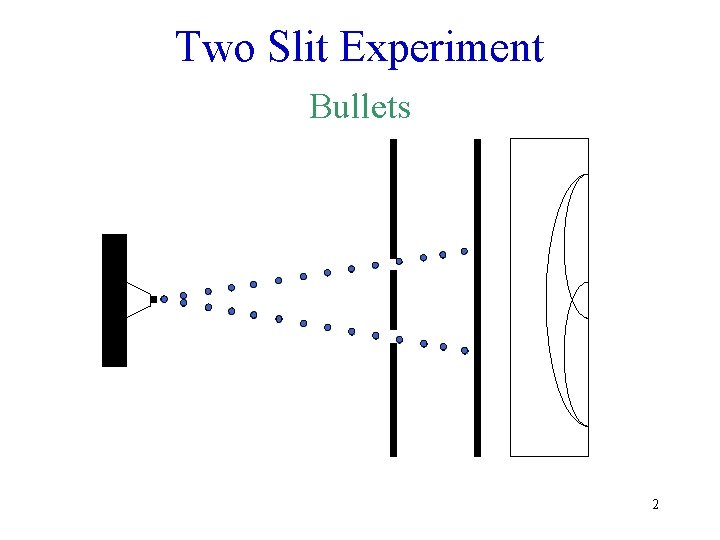
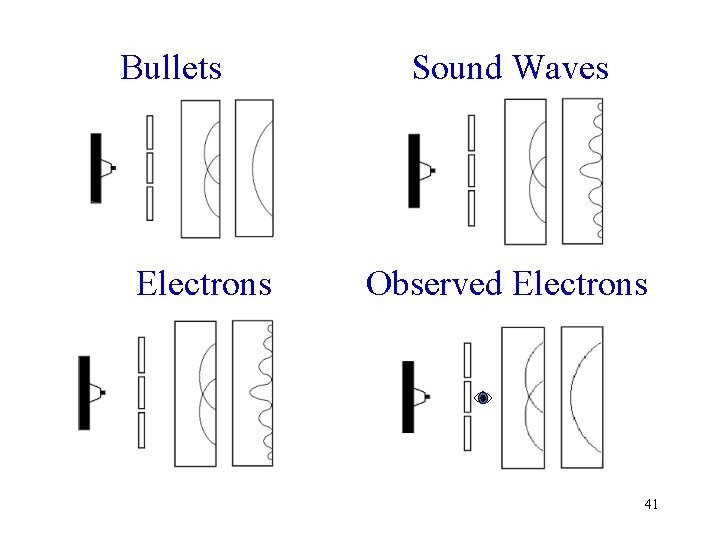
Two Slit Experiment Bullets 2
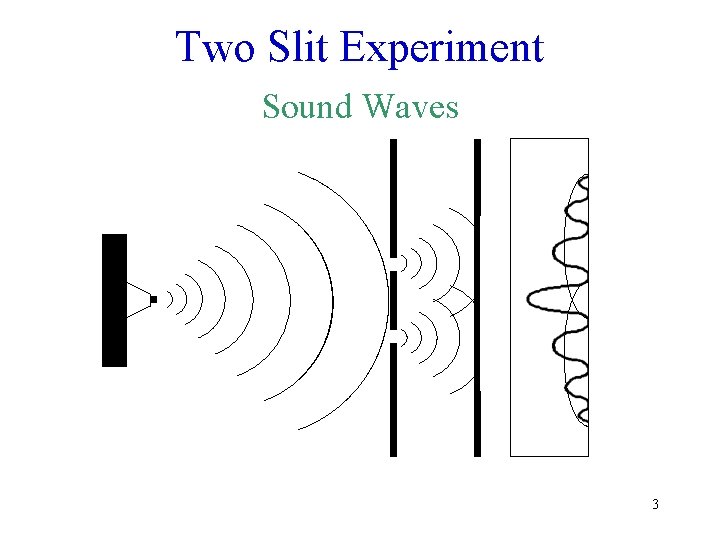
Two Slit Experiment Sound Waves 3
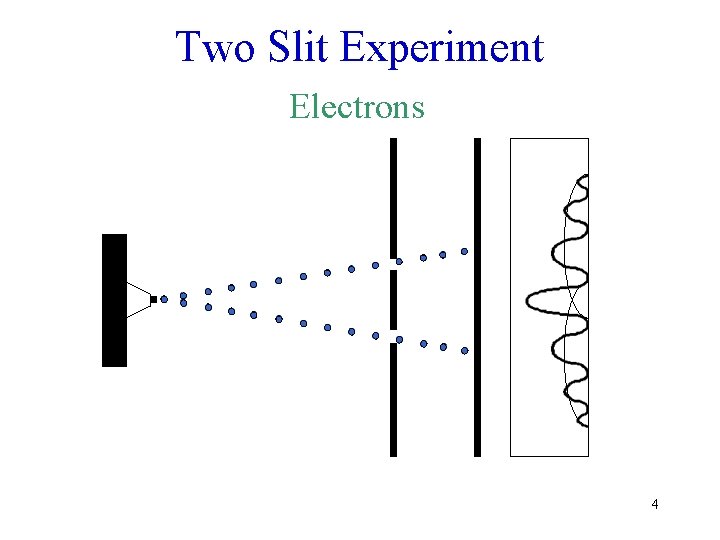
Two Slit Experiment Electrons 4
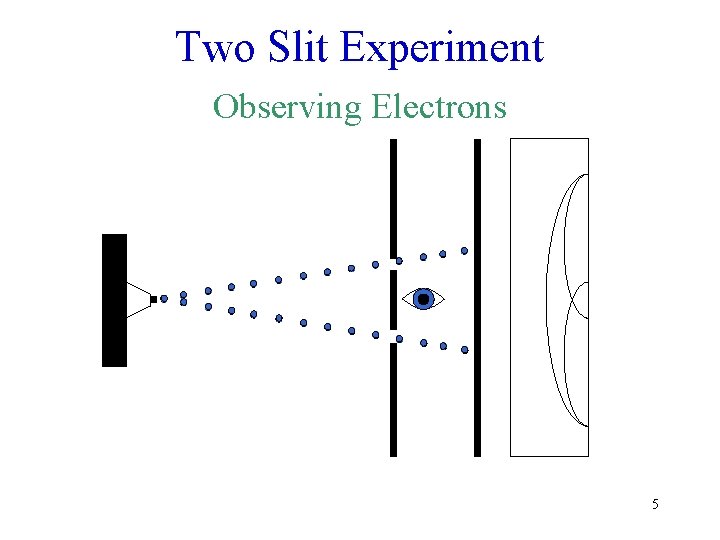
Two Slit Experiment Observing Electrons 5
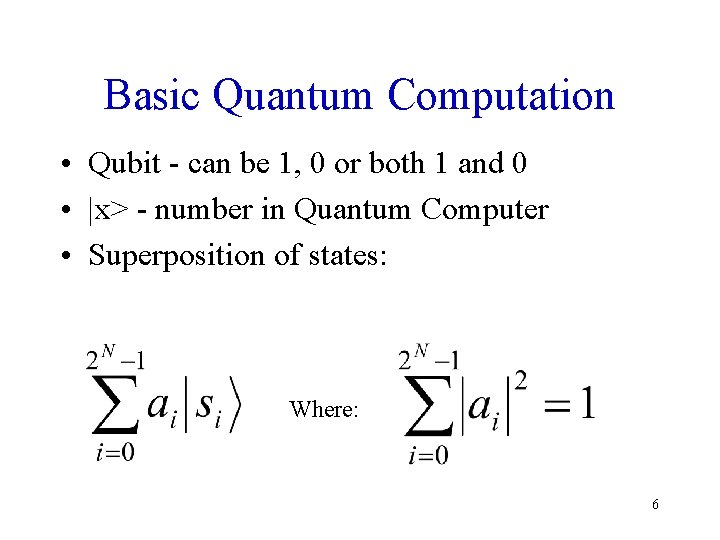
Basic Quantum Computation • Qubit - can be 1, 0 or both 1 and 0 • |x> - number in Quantum Computer • Superposition of states: Where: 6
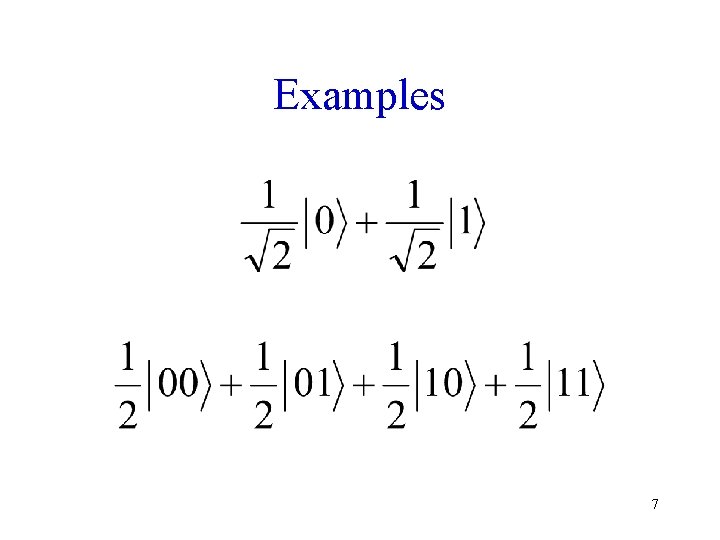
Examples 7
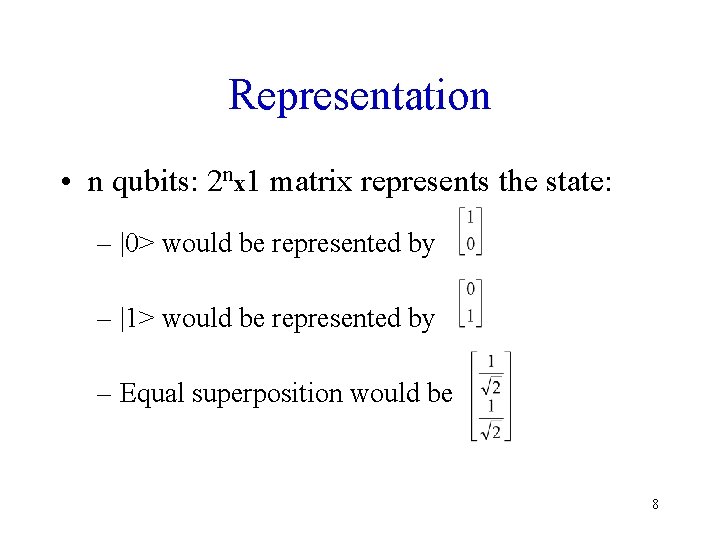
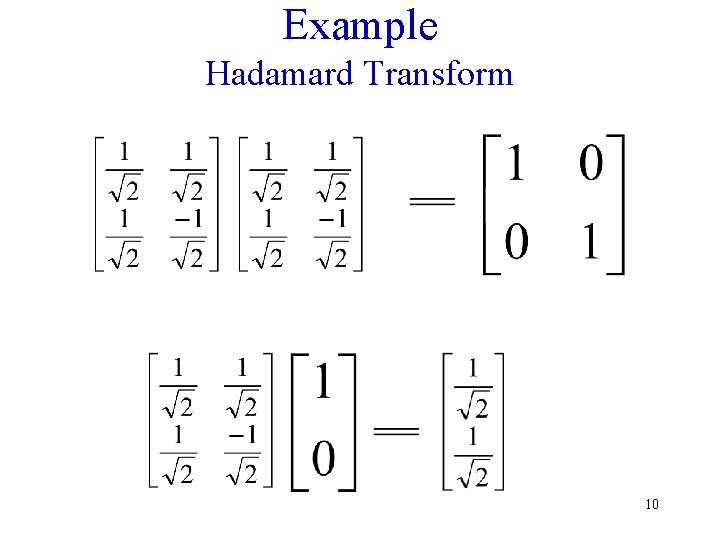
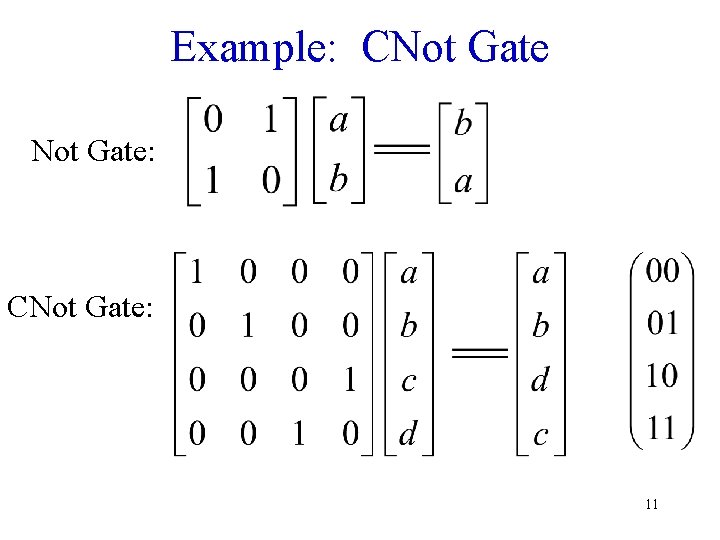
Representation • n qubits: 2 nx 1 matrix represents the state: – |0> would be represented by – |1> would be represented by – Equal superposition would be 8
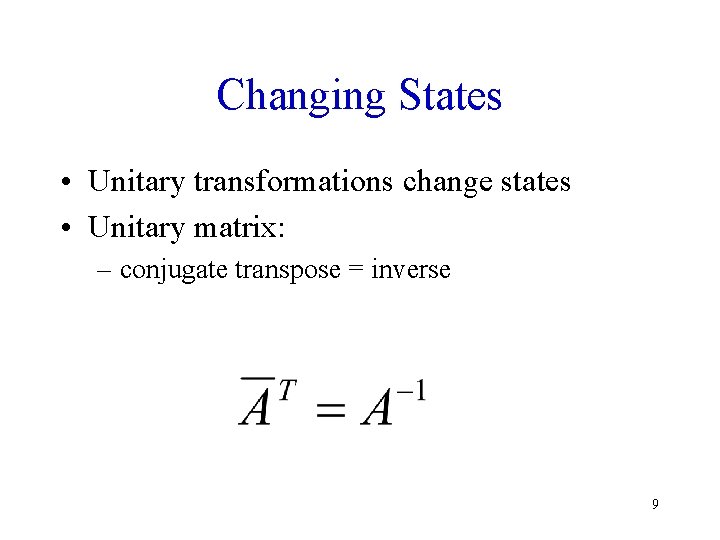
Changing States • Unitary transformations change states • Unitary matrix: – conjugate transpose = inverse 9
Example Hadamard Transform 10
Example: CNot Gate: CNot Gate: 11
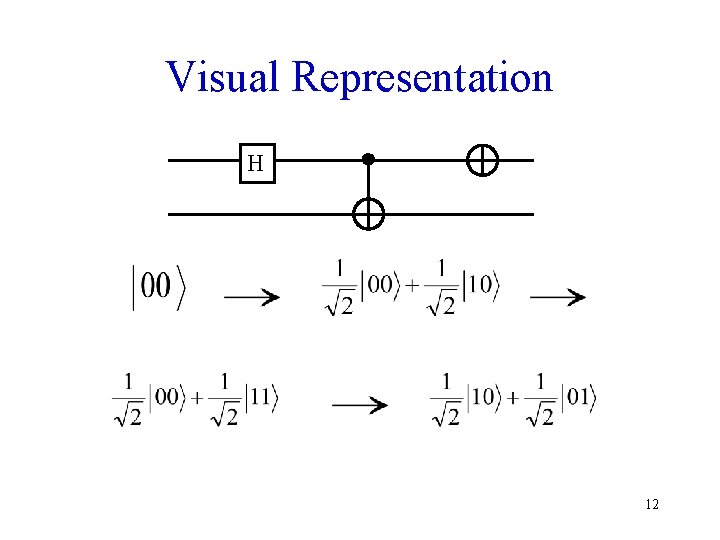
Visual Representation H 12
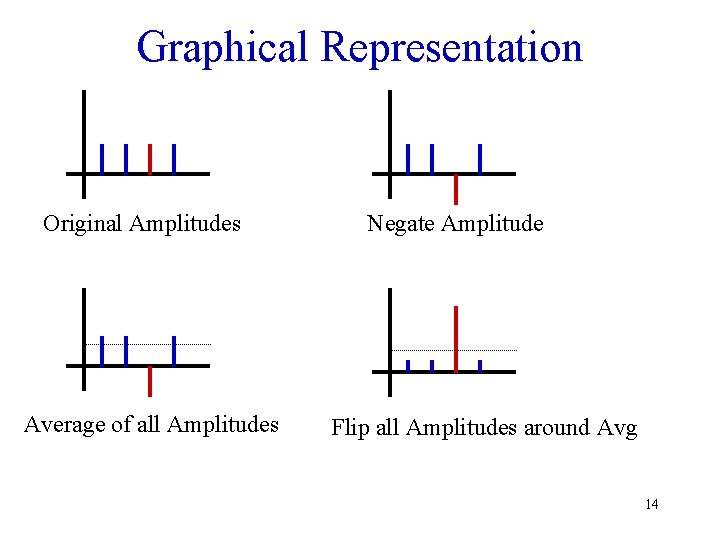
Grover’s Search Algorithm • Search a phone book for a specific number without rearranging the numbers. • Idea: magnify amplitude of the “choosen” number: – Flip the amplitude of the selected item and rotate all amplitudes around the average – Repeat this until the selected item’s probability of being read is greater than 1/2 13
Graphical Representation Original Amplitudes Average of all Amplitudes Negate Amplitude Flip all Amplitudes around Avg 14
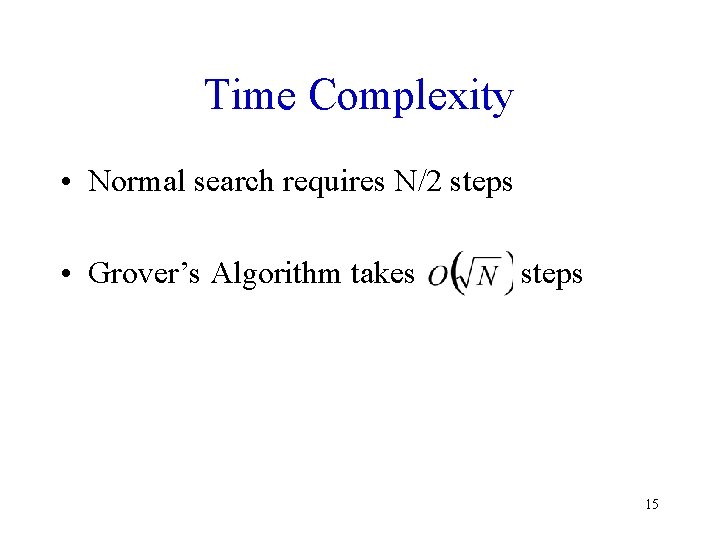
Time Complexity • Normal search requires N/2 steps • Grover’s Algorithm takes steps 15
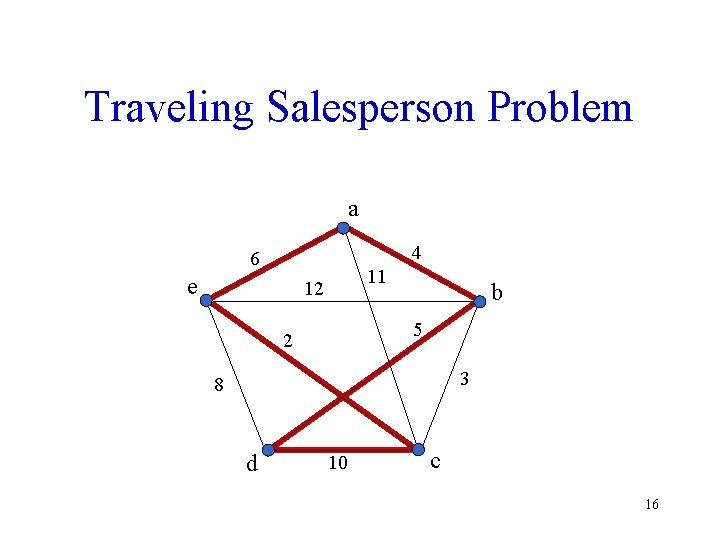
Traveling Salesperson Problem a 4 6 e 11 12 b 5 2 3 8 d 10 c 16
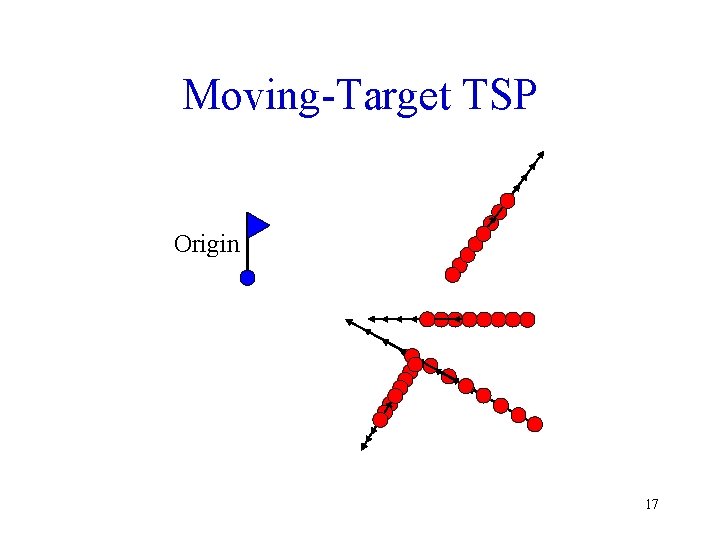
Moving-Target TSP Origin 17
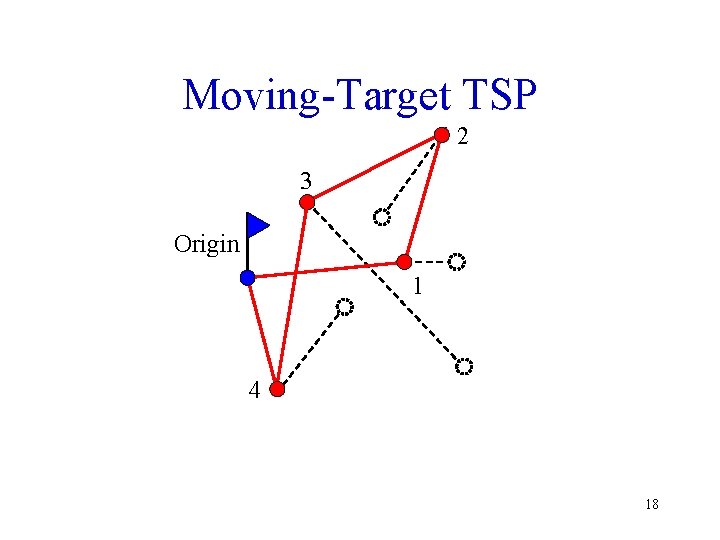
Moving-Target TSP 2 3 Origin 1 4 18
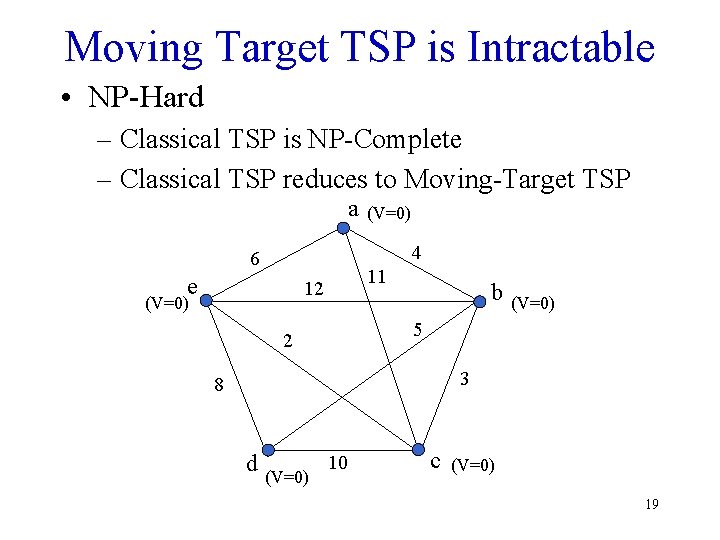
Moving Target TSP is Intractable • NP-Hard – Classical TSP is NP-Complete – Classical TSP reduces to Moving-Target TSP a (V=0) 4 6 e 11 12 (V=0) b (V=0) 5 2 3 8 d (V=0) 10 c (V=0) 19
NP-Complete • Contained in NP: 1. Decision version: $ path with time < T? • Non-deterministically travel all paths. If one exists with time < T, return TRUE. Else, return FALSE 2. Optimization version: what is min-time path? • Upper-bound T with initial random path. Then, binary search the range by testing T/2, T/4, etc. to find optimal the minimum- time path 20
Quantum Computing Solution • Step 1 - Traverse every possible path • Step 2 - Search through paths superposition to find a shortest path 21
Superposition for Hamiltonian Paths • T. Rudolph – superposition of cubic bipartite graph in linear time • Cubic - all nodes have degree 3 • Bipartite – nodes are partitioned into two groups – each node is only adjacent to nodes in other group 22
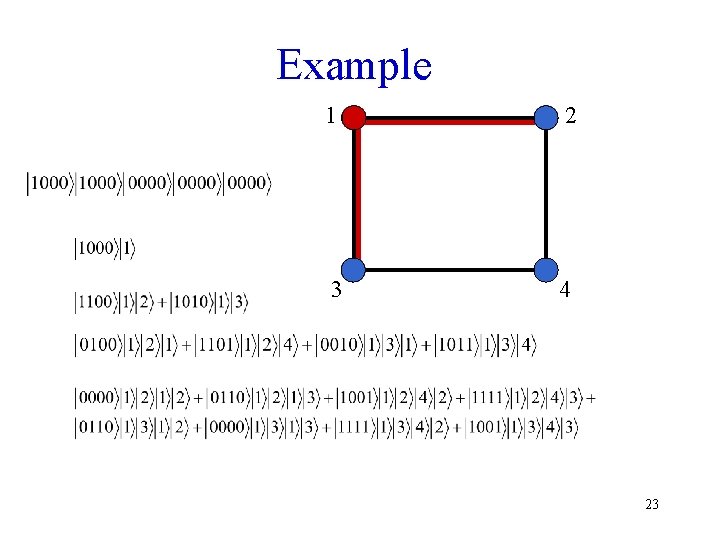
Example 1 2 3 4 23
Potential Problems • Problem 1: – Extract the Hamiltonian paths • Problem 2: – Find cycles, not paths • Problem 3: – Only works for cubic graphs 24
Solution to Problem 1 • How to extract only paths containing all 1’s in first register? • Solution: Use Grover’s Algorithm! 25
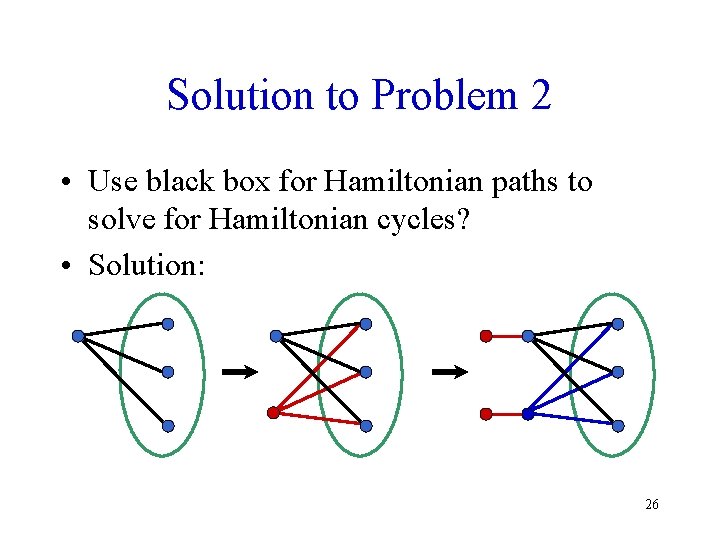
Solution to Problem 2 • Use black box for Hamiltonian paths to solve for Hamiltonian cycles? • Solution: 26
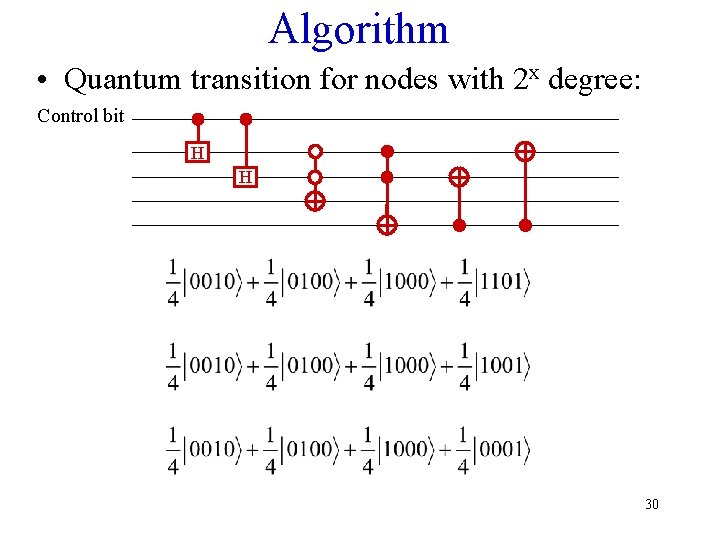
Solution to Problem 3 • Problem 3: non-cubic graphs • Solution: – Make all nodes have the same degree – Degree must be a power of 2 – Algorithm when all nodes have degree 2 i 27
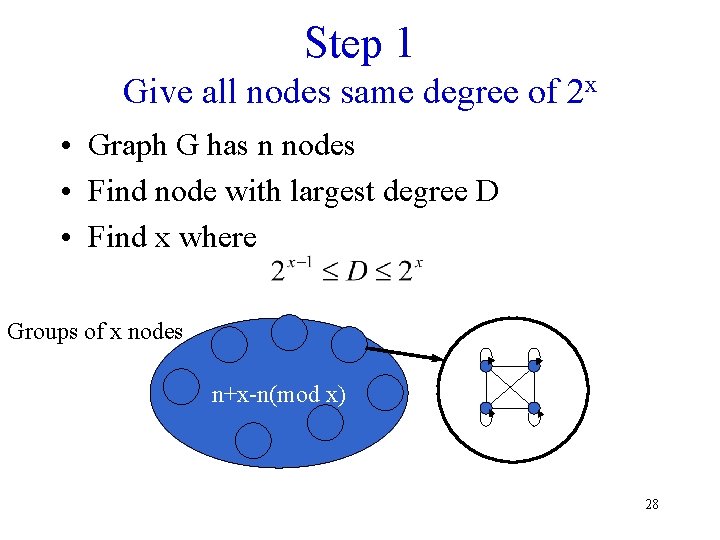
Step 1 Give all nodes same degree of 2 x • Graph G has n nodes • Find node with largest degree D • Find x where Groups of x nodes n+x-n(mod x) 28
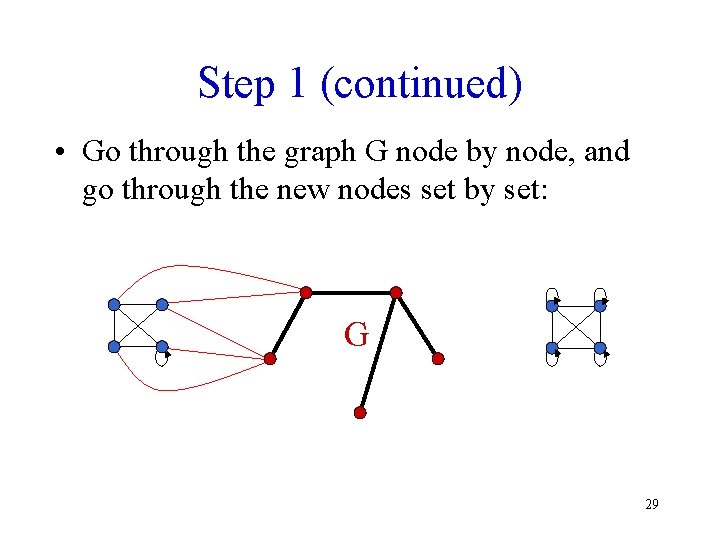
Step 1 (continued) • Go through the graph G node by node, and go through the new nodes set by set: G 29
Algorithm • Quantum transition for nodes with 2 x degree: Control bit H H 30
Observations • Algorithm works for all graphs • May double # of nodes • Takes O(n) steps • Search first register for all 1’s • Added nodes do not affect solution 31
Extension to TSP • Need another register: – Large enough to hold longest path • At each step, add edge weight into register 32
Iteration • All paths of length n & their weights • Run algorithm for Hamiltonian cycles – Look for all 1’s in the first register • Superposition of all Hamiltonian cycles • Grover’s algorithm on sum register finds min 33
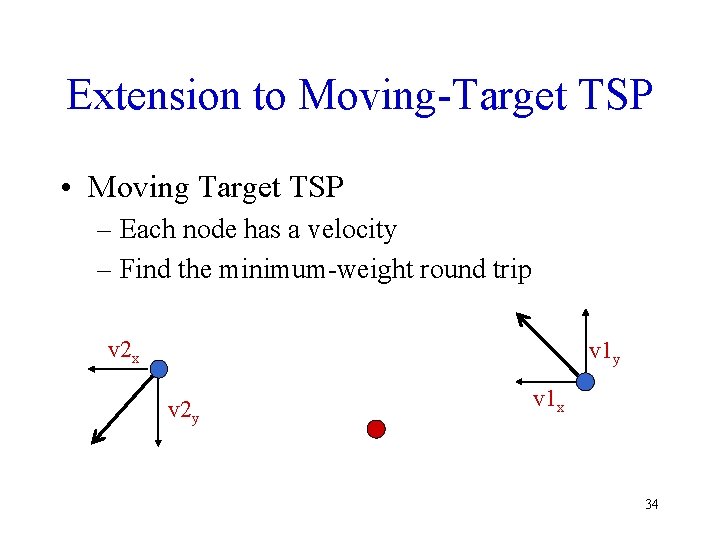
Extension to Moving-Target TSP • Moving Target TSP – Each node has a velocity – Find the minimum-weight round trip v 2 x v 1 y v 2 y v 1 x 34
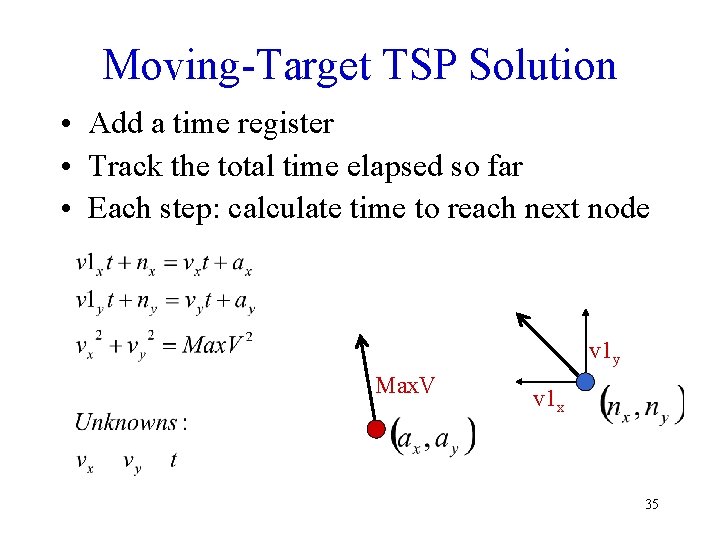
Moving-Target TSP Solution • Add a time register • Track the total time elapsed so far • Each step: calculate time to reach next node v 1 y Max. V v 1 x 35
Determining the Optimal Path • Add time to reach next node to total sum • Find the minimum, similar to TSP • Added time complexity is linear 36
Summary • Extended Hamiltonian path algorithm for cubic bipartite graphs [Rudolph’s] • For TSP and Moving-Target TSP, paths superposition can be obtained in linear time • Grover’s search algorithm works in time SQRT of # of objects in superposition • 2 n different paths: total time is O(2 n/2 ) 37
Future Work • Faster algorithm for (Moving-Target) TSP • Improve Grover’s search algorithm • P=NP for quantum computation? 38
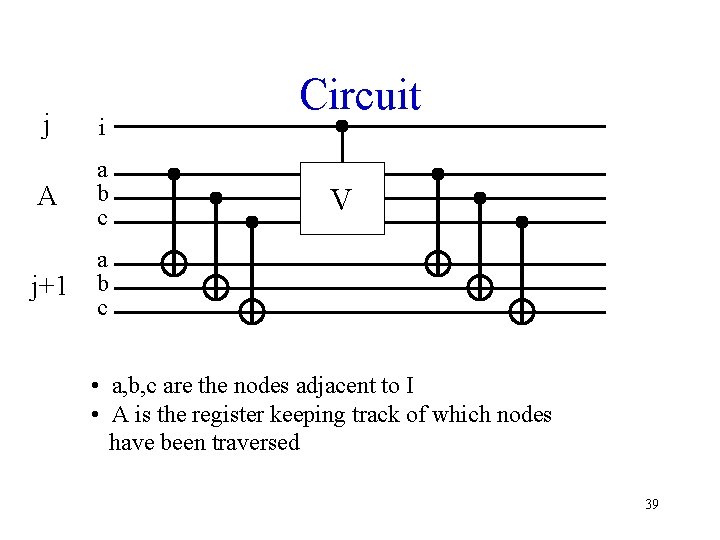
j i A a b c j+1 a b c Circuit V • a, b, c are the nodes adjacent to I • A is the register keeping track of which nodes have been traversed 39
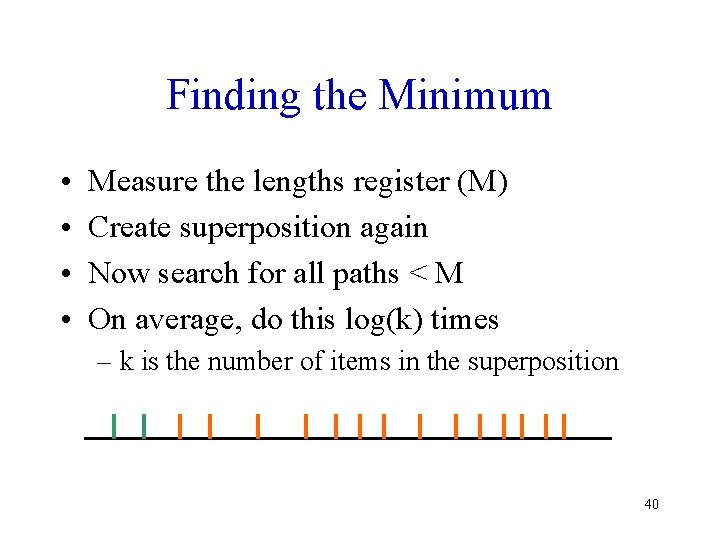
Finding the Minimum • • Measure the lengths register (M) Create superposition again Now search for all paths < M On average, do this log(k) times – k is the number of items in the superposition 40
Bullets Electrons Sound Waves Observed Electrons 41