
Quantitative social science feminist questions feminist answers feminist
- Slides: 32
Quantitative social science: feminist questions, feminist answers, feminist methods? Maria Iacovou Department of Sociology, University of Cambridge
The old “qual versus quant” question
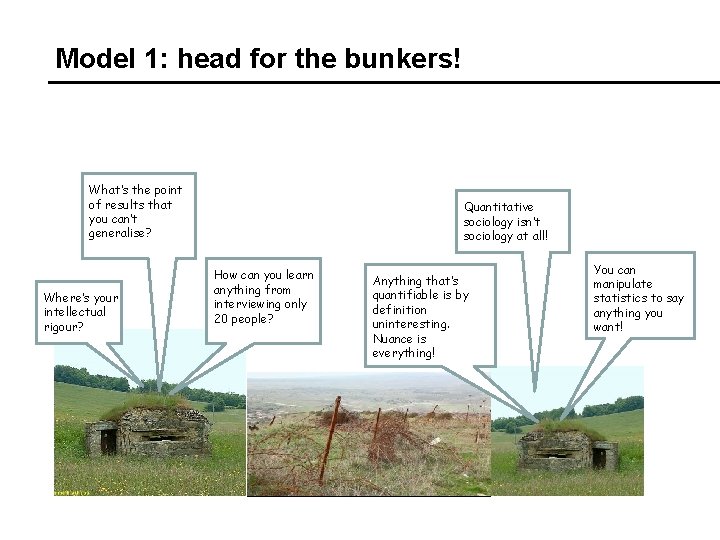
Model 1: head for the bunkers! What’s the point of results that you can’t generalise? Where’s your intellectual rigour? Quantitative sociology isn’t sociology at all! How can you learn anything from interviewing only 20 people? Anything that’s quantifiable is by definition uninteresting. Nuance is everything! You can manipulate statistics to say anything you want!
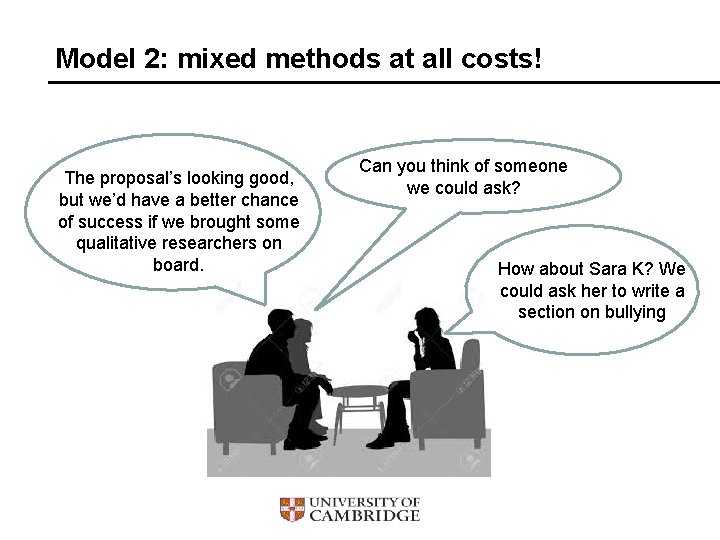
Model 2: mixed methods at all costs! The proposal’s looking good, but we’d have a better chance of success if we brought some qualitative researchers on board. Can you think of someone we could ask? How about Sara K? We could ask her to write a section on bullying
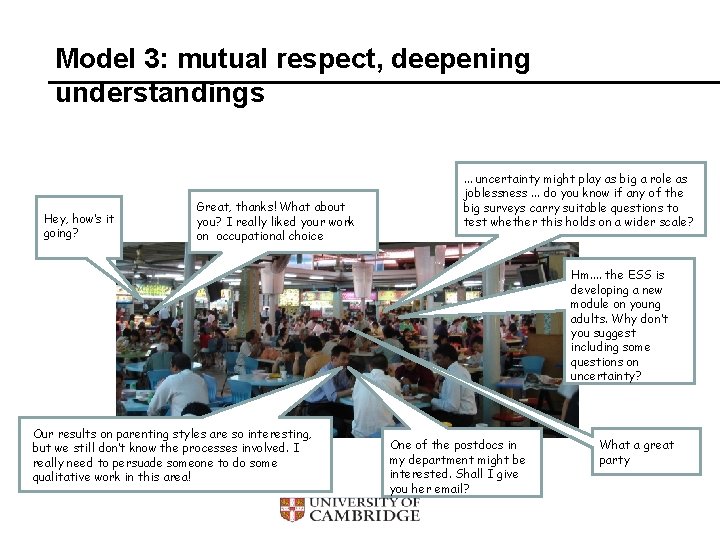
Model 3: mutual respect, deepening understandings Hey, how’s it going? Great, thanks! What about you? I really liked your work on occupational choice . . . uncertainty might play as big a role as joblessness. . . do you know if any of the big surveys carry suitable questions to test whether this holds on a wider scale? Hm. . the ESS is developing a new module on young adults. Why don’t you suggest including some questions on uncertainty? Our results on parenting styles are so interesting, but we still don’t know the processes involved. I really need to persuade someone to do some qualitative work in this area! One of the postdocs in my department might be interested. Shall I give you her email? What a great party
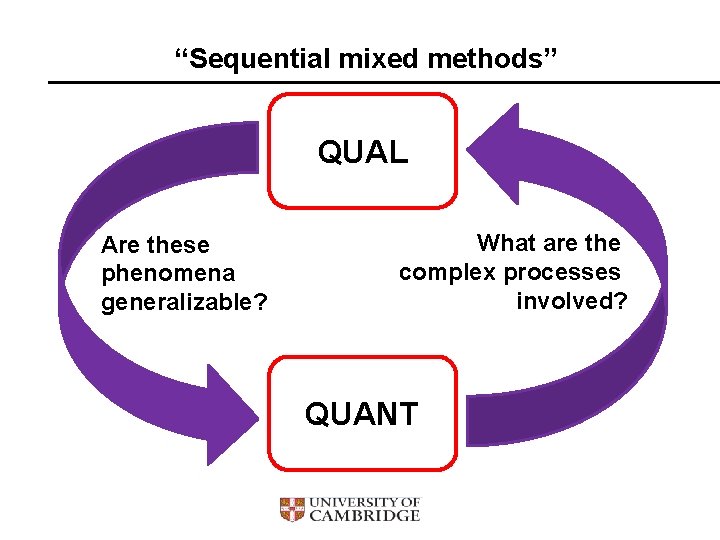
“Sequential mixed methods” QUAL Are these phenomena generalizable? What are the complex processes involved? QUANT
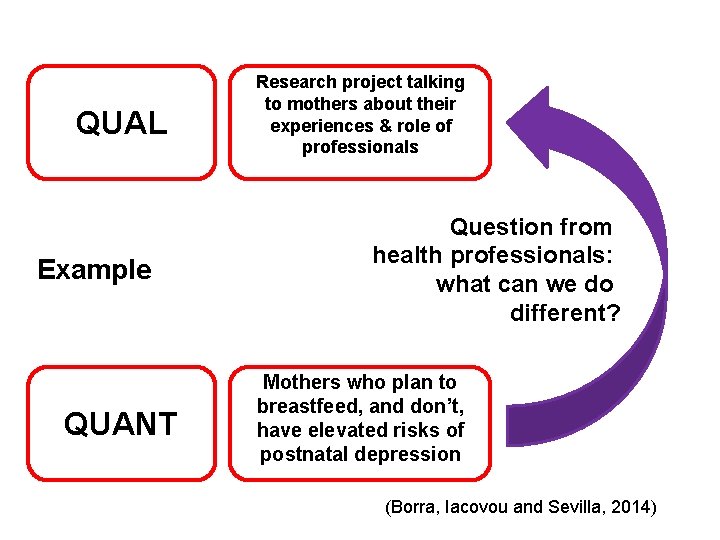
QUAL Example QUANT Research project talking to mothers about their experiences & role of professionals Question from health professionals: what can we do different? Mothers who plan to breastfeed, and don’t, have elevated risks of postnatal depression (Borra, Iacovou and Sevilla, 2014)
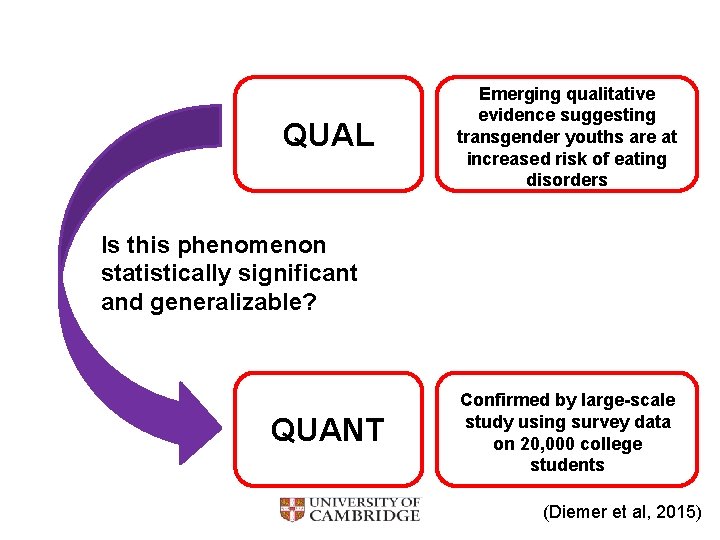
QUAL Emerging qualitative evidence suggesting transgender youths are at increased risk of eating disorders Is this phenomenon statistically significant and generalizable? QUANT Confirmed by large-scale study using survey data on 20, 000 college students (Diemer et al, 2015)
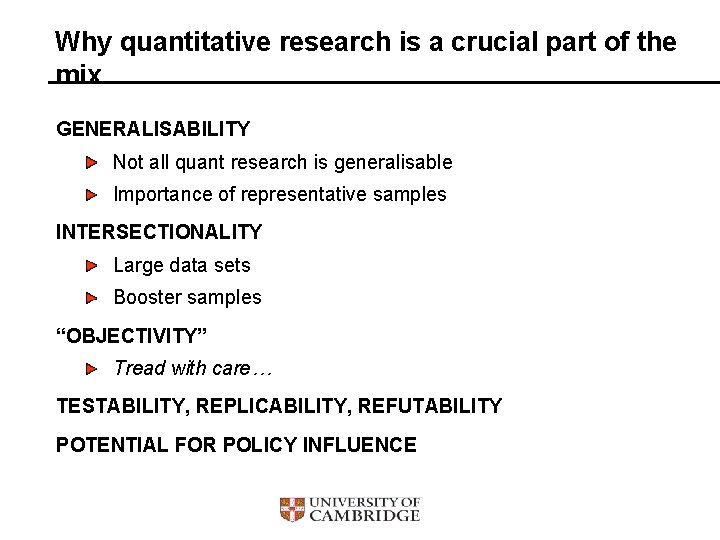
Why quantitative research is a crucial part of the mix GENERALISABILITY Not all quant research is generalisable Importance of representative samples INTERSECTIONALITY Large data sets Booster samples “OBJECTIVITY” Tread with care… TESTABILITY, REPLICABILITY, REFUTABILITY POTENTIAL FOR POLICY INFLUENCE
What is feminist research anyway?
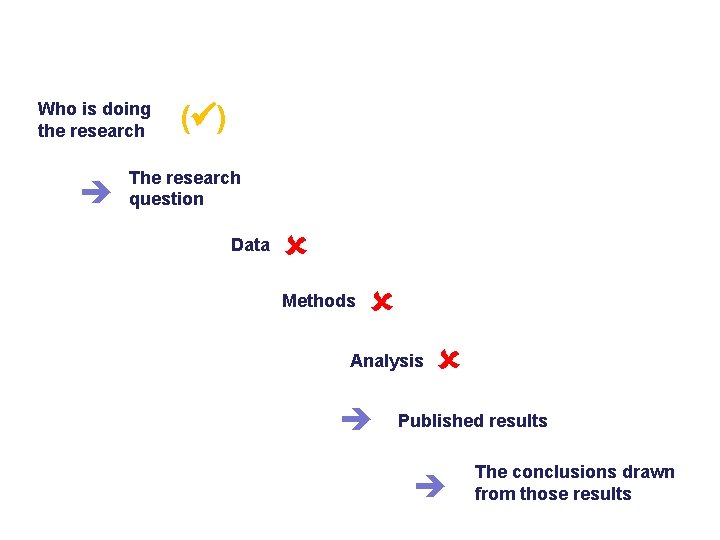
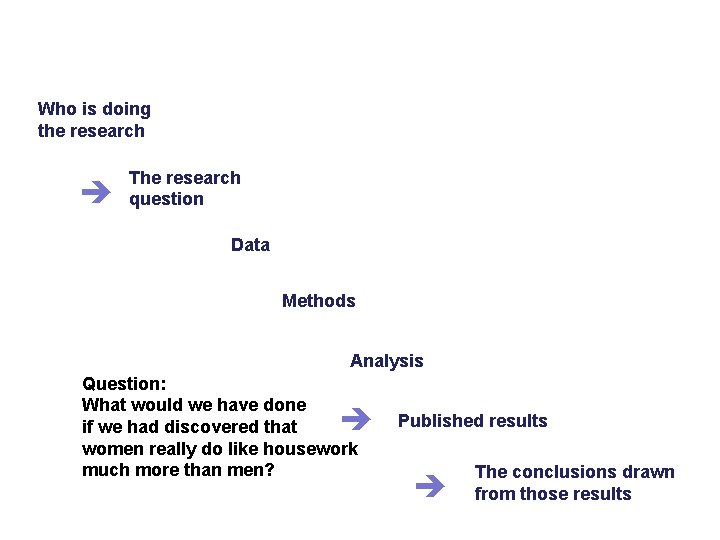
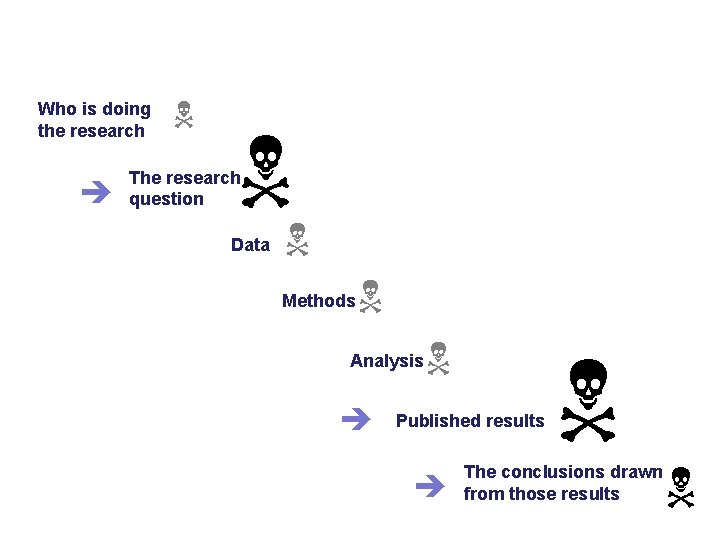
Who is doing the research ( ) The research question Data Methods Analysis Published results The conclusions drawn from those results
Research on housework
Data Understanding Society Replaces BHPS, but much bigger (40, 000 households) Includes Innovation Panel, a subsample of 1500 households used for trialling innovative questions or techniques
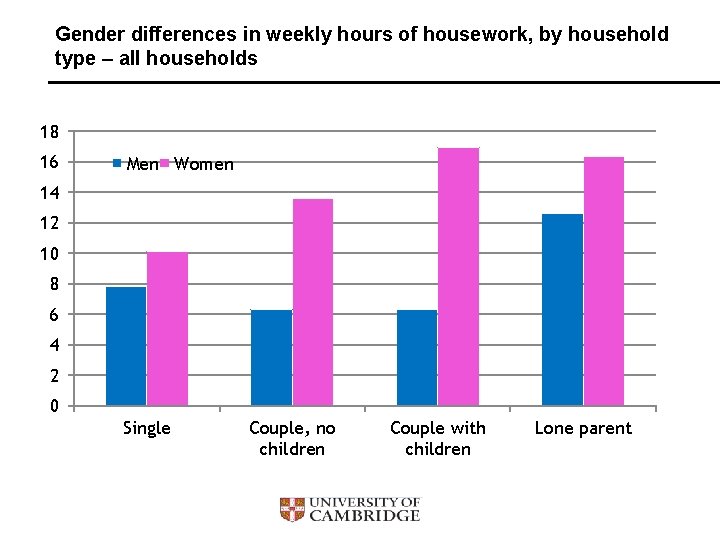
Gender differences in weekly hours of housework, by household type – all households 18 16 Men Women 14 12 10 8 6 4 2 0 Single Couple, no children Couple with children Lone parent
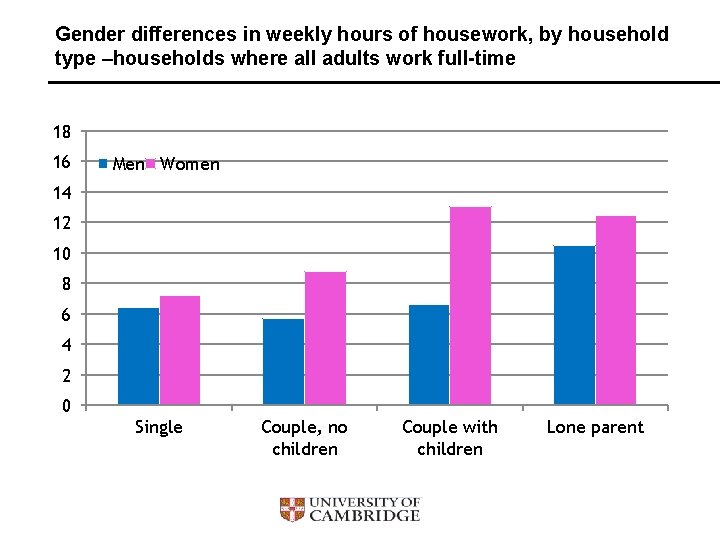
Gender differences in weekly hours of housework, by household type –households where all adults work full-time 18 16 Men Women 14 12 10 8 6 4 2 0 Single Couple, no children Couple with children Lone parent
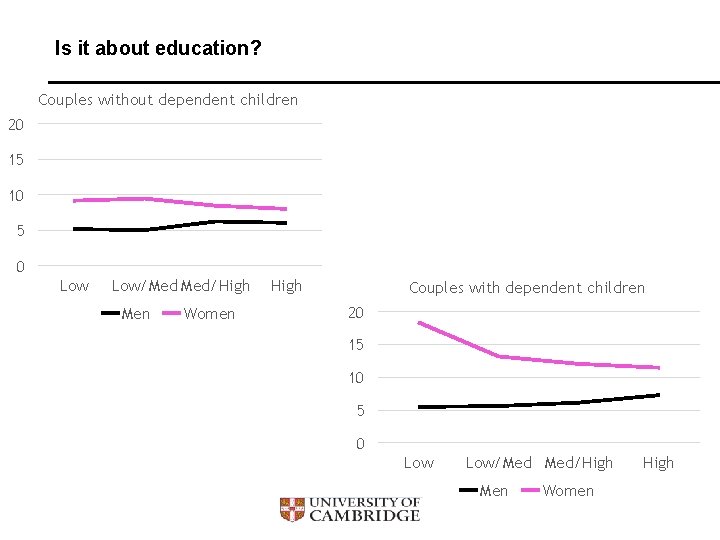
Is it about education? Couples without dependent children 20 15 10 5 0 Low/Med Med/High Men Women High Couples with dependent children 20 15 10 5 0 Low/Med Med/High Men Women High
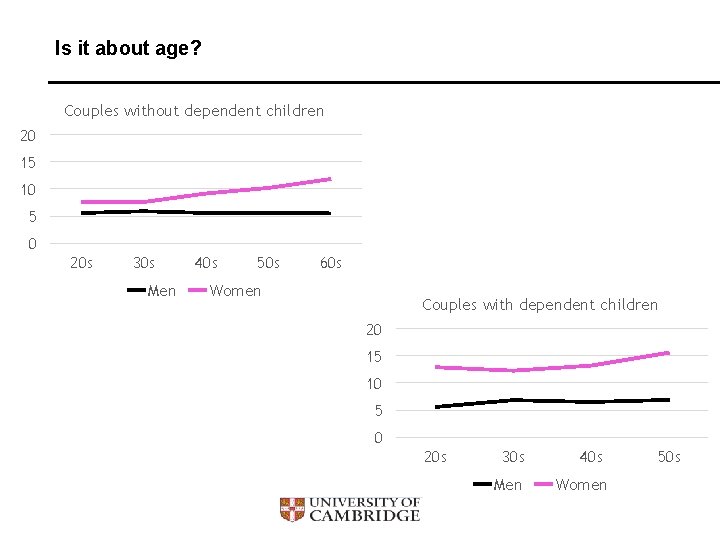
Is it about age? Couples without dependent children 20 15 10 5 0 20 s 30 s Men 40 s 50 s 60 s Women Couples with dependent children 20 15 10 5 0 20 s 30 s Men 40 s Women 50 s
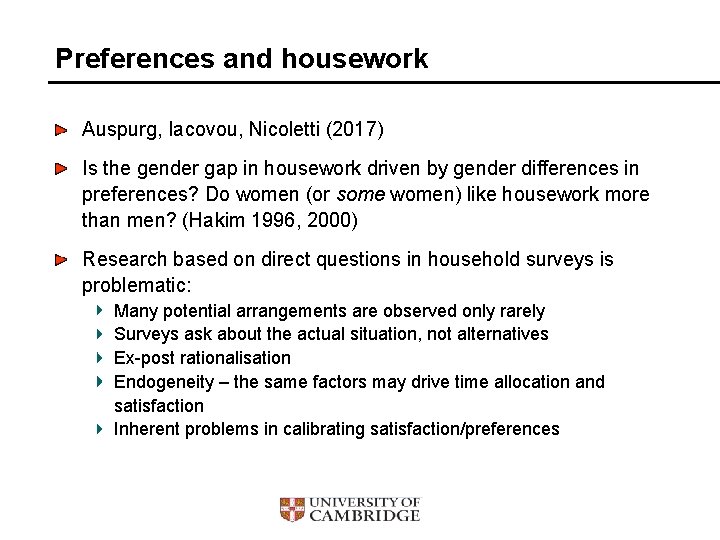
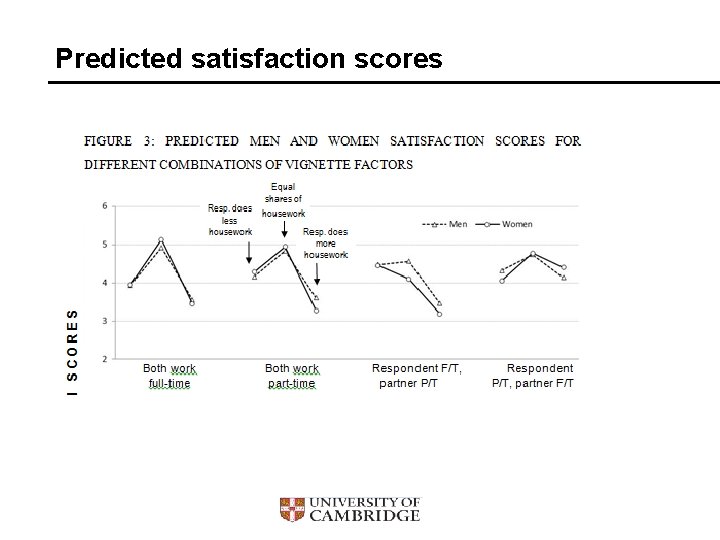
Preferences and housework Auspurg, Iacovou, Nicoletti (2017) Is the gender gap in housework driven by gender differences in preferences? Do women (or some women) like housework more than men? (Hakim 1996, 2000) Research based on direct questions in household surveys is problematic: Many potential arrangements are observed only rarely Surveys ask about the actual situation, not alternatives Ex-post rationalisation Endogeneity – the same factors may drive time allocation and satisfaction Inherent problems in calibrating satisfaction/preferences
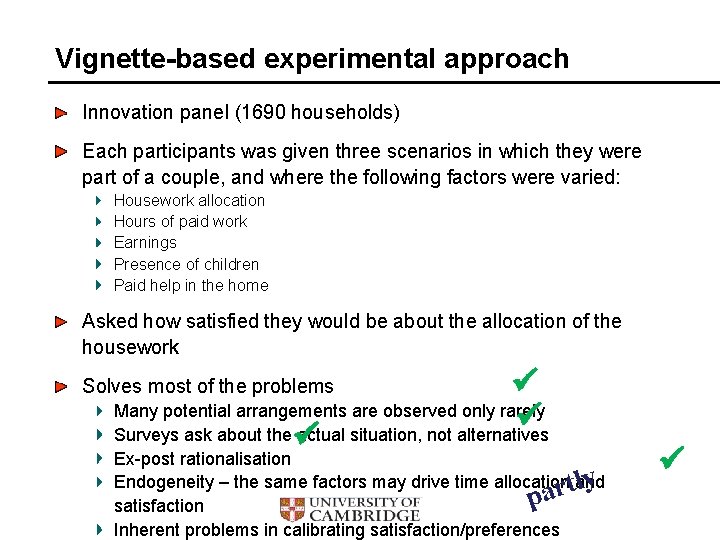
Vignette-based experimental approach Innovation panel (1690 households) Each participants was given three scenarios in which they were part of a couple, and where the following factors were varied: Housework allocation Hours of paid work Earnings Presence of children Paid help in the home Asked how satisfied they would be about the allocation of the housework Many potential arrangements are observed only rarely Surveys ask about the actual situation, not alternatives Solves most of the problems Ex-post rationalisation y Endogeneity – the same factors may drive time allocationtand l r pa satisfaction Inherent problems in calibrating satisfaction/preferences
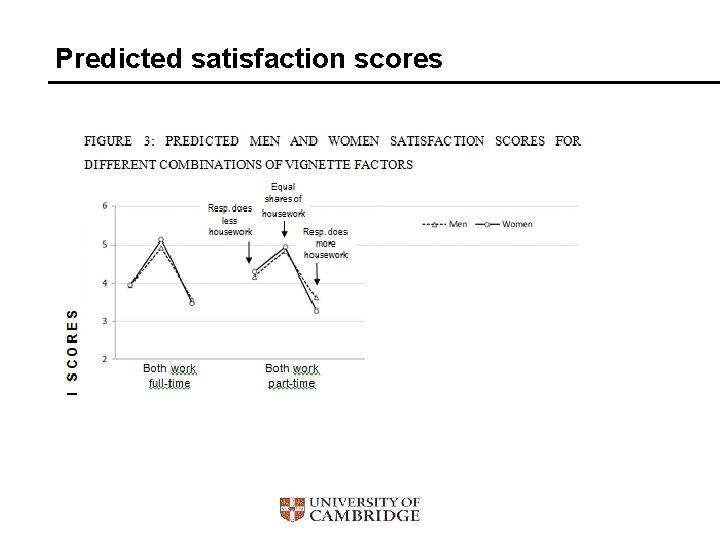
Predicted satisfaction scores
Predicted satisfaction scores
Other research Mencarini and Sironi (2010) Happiness and housework Sharers are happier Harryson et al (2012) Mental health and housework arrangements Psychological distress is more common in couples with unequal shares of housework Sigle-Rushton (2010) Partnership breakdown and housework Incidence of separation is lower when housework is more equally shared Booth & Van Ours (2009) Paid work and life/job satisfaction Full-time men and part-time women report highest levels of satisfaction
Who is doing the research The research question Data Methods Analysis Question: What would we have done if we had discovered that women really do like housework much more than men? Published results The conclusions drawn from those results
Work on parenting and infant feeding
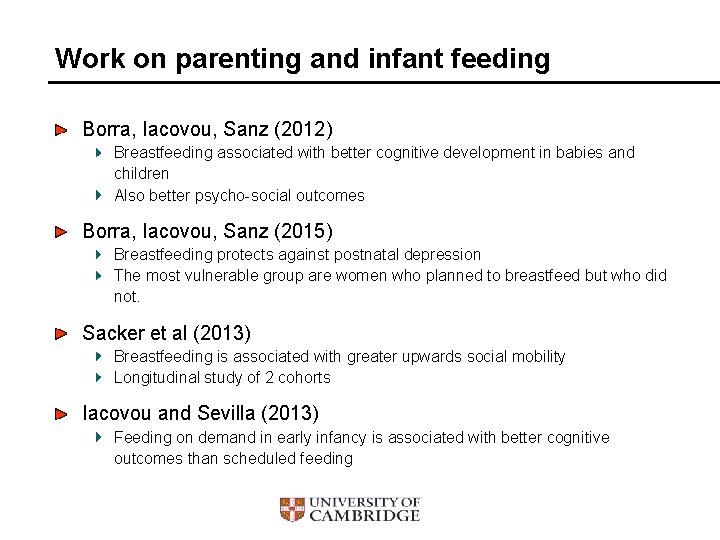
Work on parenting and infant feeding Borra, Iacovou, Sanz (2012) Breastfeeding associated with better cognitive development in babies and children Also better psycho-social outcomes Borra, Iacovou, Sanz (2015) Breastfeeding protects against postnatal depression The most vulnerable group are women who planned to breastfeed but who did not. Sacker et al (2013) Breastfeeding is associated with greater upwards social mobility Longitudinal study of 2 cohorts Iacovou and Sevilla (2013) Feeding on demand in early infancy is associated with better cognitive outcomes than scheduled feeding
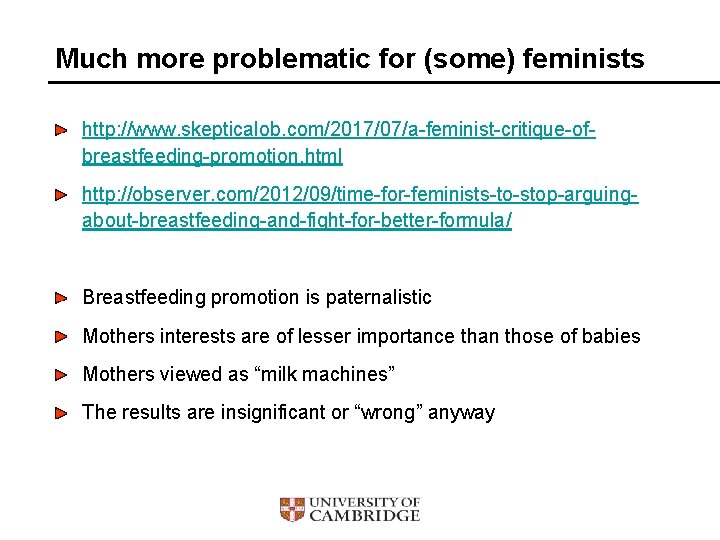
Much more problematic for (some) feminists http: //www. skepticalob. com/2017/07/a-feminist-critique-ofbreastfeeding-promotion. html http: //observer. com/2012/09/time-for-feminists-to-stop-arguingabout-breastfeeding-and-fight-for-better-formula/ Breastfeeding promotion is paternalistic Mothers interests are of lesser importance than those of babies Mothers viewed as “milk machines” The results are insignificant or “wrong” anyway
Who is doing the research The research question Data Methods Analysis Published results The conclusions drawn from those results
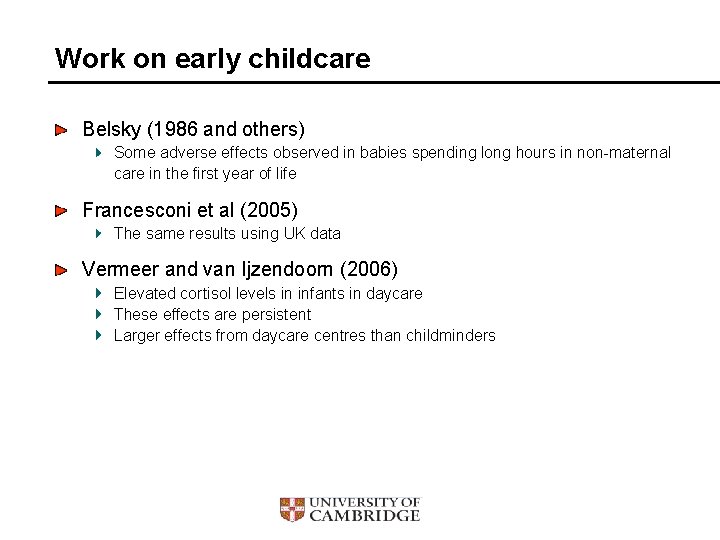
Work on early childcare Belsky (1986 and others) Some adverse effects observed in babies spending long hours in non-maternal care in the first year of life Francesconi et al (2005) The same results using UK data Vermeer and van Ijzendoorn (2006) Elevated cortisol levels in infants in daycare These effects are persistent Larger effects from daycare centres than childminders
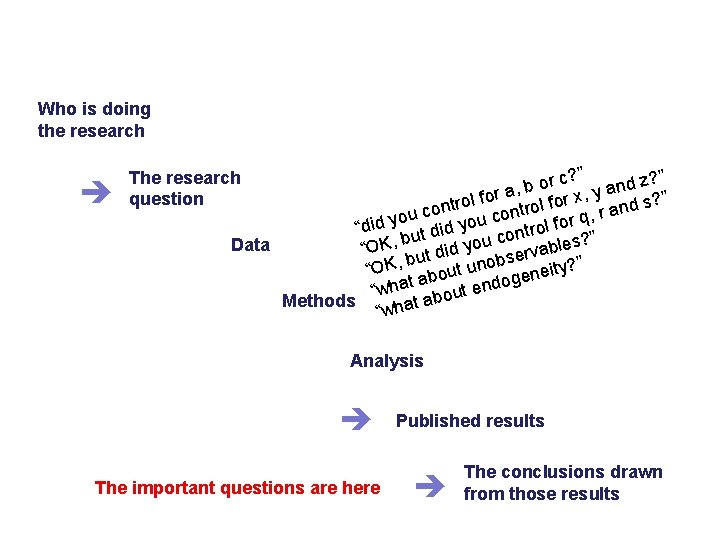
Who is doing the research ? ” c z? ” r o d n b a , for a l for x, y l ? ” o s r t d n o n r o , ra cont ou c q y r u o o d f i y “d ntrol s? ” t did o u c b , u Data ble “OK ut did yo a v r e b bs “OK, bout uno eneity? ” og ta “wha bout end Methods ta “wha The research question Analysis The important questions are here Published results The conclusions drawn from those results
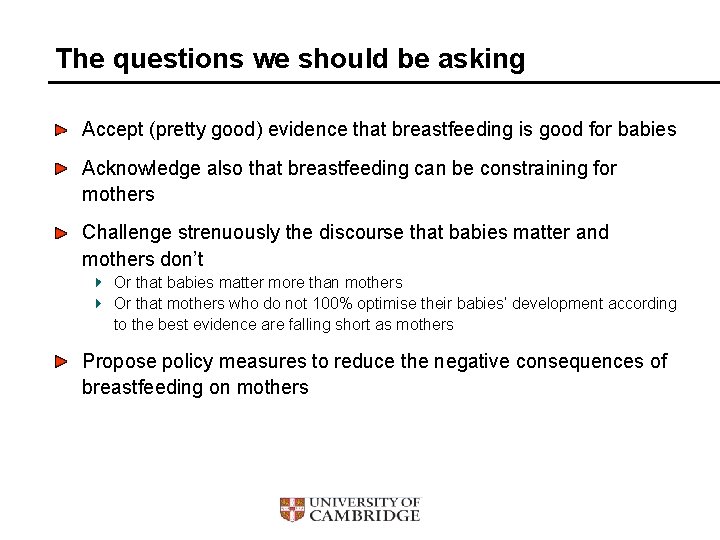
The questions we should be asking Accept (pretty good) evidence that breastfeeding is good for babies Acknowledge also that breastfeeding can be constraining for mothers Challenge strenuously the discourse that babies matter and mothers don’t Or that babies matter more than mothers Or that mothers who do not 100% optimise their babies’ development according to the best evidence are falling short as mothers Propose policy measures to reduce the negative consequences of breastfeeding on mothers
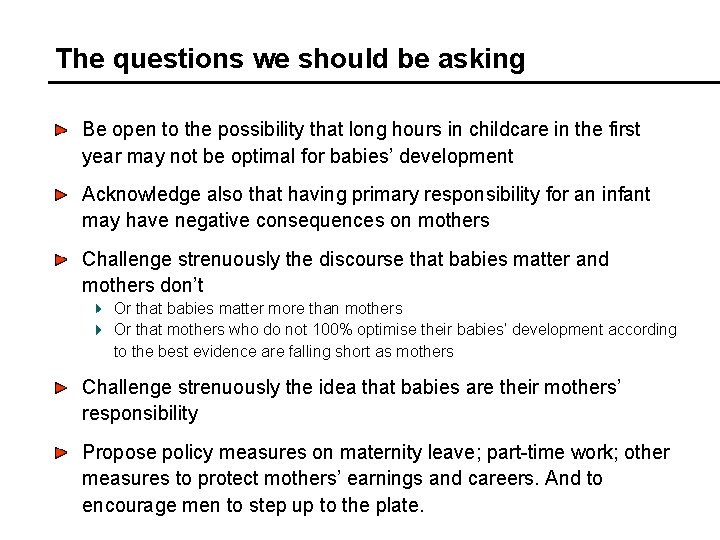
The questions we should be asking Be open to the possibility that long hours in childcare in the first year may not be optimal for babies’ development Acknowledge also that having primary responsibility for an infant may have negative consequences on mothers Challenge strenuously the discourse that babies matter and mothers don’t Or that babies matter more than mothers Or that mothers who do not 100% optimise their babies’ development according to the best evidence are falling short as mothers Challenge strenuously the idea that babies are their mothers’ responsibility Propose policy measures on maternity leave; part-time work; other measures to protect mothers’ earnings and careers. And to encourage men to step up to the plate.
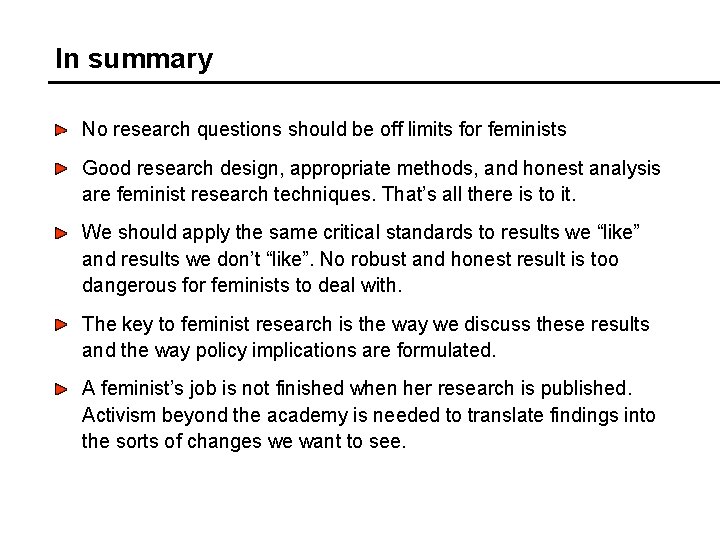
In summary No research questions should be off limits for feminists Good research design, appropriate methods, and honest analysis are feminist research techniques. That’s all there is to it. We should apply the same critical standards to results we “like” and results we don’t “like”. No robust and honest result is too dangerous for feminists to deal with. The key to feminist research is the way we discuss these results and the way policy implications are formulated. A feminist’s job is not finished when her research is published. Activism beyond the academy is needed to translate findings into the sorts of changes we want to see.