
Quantitative Methods Model Selection I principles of model
- Slides: 40
Quantitative Methods Model Selection I: principles of model choice and designed experiments
Model Selection I: principles of model choice The problem of model choice
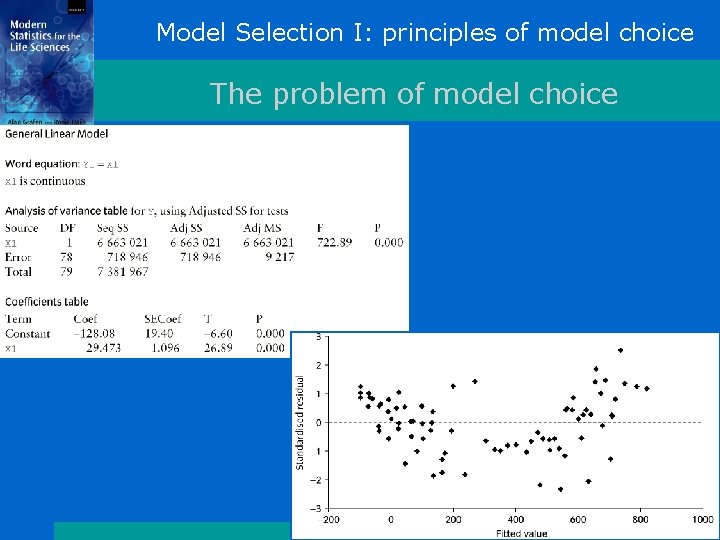
Model Selection I: principles of model choice The problem of model choice
Model Selection I: principles of model choice The problem of model choice Varying b Varying a Y = a + b. X
Model Selection I: principles of model choice The problem of model choice Varying c Y = a + b. X + c. X 2
Model Selection I: principles of model choice The problem of model choice Varying c Y = a + b. X + c. X 2 Varying d, Part II Y = a + b. X + c. X 2 + d. X 3 Any continuous curve can be sufficiently well approximately by a polynomial of high enough order.
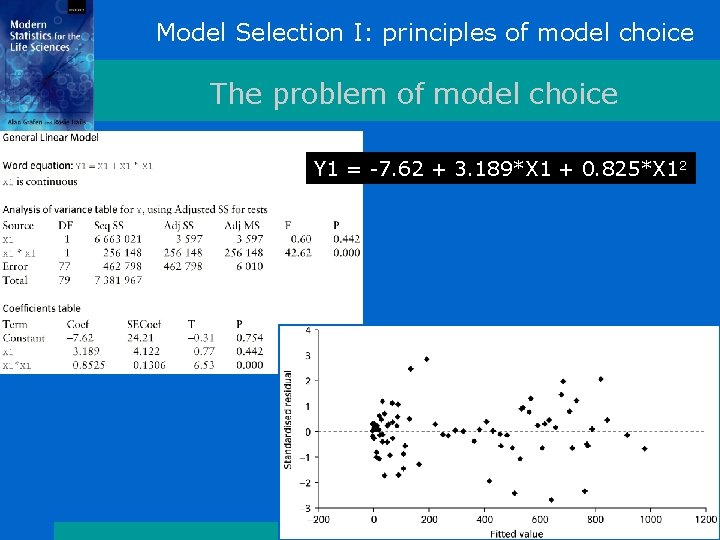
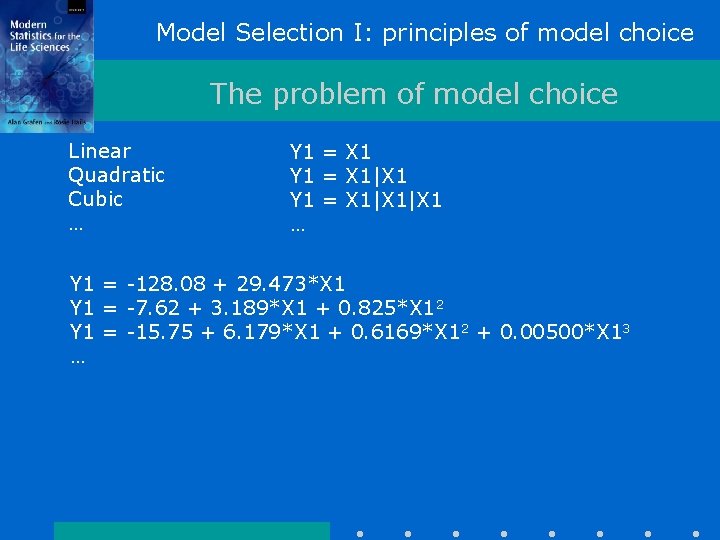
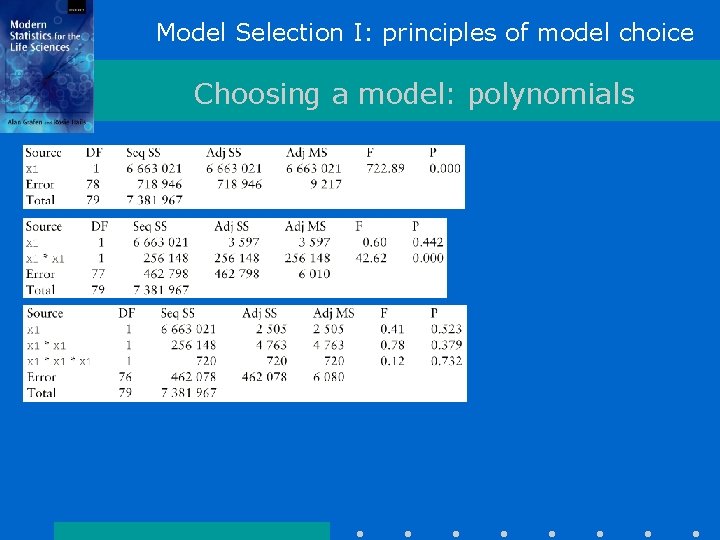
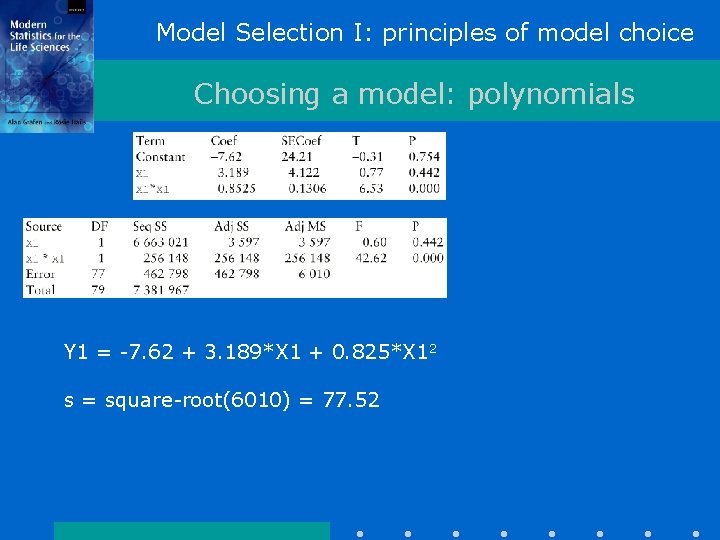
Model Selection I: principles of model choice The problem of model choice Y 1 = -7. 62 + 3. 189*X 1 + 0. 825*X 12
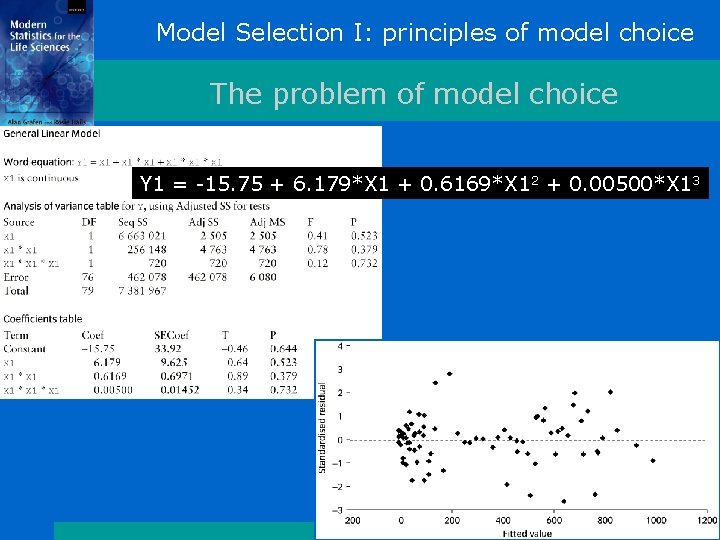
Model Selection I: principles of model choice The problem of model choice Y 1 = -15. 75 + 6. 179*X 1 + 0. 6169*X 12 + 0. 00500*X 13
Model Selection I: principles of model choice The problem of model choice Linear Quadratic Cubic … Y 1 = X 1|X 1 … Y 1 = -128. 08 + 29. 473*X 1 Y 1 = -7. 62 + 3. 189*X 1 + 0. 825*X 12 Y 1 = -15. 75 + 6. 179*X 1 + 0. 6169*X 12 + 0. 00500*X 13 …
Model Selection I: principles of model choice Principles of model choice
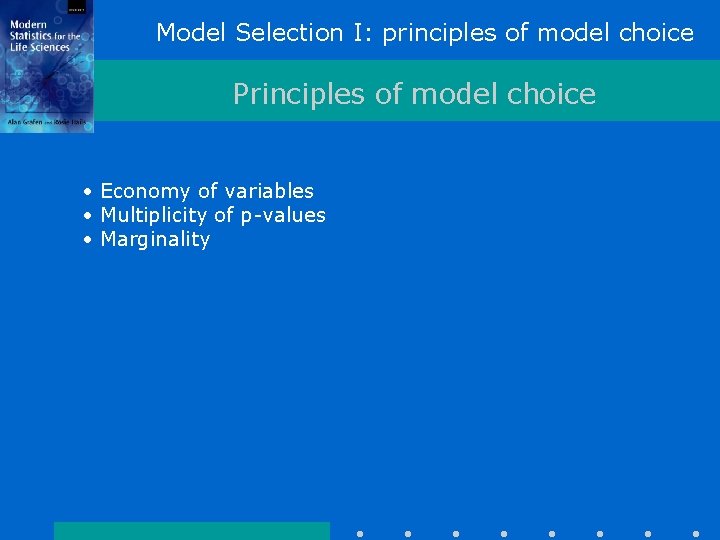
Model Selection I: principles of model choice Principles of model choice • Economy of variables • Multiplicity of p-values • Marginality
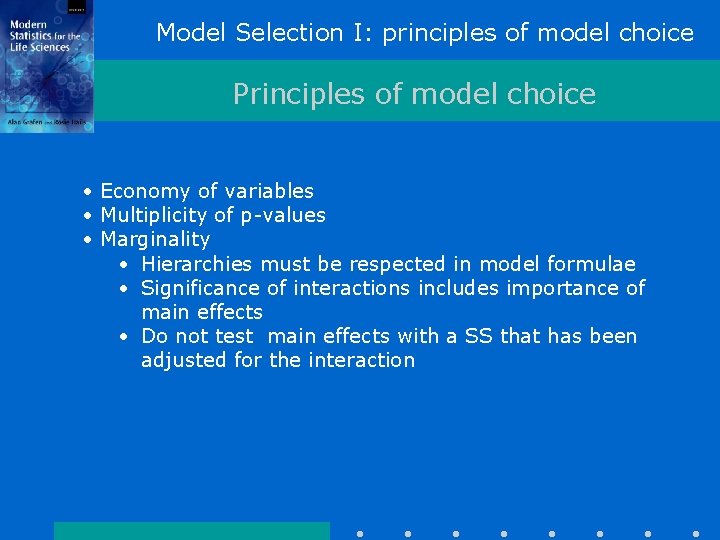
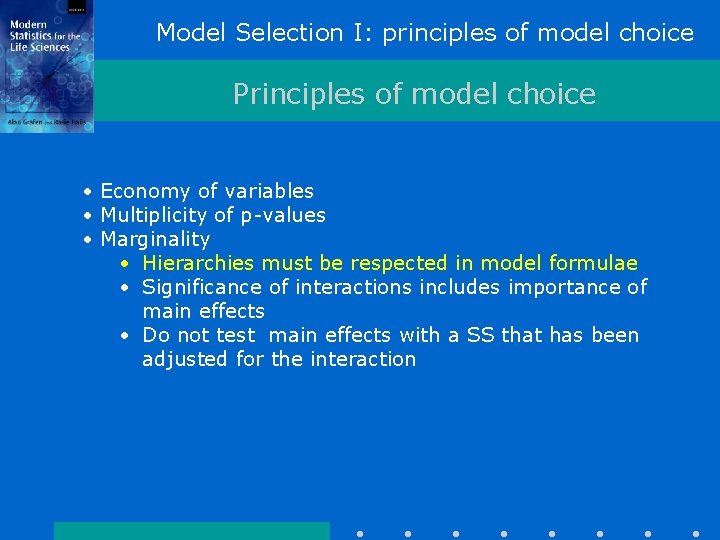
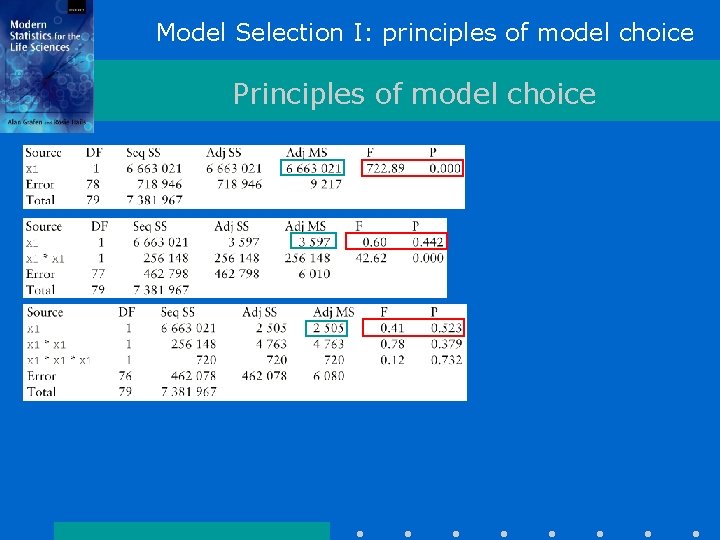
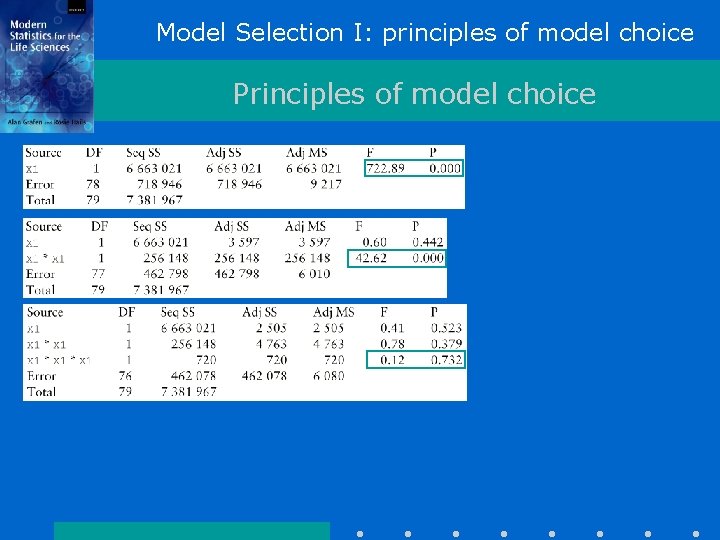
Model Selection I: principles of model choice Principles of model choice • Economy of variables • Multiplicity of p-values • Marginality • Hierarchies must be respected in model formulae • Significance of interactions includes importance of main effects • Do not test main effects with a SS that has been adjusted for the interaction
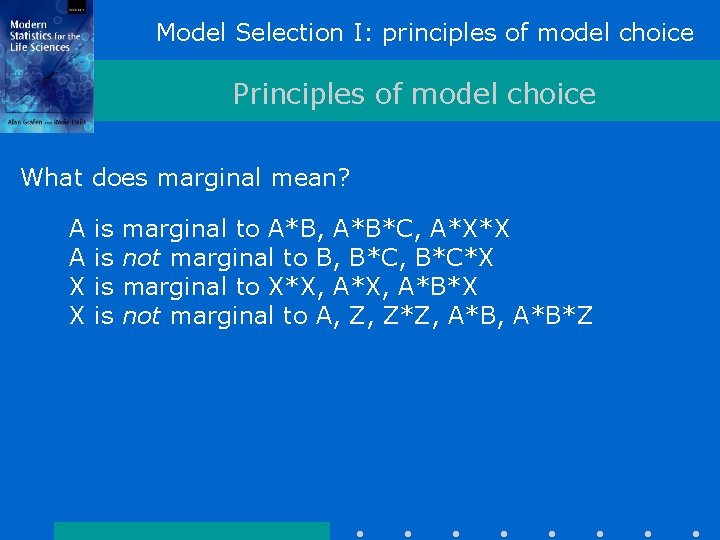
Model Selection I: principles of model choice Principles of model choice What does marginal mean? A A X X is is marginal to A*B, A*B*C, A*X*X not marginal to B, B*C*X marginal to X*X, A*B*X not marginal to A, Z, Z*Z, A*B*Z
Model Selection I: principles of model choice Principles of model choice Why marginal?
Model Selection I: principles of model choice Principles of model choice • Economy of variables • Multiplicity of p-values • Marginality • Hierarchies must be respected in model formulae • Significance of interactions includes importance of main effects • Do not test main effects with a SS that has been adjusted for the interaction
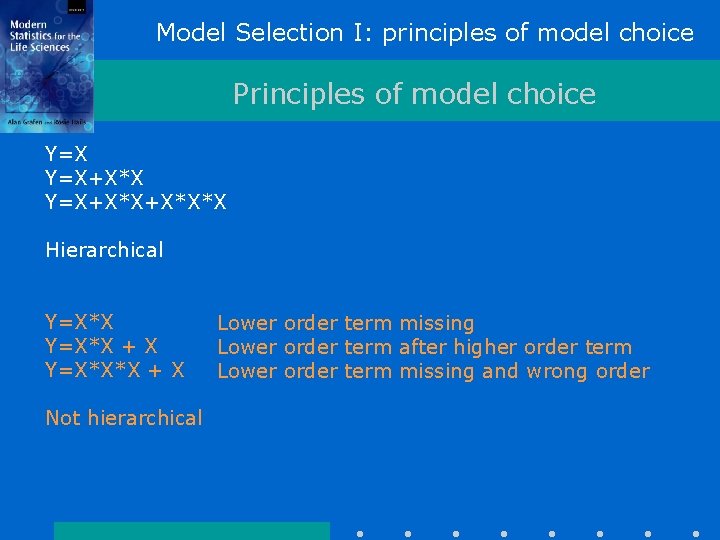
Model Selection I: principles of model choice Principles of model choice Y=X+X*X*X Hierarchical Y=X*X + X Y=X*X*X + X Not hierarchical Lower order term missing Lower order term after higher order term Lower order term missing and wrong order
Model Selection I: principles of model choice Principles of model choice • Economy of variables • Multiplicity of p-values • Marginality • Hierarchies must be respected in model formulae • Significance of interactions includes importance of main effects • Do not test main effects with a SS that has been adjusted for the interaction
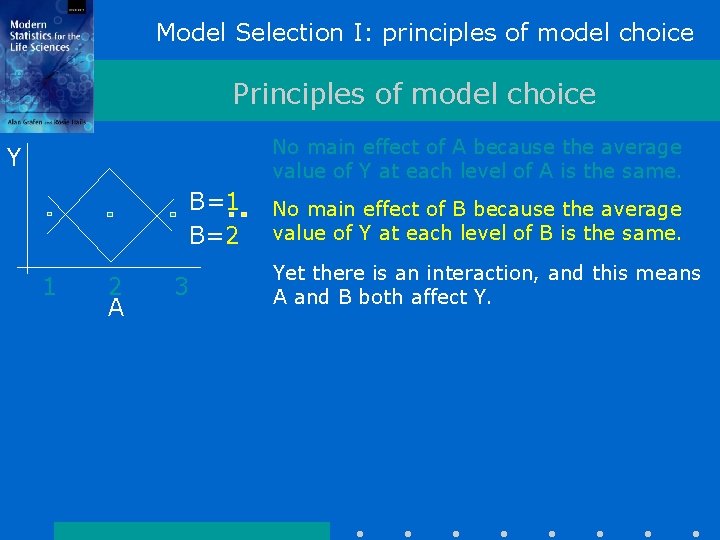
Model Selection I: principles of model choice Principles of model choice No main effect of A because the average value of Y at each level of A is the same. Y B=1 B=2 1 2 A 3 No main effect of B because the average value of Y at each level of B is the same. Yet there is an interaction, and this means A and B both affect Y.
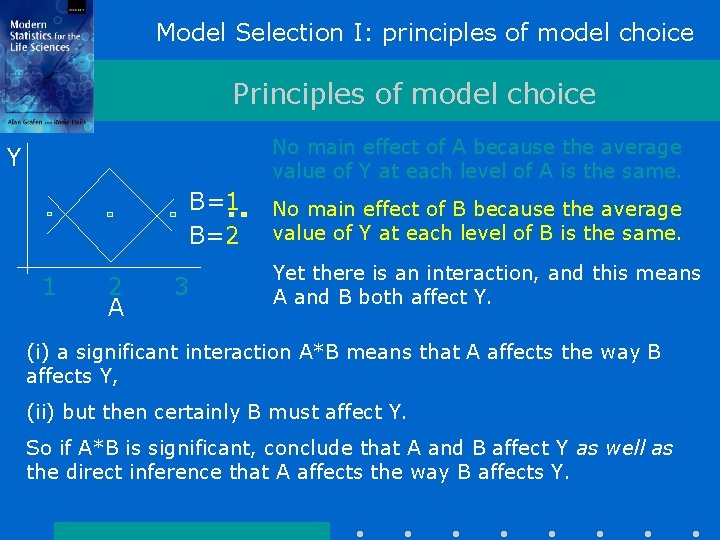
Model Selection I: principles of model choice Principles of model choice No main effect of A because the average value of Y at each level of A is the same. Y B=1 B=2 1 2 A 3 No main effect of B because the average value of Y at each level of B is the same. Yet there is an interaction, and this means A and B both affect Y. (i) a significant interaction A*B means that A affects the way B affects Y, (ii) but then certainly B must affect Y. So if A*B is significant, conclude that A and B affect Y as well as the direct inference that A affects the way B affects Y.
Model Selection I: principles of model choice Principles of model choice • Economy of variables • Multiplicity of p-values • Marginality • Hierarchies must be respected in model formulae • Significance of interactions includes importance of main effects • Do not test main effects with a SS that has been adjusted for the interaction
Model Selection I: principles of model choice Principles of model choice
Model Selection I: principles of model choice Principles of model choice
Model Selection I: principles of model choice Principles of model choice
Model Selection I: principles of model choice Principles of model choice
Model Selection I: principles of model choice Choosing a model
Model Selection I: principles of model choice Choosing a model: polynomials
Model Selection I: principles of model choice Choosing a model: polynomials
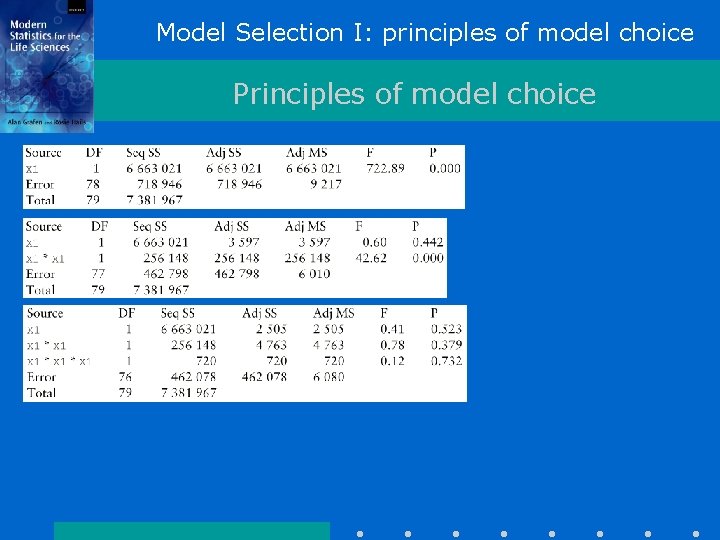
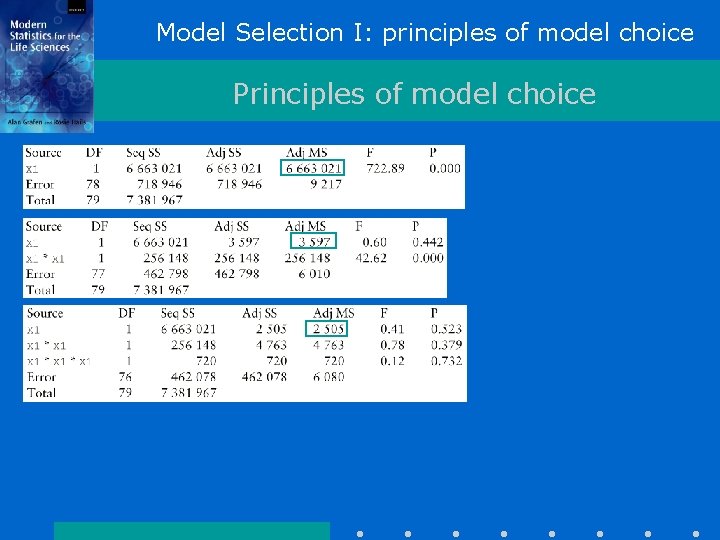
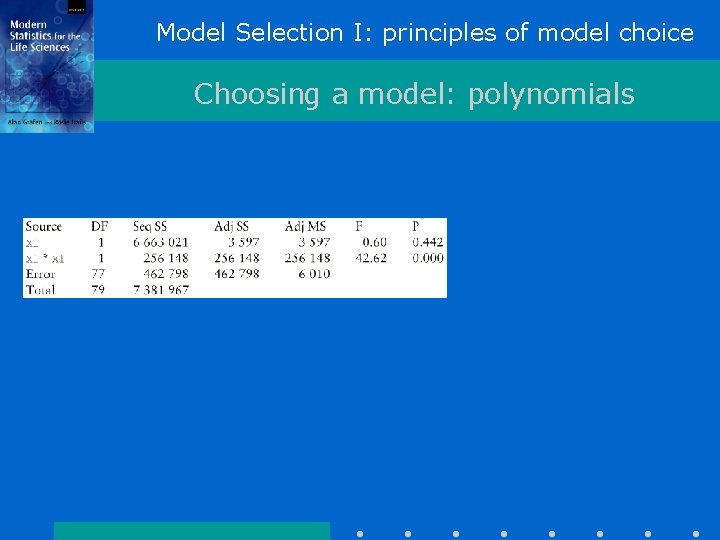
Model Selection I: principles of model choice Choosing a model: polynomials Y 1 = -7. 62 + 3. 189*X 1 + 0. 825*X 12 s = square-root(6010) = 77. 52
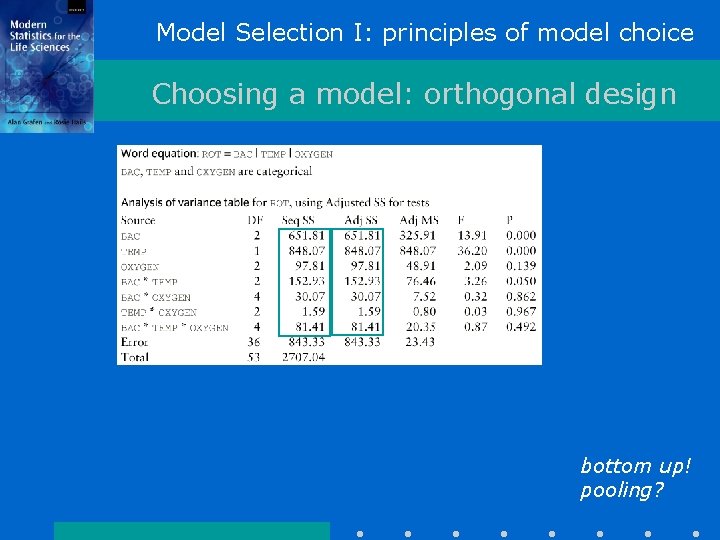
Model Selection I: principles of model choice Choosing a model: orthogonal design
Model Selection I: principles of model choice Choosing a model: orthogonal design bottom up! pooling?
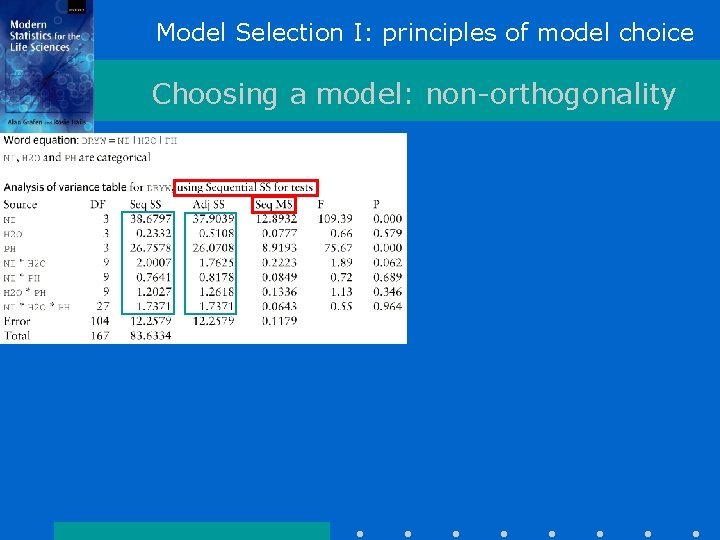
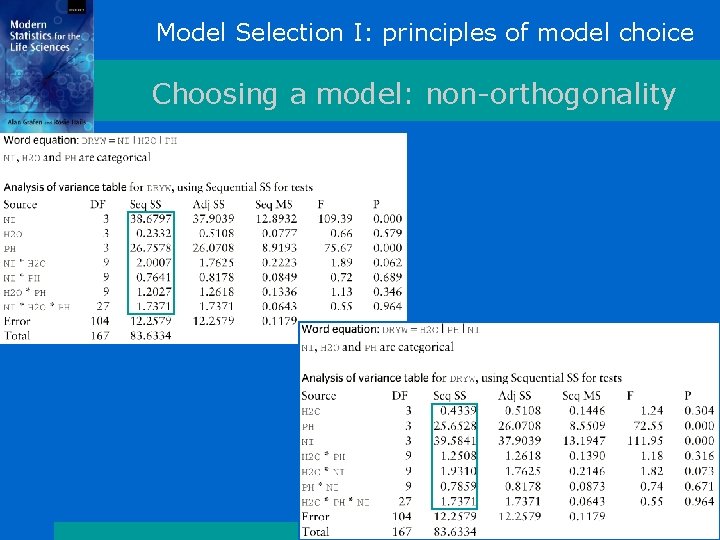
Model Selection I: principles of model choice Choosing a model: non-orthogonality
Model Selection I: principles of model choice Choosing a model: non-orthogonality
Model Selection I: principles of model choice Choosing a model: non-orthogonality
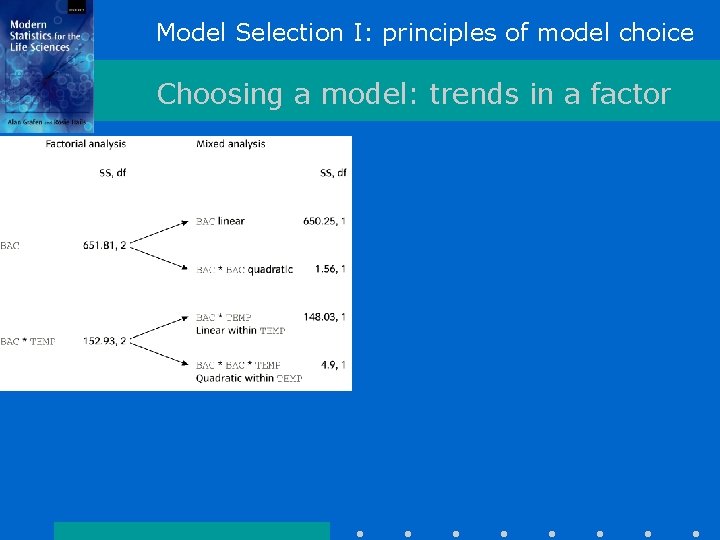
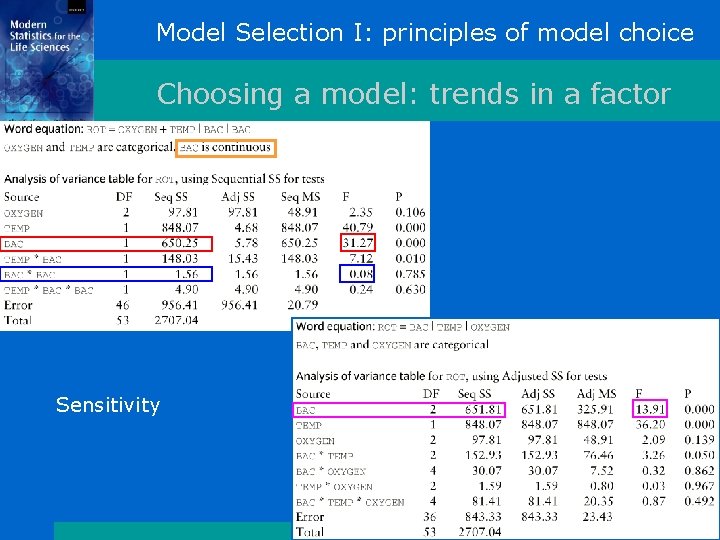
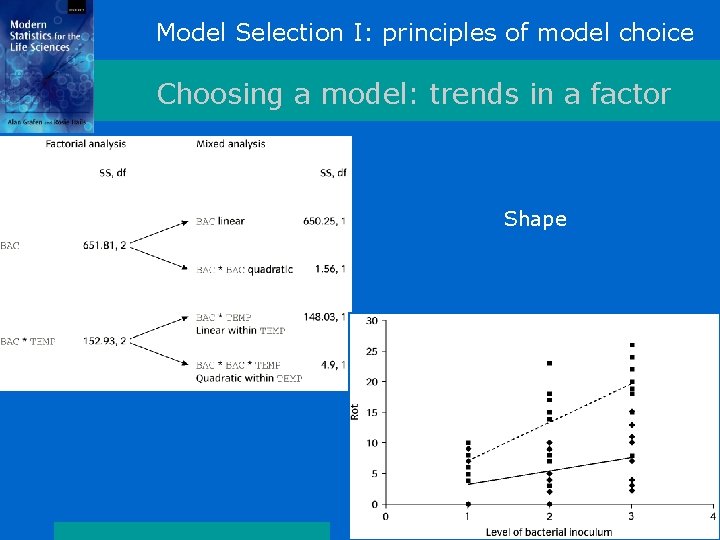
Model Selection I: principles of model choice Choosing a model: trends in a factor - Shape - Sensitivity to consistent effects
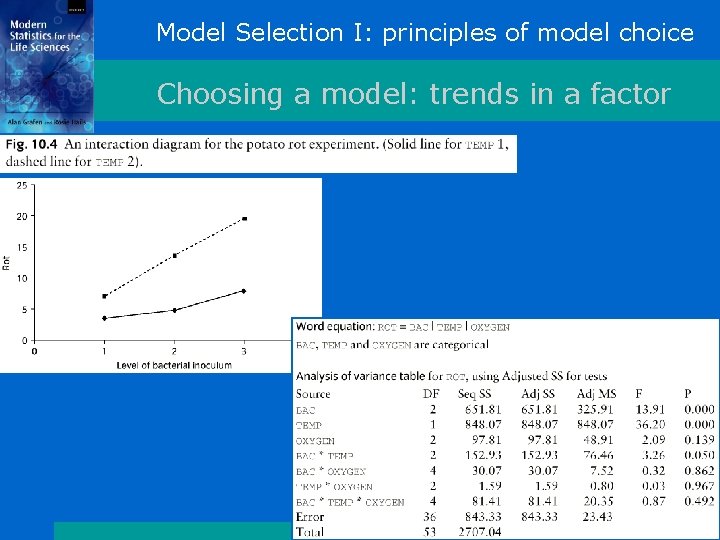
Model Selection I: principles of model choice Choosing a model: trends in a factor
Model Selection I: principles of model choice Choosing a model: trends in a factor
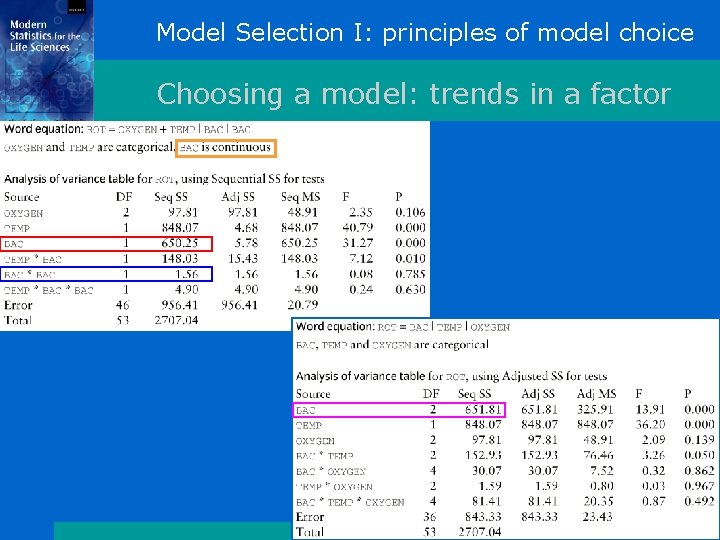
Model Selection I: principles of model choice Choosing a model: trends in a factor
Model Selection I: principles of model choice Choosing a model: trends in a factor Sensitivity
Model Selection I: principles of model choice Choosing a model: trends in a factor Shape
Model Selection I: principles of model choice Last words… • Model choice represents a whole extra layer of sophistication to use of GLM • Very powerful extensions: polynomials • Very important principles: economy, multiplicity • Very important cautions: marginality Model Selection II: datasets with several explanatory variables Read Chapter 11