
QUANTITATIVE METHODS For Fun and Profit I 203
- Slides: 24
QUANTITATIVE METHODS For Fun and Profit I 203 Social and Organizational Issues of Information
Definition of ‘Science’ “an objective, logical , and systematic method of analysis of phenomena, devised to permit the accumulation of reliable knowledge” (Lastrucci 1963: 6)
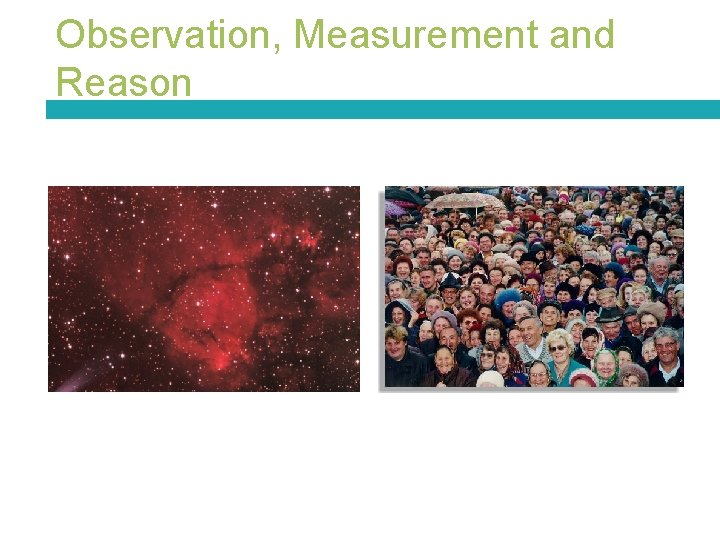
Observation, Measurement and Reason
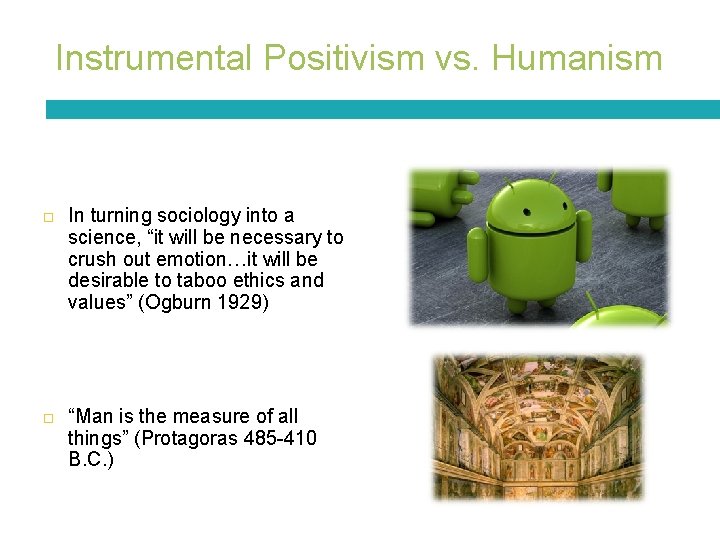
Instrumental Positivism vs. Humanism In turning sociology into a science, “it will be necessary to crush out emotion…it will be desirable to taboo ethics and values” (Ogburn 1929) “Man is the measure of all things” (Protagoras 485 -410 B. C. )
That other popular argument… Quantitative vs. Qualitative "There's no such thing as qualitative data. Everything is either 1 or 0" - Fred Kerlinger "All research ultimately has a qualitative grounding" - Donald Campbell
A Problem… Yoogle. com wants to better understand the concept of ‘credibility’ in information. In particular, they want to know more about how their users make judgments about credibility in information. 6
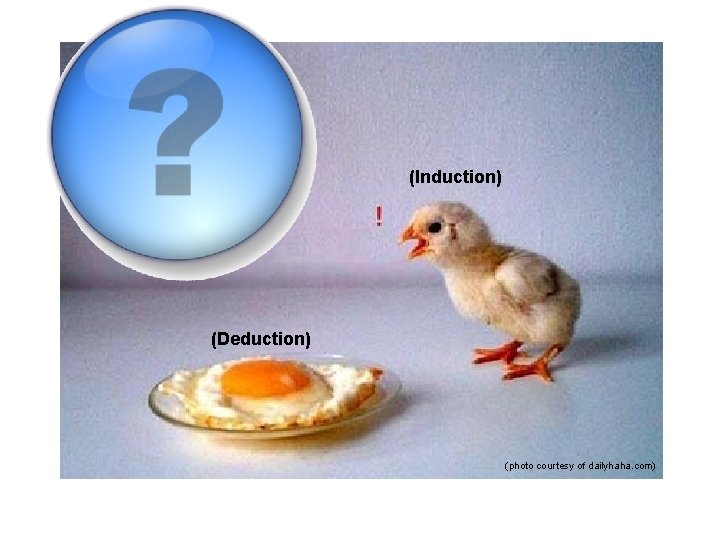
(Induction) (Deduction) (photo courtesy of dailyhaha. com) 7
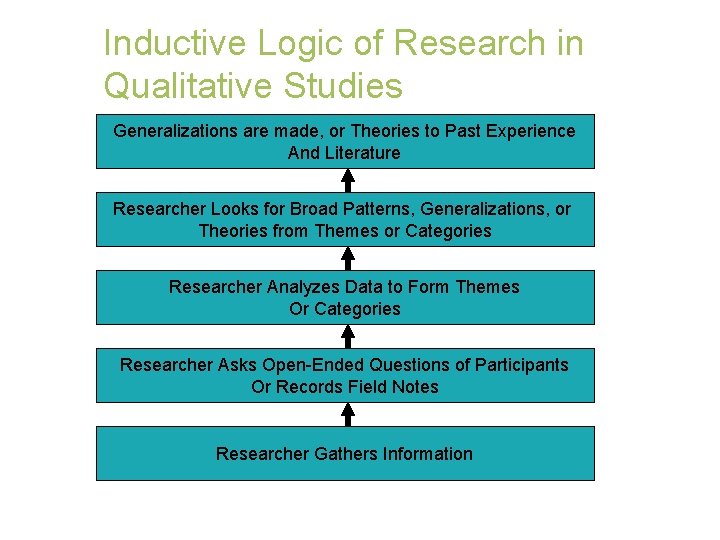
Inductive Logic of Research in Qualitative Studies Generalizations are made, or Theories to Past Experience And Literature Researcher Looks for Broad Patterns, Generalizations, or Theories from Themes or Categories Researcher Analyzes Data to Form Themes Or Categories Researcher Asks Open-Ended Questions of Participants Or Records Field Notes Researcher Gathers Information 8
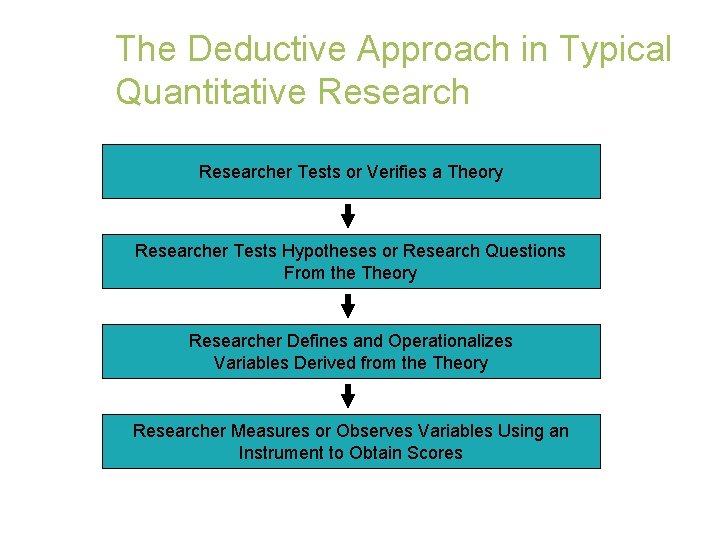
The Deductive Approach in Typical Quantitative Researcher Tests or Verifies a Theory Researcher Tests Hypotheses or Research Questions From the Theory Researcher Defines and Operationalizes Variables Derived from the Theory Researcher Measures or Observes Variables Using an Instrument to Obtain Scores 9
If our goal is to find support (or not) for a theory or hypothesis, how do we establish such a relationship? 10
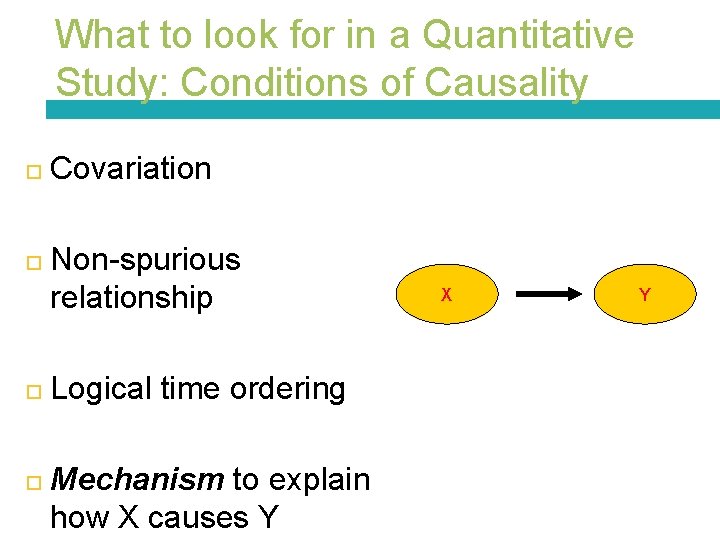
What to look for in a Quantitative Study: Conditions of Causality Covariation Non-spurious relationship X Y Logical time ordering Mechanism to explain how X causes Y 11
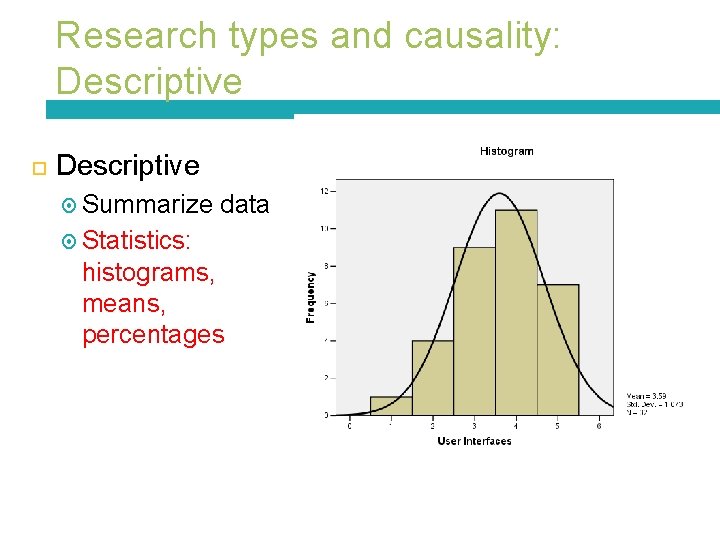
Research types and causality: Descriptive Summarize data Statistics: histograms, means, percentages 12
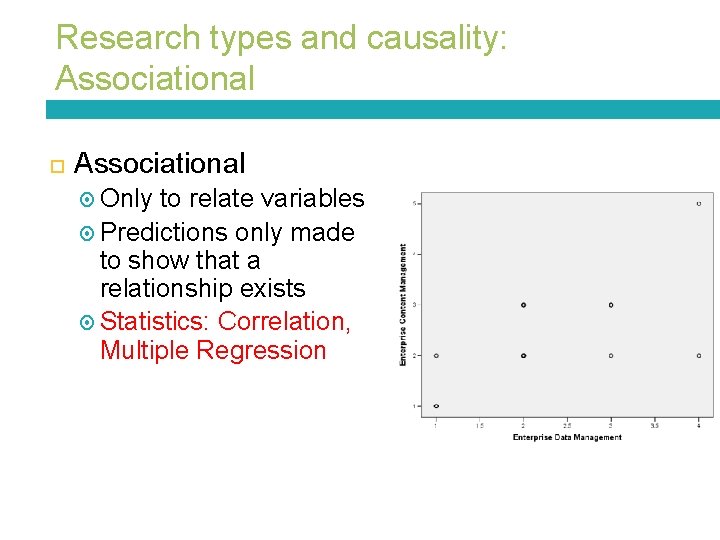
Research types and causality: Associational Only to relate variables Predictions only made to show that a relationship exists Statistics: Correlation, Multiple Regression 13
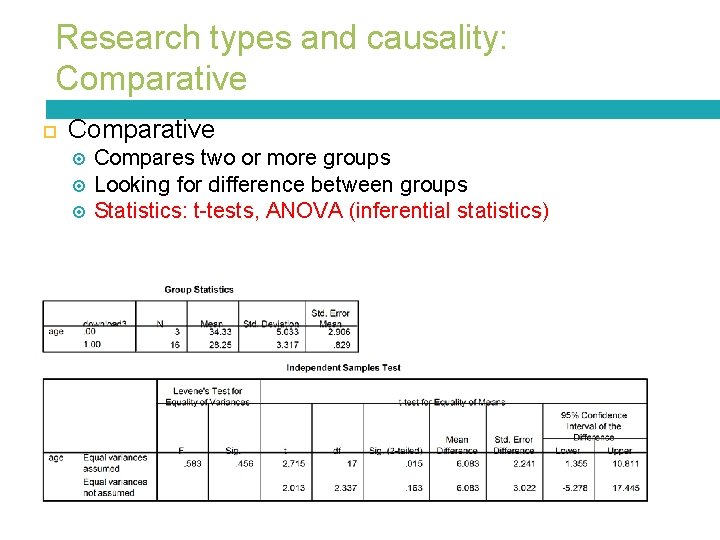
Research types and causality: Comparative Compares two or more groups Looking for difference between groups Statistics: t-tests, ANOVA (inferential statistics) 14
Di. Maggio and Bonikowski 2008 reading for today… Starts with a clear statement of a research problem that is not resolved: Digital Divide research presumes that adults who do not use the Internet are economically disadvantaged. They want to (1) go beyond typical crosssectional analyses, (2) control for as many individual factors as possible, and (3) distinguish between types of internet use rather than lumping them all together as a single concept.
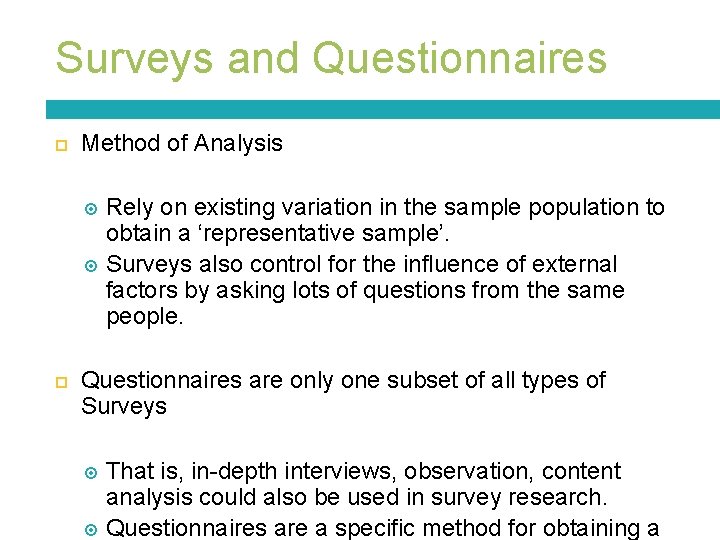
Common Quantitative Research Methods Questionnaires, Surveys Experiments and Experimental Designs 16
Surveys and Questionnaires Method of Analysis Rely on existing variation in the sample population to obtain a ‘representative sample’. Surveys also control for the influence of external factors by asking lots of questions from the same people. Questionnaires are only one subset of all types of Surveys That is, in-depth interviews, observation, content analysis could also be used in survey research. 17 Questionnaires are a specific method for obtaining a
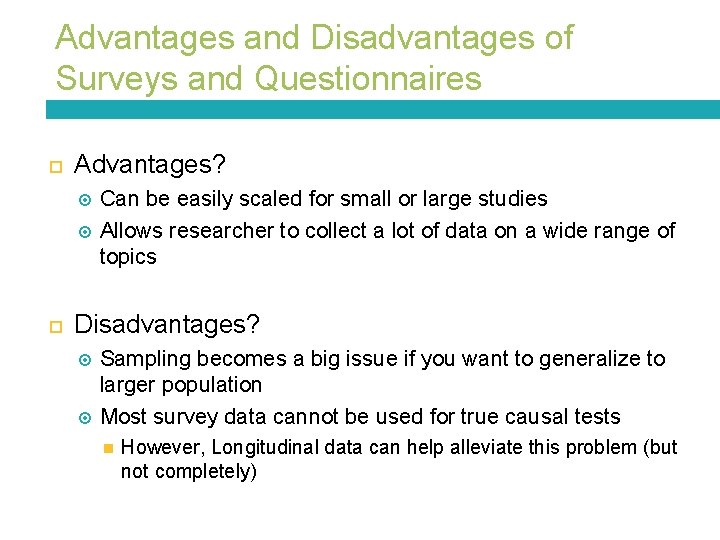
Advantages and Disadvantages of Surveys and Questionnaires Advantages? Can be easily scaled for small or large studies Allows researcher to collect a lot of data on a wide range of topics Disadvantages? Sampling becomes a big issue if you want to generalize to larger population Most survey data cannot be used for true causal tests However, Longitudinal data can help alleviate this problem (but not completely) 18
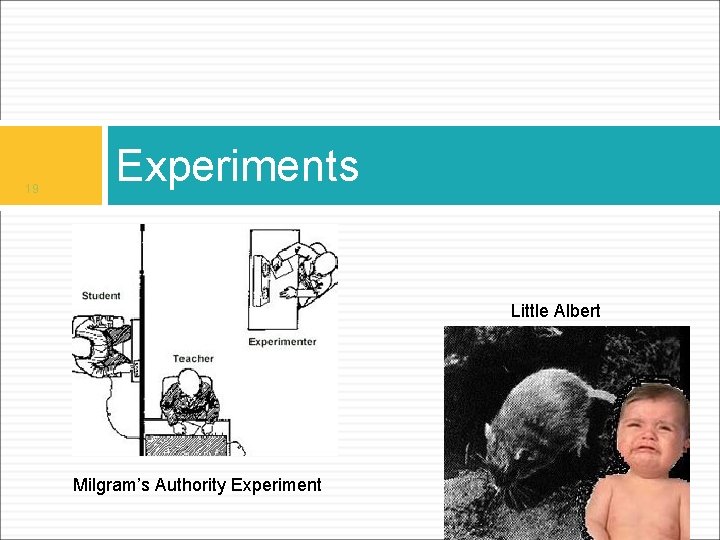
19 Experiments Little Albert Milgram’s Authority Experiment
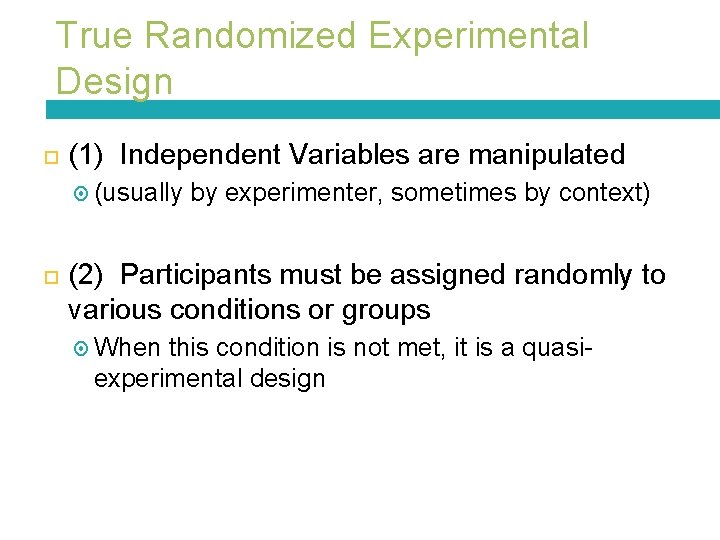
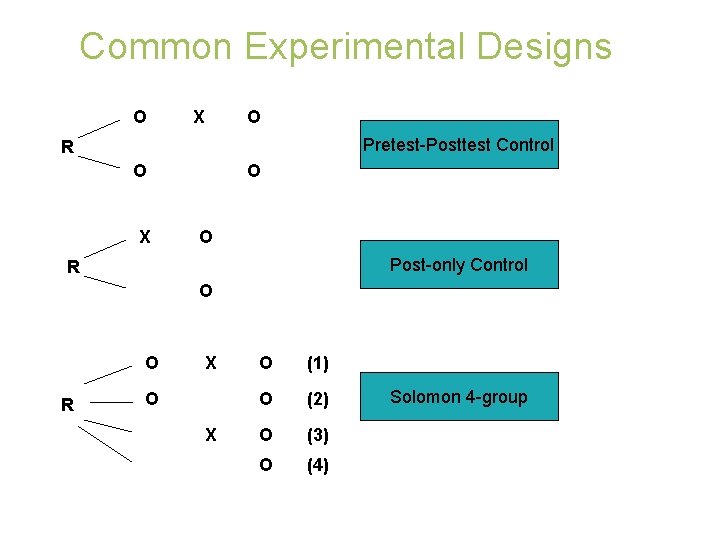
True Randomized Experimental Design (1) Independent Variables are manipulated (usually by experimenter, sometimes by context) (2) Participants must be assigned randomly to various conditions or groups When this condition is not met, it is a quasiexperimental design 20
Common Experimental Designs O X O Pretest-Posttest Control R O X O O Post-only Control R O O R X O (1) O (2) O (3) O (4) Solomon 4 -group 21
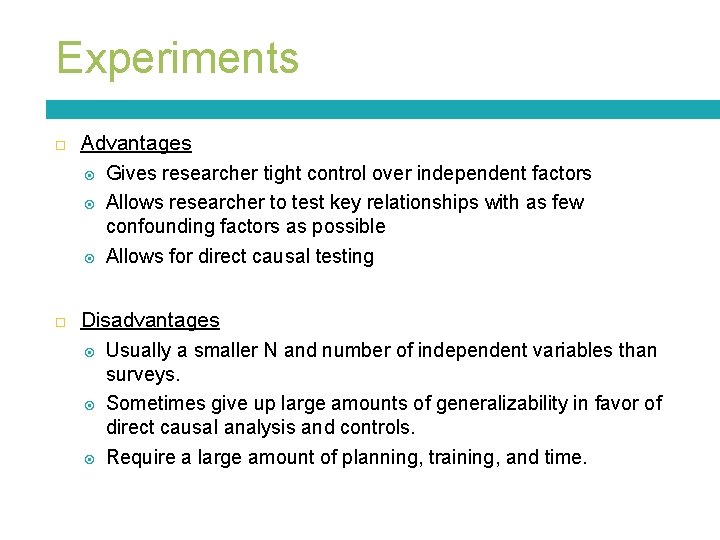
Experiments Advantages Gives researcher tight control over independent factors Allows researcher to test key relationships with as few confounding factors as possible Allows for direct causal testing Disadvantages Usually a smaller N and number of independent variables than surveys. Sometimes give up large amounts of generalizability in favor of direct causal analysis and controls. Require a large amount of planning, training, and time. 22
Making Sense of Quantitative Studies Think about the sample, who does this represent? Think about the validity and reliability of the measures. Think about the generalizability of the study. Think about whether the analysis is claiming to be a test of causality (what was the method? How is causality established)?
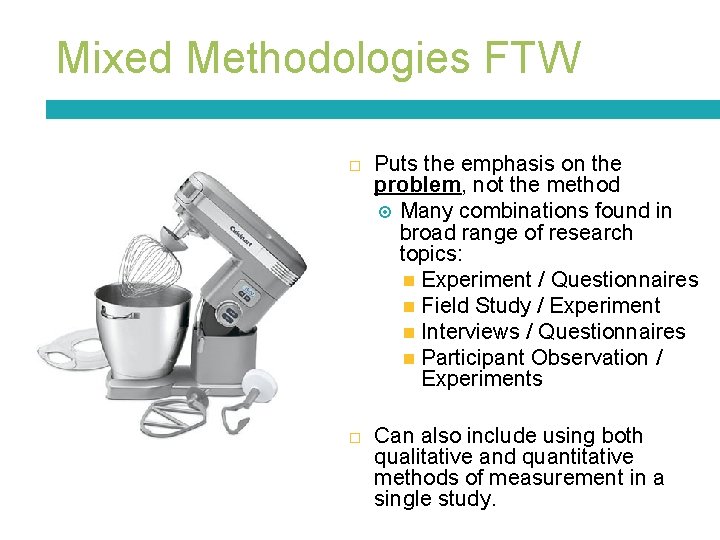
Mixed Methodologies FTW Puts the emphasis on the problem, not the method Many combinations found in broad range of research topics: Experiment / Questionnaires Field Study / Experiment Interviews / Questionnaires Participant Observation / Experiments Can also include using both qualitative and quantitative methods of measurement in a single study.