
Quantitative in vitro to in vivo extrapolation current
- Slides: 24
Quantitative in vitro to in vivo extrapolation: current issues Miyoung Yoon, Ph. D Center for Human Health Assessment The Hamner Institutes for Health Sciences Research Triangle Park, NC Creating a Safer and Healthier World by Advancing the Science and Increasing the Impact of Toxicology
Toxicity Testing in the 21 st Century - New challenges in translation • Use of modern toxicology tools to make better decisions in human safety assessment • Cell-based toxicity assays - predicting biological effects in humans • Computational systems biology pathway modeling – defining the safe exposure level in vitro • Needs to integrate and translate in vitro and in silico results in the context of human safety – ‘What is the dose at which no reasonable likelihood of responses? ’
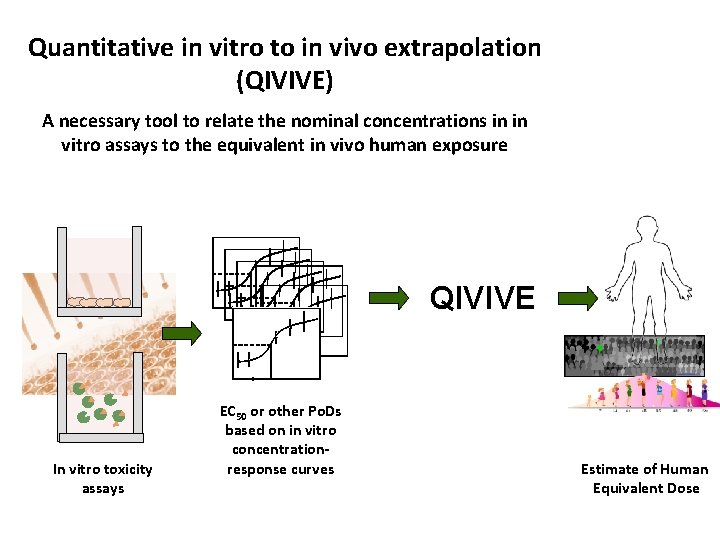
Quantitative in vitro to in vivo extrapolation (QIVIVE) A necessary tool to relate the nominal concentrations in in vitro assays to the equivalent in vivo human exposure QIVIVE In vitro toxicity assays EC 50 or other Po. Ds based on in vitro concentrationresponse curves Estimate of Human Equivalent Dose
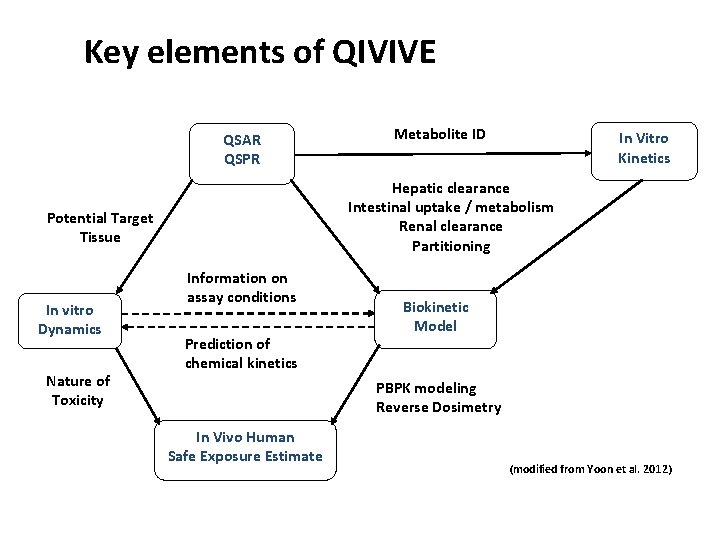
Key elements of QIVIVE QSAR QSPR Nature of Toxicity In Vitro Kinetics Hepatic clearance Intestinal uptake / metabolism Renal clearance Partitioning Potential Target Tissue In vitro Dynamics Metabolite ID Information on assay conditions Prediction of chemical kinetics Biokinetic Model PBPK modeling Reverse Dosimetry In Vivo Human Safe Exposure Estimate (modified from Yoon et al. 2012)
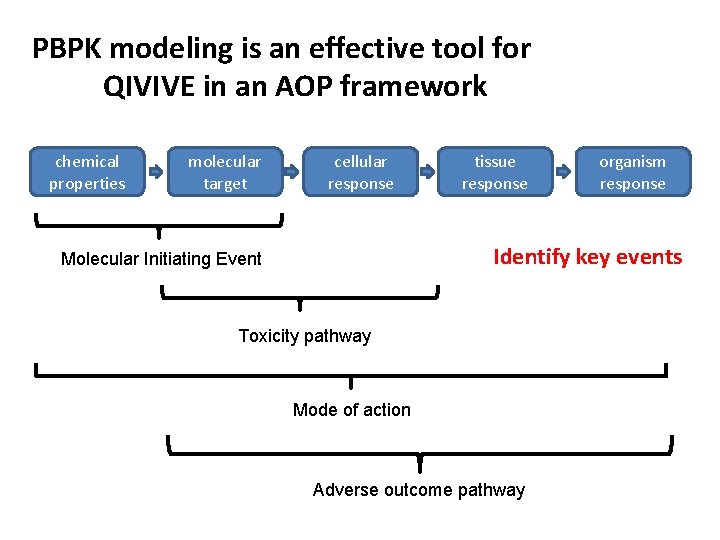
PBPK modeling is an effective tool for QIVIVE in an AOP framework chemical properties molecular target cellular response tissue response organism response Identify key events Molecular Initiating Event Toxicity pathway Mode of action Adverse outcome pathway
PBPK brings a tool to describe concentration-response relationship for early key event at the target in vivo for AOP-based safety assessment • PBPK models provide a physiological platform to incorporate in silico- and in vitro-derived chemical specific parameters to predict in vivo absorption, distribution, metabolism and excretion • IVIVE-PBPK modeling can be used in human safety assessment • to predict the in vivo exposure conditions that would produce chemical concentrations in the target tissue equivalent to the concentrations at which effects were observed with in vitro assays of tissue/organ toxicity • to support the identification of potentially susceptible populations associated with age-dependent pharmacokinetics or metabolic polymorphisms
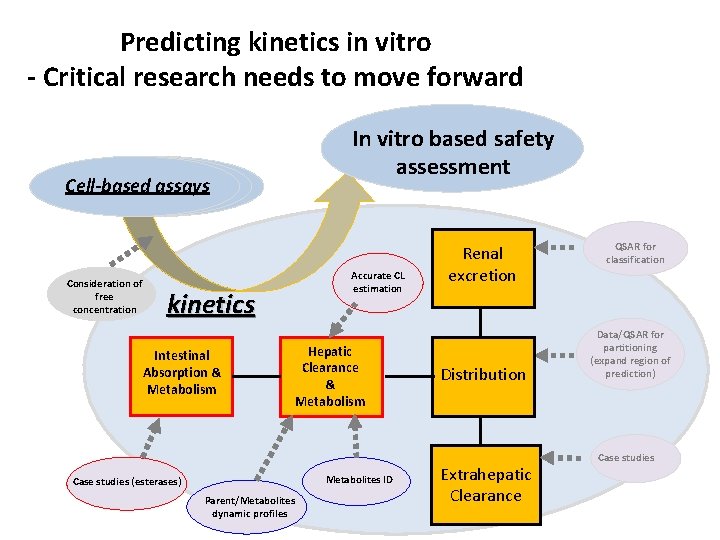
Predicting kinetics in vitro - Critical research needs to move forward Cell-based assays Consideration of free concentration kinetics Intestinal Absorption & Metabolism In vitro based safety assessment Accurate CL estimation Hepatic Clearance & Metabolism Metabolites ID Case studies (esterases) Parent/Metabolites dynamic profiles Renal excretion Distribution Extrahepatic Clearance QSAR for classification Data/QSAR for partitioning (expand region of prediction) Case studies
IVIVE-PBPK Case Study I MOS assessment using in vitro Po. D and IVIVE-PBPK-predicted in vivo Css for parabens
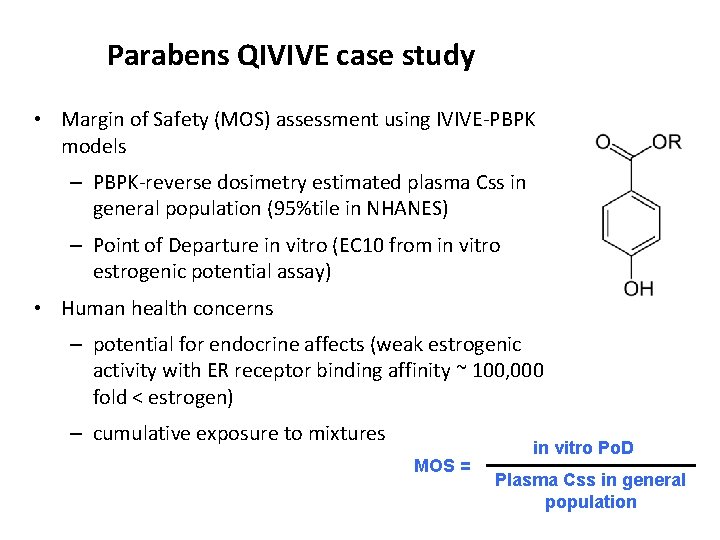
Parabens QIVIVE case study • Margin of Safety (MOS) assessment using IVIVE-PBPK models – PBPK-reverse dosimetry estimated plasma Css in general population (95%tile in NHANES) – Point of Departure in vitro (EC 10 from in vitro estrogenic potential assay) • Human health concerns – potential for endocrine affects (weak estrogenic activity with ER receptor binding affinity ~ 100, 000 fold < estrogen) – cumulative exposure to mixtures MOS = in vitro Po. D Plasma Css in general population
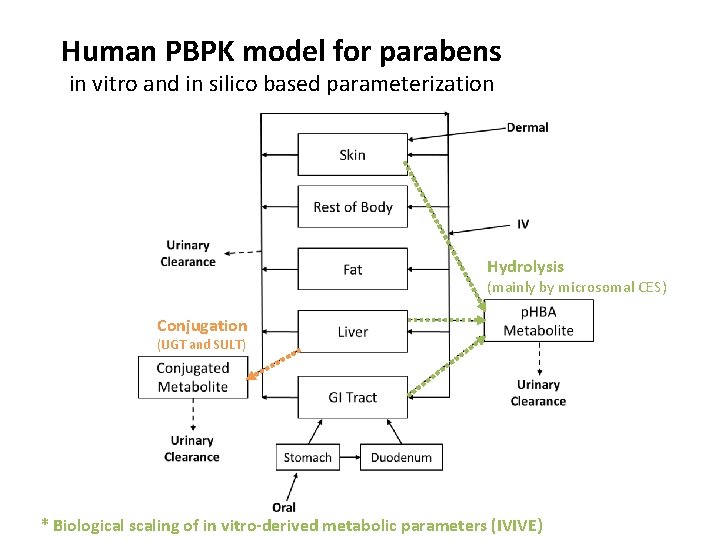
Human PBPK model for parabens in vitro and in silico based parameterization Hydrolysis (mainly by microsomal CES) Conjugation (UGT and SULT) * Biological scaling of in vitro-derived metabolic parameters (IVIVE)
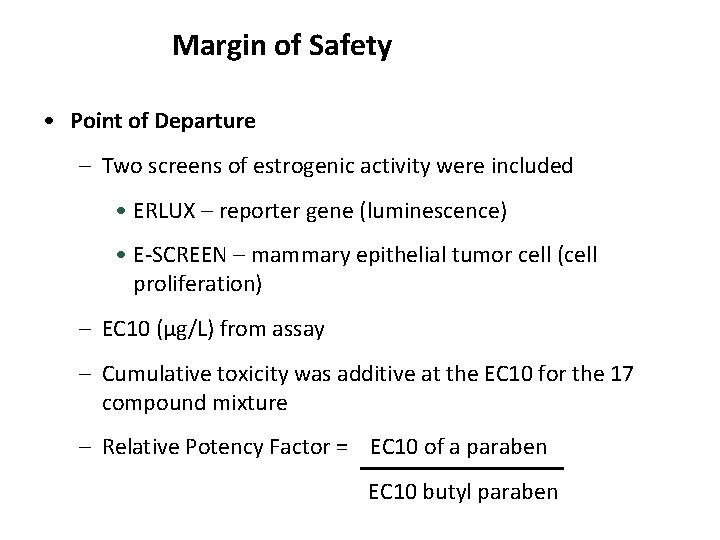
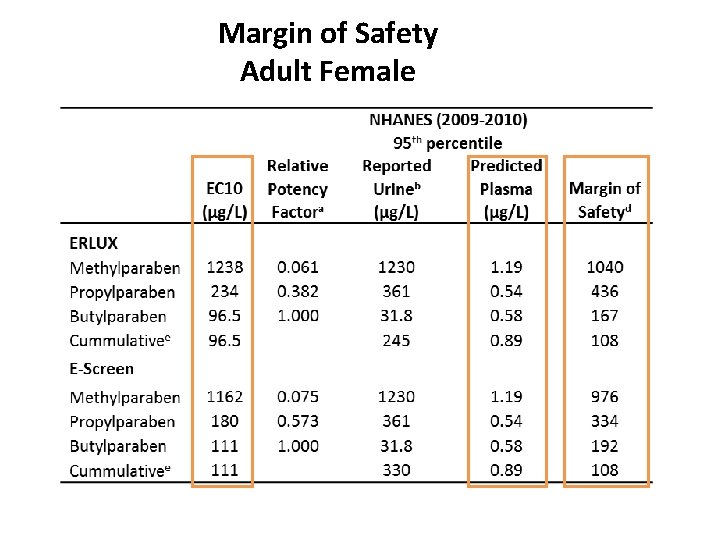
Margin of Safety • Point of Departure – Two screens of estrogenic activity were included • ERLUX – reporter gene (luminescence) • E-SCREEN – mammary epithelial tumor cell (cell proliferation) – EC 10 (µg/L) from assay – Cumulative toxicity was additive at the EC 10 for the 17 compound mixture – Relative Potency Factor = EC 10 of a paraben EC 10 butyl paraben
Margin of Safety Adult Female
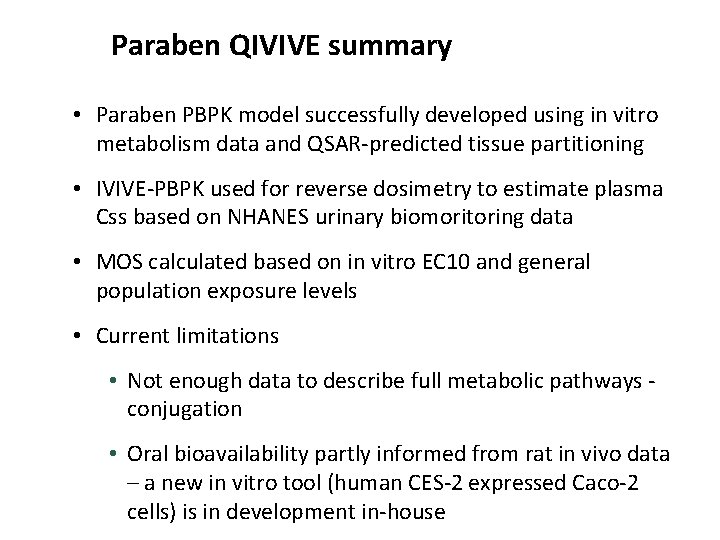
Paraben QIVIVE summary • Paraben PBPK model successfully developed using in vitro metabolism data and QSAR-predicted tissue partitioning • IVIVE-PBPK used for reverse dosimetry to estimate plasma Css based on NHANES urinary biomoritoring data • MOS calculated based on in vitro EC 10 and general population exposure levels • Current limitations • Not enough data to describe full metabolic pathways conjugation • Oral bioavailability partly informed from rat in vivo data – a new in vitro tool (human CES-2 expressed Caco-2 cells) is in development in-house
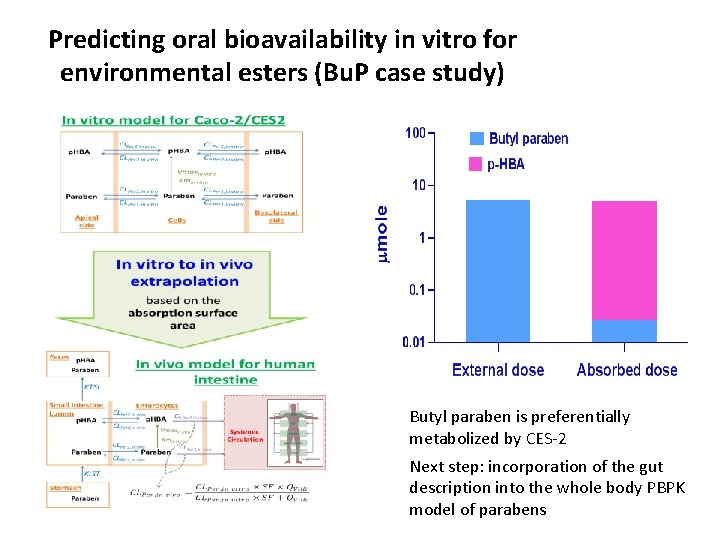
Predicting oral bioavailability in vitro for environmental esters (Bu. P case study) Butyl paraben is preferentially metabolized by CES-2 Next step: incorporation of the gut description into the whole body PBPK model of parabens
IVIVE-PBPK Case Study II Predicting early life target tissue dosimetry for pyrethroids to identify potentially sensitive populations
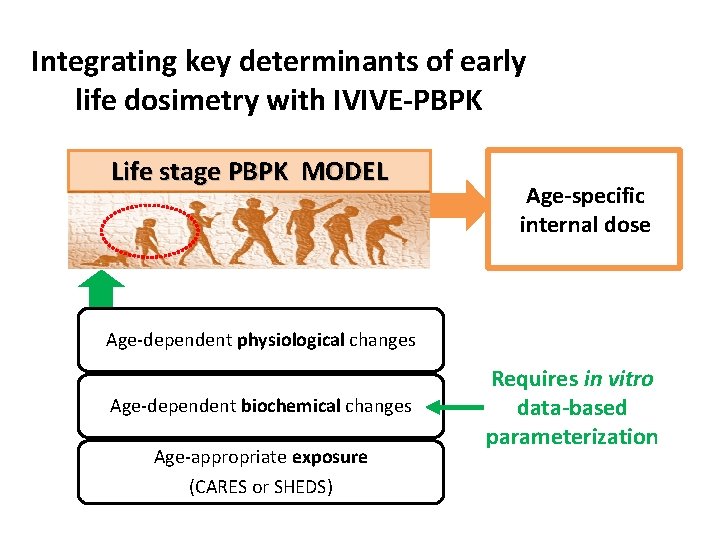
Integrating key determinants of early life dosimetry with IVIVE-PBPK Life stage PBPK MODEL Age-specific internal dose Age-dependent physiological changes Age-dependent biochemical changes Age-appropriate exposure (CARES or SHEDS) Requires in vitro data-based parameterization
Major challenges in IVIVE for human early ages for environmental chemicals • Human in vivo data is necessarily limited (in contrast to pharmaceuticals), leading to a reliance on in vitro data. However: – Pediatric tissues samples are very difficult to obtain and sample quality is generally uncertain – Addressing human variability is challenging • IVIVE with recombinant enzymes in conjunction with enzyme ontogeny of expression is selected as an alternative approach
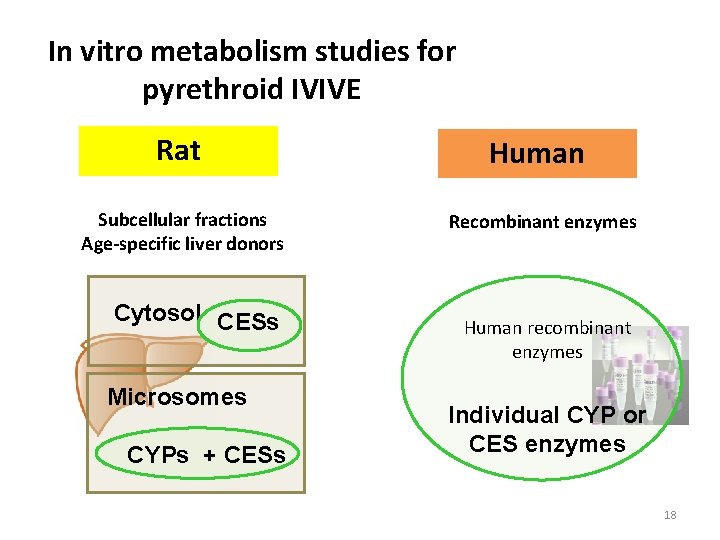
In vitro metabolism studies for pyrethroid IVIVE Rat Human Subcellular fractions Age-specific liver donors Recombinant enzymes Cytosol CESs Microsomes CYPs + CESs Human recombinant enzymes Individual CYP or CES enzymes 18
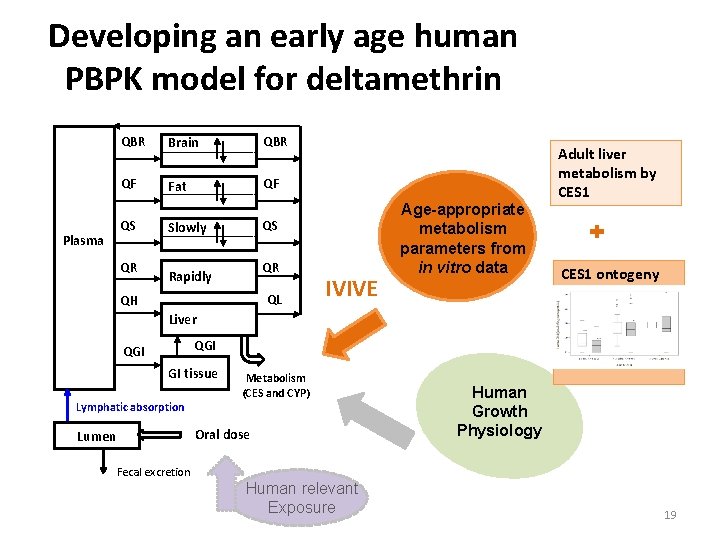
Developing an early age human PBPK model for deltamethrin Plasma QBR Brain QBR QF Fat QF QS QR QS Slowly QR Rapidly QL QH IVIVE Age-appropriate metabolism parameters from in vitro data Adult liver metabolism by CES 1 ontogeny Liver QGI GI tissue Lymphatic absorption Metabolism (CES and CYP) Oral dose Lumen Fecal excretion Human relevant Exposure Human Growth Physiology 19
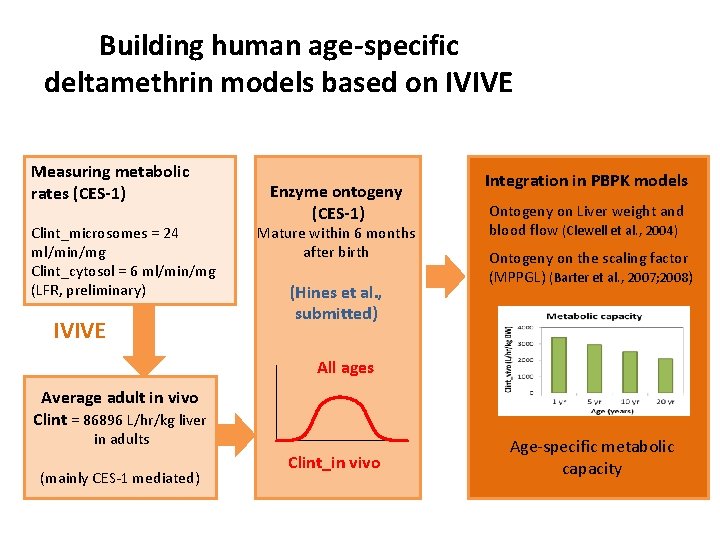
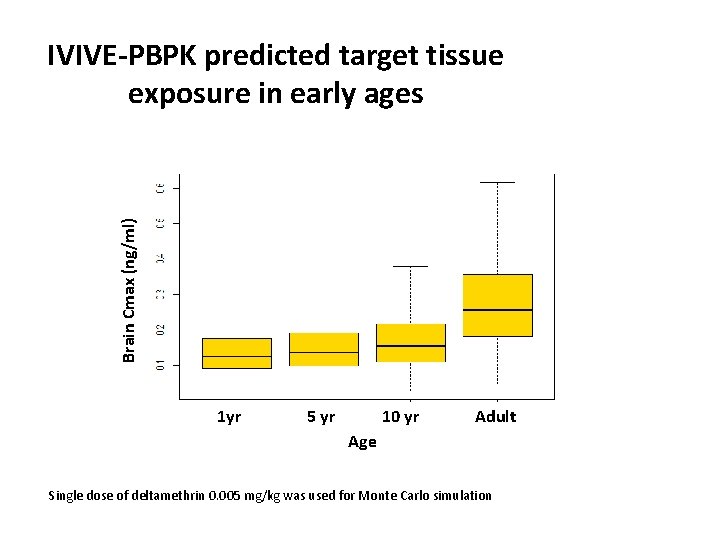
Building human age-specific deltamethrin models based on IVIVE Measuring metabolic rates (CES-1) Clint_microsomes = 24 ml/min/mg Clint_cytosol = 6 ml/min/mg (LFR, preliminary) IVIVE Enzyme ontogeny (CES-1) Mature within 6 months after birth (Hines et al. , submitted) Integration in PBPK models Ontogeny on Liver weight and blood flow (Clewell et al. , 2004) Ontogeny on the scaling factor (MPPGL) (Barter et al. , 2007; 2008) All ages Average adult in vivo Clint = 86896 L/hr/kg liver in adults (mainly CES-1 mediated) Clint_in vivo Age-specific metabolic capacity
Brain Cmax (ng/ml) IVIVE-PBPK predicted target tissue exposure in early ages 1 yr 5 yr 10 yr Adult Age Single dose of deltamethrin 0. 005 mg/kg was used for Monte Carlo simulation
Future directions in QIVIVE • Improving in vitro assays to accurately predict – Bioavailability with pre-systemic clearance – Hepatic clearance and in vivo metabolism profiles • Major drawback in current QIVIVE is lack of consideration for metabolite-mediated toxicity – Building database for human metabolism covering a wide range of chemical spaces using in vitro data – To develop predictive in silico tools for human metabolism and metabolites and their potential bioactivity
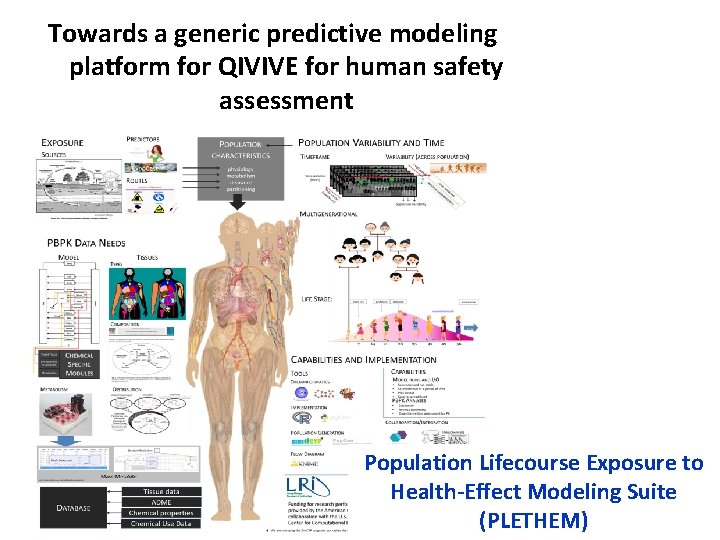
Towards a generic predictive modeling platform for QIVIVE for human safety assessment Population Lifecourse Exposure to Health-Effect Modeling Suite (PLETHEM)
Acknowledgements QIVIVE, Paraben case study, and PLETHEM project • • Jerry Campbell (Hamner) Cory Strope (Hamner) Harvey Clewell (Hamner) Funded by ACC-LRI Pyrethroids IVIVE Huali Wu (Hamner) Harvey Clewell (Hamner) Brian G. Lake Lab (LFR) James Bruckner Lab (UGa) Gail Mc. Carver/Ron Hines Lab (Medical College of Wisconsin) • Thomas Osimitz (Science Strategies, LLC) • Funded by the Council for Advancement of Pyrethroid Human Risk Assessment (CAPHRA) • • •