
Quantitative Determination of Lineshape Parameters from Velocity Modulation
- Slides: 20
Quantitative Determination of Lineshape Parameters from Velocity Modulation Spectroscopy James N. Hodges TE 05 June 21, 2016
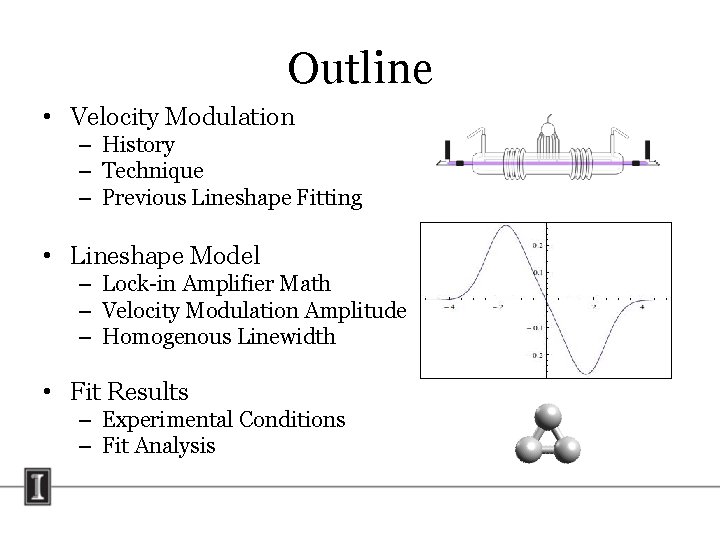
Outline • Velocity Modulation – History – Technique – Previous Lineshape Fitting • Lineshape Model – Lock-in Amplifier Math – Velocity Modulation Amplitude – Homogenous Linewidth • Fit Results – Experimental Conditions – Fit Analysis
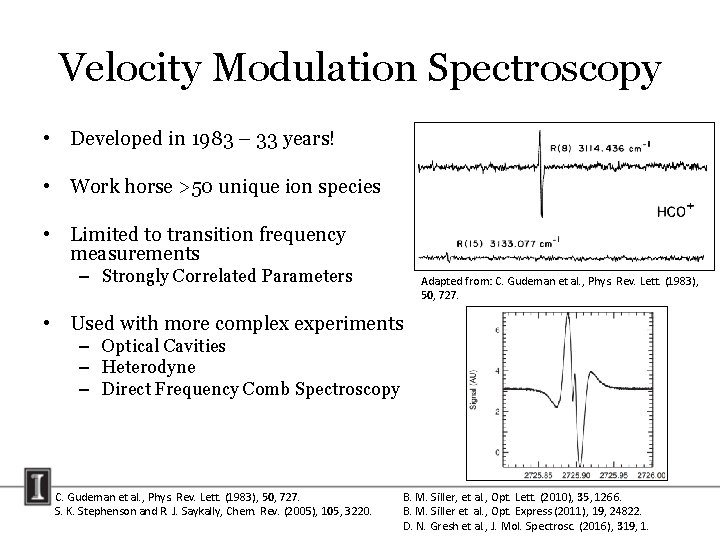
Velocity Modulation Spectroscopy • Developed in 1983 – 33 years! • Work horse >50 unique ion species • Limited to transition frequency measurements – Strongly Correlated Parameters Adapted from: C. Gudeman et al. , Phys. Rev. Lett. (1983), 50, 727. • Used with more complex experiments – Optical Cavities – Heterodyne – Direct Frequency Comb Spectroscopy C. Gudeman et al. , Phys. Rev. Lett. (1983), 50, 727. S. K. Stephenson and R. J. Saykally, Chem. Rev. (2005), 105, 3220. B. M. Siller, et al. , Opt. Lett. (2010), 35, 1266. B. M. Siller et al. , Opt. Express (2011), 19, 24822. D. N. Gresh et al. , J. Mol. Spectrosc. (2016), 319, 1.
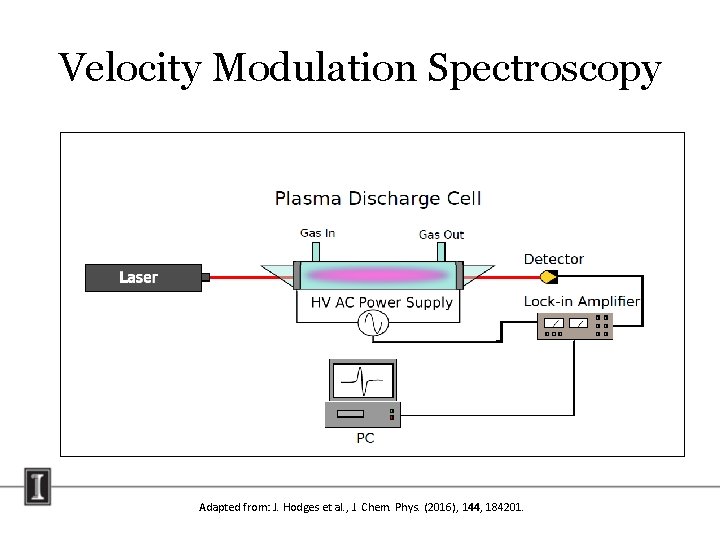
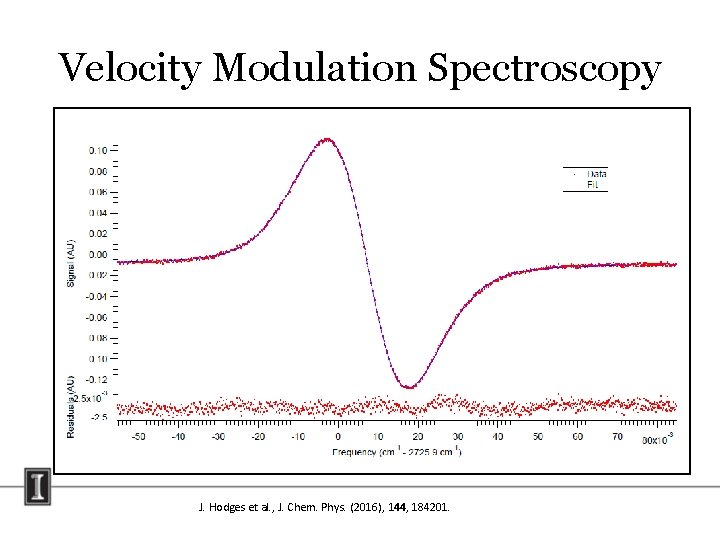
Velocity Modulation Spectroscopy Adapted from: J. Hodges et al. , J. Chem. Phys. (2016), 144, 184201.
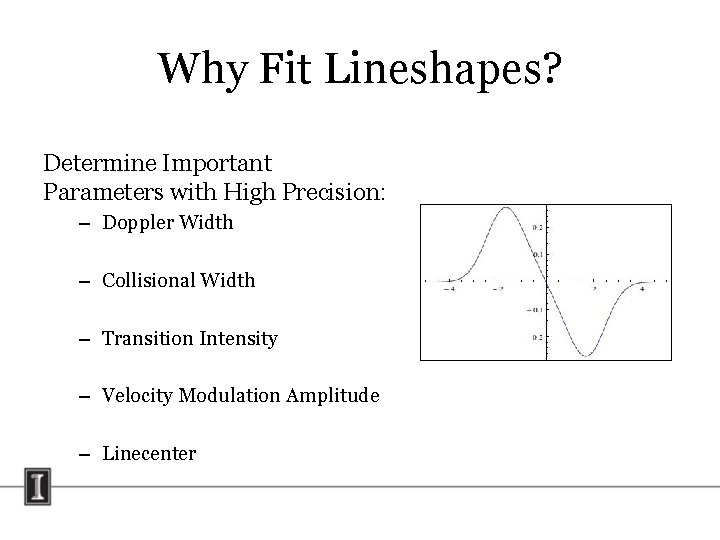
Why Fit Lineshapes? Determine Important Parameters with High Precision: – Doppler Width – Collisional Width – Transition Intensity – Velocity Modulation Amplitude – Linecenter
Integrated Fitting Approach Integrated lineshapes of Ar. H+ and Ar. D+ and fit to two Voigt profiles. S. Civiš. Chem. Phys. (1994), 186, 63 -76.
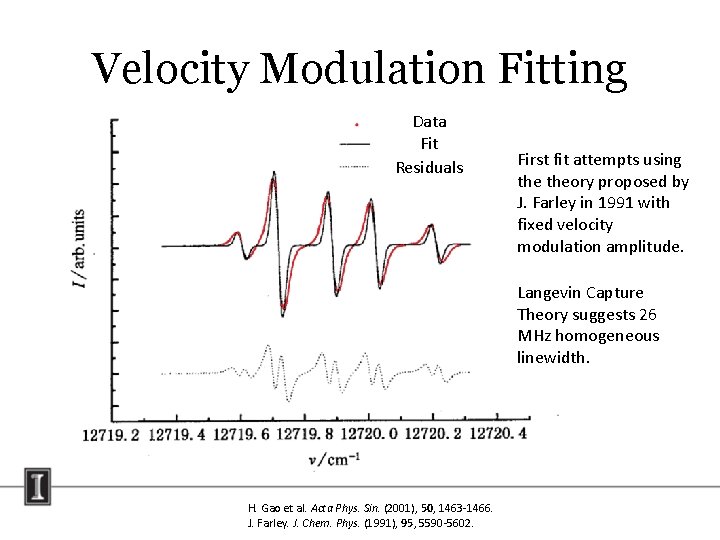
Velocity Modulation Fitting Data Fit Residuals First fit attempts using theory proposed by J. Farley in 1991 with fixed velocity modulation amplitude. Langevin Capture Theory suggests 26 MHz homogeneous linewidth. H. Gao et al. Acta Phys. Sin. (2001), 50, 1463 -1466. J. Farley. J. Chem. Phys. (1991), 95, 5590 -5602.
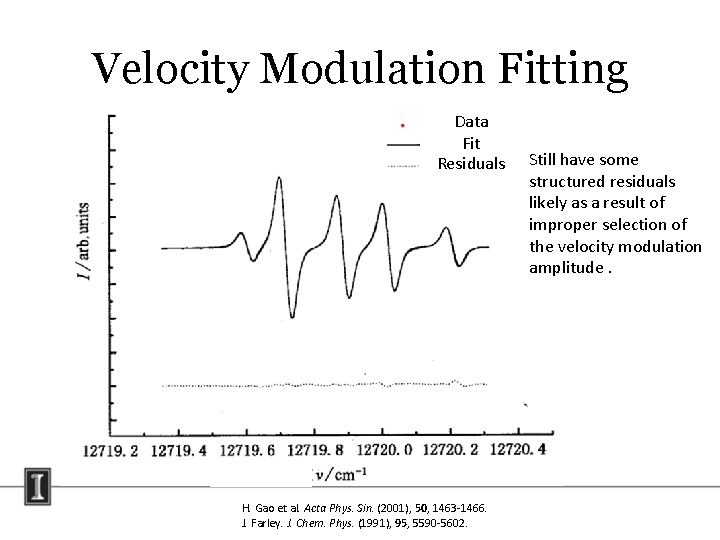
Velocity Modulation Fitting Data Fit Residuals H. Gao et al. Acta Phys. Sin. (2001), 50, 1463 -1466. J. Farley. J. Chem. Phys. (1991), 95, 5590 -5602. Still have some structured residuals likely as a result of improper selection of the velocity modulation amplitude.
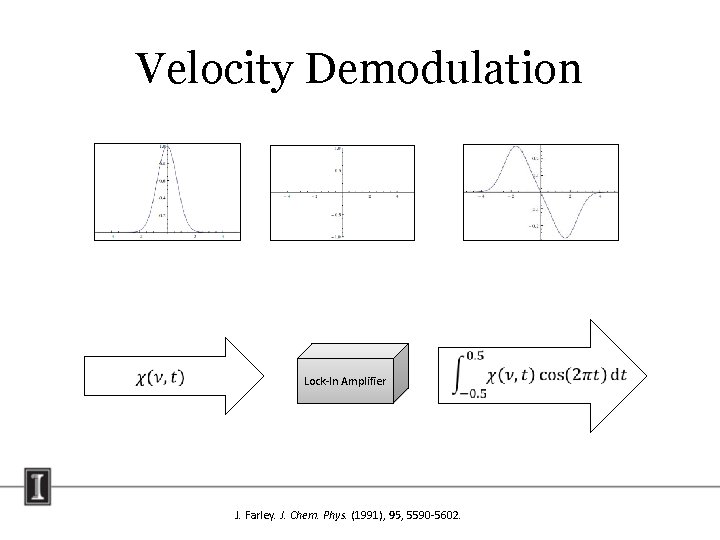
Velocity Demodulation Lock-In Amplifier J. Farley. J. Chem. Phys. (1991), 95, 5590 -5602.
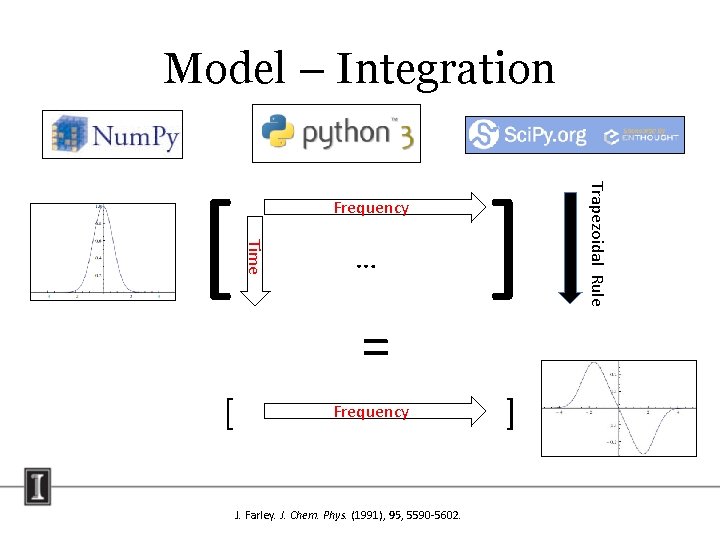
Model – Integration … = Frequency J. Farley. J. Chem. Phys. (1991), 95, 5590 -5602. ] ] Trapezoidal Rule [ Time [ Frequency
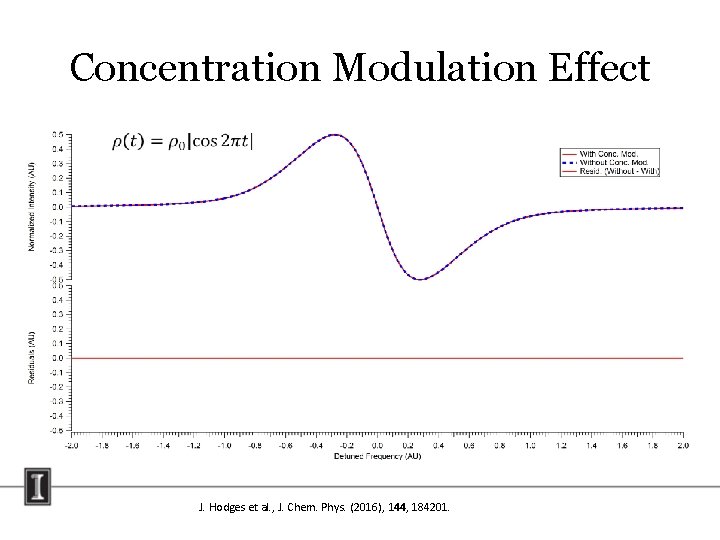
Concentration Modulation Effect J. Hodges et al. , J. Chem. Phys. (2016), 144, 184201.
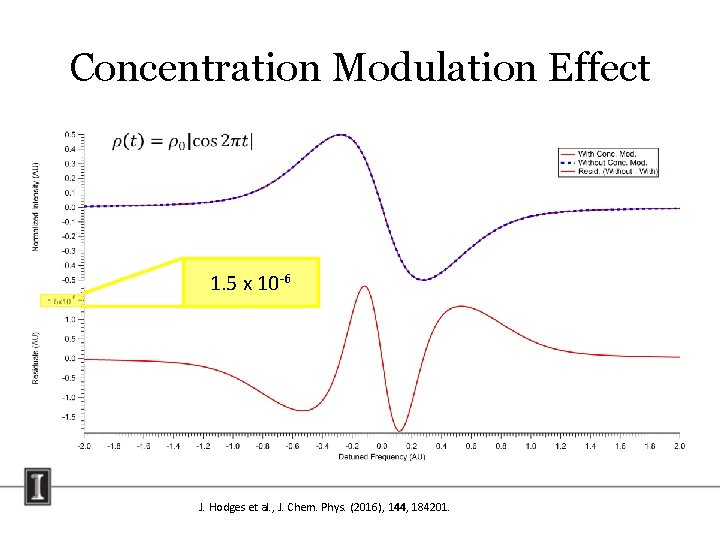
Concentration Modulation Effect 1. 5 x 10 -6 J. Hodges et al. , J. Chem. Phys. (2016), 144, 184201.
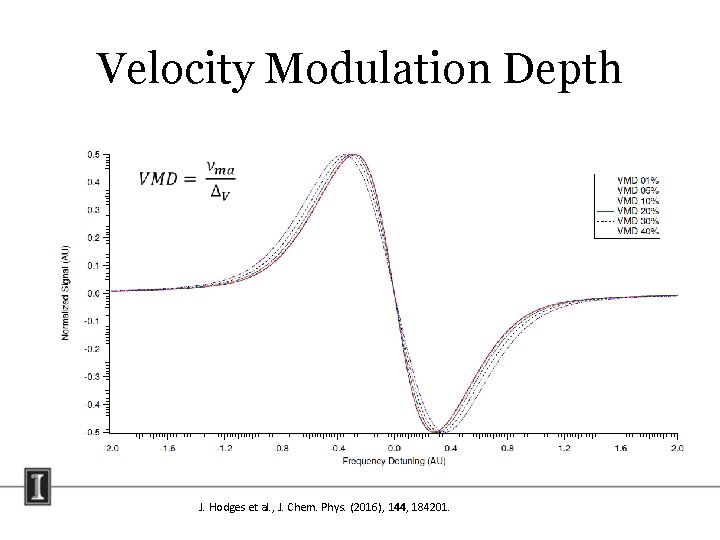
Velocity Modulation Depth J. Hodges et al. , J. Chem. Phys. (2016), 144, 184201.
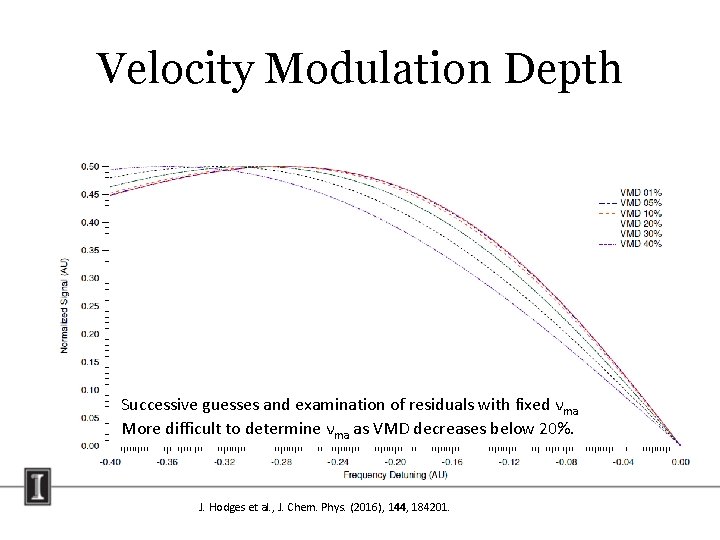
Velocity Modulation Depth Successive guesses and examination of residuals with fixed νma More difficult to determine νma as VMD decreases below 20%. J. Hodges et al. , J. Chem. Phys. (2016), 144, 184201.
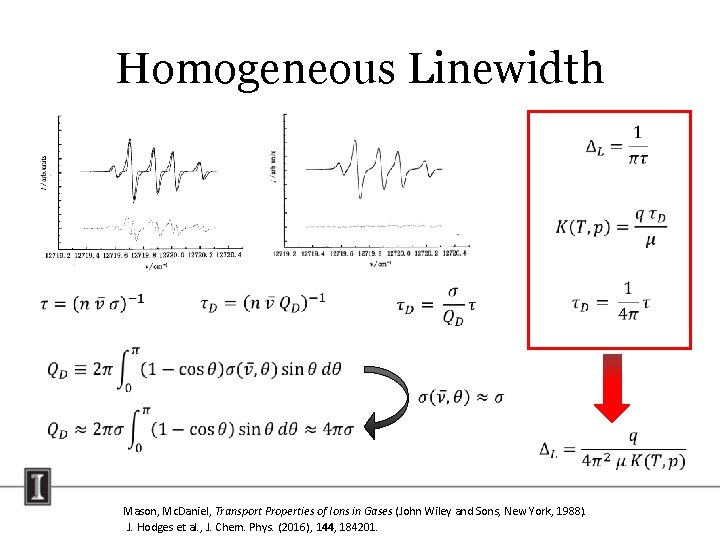
Homogeneous Linewidth Mason, Mc. Daniel, Transport Properties of Ions in Gases (John Wiley and Sons, New York, 1988). J. Hodges et al. , J. Chem. Phys. (2016), 144, 184201.
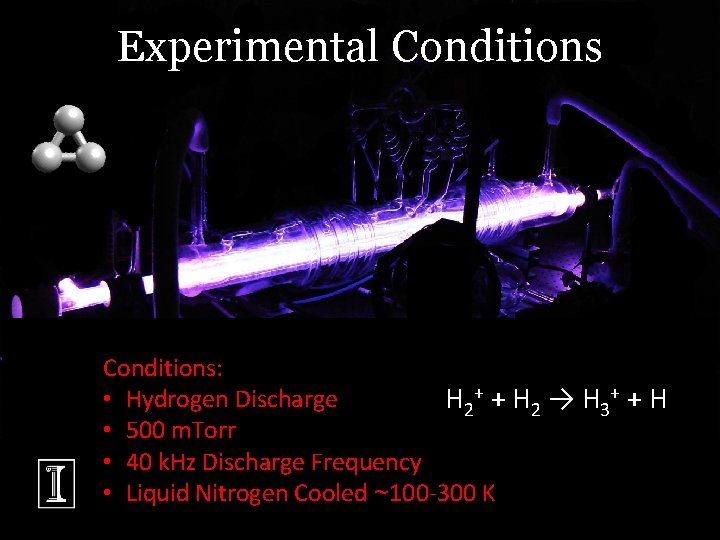
Experimental Conditions: • Hydrogen Discharge H 2 + + H 2 → H 3 + + H • 500 m. Torr • 40 k. Hz Discharge Frequency • Liquid Nitrogen Cooled ~100 -300 K
Velocity Modulation Spectroscopy J. Hodges et al. , J. Chem. Phys. (2016), 144, 184201.
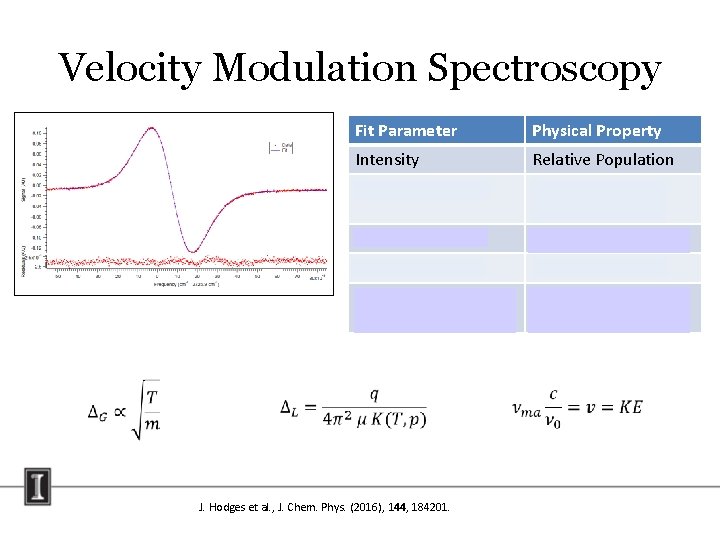
Velocity Modulation Spectroscopy Fit Parameter Physical Property Intensity Relative Population Doppler Width T = 222(11) K Δm = 0. 03 amu Collisional Width K 0 = 12. 0(1. 5) cm 2/Vs Linecenter sub-MHz Velocity Modulation Amplitude vrms = 583(16) m/s Erms = 4. 3(5) V/cm J. Hodges et al. , J. Chem. Phys. (2016), 144, 184201.
Summary • Velocity Modulation – History – Technique – Previous Lineshape Fitting • Lineshape Model – Lock-in Amplifier Math – Velocity Modulation Amplitude – Homogenous Linewidth • Fit Results – Experimental Conditions – Fit Analysis
Acknowledgements Springborn Fellowship NSF GRF (DGE 11 -44245 FLLW)