
Quantitative Data Collection In Advertising Research Quantitative Data

- Slides: 13
Quantitative Data Collection In Advertising Research
Quantitative Data Collection l Quantitative data can be collected through a specified number of completed interviews ¡ Self-completion method or interviewer administered method
Factors influencing completion method l Study objectives l Topic/issues to be considered l Sampling frame ¡ Criteria associated with sample selection l Projected response rate (number needed) l Time/Budget available
Common Interviewer Administered Methods l Face to Face ¡ Street interviews ¡ Shopping Center Intercepts ¡ In home interviews ¡ Workplace interviews
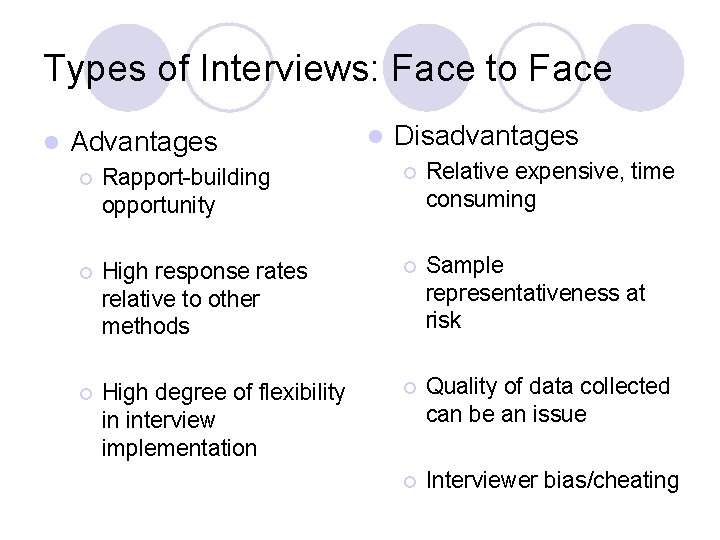
Types of Interviews: Face to Face l Advantages l Disadvantages ¡ Rapport-building opportunity ¡ Relative expensive, time consuming ¡ High response rates relative to other methods ¡ Sample representativeness at risk ¡ High degree of flexibility in interview implementation ¡ Quality of data collected can be an issue ¡ Interviewer bias/cheating
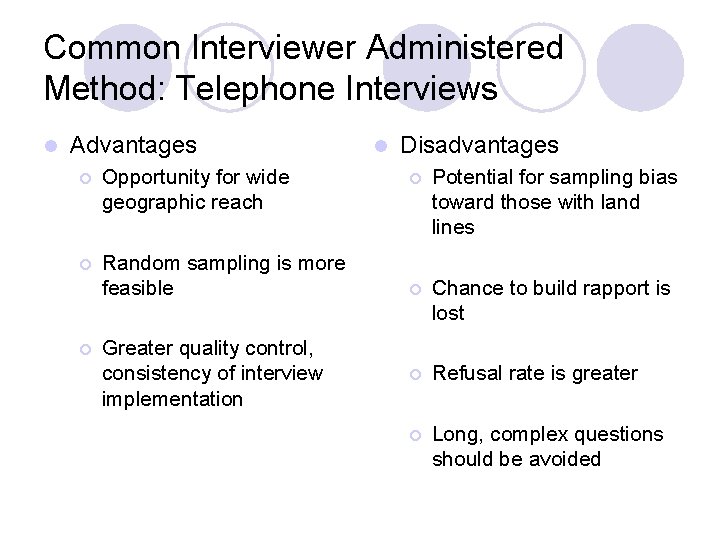
Common Interviewer Administered Method: Telephone Interviews l Advantages ¡ Opportunity for wide geographic reach ¡ Random sampling is more feasible ¡ Greater quality control, consistency of interview implementation l Disadvantages ¡ Potential for sampling bias toward those with land lines ¡ Chance to build rapport is lost ¡ Refusal rate is greater ¡ Long, complex questions should be avoided
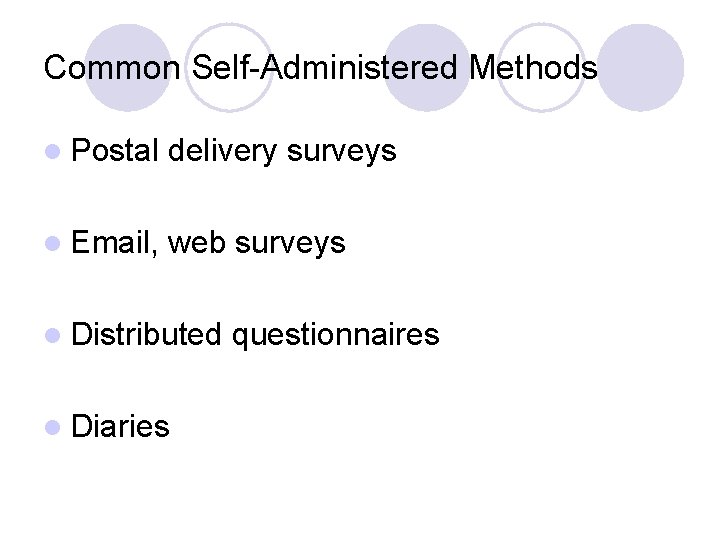
Common Self-Administered Methods l Postal delivery surveys l Email, web surveys l Distributed l Diaries questionnaires
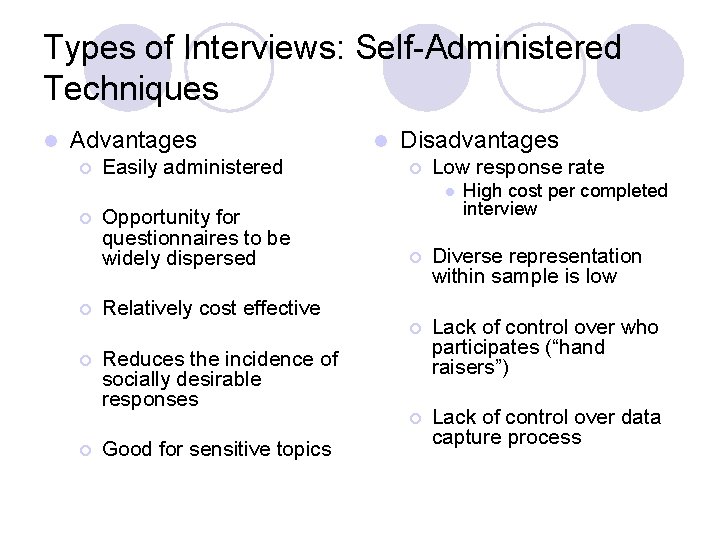
Types of Interviews: Self-Administered Techniques l Advantages ¡ Easily administered l Disadvantages ¡ Low response rate l ¡ ¡ Opportunity for questionnaires to be widely dispersed ¡ Diverse representation within sample is low ¡ Lack of control over who participates (“hand raisers”) ¡ Lack of control over data capture process Relatively cost effective Reduces the incidence of socially desirable responses Good for sensitive topics High cost per completed interview
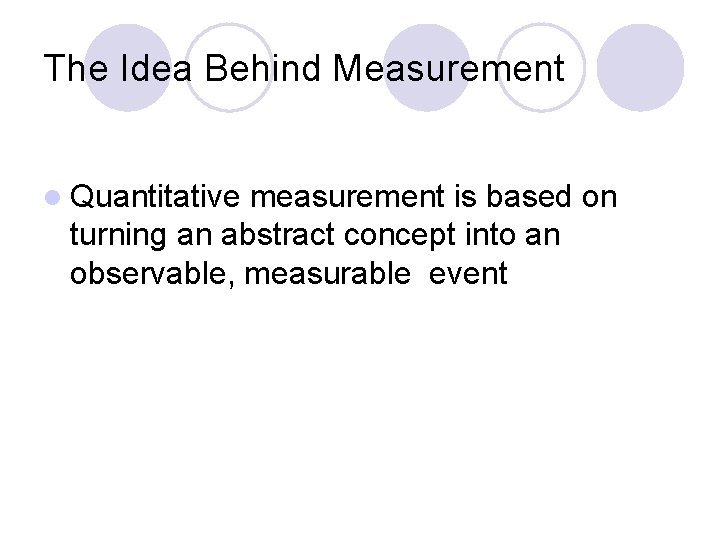
The Idea Behind Measurement l Quantitative measurement is based on turning an abstract concept into an observable, measurable event
Steps In the Measurement Process l Identify, define the concept of interest ¡ Concepts (constructs) are ‘invented names’ that describe an object, person, condition, or event ¡ Defining the concept requires specifying the core, underlying idea for it
Example l ‘Attitude’ l has as an identified concept … been defined as one’s predisposition to respond favorably or unfavorably to a stimulus
Steps In the Measurement Process l Operationalize ¡ Translating the concept definition the abstract concept definition into measurable, observable criteria
Example ‘Attitude’ toward the Nintendo brand could be observed by ¡ asking people if they ‘like or dislike’ the a specific advertisement from the brand OR ¡ asking to what extent they feel ‘favorably or unfavorably’ toward Nintendo relative to other brands in the category