
Quantitative Data Analysis For Development Evaluatation National Evaluation






- Slides: 25
Quantitative Data Analysis For Development Evaluatation National Evaluation Capacities (NEC) Conference 2019 No One Left Behind Hurghada, Egypt October 20 -24, 2019. Bassirou Chitou, Ph. D.
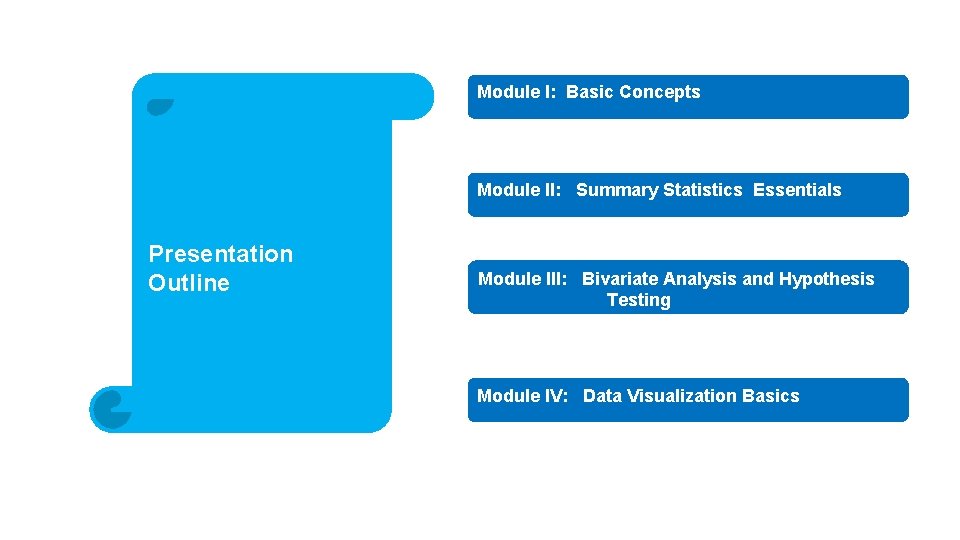
Module I: Basic Concepts Module II: Summary Statistics Essentials Presentation Outline Module III: Bivariate Analysis and Hypothesis Testing Module IV: Data Visualization Basics
Module I Basic Concepts and Dummy Tables
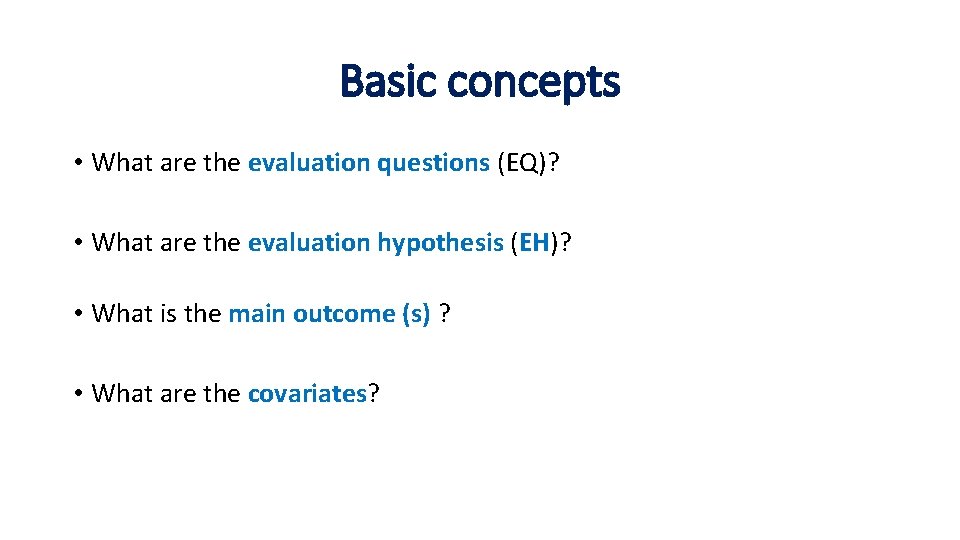
Basic concepts • What are the evaluation questions (EQ)? • What are the evaluation hypothesis (EH)? • What is the main outcome (s) ? • What are the covariates?
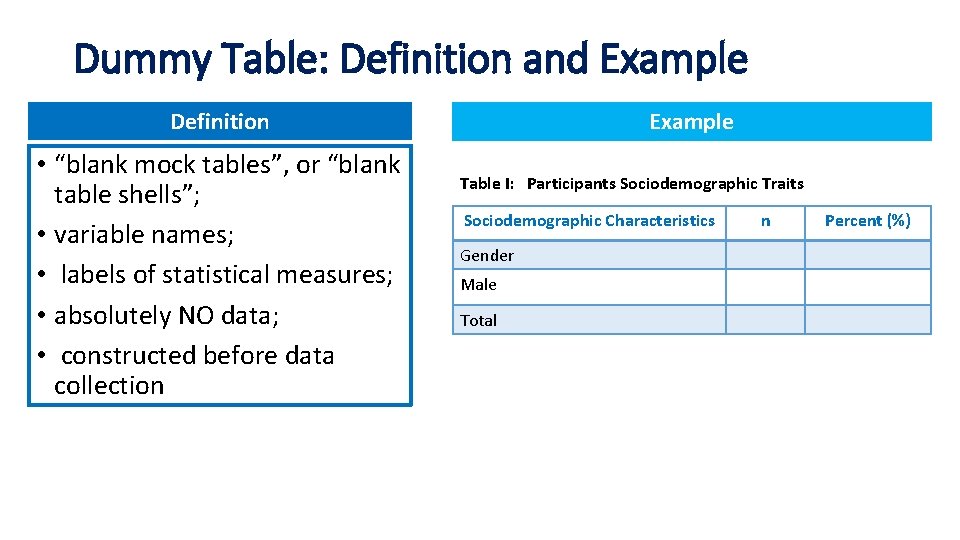
Dummy Table: Definition and Example Definition • “blank mock tables”, or “blank table shells”; • variable names; • labels of statistical measures; • absolutely NO data; • constructed before data collection Example Table I: Participants Sociodemographic Traits Sociodemographic Characteristics Gender Male Total n Percent (%)
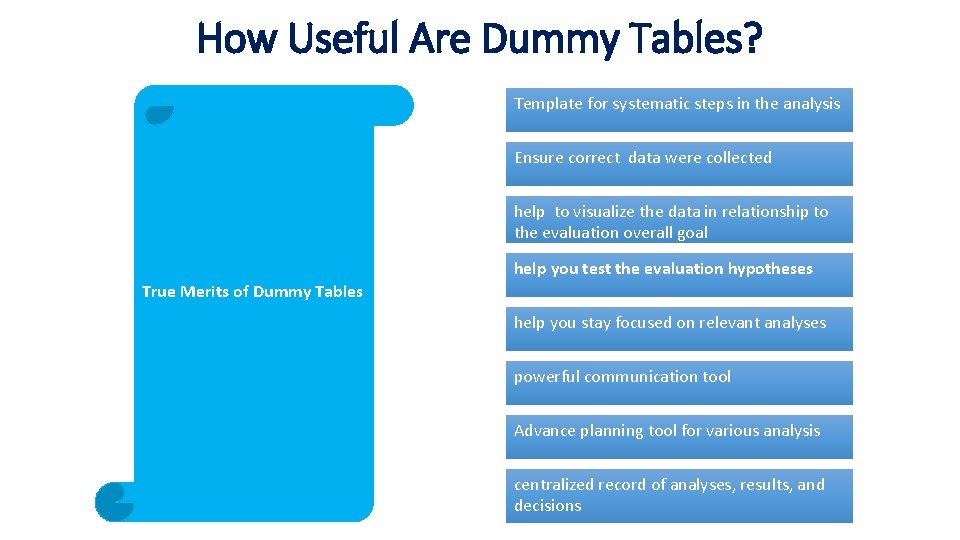
How Useful Are Dummy Tables? Template for systematic steps in the analysis Ensure correct data were collected help to visualize the data in relationship to the evaluation overall goal help you test the evaluation hypotheses True Merits of Dummy Tables help you stay focused on relevant analyses powerful communication tool Advance planning tool for various analysis centralized record of analyses, results, and decisions
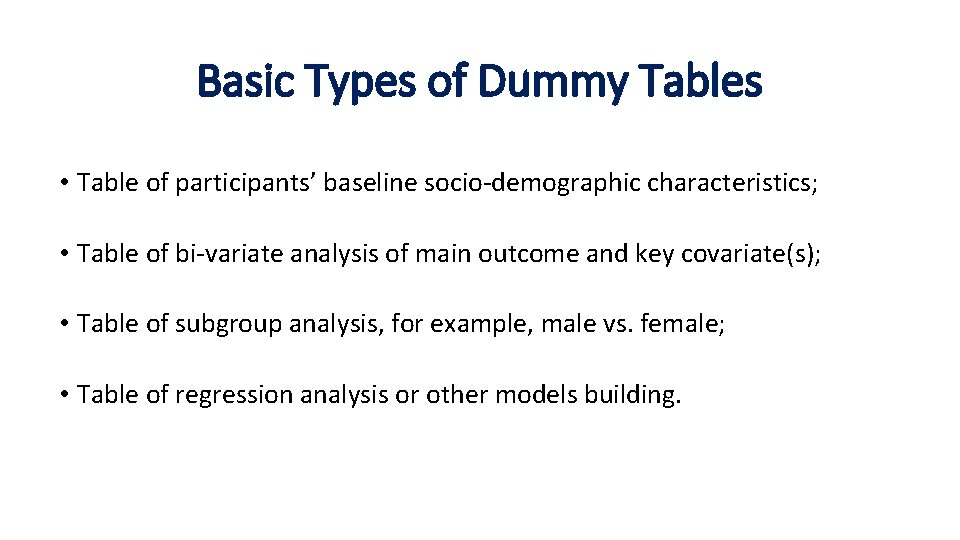
Basic Types of Dummy Tables • Table of participants’ baseline socio-demographic characteristics; • Table of bi-variate analysis of main outcome and key covariate(s); • Table of subgroup analysis, for example, male vs. female; • Table of regression analysis or other models building.
Go to https: //d. docs. live. net/43296 abb 124 de 8 a 9/Documents/UNDP_Egypt/workshop/wo rd/nss_sam_dummy_tables_oct_21_2019. docx
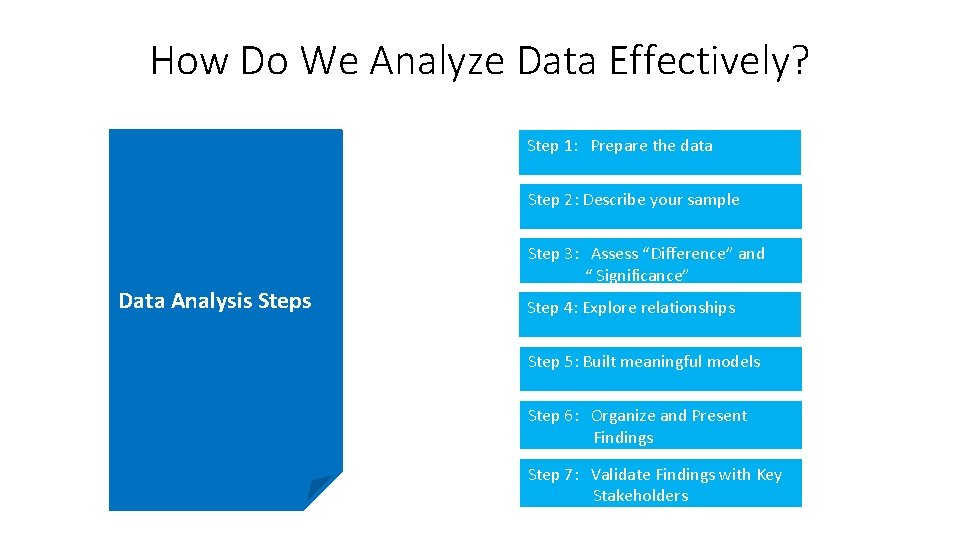
How Do We Analyze Data Effectively? Step 1: Prepare the data Step 2: Describe your sample Data Analysis Step 3: Assess “Difference” and “ Significance” Step 4: Explore relationships Step 5: Built meaningful models Step 6: Organize and Present Findings Step 7: Validate Findings with Key Stakeholders
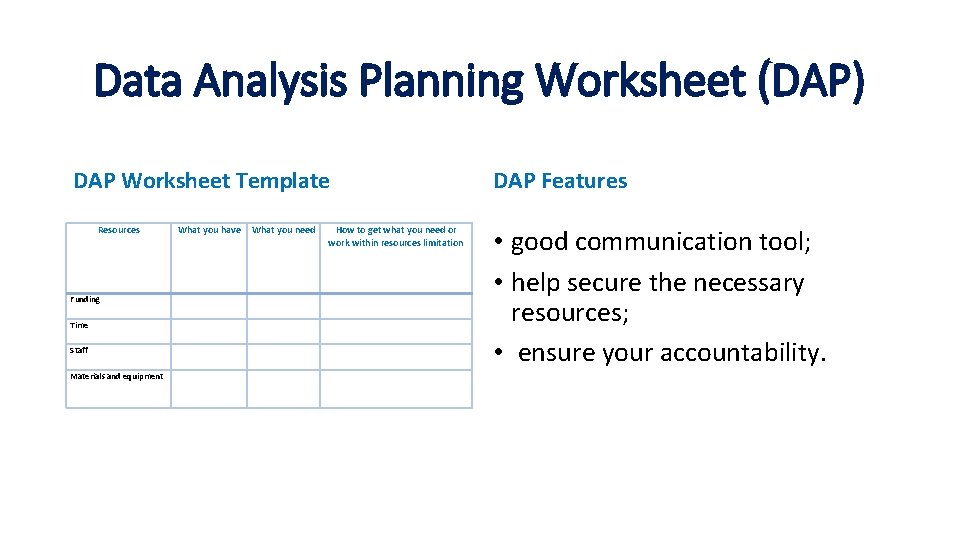
Data Analysis Planning Worksheet (DAP) DAP Worksheet Template Resources Funding Time Staff Materials and equipment What you have What you need How to get what you need or work within resources limitation DAP Features • good communication tool; • help secure the necessary resources; • ensure your accountability.
Module II Descriptive Analysis: Summary Statistics
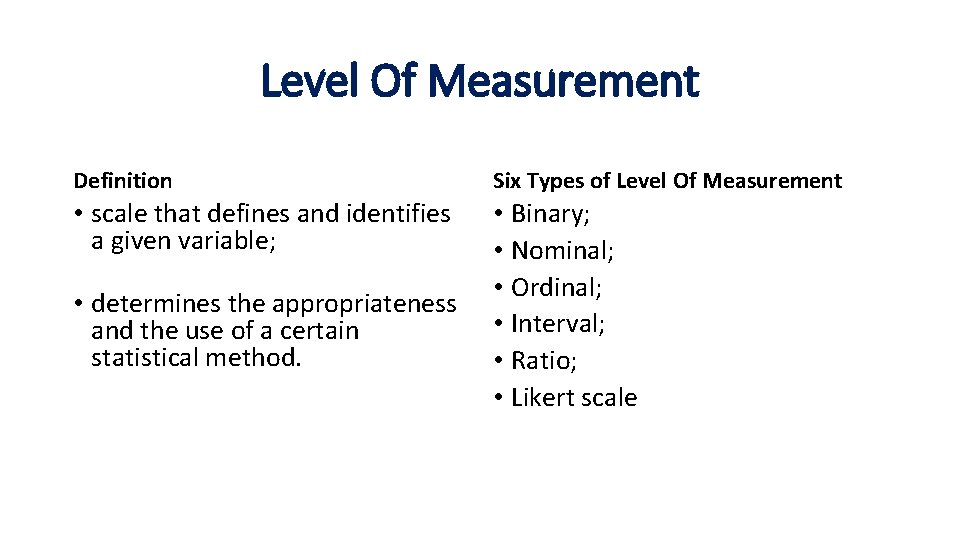
Level Of Measurement Definition Six Types of Level Of Measurement • scale that defines and identifies a given variable; • Binary; • Nominal; • Ordinal; • Interval; • Ratio; • Likert scale • determines the appropriateness and the use of a certain statistical method.
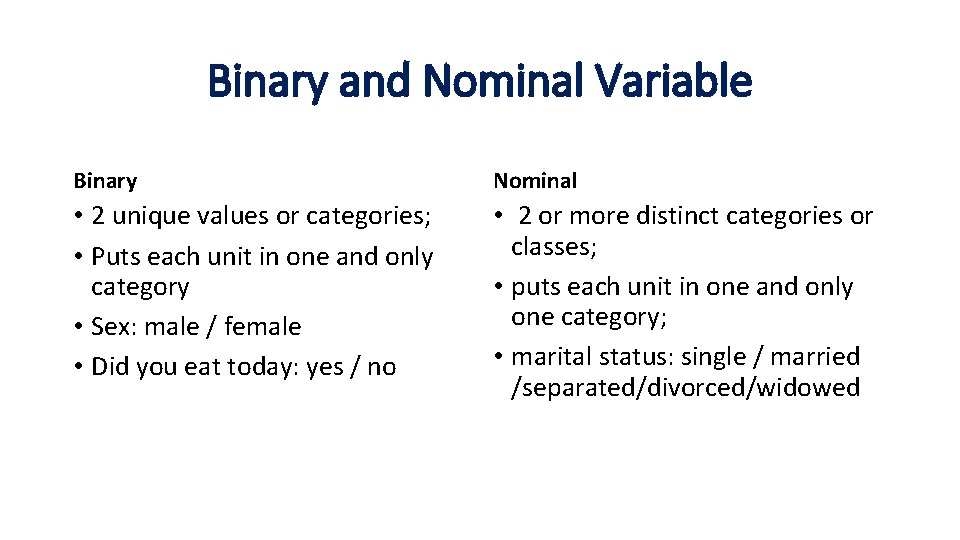
Binary and Nominal Variable Binary Nominal • 2 unique values or categories; • Puts each unit in one and only category • Sex: male / female • Did you eat today: yes / no • 2 or more distinct categories or classes; • puts each unit in one and only one category; • marital status: single / married /separated/divorced/widowed
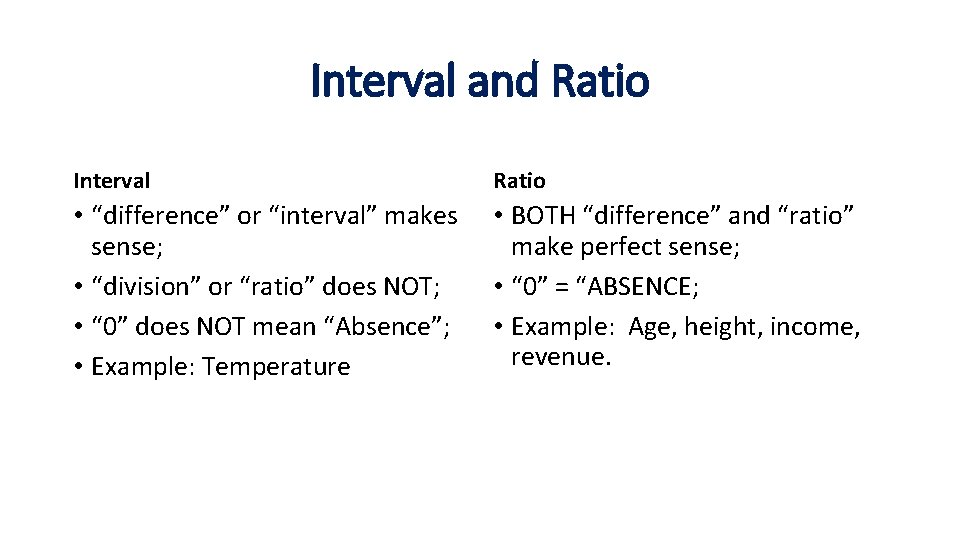
Interval and Ratio Interval Ratio • “difference” or “interval” makes sense; • “division” or “ratio” does NOT; • “ 0” does NOT mean “Absence”; • Example: Temperature • BOTH “difference” and “ratio” make perfect sense; • “ 0” = “ABSENCE; • Example: Age, height, income, revenue.
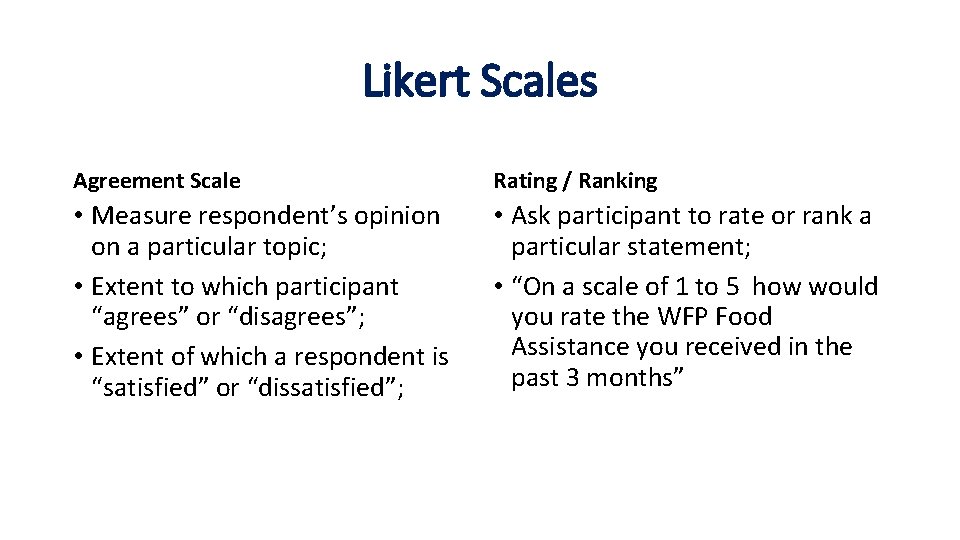
Likert Scales Agreement Scale Rating / Ranking • Measure respondent’s opinion on a particular topic; • Extent to which participant “agrees” or “disagrees”; • Extent of which a respondent is “satisfied” or “dissatisfied”; • Ask participant to rate or rank a particular statement; • “On a scale of 1 to 5 how would you rate the WFP Food Assistance you received in the past 3 months”
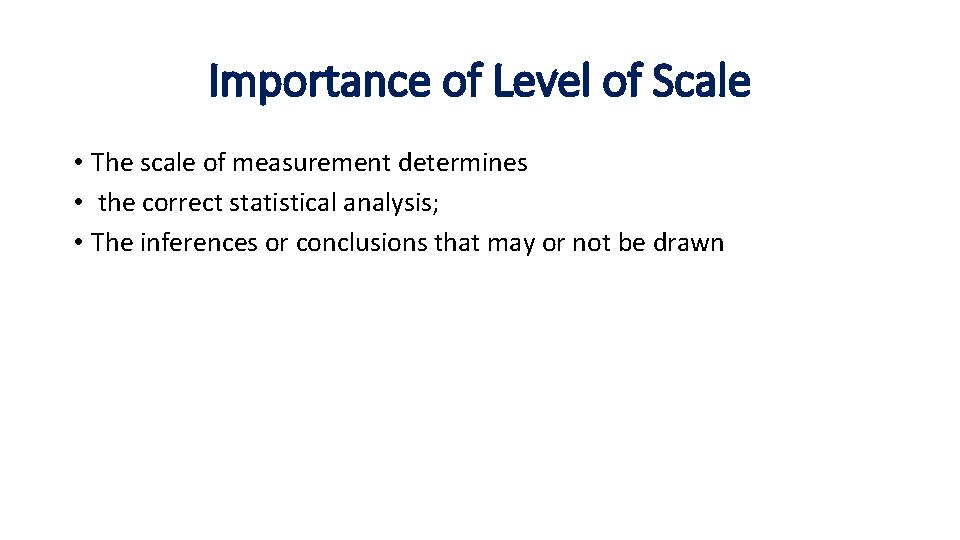
Importance of Level of Scale • The scale of measurement determines • the correct statistical analysis; • The inferences or conclusions that may or not be drawn
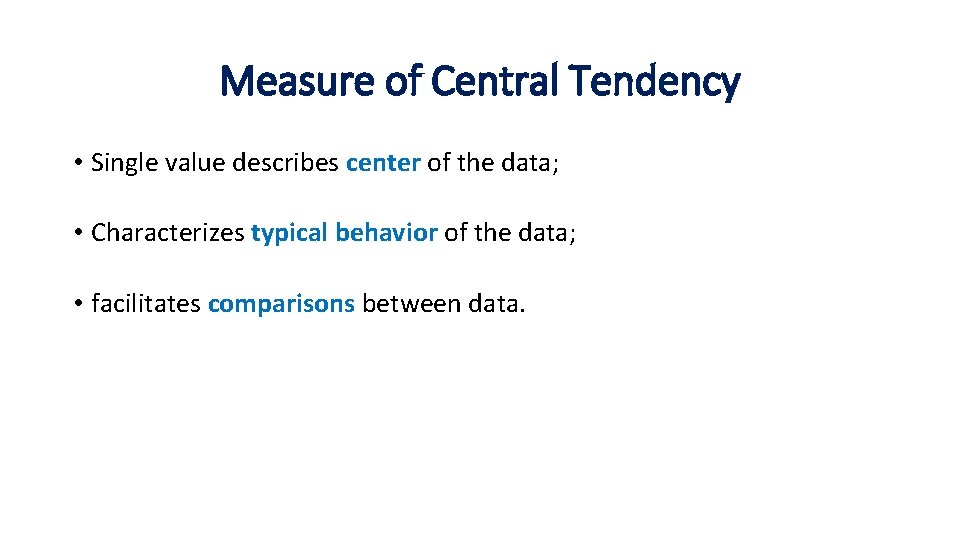
Measure of Central Tendency • Single value describes center of the data; • Characterizes typical behavior of the data; • facilitates comparisons between data.
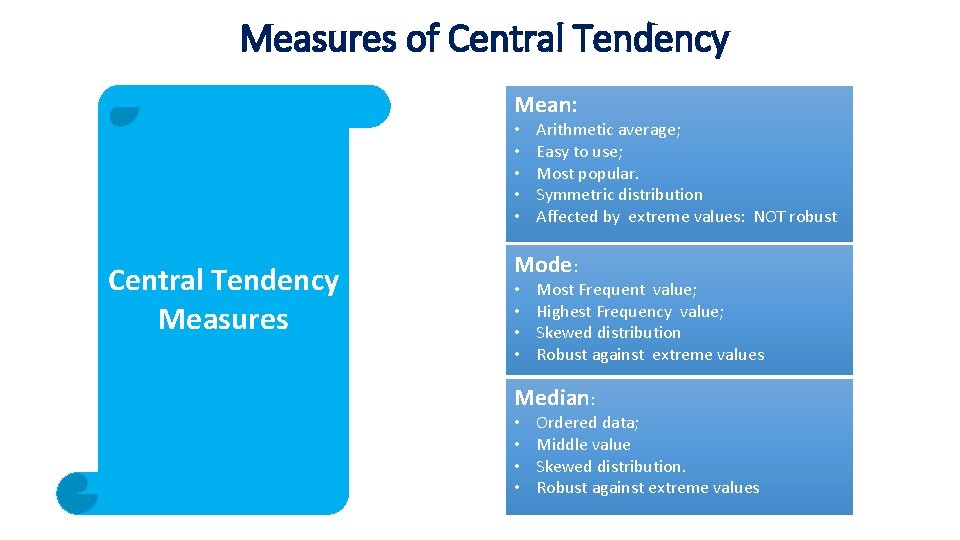
Measures of Central Tendency Mean: • • • Central Tendency Measures Arithmetic average; Easy to use; Most popular. Symmetric distribution Affected by extreme values: NOT robust Mode: • • Most Frequent value; Highest Frequency value; Skewed distribution Robust against extreme values Median: • • Ordered data; Middle value Skewed distribution. Robust against extreme values
Measure of Variation • Describes the extent to which the data is spread out, stretched or squeezed around the central tendency value. • Characterizes dispersion of the data; • Help understand how individual scores or values behaves; • enhances comparisons between data.
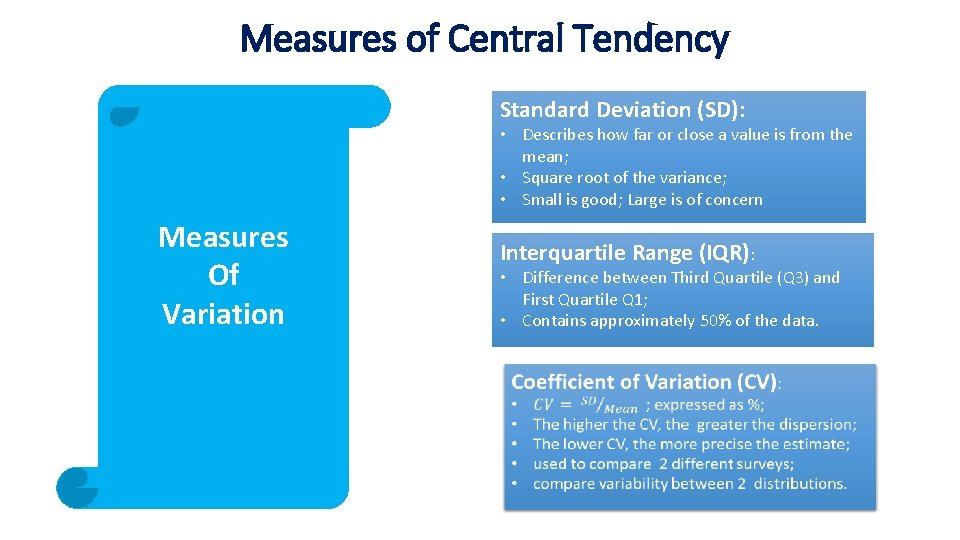
Measures of Central Tendency Standard Deviation (SD): • Describes how far or close a value is from the mean; • Square root of the variance; • Small is good; Large is of concern Measures Of Variation Interquartile Range (IQR): • Difference between Third Quartile (Q 3) and First Quartile Q 1; • Contains approximately 50% of the data.
Module III Bivariate Analysis & Hypothesis Testing
Go to https: //d. docs. live. net/43296 abb 124 de 8 a 9/Documents/UNDP_Egypt/workshop/wo rd/intro_to_quant_anal_undp_nec_2019_sept_26_2019. docx
Module IV Bivariate Analysis & Hypothesis Testing
Go to https: //d. docs. live. net/43296 abb 124 de 8 a 9/Docu ments/UNDP_Egypt/workshop/word/intro_to_qu ant_anal_undp_nec_2019_sept_26_2019. docx
Thank You A Million