
Quantitative aspects of drugs Objectives Determine quantitative aspects
Quantitative aspects of drugs Objectives: • Determine quantitative aspects of drug receptor binding. • Recognize concentration binding curves. • Identify dose response curves and therapeutic utility of these curves. • Classify different types of antagonism. Titles Very important Extra information Wake up with determination, go to bed with satisfaction Terms Contact us : Pharma 436@outlook. com @Pharma 436 1
![Concentration-Binding Curve Dose Response Curve Relate concentration [C] of Drug used (x- axis) to](http://slidetodoc.com/presentation_image_h2/48e61e2bba57c18994308db35ae664bb/image-2.jpg "Concentration-Binding Curve Dose Response Curve Relate concentration [C] of Drug used (x- axis) to")
Concentration-Binding Curve Dose Response Curve Relate concentration [C] of Drug used (x- axis) to the binding capacity at receptors (y-axis) Relate concentration [C] of Drug used (x-axis) to the response produced (y-axis) potency is a measure of drug activity (afficacy, efficacy). Concentration-Binding Curve: - The relationship between drug binding & drug concentration is expressed mathematically by the following equation: (Bmax x. C) /(Bmax C+ KD 5) v Bmax (the binding capacity): - is the total density of receptors in the tissues. v KD 50: - is the concentration of drug required to occupy 50% of receptors at equilibrium. v The affinity of drug for receptor: The higher the affinity of D for receptor the lower is the KD i. e. inverse relation ( Binding Potential= Bmax/KD ). Contact us : Pharma 436@outlook. com @Pharma 436 2
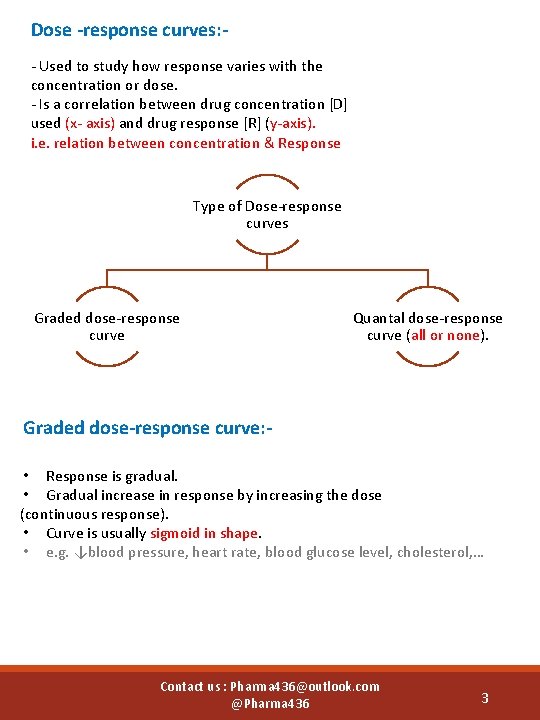
Dose -response curves: - Used to study how response varies with the concentration or dose. - Is a correlation between drug concentration [D] used (x- axis) and drug response [R] (y-axis). i. e. relation between concentration & Response Type of Dose-response curves Graded dose-response curve Quantal dose-response curve (all or none). Graded dose-response curve: • Response is gradual. • Gradual increase in response by increasing the dose (continuous response). • Curve is usually sigmoid in shape. • e. g. ↓blood pressure, heart rate, blood glucose level, cholesterol, … Contact us : Pharma 436@outlook. com @Pharma 436 3

Max effect = Emax 100 80 As C ↑ response ↑ 60 % of Maximal Effect 40 20 0 0 200 400 600 800 [C] Graded dose-response curves are used to calculate : §Efficacy: is a drug's capacity to produce an effect. §Emax: is the maximal biological response produced by a drug. §EC 50: The dose of the drug required to produce half the maximal effect (Emax). §Potency: the concentration of drug required to produce a specified response (EC 50 is the international parameter) Potency is inversely proportional to EC 50. (lower concentration higher potency. higher concentration lower potency). In this diagram: The potency of drug A is more than drug B & C. The efficacy of drug A & B are the same and they are more efficacy than drug C. Contact us : Pharma 436@outlook. com @Pharma 436 4

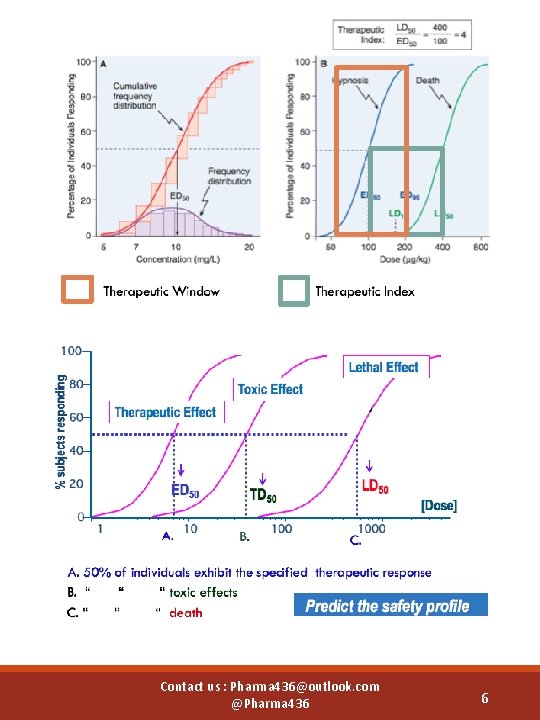
Quantal Dose-Response Curves: - *note the difference in T. I. Contact us : Pharma 436@outlook. com @Pharma 436 5
Contact us : Pharma 436@outlook. com @Pharma 436 6
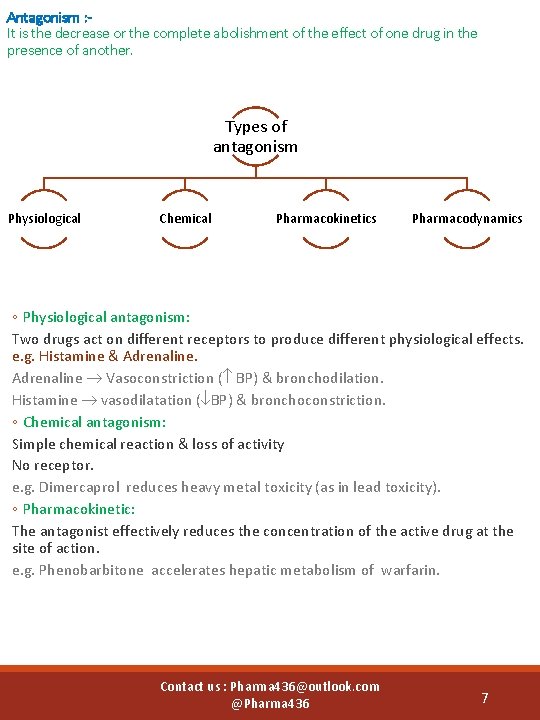
Antagonism : It is the decrease or the complete abolishment of the effect of one drug in the presence of another. Types of antagonism Physiological Chemical Pharmacokinetics Pharmacodynamics ◦ Physiological antagonism: Two drugs act on different receptors to produce different physiological effects. e. g. Histamine & Adrenaline Vasoconstriction ( BP) & bronchodilation. Histamine vasodilatation ( BP) & bronchoconstriction. ◦ Chemical antagonism: Simple chemical reaction & loss of activity No receptor. e. g. Dimercaprol reduces heavy metal toxicity (as in lead toxicity). ◦ Pharmacokinetic: The antagonist effectively reduces the concentration of the active drug at the site of action. e. g. Phenobarbitone accelerates hepatic metabolism of warfarin. Contact us : Pharma 436@outlook. com @Pharma 436 7
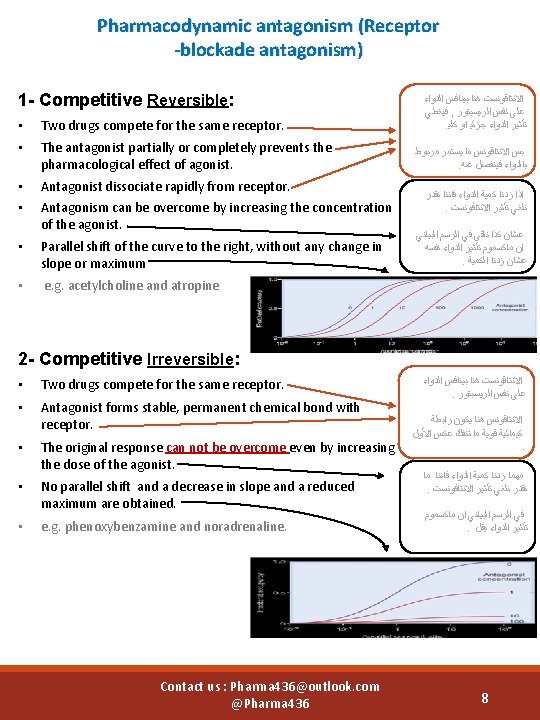
Pharmacodynamic antagonism (Receptor -blockade antagonism) 1 - Competitive Reversible: • Two drugs compete for the same receptor. • The antagonist partially or completely prevents the pharmacological effect of agonist. • Antagonist dissociate rapidly from receptor. • Antagonism can be overcome by increasing the concentration of the agonist. • Parallel shift of the curve to the right, without any change in slope or maximum • e. g. acetylcholine and atropine ﺍﻻﻧﺘﺎﻗﻮﻧﺴﺖ ﻫﻨﺎ ﺑﻴﻨﺎﻓﺲ ﺍﻟﺪﻭﺍﺀ ﻓﻴﻐﻄﻲ , ﻋﻠﻰ ﻧﻔﺲ ﺍﻟﺮﻳﺴﺒﺘﻮﺭ . ﺗﺄﺜﻴﺮ ﺍﻟﺪﻭﺍﺀ ﺟﺰﺋﻴ ﺍﻭ ﻛﻠﻴ ﺑﺲ ﺍﻻﻧﺘﺎﻗﻮﻧﺲ ﻣﺎ ﻳﺴﺘﻤﺮ ﻣﺮﺑﻮﻁ . ﺑﺎﻟﺪﻭﺍﺀ ﻓﻴﻨﻔﺼﻞ ﻋﻨﻪ ﺍﺫﺍ ﺯﺩﻧﺎ ﻛﻤﻴﺔ ﺍﻟﺪﻭﺍﺀ ﻓﺎﻧﻨﺎ ﻧﻘﺪﺭ . ﻧﻠﻐﻲ ﺗﺄﺜﻴﺮ ﺍﻻﻧﺘﺎﻓﻮﻧﺴﺖ ﻋﺸﺎﻥ ﻛﺬﺍ ﻧﻠﻘﻰ ﻓﻲ ﺍﻟﺮﺳﻢ ﺍﻟﺒﻴﺎﻧﻲ ﺍﻥ ﻣﺎﻛﺴﻤﻮﻡ ﺗﺄﺜﻴﺮ ﺍﻟﺪﻭﺍﺀ ﻧﻔﺴﻪ . ﻋﺸﺎﻥ ﺯﺩﻧﺎ ﺍﻟﻜﻤﻴﺔ 2 - Competitive Irreversible: • Two drugs compete for the same receptor. • Antagonist forms stable, permanent chemical bond with receptor. • The original response can not be overcome even by increasing the dose of the agonist. • No parallel shift and a decrease in slope and a reduced maximum are obtained. • e. g. phenoxybenzamine and noradrenaline. Contact us : Pharma 436@outlook. com @Pharma 436 ﺍﻻﻧﺘﺎﻗﻮﻧﺴﺖ ﻫﻨﺎ ﺑﻴﻨﺎﻓﺲ ﺍﻟﺪﻭﺍﺀ . ﻋﻠﻰ ﻧﻔﺲ ﺍﻟﺮﻳﺴﺒﺘﻮﺭ ﺍﻻﻧﺘﺎﻗﻮﻧﺲ ﻫﻨﺎ ﻳﻜﻮﻥ ﺭﺍﺑﻄﺔ ﻛﻴﻤﺎﺋﻴﺔ ﻗﻮﻳﺔ ﻣﺎ ﺗﻨﻔﻚ ﻋﻜﺲ ﺍﻷﻮﻝ . ﻣﻬﻤﺎ ﺯﺩﻧﺎ ﻛﻤﻴﺔ ﺍﻟﺪﻭﺍﺀ ﻓﺎﻧﻨﺎ ﻣﺎ . ﻧﻘﺪﺭ ﻧﻠﻐﻲ ﺗﺄﺜﻴﺮ ﺍﻻﻧﺘﺎﻓﻮﻧﺴﺖ ﻓﻲ ﺍﻟﺮﺳﻢ ﺍﻟﺒﻴﺎﻧﻲ ﺍﻥ ﻣﺎﻛﺴﻤﻮﻡ . ﺗﺄﺜﻴﺮ ﺍﻟﺪﻭﺍﺀ ﻳﻘﻞ 8
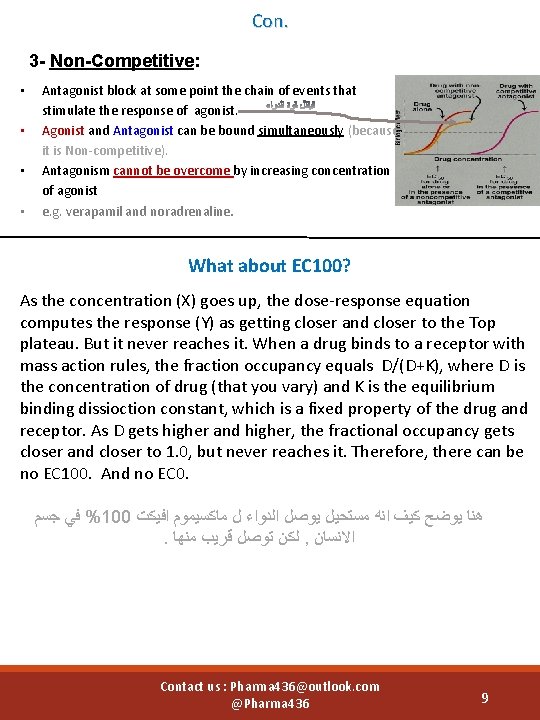
Con. 3 - Non-Competitive: • • Antagonist block at some point the chain of events that stimulate the response of agonist. Agonist and Antagonist can be bound simultaneously (because it is Non-competitive). Antagonism cannot be overcome by increasing concentration of agonist e. g. verapamil and noradrenaline. What about EC 100? As the concentration (X) goes up, the dose-response equation computes the response (Y) as getting closer and closer to the Top plateau. But it never reaches it. When a drug binds to a receptor with mass action rules, the fraction occupancy equals D/(D+K), where D is the concentration of drug (that you vary) and K is the equilibrium binding dissioction constant, which is a fixed property of the drug and receptor. As D gets higher and higher, the fractional occupancy gets closer and closer to 1. 0, but never reaches it. Therefore, there can be no EC 100. And no EC 0. ﻓﻲ ﺟﺴﻢ %100 ﻫﻨﺎ ﻳﻮﺿﺢ ﻛﻴﻒ ﺍﻧﻪ ﻣﺴﺘﺤﻴﻞ ﻳﻮﺻﻞ ﺍﻟﺪﻭﺍﺀ ﻝ ﻣﺎﻛﺴﻴﻤﻮﻡ ﺍﻓﻴﻜﺖ . ﻟﻜﻦ ﺗﻮﺻﻞ ﻗﺮﻳﺐ ﻣﻨﻬﺎ , ﺍﻻﻧﺴﺎﻥ Contact us : Pharma 436@outlook. com @Pharma 436 9

Quick exam Contact us : Pharma 436@outlook. com @Pharma 436 10
- Slides: 11