
Quantifying Rockfall and Rockburst Risk in Underground Mines
Quantifying Rockfall and Rockburst Risk in Underground Mines William Joughin
Objectives • Realistically quantify the rockfall and rockburst risk under a given set of conditions from a safety and economic perspective – Enable the comparison of support systems, mining layouts, safety strategies – Assess the effects of quality of support installation and support strength variability
Design philosophies • Deterministic (Capacity/Demand) – Factor of safety • 1. 5 – 2. 0 for high consequence • Variability not considered – Limit states design • 95% fall out height • Civil engineering – reinforced concrete code – Ultimate limit state and Serviceability limit state – Partial safety factors for load and material properties based on 5 percentile (1 -95%) • Variability partially, but not all cases are considered • Probabilistic – Monte Carlo simulation to determine Probability of Failure • All cases considered, load and material variability considered • What is an acceptable probability of failure? ? – Risk Evaluation!! • Incorporates all of the above • Accepted risk criteria based upon safety and economics
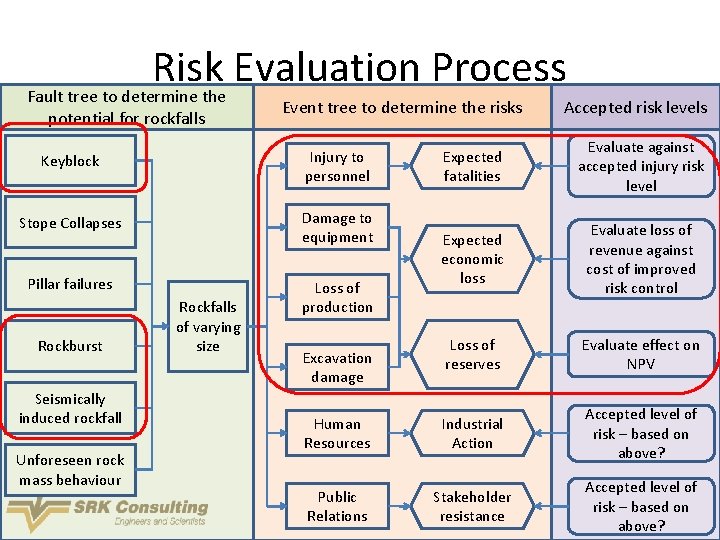
Risk Evaluation Process Fault tree to determine the potential for rockfalls Event tree to determine the risks Expected fatalities Evaluate against accepted injury risk level Expected economic loss Evaluate loss of revenue against cost of improved risk control Loss of reserves Evaluate effect on NPV Human Resources Industrial Action Accepted level of risk – based on above? Public Relations Stakeholder resistance Accepted level of risk – based on above? Keyblock Injury to personnel Stope Collapses Damage to equipment Pillar failures Loss of production Rockburst Seismically induced rockfall Unforeseen rock mass behaviour Rockfalls of varying size Accepted risk levels Excavation damage
Overview • • • Accepted level of risk? Rockfall analysis (keyblock analysis –Jblock) Injury analysis Economic Evaluation Rockburst analysis (empirical analysis)
Accepted level of risk Injuries and Fatalities • Zero tolerance, zero fatalities, zero injuries, zero harm • How do you get to zero, when people are exposed to hazards? • How do you design for zero risk? • Need to set realistic, measureable targets.
Accepted level of risk Injuries and Fatalities • Expected frequency of injuries/fatalities • Expected frequency of incidents with one or fatalities • Individual injury/fatality risk • DIFR / FIFR • 2013 Benchmark – all accidents • International Benchmarking against all industries – Annual Probability of injury / fatality • Ongoing Improvement
Accepted level of risk Injuries and Fatalities – International benchmarking F-N Graph
Accepted level of risk Injuries and Fatalities F-N Graph International Criteria
High Accepted level of risk Low Cost Economic evaluation Low High Rockfall/Rockburst Hazard
High Accepted level of risk Low Cost Economic evaluation Low High Rockfall/Rockburst Hazard Expected cost = (Cost of expected incidents)
High Accepted level of risk Low Cost Economic evaluation Low High Rockfall/Rockburst Hazard Economic evaluations for given scenarios Expected cost = (cost of expected incidents)
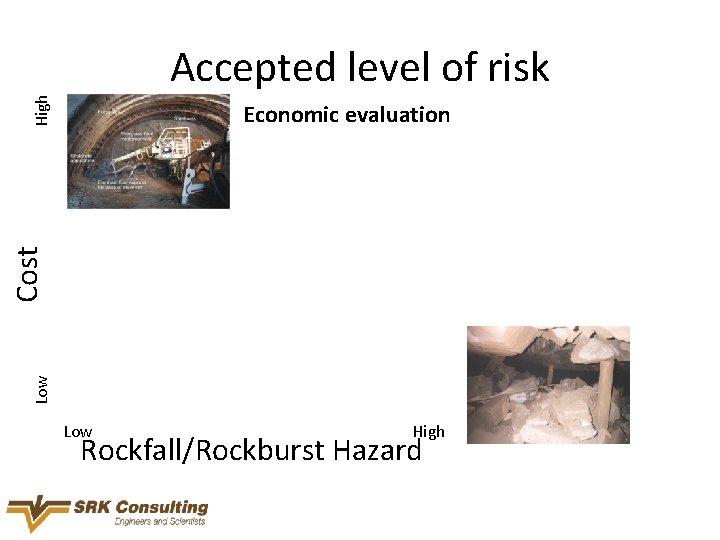
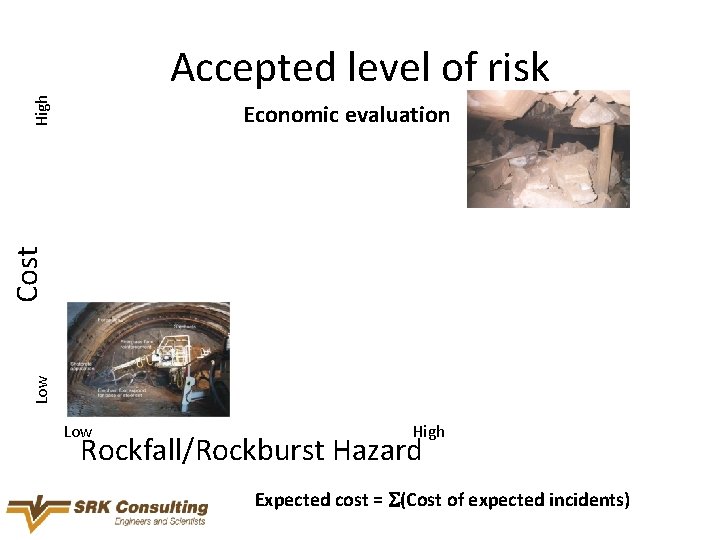
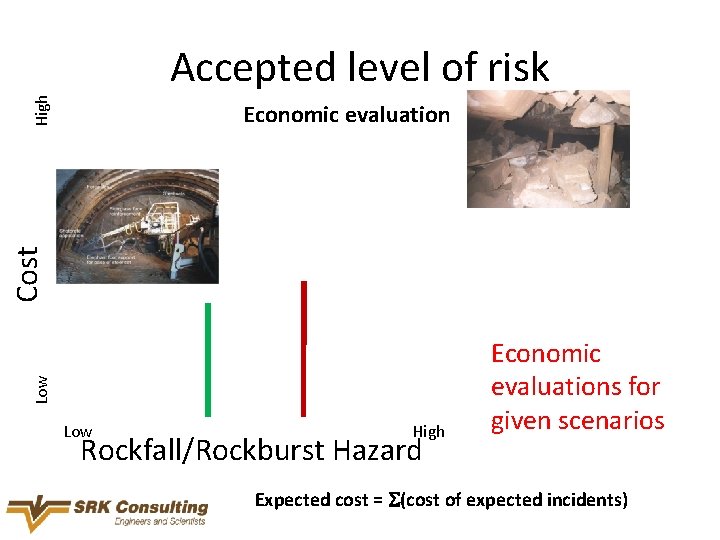
Accepted level of risk Economic evaluation • Compare different scenarios • Annual costs – Cost of risk control + – Expected loss • Discounted cashflow – Capital outlay (at start of implementation) – Annual costs – Reserve loss (at end of life of mine) – Net Present Cost (NPC)
Rockfall analysis - JBlock • Not just probability of failure of a single event • Frequency of large and small rockfalls (size counts) • Represent as many failure modes as possible • Represent a realistic rock mass with variable discontinuity characteristics • Represent realistic support patterns with installation and strength variability
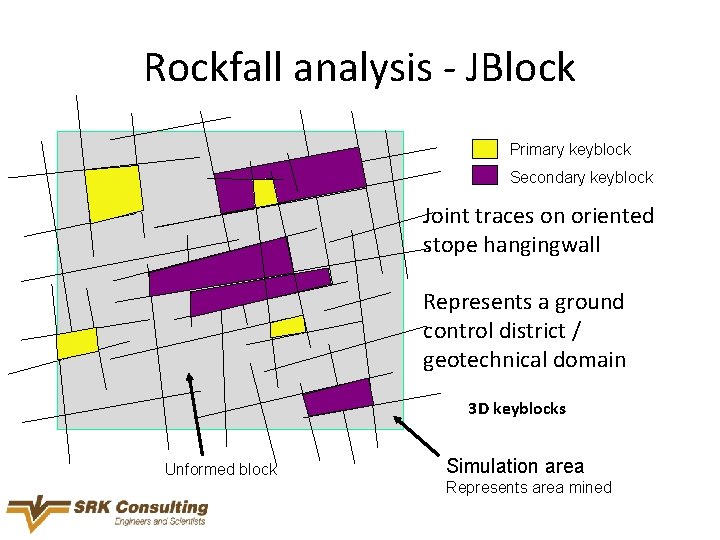
Rockfall analysis - JBlock Primary keyblock Secondary keyblock Joint traces on oriented stope hangingwall Represents a ground control district / geotechnical domain 3 D keyblocks Unformed block Simulation area Represents area mined
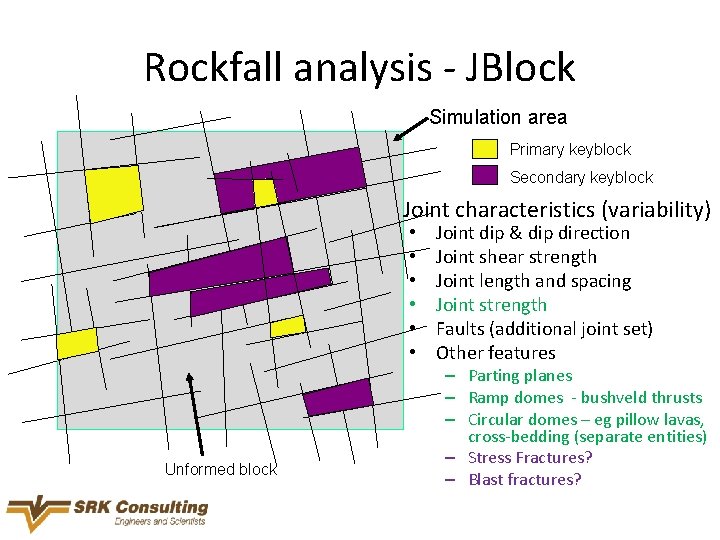
Rockfall analysis - JBlock Simulation area Primary keyblock Secondary keyblock Joint characteristics (variability) • • • Unformed block Joint dip & dip direction Joint shear strength Joint length and spacing Joint strength Faults (additional joint set) Other features – Parting planes – Ramp domes - bushveld thrusts – Circular domes – eg pillow lavas, cross-bedding (separate entities) – Stress Fractures? – Blast fractures?
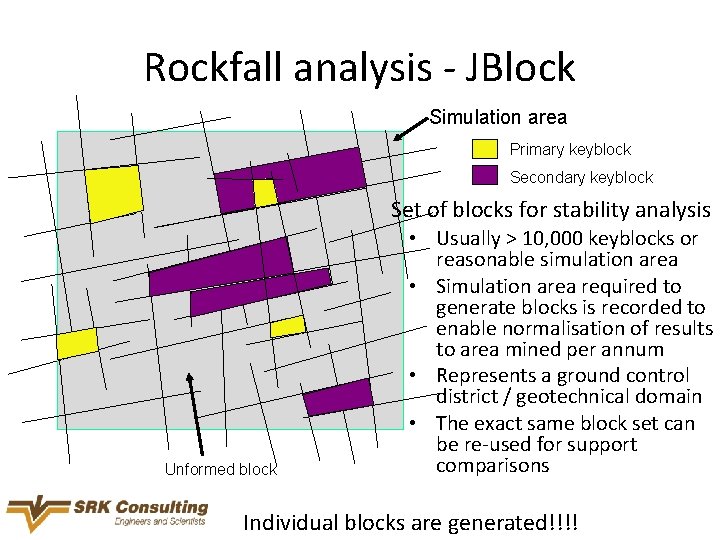
Rockfall analysis - JBlock Simulation area Primary keyblock Secondary keyblock Set of blocks for stability analysis Unformed block • Usually > 10, 000 keyblocks or reasonable simulation area • Simulation area required to generate blocks is recorded to enable normalisation of results to area mined per annum • Represents a ground control district / geotechnical domain • The exact same block set can be re-used for support comparisons Individual blocks are generated!!!!
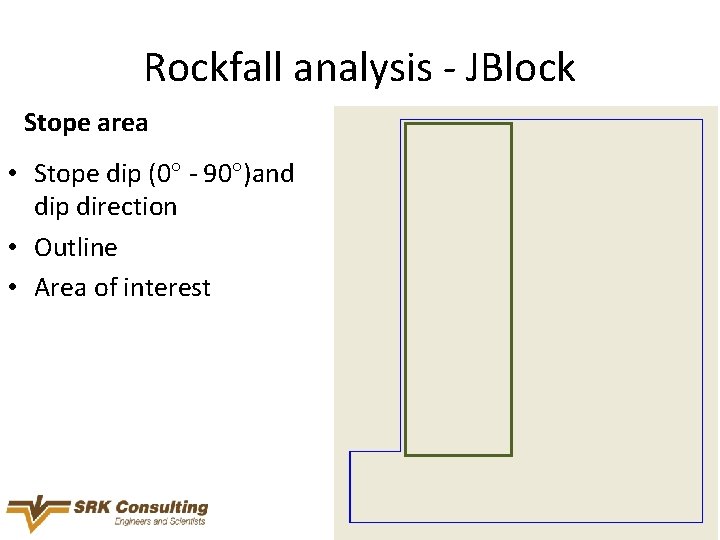
Rockfall analysis - JBlock Stope area • Stope dip (0 - 90 )and dip direction • Outline • Area of interest
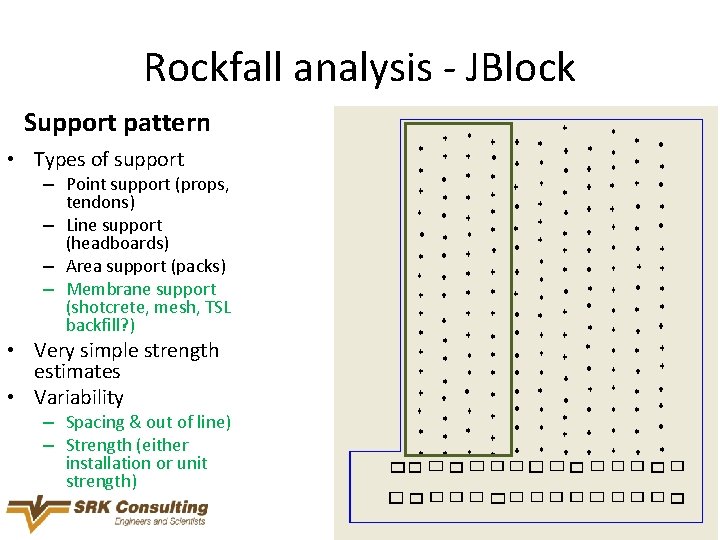
Rockfall analysis - JBlock Support pattern • Types of support – Point support (props, tendons) – Line support (headboards) – Area support (packs) – Membrane support (shotcrete, mesh, TSL backfill? ) • Very simple strength estimates • Variability – Spacing & out of line) – Strength (either installation or unit strength)
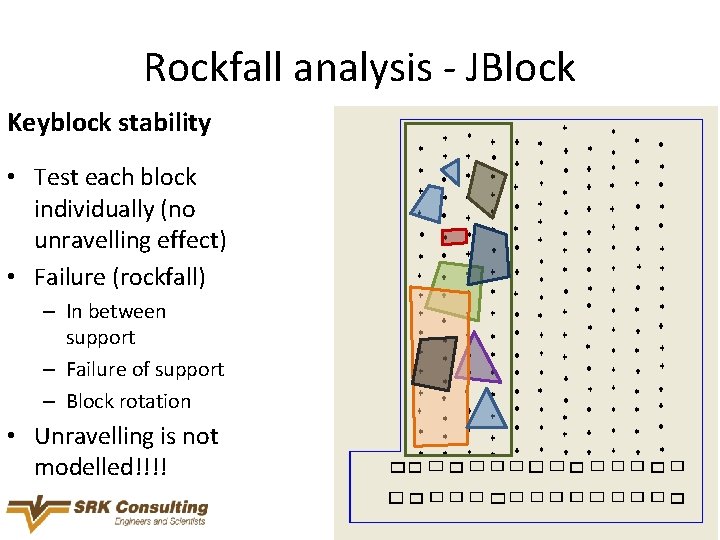
Rockfall analysis - JBlock Keyblock stability • Test each block individually (no unravelling effect) • Failure (rockfall) – In between support – Failure of support – Block rotation • Unravelling is not modelled!!!!
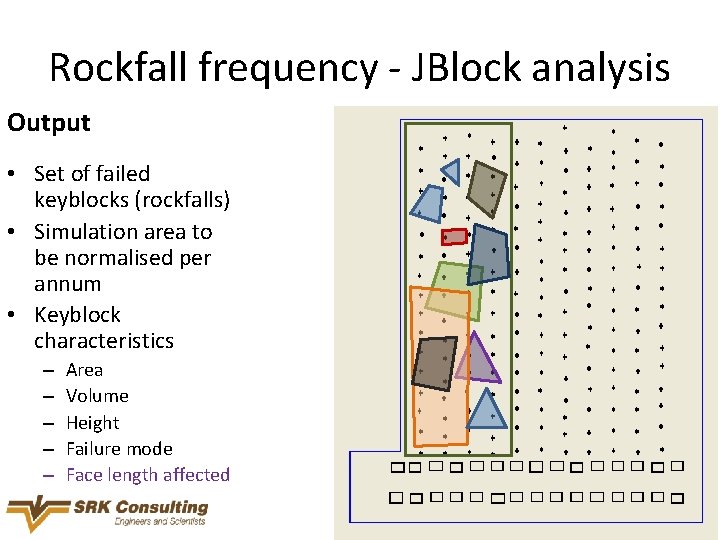
Rockfall frequency - JBlock analysis Output • Set of failed keyblocks (rockfalls) • Simulation area to be normalised per annum • Keyblock characteristics – – – Area Volume Height Failure mode Face length affected
Rockfall analysis - Data calibration Lonmin & Impala data 3 years Represents 1000 crews 810 Rockfalls 0. 5 m 3 to 4000 m 3
Rockfall analysis - Data calibration • Small rockfalls? – more rockfall injuries than rockfalls • Length, width and height • Errors in database • Unknown variables – support, mechanism, ground control district etc • Face or Back area – time dependency? • Falls after blast, removed by barring?
Rockfall analysis - Data calibration
Injury Analysis Injury Event Tree
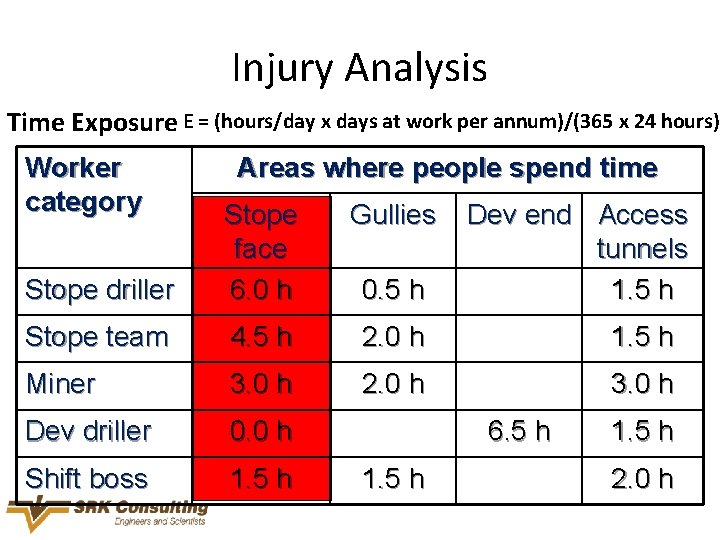
Injury Analysis Time Exposure E = (hours/day x days at work per annum)/(365 x 24 hours) Worker category Areas where people spend time Gullies Stope driller Stope face 6. 0 h Stope team 4. 5 h 2. 0 h 1. 5 h Miner 3. 0 h 2. 0 h 3. 0 h Dev driller 0. 0 h Shift boss 1. 5 h 0. 5 h Dev end Access tunnels 1. 5 h 6. 5 h 1. 5 h 2. 0 h
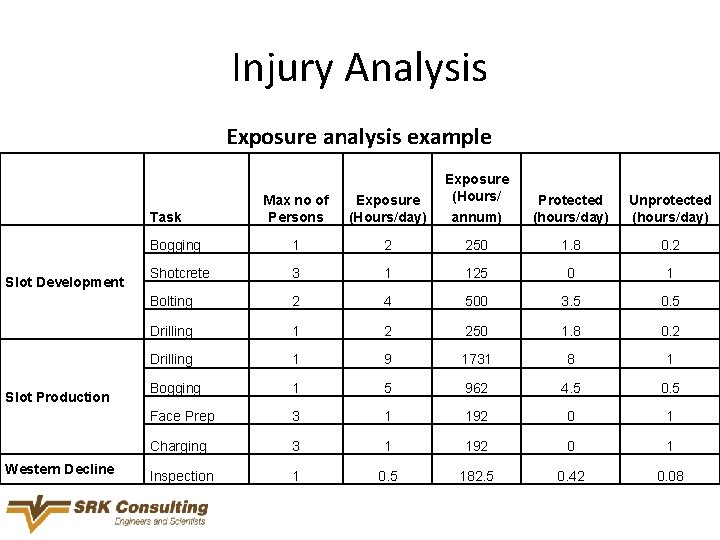
Injury Analysis Exposure analysis example Max no of Persons Exposure (Hours/day) Exposure (Hours/ annum) Bogging 1 2 250 1. 8 0. 2 Shotcrete 3 1 125 0 1 Bolting 2 4 500 3. 5 0. 5 Drilling 1 2 250 1. 8 0. 2 Drilling 1 9 1731 8 1 Bogging 1 5 962 4. 5 0. 5 Face Prep 3 1 192 0 1 Charging 3 1 192 0 1 Inspection 1 0. 5 182. 5 0. 42 0. 08 Task Slot Development Slot Production Western Decline Protected (hours/day) Unprotected (hours/day)
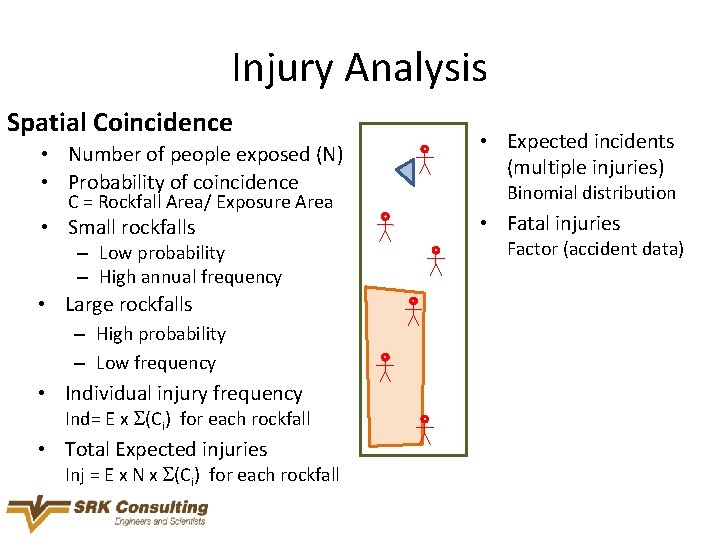
Injury Analysis Spatial Coincidence • Number of people exposed (N) • Probability of coincidence C = Rockfall Area/ Exposure Area • Small rockfalls – Low probability – High annual frequency • Large rockfalls – High probability – Low frequency • Individual injury frequency Ind= E x (Ci) for each rockfall • Total Expected injuries Inj = E x N x (Ci) for each rockfall • Expected incidents (multiple injuries) Binomial distribution • Fatal injuries Factor (accident data)
F-N Graph output
Economic Evaluation Equipment Damage Event Tree
Economic Evaluation Stope Damage Event Tree
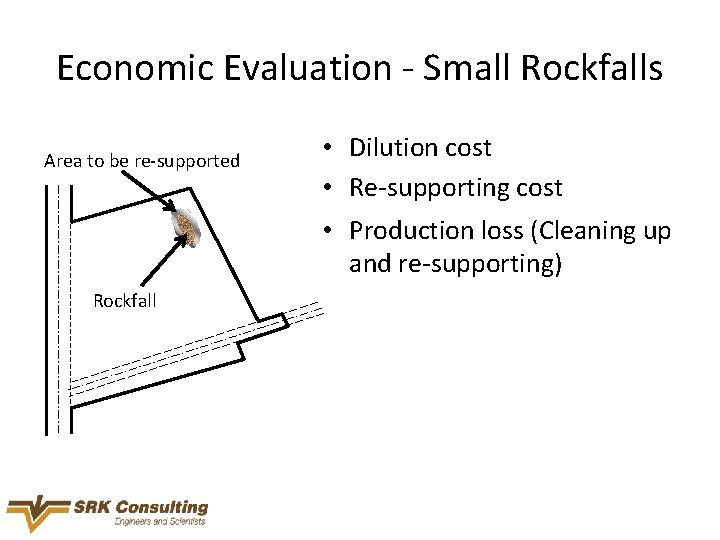
Economic Evaluation - Small Rockfalls Area to be re-supported Rockfall • Dilution cost • Re-supporting cost • Production loss (Cleaning up and re-supporting)
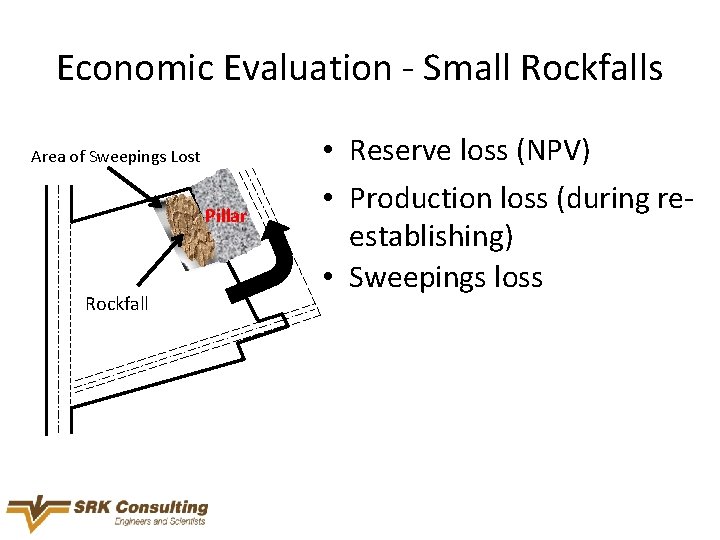
Economic Evaluation - Small Rockfalls Area of Sweepings Lost Pillar Rockfall • Reserve loss (NPV) • Production loss (during reestablishing) • Sweepings loss
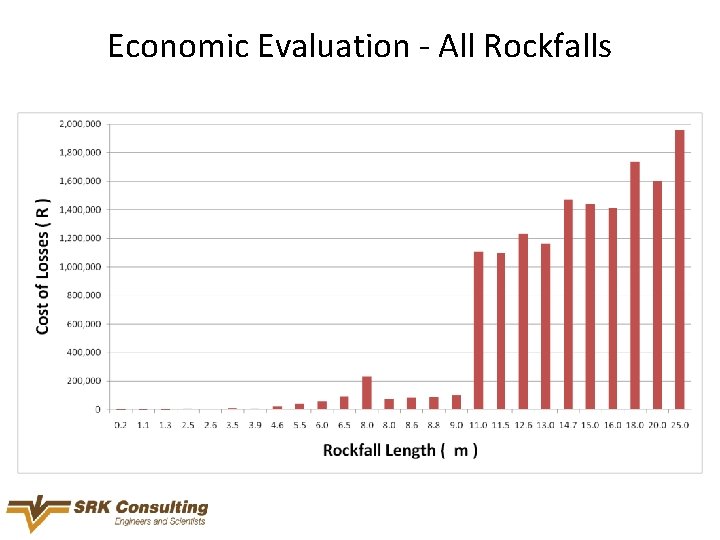
Economic Evaluation - All Rockfalls
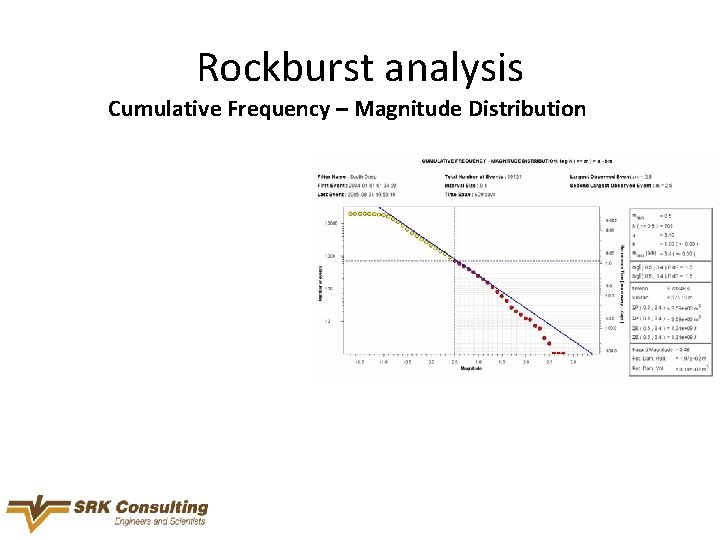
Rockburst analysis Cumulative Frequency – Magnitude Distribution
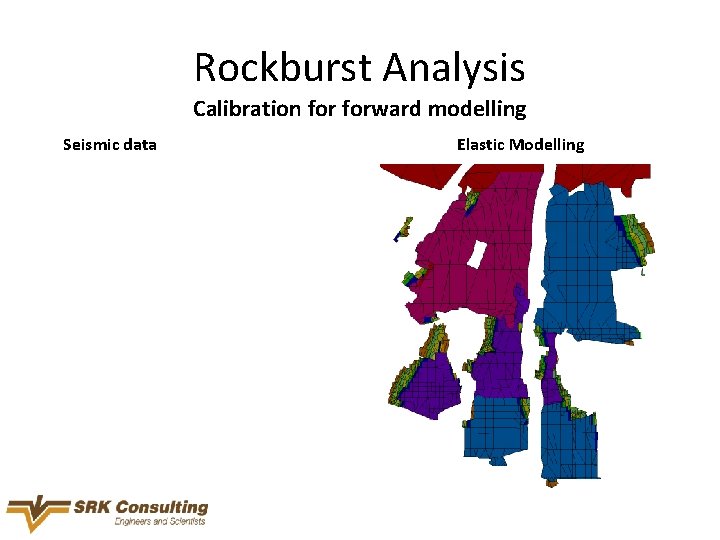
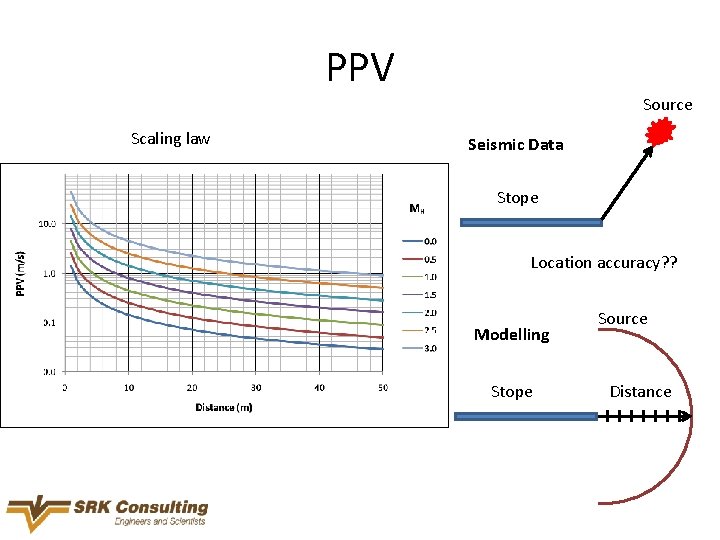
Rockburst Analysis Calibration forward modelling Seismic data Elastic Modelling
Rockburst Analysis Calibration forward modelling Modelled Energy a value
Rockburst Analysis Calibration forward modelling Constant b value
Rockburst Analysis Potential for Rockburst Damage ?
PPV Source Scaling law Seismic Data Stope Location accuracy? ? Modelling Stope Source Distance
Rockburst Analysis Excavation vulnerability potential (EVP) • Heal, Potvin & Hudyma, 2005 • 13 Australian & Canadian mines • 83 case histories, 254 damage locations
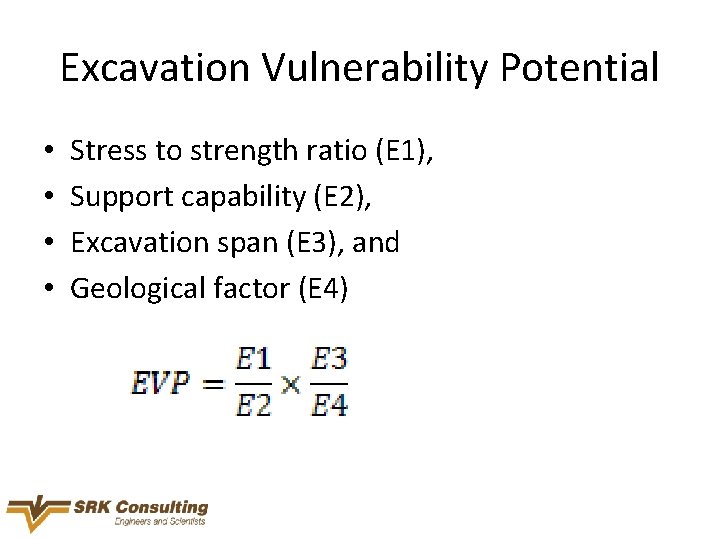
Excavation Vulnerability Potential • • Stress to strength ratio (E 1), Support capability (E 2), Excavation span (E 3), and Geological factor (E 4)
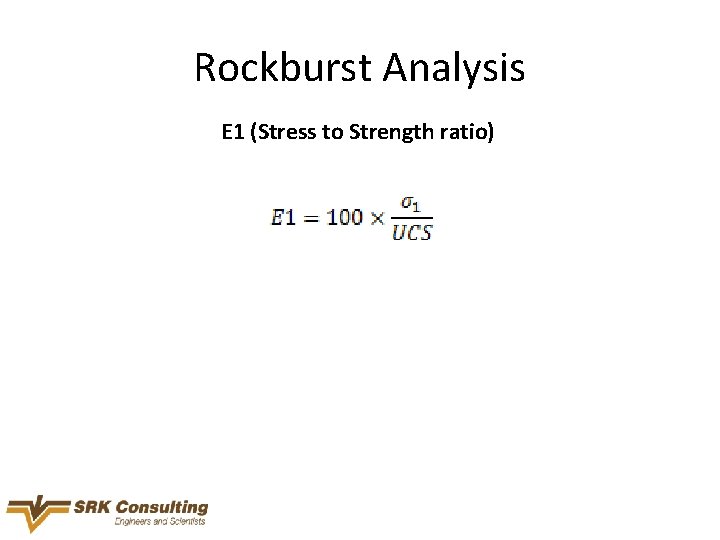
Rockburst Analysis E 1 (Stress to Strength ratio)
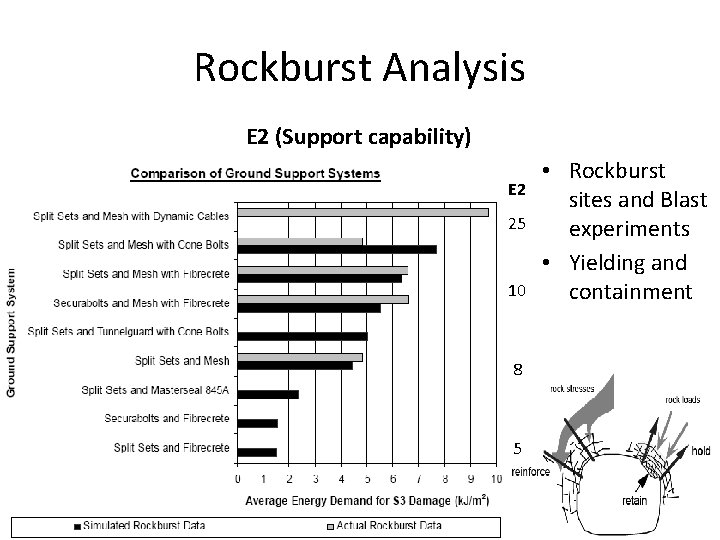
Rockburst Analysis E 2 (Support capability) E 2 25 10 8 5 • Rockburst sites and Blast experiments • Yielding and containment
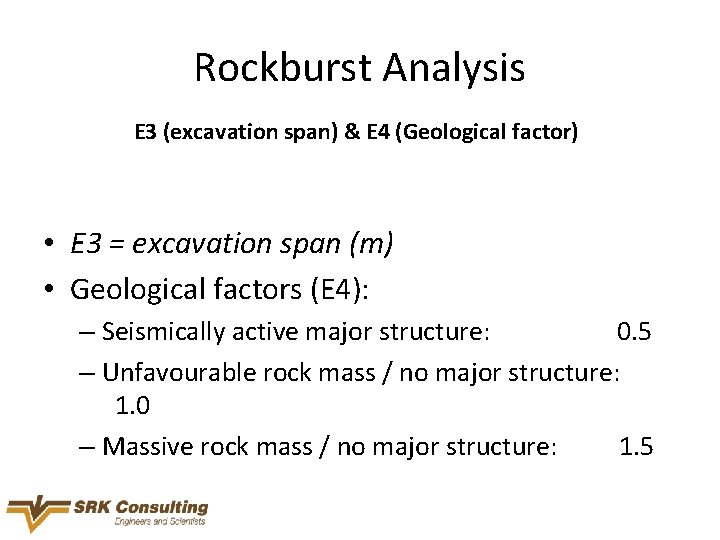
Rockburst Analysis E 3 (excavation span) & E 4 (Geological factor) • E 3 = excavation span (m) • Geological factors (E 4): – Seismically active major structure: 0. 5 – Unfavourable rock mass / no major structure: 1. 0 – Massive rock mass / no major structure: 1. 5
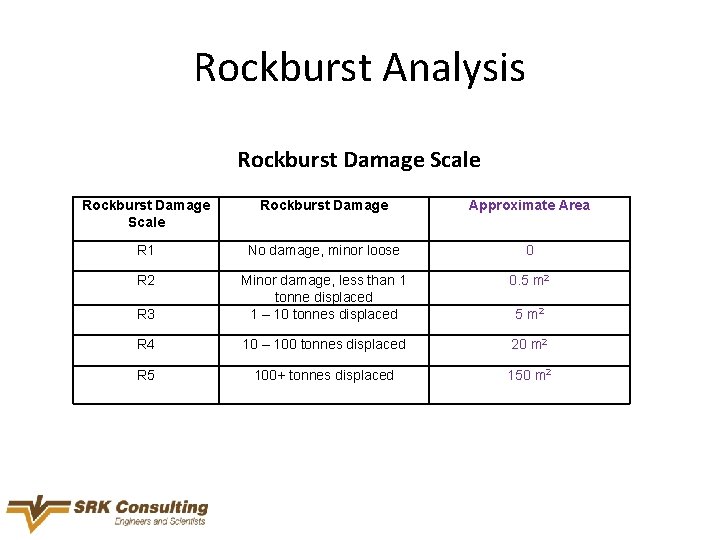
Rockburst Analysis Rockburst Damage Scale Rockburst Damage Approximate Area R 1 No damage, minor loose 0 R 2 0. 5 m 2 R 3 Minor damage, less than 1 tonne displaced 1 – 10 tonnes displaced R 4 10 – 100 tonnes displaced 20 m 2 R 5 100+ tonnes displaced 150 m 2 5 m 2
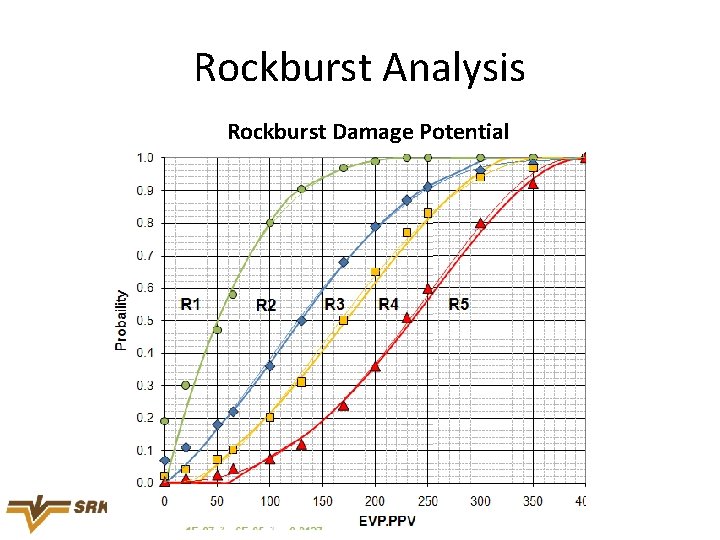
Rockburst Analysis Rockburst Damage Potential
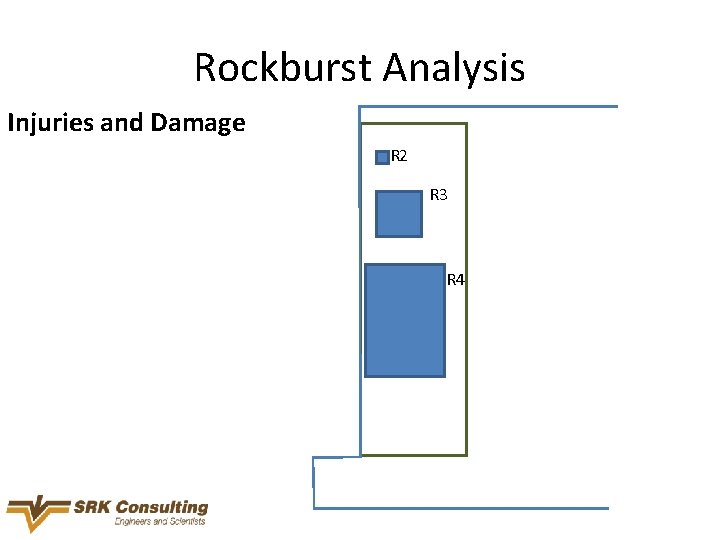
Rockburst Analysis Injuries and Damage R 2 R 3 R 4
Rockburst Analysis Injuries and Damage R 5
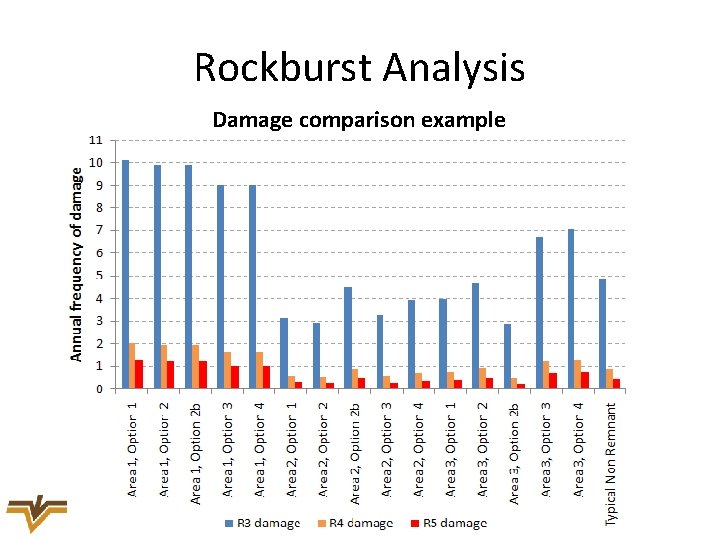
Rockburst Analysis Damage comparison example
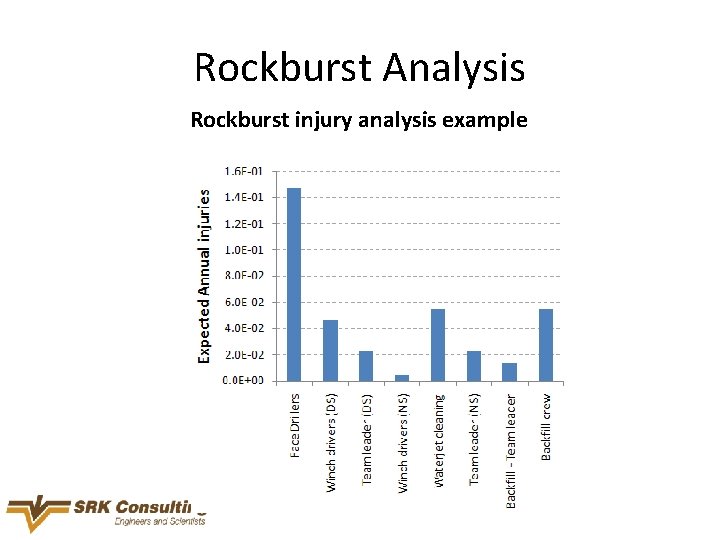
Rockburst Analysis Rockburst injury analysis example
Conclusions • A risk evaluation model has been developed to quantify rockfall and rockburst risk • It enables quantification of safety (injury and fatality) and economic risk • It enables the comparison between different support systems or safety strategies • Rockfall risk is quantified using statistical keyblock anlaysis • Rockfall risk is quantified using statistical and empirical methods • Data is required for calibration
Acknowledgements • Mine Health and Safety Council (MHSC) • The management of Lonmin and Impala Platinum are thanked for providing rockfall data for this research • South Deep & Telfer (Rockburst Risk) • Lawrence Rwodzi – economic analysis • Roger Stewart – Risk and economic evaluation software • Essie Esterhuizen – JBlock upgrades • Jody Thompson, Tony Jager, Dave Roberts, Johan Wesseloo, Dick Stacey, Luis-Fernando Contreras, Graham Howell, and Oscar Steffen.
- Slides: 53