
Quality of Service Issues Network design and security
- Slides: 25
Quality of Service Issues Network design and security Lecture 12 1
Background Interactive Multimedia (IMM) applications stretch resources What is Quality of service? What does a Qo. S-aware architecture look like? What building blocks does a Qo. S-aware architecture consist of? 2
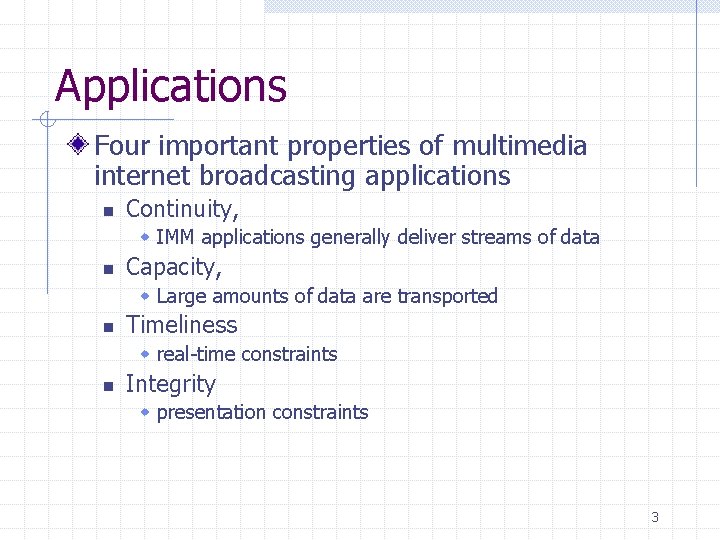
Applications Four important properties of multimedia internet broadcasting applications n Continuity, w IMM applications generally deliver streams of data n Capacity, w Large amounts of data are transported n Timeliness w real-time constraints n Integrity w presentation constraints 3
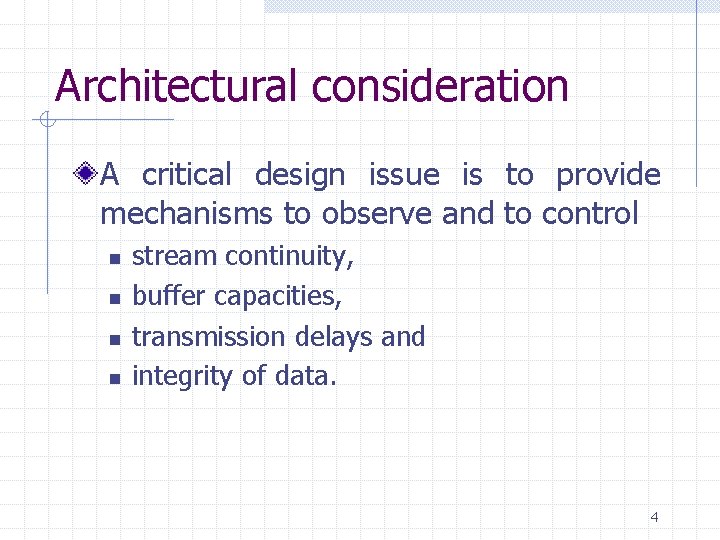
Architectural consideration A critical design issue is to provide mechanisms to observe and to control n n stream continuity, buffer capacities, transmission delays and integrity of data. 4
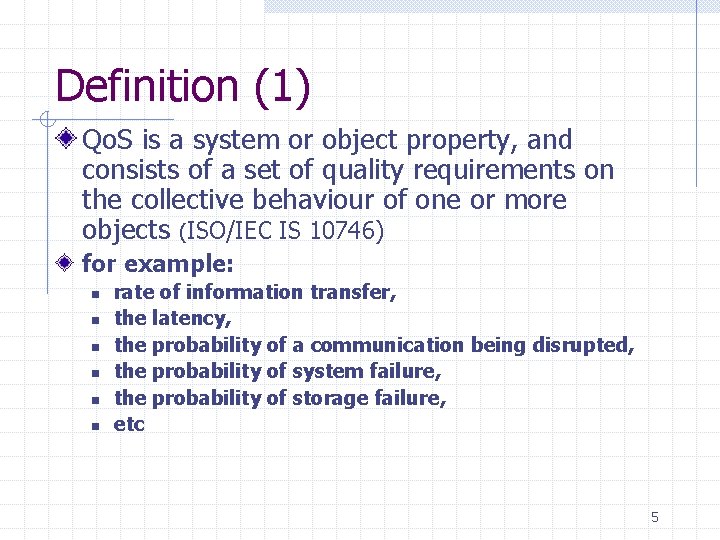
Definition (1) Qo. S is a system or object property, and consists of a set of quality requirements on the collective behaviour of one or more objects (ISO/IEC IS 10746) for example: n n n rate of information transfer, the latency, the probability of a communication being disrupted, the probability of system failure, the probability of storage failure, etc 5
Definition(2) to evaluate the characteristics of a system or service as to its task performance. . . qualitatively and quantitatively(ETSI) this is an end-user view 6
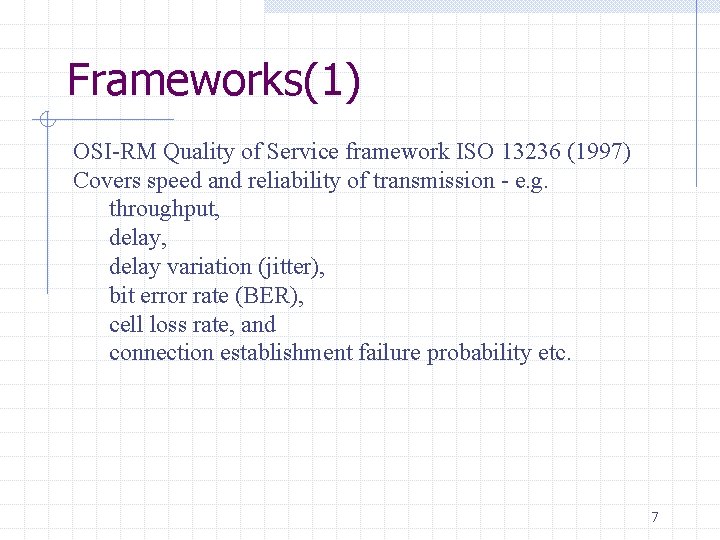
Frameworks(1) OSI-RM Quality of Service framework ISO 13236 (1997) Covers speed and reliability of transmission - e. g. throughput, delay variation (jitter), bit error rate (BER), cell loss rate, and connection establishment failure probability etc. 7
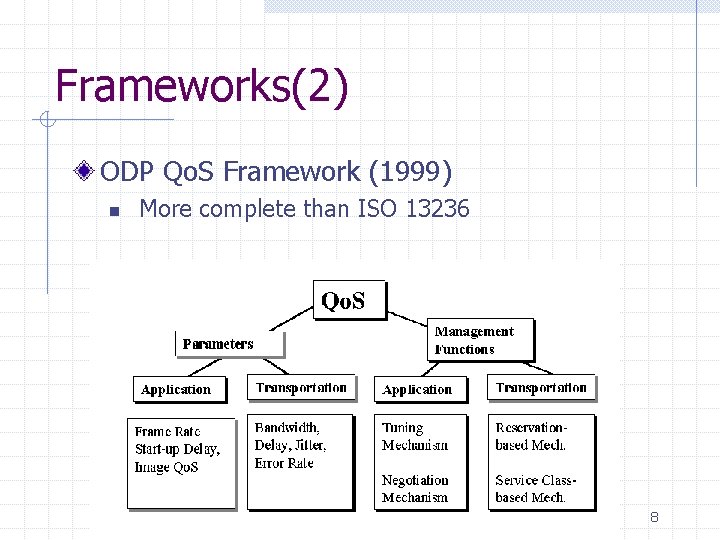
Frameworks(2) ODP Qo. S Framework (1999) n More complete than ISO 13236 8
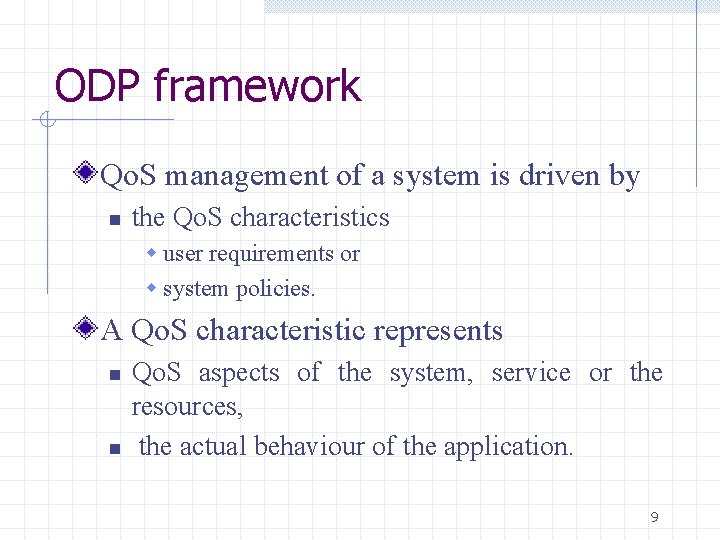
ODP framework Qo. S management of a system is driven by n the Qo. S characteristics w user requirements or w system policies. A Qo. S characteristic represents n n Qo. S aspects of the system, service or the resources, the actual behaviour of the application. 9
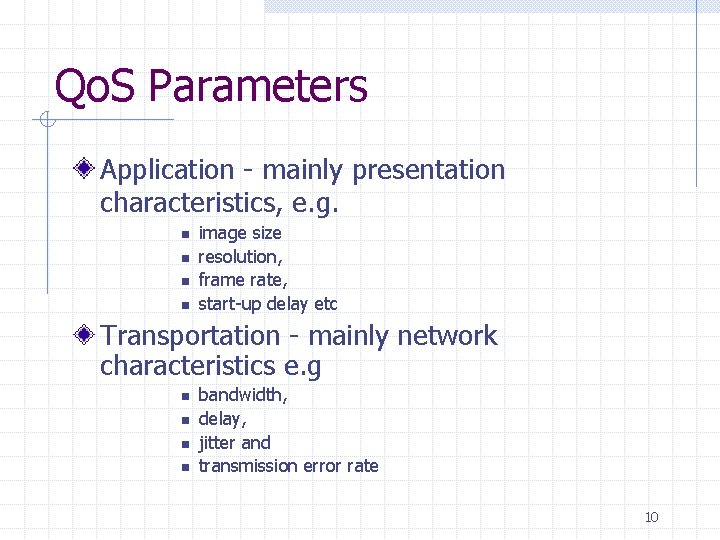
Qo. S Parameters Application - mainly presentation characteristics, e. g. n n image size resolution, frame rate, start-up delay etc Transportation - mainly network characteristics e. g n n bandwidth, delay, jitter and transmission error rate 10
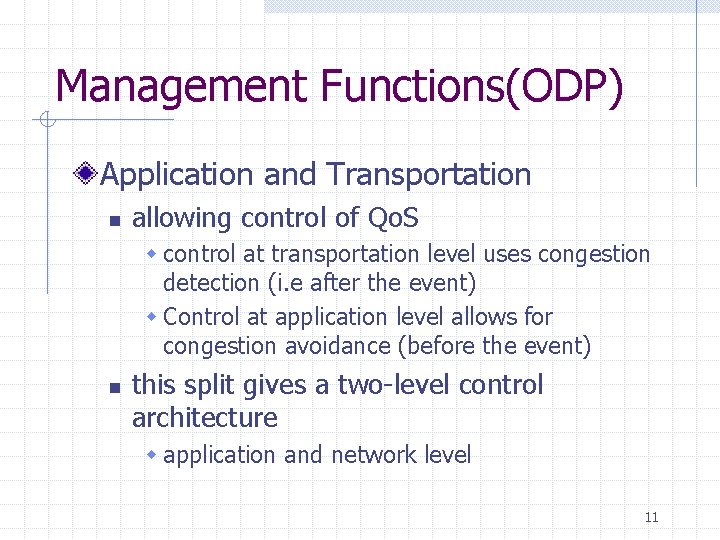
Management Functions(ODP) Application and Transportation n allowing control of Qo. S w control at transportation level uses congestion detection (i. e after the event) w Control at application level allows for congestion avoidance (before the event) n this split gives a two-level control architecture w application and network level 11
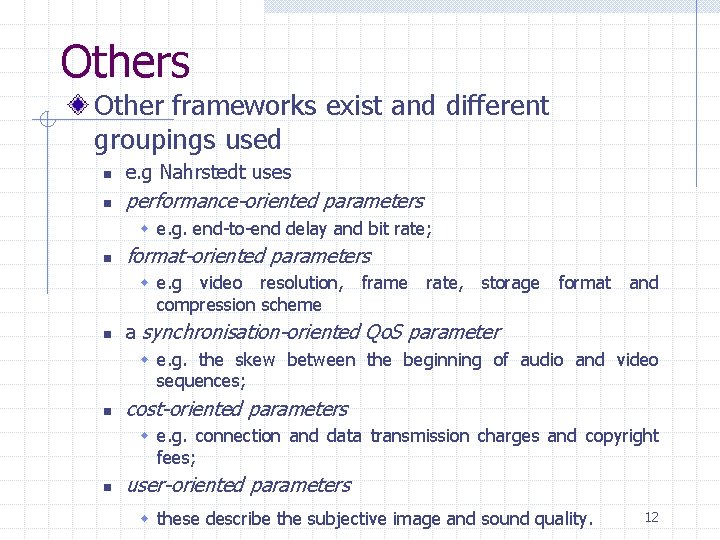
Others Other frameworks exist and different groupings used n e. g Nahrstedt uses n performance-oriented parameters w e. g. end-to-end delay and bit rate; n format-oriented parameters w e. g video resolution, compression scheme n frame rate, storage format and a synchronisation-oriented Qo. S parameter w e. g. the skew between the beginning of audio and video sequences; n cost-oriented parameters w e. g. connection and data transmission charges and copyright fees; n user-oriented parameters w these describe the subjective image and sound quality. 12
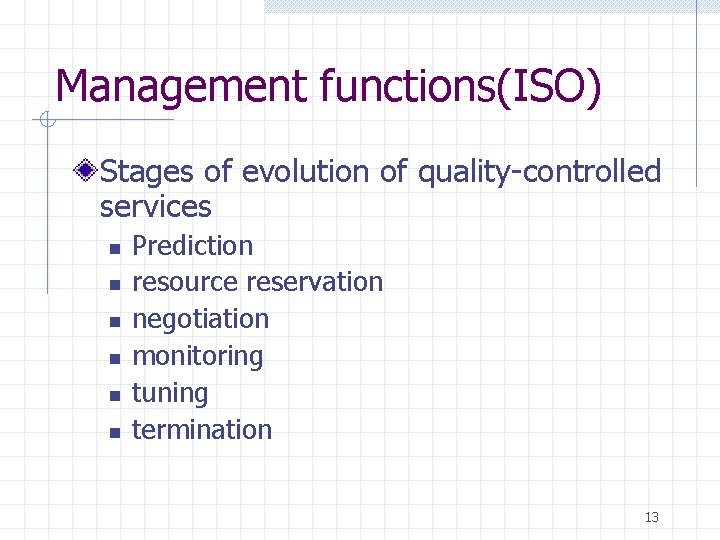
Management functions(ISO) Stages of evolution of quality-controlled services n n n Prediction resource reservation negotiation monitoring tuning termination 13
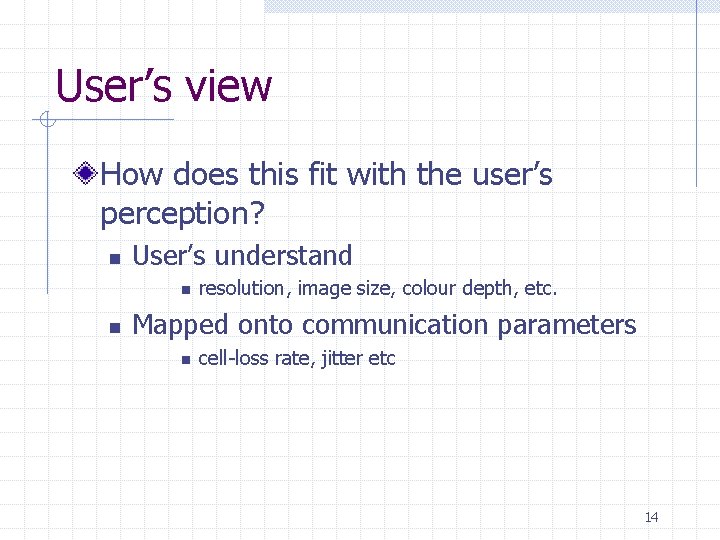
User’s view How does this fit with the user’s perception? n User’s understand n n resolution, image size, colour depth, etc. Mapped onto communication parameters n cell-loss rate, jitter etc 14
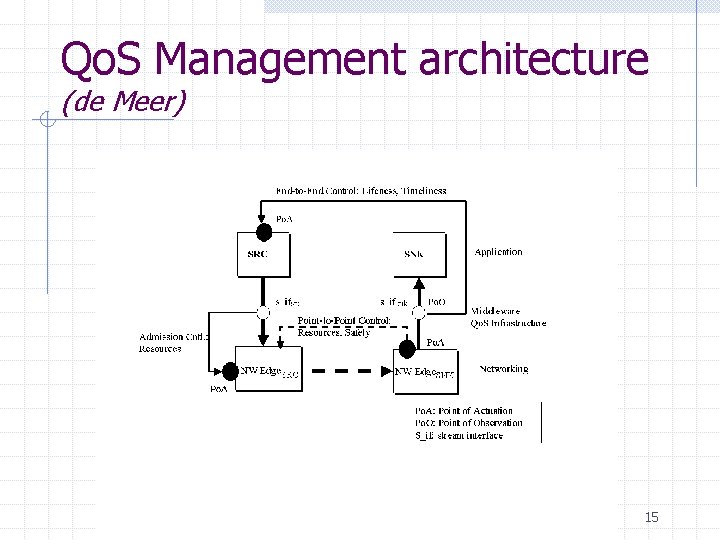
Qo. S Management architecture (de Meer) 15
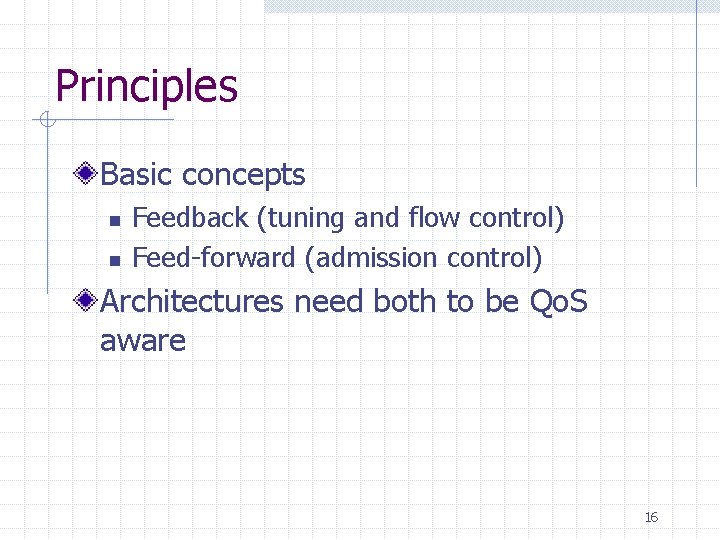
Principles Basic concepts n n Feedback (tuning and flow control) Feed-forward (admission control) Architectures need both to be Qo. S aware 16
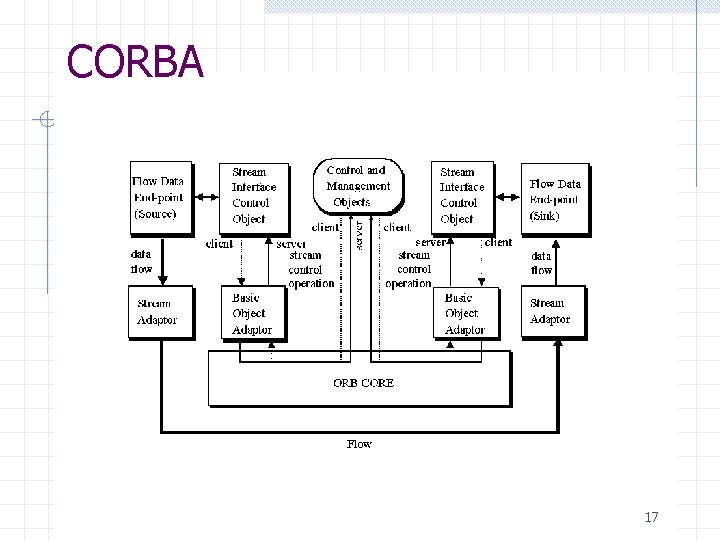
CORBA 17
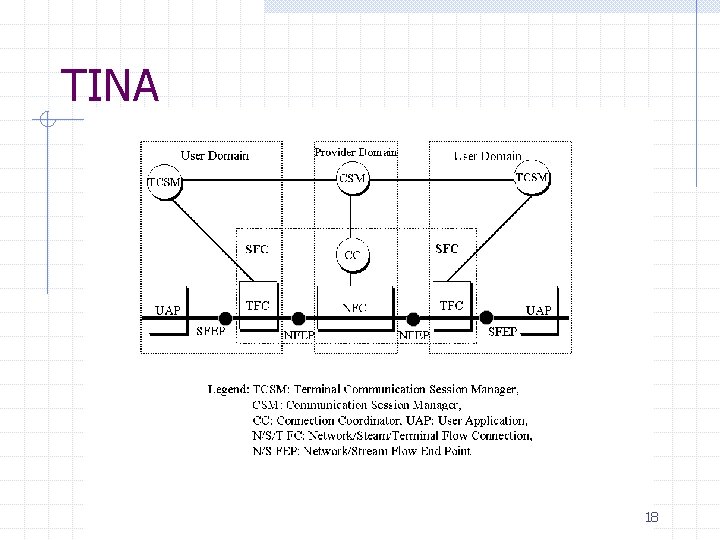
TINA 18
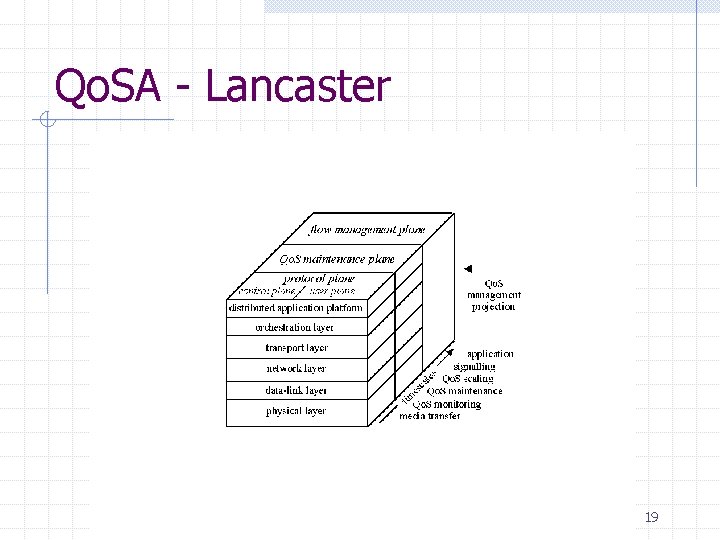
Qo. SA - Lancaster 19
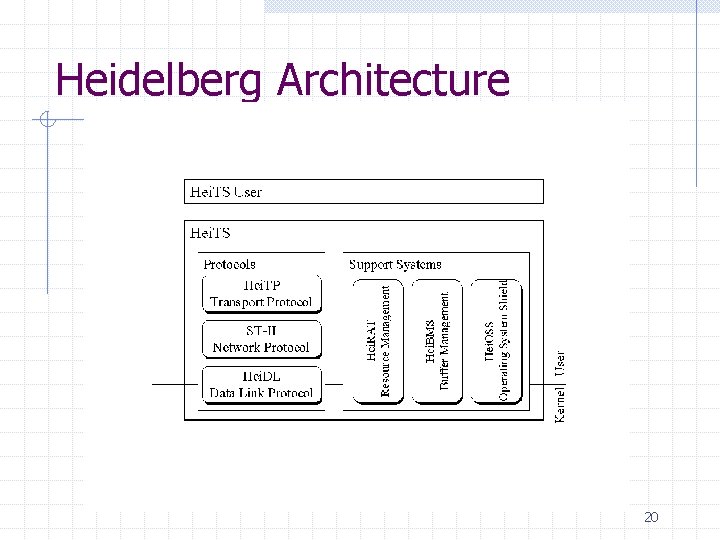
Heidelberg Architecture 20
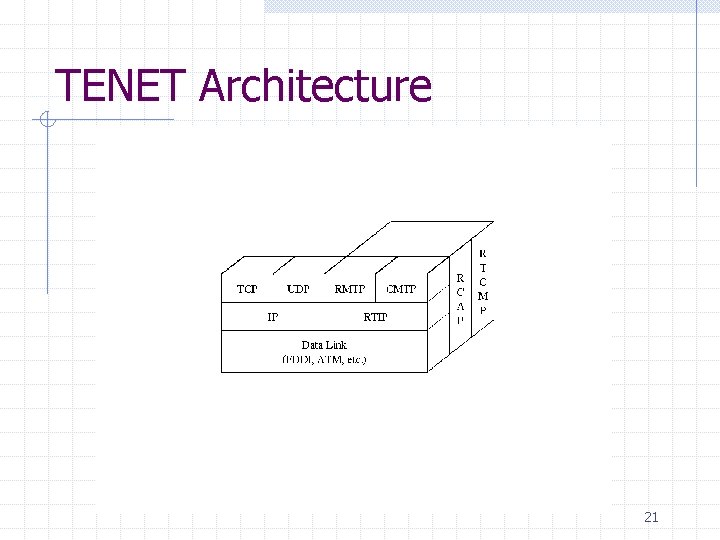
TENET Architecture 21
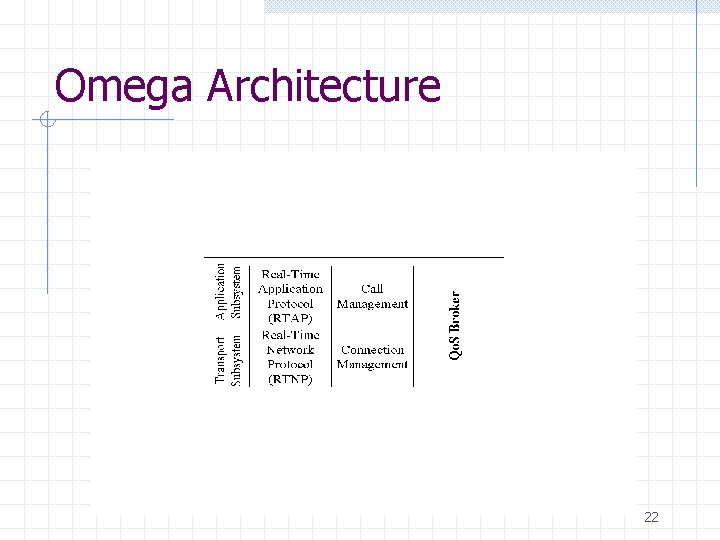
Omega Architecture 22
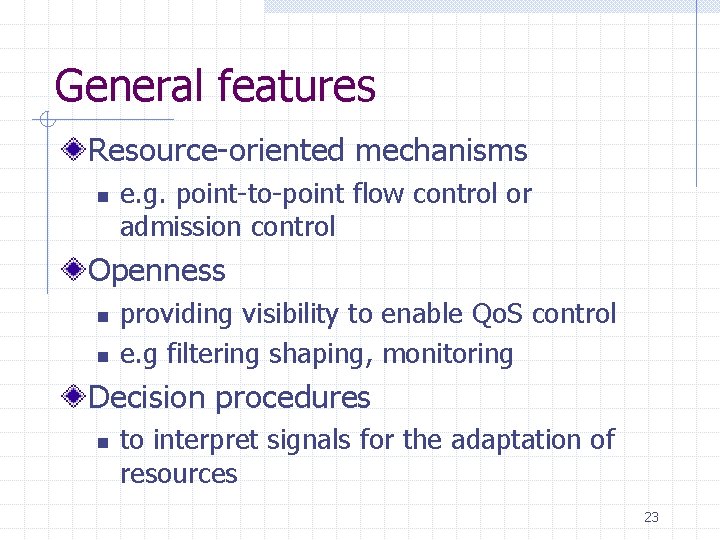
General features Resource-oriented mechanisms n e. g. point-to-point flow control or admission control Openness n n providing visibility to enable Qo. S control e. g filtering shaping, monitoring Decision procedures n to interpret signals for the adaptation of resources 23
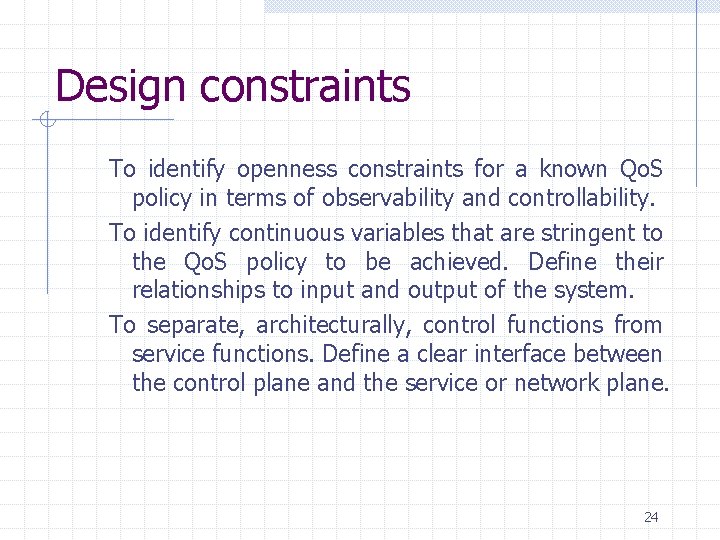
Design constraints To identify openness constraints for a known Qo. S policy in terms of observability and controllability. To identify continuous variables that are stringent to the Qo. S policy to be achieved. Define their relationships to input and output of the system. To separate, architecturally, control functions from service functions. Define a clear interface between the control plane and the service or network plane. 24
Conclusions Many models exist Those outlined are mainly Qo. S-aware IMM applications will suffer without Qo. S -awareness 25