
Quality issue initial problem Aberdeenshire Improving outcomes for
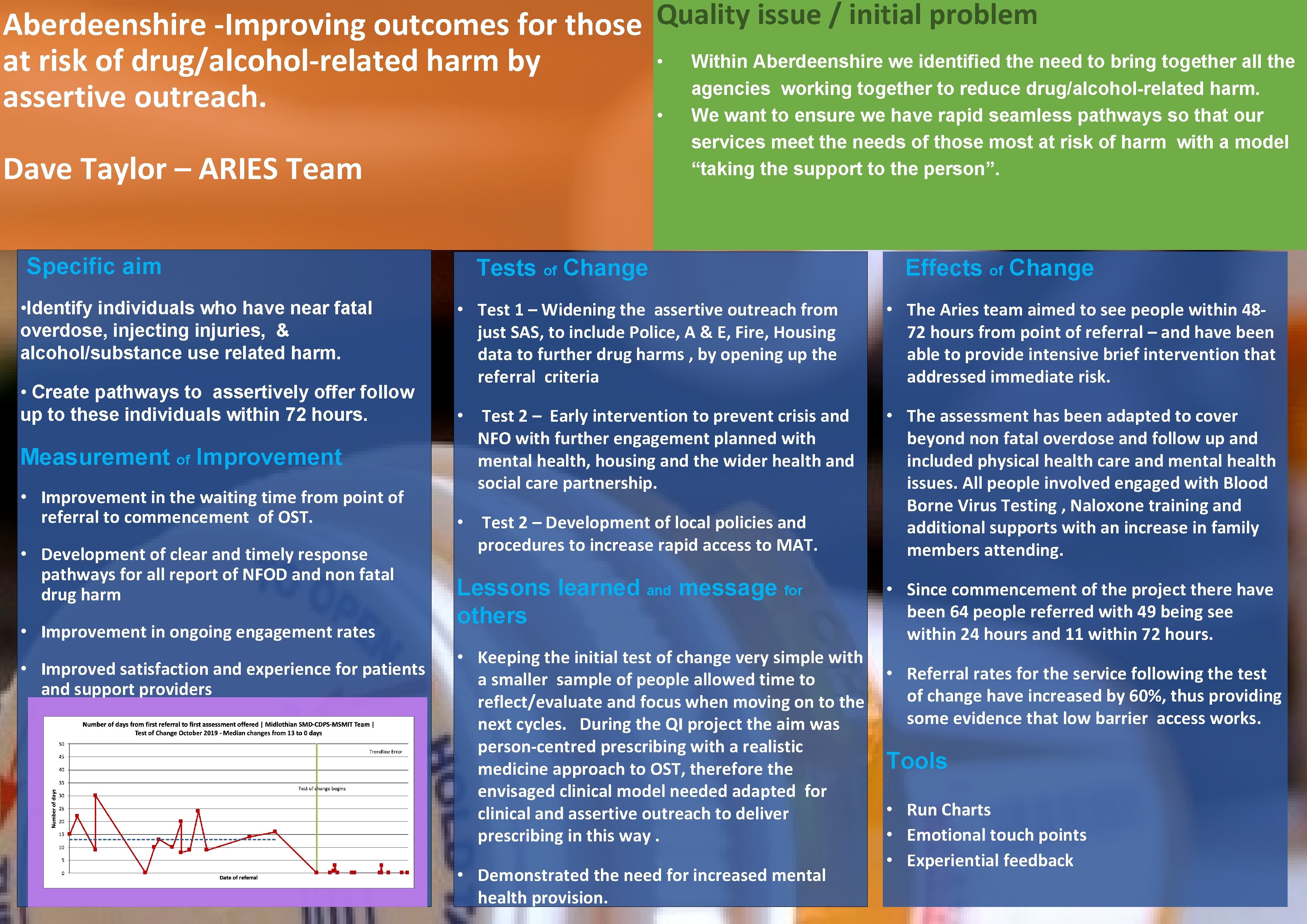
Quality issue / initial problem Aberdeenshire -Improving outcomes for those at risk of drug/alcohol-related harm by assertive outreach. Dave Taylor – ARIES Team Specific aim • Identify individuals who have near fatal overdose, injecting injuries, & alcohol/substance use related harm. • Create pathways to assertively offer follow up to these individuals within 72 hours. Measurement of Improvement • Improvement in the waiting time from point of referral to commencement of OST. • Development of clear and timely response pathways for all report of NFOD and non fatal drug harm • Improvement in ongoing engagement rates • Improved satisfaction and experience for patients and support providers • • Within Aberdeenshire we identified the need to bring together all the agencies working together to reduce drug/alcohol-related harm. We want to ensure we have rapid seamless pathways so that our services meet the needs of those most at risk of harm with a model “taking the support to the person”. Tests of Change Effects of Change • Test 1 – Widening the assertive outreach from just SAS, to include Police, A & E, Fire, Housing data to further drug harms , by opening up the referral criteria • The Aries team aimed to see people within 4872 hours from point of referral – and have been able to provide intensive brief intervention that addressed immediate risk. • Test 2 – Early intervention to prevent crisis and NFO with further engagement planned with mental health, housing and the wider health and social care partnership. • The assessment has been adapted to cover beyond non fatal overdose and follow up and included physical health care and mental health issues. All people involved engaged with Blood Borne Virus Testing , Naloxone training and additional supports with an increase in family members attending. • Test 2 – Development of local policies and procedures to increase rapid access to MAT. Lessons learned and message for others • Keeping the initial test of change very simple with a smaller sample of people allowed time to reflect/evaluate and focus when moving on to the next cycles. During the QI project the aim was person-centred prescribing with a realistic medicine approach to OST, therefore the envisaged clinical model needed adapted for clinical and assertive outreach to deliver prescribing in this way. • Demonstrated the need for increased mental health provision. • Since commencement of the project there have been 64 people referred with 49 being see within 24 hours and 11 within 72 hours. • Referral rates for the service following the test of change have increased by 60%, thus providing some evidence that low barrier access works. Tools • Run Charts • Emotional touch points • Experiential feedback
- Slides: 1