
Quality Infrastructure System definition core elements guiding principles


- Slides: 10
Quality Infrastructure System: definition, core elements, guiding principles Ivan Hendrikx, key expert conformity assessment, Market Surveillance and QI 1
Definition of a Quality Infrastructure System A QIS can be defined as a highly integrated network of people, systems and organizations involved in the research, definition, development and promotion of quality goods, services and processes. In other words “the totality of the institutional framework (public and/or private) required to establish and implement standardization, metrology (scientific, industrial and legal), accreditation and conformity assessment (inspection, testing and certification) services that are necessary to provide acceptable evidence that products and services meet defined requirements as demanded by regulatory authorities (i. e. framework laws and technical regulations) or the market place (i. e. contractually or inferred). 2
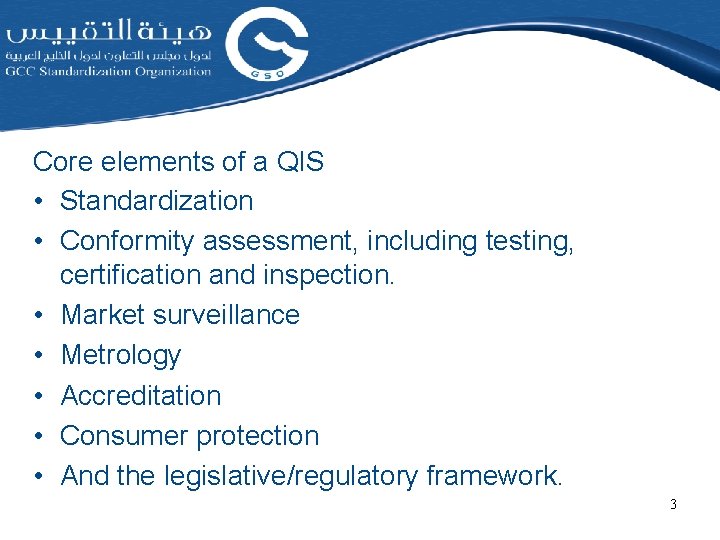
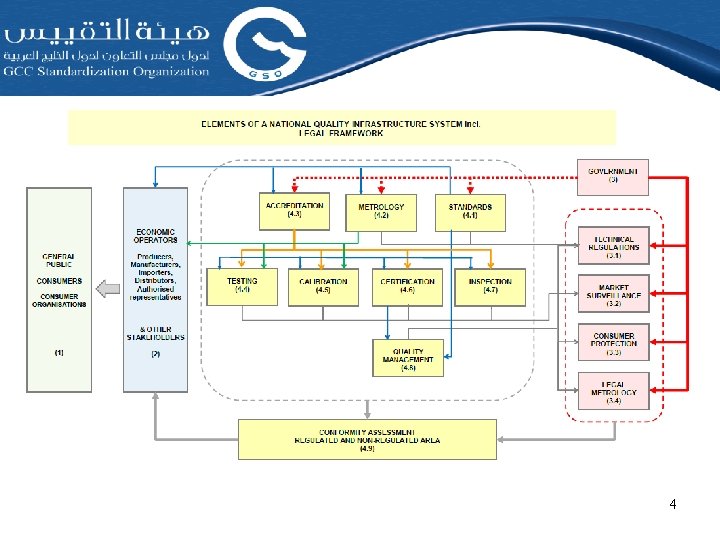
Core elements of a QIS • Standardization • Conformity assessment, including testing, certification and inspection. • Market surveillance • Metrology • Accreditation • Consumer protection • And the legislative/regulatory framework. 3
4
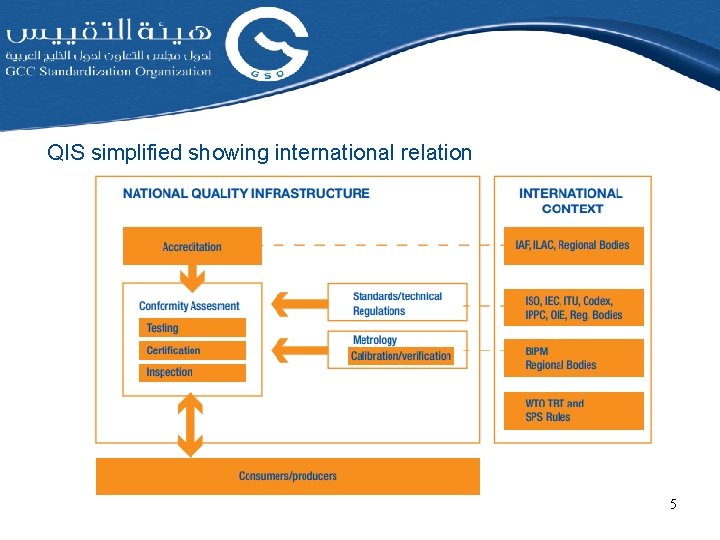
QIS simplified showing international relation 5
Basic expectations of a QIS 1. Products/service made available on the market are safe and conform to other requirements of public interest. 2. Above made possible by law on general product safety: economic operators only to place safe products on the market. 3. Additional sector-specific safety requirements applicable for certain products/services based on voluntary (mandatory) standards provide for presumption of conformity with the requirements. 4. Product conformity assured through CA schemes by economic operator and CABs which performances are assured by a National Accreditation Body. 6
Basic expectations of a QIS 4. Legal metrology and national metrology system (NMI) in place 5. Product liability law in place will safeguard responsibilities for economic operators to compensate for damages caused by unsafe products when already on the market 6. Obligation of public authorities to develop the QIS and to make it effective and functional 7
Guiding principles 1. Proportionality of requirements, of fines/penalties 2. Avoidance of conflicts of interest (QI entity cannot be judge and party at the same time) 3. Participatory regulations (co-regulation) 4. Transparency providing “legal certainty” to economic operators 5. Right of defence (hearings, appeals in case of decisions made by MSAs) 6. Integration with other elements of national trade policy (see next slide) 8
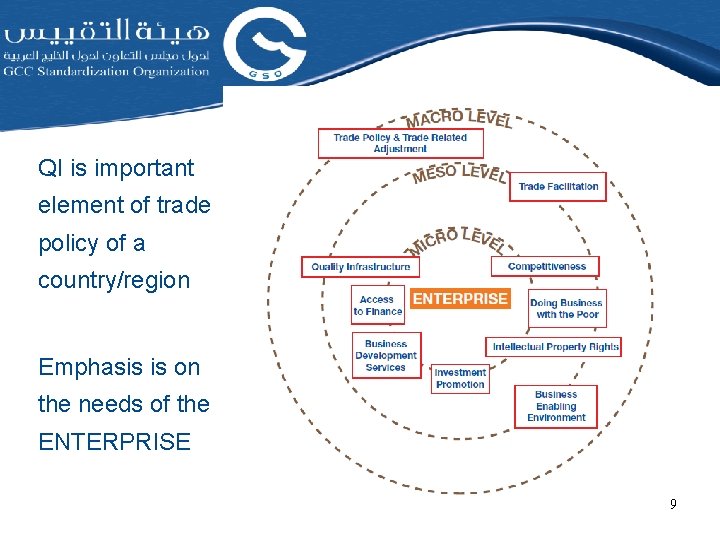
QI is important element of trade policy of a country/region Emphasis is on the needs of the ENTERPRISE 9
Thank you for your attention Any questions? 10