
Quality Improvement Data Systems for Performance Excellence Board
Quality Improvement & Data Systems for Performance Excellence Board and Executive Learning Series June 2, 2012 Lucy A. Savitz, Ph. D. , MBA Director of Research and Education Institute for Health Care Delivery Research
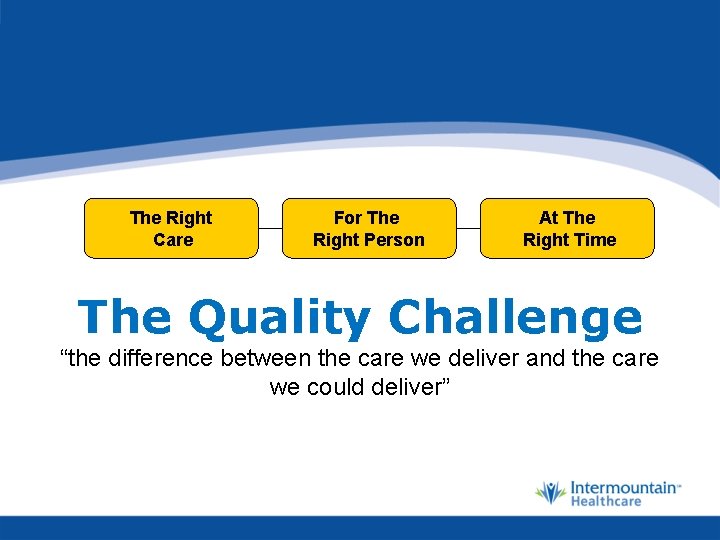
The Right Care For The Right Person At The Right Time The Quality Challenge “the difference between the care we deliver and the care we could deliver”
Care Delivery Falls Short of Potential • Well-documented, massive variation in practices • High rates of inappropriate care • Unacceptable rates of preventable careassociated patient injury & death • A striking inability to do what we know works • Huge amounts of waste (>44%), spiraling prices, and limited access
Need for a Healthcare System that Learns We require a sustainable system • That gets the right care to the right person at the right time and then • Captures the results for making improvements.
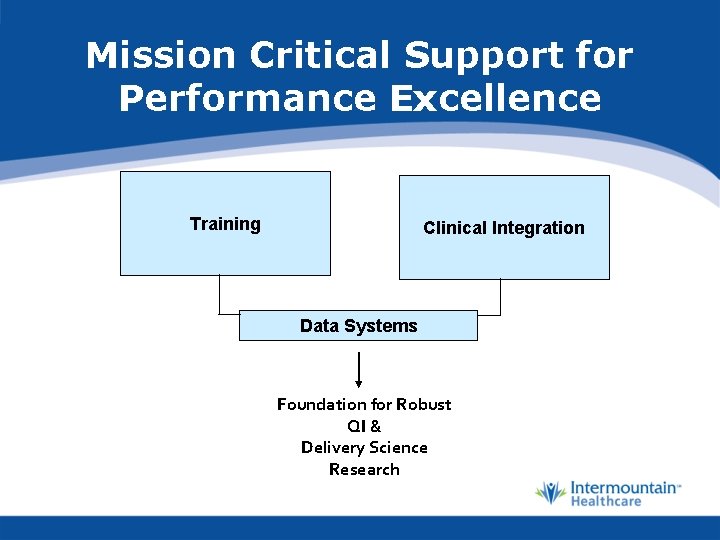
Mission Critical Support for Performance Excellence Training Clinical Integration Data Systems Foundation for Robust QI & Delivery Science Research
Driving Change • We combined our QUE “research” experience with Deming’s quality theory to create a series of training programs.
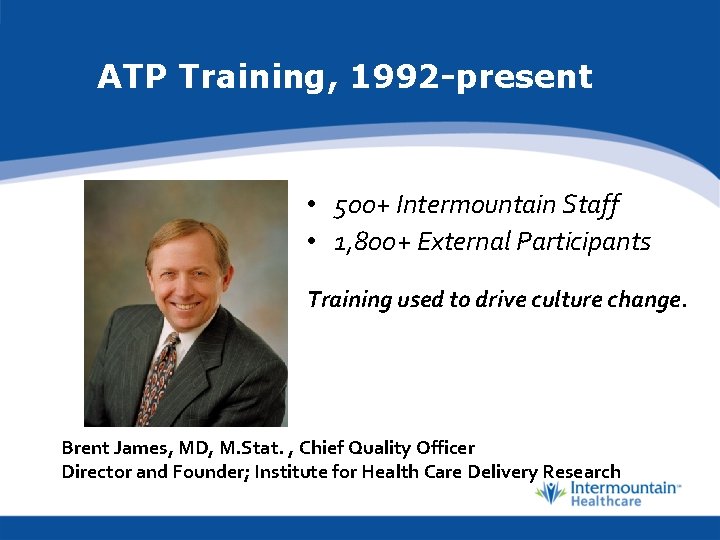
ATP Training, 1992 -present • 500+ Intermountain Staff • 1, 800+ External Participants Training used to drive culture change. Brent James, MD, M. Stat. , Chief Quality Officer Director and Founder; Institute for Health Care Delivery Research
Clinical Integration • Clinical work process-based organizational structure • A fundamental idea of QI theory is to identify key work processes then organize around them. • A limited number of these key processes make up the majority of services you provide to patients.

Data Systems Integrated Reporting and Analysis Claims& Eligibility EDW Clinical Data Financial Data
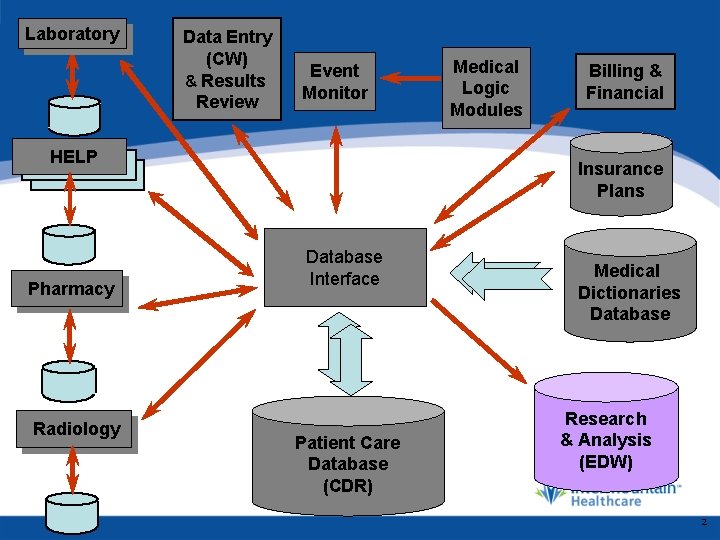
Laboratory Data Entry (CW) & Results Review Event Monitor HELP Pharmacy Radiology Medical Logic Modules Billing & Financial Insurance Plans Database Interface Patient Care Database (CDR) Medical Dictionaries Database Research & Analysis (EDW) 2
Case for Continuous Improvement Incorporating • Innovation • Disciplined QI • Research & Evaluation Critical to finding new designs/solutions for optimizing: • Patient experience • Health of the population • Controlling cost/reducing waste.
The Problem Reducing variation in compliance with evidencebased guidelines. • Care Process Models (CPMs) are narrative documents that aim at representing state-of-the-art medical knowledge. • Clinical Decision Support Tools can include all ways in which health care knowledge is represented in health information systems.
Key steps in our approach… • Identify problem • Establish evidence base • Develop, test, & implement using QI concepts and tools (define, measure, analyze, improve, control)
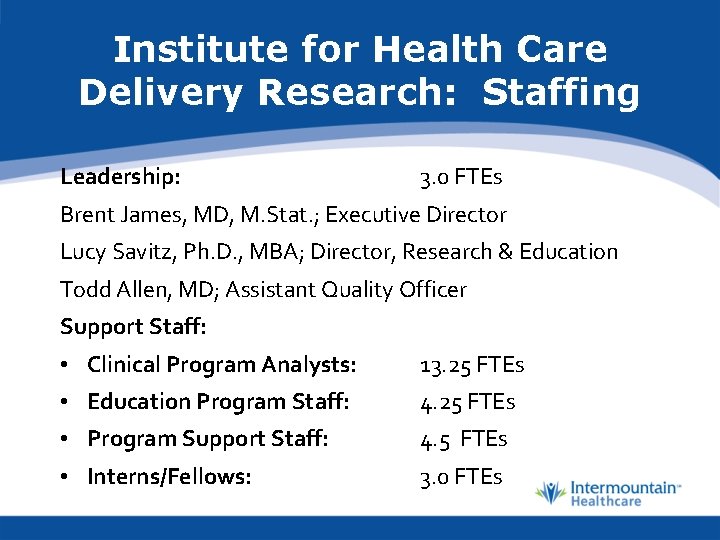
Institute for Health Care Delivery Research: Staffing Leadership: 3. 0 FTEs Brent James, MD, M. Stat. ; Executive Director Lucy Savitz, Ph. D. , MBA; Director, Research & Education Todd Allen, MD; Assistant Quality Officer Support Staff: • Clinical Program Analysts: 13. 25 FTEs • Education Program Staff: 4. 25 FTEs • Program Support Staff: 4. 5 FTEs • Interns/Fellows: 3. 0 FTEs
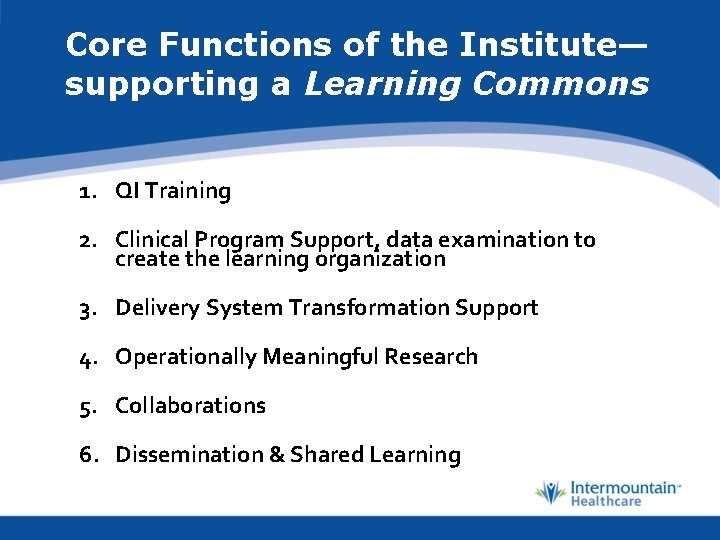
Core Functions of the Institute— supporting a Learning Commons 1. QI Training 2. Clinical Program Support, data examination to create the learning organization 3. Delivery System Transformation Support 4. Operationally Meaningful Research 5. Collaborations 6. Dissemination & Shared Learning
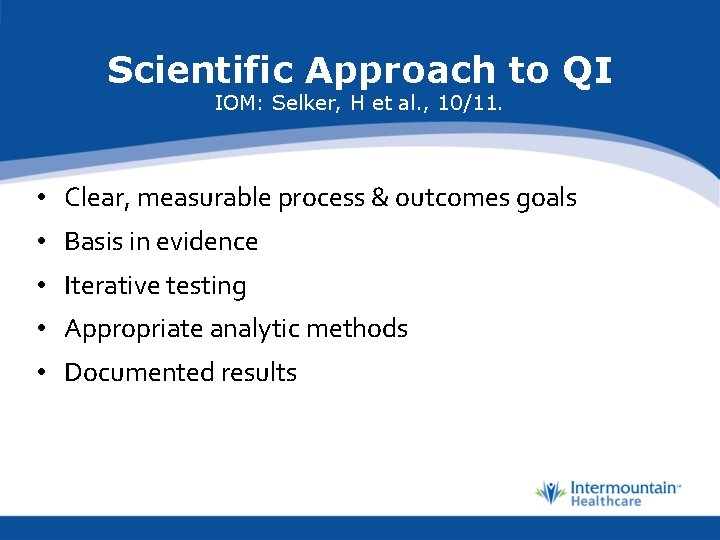
Scientific Approach to QI IOM: Selker, H et al. , 10/11. • Clear, measurable process & outcomes goals • Basis in evidence • Iterative testing • Appropriate analytic methods • Documented results
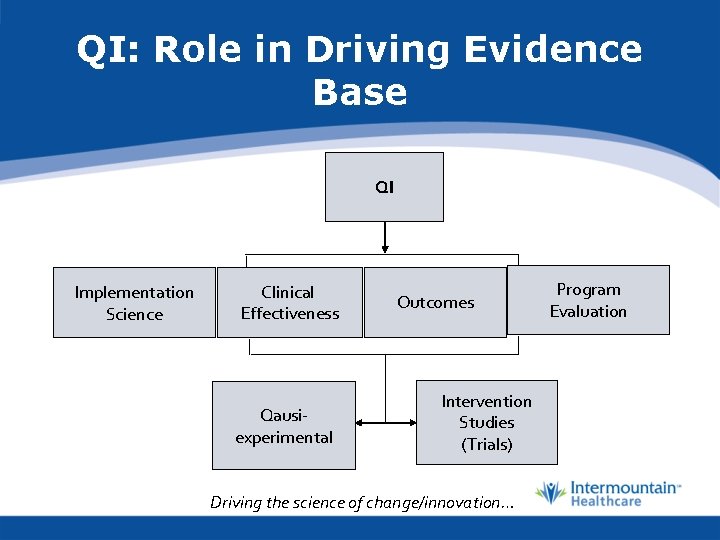
QI: Role in Driving Evidence Base QI Implementation Science Clinical Effectiveness Qausiexperimental Outcomes Intervention Studies (Trials) Driving the science of change/innovation… Program Evaluation
Selected References • Wallace, J, LA Savitz: Estimating Waste in Frontline Health Care Workers, Journal of Evaluation in Clinical Practice, 14: 178 -180, 2008. • Clark, DD, LA Savitz, SB Pingree: “Cost Cutting in Health Systems Without Compromising Quality, ” Frontiers of Health Services Management, 27(2): 19 -30, 2010. • James, BC & LA Savitz: “How Intermountain Trimmed Health Care Costs Through Robust Quality Improvement Efforts, ” Health Affairs, 30(6), 2011. • Selker, H, C Grossman, A Adams, D Goldman, C Dexii, G Meyer, V Roger, L Savitz, R Platt: “The Common Rule and Continuous Improvement in health Care, A Learning System Perspective, IOM, October, 2011. • Luther, K & LA Savitz: “Leaders Challenged to Reduce Cost, Deliver More, ” Healthcare Executive, Jan/Feb, 2012.

Thank you.
- Slides: 19