
Quality Circle By Kate Craig Rachna Gaur and
Quality Circle By: Kate Craig, Rachna Gaur, and Jessica Saenz
Introduction “Quality circles typically are small groups of volunteers from the same work areas who meet regularly to identify, analyze, and solve quality and related problems in their area of responsibility. ” (George Munchus, 1983) The technique was introduced in Japan through the teaching of Dr. W. Edward Deming after World War II
Attributes Participative Management Human Resource Development Technique Problem Solving Technique
QC Objectives Change in attitude Development of team spirit Improved organizational culture Help in improving the productivity Promote individuals self-development Enhanced interest in jobs
QC Characteristics Consists of 6 -8 members from the same section Membership is Voluntary Meet Regularly Members need to elect a leader to conduct meetings (first meeting) Members are specially trained in problem solving and analysis techniques in order to play their role effectively Systematic basis Management approval and proper recognition
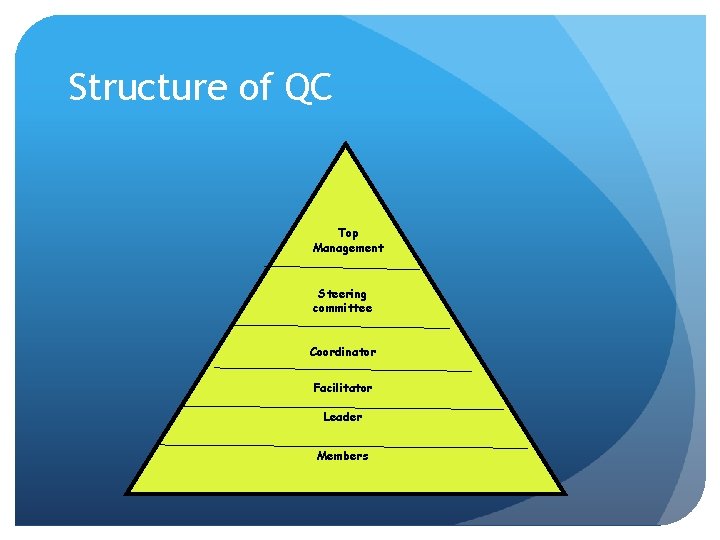
Structure of QC Top Management Steering committee Coordinator Facilitator Leader Members
Launching a QC Expose and inform management about the process Committee is formed Coordinators and steering committee are selected Scope is defined Training is provided for coordinators and middle management Employees are invited Trained suitability once they sign up Problems are discussed in a systematic manner
Process Problem selection Problem identification Problem Analysis Generate alternative solutions Prepare plan of action Implementation of solution Select the most appropriate solution
- Slides: 8