
Qualitative Research Origins of Qualitative Approaches Developed as






- Slides: 48
Qualitative Research
Origins of Qualitative Approaches • Developed as a reaction to positivist philosophy which had overrun all sciences, even philosophy itself • Recognition that the lived world of humanity requires a different research approach to the natural world
MAKING SENSE OF OTHERS’ REALITY
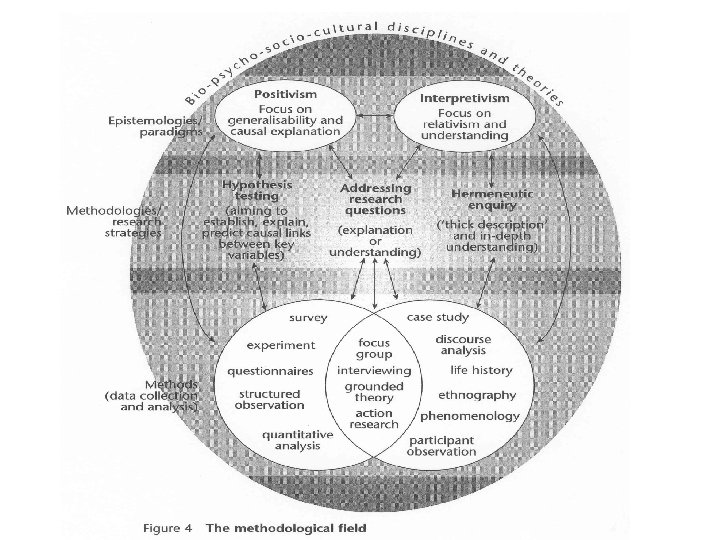
scientific paradigms Quantitative and qualitative research may largely be seen as existing within two separate scientific paradigms. Quantitative Research is rooted in the Positivist paradigm. Qualitative Research is rooted in the Interpretive paradigm.
THE POSITIVIST PARADIGM • Positivism argues that research should act “… as an organised method …” surrounding precise empirical observations of individual behaviour in order to discover and confirm a set of probabilistic causal laws that can be used to predict general patterns of human activity” (Neuman, 1997: 63) • Empiricism argues that only that which can be experienced through the senses may be known to be real. • Positivist research gained dominance in the natural sciences and was later adopted in social sciences.
THE INTERPRETIVE PARADIGM • The interpretive approach argues that research should explore “…socially meaningful action through the direct detailed observation of people in natural settings in order to arrive at understandings and interpretations of how people create and maintain their social worlds” (Neuman, 1997: 68). • We use “… methods that try to describe and interpret people’s feelings and experiences in human terms rather than through quantification and measurement” (Terre Blanche & Kelly, 1999: 123).
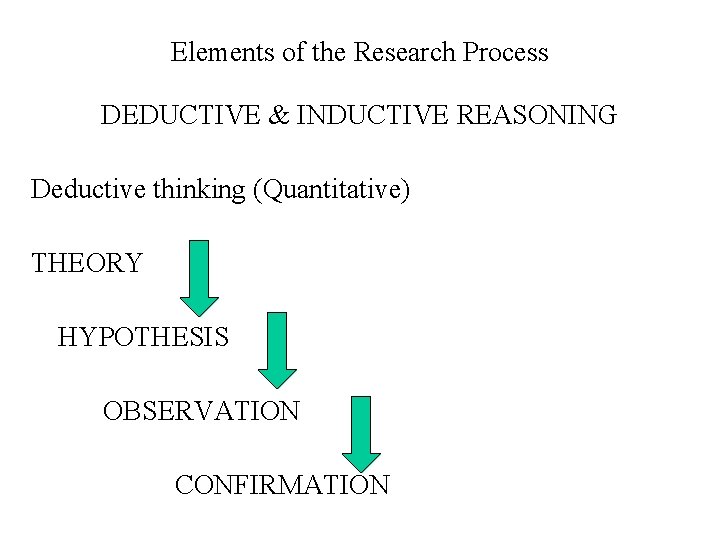
Elements of the Research Process DEDUCTIVE & INDUCTIVE REASONING Deductive thinking (Quantitative) THEORY HYPOTHESIS OBSERVATION CONFIRMATION
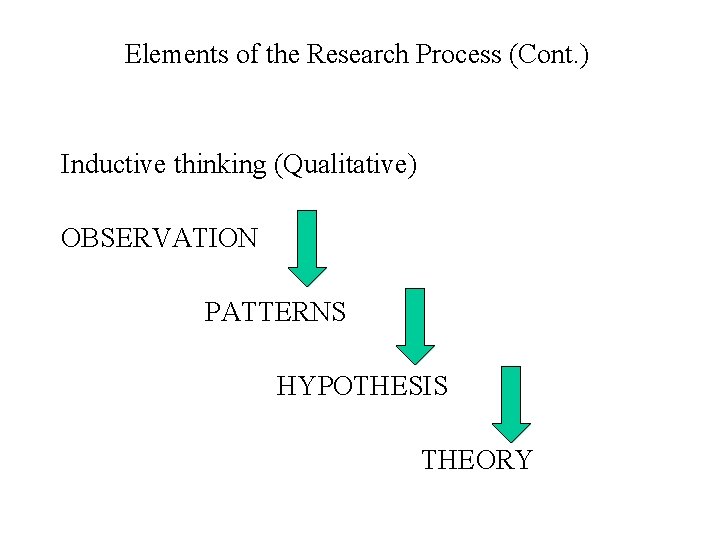
Elements of the Research Process (Cont. ) Inductive thinking (Qualitative) OBSERVATION PATTERNS HYPOTHESIS THEORY
Qualitative research. . . • Commonly called “interpretive research” …its methods rely heavily on “thick” verbal descriptions of a particular social context being studied
Qualitative research. . . • It is useful for describing or answering questions about particular, localized occurrences or contexts and the perspectives of a participant group toward events, beliefs, or practices …a helpful process for exploring a complex research area about which little is known
Qualitative research. . . • Interpretation, as the core of qualitative research focuses on the meaning of human experience. • The focus is on understanding human experience rather than explaining and predicting behaviour. • It is acknowledged that meaning and behaviour occurs within particular social, cultural and historical contexts.
“Qualitative Research” a definition by Van Maanen (1979) “An umbrella term covering an array of interpretive techniques which seek to describe, decode, translate, and otherwise come to terms with the meaning, not the frequency, of certain naturally occurring phenomena in the social world” (p. 520)
“Qualitative Research” a definition by (Ulin, Robinson & Tolley, 2005, p. 5) “… a theoretical and methodological focus on complex relations between (1) personal and social meanings, (2) individual and cultural practices, and (3) the material environment of context.
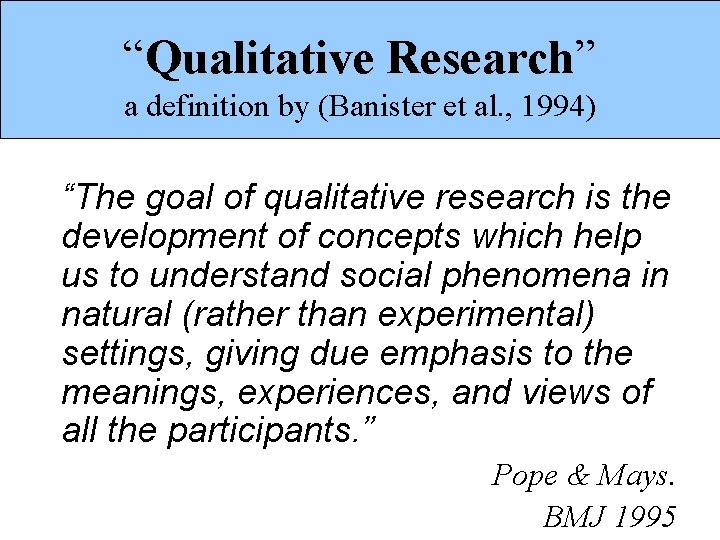
“Qualitative Research” a definition by (Banister et al. , 1994) “The goal of qualitative research is the development of concepts which help us to understand social phenomena in natural (rather than experimental) settings, giving due emphasis to the meanings, experiences, and views of all the participants. ” Pope & Mays. BMJ 1995
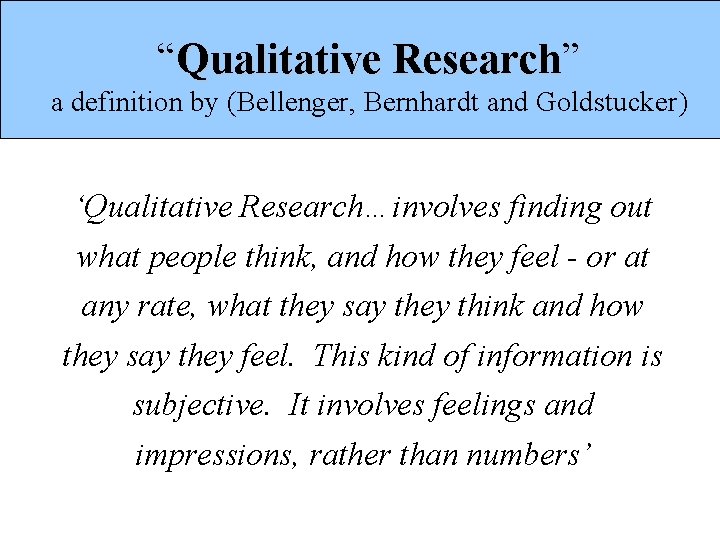
“Qualitative Research” a definition by (Bellenger, Bernhardt and Goldstucker) ‘Qualitative Research…involves finding out what people think, and how they feel - or at any rate, what they say they think and how they say they feel. This kind of information is subjective. It involves feelings and impressions, rather than numbers’
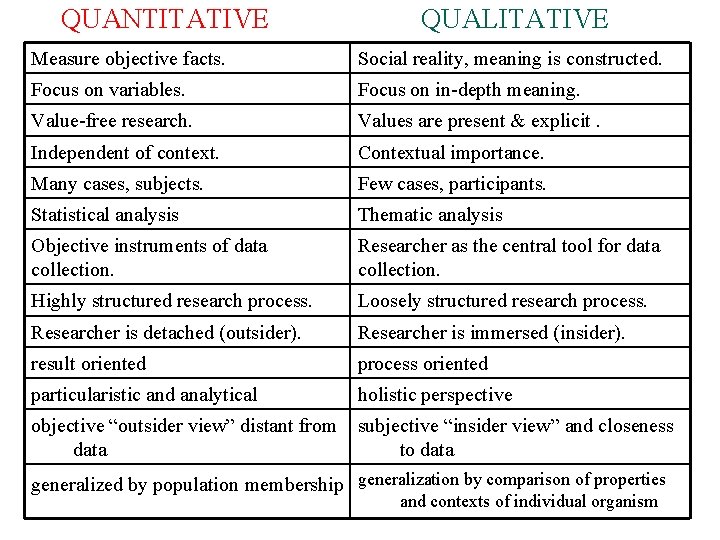
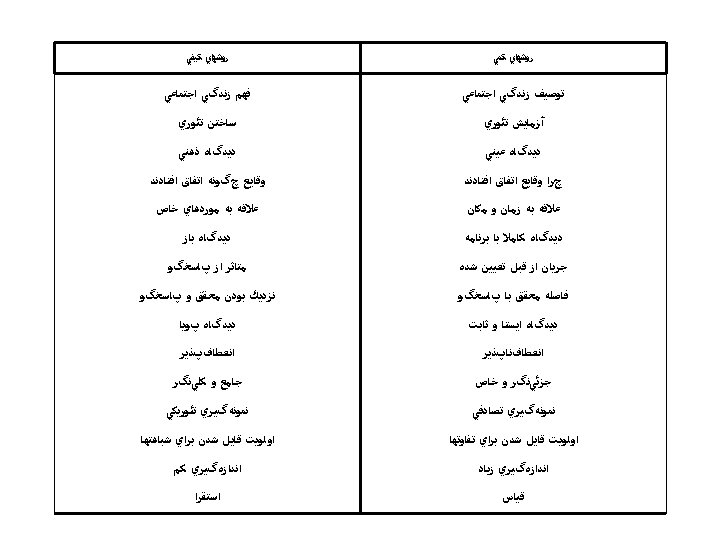
QUANTITATIVE QUALITATIVE Measure objective facts. Social reality, meaning is constructed. Focus on variables. Focus on in-depth meaning. Value-free research. Values are present & explicit. Independent of context. Contextual importance. Many cases, subjects. Few cases, participants. Statistical analysis Thematic analysis Objective instruments of data collection. Researcher as the central tool for data collection. Highly structured research process. Loosely structured research process. Researcher is detached (outsider). Researcher is immersed (insider). result oriented process oriented particularistic and analytical holistic perspective objective “outsider view” distant from data subjective “insider view” and closeness to data generalized by population membership generalization by comparison of properties and contexts of individual organism
Essential Characteristics of Qualitative Research • concerned with understanding a phenomenon • assumes multiple realities • data is in the form of rich verbal descriptions • researcher is immersed and in direct contact during the data collection • the data collection is highly interactive • data collection methodology evolves and is flexible; a “tentative” approach to the
Essential Characteristics of Qualitative Research • emphasizes the holistic perspective • research is context sensitive • illuminate the invisibility of everyday life; “make the familiar strange” • construct meaning from the participant’s point of view (“informants” rather than “subjects”) • explores open questions rather than testing hypothesis • employs purposive sampling and “gate
Appropriateness of Qualitative Research • When variables cannot be quantified • When variables are best understood in their natural settings • When variables are studied over time • When studying roles, processes, and groups • When the paramount objective is “understanding”
What to Observe or Study • • • Behaviors or practices Episodes, common events (death, birth, etc. ) Encounters –when groups or people interact Roles Relationship roles – mother/daughter; wife/husband, Therapist/disabled, … etc.
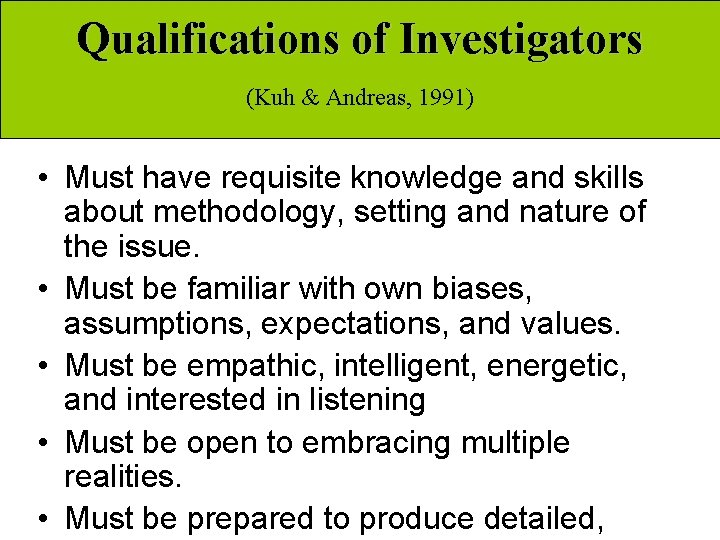
Qualifications of Investigators (Kuh & Andreas, 1991) • Must have requisite knowledge and skills about methodology, setting and nature of the issue. • Must be familiar with own biases, assumptions, expectations, and values. • Must be empathic, intelligent, energetic, and interested in listening • Must be open to embracing multiple realities. • Must be prepared to produce detailed,
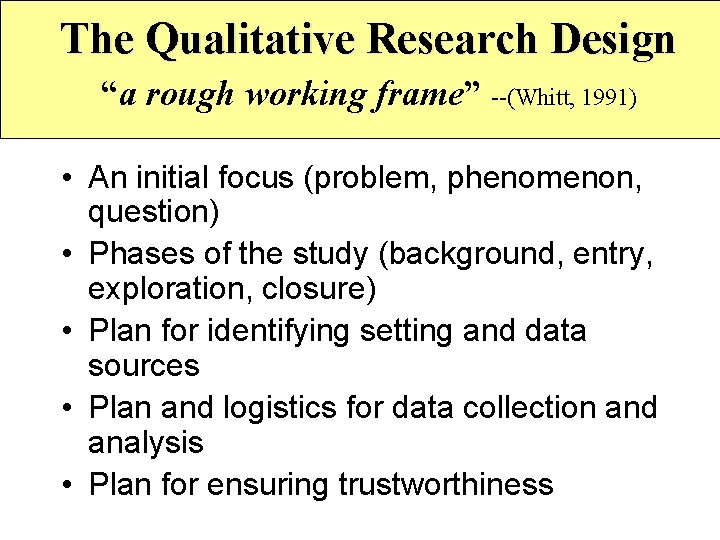
The Qualitative Research Design “a rough working frame” --(Whitt, 1991) • An initial focus (problem, phenomenon, question) • Phases of the study (background, entry, exploration, closure) • Plan for identifying setting and data sources • Plan and logistics for data collection and analysis • Plan for ensuring trustworthiness
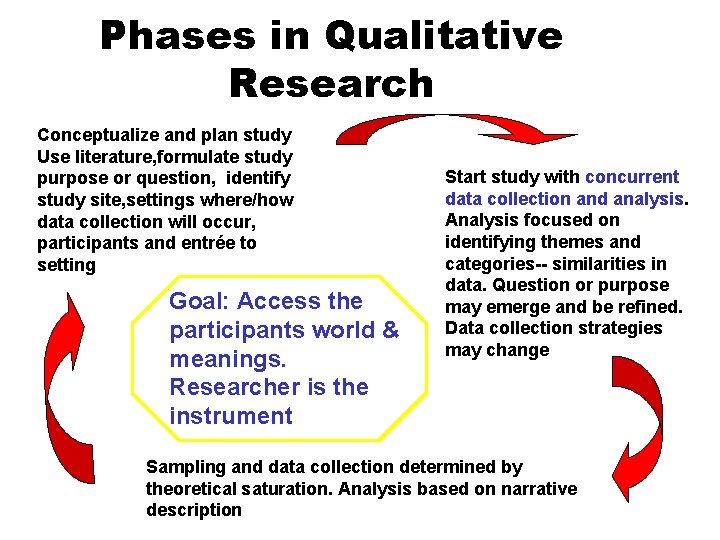
Phases in Qualitative Research Conceptualize and plan study Use literature, formulate study purpose or question, identify study site, settings where/how data collection will occur, participants and entrée to setting Goal: Access the participants world & meanings. Researcher is the instrument Start study with concurrent data collection and analysis. Analysis focused on identifying themes and categories-- similarities in data. Question or purpose may emerge and be refined. Data collection strategies may change Sampling and data collection determined by theoretical saturation. Analysis based on narrative description
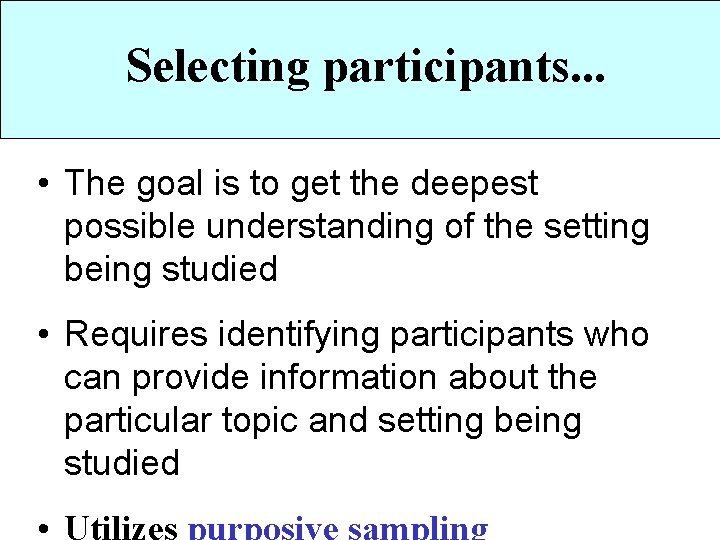
Selecting participants. . . • The goal is to get the deepest possible understanding of the setting being studied • Requires identifying participants who can provide information about the particular topic and setting being studied • Utilizes purposive sampling
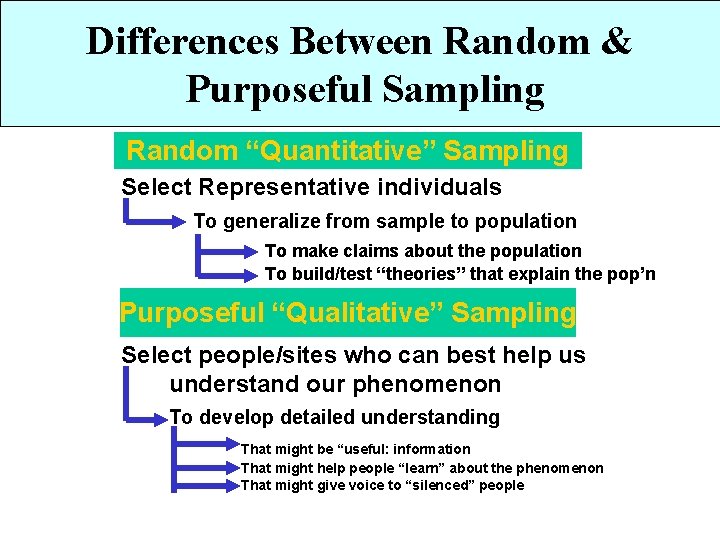
Differences Between Random & Purposeful Sampling Random “Quantitative” Sampling Select Representative individuals To generalize from sample to population To make claims about the population To build/test “theories” that explain the pop’n Purposeful “Qualitative” Sampling Select people/sites who can best help us understand our phenomenon To develop detailed understanding That might be “useful: information That might help people “learn” about the phenomenon That might give voice to “silenced” people
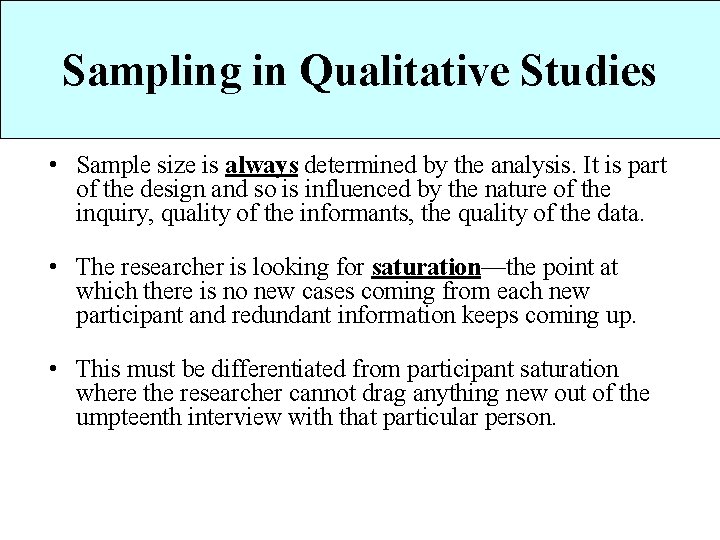
Sampling in Qualitative Studies • Sample size is always determined by the analysis. It is part of the design and so is influenced by the nature of the inquiry, quality of the informants, the quality of the data. • The researcher is looking for saturation—the point at which there is no new cases coming from each new participant and redundant information keeps coming up. • This must be differentiated from participant saturation where the researcher cannot drag anything new out of the umpteenth interview with that particular person.
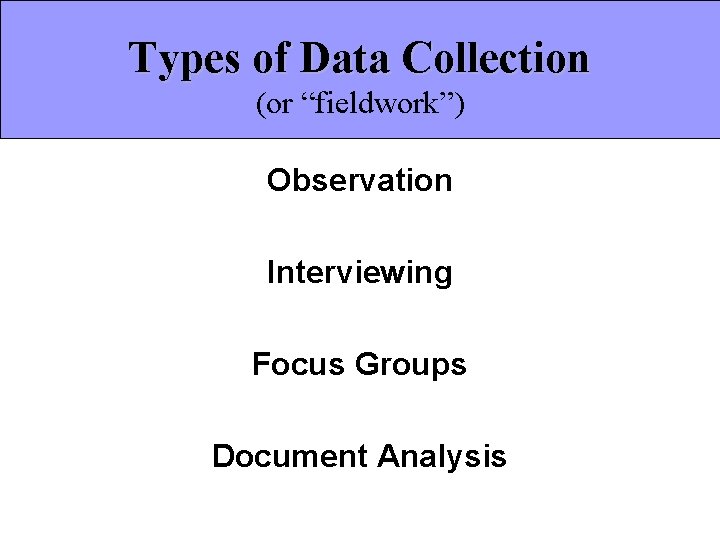
Types of Data Collection (or “fieldwork”) Observation Interviewing Focus Groups Document Analysis
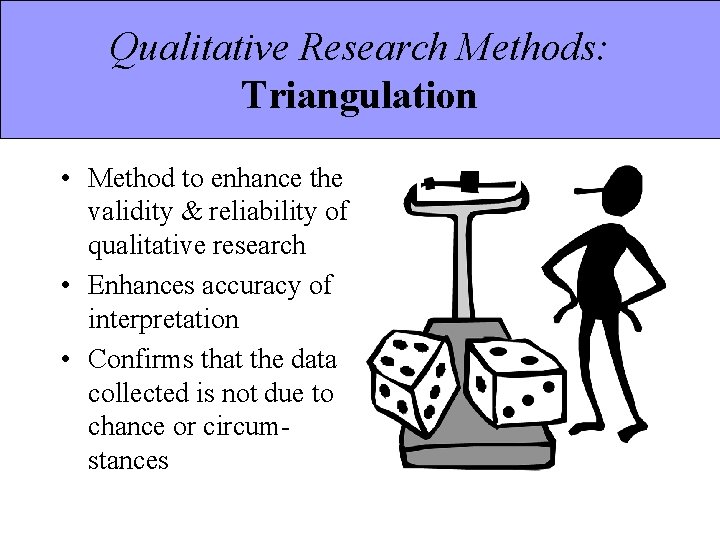
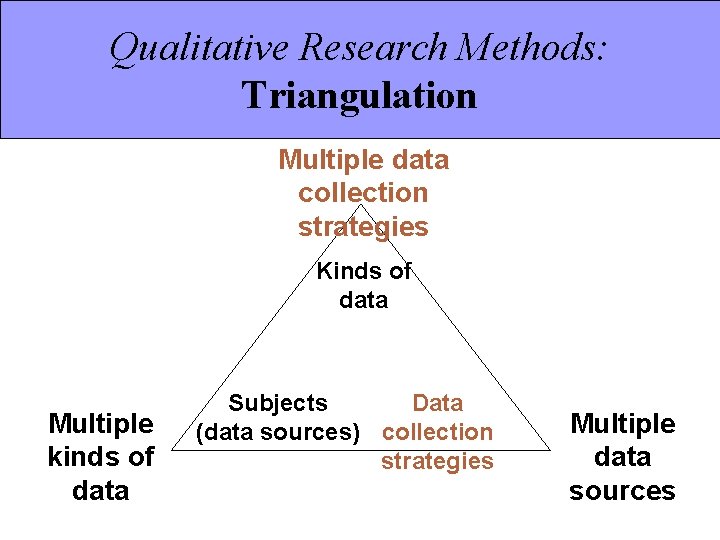
Qualitative Research Methods: Triangulation • Method to enhance the validity & reliability of qualitative research • Enhances accuracy of interpretation • Confirms that the data collected is not due to chance or circumstances
Qualitative Research Methods: Triangulation Multiple data collection strategies Kinds of data Multiple kinds of data Subjects Data (data sources) collection strategies Multiple data sources
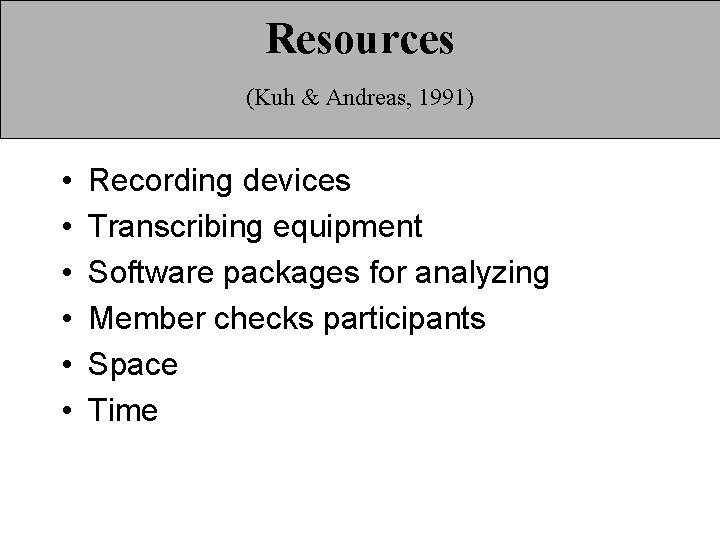
Resources (Kuh & Andreas, 1991) • • • Recording devices Transcribing equipment Software packages for analyzing Member checks participants Space Time
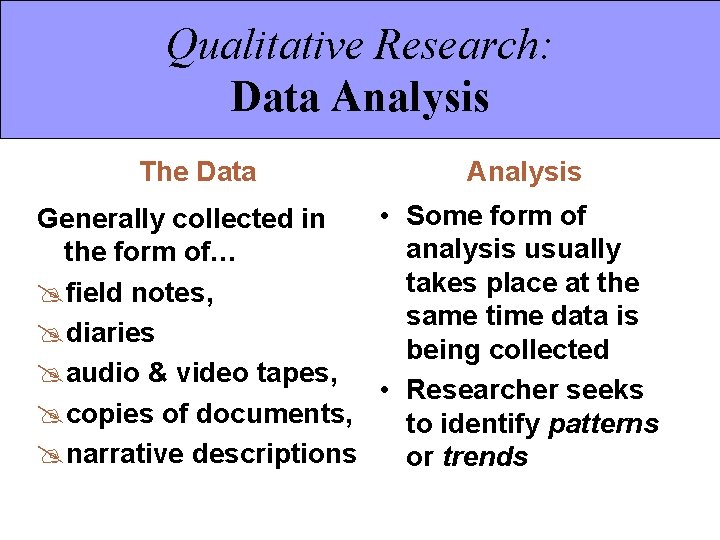
Qualitative Research: Data Analysis The Data Analysis • Some form of Generally collected in analysis usually the form of… takes place at the @field notes, same time data is @diaries being collected @audio & video tapes, • Researcher seeks @copies of documents, to identify patterns @narrative descriptions or trends
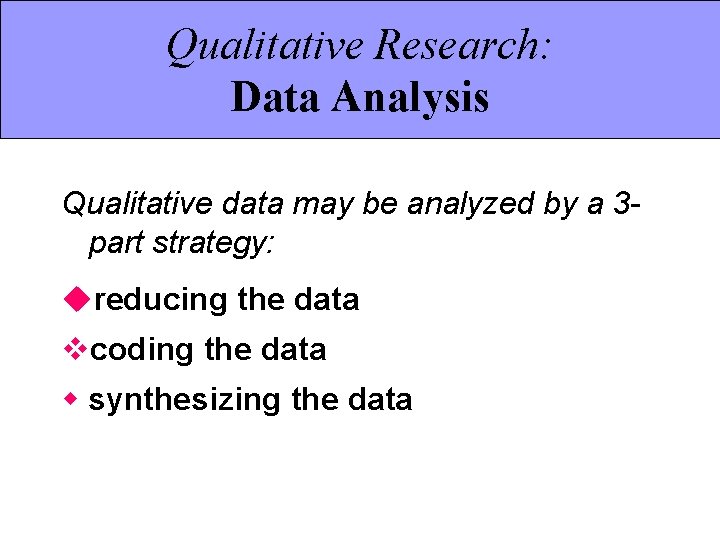
Qualitative Research: Data Analysis Qualitative data may be analyzed by a 3 part strategy: ureducing the data vcoding the data w synthesizing the data
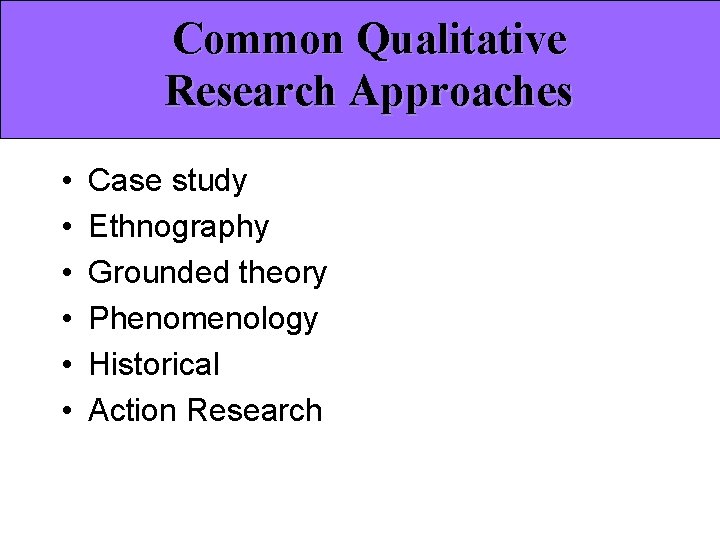
Common Qualitative Research Approaches • • • Case study Ethnography Grounded theory Phenomenology Historical Action Research
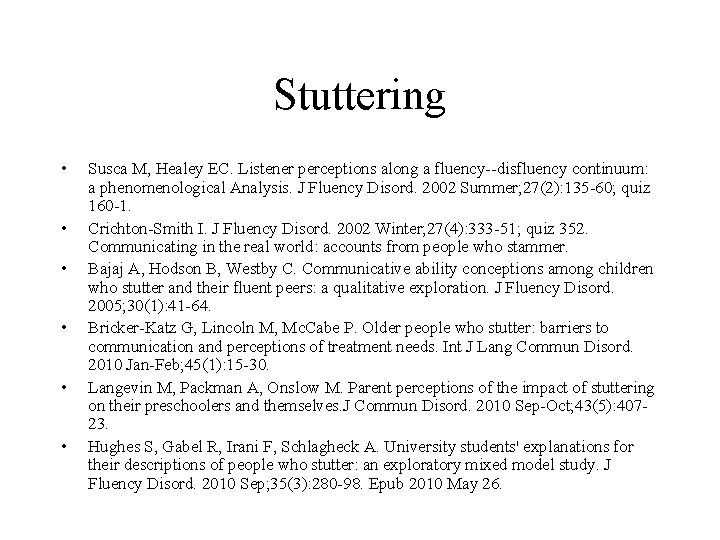
Stuttering • • • Susca M, Healey EC. Listener perceptions along a fluency--disfluency continuum: a phenomenological Analysis. J Fluency Disord. 2002 Summer; 27(2): 135 -60; quiz 160 -1. Crichton-Smith I. J Fluency Disord. 2002 Winter; 27(4): 333 -51; quiz 352. Communicating in the real world: accounts from people who stammer. Bajaj A, Hodson B, Westby C. Communicative ability conceptions among children who stutter and their fluent peers: a qualitative exploration. J Fluency Disord. 2005; 30(1): 41 -64. Bricker-Katz G, Lincoln M, Mc. Cabe P. Older people who stutter: barriers to communication and perceptions of treatment needs. Int J Lang Commun Disord. 2010 Jan-Feb; 45(1): 15 -30. Langevin M, Packman A, Onslow M. Parent perceptions of the impact of stuttering on their preschoolers and themselves. J Commun Disord. 2010 Sep-Oct; 43(5): 40723. Hughes S, Gabel R, Irani F, Schlagheck A. University students' explanations for their descriptions of people who stutter: an exploratory mixed model study. J Fluency Disord. 2010 Sep; 35(3): 280 -98. Epub 2010 May 26.
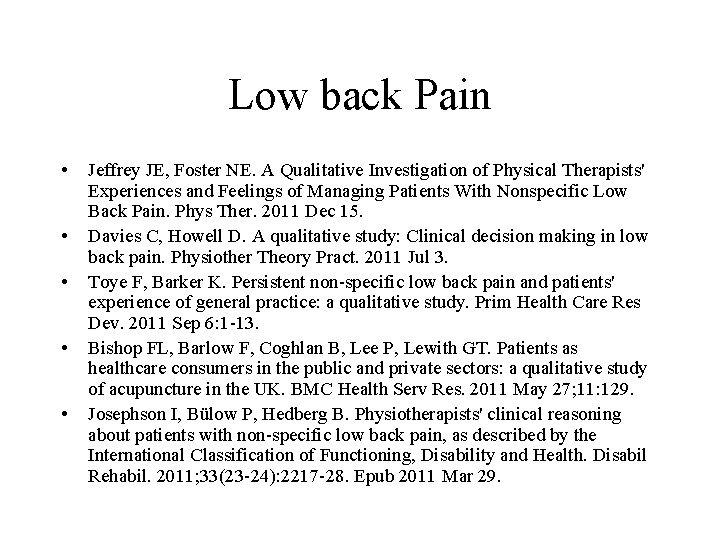
Low back Pain • • • Jeffrey JE, Foster NE. A Qualitative Investigation of Physical Therapists' Experiences and Feelings of Managing Patients With Nonspecific Low Back Pain. Phys Ther. 2011 Dec 15. Davies C, Howell D. A qualitative study: Clinical decision making in low back pain. Physiother Theory Pract. 2011 Jul 3. Toye F, Barker K. Persistent non-specific low back pain and patients' experience of general practice: a qualitative study. Prim Health Care Res Dev. 2011 Sep 6: 1 -13. Bishop FL, Barlow F, Coghlan B, Lee P, Lewith GT. Patients as healthcare consumers in the public and private sectors: a qualitative study of acupuncture in the UK. BMC Health Serv Res. 2011 May 27; 11: 129. Josephson I, Bülow P, Hedberg B. Physiotherapists' clinical reasoning about patients with non-specific low back pain, as described by the International Classification of Functioning, Disability and Health. Disabil Rehabil. 2011; 33(23 -24): 2217 -28. Epub 2011 Mar 29.
Occupational Therapy • Tariah HS, Hamed RT, Alheresh RA, Abu-Dahab SM, Al-Oraibi S. Factors influencing job satisfaction among Jordanian occupational therapists: A qualitative study. Aust Occup Ther J. 2011 Dec; 58(6): 405 -11. • Atwal A, Mc. Intyre A, Wiggett C. Risks with older adults in acute care settings: UK occupational therapists' and physiotherapists' perceptions of risks associated with discharge and professional practice. Scand J Caring Sci. 2011 Nov 14. • Simonelis J, Njelesani J, Novak L, Kuzma C, Cameron D. International fieldwork placements and occupational therapy: lived experiences of the major stakeholders. Aust Occup Ther J. 2011 Oct; 58(5): 370 -7. • Van't Leven N, Graff MJ, Kaijen M, de Swart BJ, Olde Rikkert MG, Vernooij-Dassen MJ. Barriers to and facilitators for the use of an evidence -based occupational therapy guideline for older people with dementia and their carers. Int J Geriatr Psychiatry. 2011 Sep 27
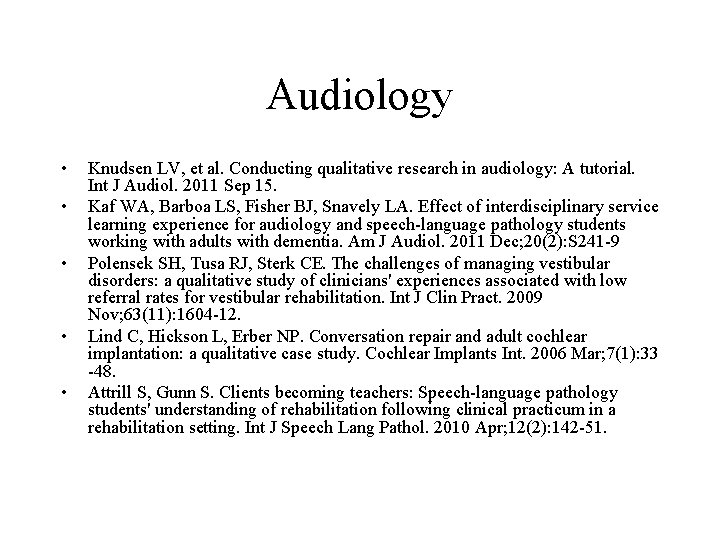
Audiology • • • Knudsen LV, et al. Conducting qualitative research in audiology: A tutorial. Int J Audiol. 2011 Sep 15. Kaf WA, Barboa LS, Fisher BJ, Snavely LA. Effect of interdisciplinary service learning experience for audiology and speech-language pathology students working with adults with dementia. Am J Audiol. 2011 Dec; 20(2): S 241 -9 Polensek SH, Tusa RJ, Sterk CE. The challenges of managing vestibular disorders: a qualitative study of clinicians' experiences associated with low referral rates for vestibular rehabilitation. Int J Clin Pract. 2009 Nov; 63(11): 1604 -12. Lind C, Hickson L, Erber NP. Conversation repair and adult cochlear implantation: a qualitative case study. Cochlear Implants Int. 2006 Mar; 7(1): 33 -48. Attrill S, Gunn S. Clients becoming teachers: Speech-language pathology students' understanding of rehabilitation following clinical practicum in a rehabilitation setting. Int J Speech Lang Pathol. 2010 Apr; 12(2): 142 -51.
Prosthetics • Lundberg M, Hagberg K, Bullington J. My prosthesis as a part of me: a qualitative analysis of living with an osseointegrated prosthetic limb. Prosthet Orthot Int. 2011 Jun; 35(2): 207 -14. • Schaffalitzky E, Gallagher P, Maclachlan M, Ryall N. Understanding the benefits of prosthetic prescription: exploring the experiences of practitioners and lower limb prosthetic users. Disabil Rehabil. 2011; 33(15 -16): 1314 -23. Epub 2010 Nov 4. • Harden RN, Gagnon CM, Khan A, Wallach G, Zereshki A. Hypoesthesia in the distal residual limb of amputees. PM R. 2010 Jul; 2(7): 607 -11. • Magnusson L, Ramstrand N. Prosthetist/orthotist educational experience & professional development in Pakistan. Disabil Rehabil Assist Technol. 2009 Nov; 4(6): 385 -92.
Qualitative Research “You can learn a lot just by watching”