
Qualitative data collection Collecting Qualitative Data Interviews Focus


- Slides: 28
Qualitative data collection
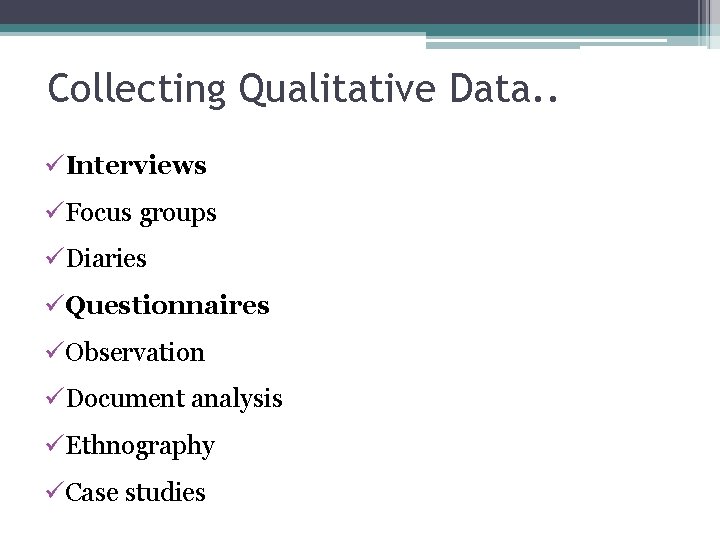
Collecting Qualitative Data. . üInterviews üFocus groups üDiaries üQuestionnaires üObservation üDocument analysis üEthnography üCase studies
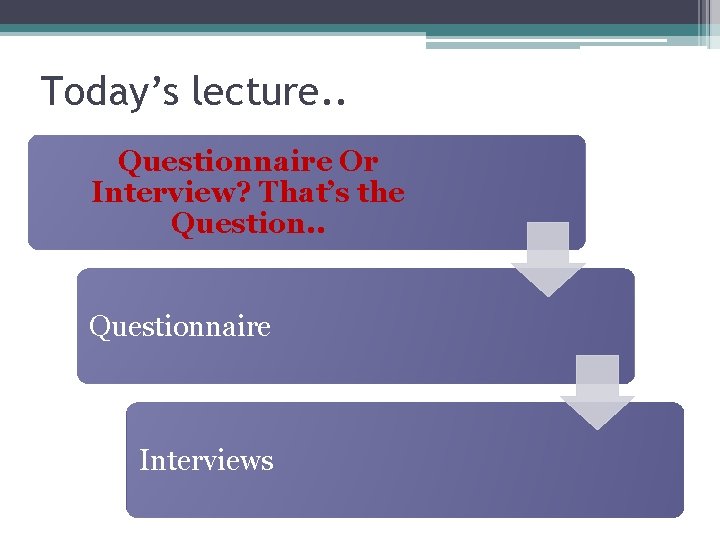
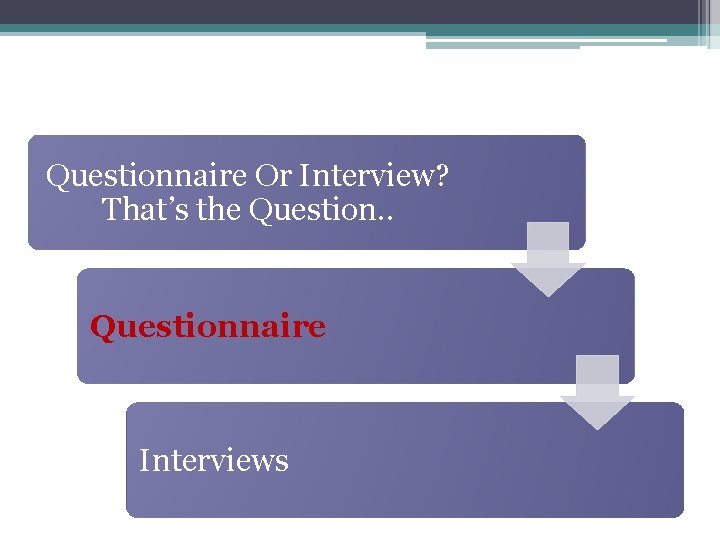
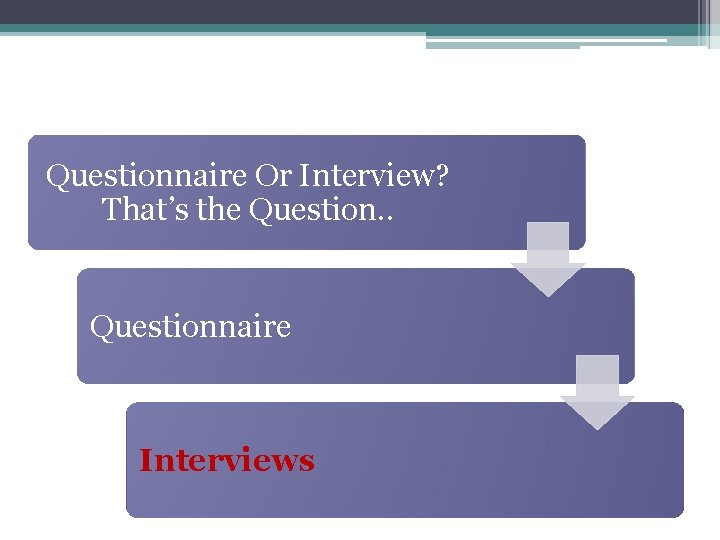
Today’s lecture. . Questionnaire Or Interview? That’s the Question. . Questionnaire Interviews
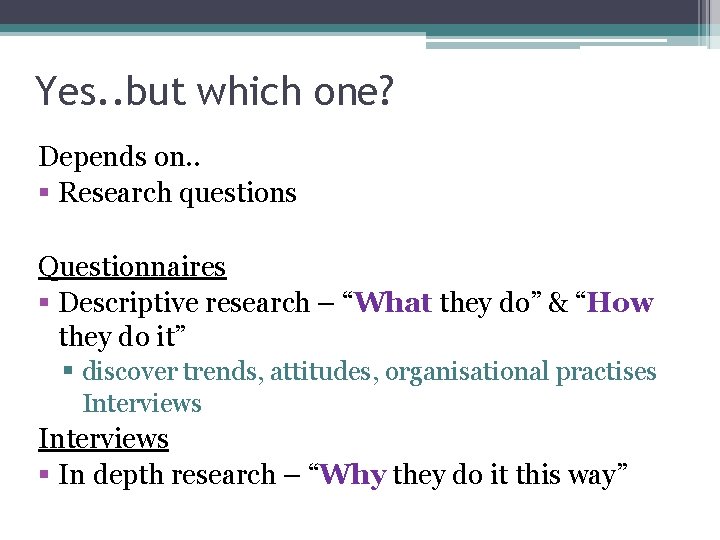
Yes. . but which one? Depends on. . § Research questions Questionnaires § Descriptive research – “What they do” & “How they do it” § discover trends, attitudes, organisational practises Interviews § In depth research – “Why they do it this way”
The Goods. . Questionnaire Interviews Costless to develop In depth answers Less biases Ability to observe body language Large sample size – use of internet Questions can be explained further Wide geographical coverage Ambiguities can be clarified and incomplete answers followed up No personal contact allows for more radical opinions Probing questions Standard format – not subject to interviewee mood
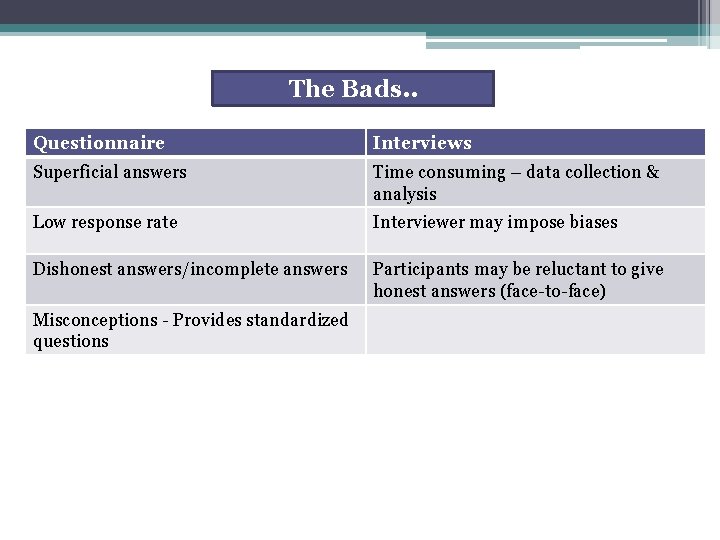
The Bads. . Questionnaire Interviews Superficial answers Time consuming – data collection & analysis Low response rate Interviewer may impose biases Dishonest answers/incomplete answers Participants may be reluctant to give honest answers (face-to-face) Misconceptions - Provides standardized questions
Questionnaire Or Interview? That’s the Question. . Questionnaire Interviews
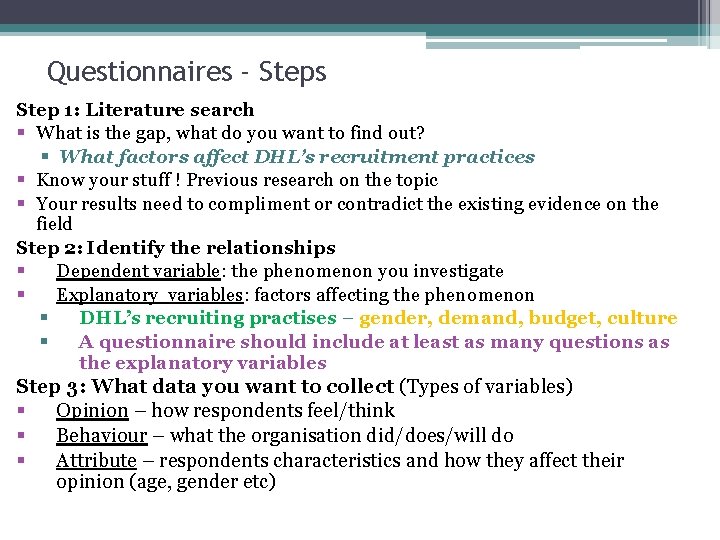
Questionnaires - Steps Step 1: Literature search § What is the gap, what do you want to find out? § What factors affect DHL’s recruitment practices § Know your stuff ! Previous research on the topic § Your results need to compliment or contradict the existing evidence on the field Step 2: Identify the relationships § Dependent variable: the phenomenon you investigate § Explanatory variables: factors affecting the phenomenon § DHL’s recruiting practises – gender, demand, budget, culture § A questionnaire should include at least as many questions as the explanatory variables Step 3: What data you want to collect (Types of variables) § Opinion – how respondents feel/think § Behaviour – what the organisation did/does/will do § Attribute – respondents characteristics and how they affect their opinion (age, gender etc)
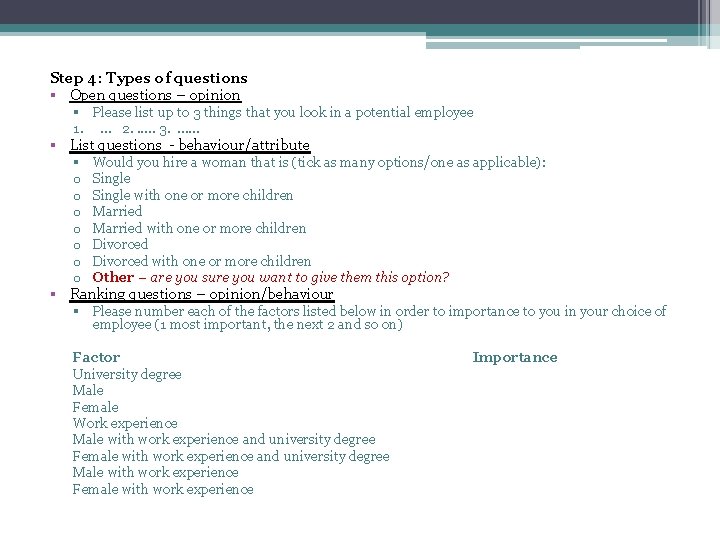
Step 4: Types of questions § Open questions – opinion § Please list up to 3 things that you look in a potential employee 1. . 2. . . 3. . . . § List questions - behaviour/attribute § Would you hire a woman that is (tick as many options/one as applicable): o Single with one or more children o Married with one or more children o Divorced with one or more children o Other – are you sure you want to give them this option? § Ranking questions – opinion/behaviour § Please number each of the factors listed below in order to importance to you in your choice of employee (1 most important, the next 2 and so on) Factor University degree Male Female Work experience Male with work experience and university degree Female with work experience and university degree Male with work experience Female with work experience Importance
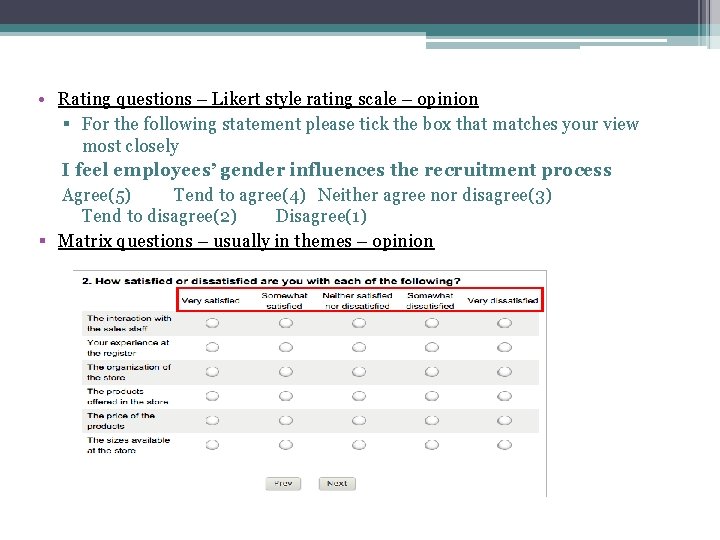
• Rating questions – Likert style rating scale – opinion § For the following statement please tick the box that matches your view most closely I feel employees’ gender influences the recruitment process Agree(5) Tend to agree(4) Neither agree nor disagree(3) Tend to disagree(2) Disagree(1) § Matrix questions – usually in themes – opinion
Step 5: Identify the participants § Who will fill in the questionnaire – Who has the knowledge you are after? § CEO, managers, lawyers etc § Anonymity or not? § Step 6: Questions wording Step 7: Decide on the acceptable response rate § Subject to the topic – do some search Step 8: Duration of questionnaire § Too short – you dont get the info § Too long – they will not fill it in Step 9: Contact respondents § Cover letter § Negotiate access – legal agreement – how are you going to use the data? § Decide on method of administration Step 10: Pilot questionnaire
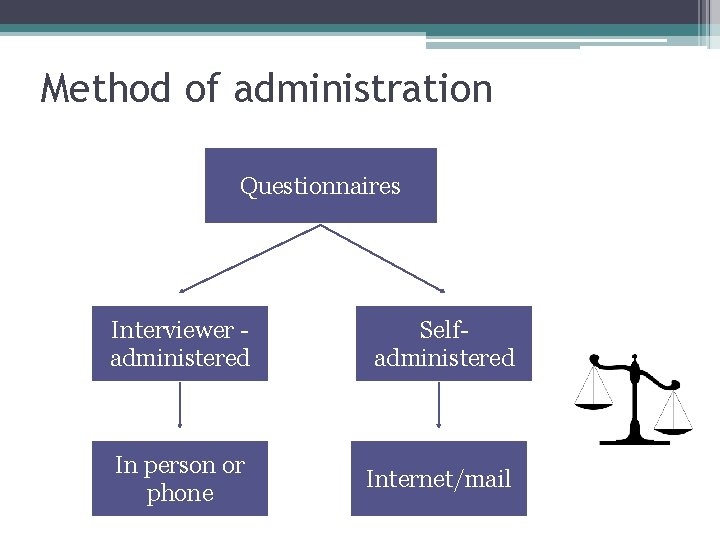
Method of administration Questionnaires Interviewer administered Selfadministered In person or phone Internet/mail
Do it ! Identify the recruitment practices of DHL
Questionnaire Or Interview? That’s the Question. . Questionnaire Interviews
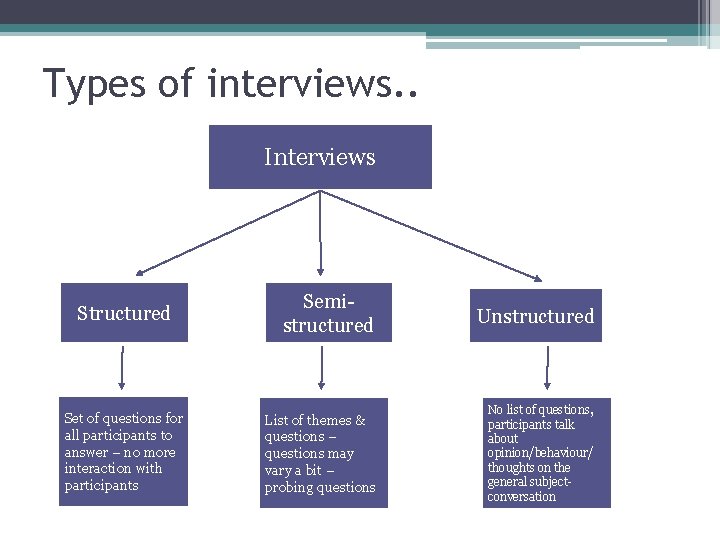
Types of interviews. . Interviews Structured Set of questions for all participants to answer – no more interaction with participants Semistructured Unstructured List of themes & questions – questions may vary a bit – probing questions No list of questions, participants talk about opinion/behaviour/ thoughts on the general subjectconversation
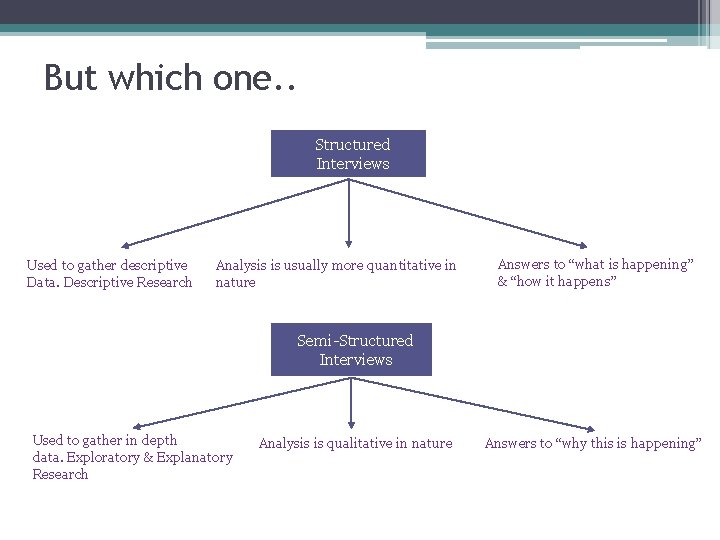
But which one. . Structured Interviews Used to gather descriptive Data. Descriptive Research Analysis is usually more quantitative in nature Answers to “what is happening” & “how it happens” Semi-Structured Interviews Used to gather in depth data. Exploratory & Explanatory Research Analysis is qualitative in nature Answers to “why this is happening”
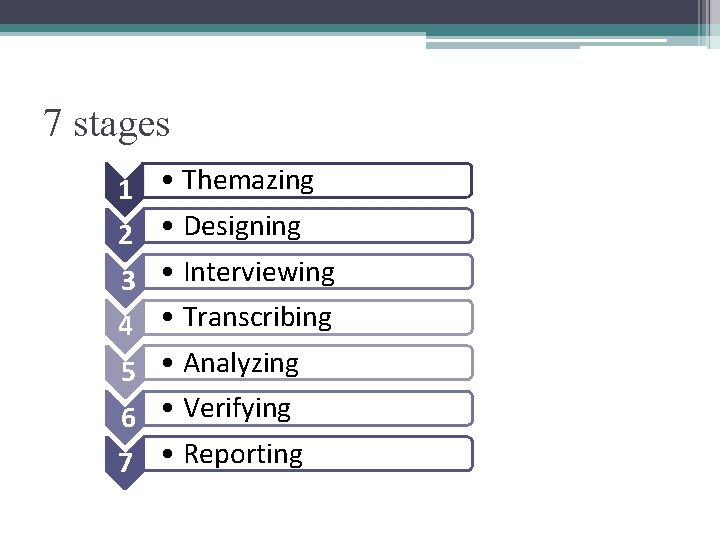
7 stages 1 • Themazing 2 • Designing 3 • Interviewing 4 • Transcribing 5 • Analyzing 6 • Verifying 7 • Reporting
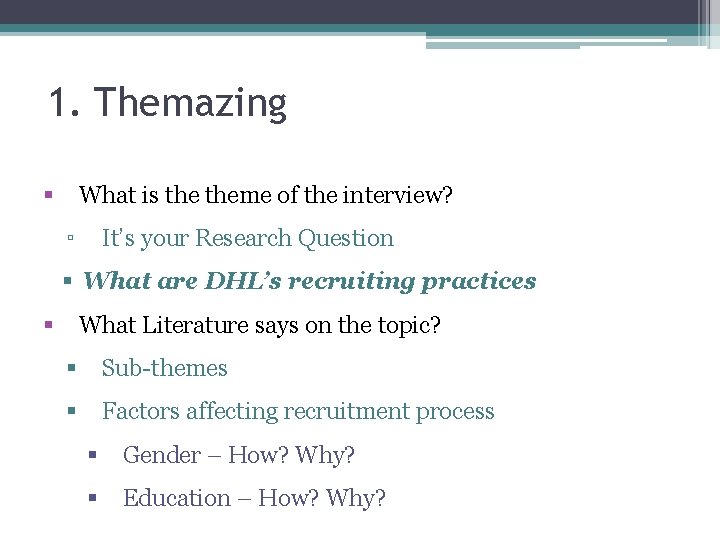
1. Themazing § What is theme of the interview? ▫ It’s your Research Question § What are DHL’s recruiting practices § What Literature says on the topic? § Sub-themes § Factors affecting recruitment process § Gender – How? Why? § Education – How? Why?
2. Designing • How will the intended knowledge be obtained? ▫ Design your Interview Questions
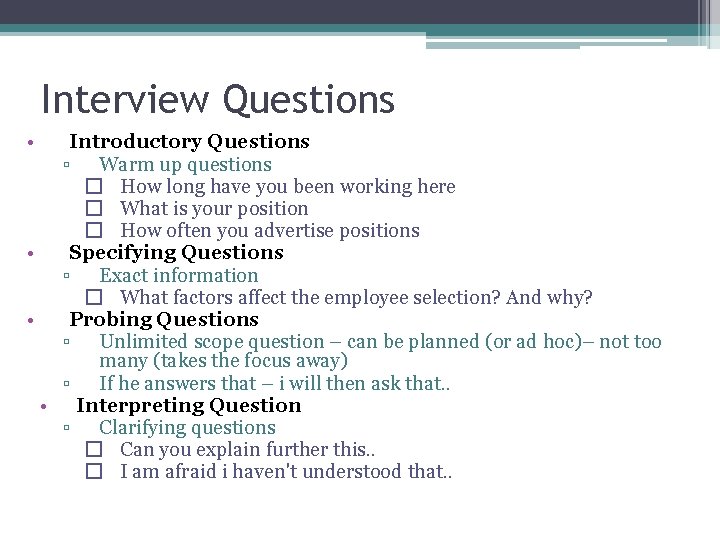
Interview Questions • Introductory Questions ▫ Warm up questions � How long have you been working here � What is your position � How often you advertise positions • Specifying Questions ▫ Exact information � What factors affect the employee selection? And why? • Probing Questions ▫ Unlimited scope question – can be planned (or ad hoc)– not too many (takes the focus away) ▫ If he answers that – i will then ask that. . • Interpreting Question ▫ Clarifying questions � Can you explain further this. . � I am afraid i haven't understood that. .
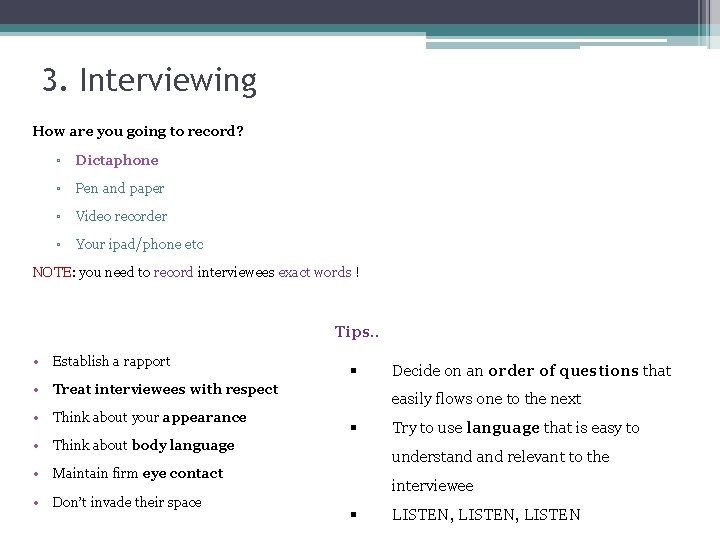
3. Interviewing How are you going to record? ▫ Dictaphone ▫ Pen and paper ▫ Video recorder ▫ Your ipad/phone etc NOTE: you need to record interviewees exact words ! Tips. . • Establish a rapport § • Treat interviewees with respect • Think about your appearance easily flows one to the next § • Think about body language Try to use language that is easy to understand relevant to the • Maintain firm eye contact • Don’t invade their space Decide on an order of questions that interviewee § LISTEN, LISTEN
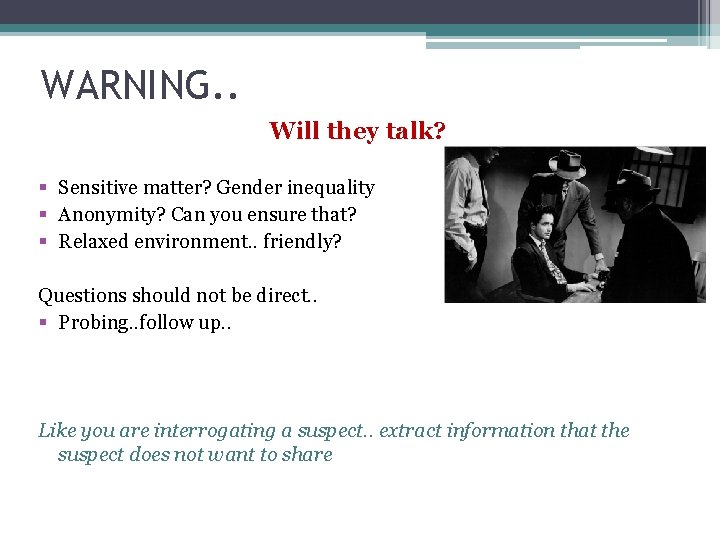
WARNING. . Will they talk? § Sensitive matter? Gender inequality § Anonymity? Can you ensure that? § Relaxed environment. . friendly? Questions should not be direct. . § Probing. . follow up. . Like you are interrogating a suspect. . extract information that the suspect does not want to share
4. Transcribing ▫ Converting interview into written text ▫ Must include everything said ▫ Attach to the report - Can be in appendix on a CD/USB stick.
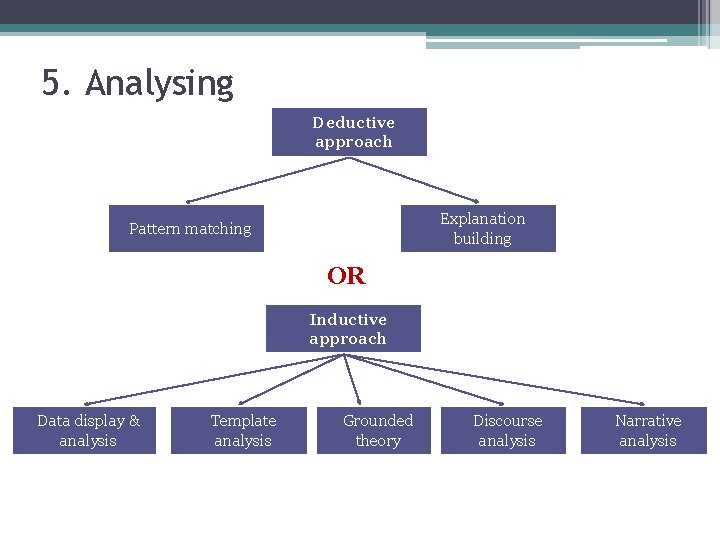
5. Analysing Deductive approach Explanation building Pattern matching OR Inductive approach Data display & analysis Template analysis Grounded theory Discourse analysis Narrative analysis
6. Verifying • Validity ▫ Can you check the truth of the statements? e. g. number of employees in organisation, number of customers • Reliability ▫ Are there any internal contradictions? ▫ Tip: Include the same question twice expressed in different ways to check the truthfulness of the responses • Transferability ▫ How do the answers agree with broader research and other interview answers?
7. Reporting • Communicate findings in a scientific and ethical manner. • Evidence of everything you did • You need to be able to prove that all procedures have been followed and data are “correct” IDEA: keep a diary – photos, recording
Example. . Plakoyiannaki paper
Do it § What factors affect DHL’s recruitment practices? § Does gender affect DHL’s recruiting practises? § Gender = sensitive § Make sure to get a “clear” answer if they recruit more men than women on purpose and WHY ! § Draft your questions