
Qualitative Data Analysis Lecture 27 th Recap 2


- Slides: 17
Qualitative Data Analysis Lecture 27 th
Recap 2
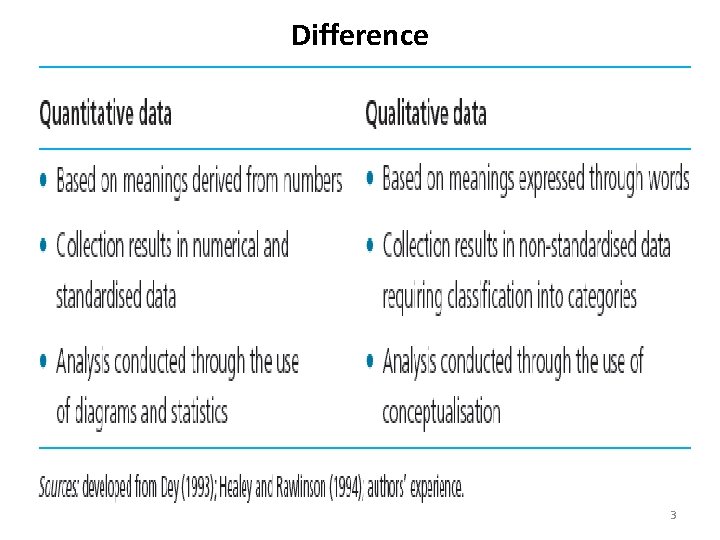
Difference 3
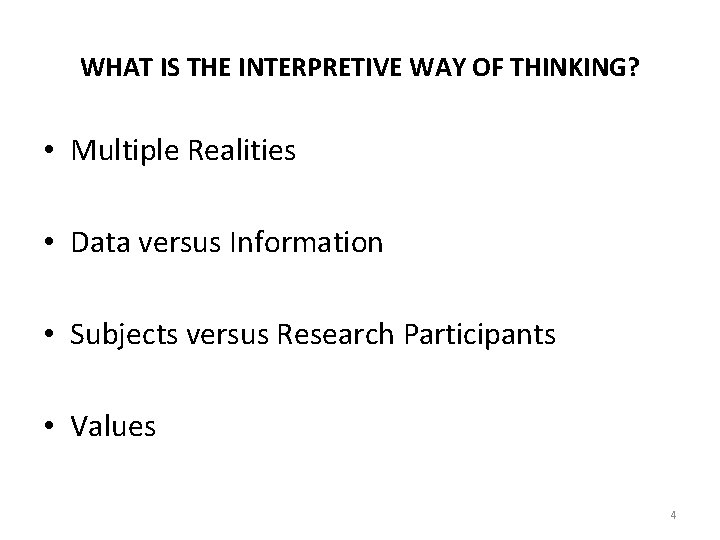
WHAT IS THE INTERPRETIVE WAY OF THINKING? • Multiple Realities • Data versus Information • Subjects versus Research Participants • Values 4
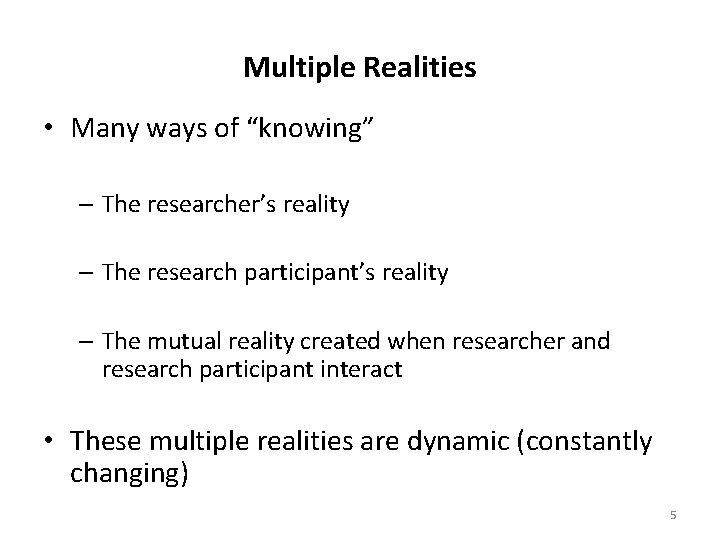
Multiple Realities • Many ways of “knowing” – The researcher’s reality – The research participant’s reality – The mutual reality created when researcher and research participant interact • These multiple realities are dynamic (constantly changing) 5
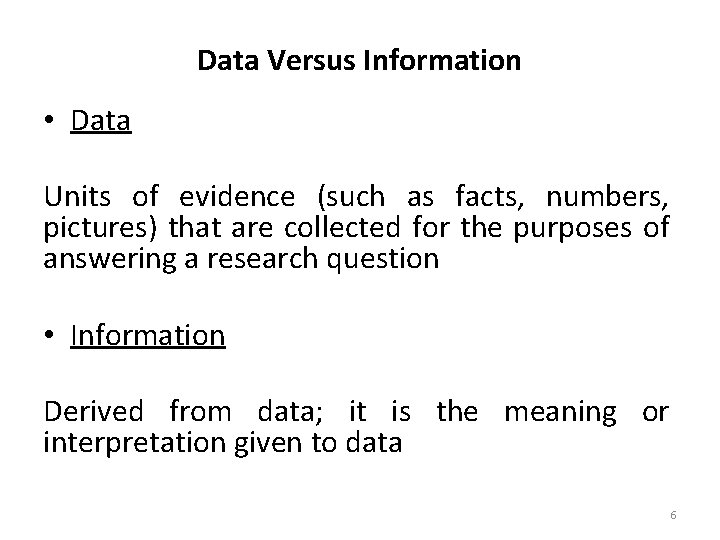
Data Versus Information • Data Units of evidence (such as facts, numbers, pictures) that are collected for the purposes of answering a research question • Information Derived from data; it is the meaning or interpretation given to data 6
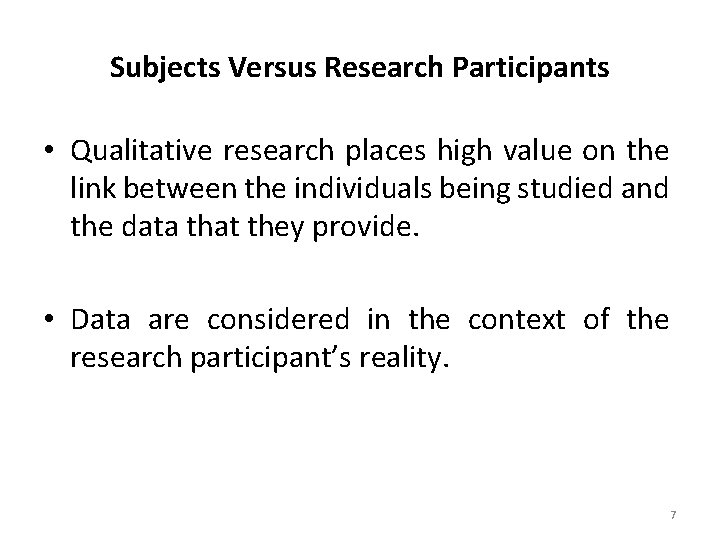
Subjects Versus Research Participants • Qualitative research places high value on the link between the individuals being studied and the data that they provide. • Data are considered in the context of the research participant’s reality. 7
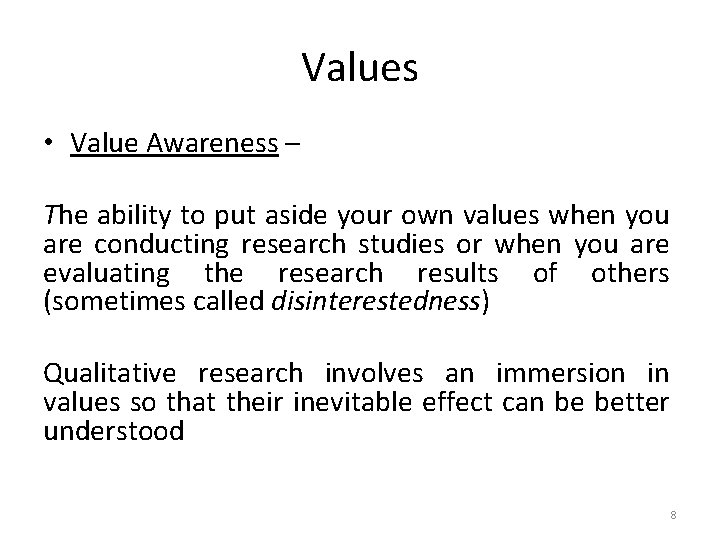
Values • Value Awareness – The ability to put aside your own values when you are conducting research studies or when you are evaluating the research results of others (sometimes called disinterestedness) Qualitative research involves an immersion in values so that their inevitable effect can be better understood 8
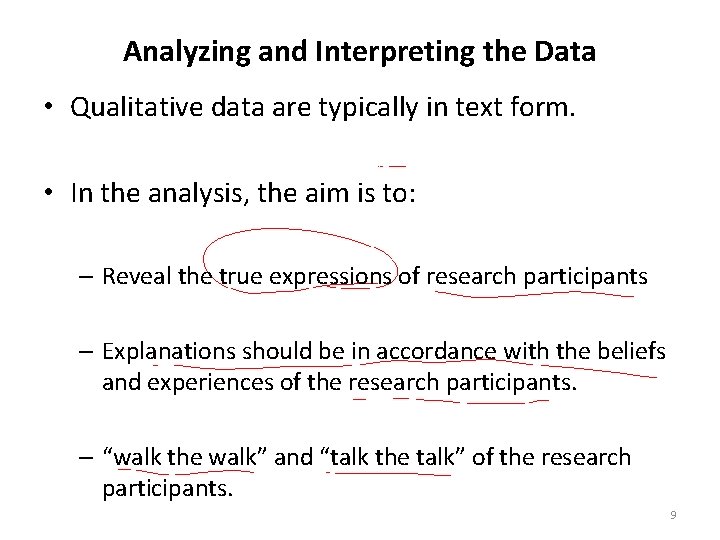
Analyzing and Interpreting the Data • Qualitative data are typically in text form. • In the analysis, the aim is to: – Reveal the true expressions of research participants – Explanations should be in accordance with the beliefs and experiences of the research participants. – “walk the walk” and “talk the talk” of the research participants. 9
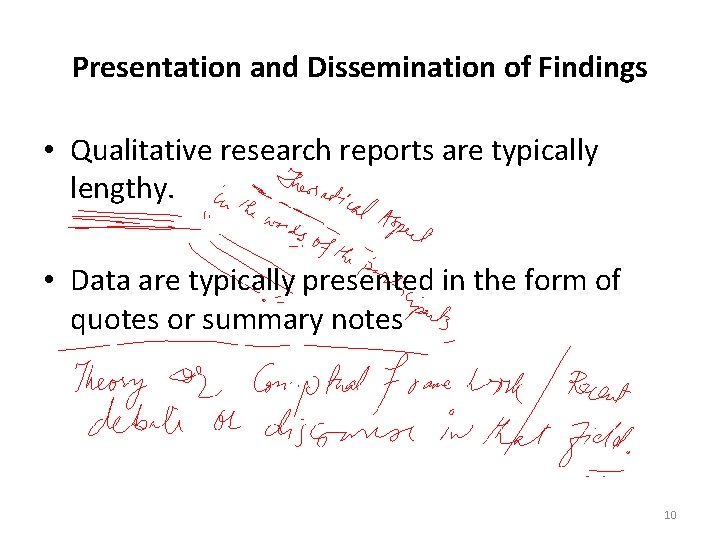
Presentation and Dissemination of Findings • Qualitative research reports are typically lengthy. • Data are typically presented in the form of quotes or summary notes 10
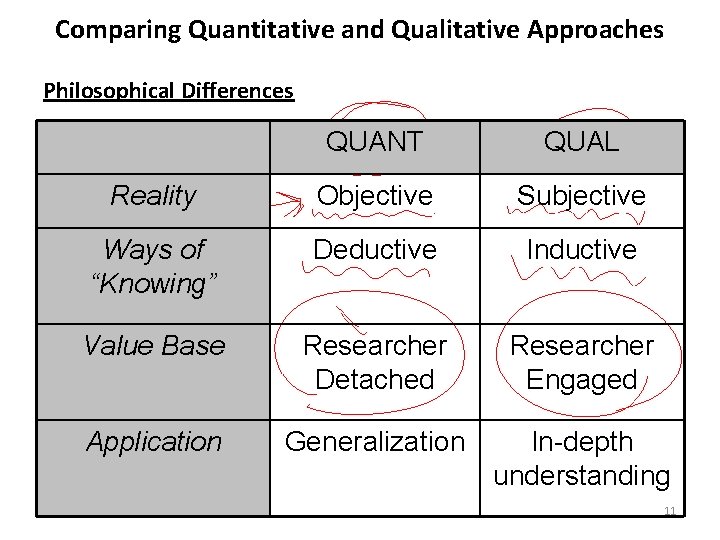
Comparing Quantitative and Qualitative Approaches Philosophical Differences QUANT QUAL Reality Objective Subjective Ways of “Knowing” Deductive Inductive Value Base Researcher Detached Researcher Engaged Application Generalization In-depth understanding 11
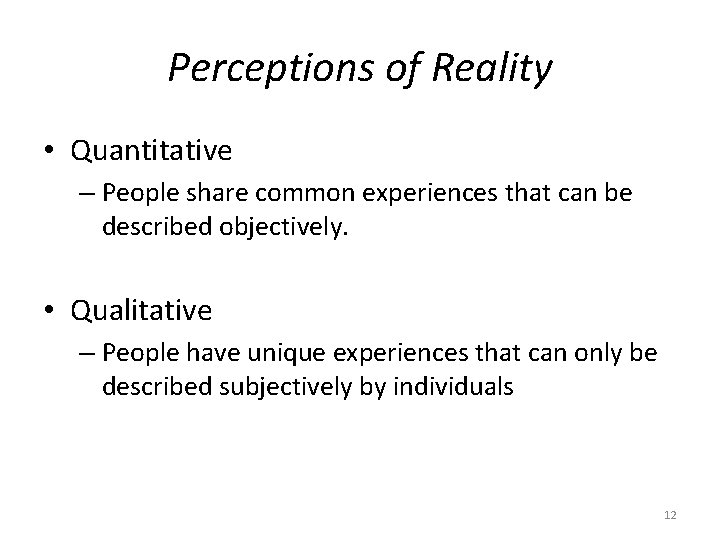
Perceptions of Reality • Quantitative – People share common experiences that can be described objectively. • Qualitative – People have unique experiences that can only be described subjectively by individuals 12
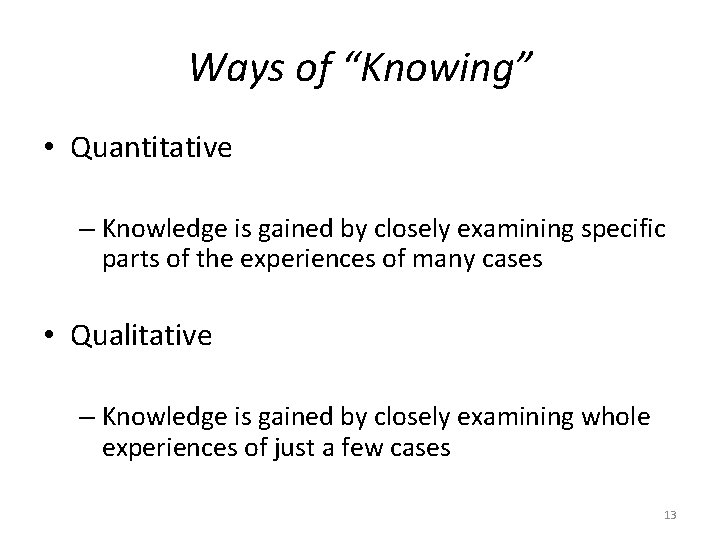
Ways of “Knowing” • Quantitative – Knowledge is gained by closely examining specific parts of the experiences of many cases • Qualitative – Knowledge is gained by closely examining whole experiences of just a few cases 13
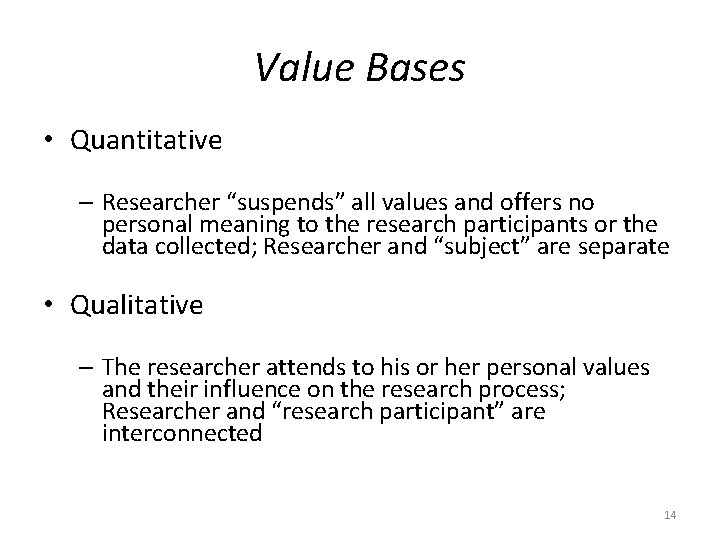
Value Bases • Quantitative – Researcher “suspends” all values and offers no personal meaning to the research participants or the data collected; Researcher and “subject” are separate • Qualitative – The researcher attends to his or her personal values and their influence on the research process; Researcher and “research participant” are interconnected 14
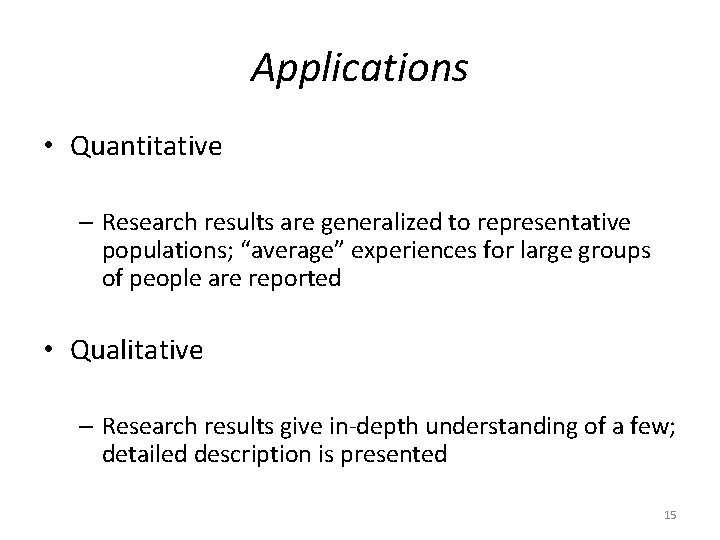
Applications • Quantitative – Research results are generalized to representative populations; “average” experiences for large groups of people are reported • Qualitative – Research results give in-depth understanding of a few; detailed description is presented 15
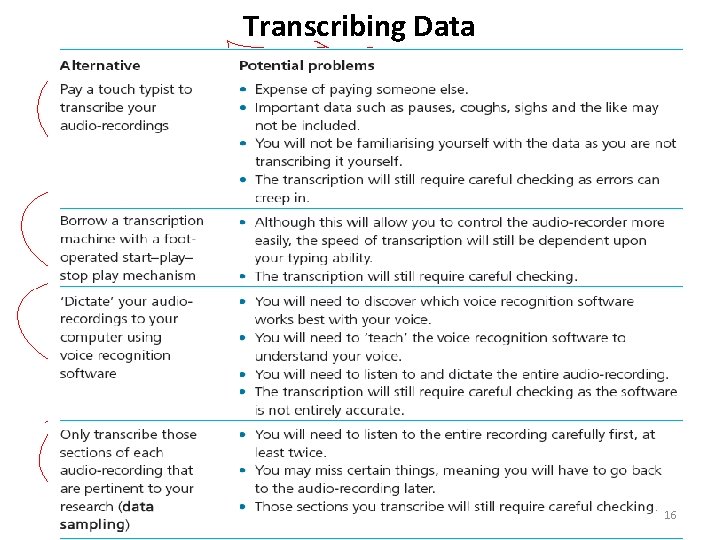
Transcribing Data 16
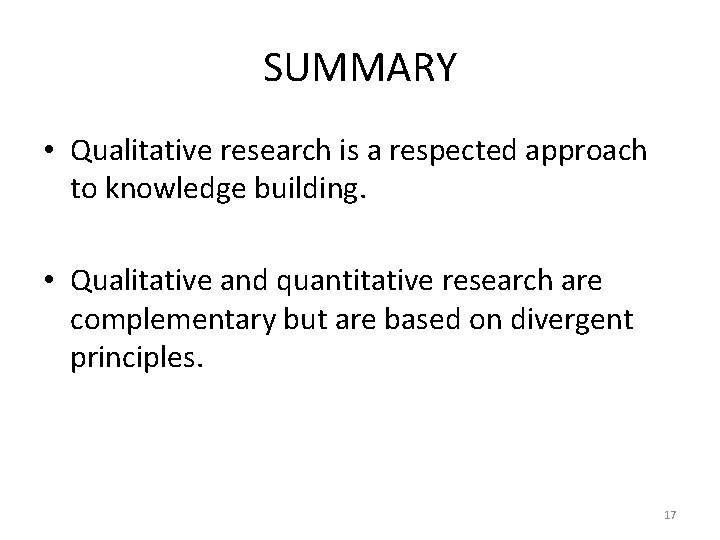
SUMMARY • Qualitative research is a respected approach to knowledge building. • Qualitative and quantitative research are complementary but are based on divergent principles. 17