
QUALITATIVE AND QUANTITATIVE TESTS OF LIPIDS Res Asst
- Slides: 13
QUALITATIVE AND QUANTITATIVE TESTS OF LIPIDS Res. Asst. Aybüke ÇELİK A. U. Faculty of Pharmacy, Department of Biochemistry 4. week
• Lipids in circulation are divided into four main groups. • - Cholesterol and esters • - Triacylglycerols • - Phospholipids and fatty acids.
- Since the solubility of lipids in water is low, they circulate in the form of micelles in the form of lipoproteins which are bound to proteins. - The disorders associated with the metabolism and transport of lipoproteins are closely related to atherosclerosis. - The Serum normal lipid values are 300 -800 mg%.
Cholesterol; - 75% esterified with fatty acids - The rest is in the form of free cholesterol Its synthesis in liver (up to 80%) and intestinal mucosa. - Cholesterol is converted to bile acids and metabolized.
MODIFIED PHOSPHOVANILLIN EXPERIMENT • Principle: It is based on the color reaction of lipids given with the phosphovanilline reagent after treatment of lipids with concentrated acids.
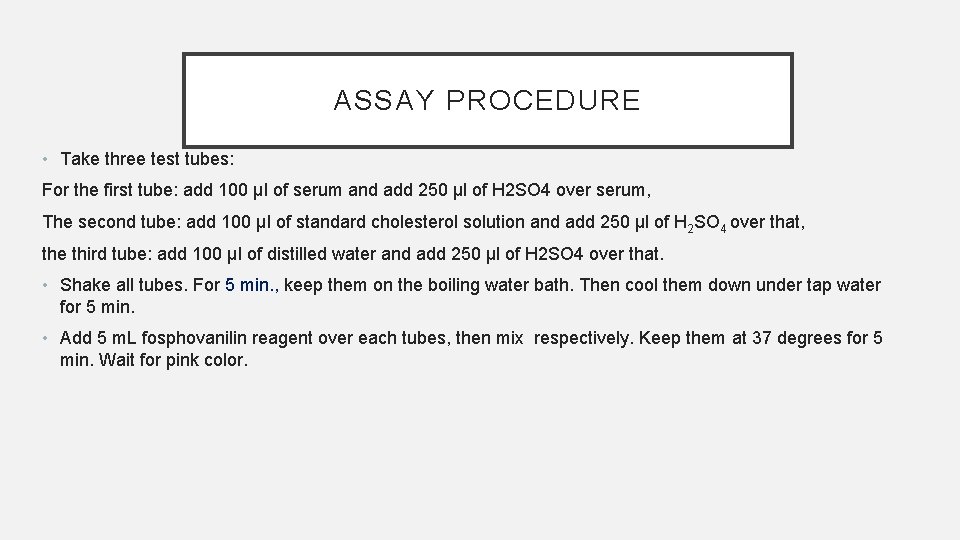
ASSAY PROCEDURE • Take three test tubes: For the first tube: add 100 μl of serum and add 250 μl of H 2 SO 4 over serum, The second tube: add 100 μl of standard cholesterol solution and add 250 μl of H 2 SO 4 over that, the third tube: add 100 μl of distilled water and add 250 μl of H 2 SO 4 over that. • Shake all tubes. For 5 min. , keep them on the boiling water bath. Then cool them down under tap water for 5 min. • Add 5 m. L fosphovanilin reagent over each tubes, then mix respectively. Keep them at 37 degrees for 5 min. Wait for pink color.
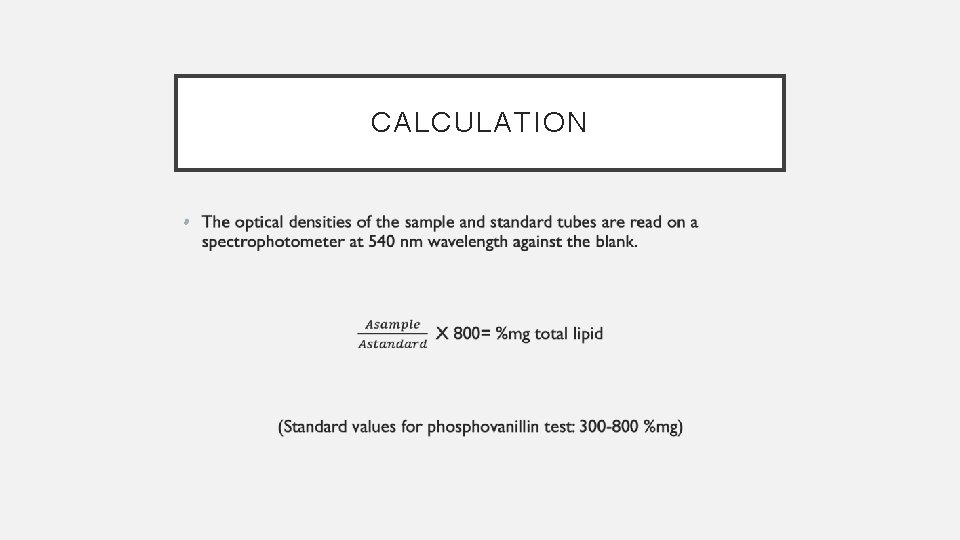
CALCULATION •
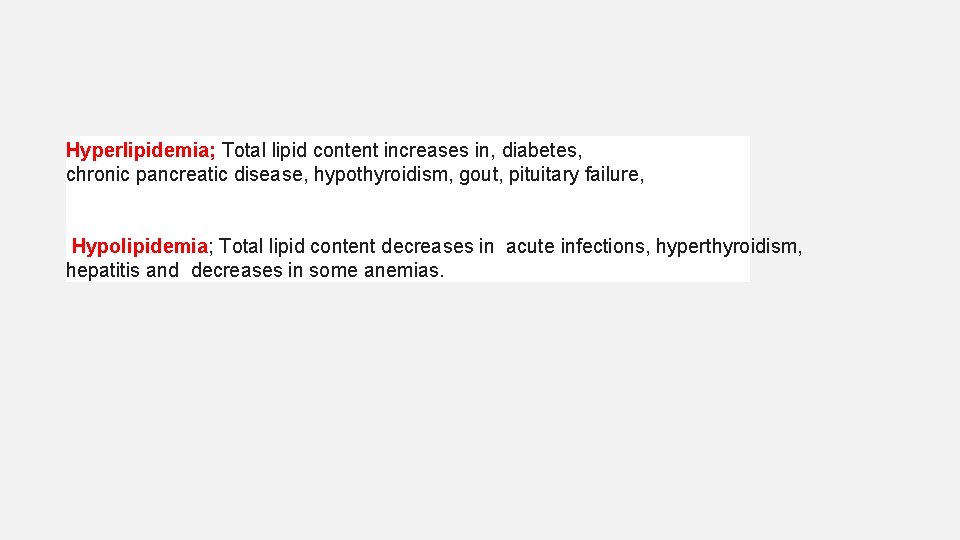
Hyperlipidemia; Total lipid content increases in, diabetes, chronic pancreatic disease, hypothyroidism, gout, pituitary failure, Hypolipidemia; Total lipid content decreases in acute infections, hyperthyroidism, hepatitis and decreases in some anemias.
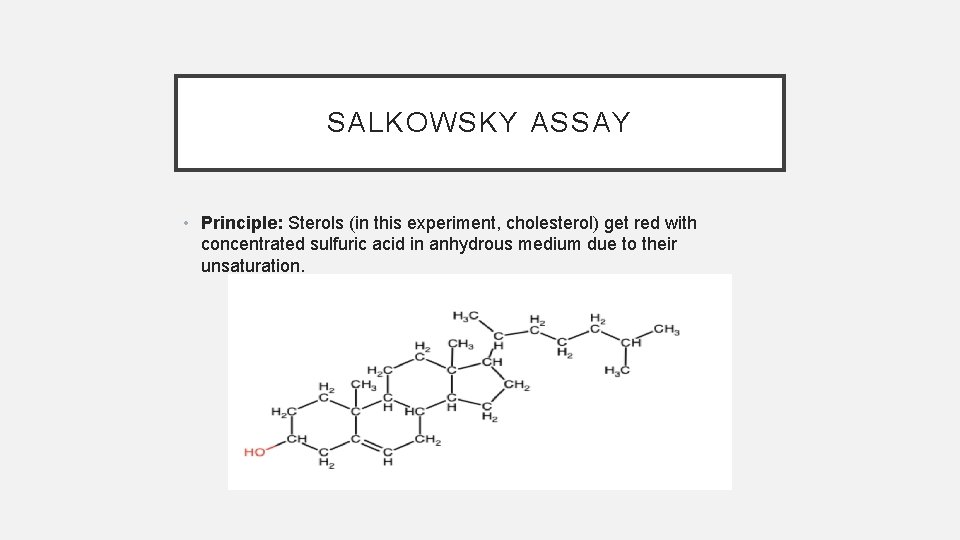
SALKOWSKY ASSAY • Principle: Sterols (in this experiment, cholesterol) get red with concentrated sulfuric acid in anhydrous medium due to their unsaturation.
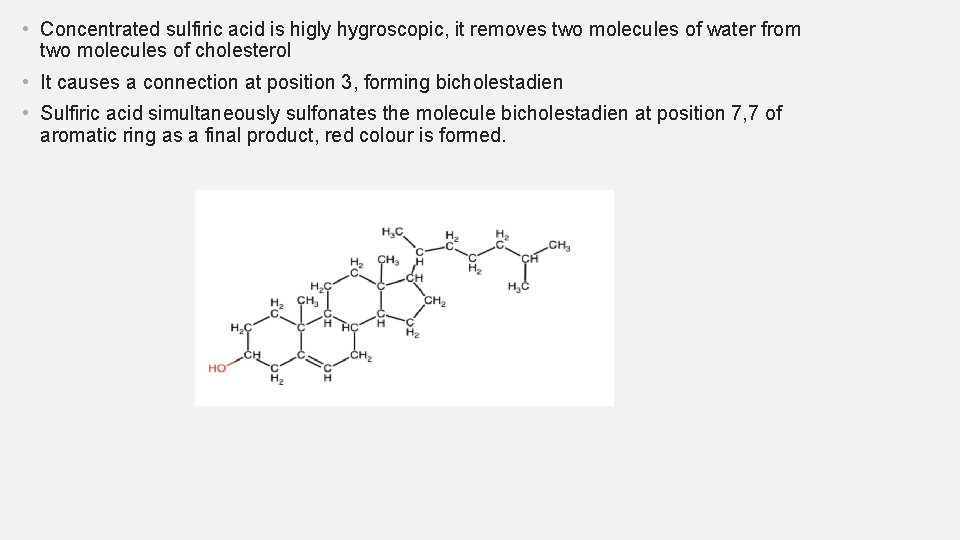
• Concentrated sulfiric acid is higly hygroscopic, it removes two molecules of water from two molecules of cholesterol • It causes a connection at position 3, forming bicholestadien • Sulfiric acid simultaneously sulfonates the molecule bicholestadien at position 7, 7 of aromatic ring as a final product, red colour is formed.
• Lipids are a group of naturally occuring substances • Insoluble in water, soluble in organic solvents (chloroform)
ASSAY PROCEDURE • Dissolve an amount of cholesterol in 3 ml chloroform. • Add a few drops of concentrated H 2 SO 4 into the tube and shake. • Wait 5 minutes at room temperature • Then, red-violet color will be observed.
REFERENCES • Ankara University Faculty of Pharmacy Biochemistry Practice Book - 2004 • Practical Clinical Biochemistry: Methods and Interpretations 4 th Edition 2014 • Biochemistry Laboratory Manual - 2016 Basu, P