
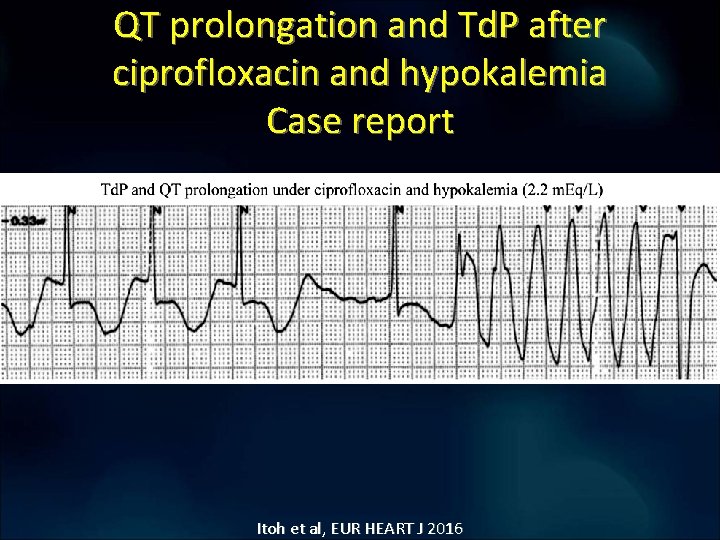
QT prolongation and Td P after ciprofloxacin and
- Slides: 37
QT prolongation and Td. P after ciprofloxacin and hypokalemia Case report Itoh et al, EUR HEART J 2016
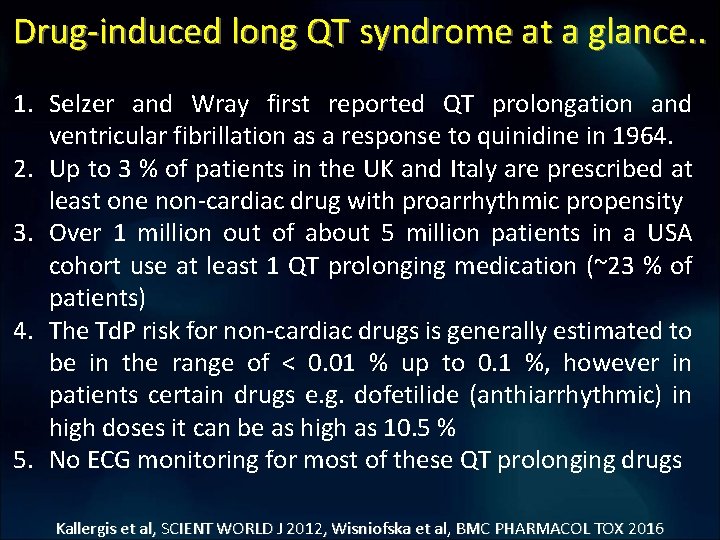
Drug-induced long QT syndrome at a glance. . 1. Selzer and Wray first reported QT prolongation and ventricular fibrillation as a response to quinidine in 1964. 2. Up to 3 % of patients in the UK and Italy are prescribed at least one non-cardiac drug with proarrhythmic propensity 3. Over 1 million out of about 5 million patients in a USA cohort use at least 1 QT prolonging medication (~23 % of patients) 4. The Td. P risk for non-cardiac drugs is generally estimated to be in the range of < 0. 01 % up to 0. 1 %, however in patients certain drugs e. g. dofetilide (anthiarrhythmic) in high doses it can be as high as 10. 5 % 5. No ECG monitoring for most of these QT prolonging drugs Kallergis et al, SCIENT WORLD J 2012, Wisniofska et al, BMC PHARMACOL TOX 2016
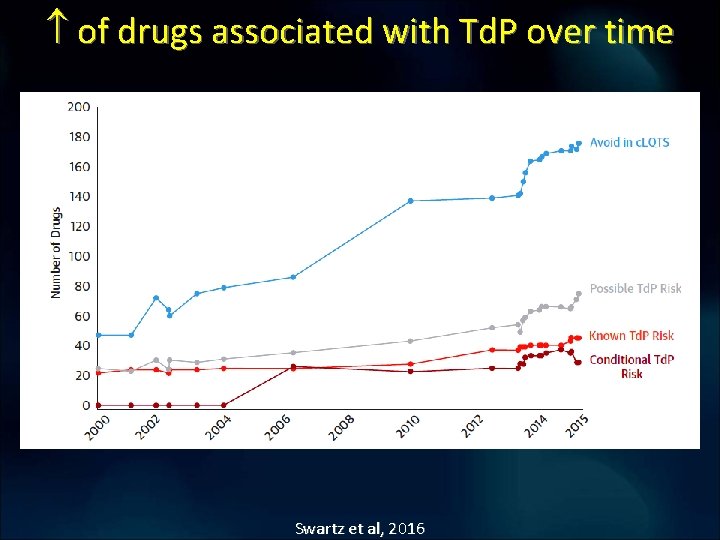
of drugs associated with Td. P over time Swartz et al, 2016
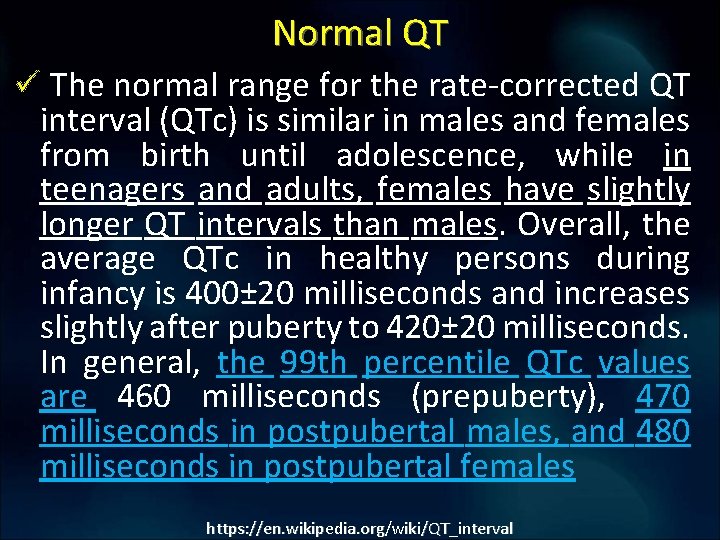
Normal QT ü The normal range for the rate-corrected QT interval (QTc) is similar in males and females from birth until adolescence, while in teenagers and adults, females have slightly longer QT intervals than males. Overall, the average QTc in healthy persons during infancy is 400± 20 milliseconds and increases slightly after puberty to 420± 20 milliseconds. In general, the 99 th percentile QTc values are 460 milliseconds (prepuberty), 470 milliseconds in postpubertal males, and 480 milliseconds in postpubertal females https: //en. wikipedia. org/wiki/QT_interval
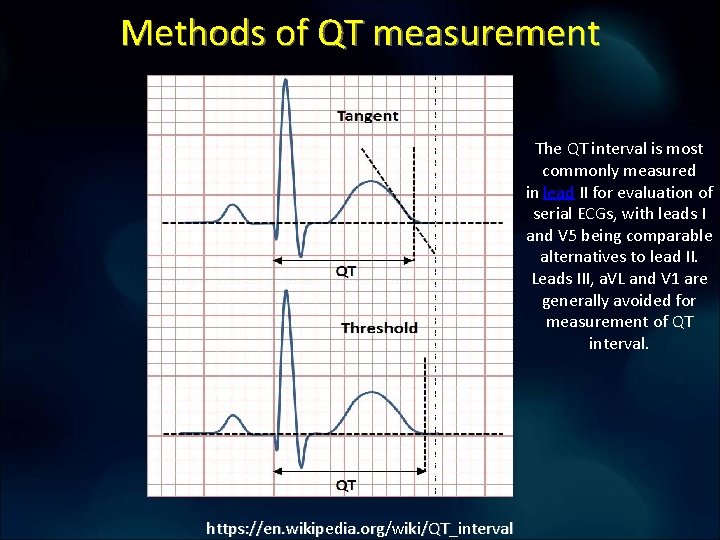
Methods of QT measurement The QT interval is most commonly measured in lead II for evaluation of serial ECGs, with leads I and V 5 being comparable alternatives to lead II. Leads III, a. VL and V 1 are generally avoided for measurement of QT interval. https: //en. wikipedia. org/wiki/QT_interval
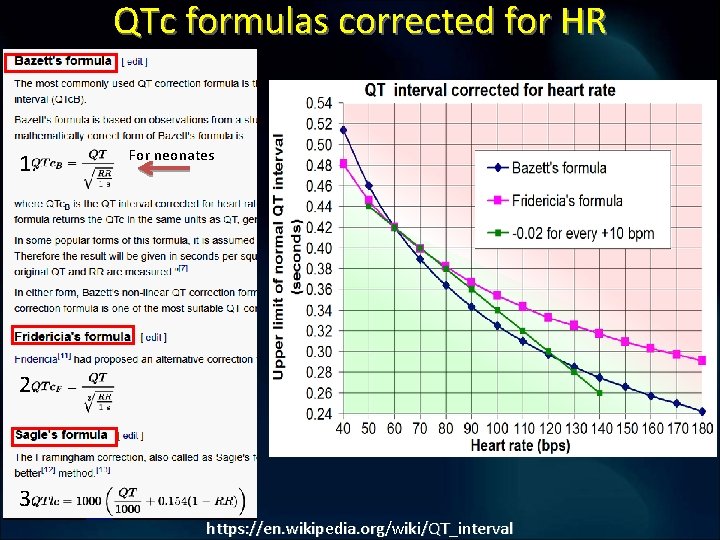
QTc formulas corrected for HR 1. For neonates 2. 3. https: //en. wikipedia. org/wiki/QT_interval
QT Prolongation Pathophysiology
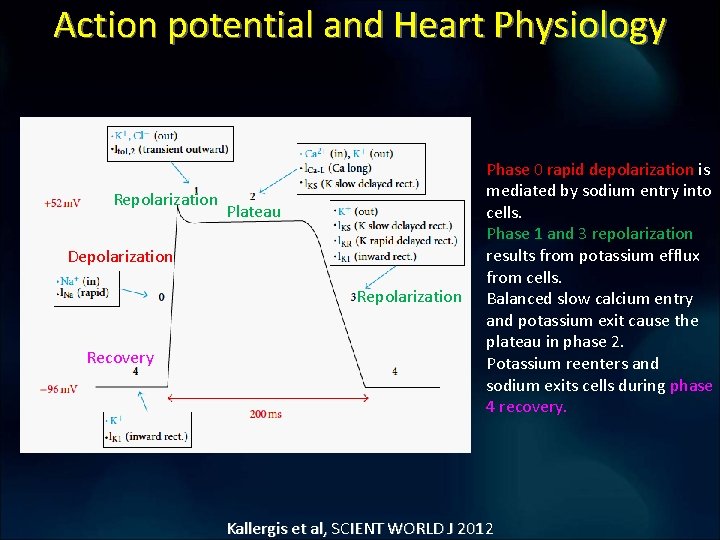
Action potential and Heart Physiology Repolarization Plateau Depolarization Recovery Phase 0 rapid depolarization is mediated by sodium entry into cells. Phase 1 and 3 repolarization results from potassium efflux from cells. Balanced slow calcium entry and potassium exit cause the plateau in phase 2. Potassium reenters and sodium exits cells during phase 4 recovery. Kallergis et al, SCIENT WORLD J 2012
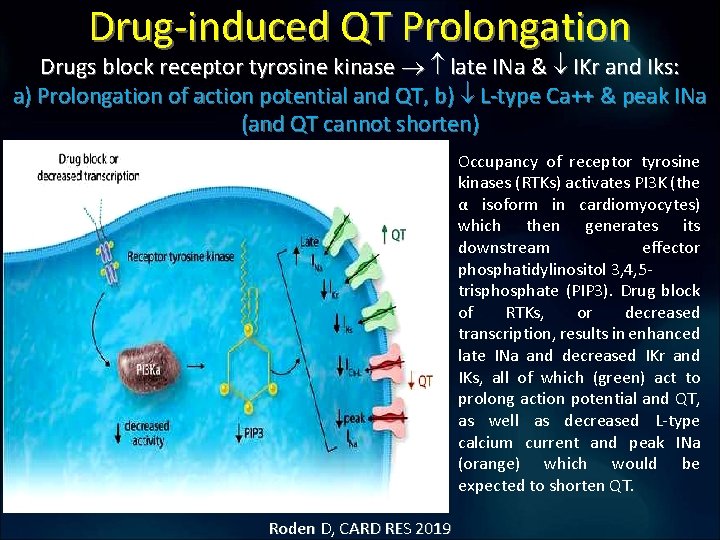
Drug-induced QT Prolongation Drugs block receptor tyrosine kinase late INa & IKr and Iks: a) Prolongation of action potential and QT, b) L-type Ca++ & peak INa (and QT cannot shorten) Occupancy of receptor tyrosine kinases (RTKs) activates PI 3 K (the α isoform in cardiomyocytes) which then generates its downstream effector phosphatidylinositol 3, 4, 5 trisphosphate (PIP 3). Drug block of RTKs, or decreased transcription, results in enhanced late INa and decreased IKr and IKs, all of which (green) act to prolong action potential and QT, as well as decreased L-type calcium current and peak INa (orange) which would be expected to shorten QT. Roden D, CARD RES 2019
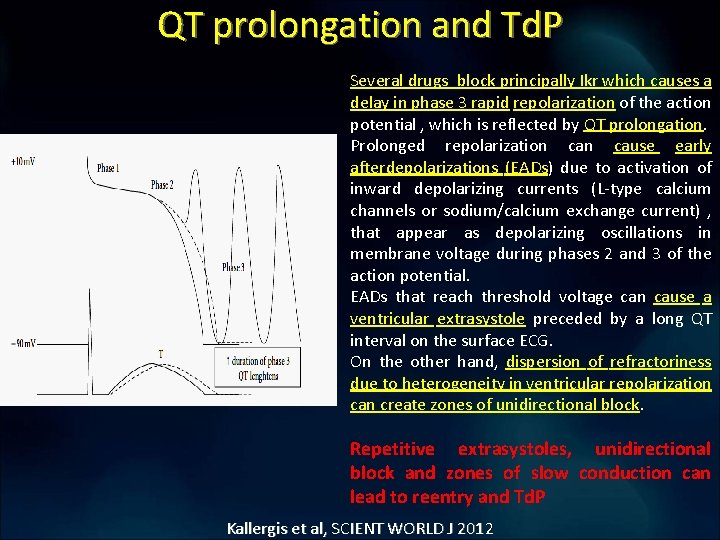
QT prolongation and Td. P Several drugs block principally Ikr which causes a delay in phase 3 rapid repolarization of the action potential , which is reflected by QT prolongation. Prolonged repolarization cause early afterdepolarizations (EADs) due to activation of inward depolarizing currents (L-type calcium channels or sodium/calcium exchange current) , that appear as depolarizing oscillations in membrane voltage during phases 2 and 3 of the action potential. EADs that reach threshold voltage can cause a ventricular extrasystole preceded by a long QT interval on the surface ECG. On the other hand, dispersion of refractoriness due to heterogeneity in ventricular repolarization can create zones of unidirectional block. Repetitive extrasystoles, unidirectional block and zones of slow conduction can lead to reentry and Td. P Kallergis et al, SCIENT WORLD J 2012
QT Prolongation Gene predisposition
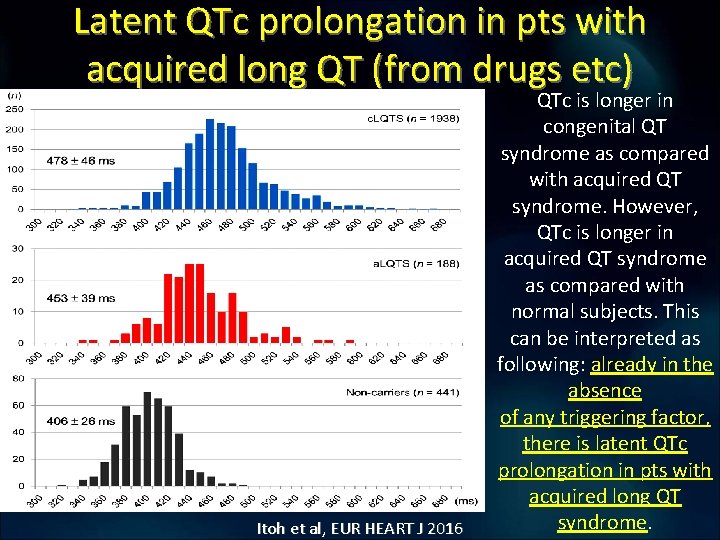
Latent QTc prolongation in pts with acquired long QT (from drugs etc) Itoh et al, EUR HEART J 2016 QTc is longer in congenital QT syndrome as compared with acquired QT syndrome. However, QTc is longer in acquired QT syndrome as compared with normal subjects. This can be interpreted as following: already in the absence of any triggering factor, there is latent QTc prolongation in pts with acquired long QT syndrome.
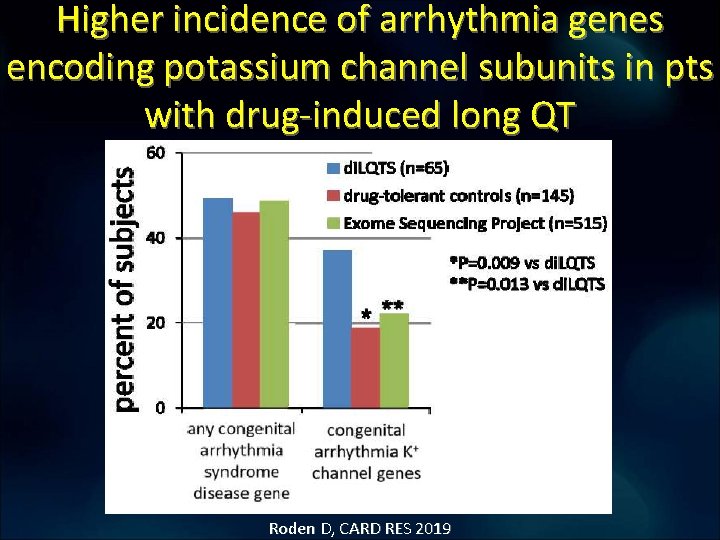
Higher incidence of arrhythmia genes encoding potassium channel subunits in pts with drug-induced long QT Roden D, CARD RES 2019
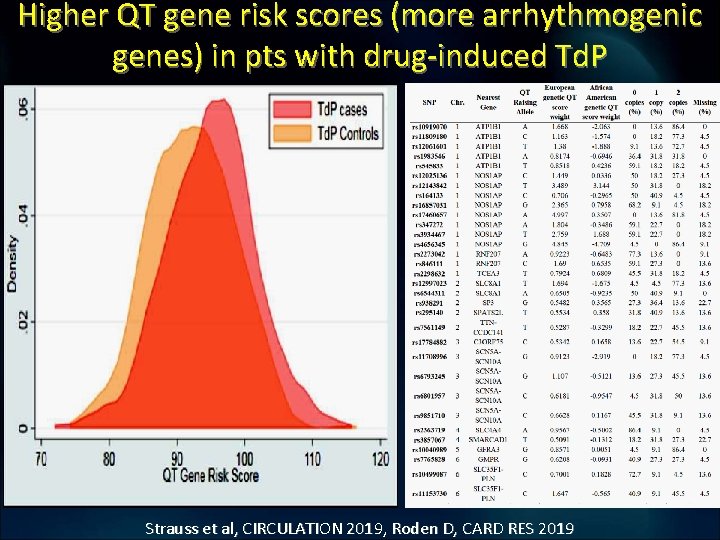
Higher QT gene risk scores (more arrhythmogenic genes) in pts with drug-induced Td. P Strauss et al, CIRCULATION 2019, Roden D, CARD RES 2019
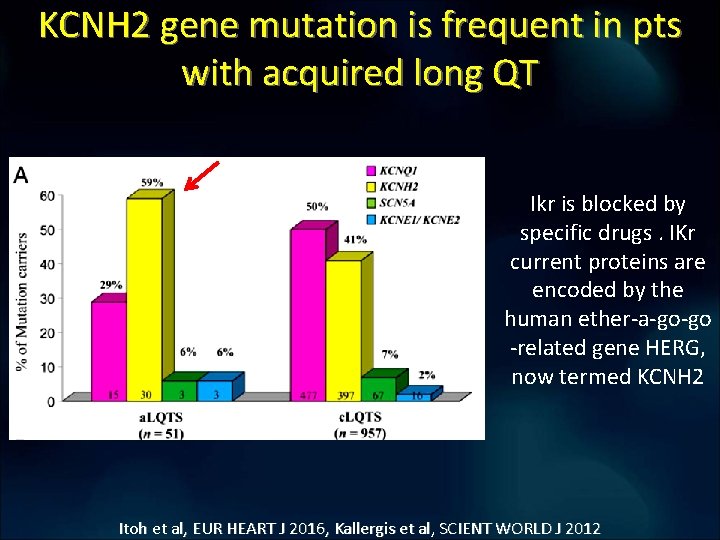
KCNH 2 gene mutation is frequent in pts with acquired long QT Ikr is blocked by specific drugs. IKr current proteins are encoded by the human ether-a-go-go -related gene HERG, now termed KCNH 2 Itoh et al, EUR HEART J 2016, Kallergis et al, SCIENT WORLD J 2012
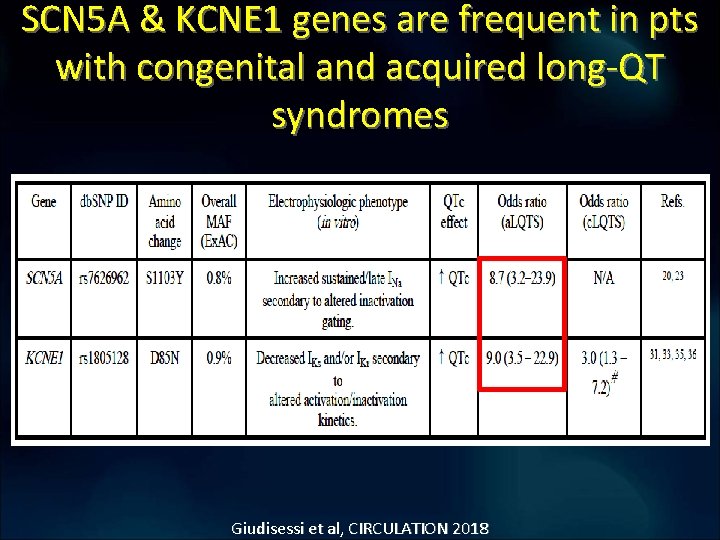
SCN 5 A & KCNE 1 genes are frequent in pts with congenital and acquired long-QT syndromes Giudisessi et al, CIRCULATION 2018
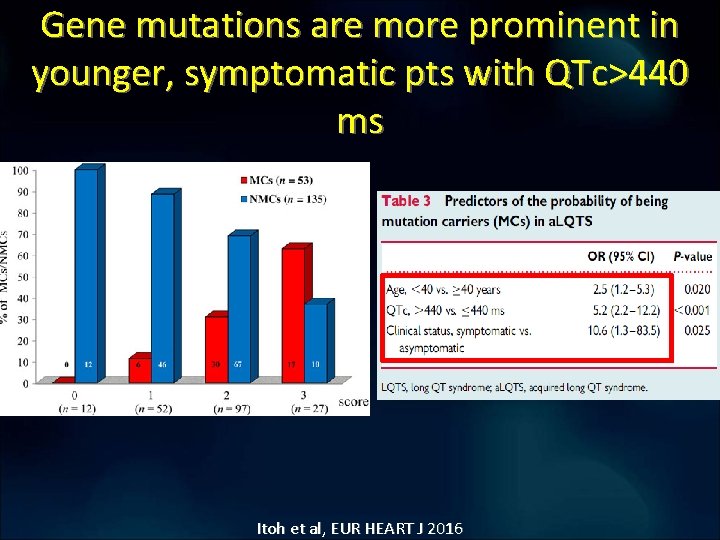
Gene mutations are more prominent in younger, symptomatic pts with QTc>440 ms Itoh et al, EUR HEART J 2016
QT Prolongation and Torsades de Pointes
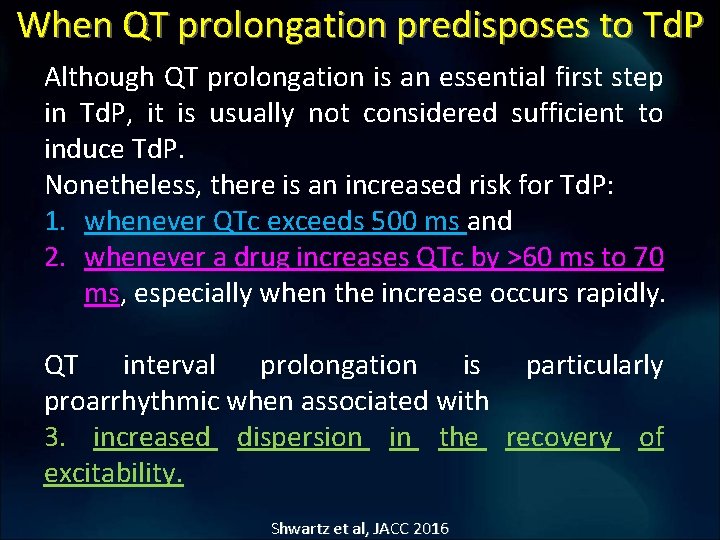
When QT prolongation predisposes to Td. P Although QT prolongation is an essential first step in Td. P, it is usually not considered sufficient to induce Td. P. Nonetheless, there is an increased risk for Td. P: 1. whenever QTc exceeds 500 ms and 2. whenever a drug increases QTc by >60 ms to 70 ms, especially when the increase occurs rapidly. QT interval prolongation is particularly proarrhythmic when associated with 3. increased dispersion in the recovery of excitability. Shwartz et al, JACC 2016
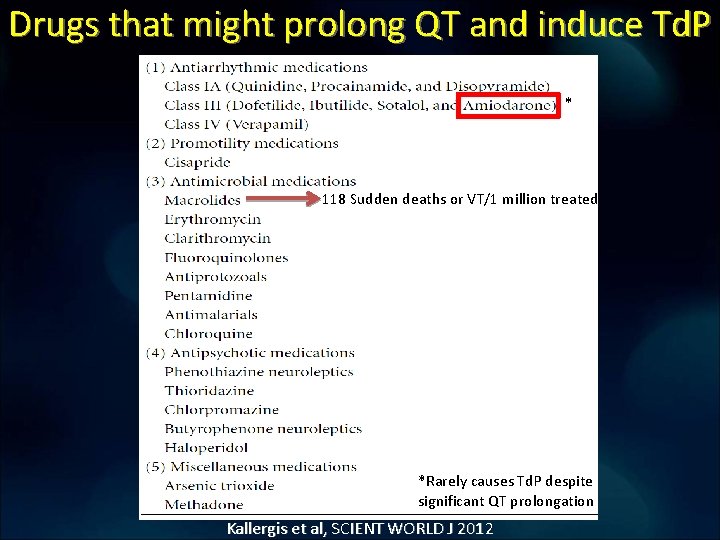
Drugs that might prolong QT and induce Td. P * 118 Sudden deaths or VT/1 million treated *Rarely causes Td. P despite significant QT prolongation Kallergis et al, SCIENT WORLD J 2012
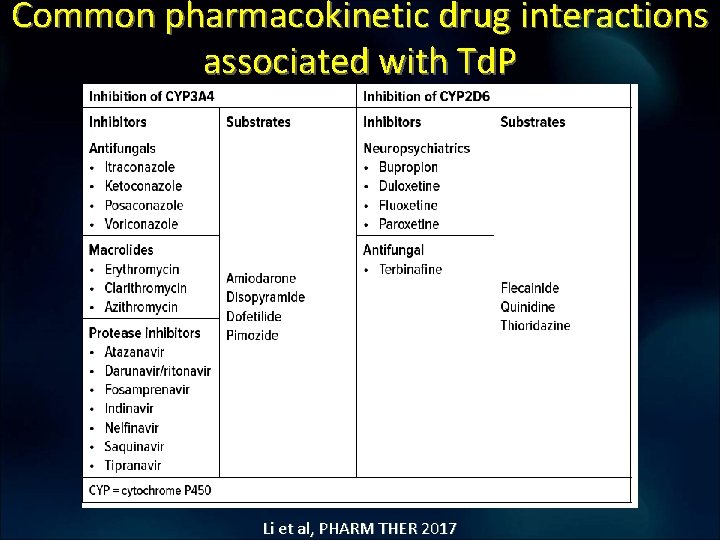
Common pharmacokinetic drug interactions associated with Td. P Li et al, PHARM THER 2017
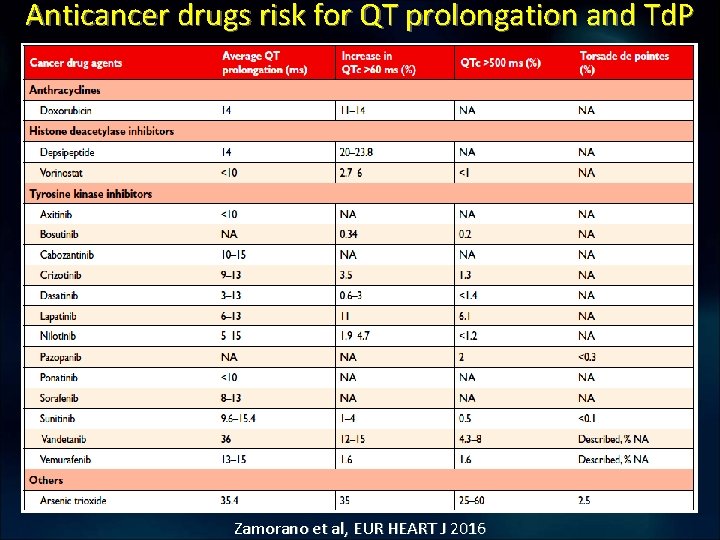
Anticancer drugs risk for QT prolongation and Td. P Zamorano et al, EUR HEART J 2016
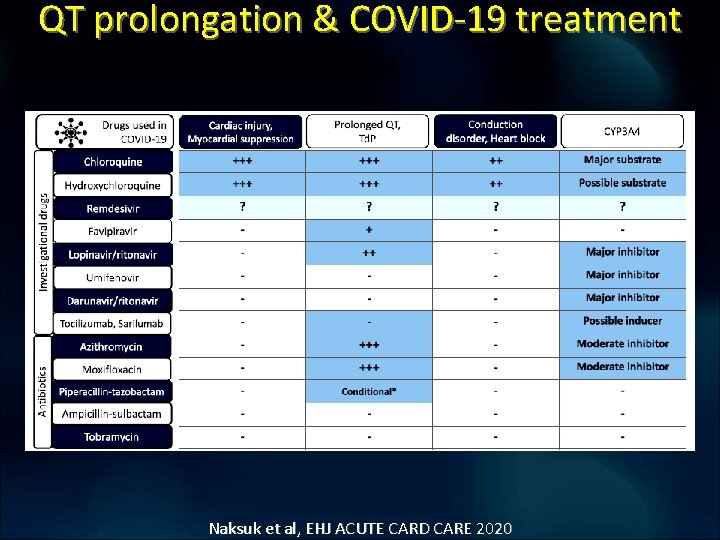
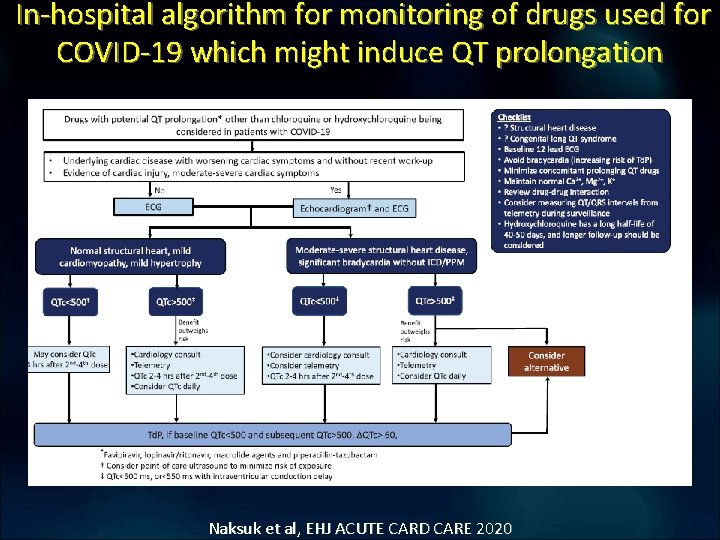
QT prolongation & COVID-19 treatment Naksuk et al, EHJ ACUTE CARD CARE 2020
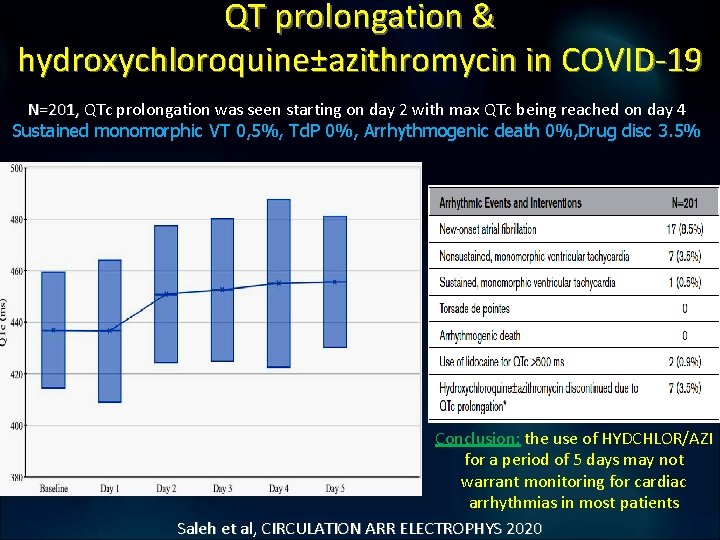
QT prolongation & hydroxychloroquine±azithromycin in COVID-19 N=201, QTc prolongation was seen starting on day 2 with max QTc being reached on day 4 N=201, Sustained monomorphic VT 0, 5%, Td. P 0%, Arrhythmogenic death 0%, Drug disc 3. 5% Conclusion: the use of HYDCHLOR/AZI for a period of 5 days may not warrant monitoring for cardiac arrhythmias in most patients Saleh et al, CIRCULATION ARR ELECTROPHYS 2020
In-hospital algorithm for monitoring of drugs used for COVID-19 which might induce QT prolongation Naksuk et al, EHJ ACUTE CARD CARE 2020
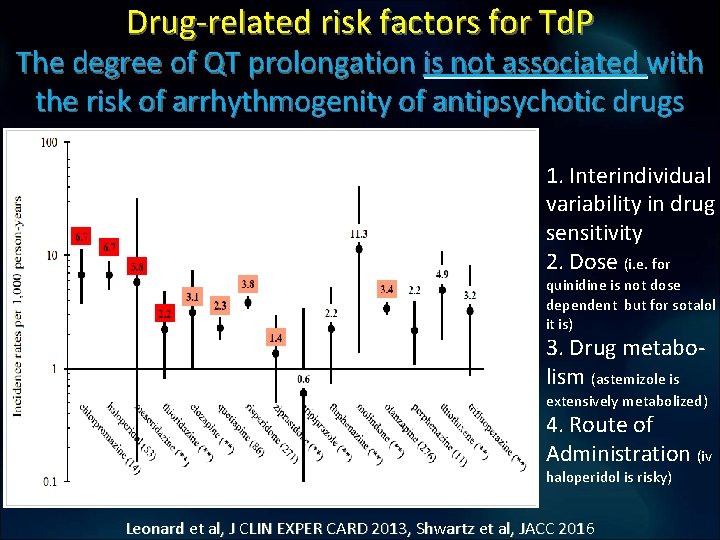
It is not only QT prolongation that predisposes to Td. P Average QT prolongation may or may not truly correlate with a given drug’s propensity for causing clinically important arrhythmias 1. Patient-related risk factors 2. Drug –related risk factors 3. Clinical condition-related Leonard et al, J CLIN EXPER CARD 2013, Shwartz et al, JACC 2016
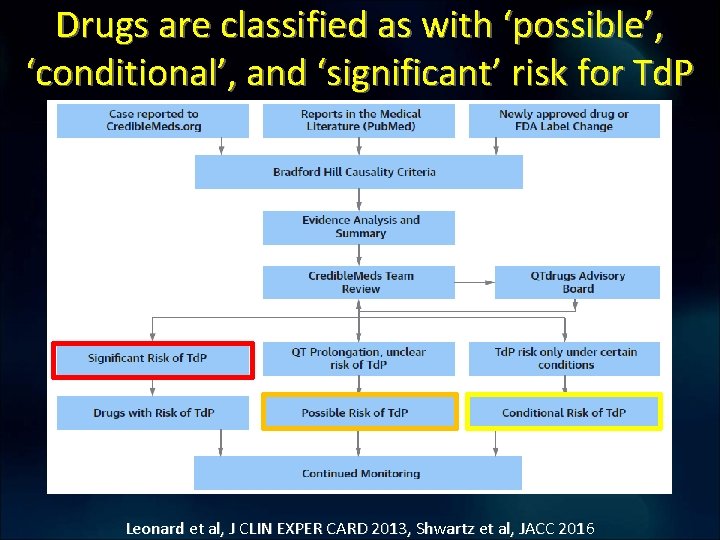
Drugs are classified as with ‘possible’, ‘conditional’, and ‘significant’ risk for Td. P Leonard et al, J CLIN EXPER CARD 2013, Shwartz et al, JACC 2016
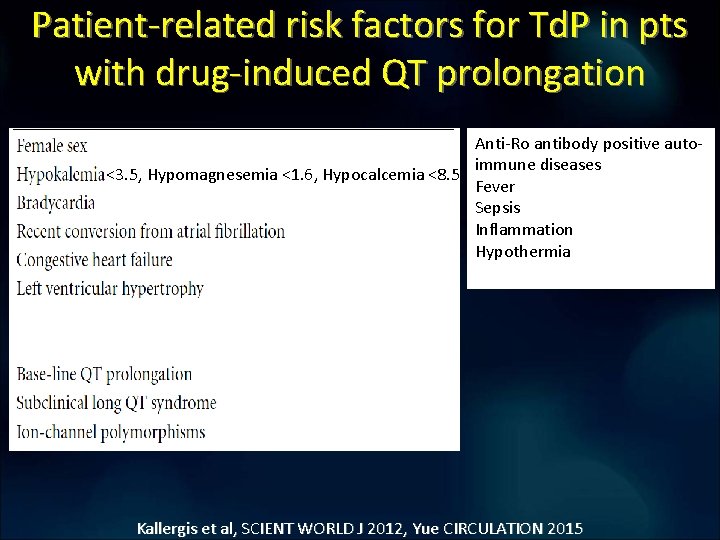
Patient-related risk factors for Td. P in pts with drug-induced QT prolongation Anti-Ro antibody positive autoimmune diseases <3. 5, Hypomagnesemia <1. 6, Hypocalcemia <8. 5 Fever Sepsis Inflammation Hypothermia Kallergis et al, SCIENT WORLD J 2012, Yue CIRCULATION 2015
Drug-related risk factors for Td. P The degree of QT prolongation is not associated with the risk of arrhythmogenity of antipsychotic drugs 1. Interindividual variability in drug sensitivity 2. Dose (i. e. for quinidine is not dose dependent but for sotalol it is) 3. Drug metabo- lism (astemizole is extensively metabolized) 4. Route of Administration (iv haloperidol is risky) Leonard et al, J CLIN EXPER CARD 2013, Shwartz et al, JACC 2016
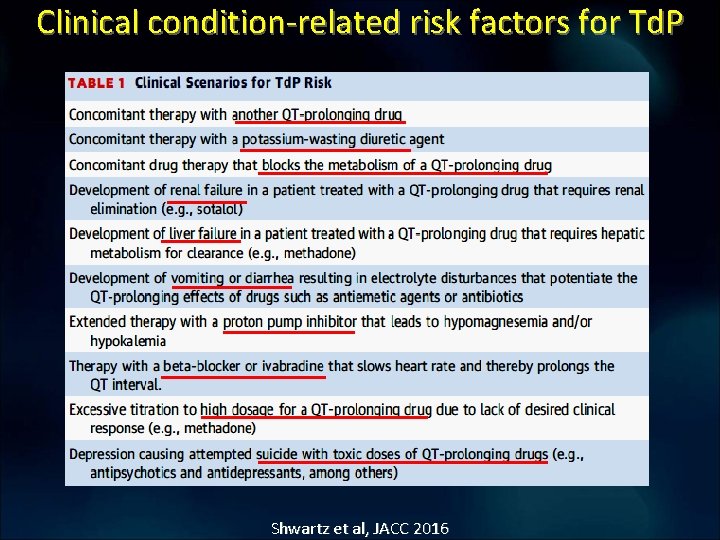
Clinical condition-related risk factors for Td. P Shwartz et al, JACC 2016
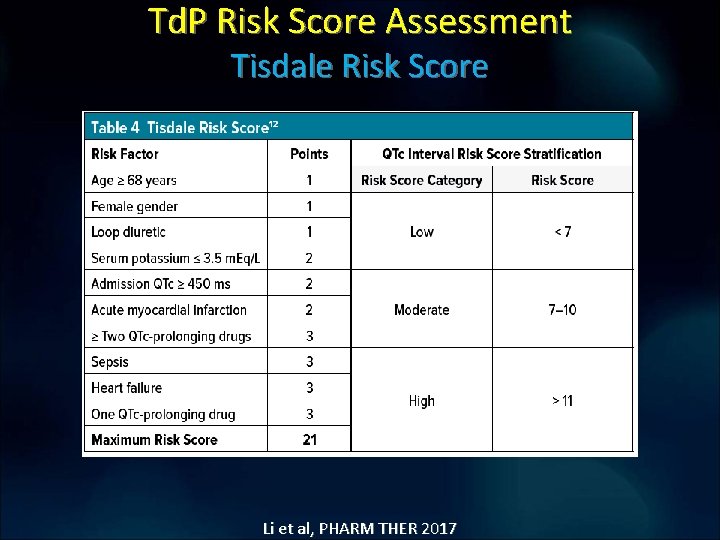
Td. P Risk Score Assessment Tisdale Risk Score Li et al, PHARM THER 2017
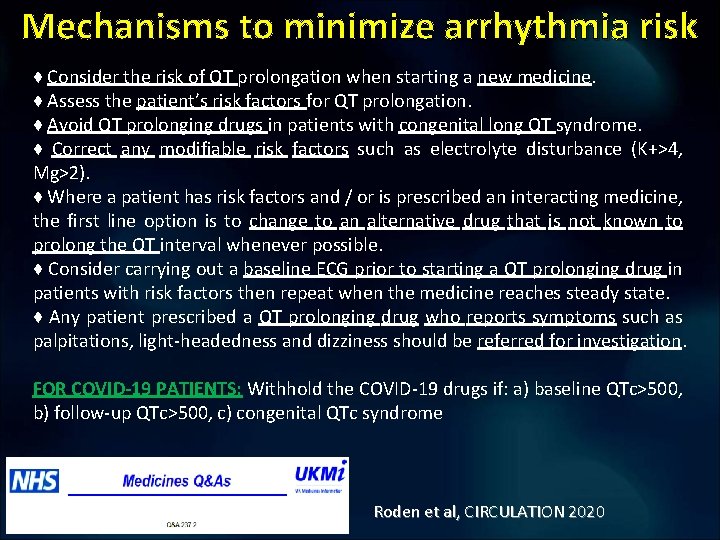
Mechanisms to minimize arrhythmia risk ♦ Consider the risk of QT prolongation when starting a new medicine. ♦ Assess the patient’s risk factors for QT prolongation. ♦ Avoid QT prolonging drugs in patients with congenital long QT syndrome. ♦ Correct any modifiable risk factors such as electrolyte disturbance (K+>4, Mg>2). ♦ Where a patient has risk factors and / or is prescribed an interacting medicine, the first line option is to change to an alternative drug that is not known to prolong the QT interval whenever possible. ♦ Consider carrying out a baseline ECG prior to starting a QT prolonging drug in patients with risk factors then repeat when the medicine reaches steady state. ♦ Any patient prescribed a QT prolonging drug who reports symptoms such as palpitations, light-headedness and dizziness should be referred for investigation. FOR COVID-19 PATIENTS: Withhold the COVID-19 drugs if: a) baseline QTc>500, b) follow-up QTc>500, c) congenital QTc syndrome Roden et al, CIRCULATION 2020
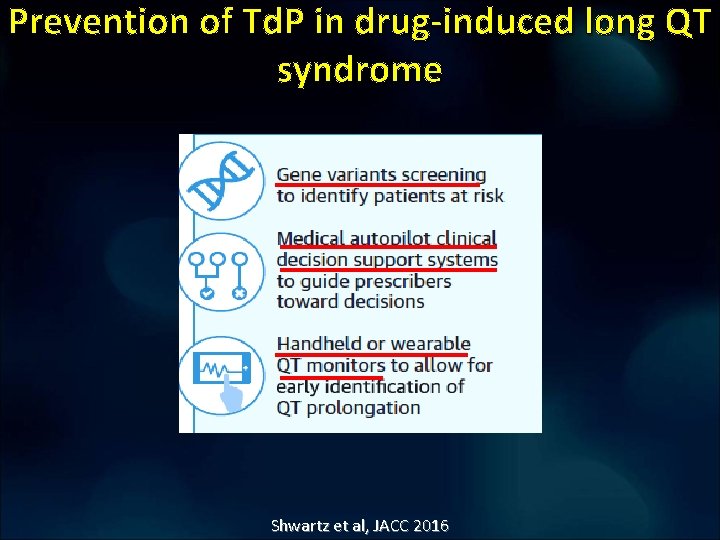
Prevention of Td. P in drug-induced long QT syndrome Shwartz et al, JACC 2016
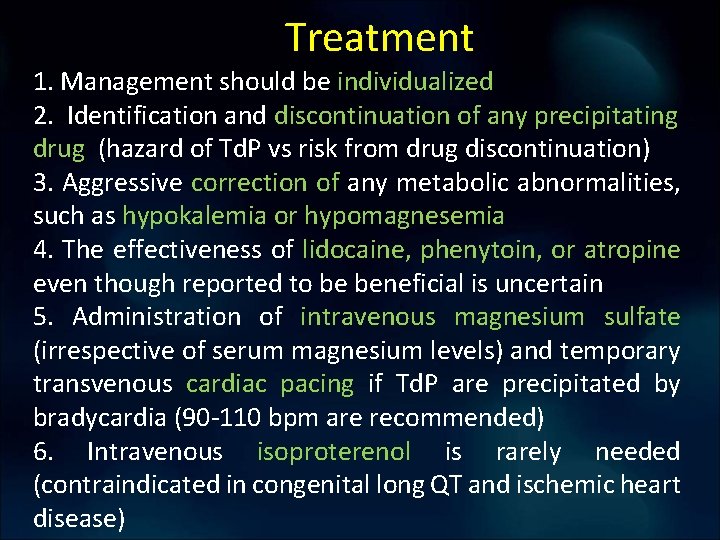
Treatment 1. Management should be individualized 2. Identification and discontinuation of any precipitating drug (hazard of Td. P vs risk from drug discontinuation) 3. Aggressive correction of any metabolic abnormalities, such as hypokalemia or hypomagnesemia 4. The effectiveness of lidocaine, phenytoin, or atropine even though reported to be beneficial is uncertain 5. Administration of intravenous magnesium sulfate (irrespective of serum magnesium levels) and temporary transvenous cardiac pacing if Td. P are precipitated by bradycardia (90 -110 bpm are recommended) 6. Intravenous isoproterenol is rarely needed (contraindicated in congenital long QT and ischemic heart disease)
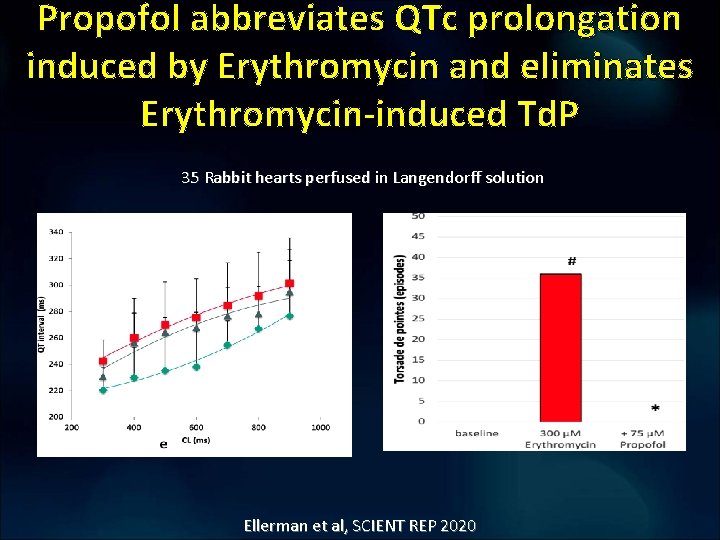
Propofol abbreviates QTc prolongation induced by Erythromycin and eliminates Erythromycin-induced Td. P 35 Rabbit hearts perfused in Langendorff solution Ellerman et al, SCIENT REP 2020
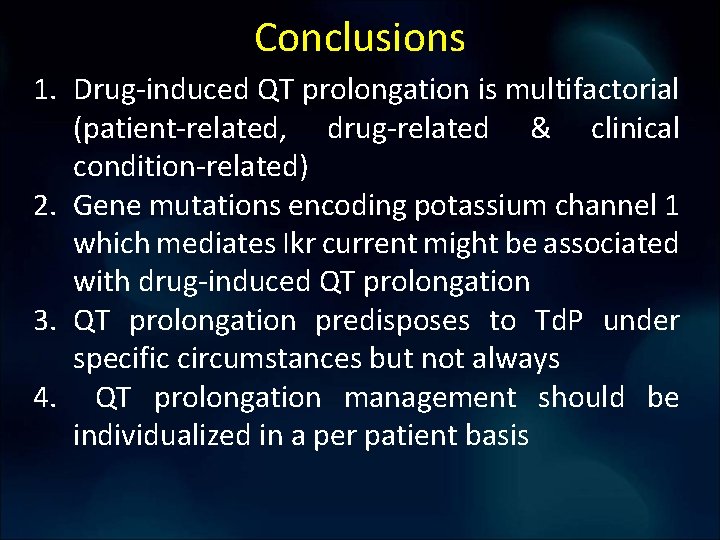
Conclusions 1. Drug-induced QT prolongation is multifactorial (patient-related, drug-related & clinical condition-related) 2. Gene mutations encoding potassium channel 1 which mediates Ikr current might be associated with drug-induced QT prolongation 3. QT prolongation predisposes to Td. P under specific circumstances but not always 4. QT prolongation management should be individualized in a per patient basis