
QRS Axis 0 degreesKH Lead a VF is


- Slides: 18
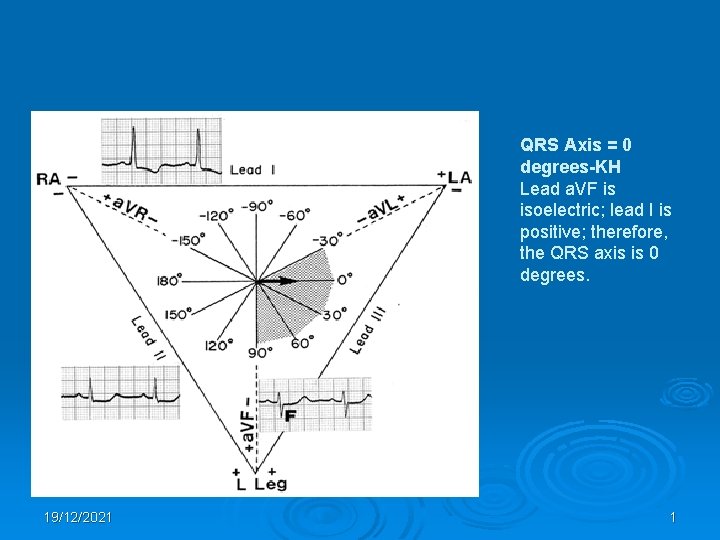
QRS Axis = 0 degrees-KH Lead a. VF is isoelectric; lead I is positive; therefore, the QRS axis is 0 degrees. 19/12/2021 1
Ø The frontal plane QRS axis represents only the average direction of ventricular activation in the frontal plane. As such this measure can inform the ECG reader of changes in the sequence of ventricular activation (e. g. , left anterior fascicular block), or it can be an indicator of myocardial damage (e. g. , inferior myocardial infarction). 19/12/2021 2
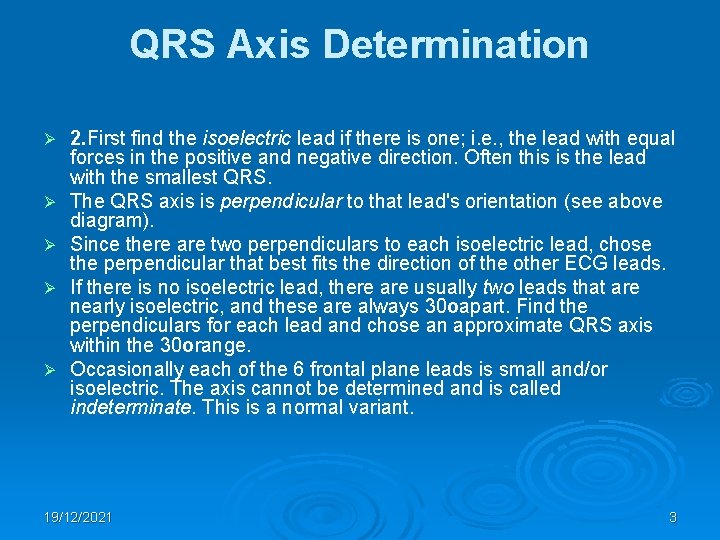
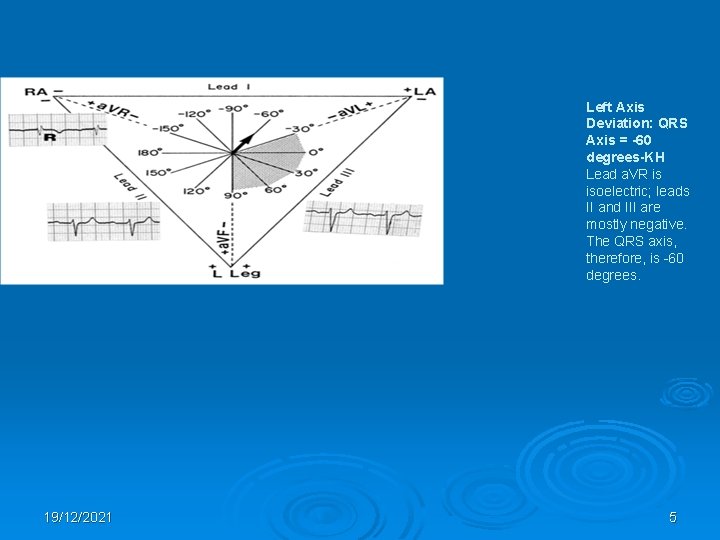
QRS Axis Determination Ø Ø Ø 2. First find the isoelectric lead if there is one; i. e. , the lead with equal forces in the positive and negative direction. Often this is the lead with the smallest QRS. The QRS axis is perpendicular to that lead's orientation (see above diagram). Since there are two perpendiculars to each isoelectric lead, chose the perpendicular that best fits the direction of the other ECG leads. If there is no isoelectric lead, there are usually two leads that are nearly isoelectric, and these are always 30 oapart. Find the perpendiculars for each lead and chose an approximate QRS axis within the 30 orange. Occasionally each of the 6 frontal plane leads is small and/or isoelectric. The axis cannot be determined and is called indeterminate. This is a normal variant. 19/12/2021 3
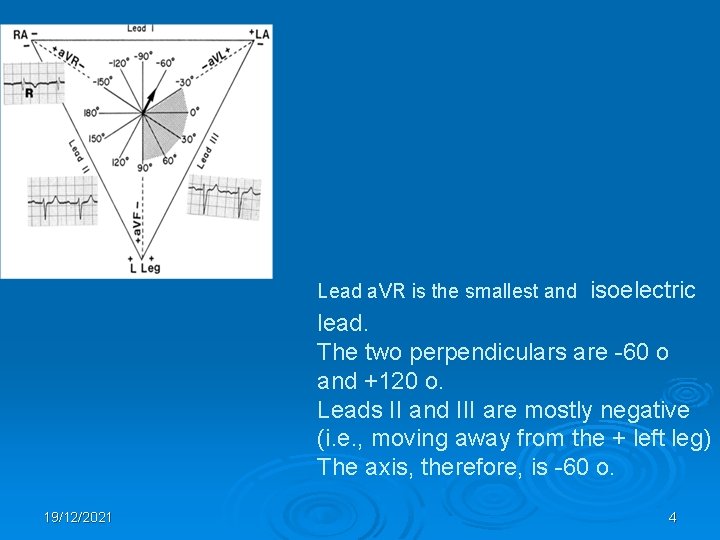
Lead a. VR is the smallest and isoelectric lead. The two perpendiculars are -60 o and +120 o. Leads II and III are mostly negative (i. e. , moving away from the + left leg) The axis, therefore, is -60 o. 19/12/2021 4
Left Axis Deviation: QRS Axis = -60 degrees-KH Lead a. VR is isoelectric; leads II and III are mostly negative. The QRS axis, therefore, is -60 degrees. 19/12/2021 5
1. Introduction to rhythm analysis 19/12/2021 6
19/12/2021 7
19/12/2021 8
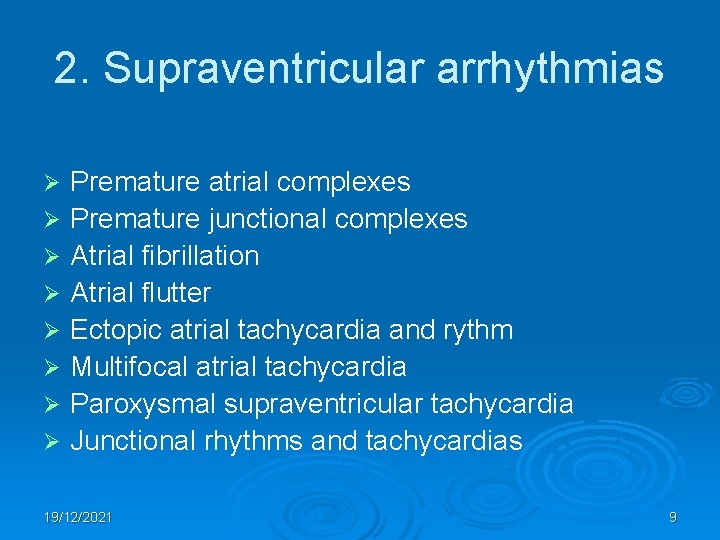
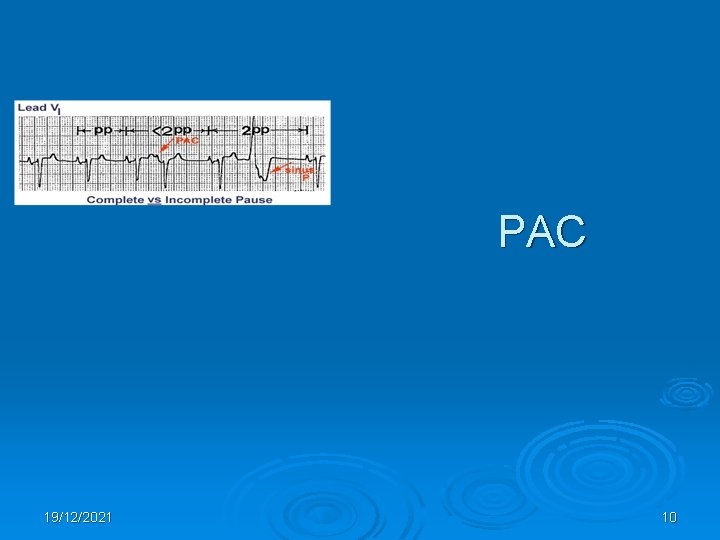
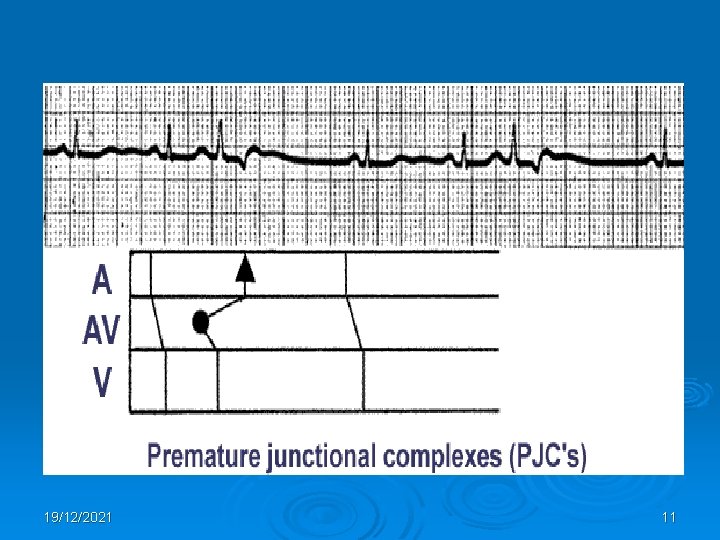
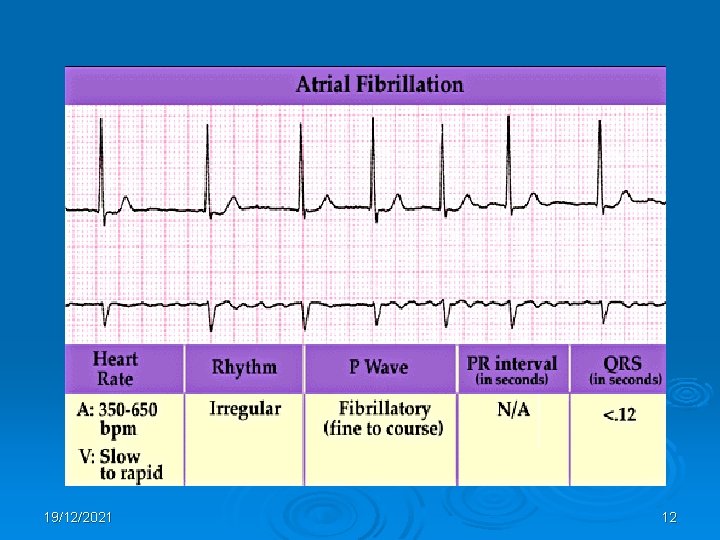
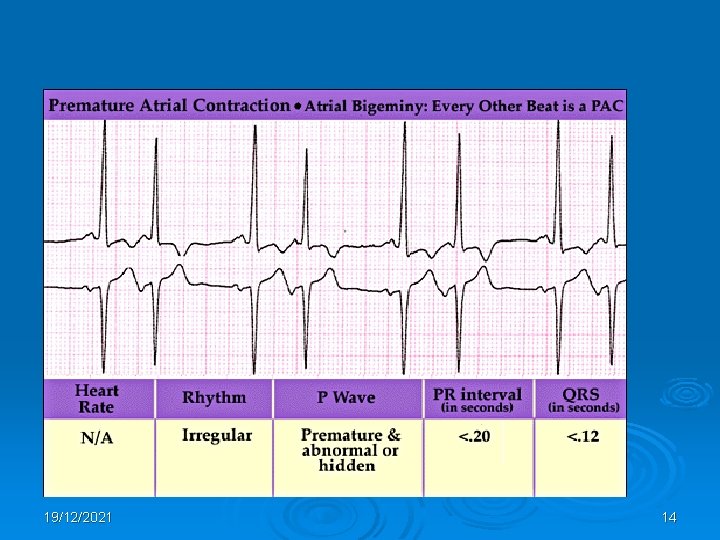
2. Supraventricular arrhythmias Ø Ø Ø Ø Premature atrial complexes Premature junctional complexes Atrial fibrillation Atrial flutter Ectopic atrial tachycardia and rythm Multifocal atrial tachycardia Paroxysmal supraventricular tachycardia Junctional rhythms and tachycardias 19/12/2021 9
PAC 19/12/2021 10
19/12/2021 11
19/12/2021 12
Atrial Flutter : The arrows point to two flutter waves for each QRS complex. Atrial rate = 280; ventricular rate = 140. 19/12/2021 13
19/12/2021 14
Paroxysmal Supraventricular Tachycardia (PSVT) 19/12/2021 15
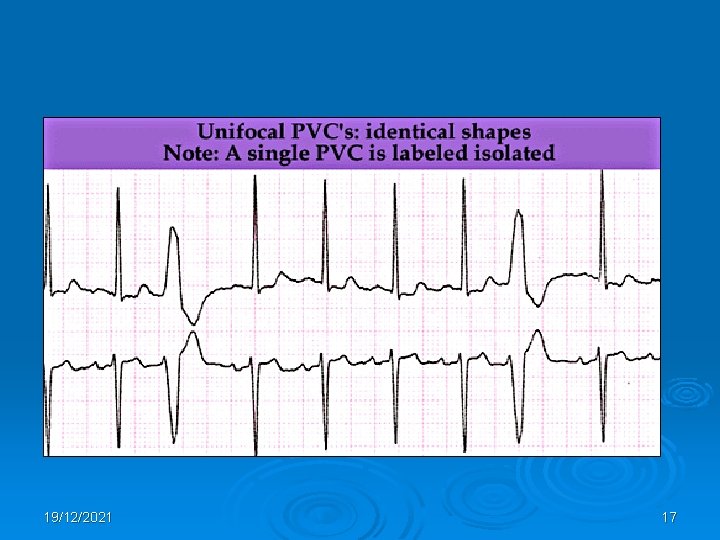
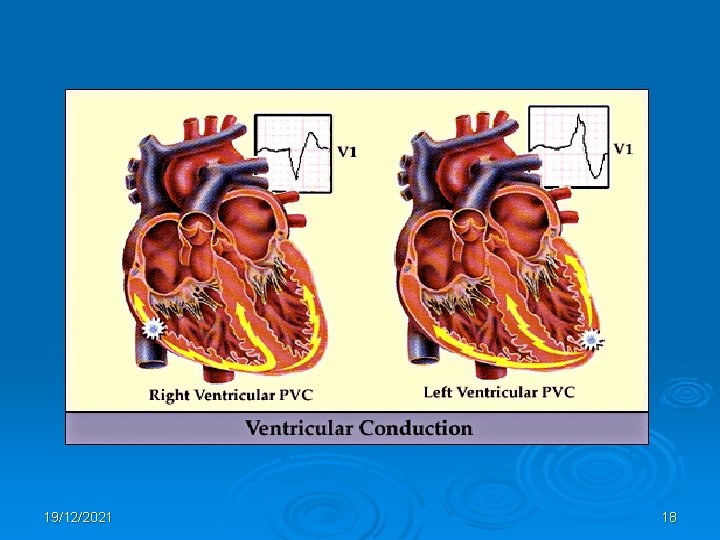
3. Ventricular arrhythmias Ø Ø Ø Ø Premature ventricular complexes (PVCs) Aberrancy vs. ventricular ectopy Ventricular tachycardia Differential diagnosis of wide QRS tachycardias Accelerated ventricular rhythms Idioventricular rhythm Ventricular parasystole 19/12/2021 16
19/12/2021 17
19/12/2021 18