
QI Residency Program Module AFundamental Principles of Quality

- Slides: 35
QI Residency Program Module A-Fundamental Principles of Quality www. nebraskahospitals. org
What is Quality? • “The degree to which health services for individuals and populations increase the likelihood of desired health outcomes and are consistent with current professional knowledge. ” – • Institute of Medicine(IOM). (2001) 2
Quality • Quality in healthcare means providing the care the patient needs when the patient needs it, in an affordable, safe, effective manner. Quality healthcare also means engaging and involving the patient, so the patient takes ownership in preventive care and in the treatment of diagnosed conditions. 3
Quality Principles • • Customer focus. Leadership. People involvement. Process approach. Systematic approach to management. Continual improvement Factual Approach to Decision Making. Mutually Beneficial Supplier Relations. 4
Customer Focus • When you understand what your customer wants or needs, you have a better chance of figuring out how to get the right materials, people, and processes in place to meet and exceed their expectations. 5
Total Employee Commitment • Employees need to understand the vision and goals that have been communicated. • They must be sufficiently trained and given the proper resources to complete tasks in order to be committed to reaching goals on time. 6
Integrated System • In an integrated system, everybody in every department should have a thorough understanding of policies, standards, objectives, and processes. 7
Process Approach • Adhering to processes is critical in quality. Processes ensure that the proper steps are taken at the right time to ensure consistency and patient safety. 8
Strategic and Systematic Approach • “Identifying, understanding and managing interrelated processes as a system contributes to the organization’s effectiveness and efficiency in achieving its objectives. ” 9
Continual Improvement • Your hospital should continually find ways to improve processes and adapt your products and services as customer needs shift. 10
The ‘WHY’? • Why do we have quality? • What difference does it make? • Who is impacted? 11
Responding to Change • Be knowledgeable of what is happening around us • Legislative updates • Informed patients • Media influence • Increased demand 12
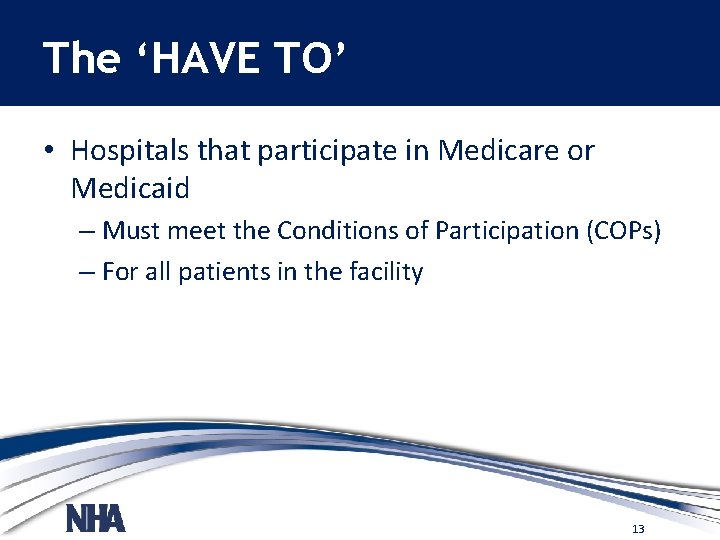
The ‘HAVE TO’ • Hospitals that participate in Medicare or Medicaid – Must meet the Conditions of Participation (COPs) – For all patients in the facility 13
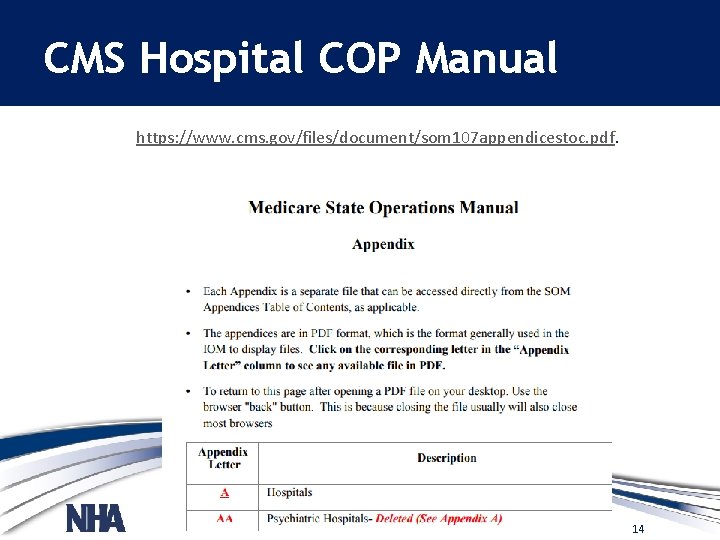
CMS Hospital COP Manual https: //www. cms. gov/files/document/som 107 appendicestoc. pdf. 14
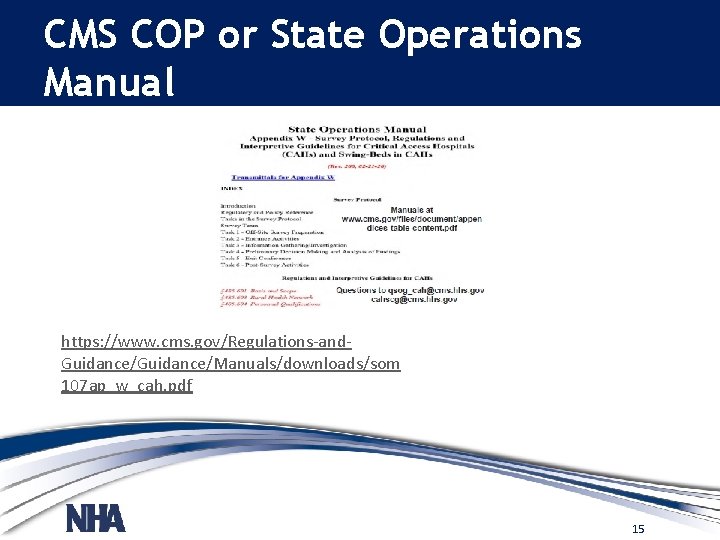
CMS COP or State Operations Manual https: //www. cms. gov/Regulations-and. Guidance/Manuals/downloads/som 107 ap_w_cah. pdf 15
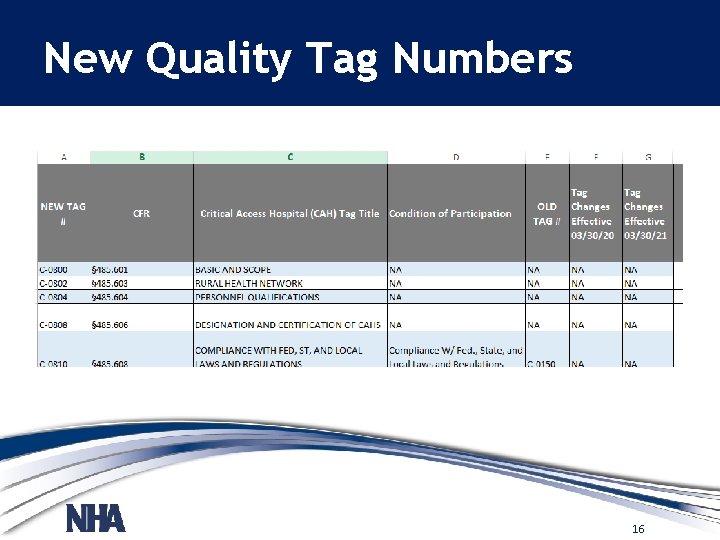
New Quality Tag Numbers 16
C 1300 -1325 QAPI Program Tags • § 485. 641 Condition of Participation: Periodic Evaluation and Quality Assurance Review • Interpretive Guidelines § 485. 641 • Survey Procedures § 485. 641 17
Defining Quality in Your Organization -Mission statement current focus -Vision statement preparing for the future -Strategic Plans -How does Quality fit? 18
Improvement Processes • QI, PI, QA all mean the same thing: By what means does your agency ensure you deliver quality care and service? 19
Improvement Processes • Quality Assurance (QA) – Today • Quality Improvement (QI) – Tomorrow • Performance Improvement (PI) – Future 20
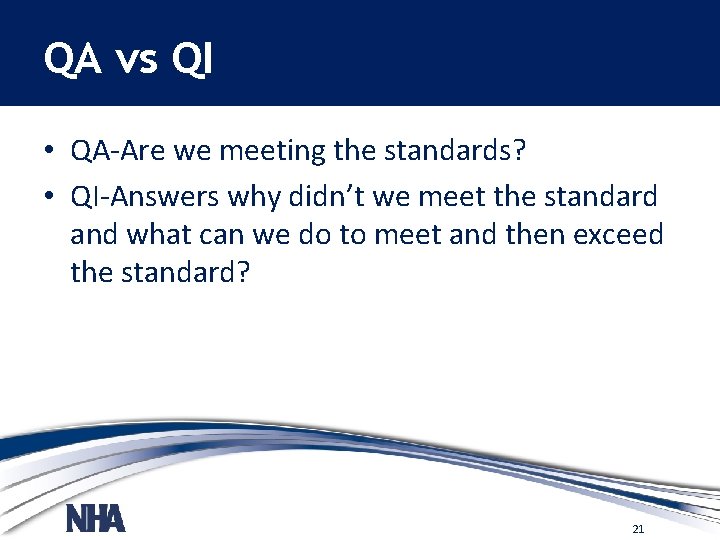
QA vs QI • QA-Are we meeting the standards? • QI-Answers why didn’t we meet the standard and what can we do to meet and then exceed the standard? 21
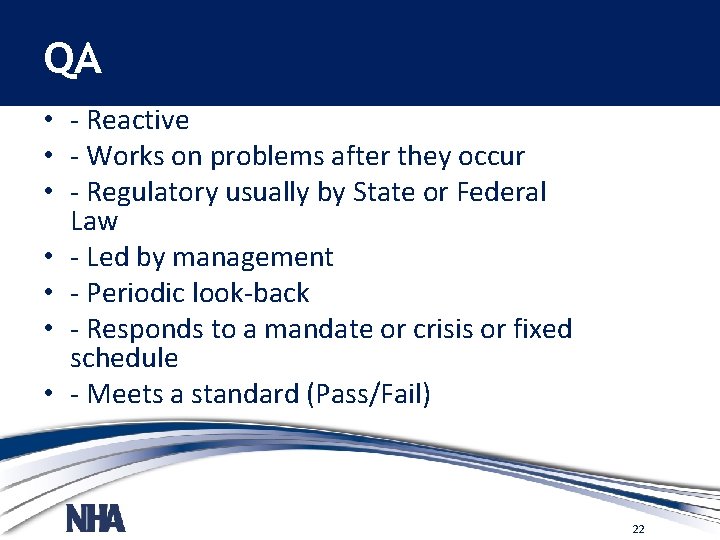
QA • - Reactive • - Works on problems after they occur • - Regulatory usually by State or Federal Law • - Led by management • - Periodic look-back • - Responds to a mandate or crisis or fixed schedule • - Meets a standard (Pass/Fail) 22
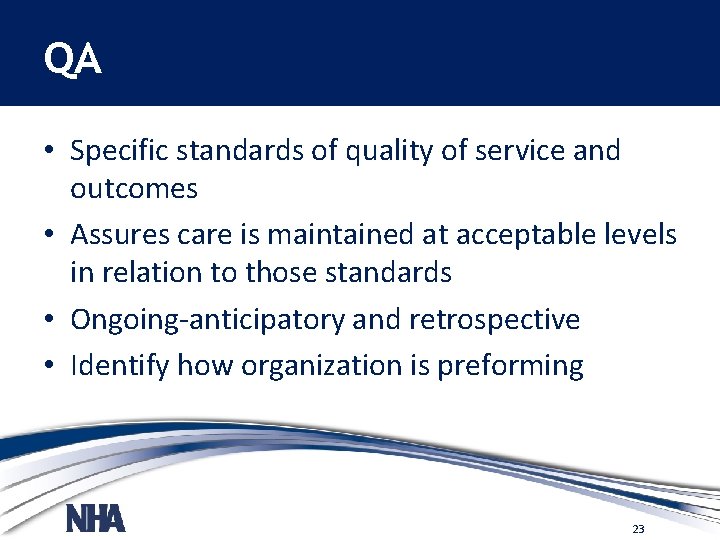
QA • Specific standards of quality of service and outcomes • Assures care is maintained at acceptable levels in relation to those standards • Ongoing-anticipatory and retrospective • Identify how organization is preforming 23
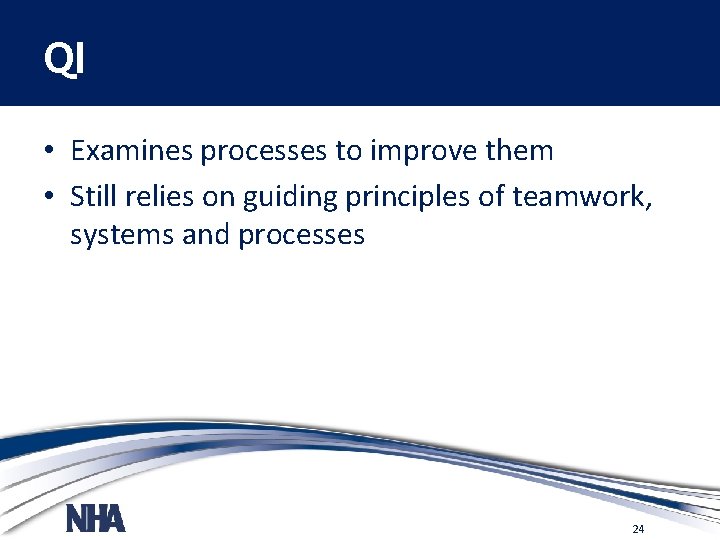
QI • Examines processes to improve them • Still relies on guiding principles of teamwork, systems and processes 24
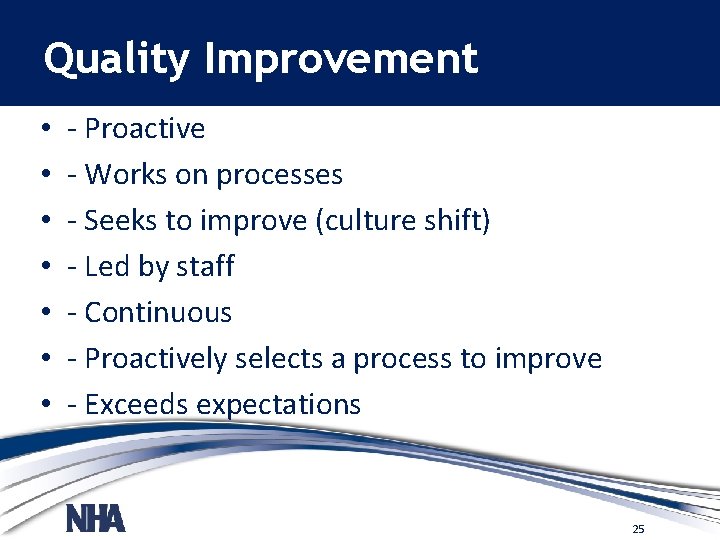
Quality Improvement • • - Proactive - Works on processes - Seeks to improve (culture shift) - Led by staff - Continuous - Proactively selects a process to improve - Exceeds expectations 25
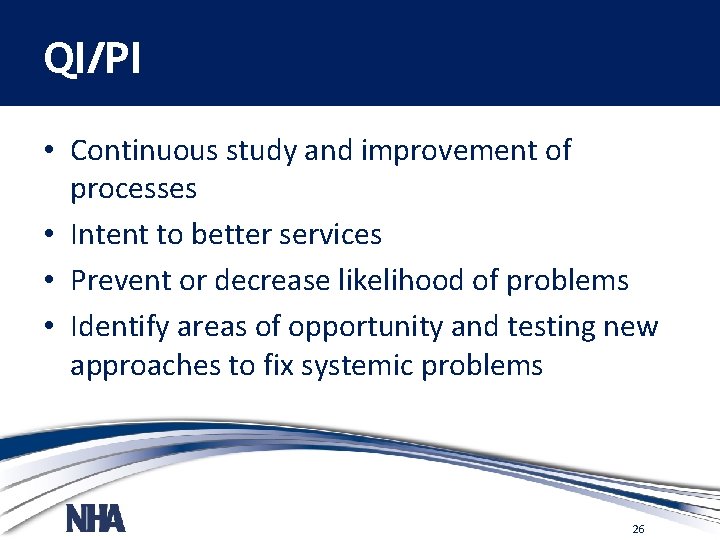
QI/PI • Continuous study and improvement of processes • Intent to better services • Prevent or decrease likelihood of problems • Identify areas of opportunity and testing new approaches to fix systemic problems 26
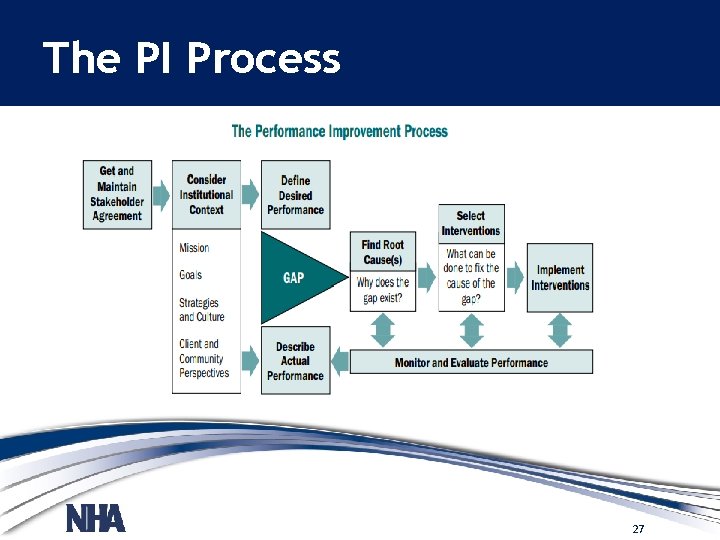
The PI Process 27
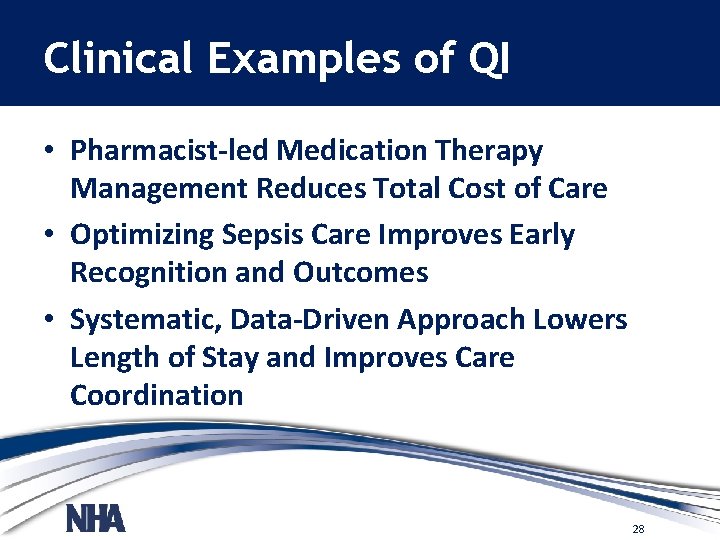
Clinical Examples of QI • Pharmacist-led Medication Therapy Management Reduces Total Cost of Care • Optimizing Sepsis Care Improves Early Recognition and Outcomes • Systematic, Data-Driven Approach Lowers Length of Stay and Improves Care Coordination 28
Example QA/QI/PI • Problem - Phone messages taken by clerical staff are not complete and not delivered to staff in a timely manner. • QA would be a process to find out "who" was not getting complete information and delivering the message in a timely manner. (Reactive) • QI would be a process in which the entire task of taking/delivering messages are looked at and a uniform method is developed for all clerical staff to use. (Proactive process to improve). 29
Quality Priorities • ID priority list of processes or services for improvement Areas to evaluate: –Culture – Engagement and Safety Culture –Credentialing /Privileging-Peer Review –Continuous Survey Readiness (CSR) –Chart audits –Gap Analysis 30
Priorities –Mandatory/ Voluntary reporting measures –Patient experience measures –Infection Prevention –Safety and Risk –Patient complaints/ comments –Staff feedback –Other. . . 31
Goals for QA/QI/PI Goals –Specific –Meaningful/connects to purpose –Measureable –Realistic/Attainable –Set time- frame 32
Goal Examples –Generator testing will be competed weekly 100% of the time. – Don’t reinvent the wheel-what are you currently monitoring - Is it measurable? Attainable? 33
Quality Responsibility • Key stakeholders – Governing Boards – Leadership – Supervisors/Managers – Frontline staff – Quality leaders 34
35