
QI Residency Program Module A Orientation How Quality
- Slides: 53
QI Residency Program Module A – Orientation & How Quality Fits in the Big Picture afternoon session www. nebraskahospitals. org
The Quality Plan • Defines responsibility, scope, methodology and organization of the quality program • Work plan for the organizations quality improvement activities • Formal ongoing process for improvement efforts • The Quality Continuum – QA, QI, PI • The Quality – QA, QI , PI 2
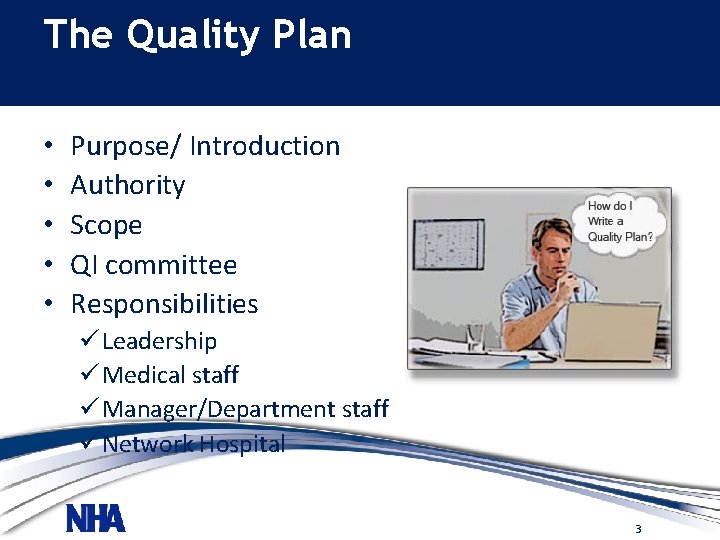
The Quality Plan • • • Purpose/ Introduction Authority Scope QI committee Responsibilities ü Leadership ü Medical staff ü Manager/Department staff ü Network Hospital 3
The Quality Plan • Confidentiality • Quality improvement processes and methodology • Communication • Annual review of document 4
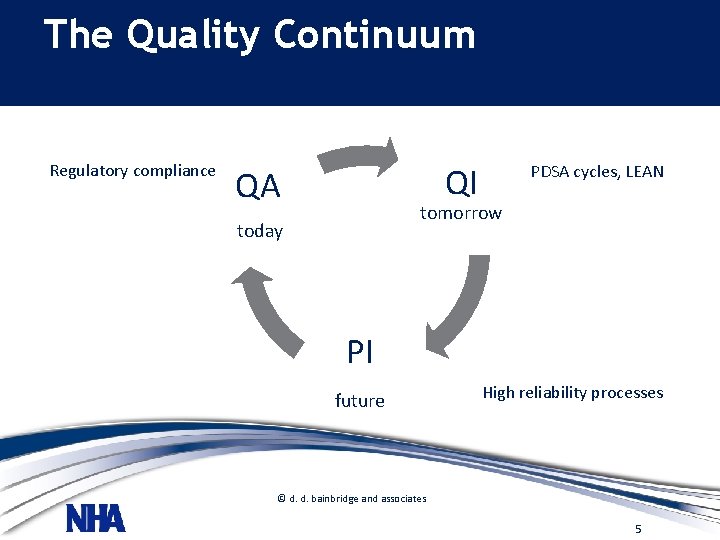
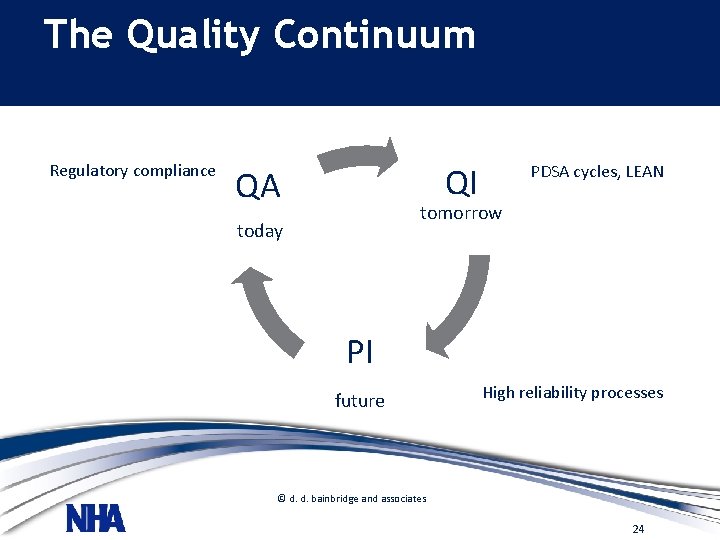
The Quality Continuum • and organization of the quality program Regulatory compliance PDSA cycles, LEAN QI quality • Work plan for. QA the organizations tomorrow improvementtoday activities • Formal ongoing process for improvement efforts PI • The Quality – QA, QI , PI future High reliability processes © d. d. bainbridge and associates 5
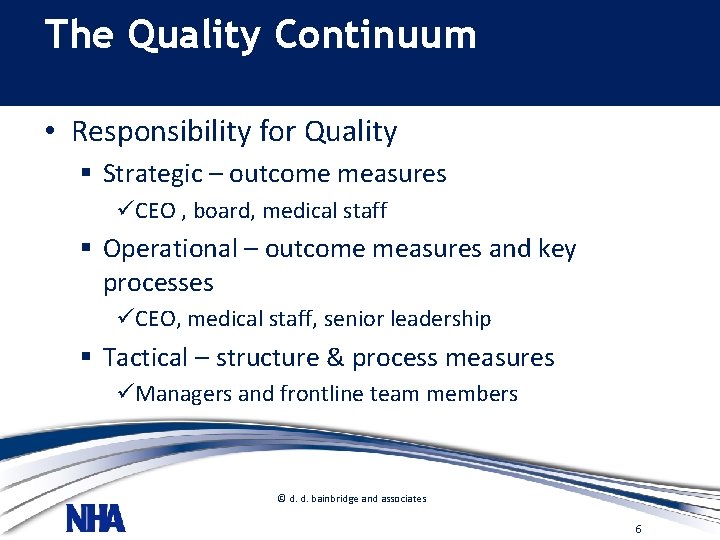
The Quality Continuum • Responsibility for Quality § Strategic – outcome measures üCEO , board, medical staff § Operational – outcome measures and key processes üCEO, medical staff, senior leadership § Tactical – structure & process measures üManagers and frontline team members © d. d. bainbridge and associates 6
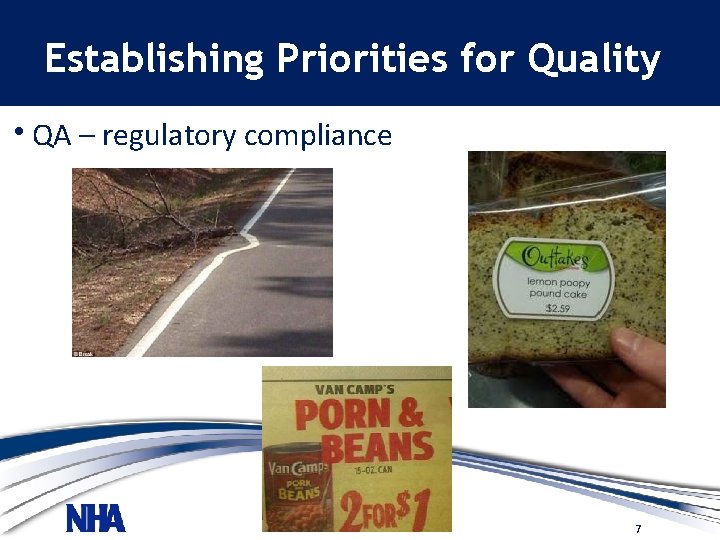
Establishing Priorities for Quality • QA – regulatory compliance 7
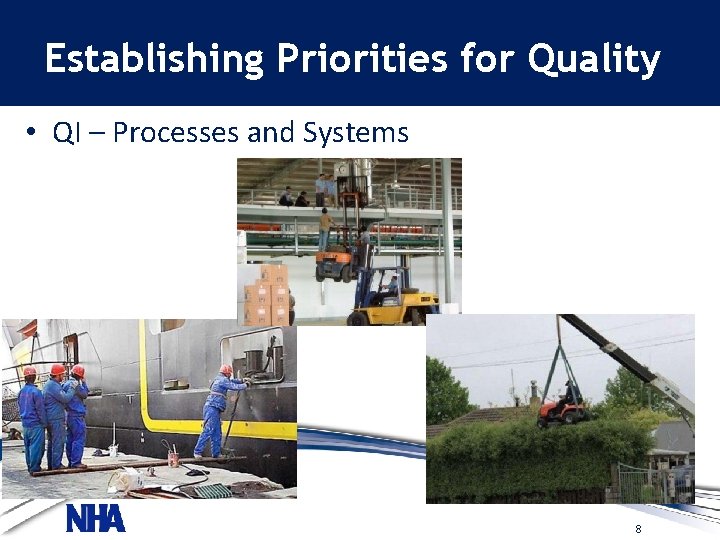
Establishing Priorities for Quality • QI – Processes and Systems 8
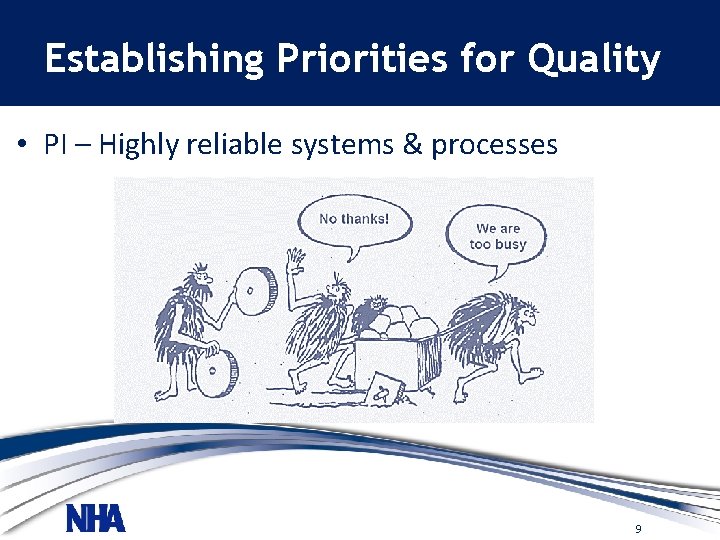
Establishing Priorities for Quality • PI – Highly reliable systems & processes 9
Establishing Priorities for Quality • Strategic Plan/Vision/Mission – Sets direction for improvement activities – Align priorities with initiatives to maximize resources – Engages leadership in quality as Vision/ Mission are applied to strategic plan 10
Establishing Priorities for Quality • ID priority list of processes or services for improvement • Evaluate Institute of Medicine quality domains • Areas to evaluate – Culture – Engagement and Safety Culture – Credentialing /Privileging – Peer Review – Continuous Survey Readiness ( CSR) – Chart audits 11
Establishing Priorities for Quality – Mandatory/ Voluntary reporting measures – Patient experience measures – Infection Prevention – Safety and Risk – Clinical quality – Patient complaints/ comments – Staff feedback – Other. . . 12
Goal Setting • Goals – Specific – what is specific goal? – Measureable – how will you track progress on goal? – Achievable – do you have resources to accomplish goal? – Relevant – is the goal meaningful? – Time- bound – when will you accomplish goal by? 13
Goal Setting • Examples of Goals – Generator testing will be competed weekly 100% of the time. – To improve patient satisfaction scores for the question "Where you told when you could expect your results” to the 80 th percentile by Q 4 2021. 14
Action Planning • Creates desired movement to attain the goal – What, when, how, where and by whom • Use improvement methodology – LEAN, PDSA, PACE etc… 15
16
Methodology for Improvement • Process Improvement Methodology – Process improvement is the proactive task of identifying, analyzing and improving upon existing processes within an organization for optimization and to meet new quotas or standards of quality. It often involves a systematic approach which follows a specific methodology. . . 17
Methodology for Improvement • Why use a methodology? – Creates desired movement to attain the goal – Defines the what, when, how, where, and by whom – Provides focus and scope – Attempts to improve or change will not last if you have no plan and follow up 18
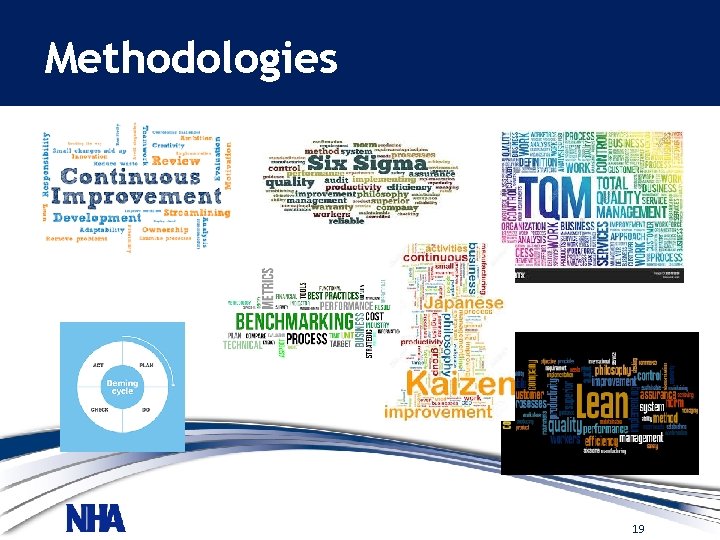
Methodologies 19
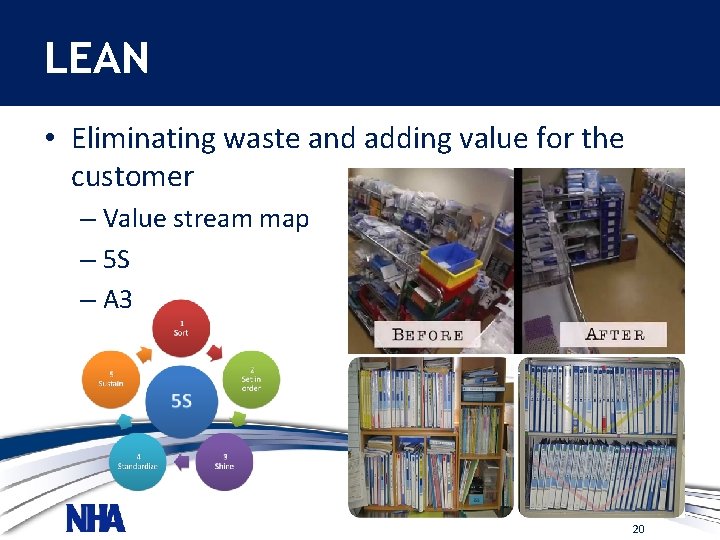
LEAN • Eliminating waste and adding value for the customer – Value stream map – 5 S – A 3 20
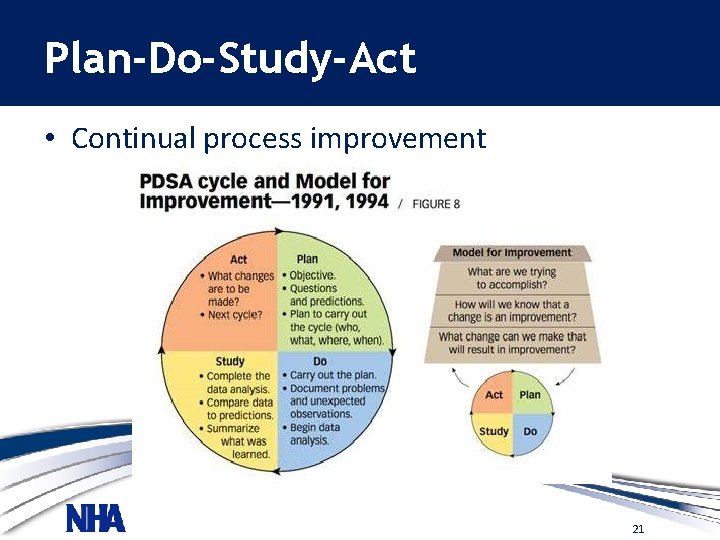
Plan-Do-Study-Act • Continual process improvement 21
Plan-Do-Study-Act https: //www. youtube. com/watch? v=sz. Lduq. P 7 u-k 22
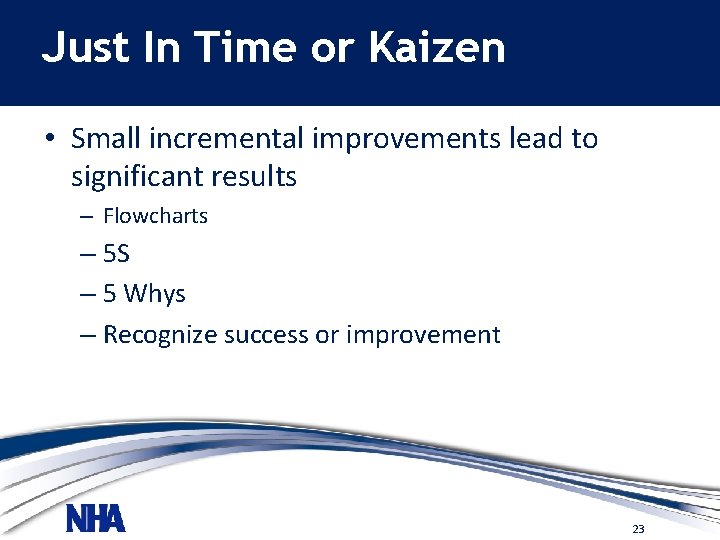
Just In Time or Kaizen • Small incremental improvements lead to significant results – Flowcharts – 5 S – 5 Whys – Recognize success or improvement 23
The Quality Continuum • and organization of the quality program Regulatory compliance PDSA cycles, LEAN QI quality • Work plan for. QA the organizations tomorrow improvementtoday activities • Formal ongoing process for improvement efforts PI • The Quality – QA, QI , PI future High reliability processes © d. d. bainbridge and associates 24
Measurement • Measure the important things • What gets measured gets focused on and improves • We measure to align behaviors to drive results 25
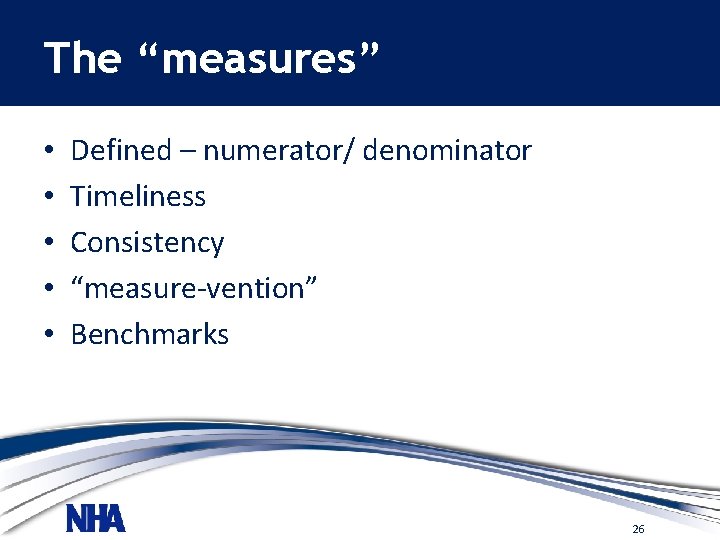
The “measures” • • • Defined – numerator/ denominator Timeliness Consistency “measure-vention” Benchmarks 26
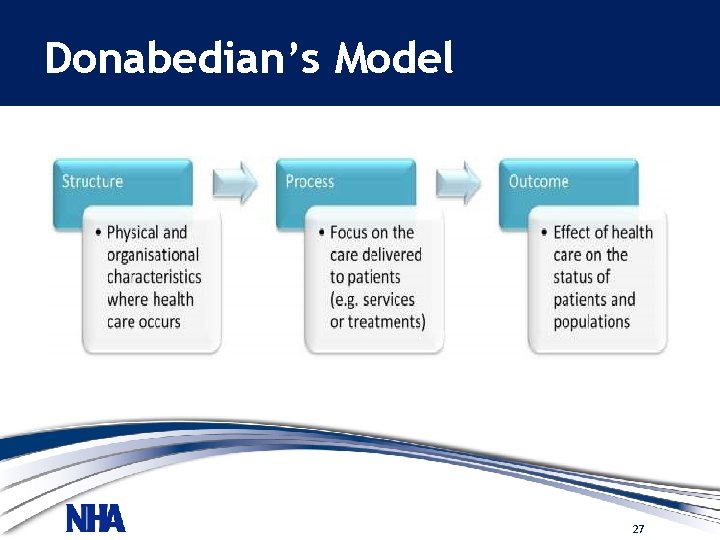
Donabedian’s Model 27
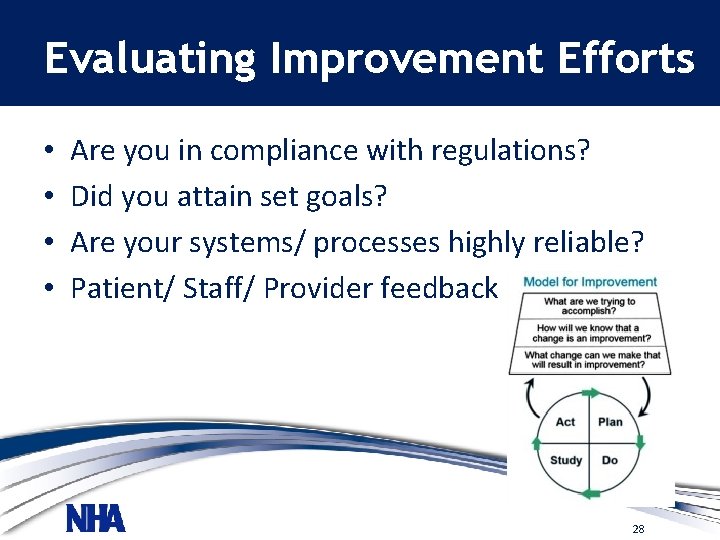
Evaluating Improvement Efforts • • Are you in compliance with regulations? Did you attain set goals? Are your systems/ processes highly reliable? Patient/ Staff/ Provider feedback 28
Reporting Improvement Efforts • Reporting platforms in organization § § § Quality meeting Employee forums Department postings Medical staff & Governing board Others… • What information goes to whom? 29
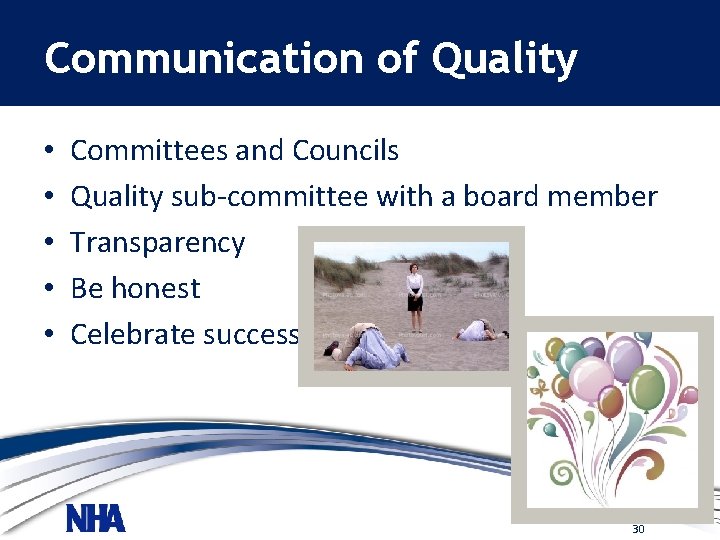
Communication of Quality • • • Committees and Councils Quality sub-committee with a board member Transparency Be honest Celebrate successes 30
Questions 31
Module A - activities • Organizations strategic plan and goal alignment • Organizations quality plan assessment & review 32
QI Residency Program Module B - Accreditation & Surveys morning session www. nebraskahospitals. org
Q & A Day 1 (Module A) • What was the one thing you found most interesting from yesterdays session? • What is one thing you will take back to apply in your work? • Other questions? 34
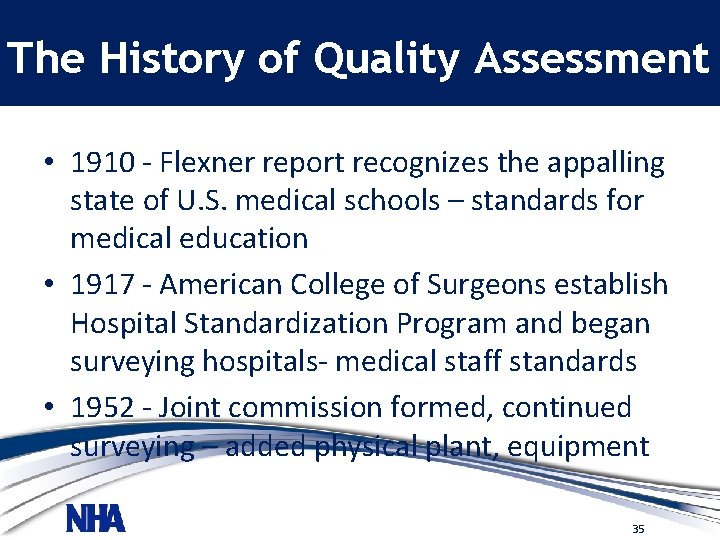
The History of Quality Assessment • 1910 - Flexner report recognizes the appalling state of U. S. medical schools – standards for medical education • 1917 - American College of Surgeons establish Hospital Standardization Program and began surveying hospitals- medical staff standards • 1952 - Joint commission formed, continued surveying – added physical plant, equipment 35
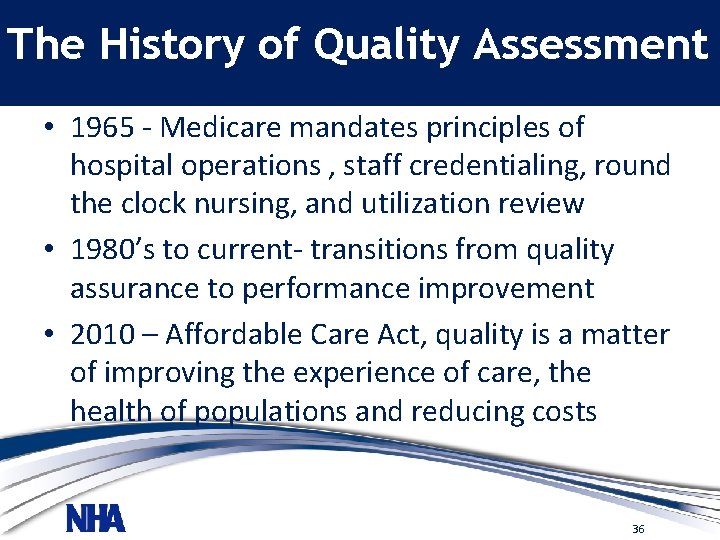
The History of Quality Assessment • 1965 - Medicare mandates principles of hospital operations , staff credentialing, round the clock nursing, and utilization review • 1980’s to current- transitions from quality assurance to performance improvement • 2010 – Affordable Care Act, quality is a matter of improving the experience of care, the health of populations and reducing costs 36
Accreditation • A process of review that allows healthcare organizations to demonstrate their ability to meet regulatory requirements and standards recognized by accreditation organizations. 37
Accrediting Bodies for Healthcare • • The Joint Commission DNV NCQA Others 38
State Survey • Nebraska DHHS survey § § CMS State Operations Manual Appendix A or W Chapter 9 Title 175 Life Safety Codes Other… 39
Regulations Review 40
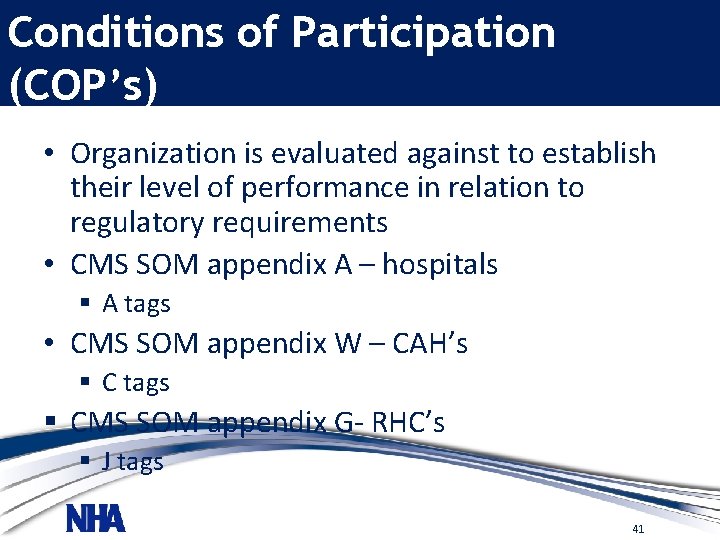
Conditions of Participation (COP’s) • Organization is evaluated against to establish their level of performance in relation to regulatory requirements • CMS SOM appendix A – hospitals § A tags • CMS SOM appendix W – CAH’s § C tags § CMS SOM appendix G- RHC’s § J tags 41
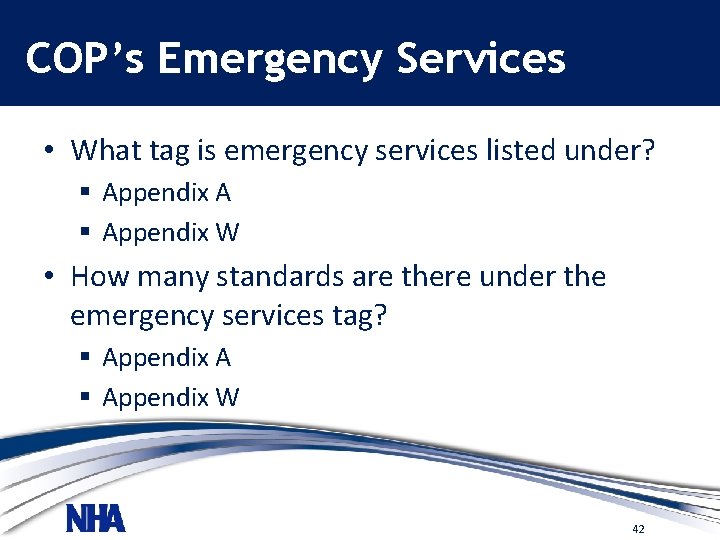
COP’s Emergency Services • What tag is emergency services listed under? § Appendix A § Appendix W • How many standards are there under the emergency services tag? § Appendix A § Appendix W 42
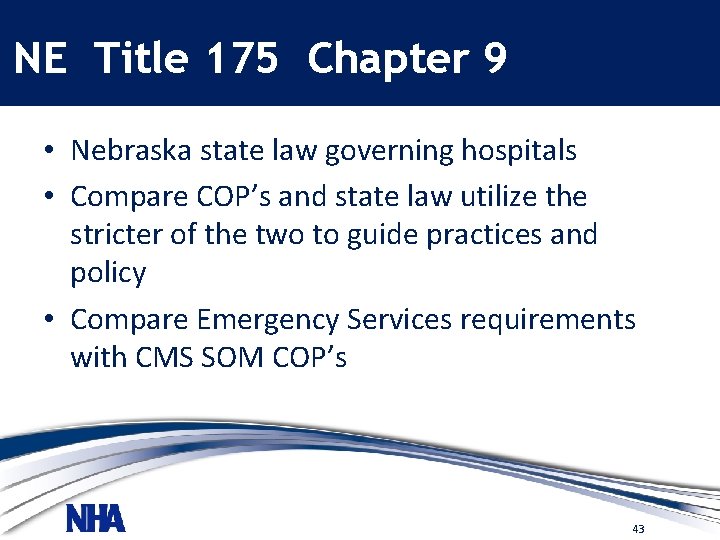
NE Title 175 Chapter 9 • Nebraska state law governing hospitals • Compare COP’s and state law utilize the stricter of the two to guide practices and policy • Compare Emergency Services requirements with CMS SOM COP’s 43
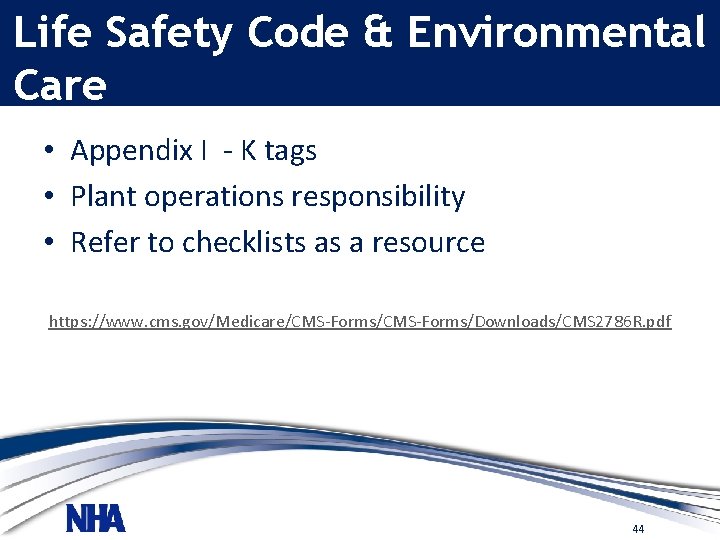
Life Safety Code & Environmental Care • Appendix I - K tags • Plant operations responsibility • Refer to checklists as a resource https: //www. cms. gov/Medicare/CMS-Forms/Downloads/CMS 2786 R. pdf 44
Questions 45
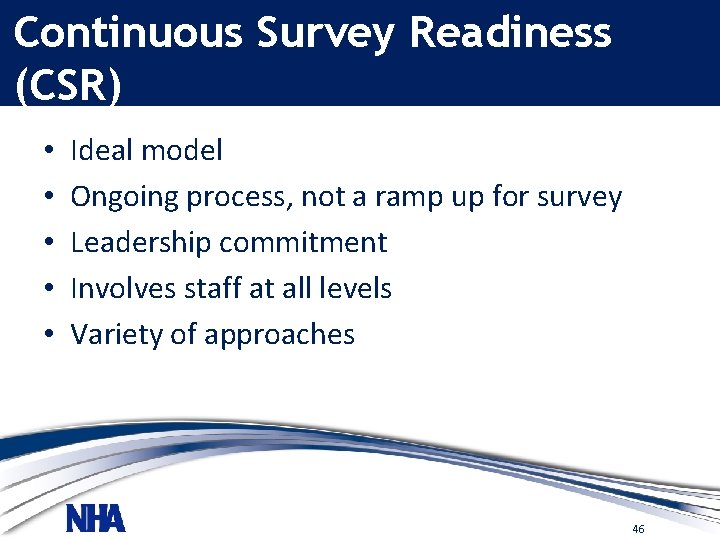
Continuous Survey Readiness (CSR) • • • Ideal model Ongoing process, not a ramp up for survey Leadership commitment Involves staff at all levels Variety of approaches 46
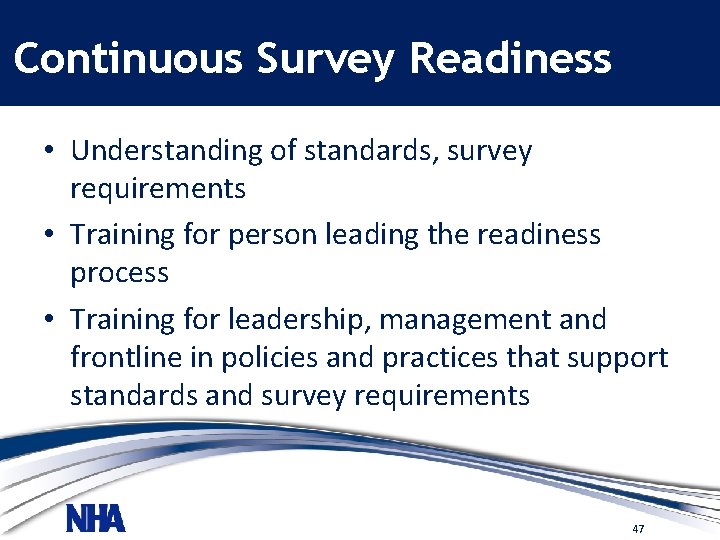
Continuous Survey Readiness • Understanding of standards, survey requirements • Training for person leading the readiness process • Training for leadership, management and frontline in policies and practices that support standards and survey requirements 47
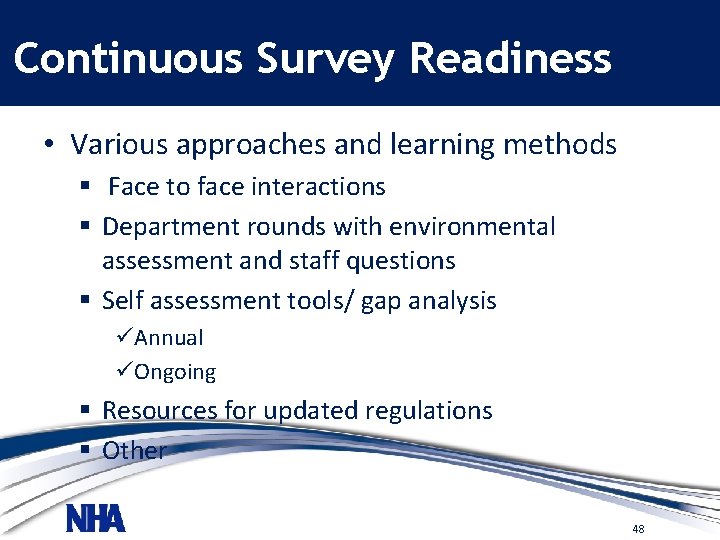
Continuous Survey Readiness • Various approaches and learning methods § Face to face interactions § Department rounds with environmental assessment and staff questions § Self assessment tools/ gap analysis üAnnual üOngoing § Resources for updated regulations § Other 48
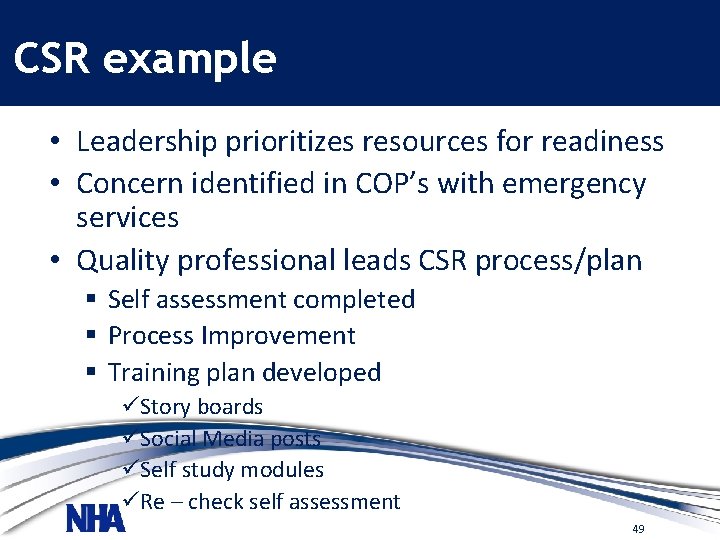
CSR example • Leadership prioritizes resources for readiness • Concern identified in COP’s with emergency services • Quality professional leads CSR process/plan § Self assessment completed § Process Improvement § Training plan developed üStory boards üSocial Media posts üSelf study modules üRe – check self assessment 49
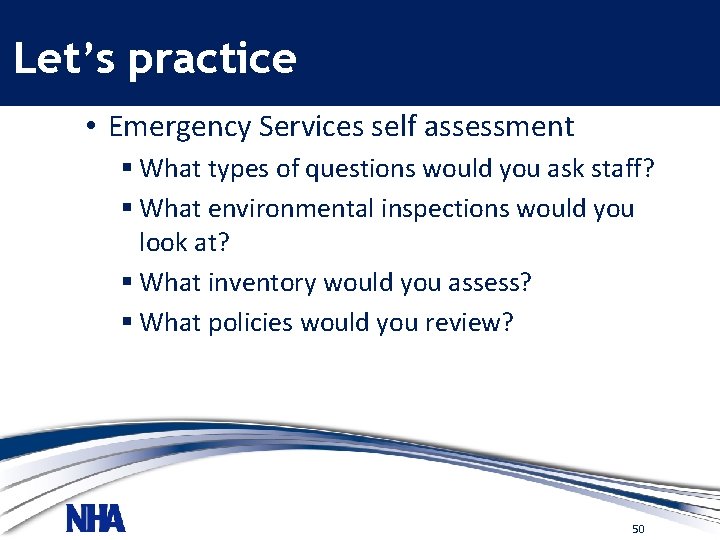
Let’s practice • Emergency Services self assessment § What types of questions would you ask staff? § What environmental inspections would you look at? § What inventory would you assess? § What policies would you review? 50
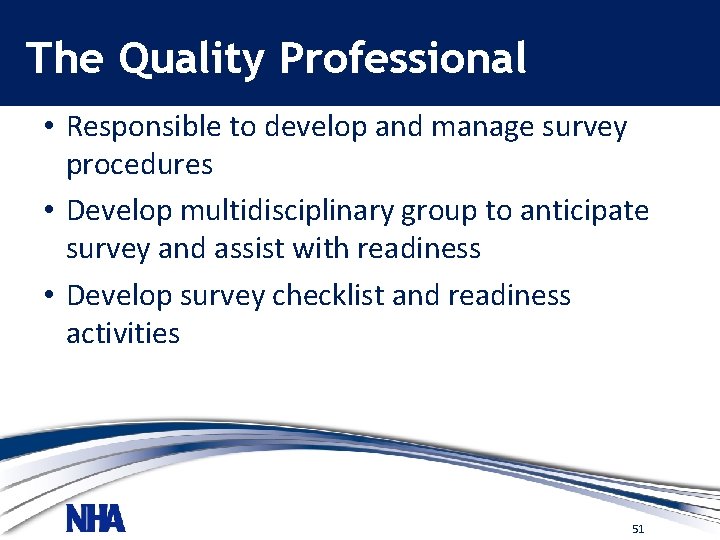
The Quality Professional • Responsible to develop and manage survey procedures • Develop multidisciplinary group to anticipate survey and assist with readiness • Develop survey checklist and readiness activities 51
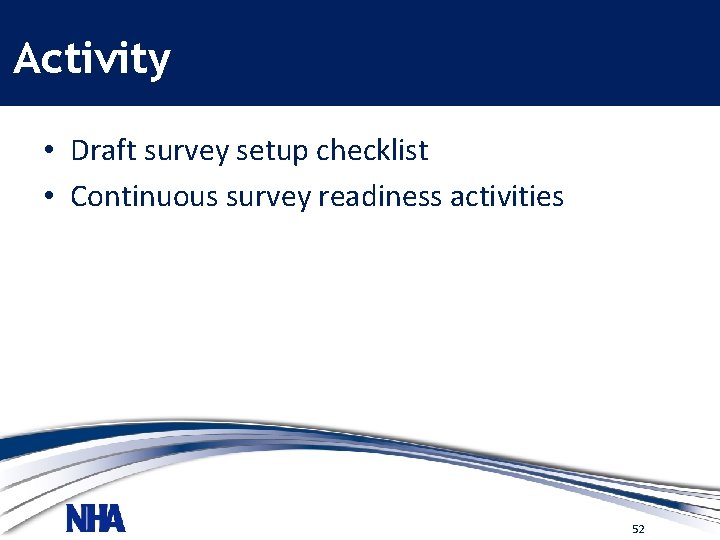
Activity • Draft survey setup checklist • Continuous survey readiness activities 52
Questions 53