
QI Educational supervision DR CLAIRE MALLINSON DME GSTT

- Slides: 13
QI Educational supervision DR CLAIRE MALLINSON DME GSTT
What do I need to do to be an effective supervisor for my trainee and the success of this project? Learning to make a difference is all about trying out small scale tests of change to demonstrate to students that they can make a difference and improve the quality of care and/ or safety of patients. Listen to the idea(s) your students have Is it SMART? Is it aligned with our Trust’s quality and safety agenda? Help them to develop their project plan using the PDSA template Help the student identify what is needed for the project’s success and to remain realistic about available resources Be available for regular meetings throughout the project Help to anticipate and/or resolve any issues arising as a result of the project Ensure all the people that need to be aware of the project is taking place Do know and receive appropriate updates on progress Encourage, guide and support your traineestudents in achieving their goal and timely completion of the project Timely recognition of any student concerns and assistance to reach resolutions Managing the expectations of the students – realistic small scale change is what is being tested here Support available from KCL team
Aims of the project
Planned changes tested PDSA 1 PDSA 2 PDSA 3
Predictions PDSA 1: PDSA 2: PDSA 3:
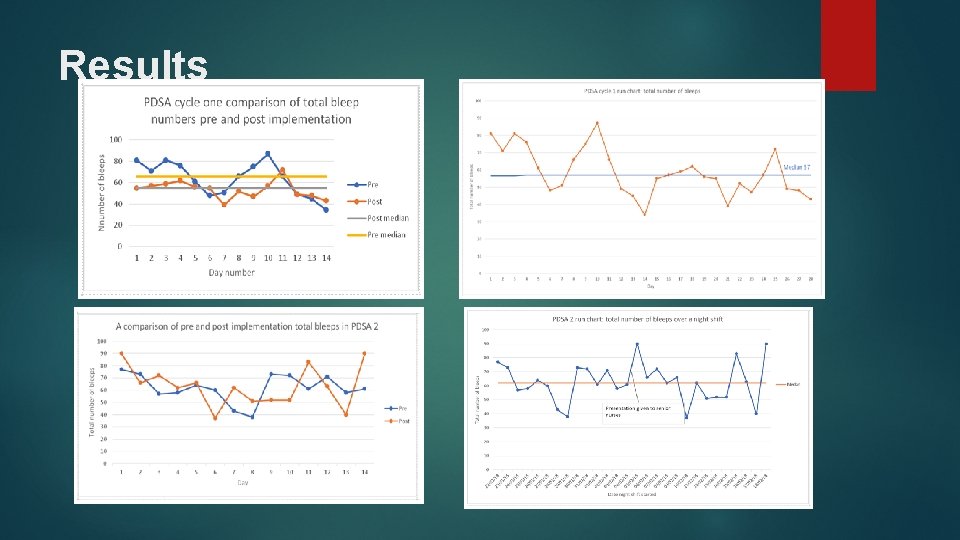
Results
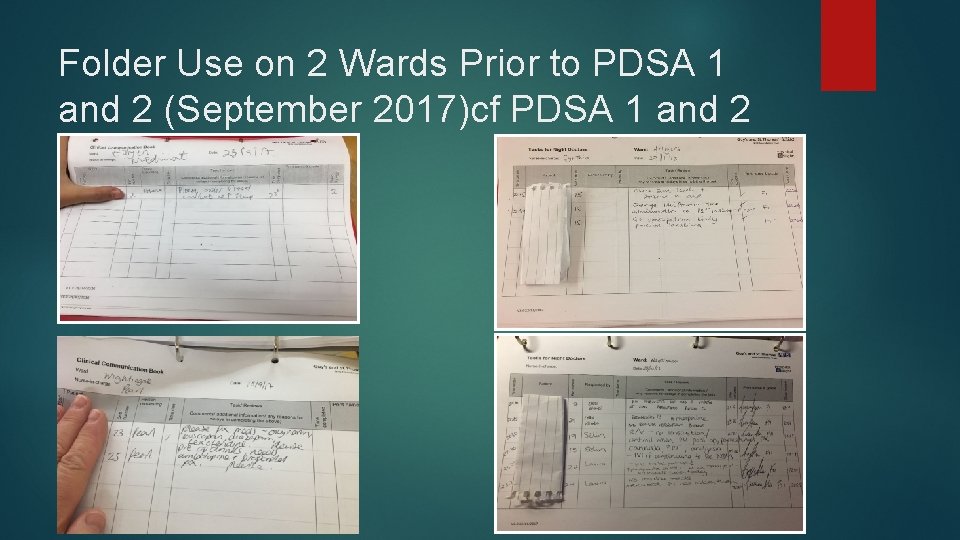
Folder Use on 2 Wards Prior to PDSA 1 and 2 (September 2017)cf PDSA 1 and 2 (February 2018)
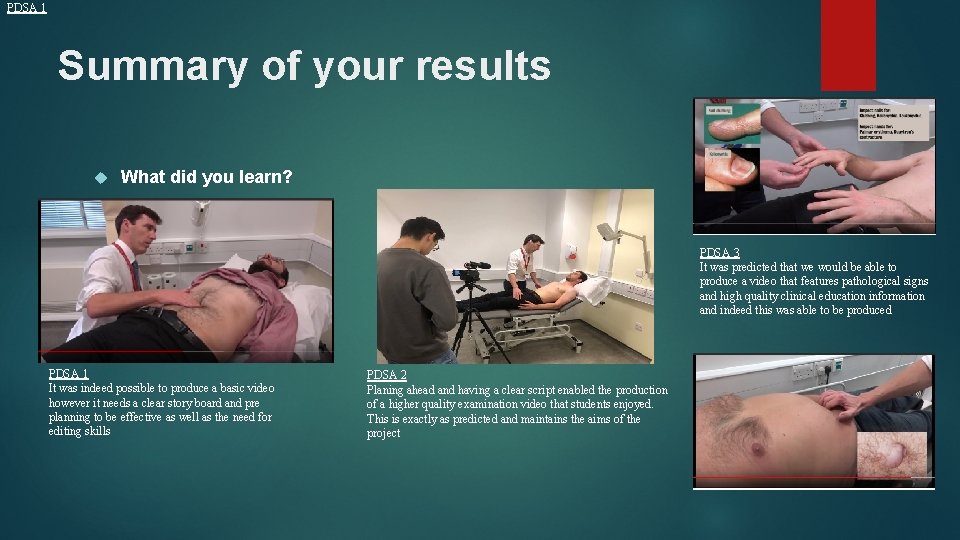
PDSA 1 Summary of your results What did you learn? PDSA 3 It was predicted that we would be able to produce a video that features pathological signs and high quality clinical education information and indeed this was able to be produced PDSA 1 It was indeed possible to produce a basic video however it needs a clear story board and pre planning to be effective as well as the need for editing skills PDSA 2 Planing ahead and having a clear script enabled the production of a higher quality examination video that students enjoyed. This is exactly as predicted and maintains the aims of the project
Impact on systems and sustainability & Conclusions Reflections / Discussions
Participation in quality improvement can help clinicians and trainees improve care together and develop important professional skills Effective quality improvement relies on collaborative working with colleagues and patients and the use of a structured method Enthusiasm, perseverance, good project management skills, and a willingness to explain your project to others and seek their support are key skills
Engaging in quality improvement enables clinicians to acquire, assimilate, and apply important professional capabilities Managing complexity and training in human factors. For students, it is a chance to improve care; develop leadership, presentation, and time management skills to help their career development Build relationships with colleagues in organisations For more experienced clinicians, it is an opportunity to address longstanding concerns about the way in which care processes and systems are delivered, and to strengthen their leadership for improvement skills.
I don’t have time to improve! This a not uncommon mantra However, large, and on occasion unfocused, data collections that are not used to drive improvement. Best intentions are lost through unwieldy, over ambitious plans or done merely as a requirement to tick a box on an appraisal form. This is precious time wasted. Instead we should value our time and plan how we can use it most productively. Time for improvement, amongst our many competing demands, is about making this a journey of small steps so it is doable. The value of working as a team cannot be underestimated. It changes the conversations and inspires innovation and creativity in how we might use opportunities of coming together such as handover, ward/board rounds and clinical governance meetings for brief improvement updates and continued momentum. All change takes effort and one job of change leaders is to make it clear that work soon becomes easier not harder.
“Quality improvement needs to be at ground level rather than vague statements or plans from the top down. Furthermore, quality improvement isn’t the sort of thing that needs randomised controlled trials. It’s about making sure that people respond to a need to do something differently in the way that they work. It is not so much about a treatment as about improving the process. ”