
QI Brief Introduction to QI Process Models Presented
QI Brief Introduction to QI Process Models Presented by: Debra Bingham, Dr. PH, RN, FAAN Associate Professor for Healthcare Quality and Safety Department of Partnerships, Professional Education, and Practice dbingham@umaryland. edu QI Brief 1. 7: Released Fall 2017
QI Brief Objectives • Discuss why QI Process Models are useful when developing and implementing a DNP Project • Describe MAP-IT and other QI Process Models QI Brief 1. 7: Released Fall 2017 dbingham@umaryland. edu 2
QI Brief Definition of Quality Improvement “The combined and unceasing efforts of everyone – health care professionals, patients and their families, researchers, administrators, payers, planners, educators – to make changes that will lead to better patient outcomes, better system performance, and better professional development. ” Ogrinc, G. , Nelson, W. A. , Adams, S. M. , & O’Hara, A. E. (2013). An instrument to differentiate between clinical research and quality improvement. IRB Ethics & Human Research 35(5), pp. 4 -5. QI Brief 1. 7: Released Fall 2017 dbingham@umaryland. edu 3

1. Evaluate & Grade the Research or Evidence for the Practice (EBP), Review Population Health Data & Clinical Outcomes *Review surveillance & utilization data to track and review population health and outcomes. *Review the research literature to determine which current practices need to change & how. *Determine the level of evidence and Evidence. Based Practice (EBP) Gaps Bingham’s Evidence-Based Practice, Quality Improvement, Research, and Improvement Science Flow Chart Implementation Science Research Human Subjects Research to Generate New Clinical Knowledge Develop and test theories, frameworks, models Improvement Science (Translation) Study Implementation Methods (Strategies & Tactics, Validated Measures, Organizational Readiness, Barriers & Facilitators, Fidelity, etc. ) 2. Design and Implement a Quality Improvement Initiative *Implement evidence-based care using QI implementation and improvement science. *Utilize process models, determinant frameworks, classic theories, & implementation theories *Small tests of change 3. Evaluate & Determine Next Steps *Program evaluation: -Structures, -Processes, -Outcomes (Healthcare & Population Health) *Identify practice & policy implications *Track un-intended consequences *Recommend modifications *Sustain *Spread ©Institute for Perinatal Quality Improvement - reprinted with permission
QI Brief • No two DNP Projects are a like • But …. all DNP Projects share a similar road to success QI Brief 1. 7: Released Fall 2017 dbingham@umaryland. edu 5
QI Brief Implementation Theories, Frameworks, and Process Models help the leader plan the road to success. dbingham@umaryland. edu 6
QI Brief Definition of Implementation Theories, and Frameworks • Theories are used for predicting and explaining implementation effectiveness by representing facts that explain causal mechanisms of implementation. • Frameworks are used for planning, describing, and as implementation checklists. Frameworks include components that are “believed or have been found to influence implementation outcomes. ” Nilsen, P. (2015). Making sense of implementation theories, models, and frameworks. dbingham@umaryland. edu Implementation Science. 10 (53). Pg. 3. DOI: DOI 10. 1186/s 13012 -015 -0242 -01 7
QI Brief Definition of QI Process Models • QI Process Models help the QI Leader develop an implementation plan or implementation protocol. • QI Process Models, like implementation frameworks, are also used for planning and as implementation checklists. • Process models do not predict implementation effectiveness or describe the causal mechanisms of various implementation activities. • Theories and frameworks should guide the components of the QI Process Model dbingham@umaryland. edu 8
QI Brief • QI Process Models help the QI Project leader – – know what they need to do know which step they are on decide what they need to do at each step decide if and how the QI Project Plan needs to be revised QI Brief 1. 7: Released Fall 2017 dbingham@umaryland. edu 9
QI Brief • All QI process models contain similar components • The QI Process Model you use needs to include the steps that help ensure QI project success QI Brief 1. 7: Released Fall 2017 dbingham@umaryland. edu 10
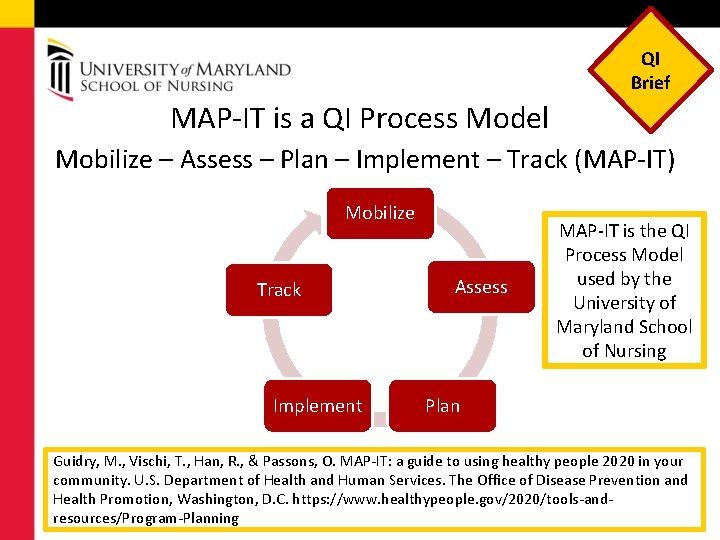
QI Brief MAP-IT is a QI Process Model Mobilize – Assess – Plan – Implement – Track (MAP-IT) Mobilize Track Implement Assess MAP-IT is the QI Process Model used by the University of Maryland School of Nursing Plan Guidry, M. , Vischi, T. , Han, R. , & Passons, O. MAP-IT: a guide to using healthy people 2020 in your community. U. S. Department of Health and Human Services. The Office of Disease Prevention and Health Promotion, Washington, D. C. https: //www. healthypeople. gov/2020/tools-and 11 resources/Program-Planning dbingham@umaryland. edu QI Brief 1. 7: Released Fall 2017
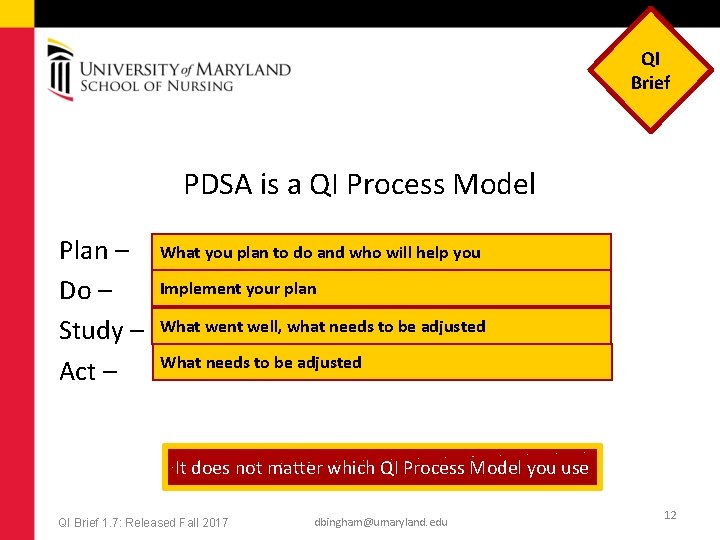
QI Brief PDSA is a QI Process Model Plan – Do – Study – Act – What you plan to do and who will help you Implement your plan What went well, what needs to be adjusted What needs to be adjusted It does not matter which QI Process Model you use QI Brief 1. 7: Released Fall 2017 dbingham@umaryland. edu 12
QI Brief 1. 7: Released Fall 2017 dbingham@son. umaryland. edu 13
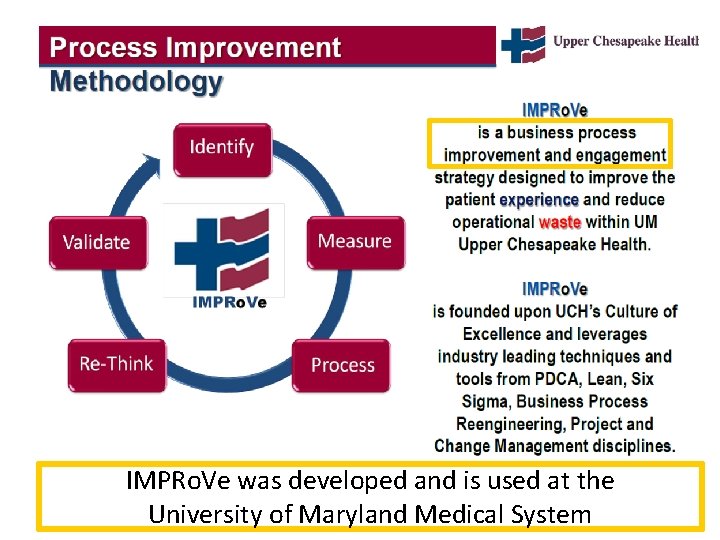
IMPRo. Ve was developed and is used at the University of Maryland Medical System 14
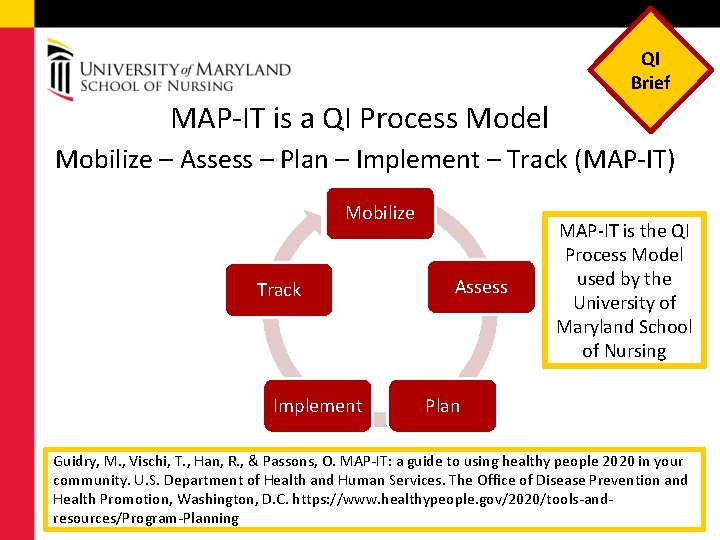
QI Brief MAP-IT is a QI Process Model Mobilize – Assess – Plan – Implement – Track (MAP-IT) Mobilize Track Implement Assess MAP-IT is the QI Process Model used by the University of Maryland School of Nursing Plan Guidry, M. , Vischi, T. , Han, R. , & Passons, O. MAP-IT: a guide to using healthy people 2020 in your community. U. S. Department of Health and Human Services. The Office of Disease Prevention and Health Promotion, Washington, D. C. https: //www. healthypeople. gov/2020/tools-and 15 resources/Program-Planning dbingham@umaryland. edu QI Brief 1. 7: Released Fall 2017
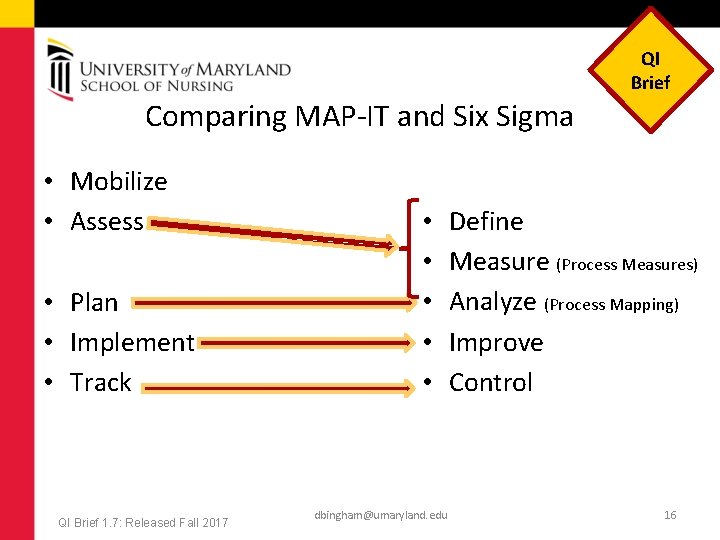
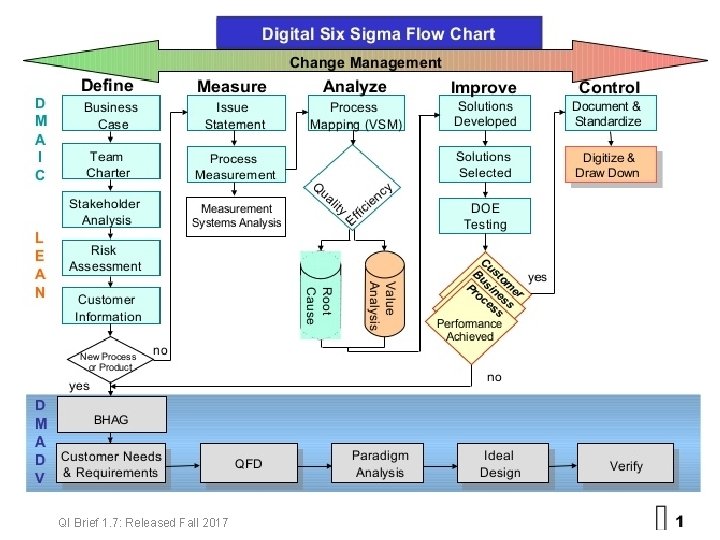
QI Brief Comparing MAP-IT and Six Sigma • Mobilize • Assess • Plan • Implement • Track QI Brief 1. 7: Released Fall 2017 • • • dbingham@umaryland. edu Define Measure (Process Measures) Analyze (Process Mapping) Improve Control 16
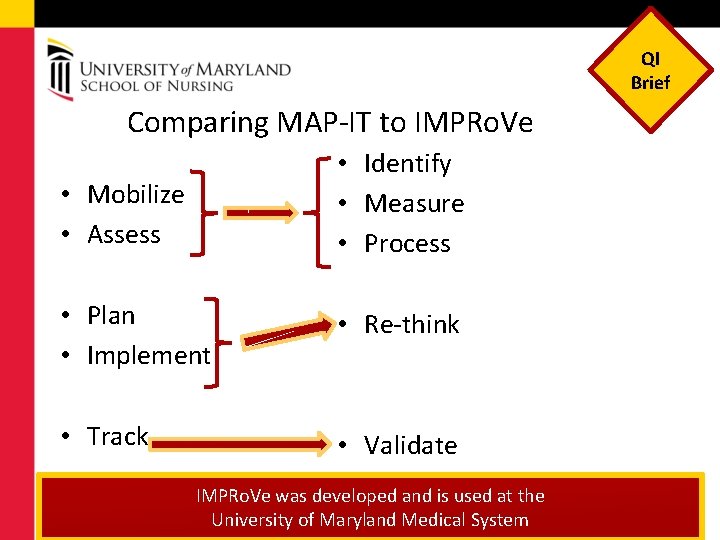
QI Brief Comparing MAP-IT to IMPRo. Ve • Mobilize • Assess • Identify • Measure • Process • Plan • Implement • Re-think • Track • Validate IMPRo. Ve was developed and is used at the University ofdbingham@umaryland. edu Maryland Medical System 17
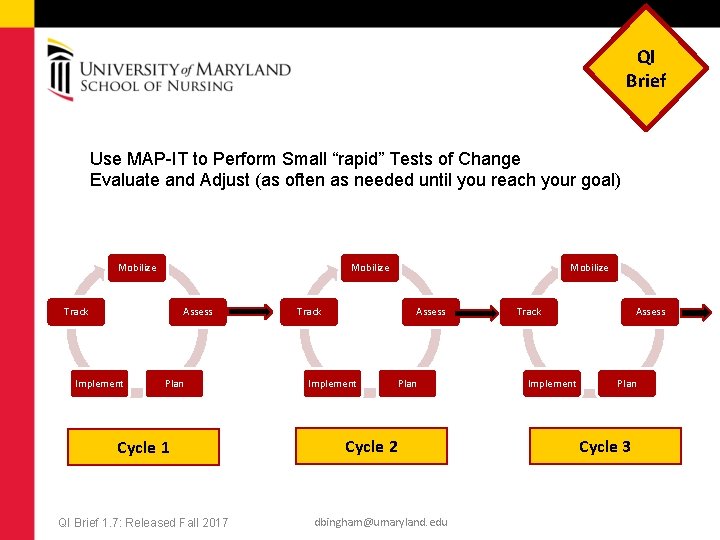
QI Brief Use MAP-IT to Perform Small “rapid” Tests of Change Evaluate and Adjust (as often as needed until you reach your goal) Mobilize Track Assess Implement Plan Cycle 1 QI Brief 1. 7: Released Fall 2017 Track Mobilize Assess Implement Plan Cycle 2 dbingham@umaryland. edu Track Implement Assess Plan Cycle 3
QI Brief MAP-IT Questions • MOBILIZE: WHO will help facilitate the needed changes in structures and processes (practices)? dbingham@umaryland. edu 19
QI Brief MAP-IT Questions, cont. • ASSESS: WHAT structures and processes (practices) need to change and WHY? WHAT metrics will be used to measure progress? dbingham@umaryland. edu 20
QI Brief MAP-IT Questions, cont. • PLAN: HOW will these changes be made (strategies and tactics)? WHEN do we plan to make these changes? dbingham@umaryland. edu 21
QI Brief MAP-IT Questions, cont. • IMPLEMENT: WHAT strategies and tactics did we use? WHEN were the desired changes made? dbingham@umaryland. edu 22
QI Brief MAP-IT Questions, cont. • TRACK: WHAT structures and processes (practices) were changed based on the metrics we used to measure progress (including frequency of assessment)? HOW did these changes affect outcomes? WHAT do we need to do differently to make greater progress toward improving outcomes? dbingham@umaryland. edu 23
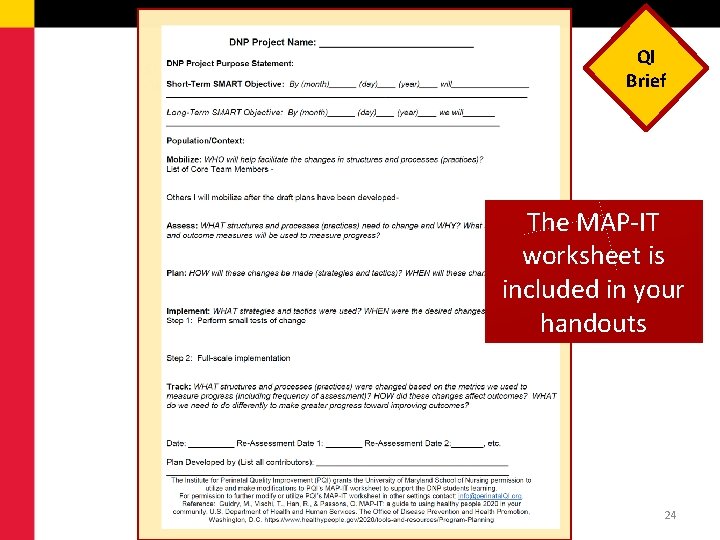
QI Brief The MAP-IT worksheet is included in your handouts dbingham@umaryland. edu 24
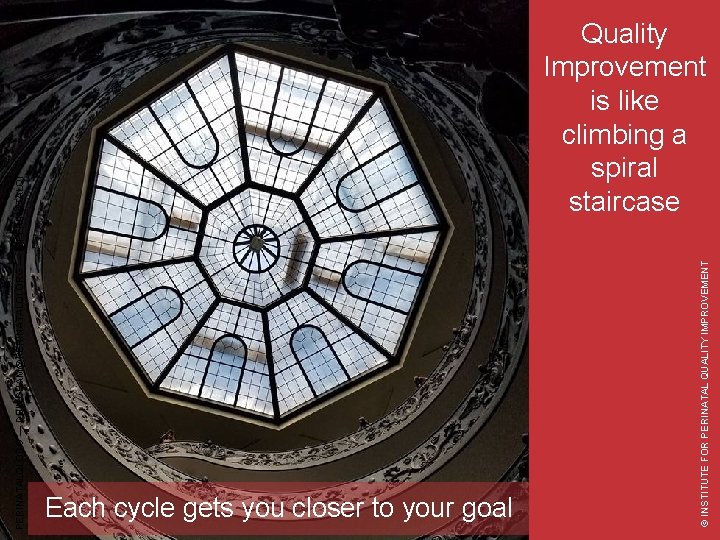
PERINATALQI. ORG — DBINGHAM@PERINATALQI. ORG — @PERINATALQI Each cycle gets you closer to your goal © INSTITUTE FOR PERINATAL QUALITY IMPROVEMENT Quality Improvement QI is. Brief like climbing a spiral staircase
QI Brief Thank you! Questions or Suggestions? Email: dbingham@umaryland. edu QI Brief 1. 7: Released Fall 2017 dbingham@son. umaryland. edu 26
- Slides: 26