
QCD Resummations for Hadronic Collisions Werner Vogelsang RBRC
QCD Resummations for Hadronic Collisions Werner Vogelsang RBRC and BNL Nuclear Theory RHIC/AGS Users’ Meeting 2005
Outline: • Introduction: why resum? q. T resummations and threshold resummations • How is resummation done? • Phenomenology • Conclusions Collab. with G. Sterman, A. Kulesza; D. de Florian
I. Introduction
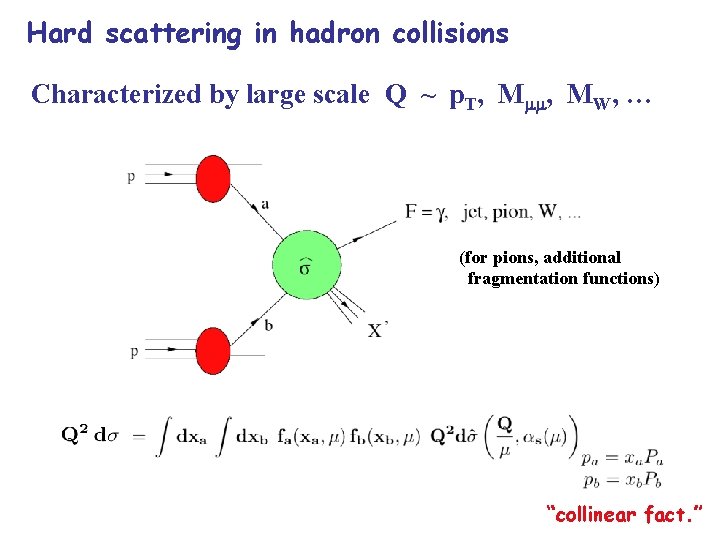
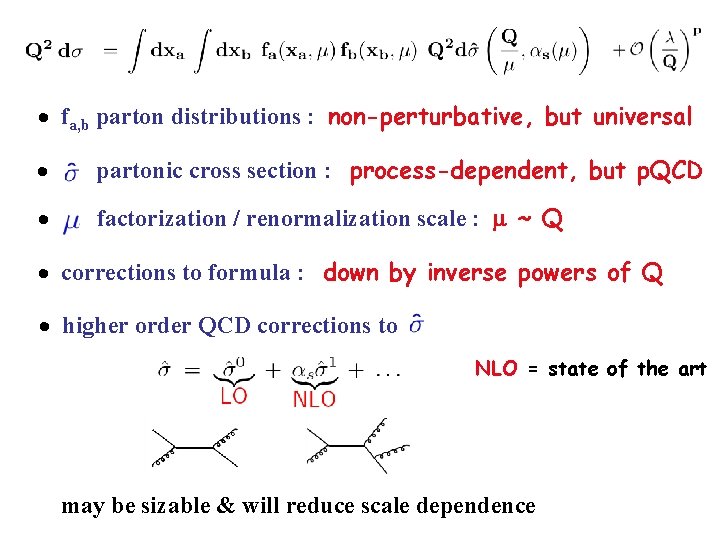
Hard scattering in hadron collisions Characterized by large scale Q ~ p. T, M , MW, … (for pions, additional fragmentation functions) “collinear fact. ”
· fa, b parton distributions : non-perturbative, but universal · partonic cross section : process-dependent, but p. QCD · factorization / renormalization scale : ~ Q · corrections to formula : down by inverse powers of Q · higher order QCD corrections to NLO = state of the art may be sizable & will reduce scale dependence
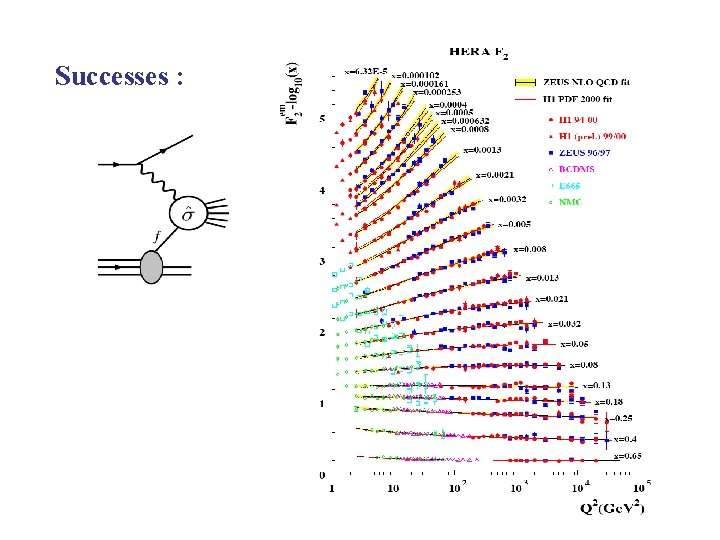
Successes :
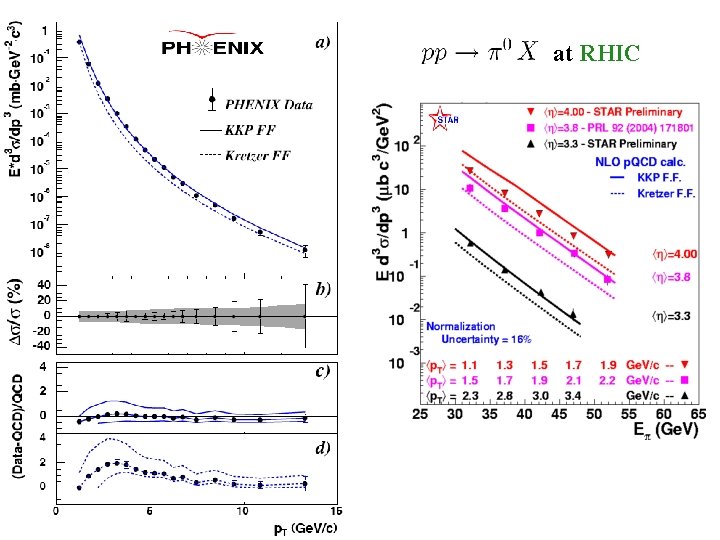
at RHIC
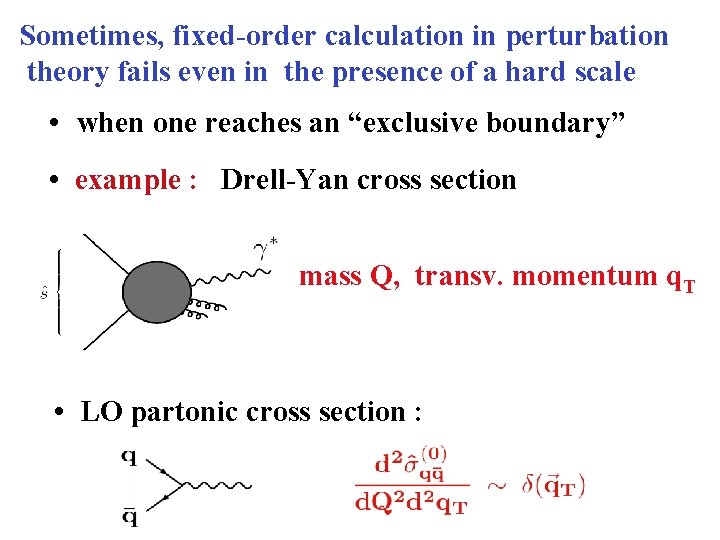
Sometimes, fixed-order calculation in perturbation theory fails even in the presence of a hard scale • when one reaches an “exclusive boundary” • example : Drell-Yan cross section mass Q, transv. momentum q. T • LO partonic cross section :
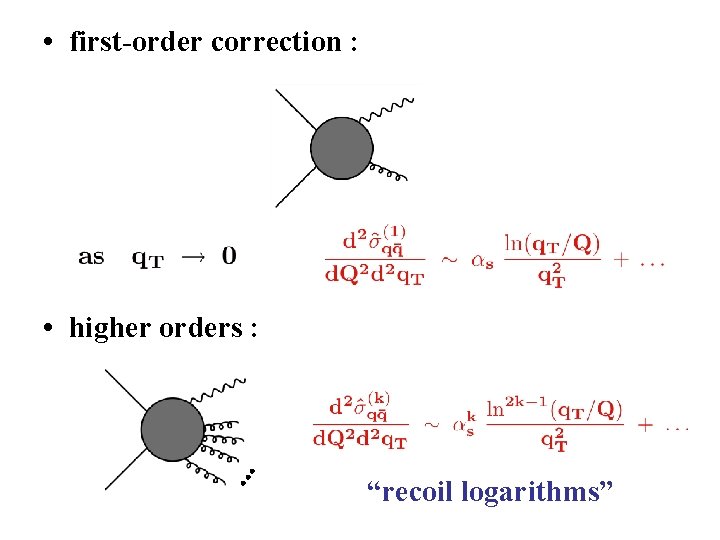
• first-order correction : • higher orders : . . . “recoil logarithms”
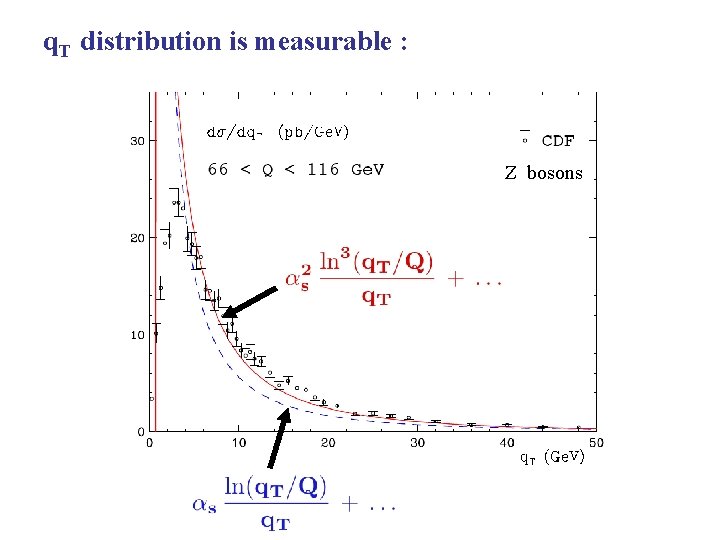
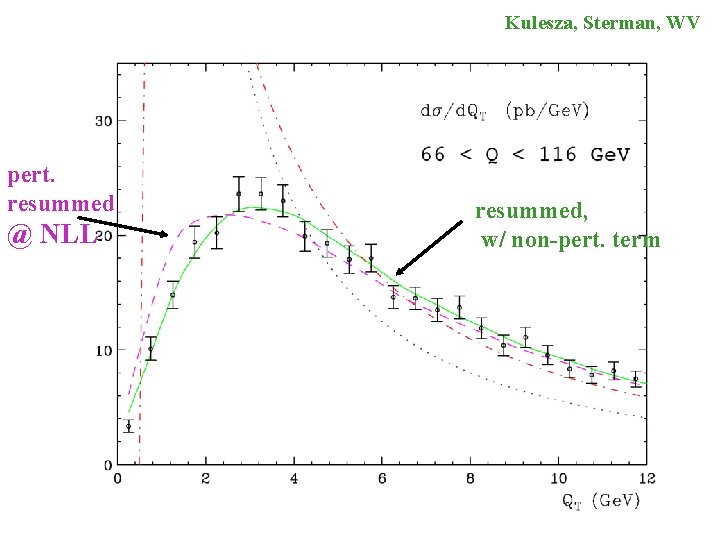
q. T distribution is measurable : Z bosons
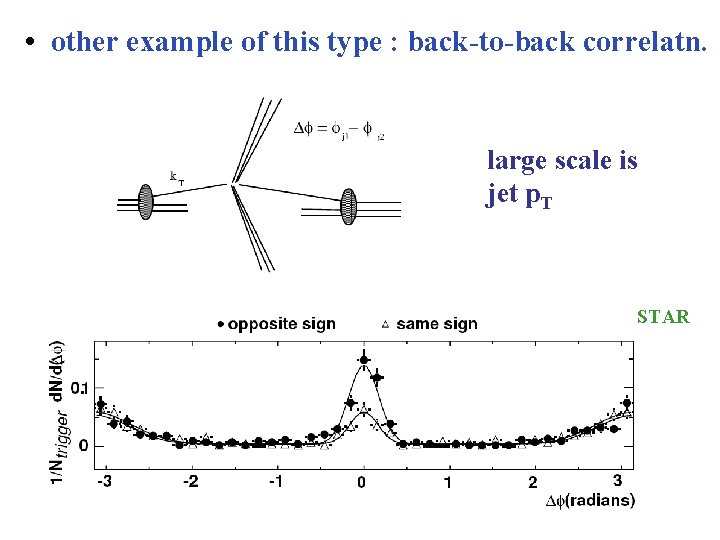
• other example of this type : back-to-back correlatn. large scale is jet p. T STAR
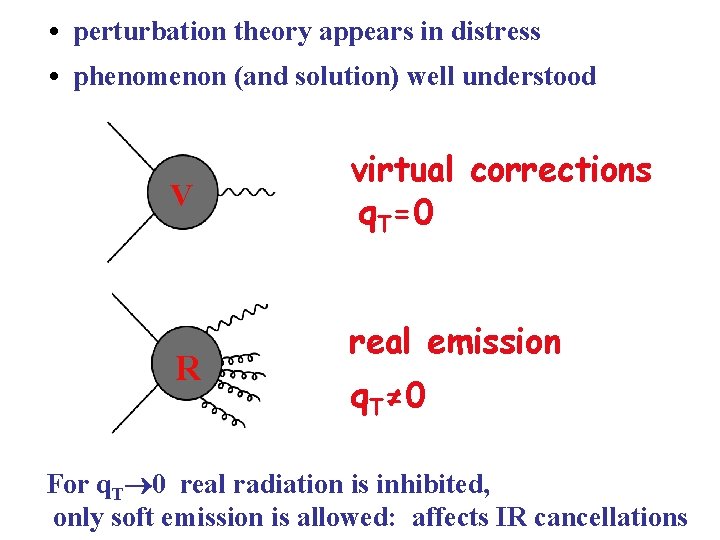
• perturbation theory appears in distress • phenomenon (and solution) well understood V R virtual corrections q. T=0 real emission q. T≠ 0 For q. T 0 real radiation is inhibited, only soft emission is allowed: affects IR cancellations
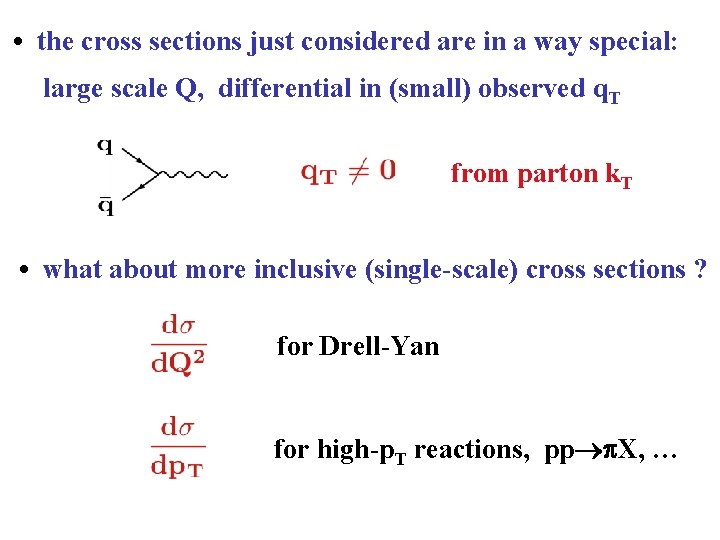
• the cross sections just considered are in a way special: large scale Q, differential in (small) observed q. T from parton k. T • what about more inclusive (single-scale) cross sections ? for Drell-Yan for high-p. T reactions, pp X, …
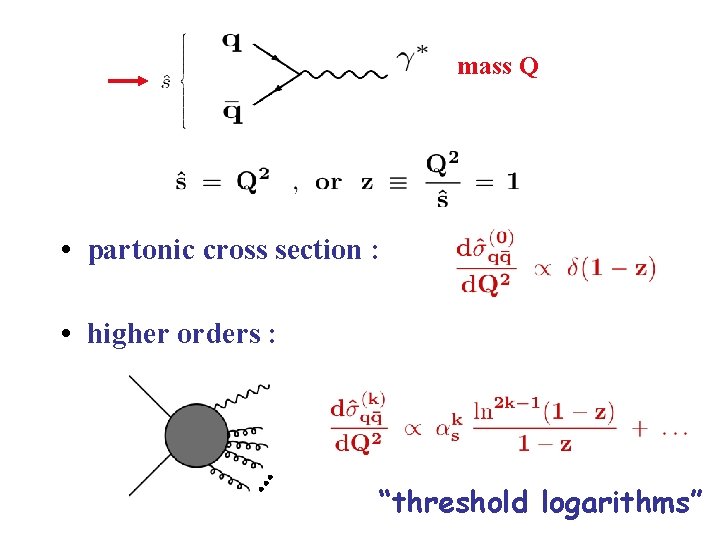
mass Q • partonic cross section : • higher orders : . . . “threshold logarithms”
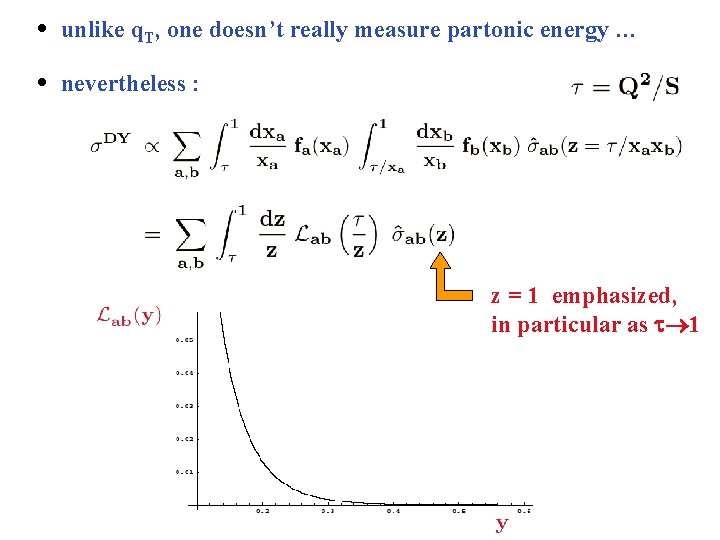
• unlike q. T, one doesn’t really measure partonic energy … • nevertheless : z = 1 emphasized, in particular as 1
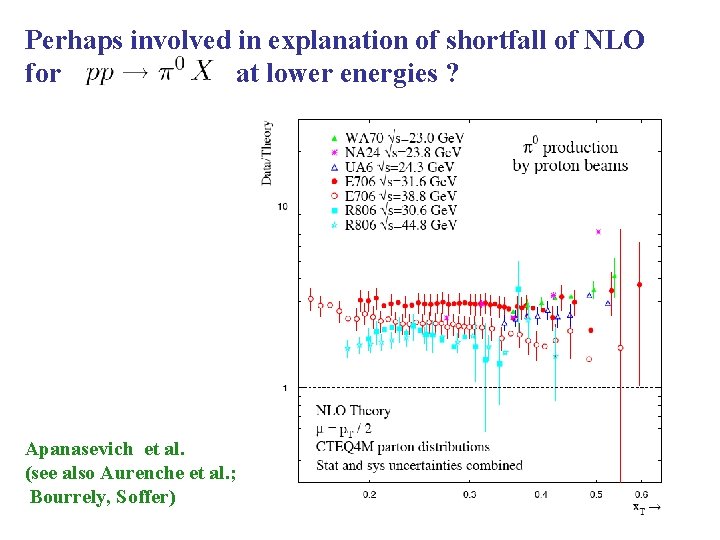
Perhaps involved in explanation of shortfall of NLO for at lower energies ? Apanasevich et al. (see also Aurenche et al. ; Bourrely, Soffer)
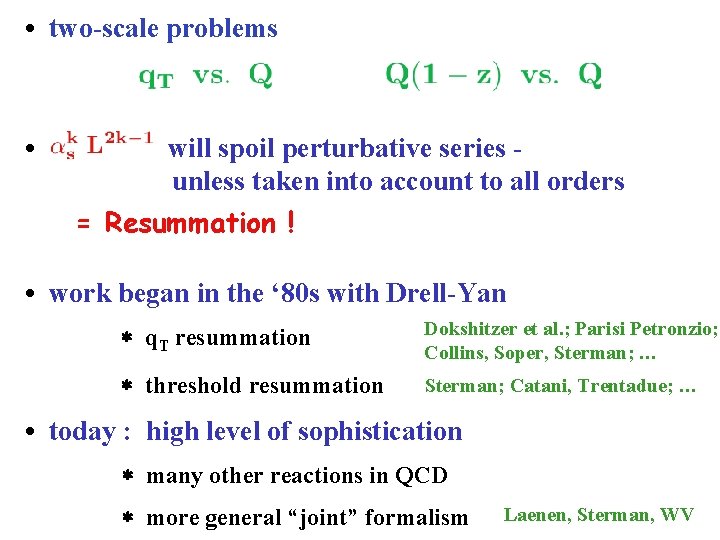
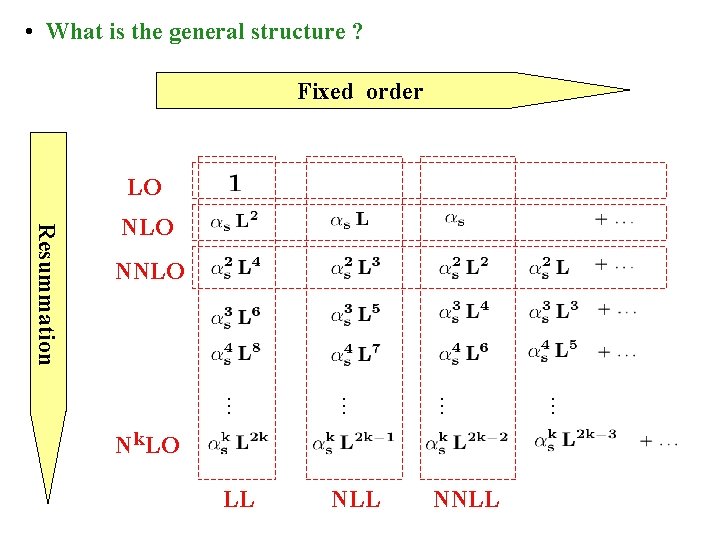
• two-scale problems • will spoil perturbative series unless taken into account to all orders = Resummation ! • work began in the ‘ 80 s with Drell-Yan q. T resummation Dokshitzer et al. ; Parisi Petronzio; Collins, Soper, Sterman; … threshold resummation Sterman; Catani, Trentadue; … • today : high level of sophistication many other reactions in QCD more general “joint” formalism Laenen, Sterman, WV
II. How resummation is done
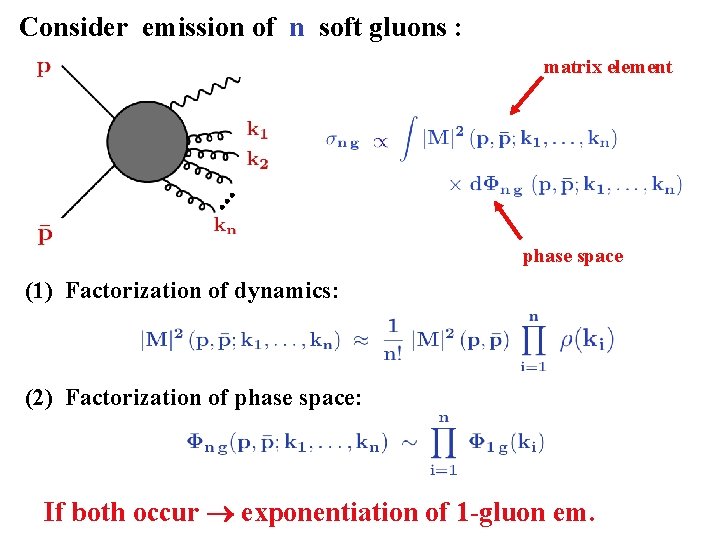
Consider emission of n soft gluons : matrix element . . . phase space (1) Factorization of dynamics: (2) Factorization of phase space: If both occur exponentiation of 1 -gluon em.
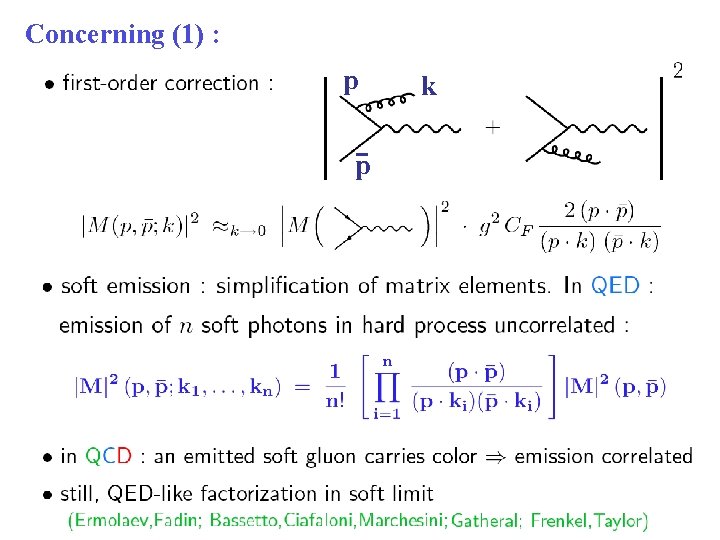
Concerning (1) : p p k
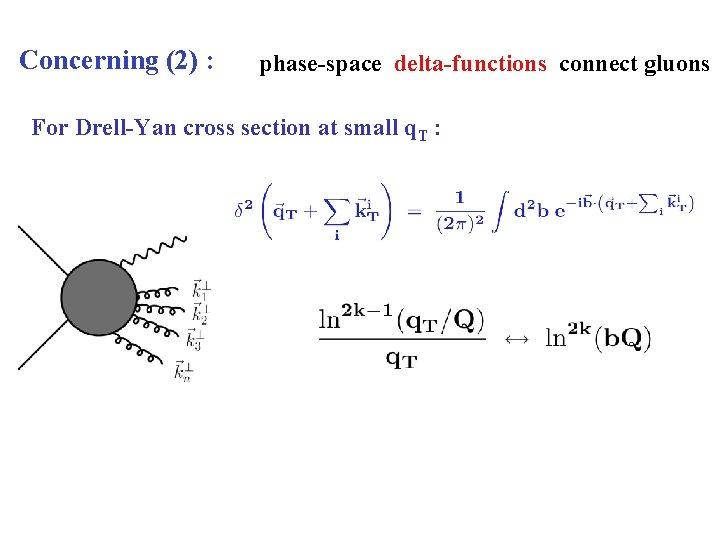
Concerning (2) : phase-space delta-functions connect gluons For Drell-Yan cross section at small q. T :
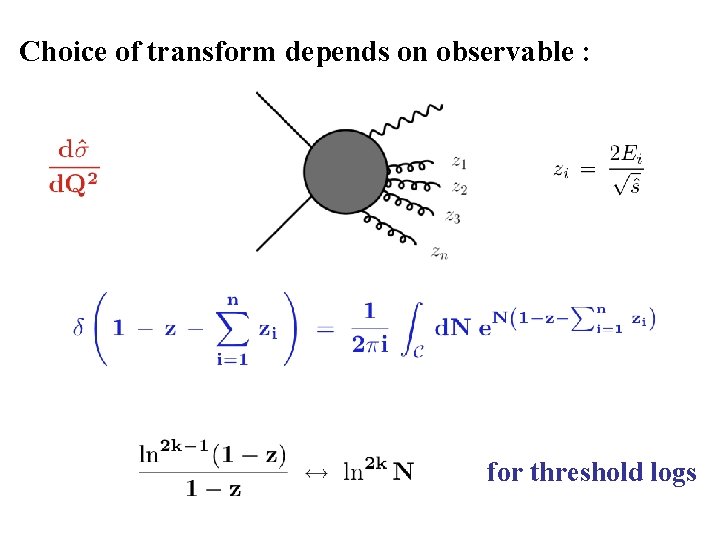
Choice of transform depends on observable : for threshold logs
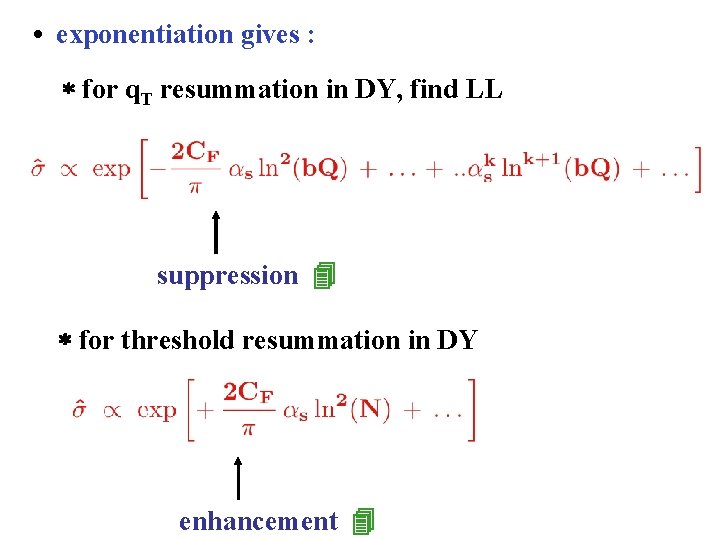
• exponentiation gives : for q. T resummation in DY, find LL suppression for threshold resummation in DY enhancement
• What is the general structure ? Fixed order LO Resummation NLO NNLO ·· · N k. LO LL NNLL ·· ·
III. Phenomenology of Resummation
Kulesza, Sterman, WV pert. resummed @ NLL @ Z bosons resummed, w/ non-pert. term
Why non-perturbative piece ? really comes from: Logarithms are contained in
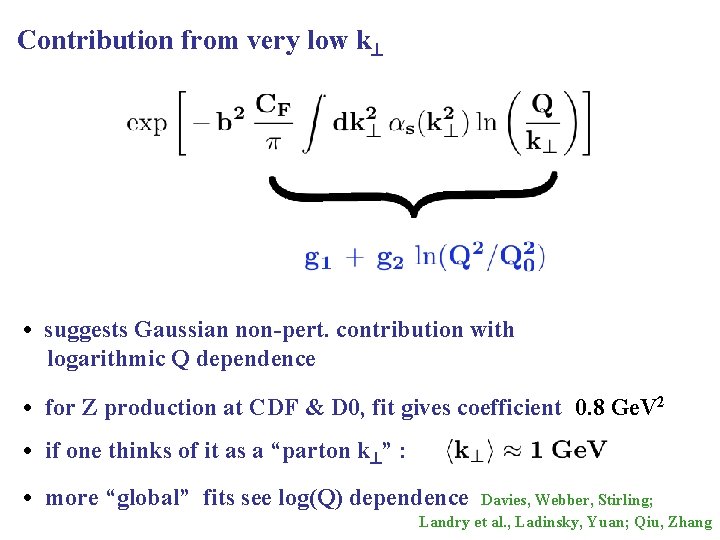
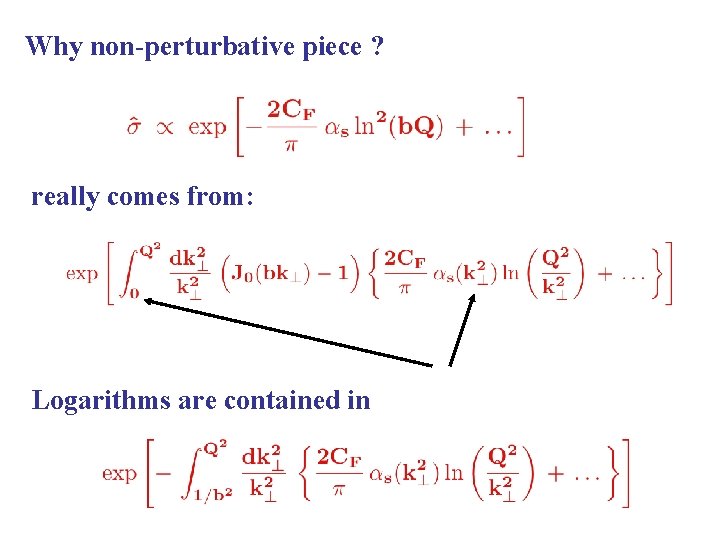
Contribution from very low k • suggests Gaussian non-pert. contribution with logarithmic Q dependence • for Z production at CDF & D 0, fit gives coefficient 0. 8 Ge. V 2 • if one thinks of it as a “parton k ” : • more “global” fits see log(Q) dependence Davies, Webber, Stirling; Landry et al. , Ladinsky, Yuan; Qiu, Zhang
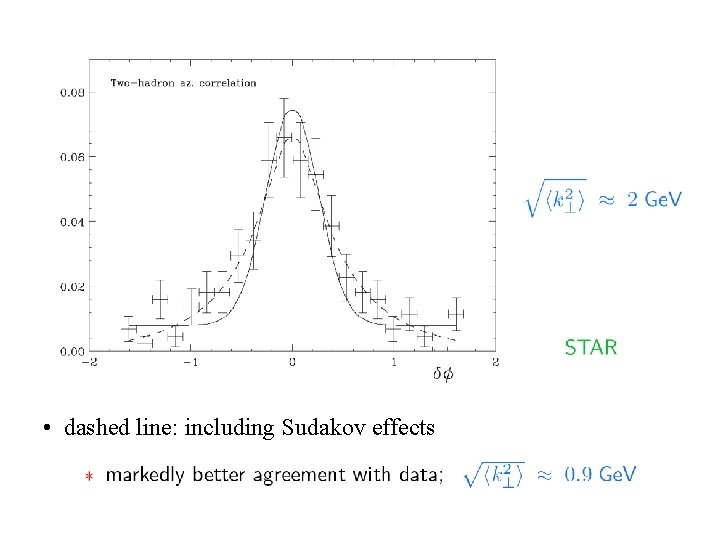
• dashed line: including Sudakov effects
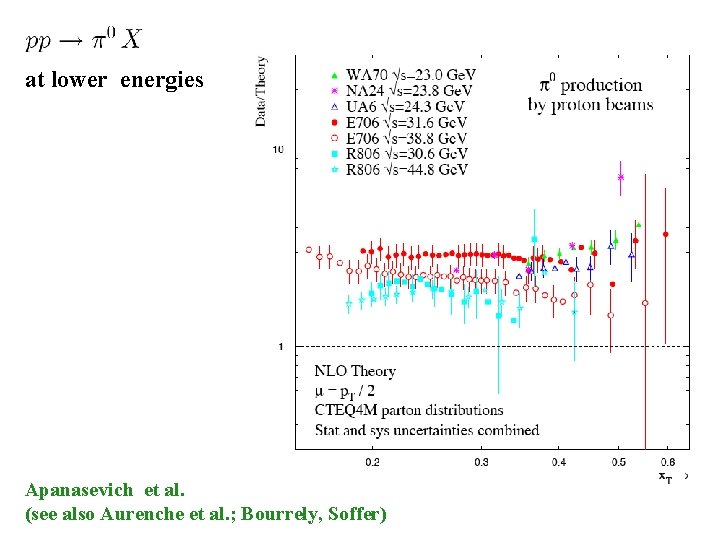
at lower energies Apanasevich et al. (see also Aurenche et al. ; Bourrely, Soffer)
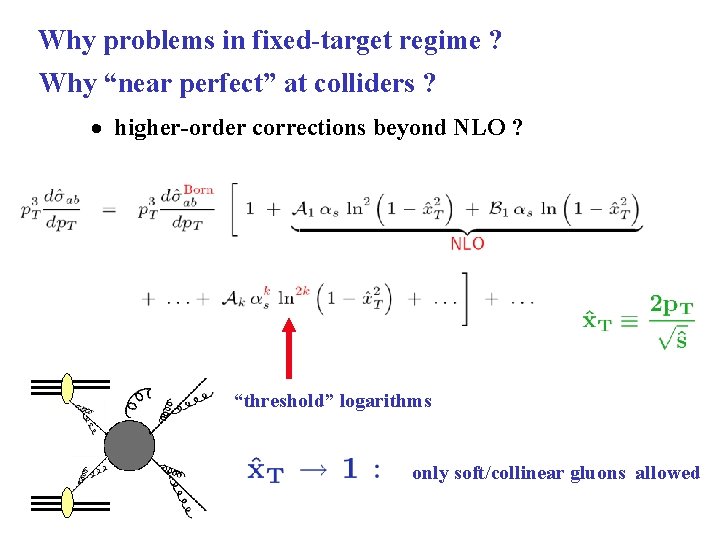
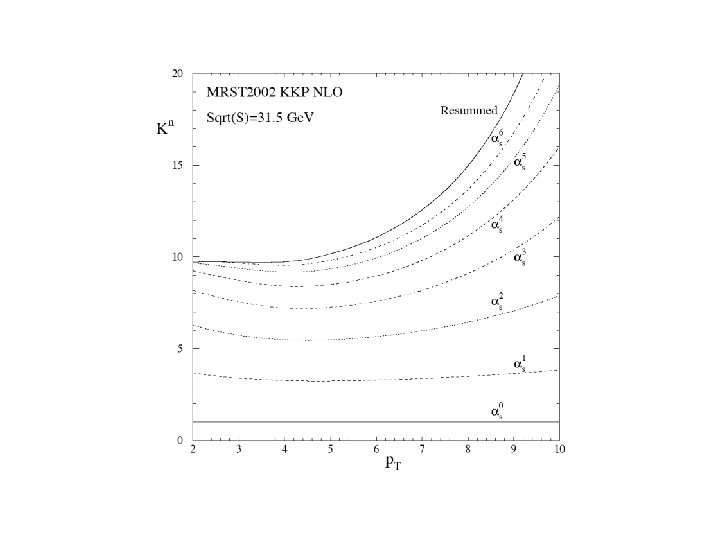
Why problems in fixed-target regime ? Why “near perfect” at colliders ? · higher-order corrections beyond NLO ? “threshold” logarithms only soft/collinear gluons allowed
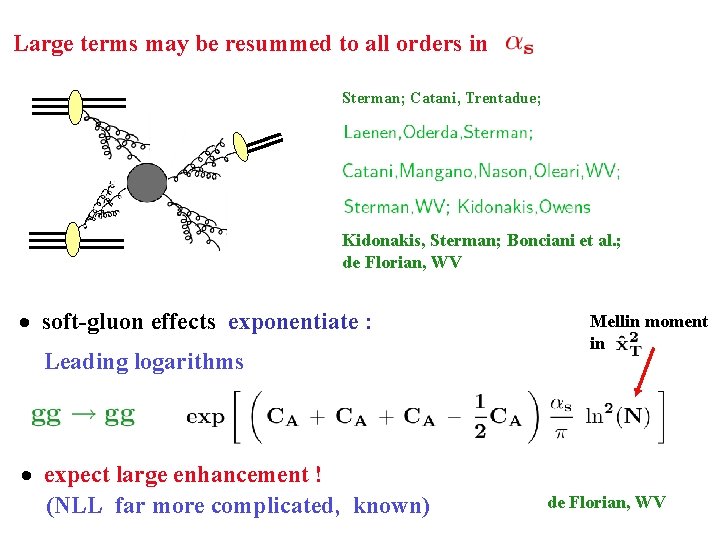
Large terms may be resummed to all orders in Sterman; Catani, Trentadue; Kidonakis, Sterman; Bonciani et al. ; de Florian, WV · soft-gluon effects exponentiate : Leading logarithms · expect large enhancement ! (NLL far more complicated, known) Mellin moment in de Florian, WV
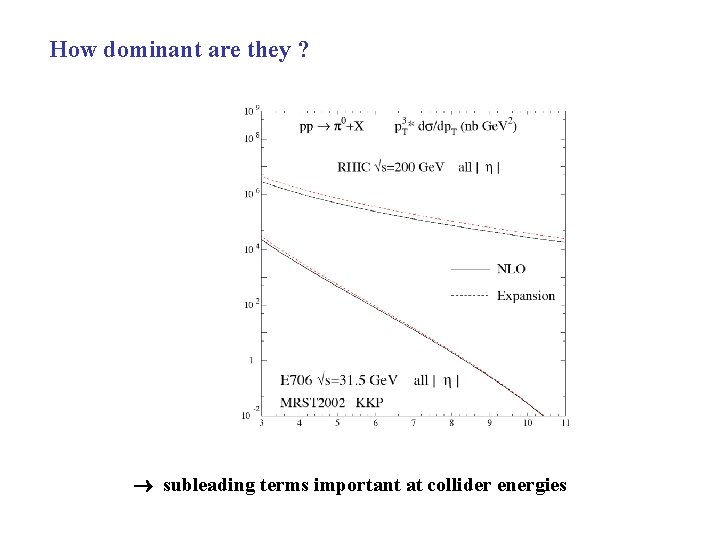
How dominant are they ? subleading terms important at collider energies
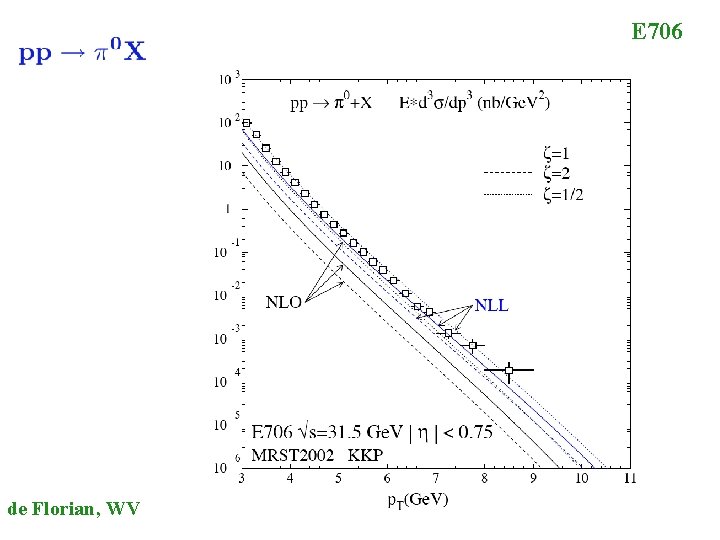
E 706 de Florian, WV
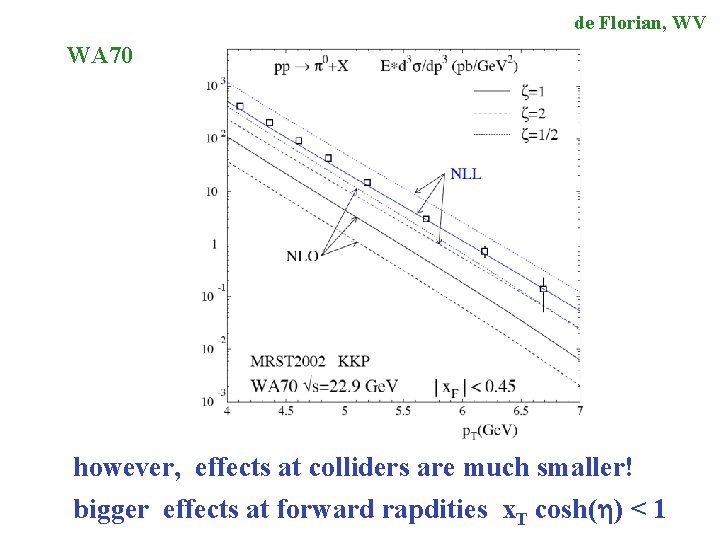
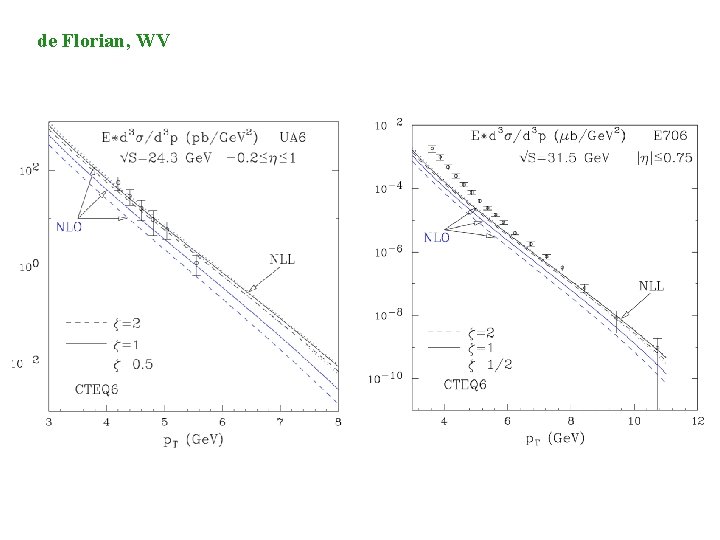
de Florian, WV WA 70 however, effects at colliders are much smaller! bigger effects at forward rapdities x. T cosh( ) < 1
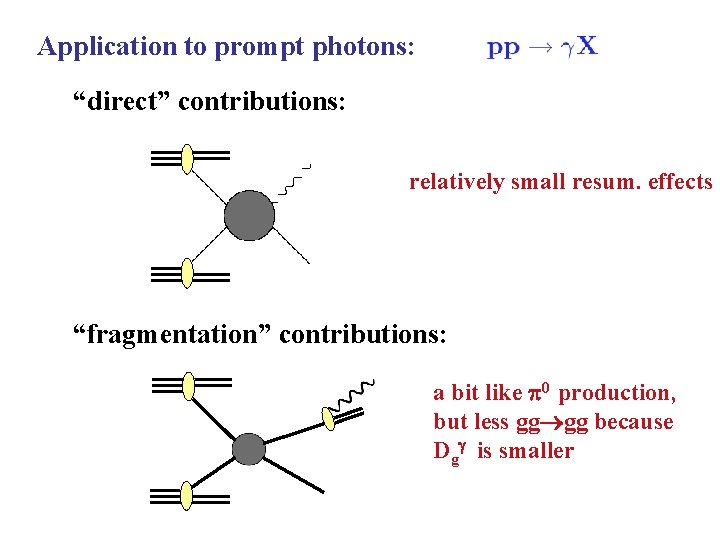
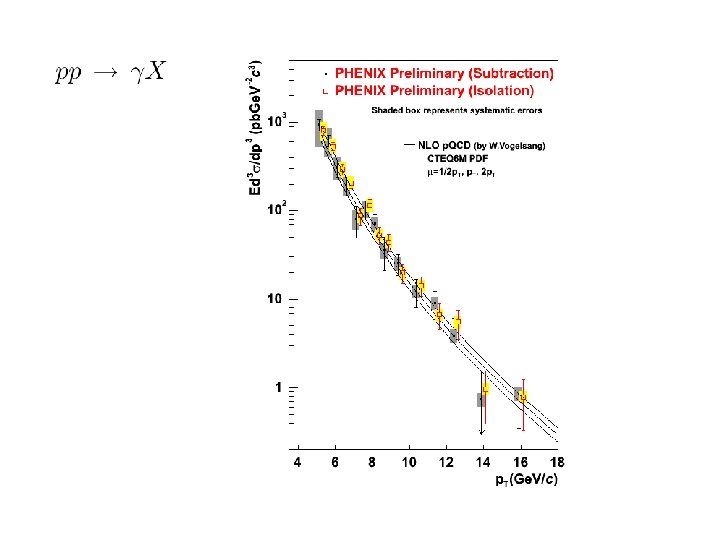
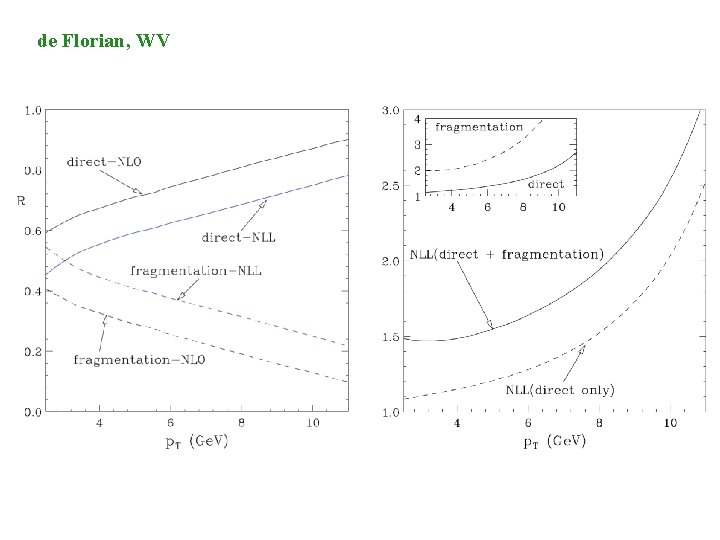
Application to prompt photons: “direct” contributions: relatively small resum. effects “fragmentation” contributions: a bit like 0 production, but less gg gg because Dg is smaller
de Florian, WV
de Florian, WV
Can one estimate non-pert. power corrections here ?
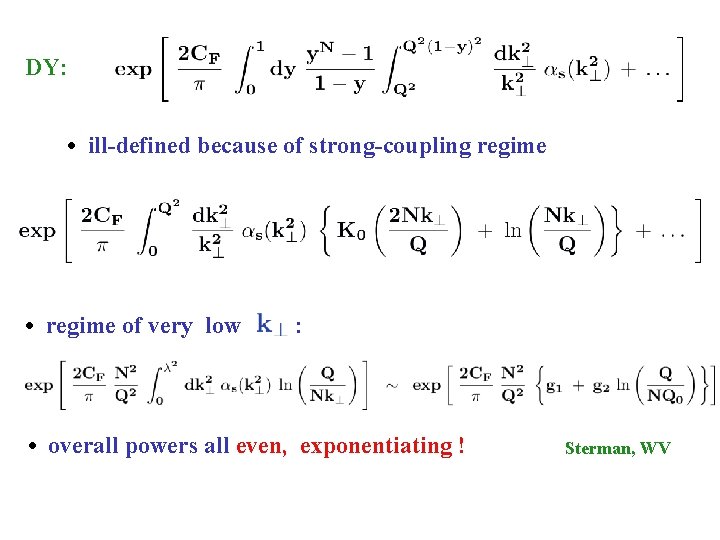
DY: • ill-defined because of strong-coupling regime • regime of very low : • overall powers all even, exponentiating ! Sterman, WV
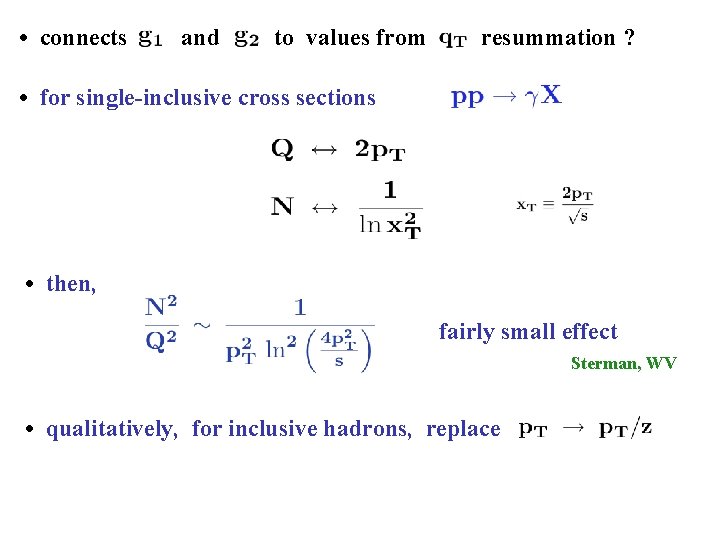
• connects and to values from resummation ? • for single-inclusive cross sections : • then, fairly small effect Sterman, WV • qualitatively, for inclusive hadrons, replace
IV. Conclusions
· resummation can be crucial in hadronic cross sections · cross sections at “small - q. T” (but otherwise large scale Q) : resummation leads to suppression at small q. T (Gaussian) non-perturbative effects important · cross sections characterized just by large scale Q : threshold resummation important when “x~1” leads to enhancement great phenomenological relevance in pp X in fixed-target regime non-perturbative effects appear less important implications for k. T models …
- Slides: 45