
QA quality assurance Writing a good test is

- Slides: 15
“QA” = quality assurance Writing a good test is very hard, and there are lots of things to watch out for. Professional test writers will spend many hours checking their tests once they have written them. Usually, dozens of people will see a test before it “goes live”. We can’t do that – but we can do our best. Restricted 1
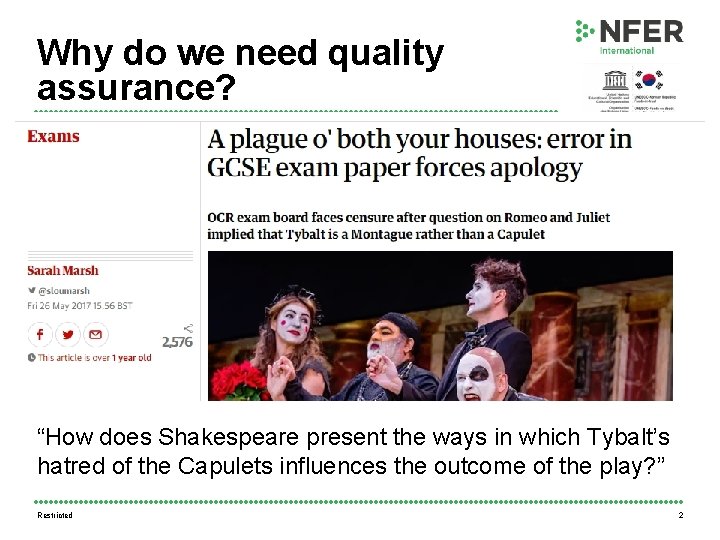
Why do we need quality assurance? “How does Shakespeare present the ways in which Tybalt’s hatred of the Capulets influences the outcome of the play? ” Restricted 2
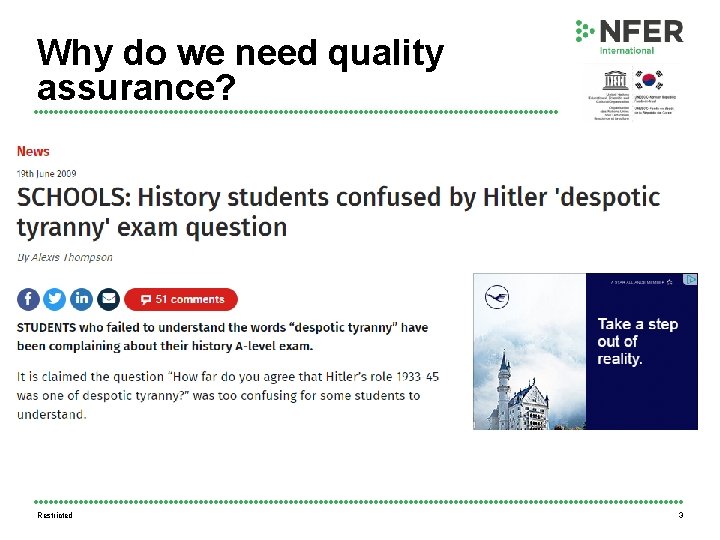
Why do we need quality assurance? Restricted 3
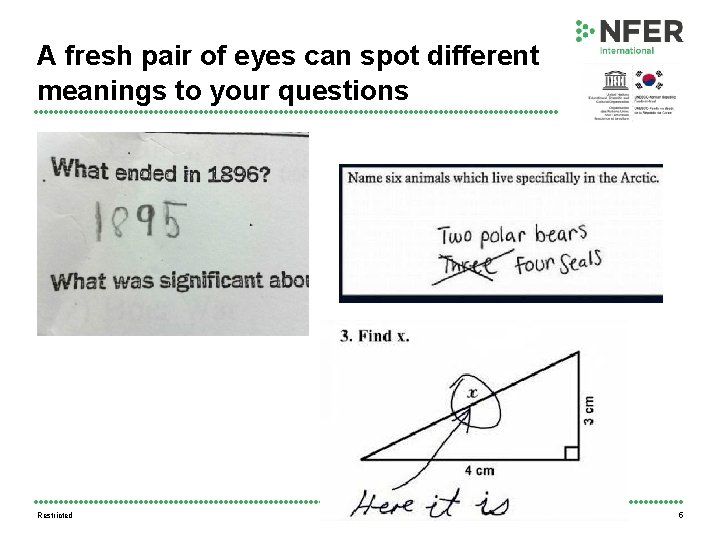
How we will make sure we write high quality tests 1. Write your test. 2. Check your test. 3. Show it to a colleague. • It is amazing how you – the test writer – can miss totally obvious problems with your test. • We call this a “fresh pair of eyes”. • Can they get the right answers? Restricted 4
A fresh pair of eyes can spot different meanings to your questions Restricted 5
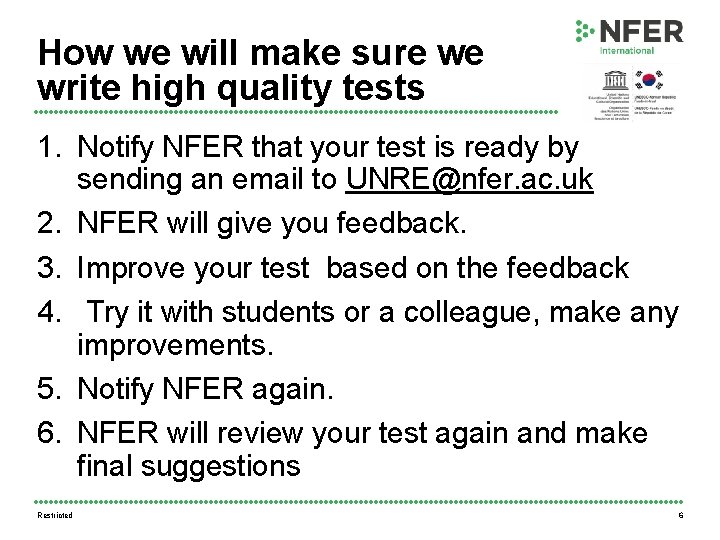
How we will make sure we write high quality tests 1. Notify NFER that your test is ready by sending an email to UNRE@nfer. ac. uk 2. NFER will give you feedback. 3. Improve your test based on the feedback 4. Try it with students or a colleague, make any improvements. 5. Notify NFER again. 6. NFER will review your test again and make final suggestions Restricted 6
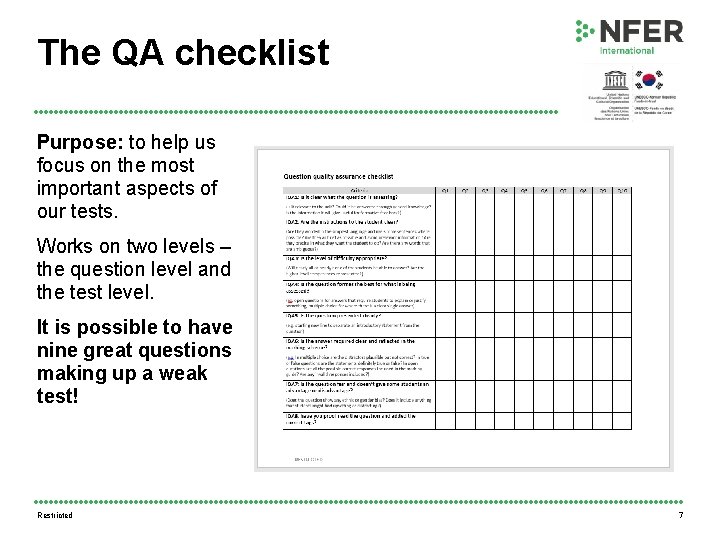
The QA checklist Purpose: to help us focus on the most important aspects of our tests. Works on two levels – the question level and the test level. It is possible to have nine great questions making up a weak test! Restricted 7
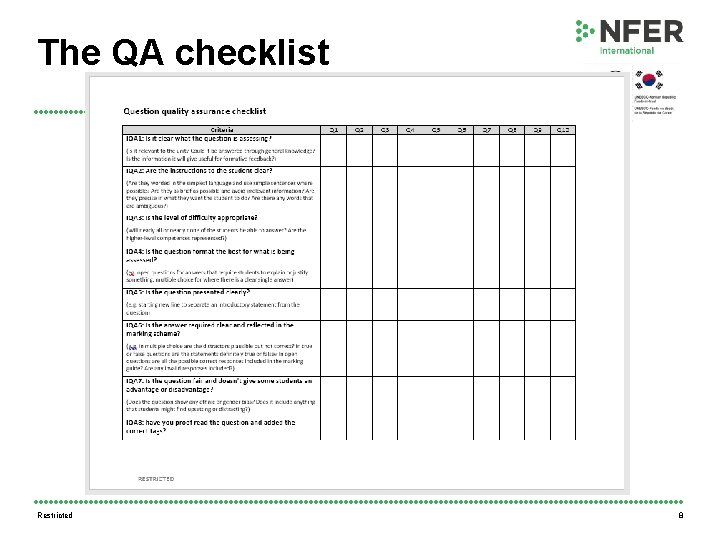
The QA checklist Restricted 8
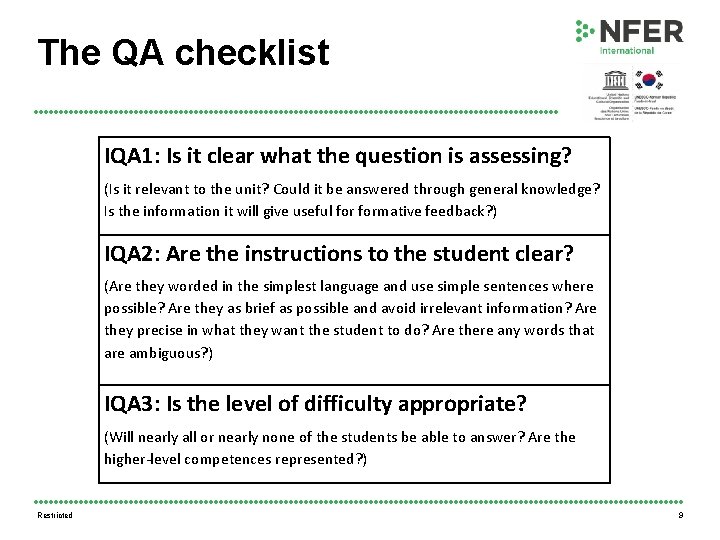
The QA checklist IQA 1: Is it clear what the question is assessing? (Is it relevant to the unit? Could it be answered through general knowledge? Is the information it will give useful formative feedback? ) IQA 2: Are the instructions to the student clear? (Are they worded in the simplest language and use simple sentences where possible? Are they as brief as possible and avoid irrelevant information? Are they precise in what they want the student to do? Are there any words that are ambiguous? ) IQA 3: Is the level of difficulty appropriate? (Will nearly all or nearly none of the students be able to answer? Are the higher-level competences represented? ) Restricted 9
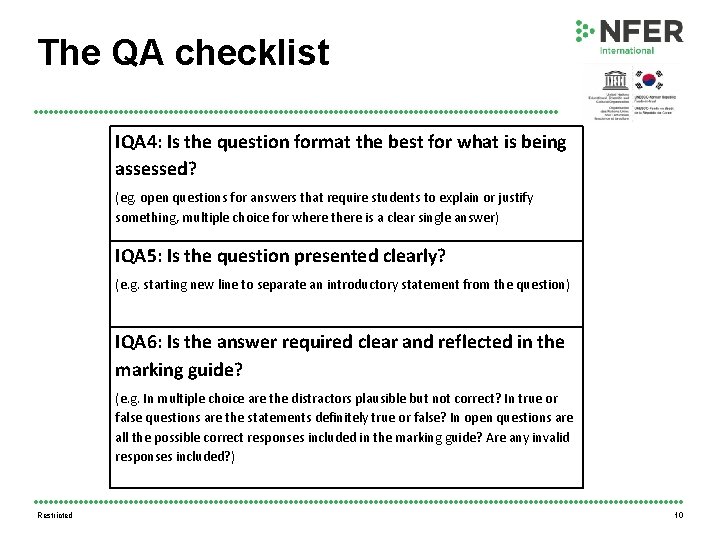
The QA checklist IQA 4: Is the question format the best for what is being assessed? (eg. open questions for answers that require students to explain or justify something, multiple choice for where there is a clear single answer) IQA 5: Is the question presented clearly? (e. g. starting new line to separate an introductory statement from the question) IQA 6: Is the answer required clear and reflected in the marking guide? (e. g. In multiple choice are the distractors plausible but not correct? In true or false questions are the statements definitely true or false? In open questions are all the possible correct responses included in the marking guide? Are any invalid responses included? ) Restricted 10
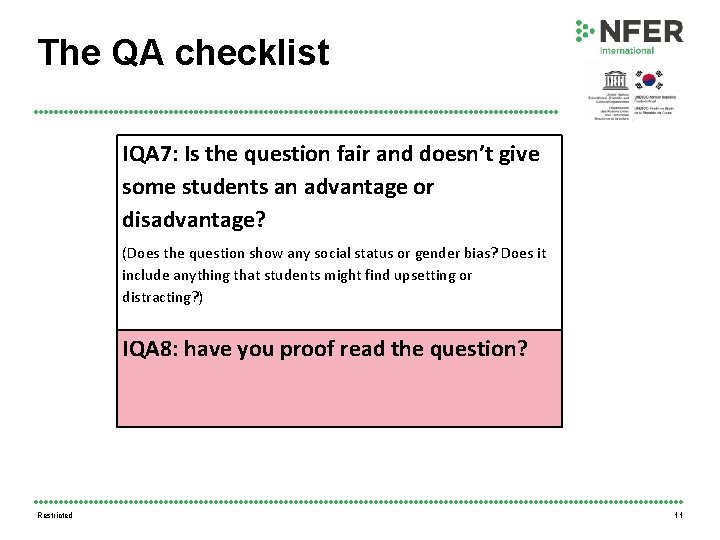
The QA checklist IQA 7: Is the question fair and doesn’t give some students an advantage or disadvantage? (Does the question show any social status or gender bias? Does it include anything that students might find upsetting or distracting? ) IQA 8: have you proof read the question? Restricted 11
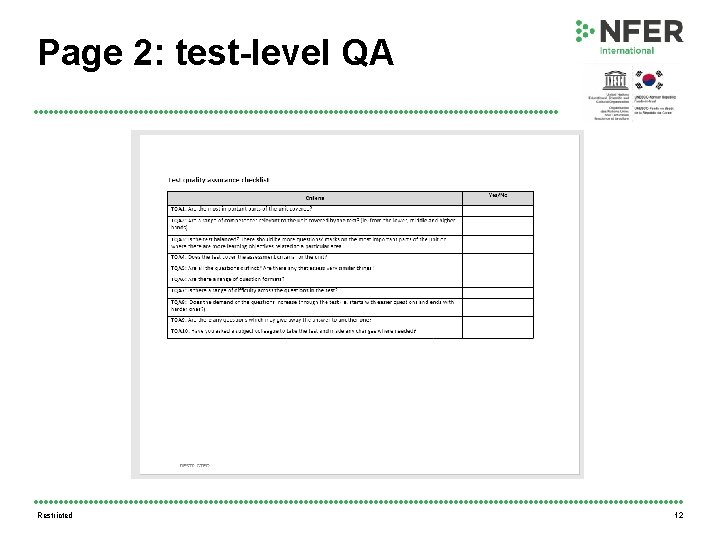
Page 2: test-level QA Restricted 12
Discuss 5 minutes in pairs Is there anything else you need to remember to look out for? What else do you find always trips you up? Restricted 13
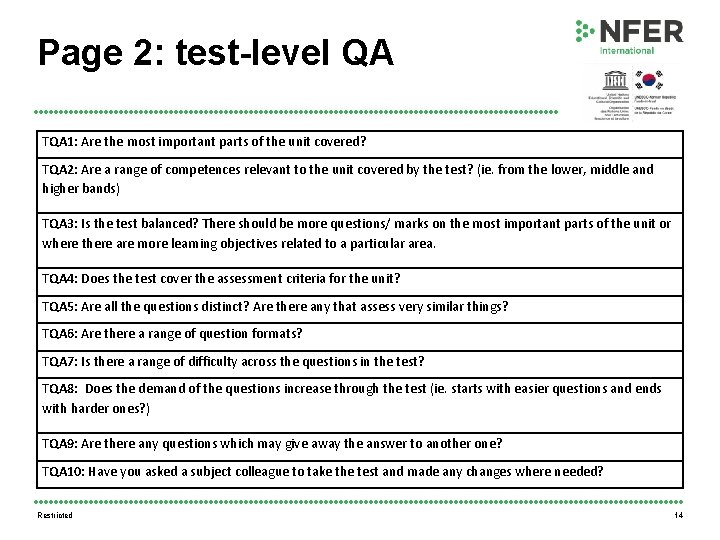
Page 2: test-level QA TQA 1: Are the most important parts of the unit covered? TQA 2: Are a range of competences relevant to the unit covered by the test? (ie. from the lower, middle and higher bands) TQA 3: Is the test balanced? There should be more questions/ marks on the most important parts of the unit or where there are more learning objectives related to a particular area. TQA 4: Does the test cover the assessment criteria for the unit? TQA 5: Are all the questions distinct? Are there any that assess very similar things? TQA 6: Are there a range of question formats? TQA 7: Is there a range of difficulty across the questions in the test? TQA 8: Does the demand of the questions increase through the test (ie. starts with easier questions and ends with harder ones? ) TQA 9: Are there any questions which may give away the answer to another one? TQA 10: Have you asked a subject colleague to take the test and made any changes where needed? Restricted 14
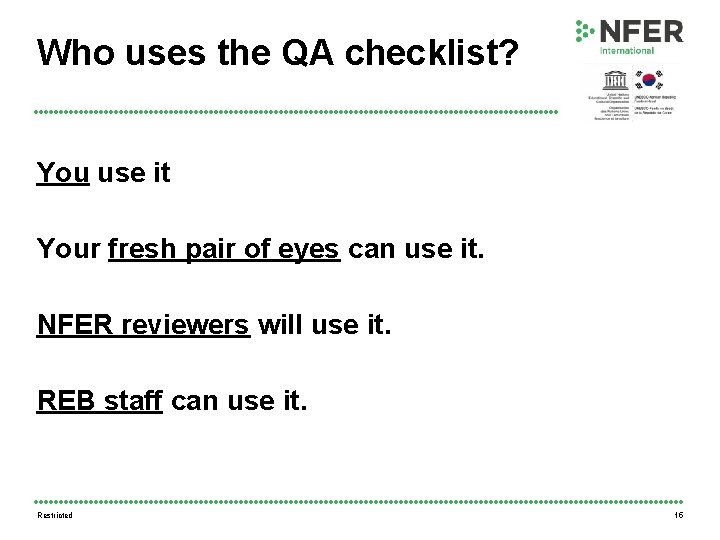
Who uses the QA checklist? You use it Your fresh pair of eyes can use it. NFER reviewers will use it. REB staff can use it. Restricted 15