
pyrolysis tire oil treatment method bleaching earth vs
pyrolysis tire oil treatment method (bleaching earth vs centrifugal separation ) Prepared by : Ahmad Janajreh Hani Salim Motaz Shahwan Ziad Saqf alhait Abdulwahab al-akhras Supervisor : Dr. Ramiz Alkhaldi

Introduction
Project background This project is about, making a comparison between two methods of oil separation the first one is bleaching earth , this method use some type of clay. material. that. has. the. capability. to. decolorize oil. or. other liquids without chemical treatment , the second one is centrifug al separation in this method device designed to separate oil and water by ce ntrifugation, the comparison between these method at many point like the a bility to use the methods in West Bank , the amount of pollution that produce d by each method, and the cost of each method will be calculated , another point will be discussed b ut the main point are include.
Objective The main objective of this project is : 1 -to do experiments on bleaching earth method. 2. to do experiments on centrifugal separation method. 3. to investigate the ability of using the method for refine the pyrolysis oil. 4. to check the degree of purity of the result from each method. 5. to compare between tow method in term of cost , pollution , cost, complexity and the production volume. 6. trying to add some improvement for the methods.
oil refining process ……. . chemistry and chemical. engineering. a separation process, or a sep aration technique, or simply a separation, is a method to achieve any mass transfer. phenomenon that converts amixture. of substance into two or mor e distinct product mixtures (which may be referred to as fractions), at least one of which is enriched in one or more of the mixture's constituen ts. In some cases, a separation may fully divide the mixture into its pure constituents. Separations are carried o ut based on differences in chemical properties or physical properties such a s size, shape, mass, density, or chemical affinity, between the constituents of a mixture. They are often classified according to the particular differences they use to achieve. separation. Usually there is only physical movement and no substantial chemical modification. If no sin gle difference can be used to accomplish a desired separation, multiple ope ration will often be performed in combination to achieve the desired end.
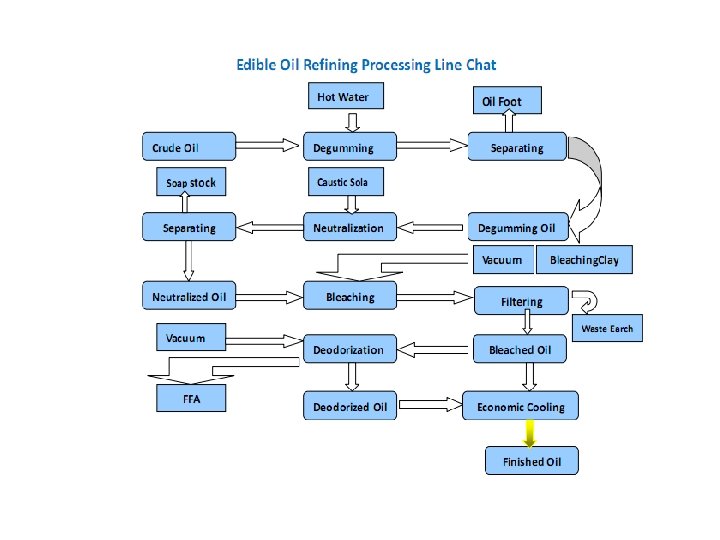
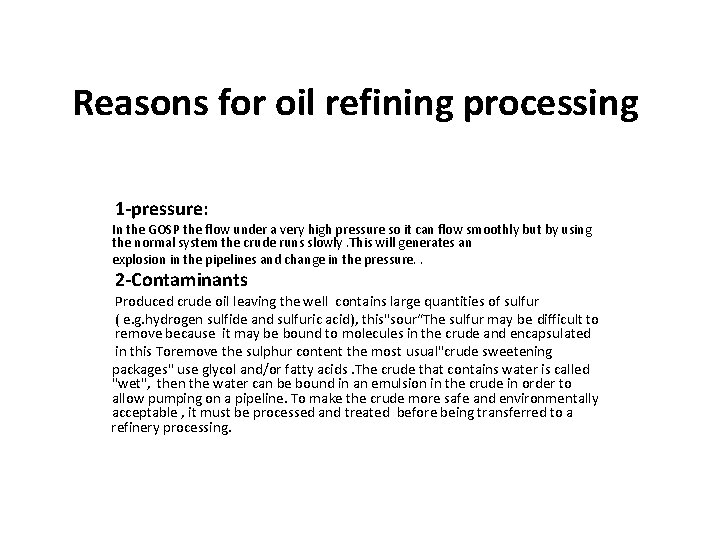
Reasons for oil refining processing 1 -pressure: In the GOSP the flow under a very high pressure so it can flow smoothly but by using the normal system the crude runs slowly. This will generates an explosion. in the pipelines and change in the pressure. . 2 -Contaminants Produced crude oil leaving the well contains large quantities of sulfur ( e. g. hydrogen. sulfide and sulfuric acid), this"sour“The sulfur may. be. difficult to remove because it may be. bound to molecules in the crude and encapsulated in this. Toremove. the. sulphur. content. the. most. usual"crude sweetening packages" use glycol and/or fatty acids. The crude that contains water is called "wet", then the water can be bound in an emulsion in the crude in order to allow pumping on a pipeline. To make the crude more safe and environmentally acceptable , it must be processed and treated before being transferred to a refinery processing.
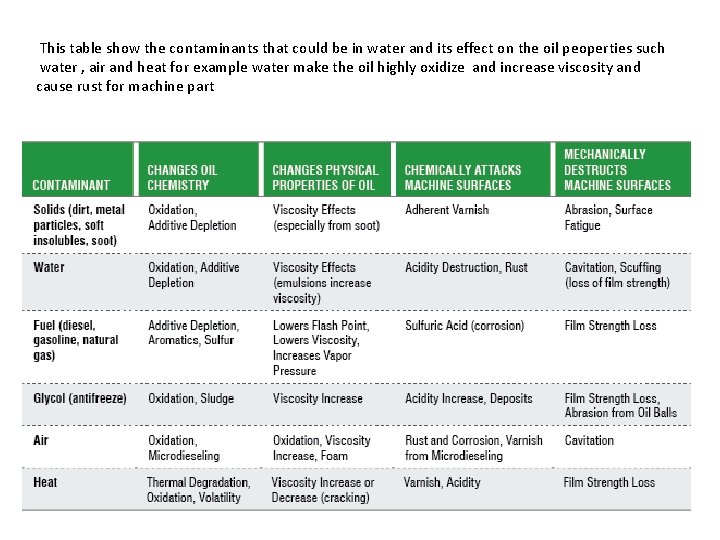
This table show the contaminants that could be in water and its effect on the oil peoperties such water , air and heat for example water make the oil highly oxidize and increase viscosity and cause rust for machine part
Cont. 3 -Phase separation It is often appropriate to separate gases and liquids for separate use. This also involves the. separation of oily and water liquid phases.
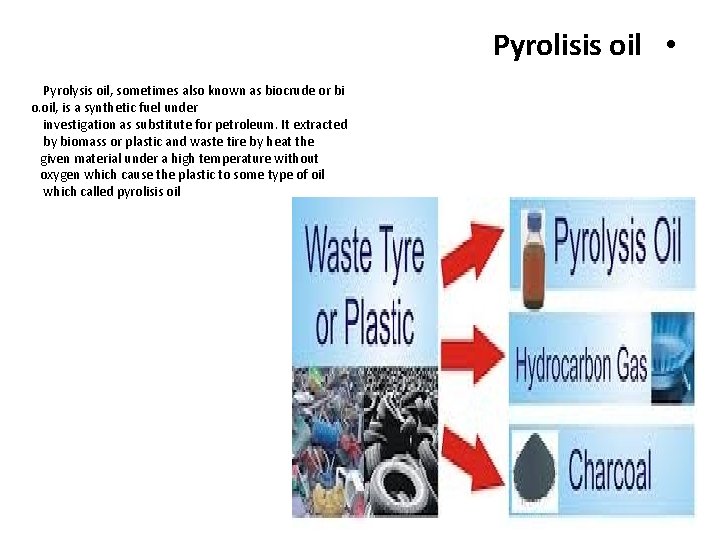
Pyrolisis oil • Pyrolysis oil, sometimes also known as biocrude or bi o. oil, is a synthetic fuel under investigation as substitute for petroleum. It extracted by biomass or plastic and waste tire by heat the given material under a high temperature without oxygen which cause the plastic to some type of oil which called pyrolisis oil
pyrolisis oil properties As shown in Table , which shown the properties of oil by showing the composition of it and describing the percentage of each element and other properties like LHV
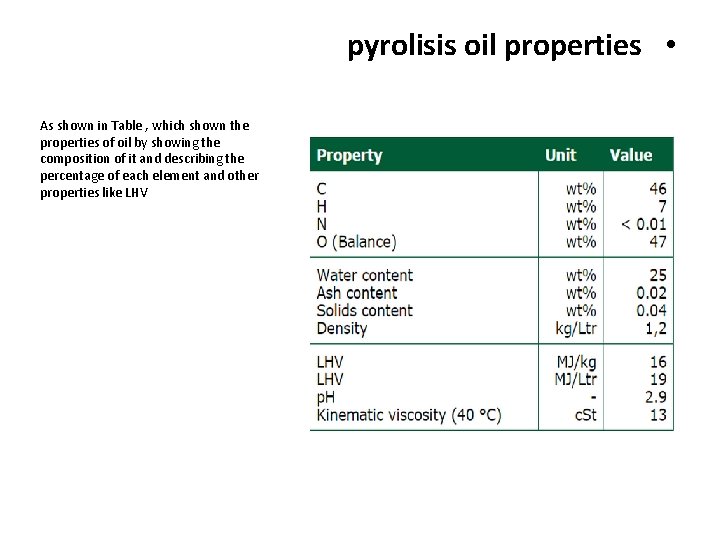
pyrolisis oil properties • As shown in Table , which shown the properties of oil by showing the composition of it and describing the percentage of each element and other properties like LHV
pyrolysis oil application Interesting applications for pyrolysis oil include Heat & Power, Automotive fuels and Biorefinery. At the moment these are in varying stages of development, wit h only Heat & Power having been demonstrated at a commercial scale. The long. term vision is to focus more on the biorefinery concept where pyrolysis oil i s (one of the) raw materials for biobased chemicals and automotive fuel Recently biorefining of pyrolysis oil has gained an increasing amount of attention around the world.
Oil sludge and gum Most crude oils that are transported for refining have a propensity to separate into the heavier and lighter hydrocarbons from which the crude oil is composed. This problem is often exacerbated by cool temperatures, the venting of volatile components from the crude, and by the static condition of fluid during storage. The heavy ends that separate from the crude oil and are deposited on the bottoms of storage vessels are known as “tank bottoms”, or “sludge”. the ‘heavier’ straight-chain hydrocarbons flocculate (heavier meaning predominantly the C 20+ hydrocarbon molecules), they tend to fall out of suspension within a static fluid, where they accumulate on the tank floor as a viscous gel. Over time, this gel stratifies, as the volatile components within the gel are ‘flashed’ from the gel with changes in temperature and pressure. This departure of the volatile components results in a concentration increase of the heavier fractions within the sludge, resulting in increased density and viscosity and decreased mobility
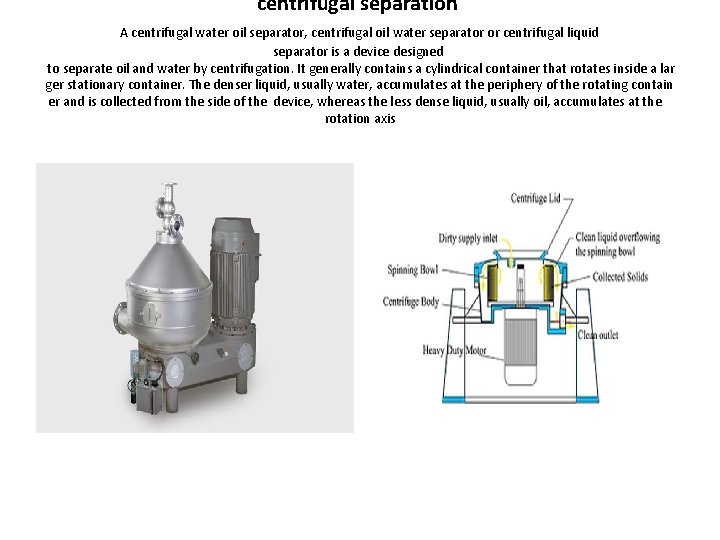
centrifugal separation A centrifugal water. oil separator, centrifugal oil. water separator or centrifugal liquid separator is a device designed to separate oil and water by centrifugation. It generally contains a cylindrical container that rotates inside a lar ger stationary container. The denser liquid, usually water, accumulates at the periphery of the rotating contain er and is collected from the side of the device, whereas the less dense liquid, usually oil, accumulates at the rotation axis
Cont. 3. 6. 1 how it work: A. mix of oil and water is pumped constantly into a cone shaped se parating apparatus at an angle, which creates a spinning vortex. Th e filtration. is a result of the force balance that occurs on fluids in a vortex. High. density. liquids will move to the outside, along with an y contaminant, displacing the lower density liquids to the inside (c enter of rotation). Water, being the more dense liquid, sits on the outside and is removed through a discharge outlet. Any segregated oil. can now safely be recovered through a suction orfice. at the center. The process will continue to function in this fashion as long as sufficient oil is added to maintain coverage of the suction orifice.
Cont. design an feature The machine consist many design feature: Materials and Metals used The bowl of the separator is generally made up of stainlesteel brass, and bronze. The structural parts are usual where the stainless steel is and the parts on the inside that come into contact with mixtures are either made of bronze or brass depending on the mixture going through the centrifugal separator. The housing and gearbox of the separator is made of aluminum or. stainless steel and cast iron. The gearbox in particular is cast iron with stainless steel coating it 3. 6. 2. 2 Transmission …. . . The vortex of the separators is generated through a power source and the power source in • use for the centrifugal separator is an electrical motor and the pieces of its transmission include a clutch and worm gear, a flexible coupling worm gear, and a set of pulleys and flat belt. 3. 6. 2. 3 Suction and Discharging of the Liquids ……The suction process of the separator takes place as stationary feed pipe suctions the mixture liquid into the co ne shaped pipe that feeds into the vortex. After the filtration of the liquids occur the unwanted contaminants are discharged either through an overflow or through one or two centripetal pumps. •

bleaching earth An. electrolyte is. Fuller's earth is any clay material that has the capability to decolo rize oil or other liquids without chemical treatment. Fuller's earth typically consists of palygorskite (attapulgite) or bentonite. Modern u ses of Fuller's earth include absorbents for oil, grease, and. animal waste and a car rier for pesticides and fertilizers. Minor uses include filtering, clarifying, and decolo rizing; and as filler in paint, plaster, adhesives, and pharmaceuticals
Occurrence and composition Fuller's earth consists primarily of hydrous. aluminum. silicates (clay minerals) of varying composition. Common components are. montmorillonite and attapulgite. Small amounts of other minerals may be present in fuller's e arth deposits, including calcite. dolomite. and quartz. In some localities fuller's earth refers to calcium. betonies. which is altered volcanic ash composed most ly of montmorillonite.
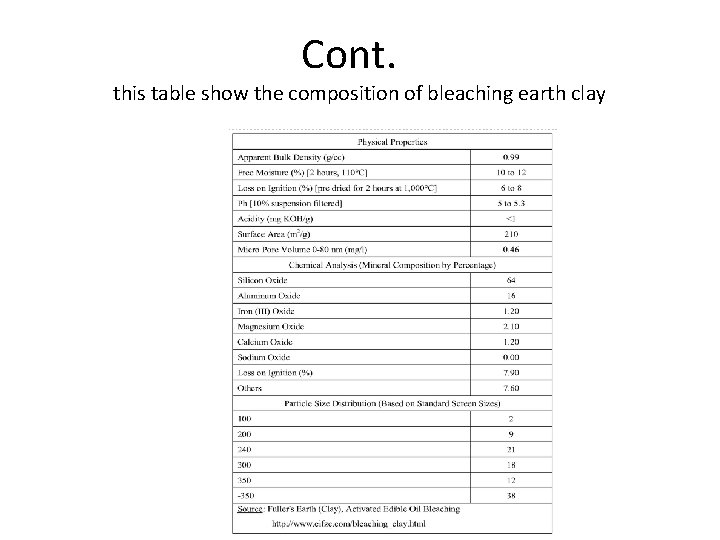
Cont. this table show the composition of bleaching earth clay
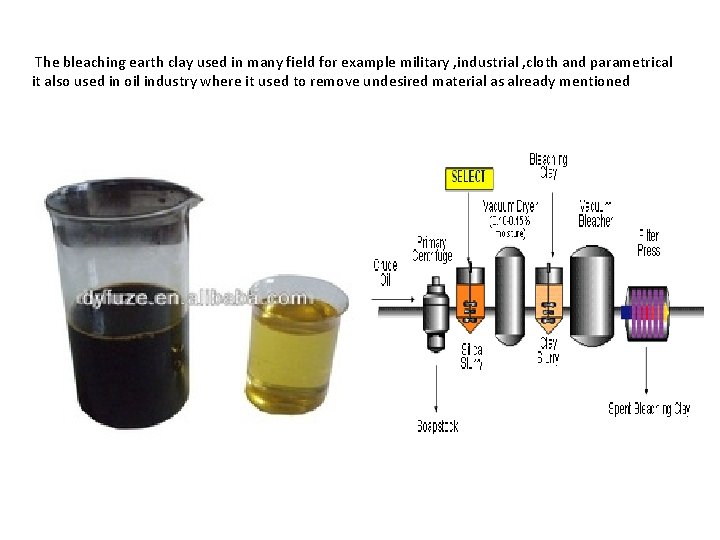
The bleaching earth clay used in many field for example military , industrial , cloth and parametrical it also used in oil industry where it used to remove undesired material as already mentioned

methodology
Oil sludge reduction At first before starting any type of comparison the reduction of oil sludge is a very important thing because this little process can increase the purity of the output oil to very high scale and it also reduce the cost of refining process due to the reduction of dirt and Impurities which cause a little maintains for the machine also a reduction in material for example sand in bleaching earth process some of way to reduce sludge is:
1 -sodium compounds and potassium compounds Previous efforts were made to convert the oil sludge into useful resources such as lower molecule organic compounds and carbonaceous residues by pyrolysis with the carrier gas of N 2. In the present study, the oil sludge from the oil storage tank. The influences of using sodium and potassium compounds as additives on the possible improvement of the pyrolysis of oil sludge are investigated. The additives employed include two groups: (1) sodium compounds (Na. OH, Na. Cl and Na 2 CO 3), and (2) potassium compounds (KCl, KOH and K 2 CO 3). For the increases of conversion, the additives provide the offers in the order of K 2 CO 3>KOH>Na 2 CO 3>KCl>Na. Cl>no additives. It appears that the above additives enhance the reaction rates when the temperatures are in 650– 710 K, following. The additives achieve the improvement of the quality of pyrolisis oil (as sum of light and heavy naphtha and light gas oil). All this information is useful not only to the improvement of a pyrolisis system but also to the better utilization of liquid oil products.
2 -sulphuric acid In this study, sulphuric acid (H 2 SO 4) was used in the pretreatment of sludge pyrolisis oil for biodiesel production by an etherification process, followed by the basic catalyzed transesterification process. The purpose of the pretreatment process was to reduce the free fatty acids content from high content FFA (> 23%) of sludge palm oil (SPO) to a minimum level for biodiesel production (> 2%). An acid catalyzed etherification process was carried out to evaluate the low content of FFA
3 -Precipitation is process of falling of heavy material from soldue the force of gravity , for the pyrolisis oil and the sludge as the sludge is the heavy material and the oil is the solution , at first the pyrolisis oil filled in big tang and by the time the sludge precipitate in the bottom of the tank then the oil drain from the tank leaving the sludge in the bottom of tank the problem of this way that it take a long time to precipitate the sludge This is some of way to reduce pyrolisis oil sludge another way to use some acid and use thinner after this process the oil be ready for further process (bleaching earth and centrifugal separation) which already mentioned
Comparison factor
purity Bleaching earth The quality of pyrolisis fuel was found to be significant for its successful use on compression ignition engines and subsequent replacement of normal fossil fuels. Conventional pyrolisis l fuel separation and purification technologies were noticed to yield lower quality pyrolisis l fuel with resultant excessive energy and water consumptions. Bleaching earth technology showed more potential for effective and efficient separation and purification of pyrolisis fuel This technology need be explored for the attainment of better quality pyrolisis oil. The technologies used for the pyrolisis fuel separation and purification, pyrolisis fuel quality, and its effects on diesel engines. pyrolisis fuel biodegradability, lubricity, stability, economic importance, and gaseous emissions have been discussed. Centrifugal separation Using a simple The purity of compound was over 98% after only one-step separation. The result indicated that centrifugal separation is perfect to reduce the sludge of pyrolisis oil
Cost Bleaching earth Already nothing sure for us about the cost of bleaching earth , but the cost of bleaching earth come , at first from the price of powder that needed thing for the process another is the cost of disposal of the used bleaching earth powder also the recycling cost for the used powder added to the total cost , the price of powder range from (20 to 200) $ for on metric ton that range depend on the powder quality Centrifugal separation the cost of Centrifugal separation come , at first from the price of Centrifugal separator that operate the all process another thing is the maintain ace and cleaning cost also the operator cost atypical Centrifugal separator machine range from 100$-100000$ the price depend on the production rate , capacity and the quality of the machine. when comparing the cost not only the cost of process which matter also the income also matter for example the production rate should take in consideration where as it increase the income increase also the capacity of each process effect , when capacity increase the daily income increase also the complicity of each one maybe increase the cost by the number of worker required to operate the process another thing may affect but this is the main thing.
ease of use Bleaching earth is a very • simple process in easy word the pyrolisis oil put in the tank thin amount of bleaching earth powder is pour into the tank the powder catch all the impurities from the oil and precipitation in the bottom then the pure oil removed to another process to complete the process if some acid is used worker should wear protective cloth. Centrifugal separation The Centrifugal separator can efficiently handle fluctuations in flow rate and oil concentrations without any adjustments, allowing for ease of installation and operation in use at wastewater treatment plants, oil rigs or food processing facilities. There is only one moving part on the Centrifugal separator, allowing for very little costly downtime in the event of maintenance or repair. The Centrifugal separator is powered by a single-phase motor. These centrifuges can be powered with electric motors, steam turbines or compressed air. •
- Slides: 30