
Pwave Swave Particles oscillate back and forth Wave
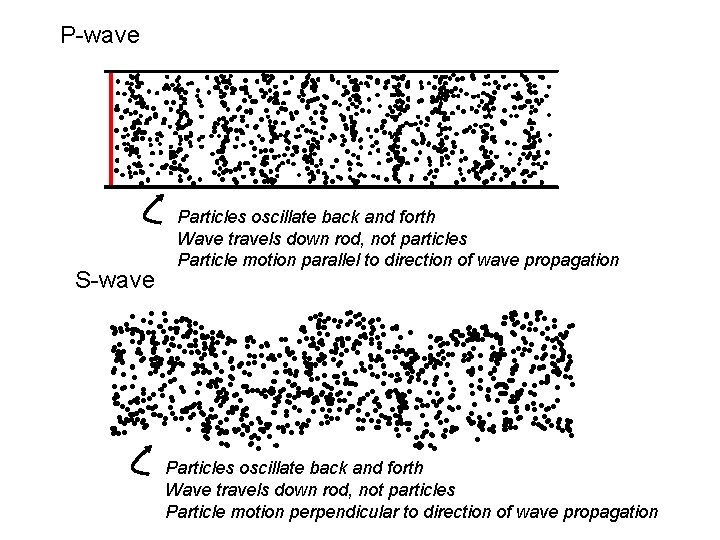
P-wave S-wave Particles oscillate back and forth Wave travels down rod, not particles Particle motion parallel to direction of wave propagation Particles oscillate back and forth Wave travels down rod, not particles Particle motion perpendicular to direction of wave propagation
Boundary Effects
Boundary Effects
Boundary Effects 2
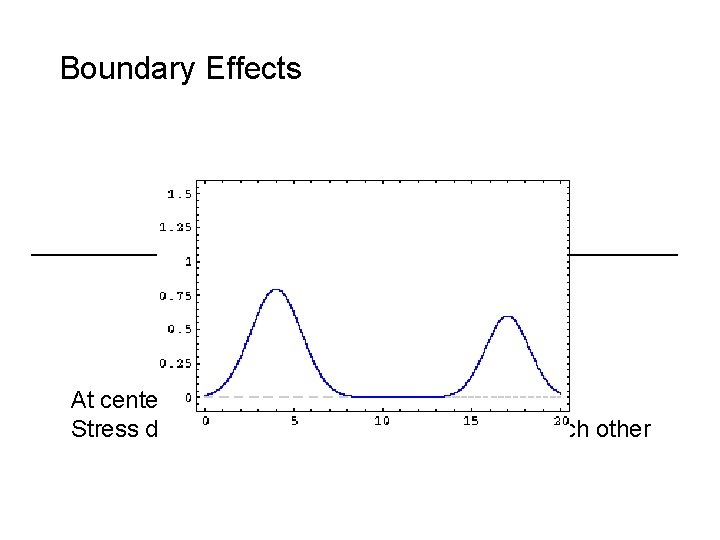
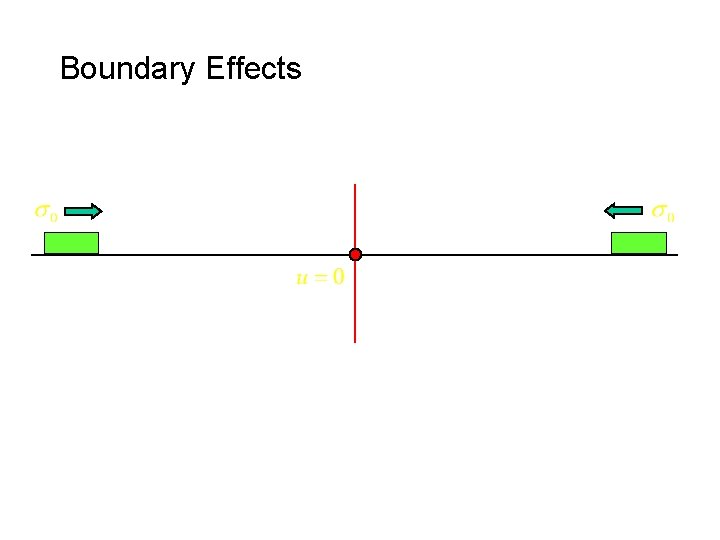
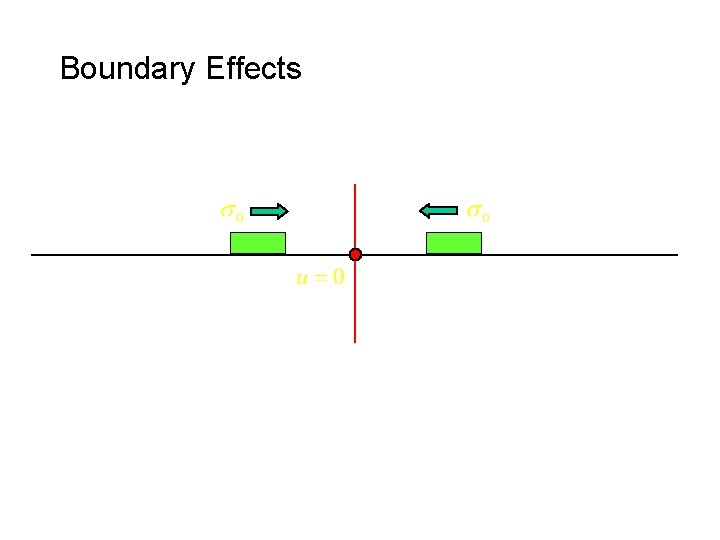
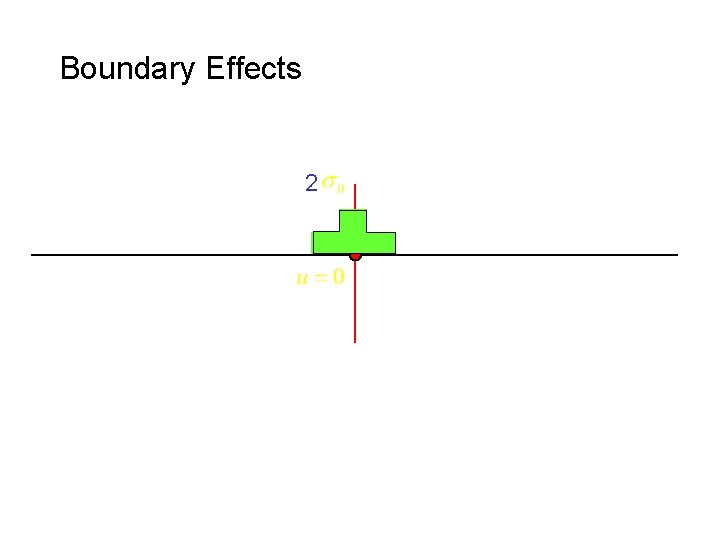
Boundary Effects At centerline, displacement is always zero Stress doubles momentarily as waves pass each other
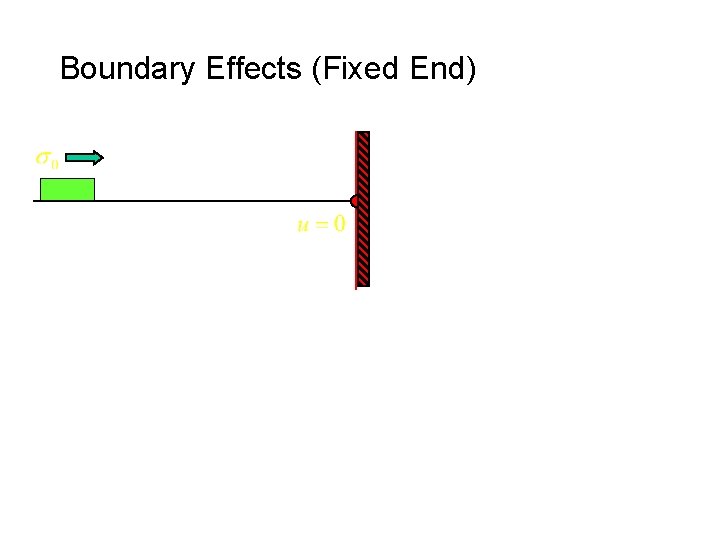
Boundary Effects (Fixed End)
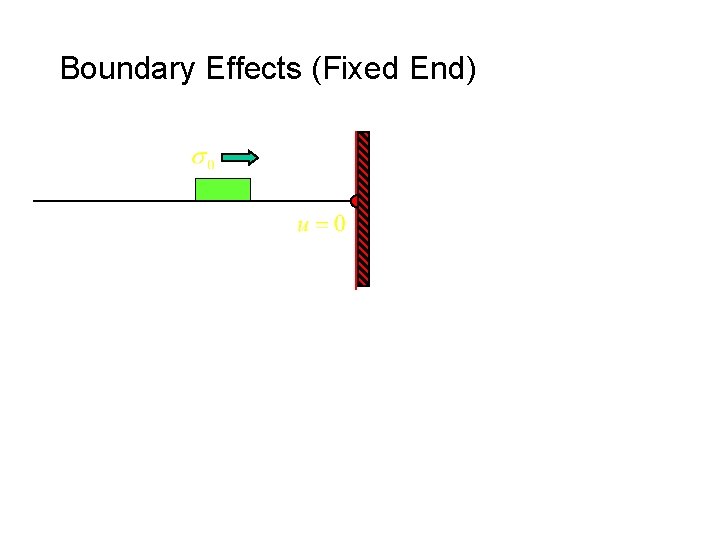
Boundary Effects (Fixed End)
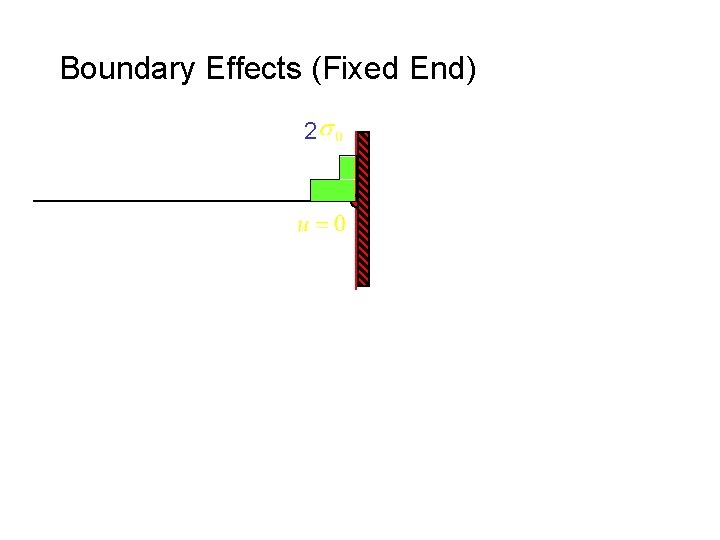
Boundary Effects (Fixed End) 2
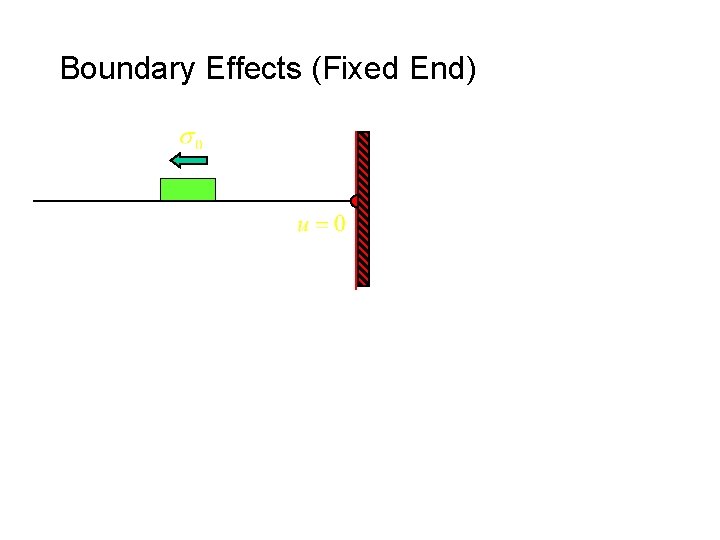
Boundary Effects (Fixed End)
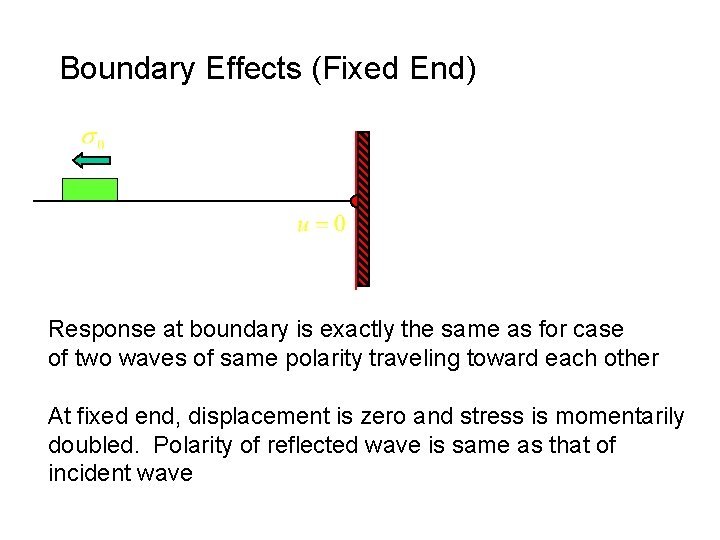
Boundary Effects (Fixed End) Response at boundary is exactly the same as for case of two waves of same polarity traveling toward each other At fixed end, displacement is zero and stress is momentarily doubled. Polarity of reflected wave is same as that of incident wave
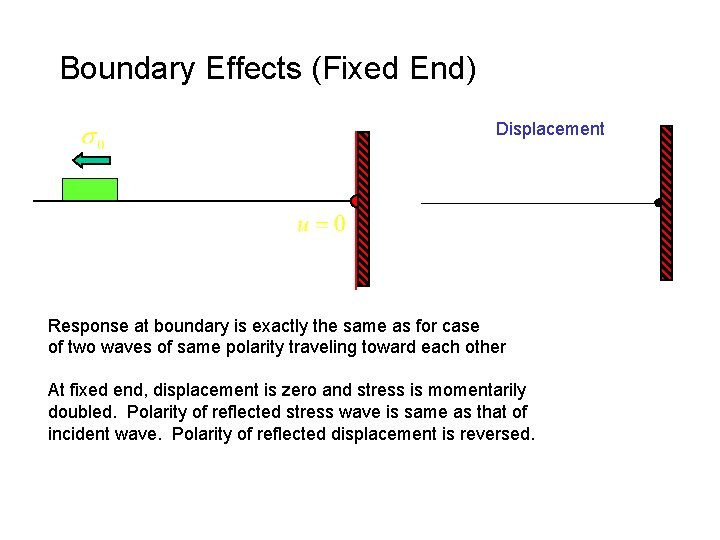
Boundary Effects (Fixed End) Displacement Response at boundary is exactly the same as for case of two waves of same polarity traveling toward each other At fixed end, displacement is zero and stress is momentarily doubled. Polarity of reflected stress wave is same as that of incident wave. Polarity of reflected displacement is reversed.
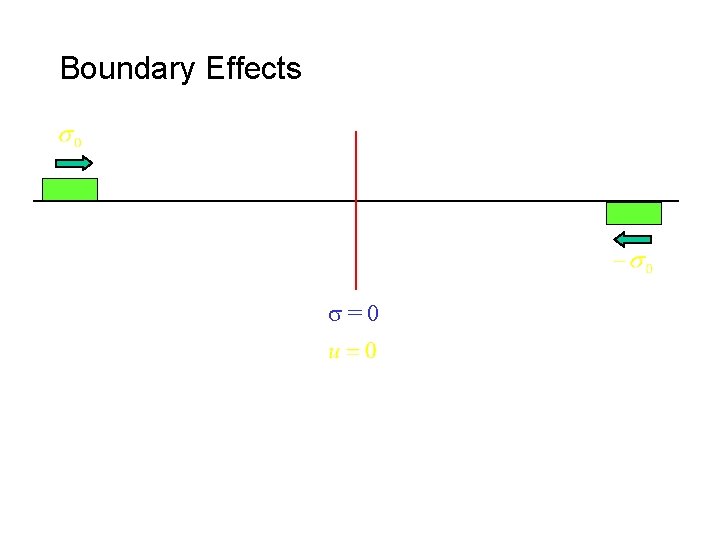
Boundary Effects s=0
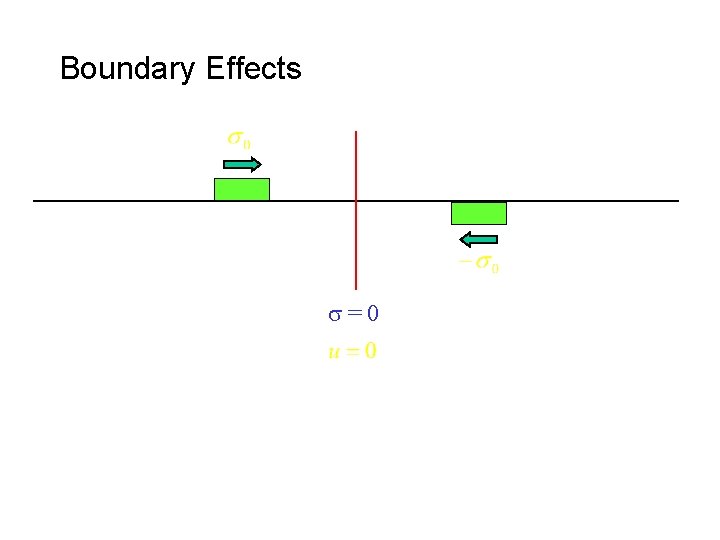
Boundary Effects s=0
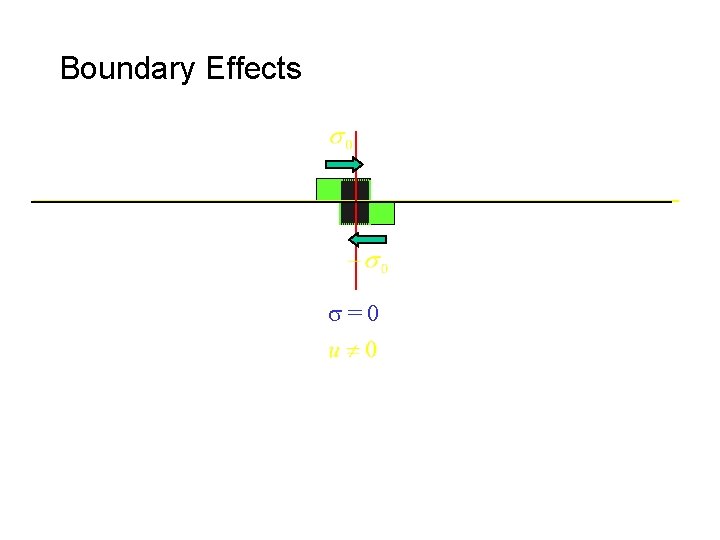
Boundary Effects s=0
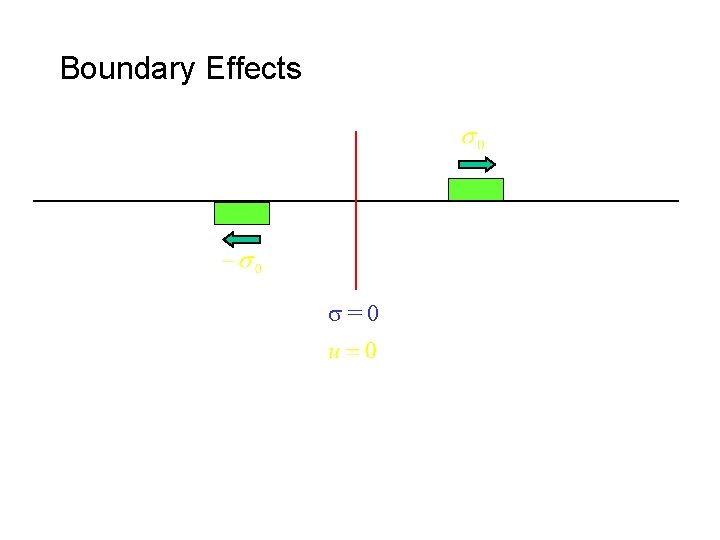
Boundary Effects s=0
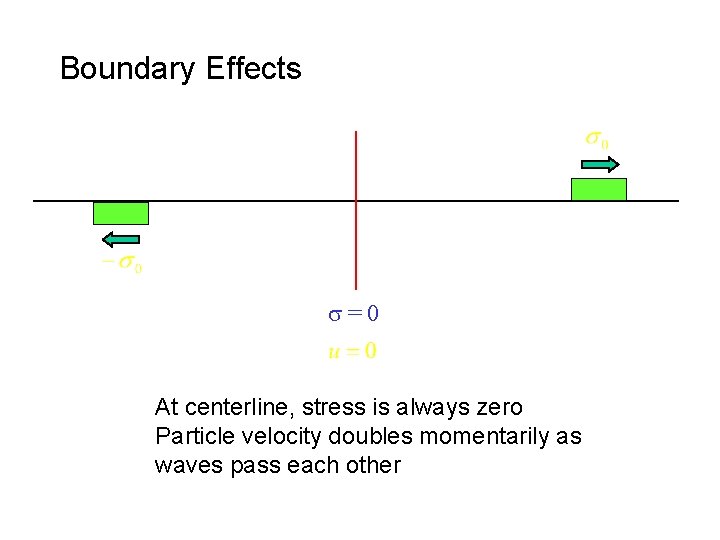
Boundary Effects s=0 At centerline, stress is always zero Particle velocity doubles momentarily as waves pass each other
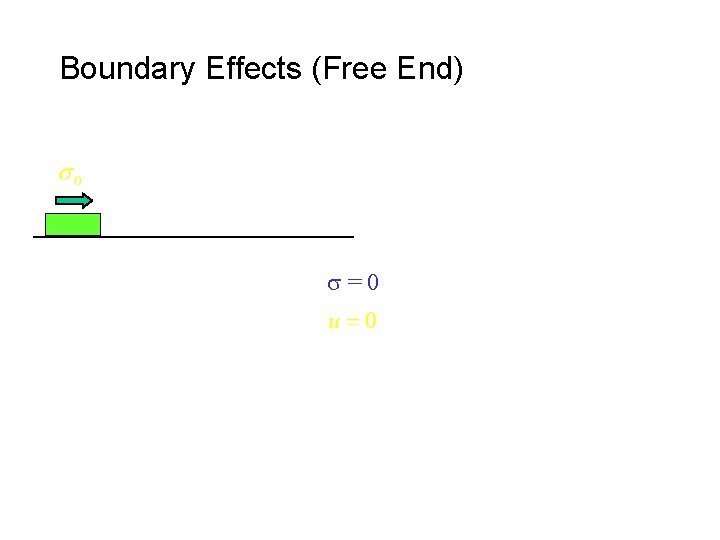
Boundary Effects (Free End) s=0
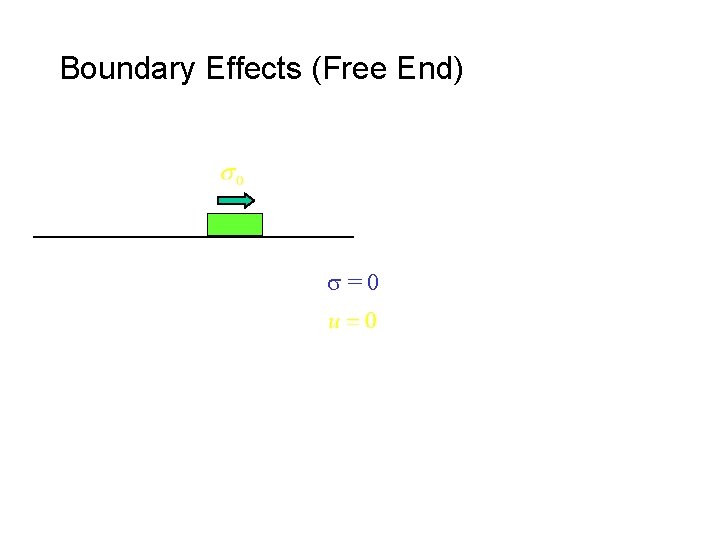
Boundary Effects (Free End) s=0
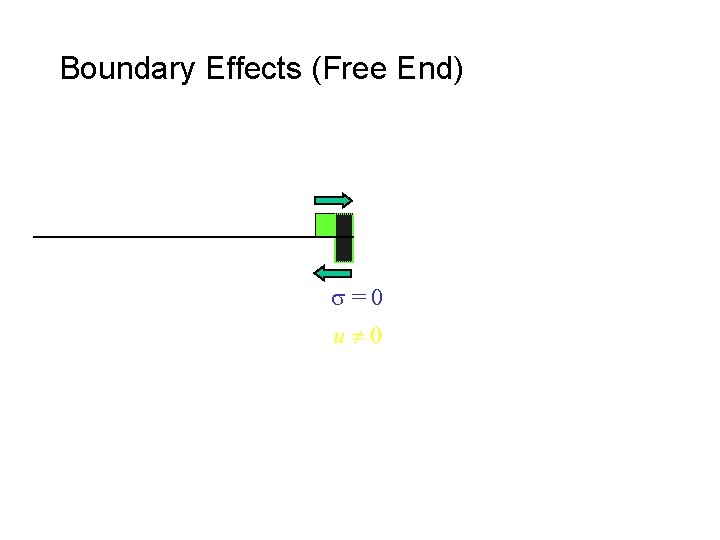
Boundary Effects (Free End) s=0
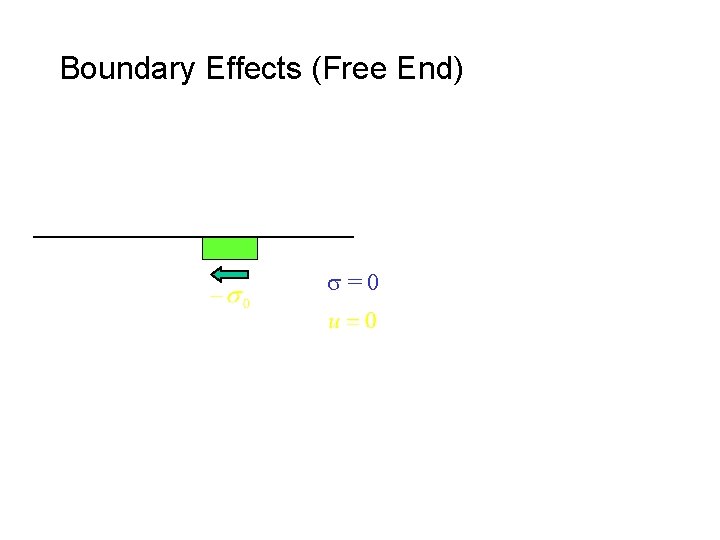
Boundary Effects (Free End) s=0
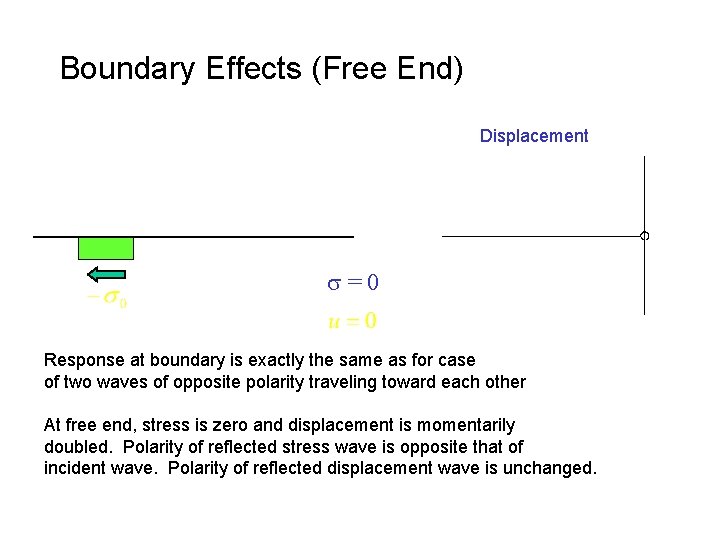
Boundary Effects (Free End) Displacement s=0 Response at boundary is exactly the same as for case of two waves of opposite polarity traveling toward each other At free end, stress is zero and displacement is momentarily doubled. Polarity of reflected stress wave is opposite that of incident wave. Polarity of reflected displacement wave is unchanged.
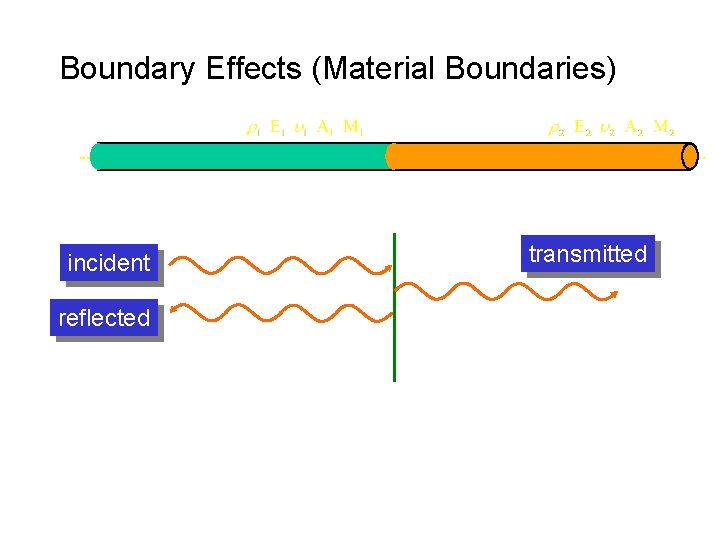
Boundary Effects (Material Boundaries) incident reflected transmitted
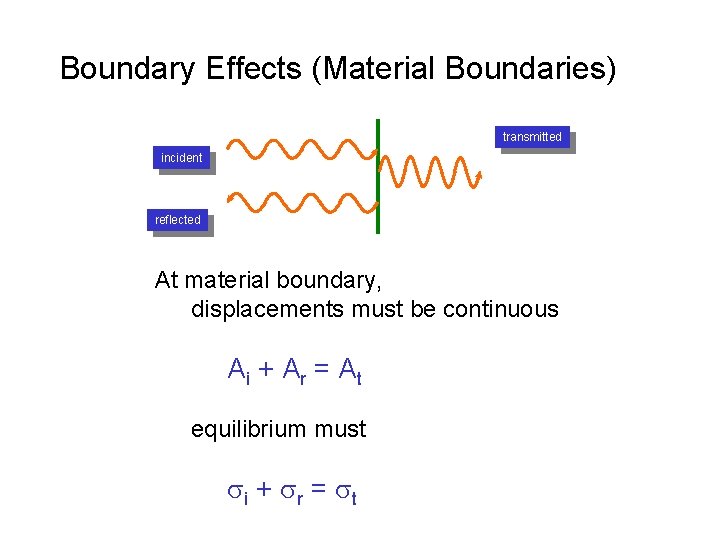
Boundary Effects (Material Boundaries) transmitted incident reflected At material boundary, displacements must be continuous Ai + A r = A t equilibrium must be satisfied si + sr = st
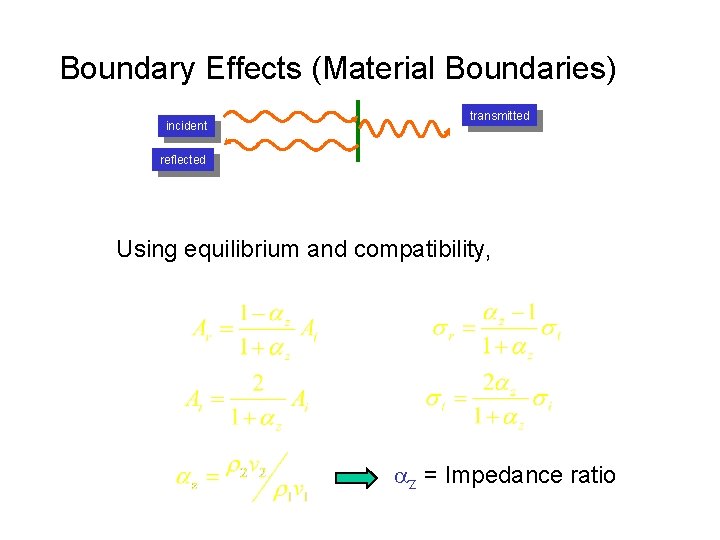
Boundary Effects (Material Boundaries) incident transmitted reflected Using equilibrium and compatibility, az = Impedance ratio
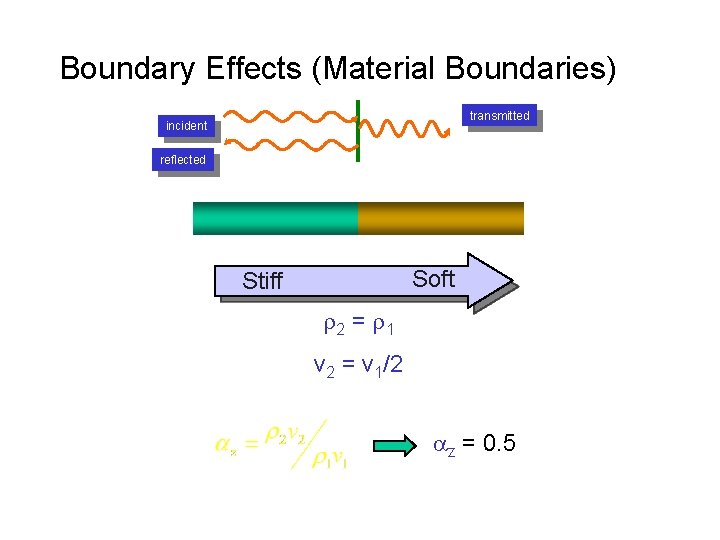
Boundary Effects (Material Boundaries) transmitted incident reflected Soft Stiff r 2 = r 1 v 2 = v 1/2 az = 0. 5
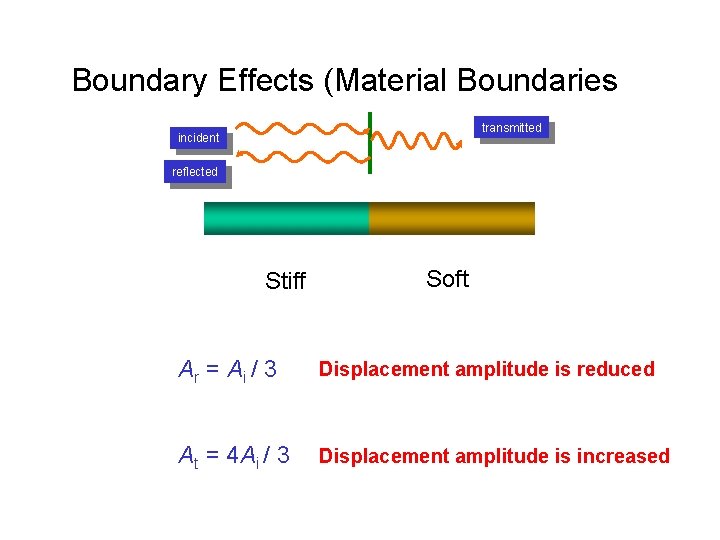
Boundary Effects (Material Boundaries) transmitted incident reflected Stiff Soft Ar = Ai / 3 Displacement amplitude is reduced At = 4 Ai / 3 Displacement amplitude is increased
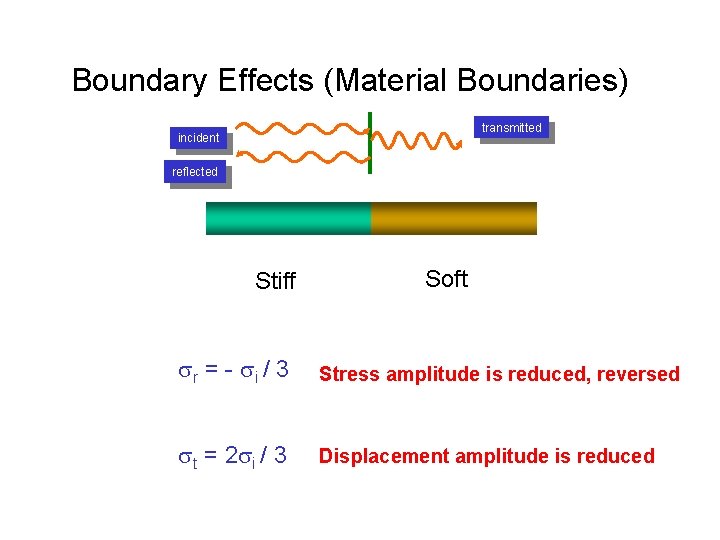
Boundary Effects (Material Boundaries) transmitted incident reflected Stiff Soft sr = - si / 3 Stress amplitude is reduced, reversed st = 2 si / 3 Displacement amplitude is reduced
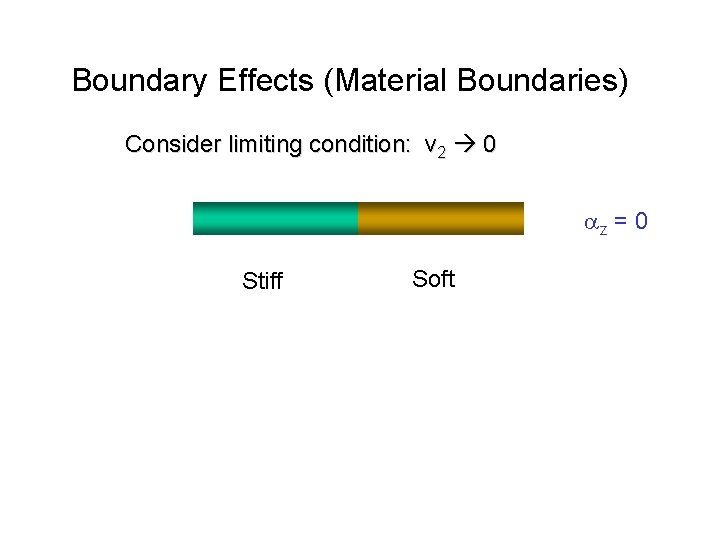
Boundary Effects (Material Boundaries) Consider limiting condition: v 2 0 az = 0 Stiff Soft
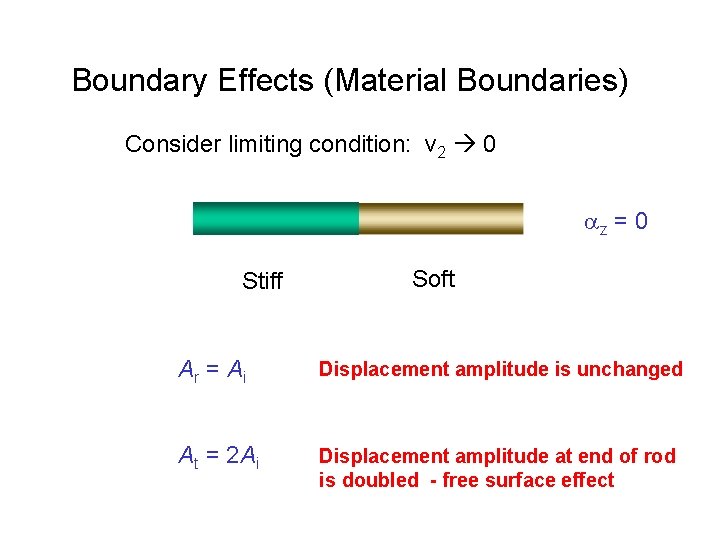
Boundary Effects (Material Boundaries) Consider limiting condition: v 2 0 az = 0 Stiff Soft Ar = Ai Displacement amplitude is unchanged At = 2 Ai Displacement amplitude at end of rod is doubled - free surface effect
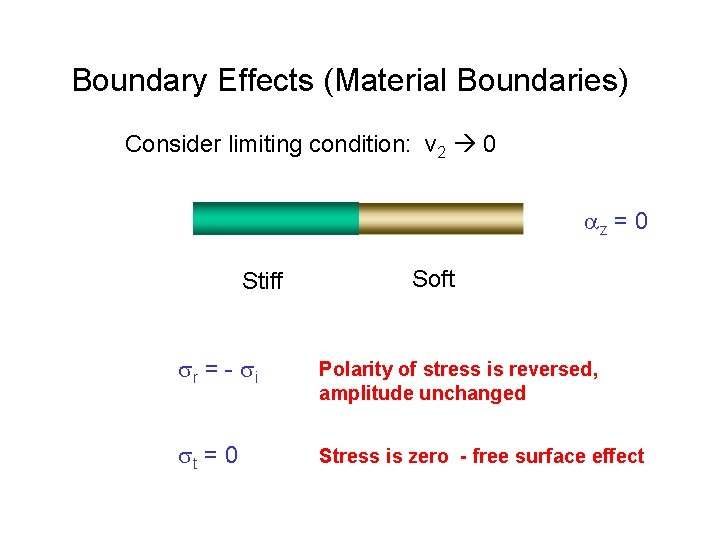
Boundary Effects (Material Boundaries) Consider limiting condition: v 2 0 az = 0 Stiff Soft sr = - si Polarity of stress is reversed, amplitude unchanged st = 0 Stress is zero - free surface effect
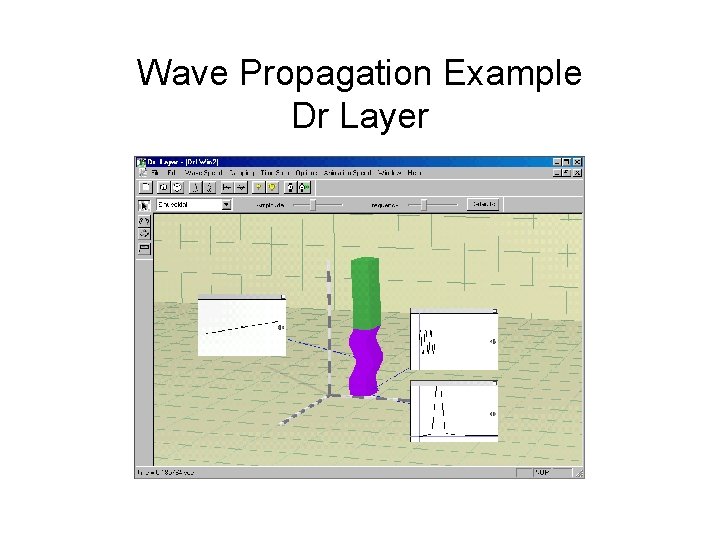
Wave Propagation Example Dr Layer
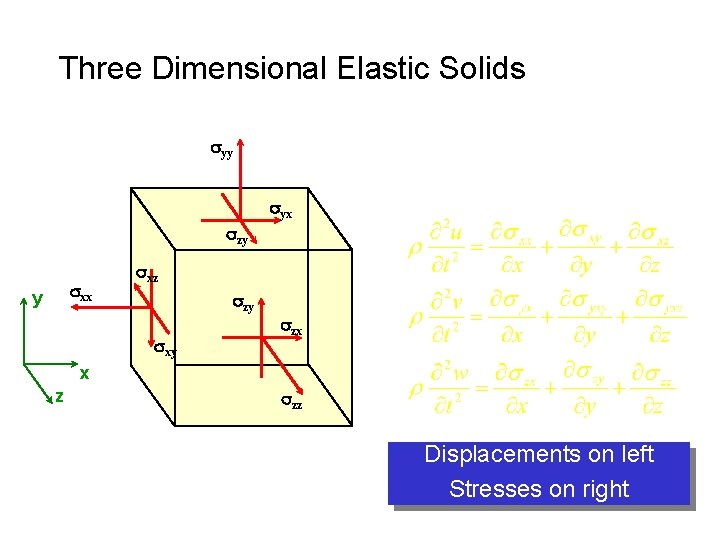
Three Dimensional Elastic Solids syy syx szy sxx y sxz szy sxy szx x z szz Displacements on left Stresses on right
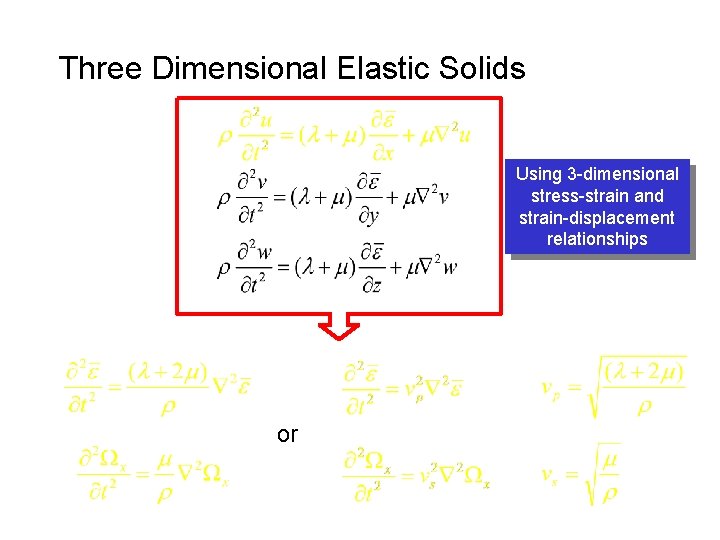
Three Dimensional Elastic Solids Using 3 -dimensional stress-strain and strain-displacement relationships or
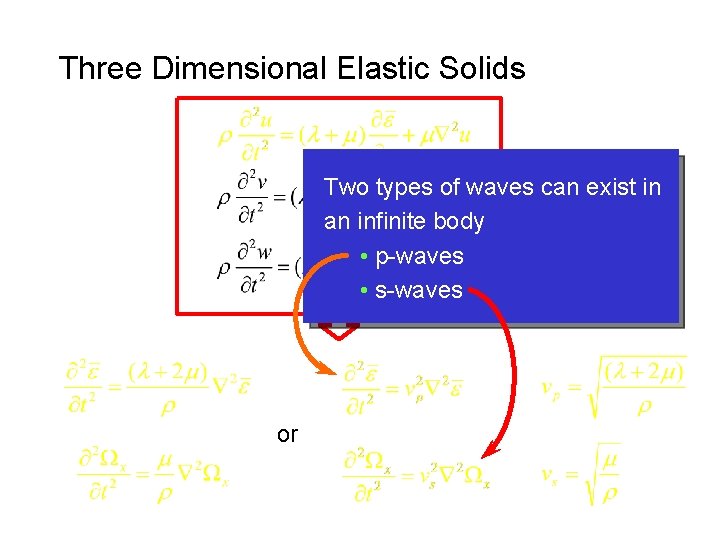
Three Dimensional Elastic Solids Two types of waves can exist in an infinite body • p-waves • s-waves or
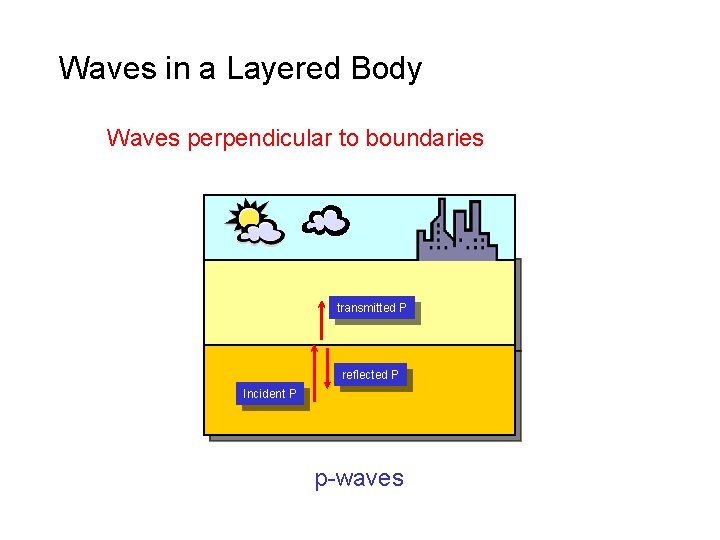
Waves in a Layered Body Waves perpendicular to boundaries transmitted P reflected P Incident P p-waves
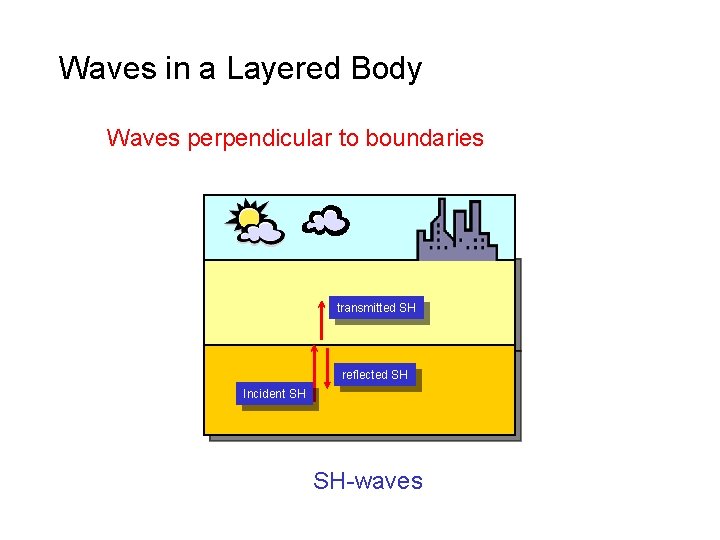
Waves in a Layered Body Waves perpendicular to boundaries transmitted SH reflected SH Incident SH SH-waves
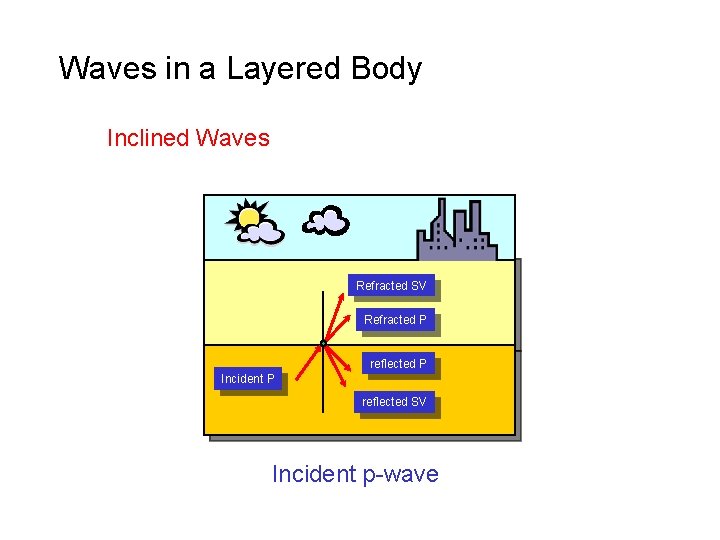
Waves in a Layered Body Inclined Waves Refracted SV Refracted P reflected P Incident P reflected SV Incident p-wave
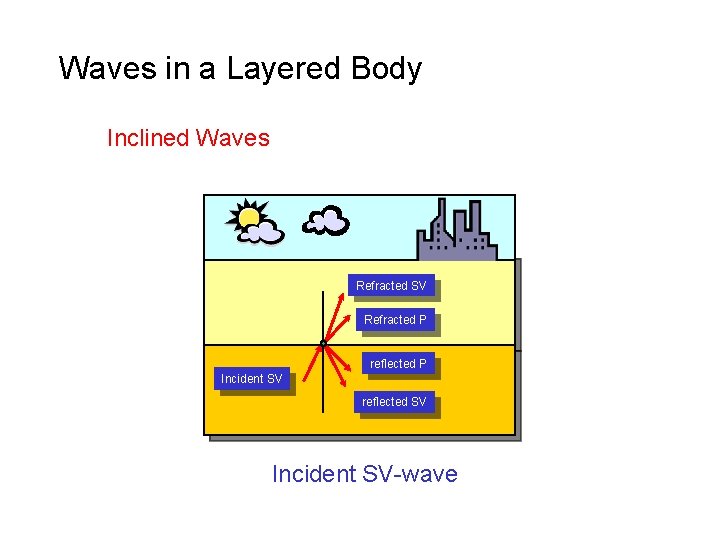
Waves in a Layered Body Inclined Waves Refracted SV Refracted P reflected P Incident SV reflected SV Incident SV-wave
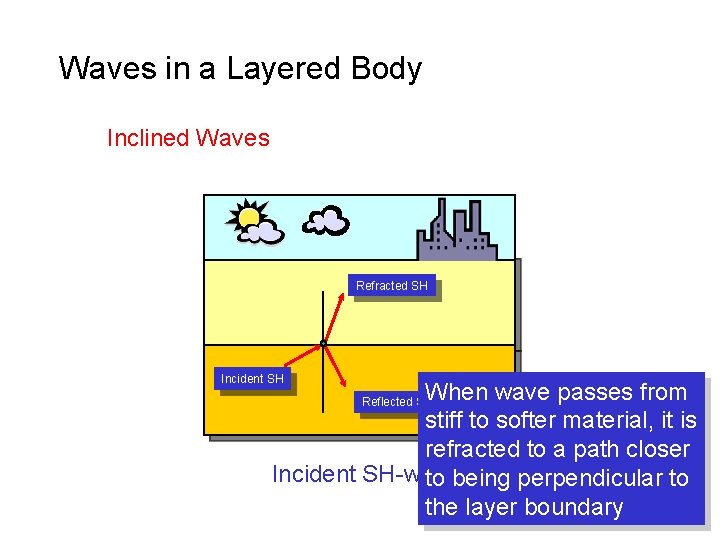
Waves in a Layered Body Inclined Waves Refracted SH Incident SH When wave passes from stiff to softer material, it is refracted to a path closer Incident SH-wave to being perpendicular to the layer boundary Reflected SH
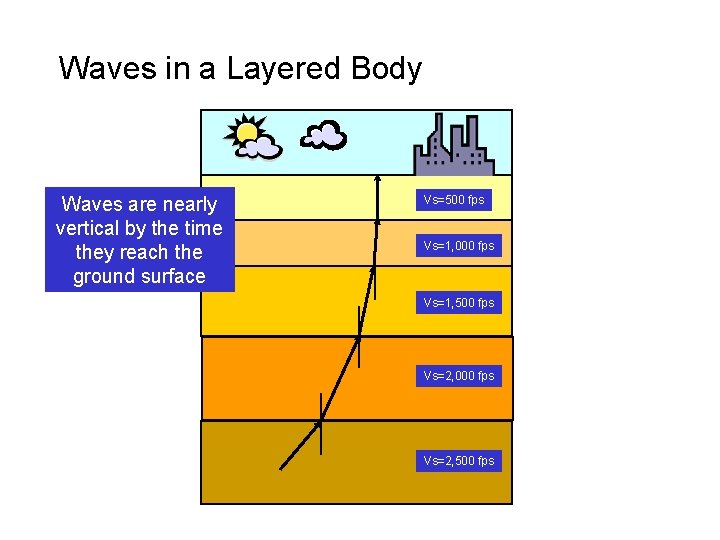
Waves in a Layered Body Waves are nearly vertical by the time they reach the ground surface Vs=500 fps Vs=1, 000 fps Vs=1, 500 fps Vs=2, 000 fps Vs=2, 500 fps
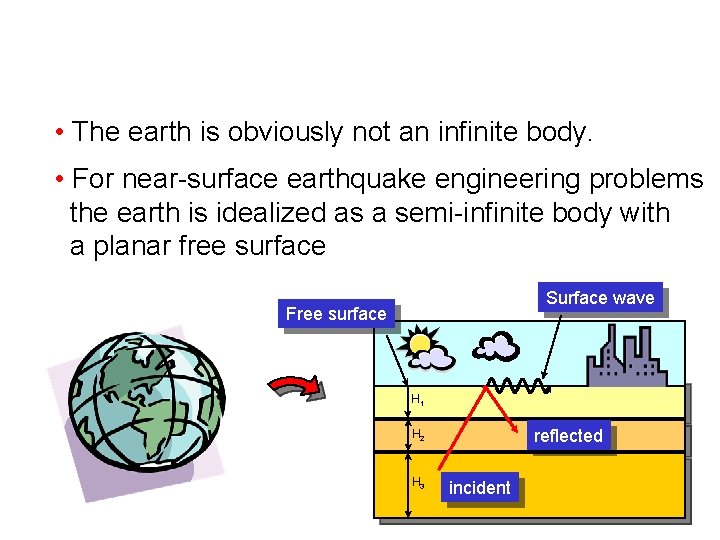
Waves in a Semi-infinite Body • The earth is obviously not an infinite body. • For near-surface earthquake engineering problems the earth is idealized as a semi-infinite body with a planar free surface Surface wave Free surface H 1 reflected H 2 H 3 incident
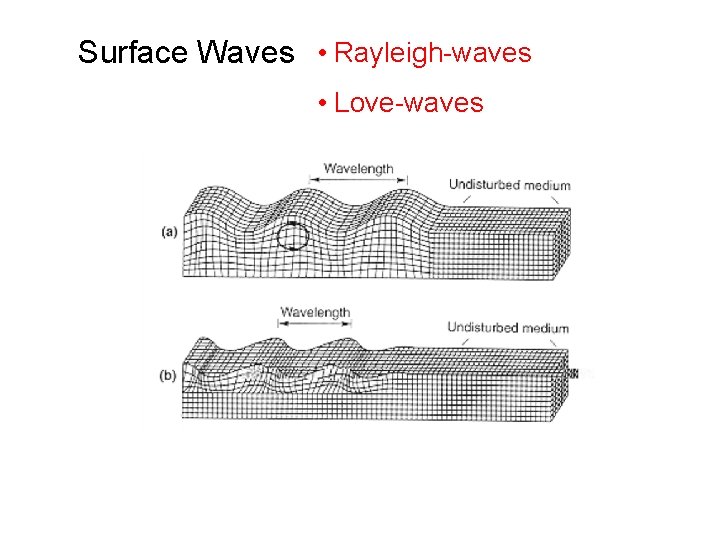
Surface Waves • Rayleigh-waves • Love-waves
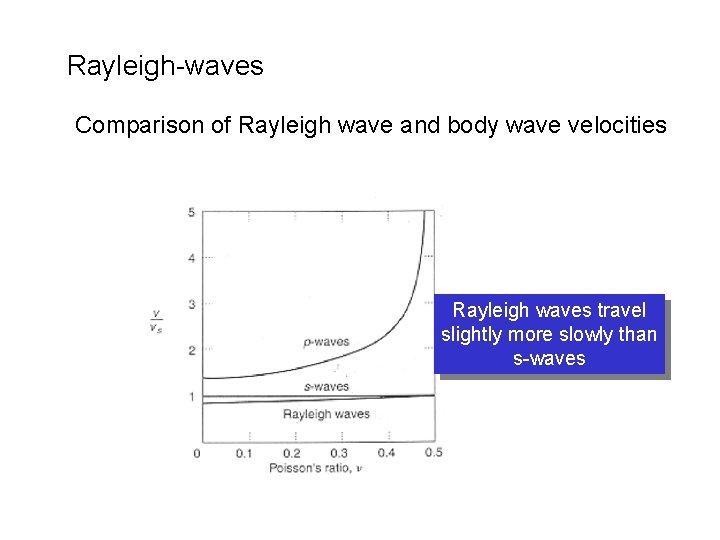
Rayleigh-waves Comparison of Rayleigh wave and body wave velocities Rayleigh waves travel slightly more slowly than s-waves
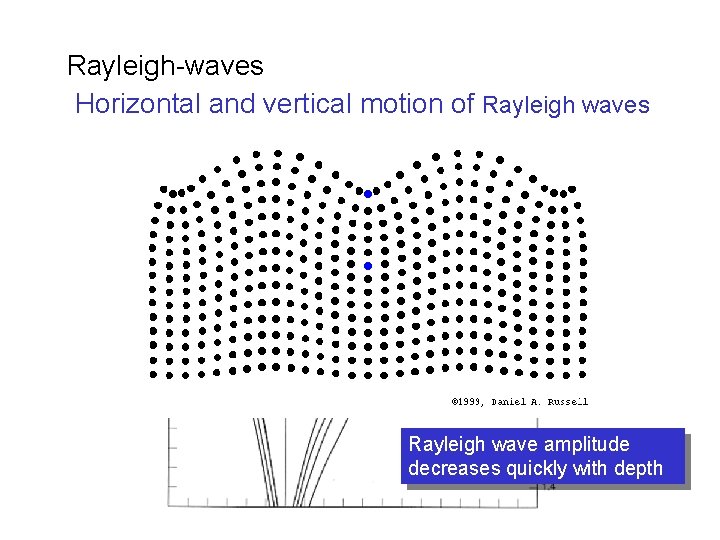
Rayleigh-waves Horizontal and vertical motion of Rayleigh waves Rayleigh wave amplitude decreases quickly with depth
Attenuation of Stress Waves The amplitudes of stress waves in real materials decrease, or attenuate, with distance Two primary sources: Material damping Radiation damping
Attenuation of Stress Waves Material damping A portion of the elastic energy of stress waves is lost due to heat generation Specific energy decreases as the waves travel through the material Consequently, the amplitude of the stress waves decreases with distance
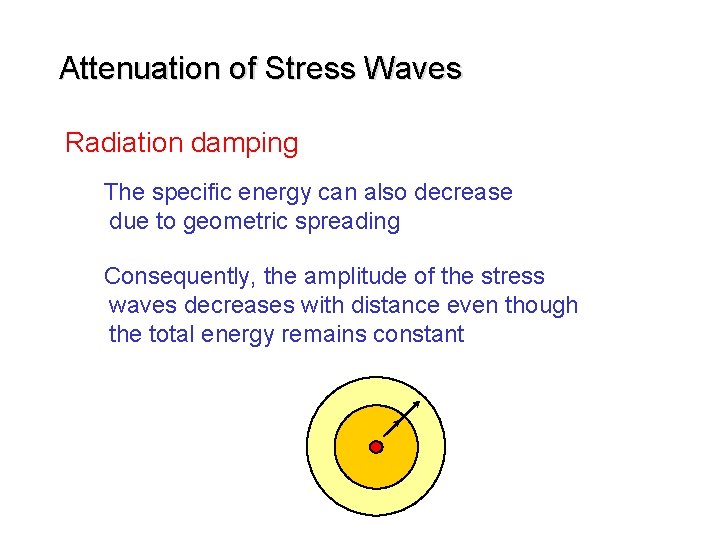
Attenuation of Stress Waves Radiation damping The specific energy can also decrease due to geometric spreading Consequently, the amplitude of the stress waves decreases with distance even though the total energy remains constant
Attenuation of Stress Waves Both types of damping are important, though one may dominate the other in specific situations
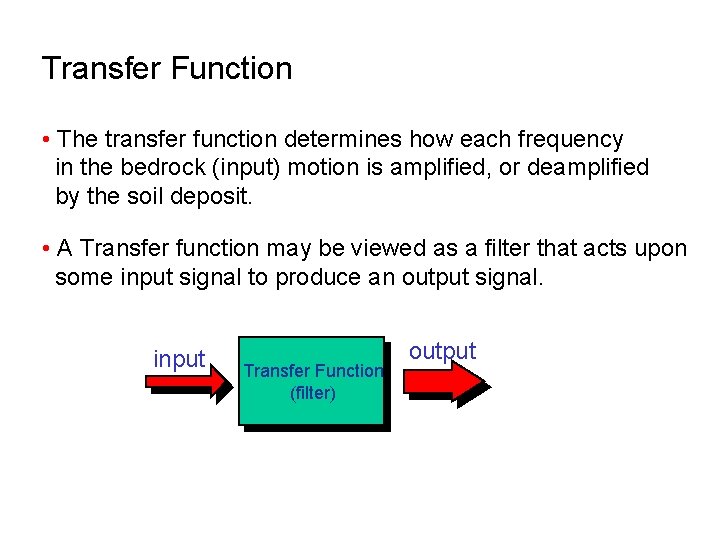
Transfer Function • The transfer function determines how each frequency in the bedrock (input) motion is amplified, or deamplified by the soil deposit. • A Transfer function may be viewed as a filter that acts upon some input signal to produce an output signal. input Transfer Function (filter) output
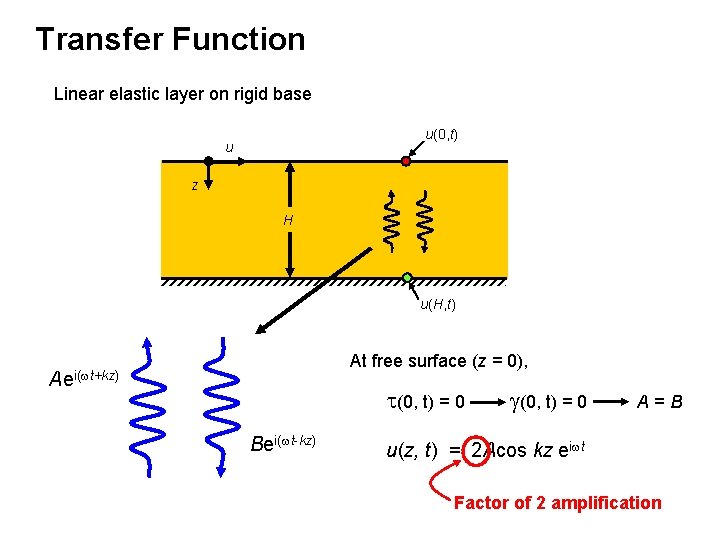
Transfer Function Linear elastic layer on rigid base u(0, t) u z H u(H, t) At free surface (z = 0), Aei(wt+kz) t(0, t) = 0 Bei(wt-kz) g(0, t) = 0 A=B u(z, t) = 2 Acos kz eiwt Factor of 2 amplification
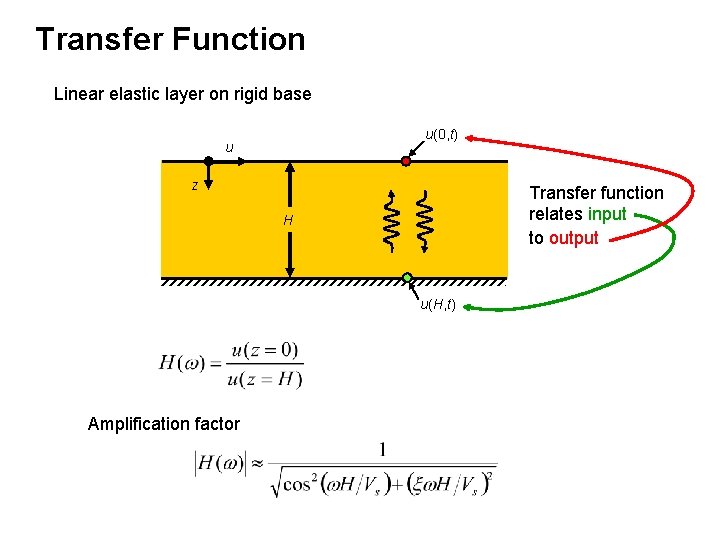
Transfer Function Linear elastic layer on rigid base u(0, t) u z Transfer function relates input to output H u(H, t) Amplification factor
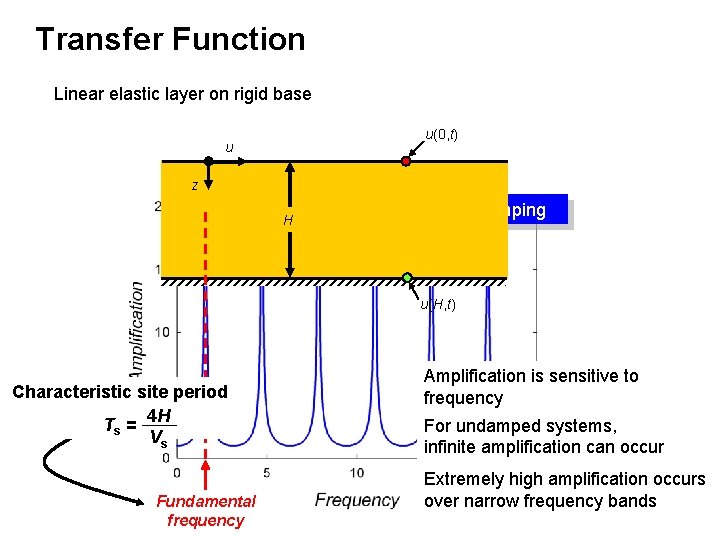
Transfer Function Linear elastic layer on rigid base u(0, t) u z H Zero damping u(H, t) Characteristic site period Ts = 4 H Vs Fundamental frequency Amplification is sensitive to frequency For undamped systems, infinite amplification can occur Extremely high amplification occurs over narrow frequency bands
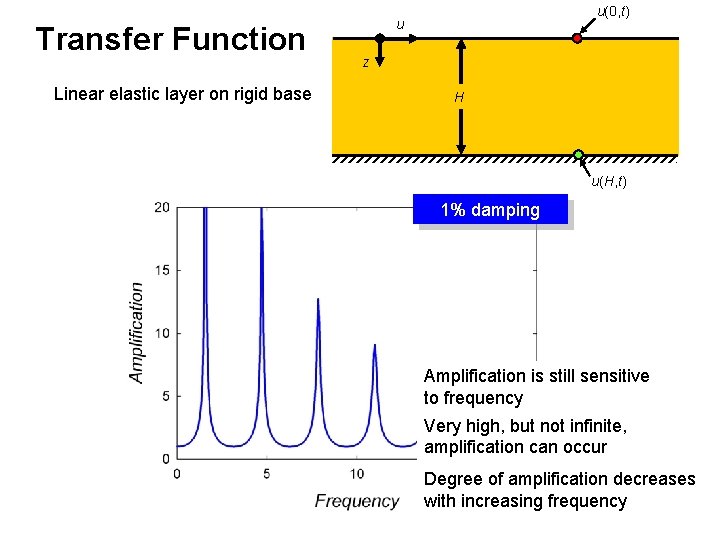
Transfer Function Linear elastic layer on rigid base u(0, t) u z H u(H, t) 1% damping Amplification is still sensitive to frequency Very high, but not infinite, amplification can occur Degree of amplification decreases with increasing frequency
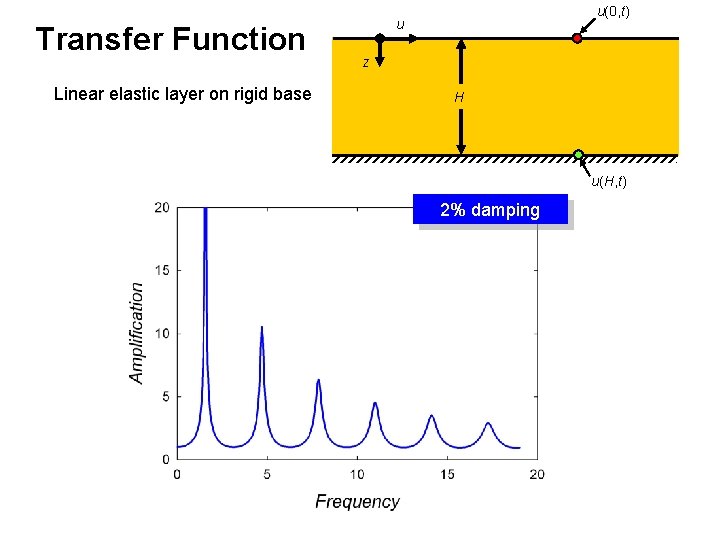
Transfer Function Linear elastic layer on rigid base u(0, t) u z H u(H, t) 2% damping
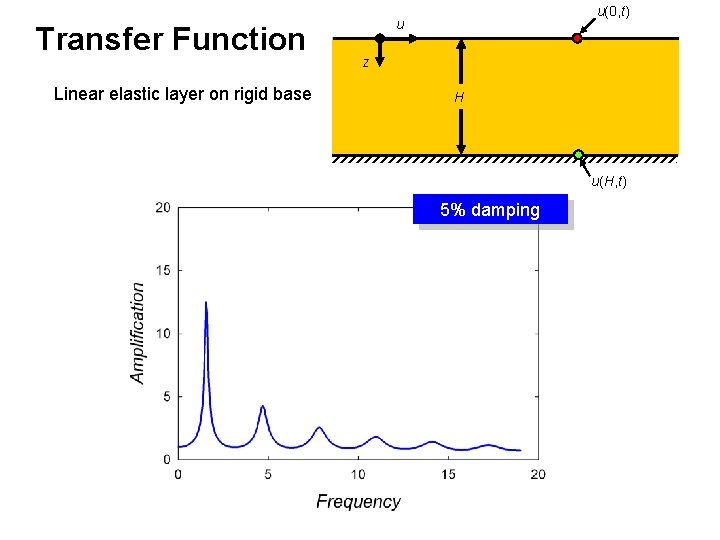
Transfer Function Linear elastic layer on rigid base u(0, t) u z H u(H, t) 5% damping
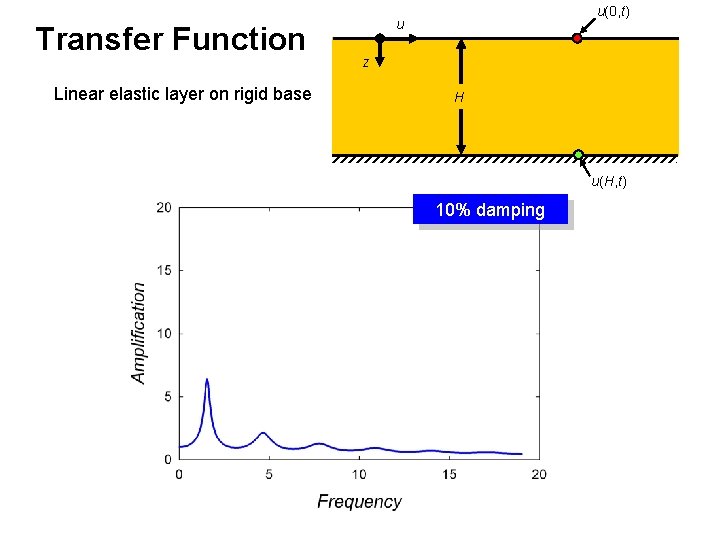
Transfer Function Linear elastic layer on rigid base u(0, t) u z H u(H, t) 10% damping
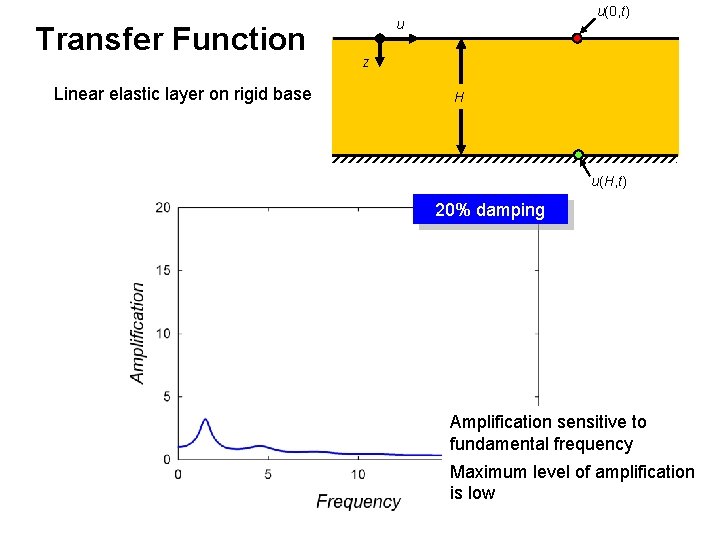
Transfer Function Linear elastic layer on rigid base u(0, t) u z H u(H, t) 20% damping Amplification sensitive to fundamental frequency Maximum level of amplification is low
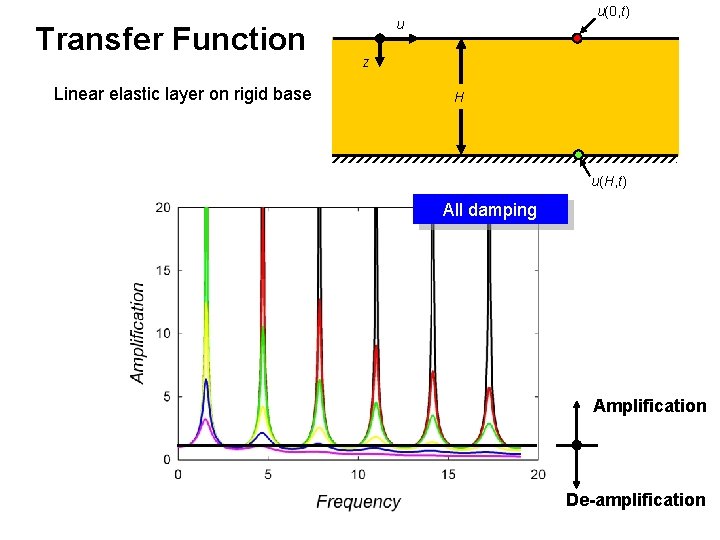
Transfer Function Linear elastic layer on rigid base u(0, t) u z H u(H, t) All damping Amplification De-amplification
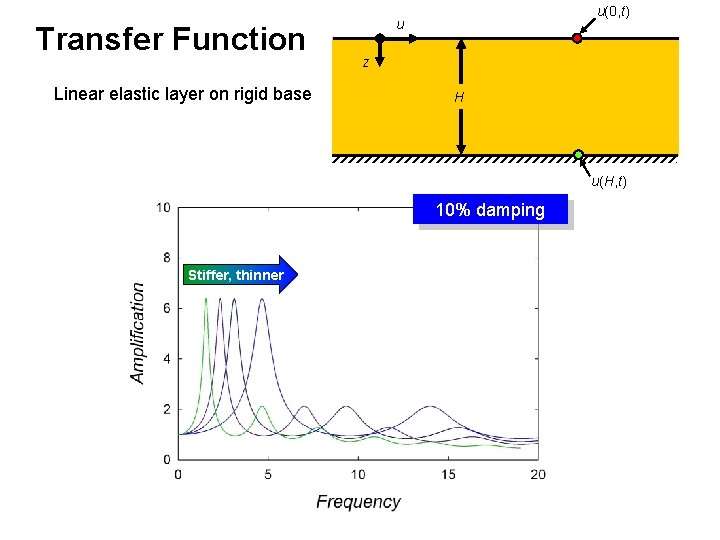
Transfer Function Linear elastic layer on rigid base u(0, t) u z H u(H, t) 10% damping Stiffer, thinner
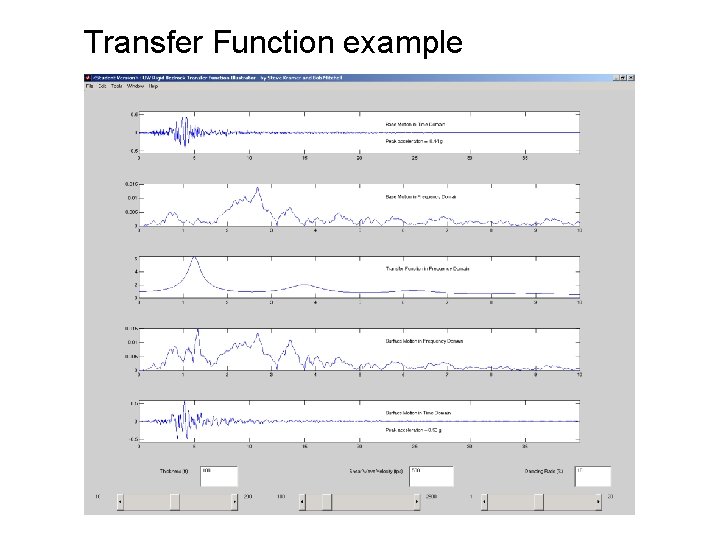
Transfer Function example
Transfer Function How is it used? Input motion convolved with transfer function – multiplication in freq domain Steps: 1. Express input motion as sum of series of sine waves (Fourier series) 2. Multiply each term in series by corresponding term of transfer function 3. Sum resulting terms to obtain output motion. Notes: 1. Some terms (frequencies) amplified, some de-amplified 2. Amplification/de-amp. behavior depends on position of transfer function
- Slides: 61