
Putting Prevention into Practice Using the United States

- Slides: 61
Putting Prevention into Practice Using the United States Preventive Services Task Force Recommendations
Acknowledgements n Robert M. Gum, DO, MPH, FACPM, Statewide Campus Regional Assistant Dean, WVSOM n James F. Cawley, MPH, PA-C, Professor and Vice Chair, Department of Prevention and Community Health School of Public Health and Health Services The George Washington University n V. James Guillory, DO, MPH, FACPM, Professor of Public Health, Public Health Program, KUMC n John C. Pellosie, Jr. , D. O. , MPH, FAOCOPM, Chair of Preventive Medicine, NSUCOM n H. S. Teitelbaum, DO, Ph. D, MPH, Professor and Chair, Department of Preventive and Community Medicine, LMU-DCOM
Thoughts on Prevention n "To find health should be the object of any doctor. Anyone can find disease. “ – ---Andrew Taylor Still, D. O. n “Prevention is one of the few known ways to reduce demand for health and aged care services. “ – ---Julie Bishop, JD n “The purpose of risk assessment is not to categorize individuals according to a test result nor even as to their overall risk, but rather to identify those who can be helped, or helped most, by preventive action. ” – ---Geoffrey Rose, MD, Ph. D
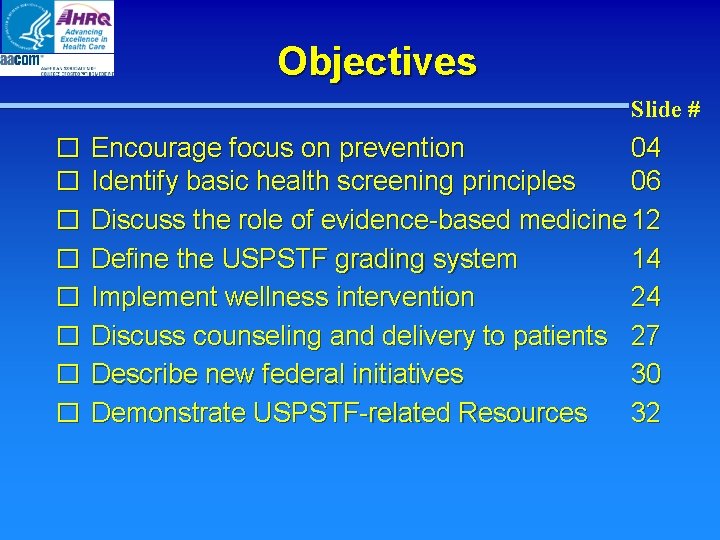
Objectives Slide # � � � � Encourage focus on prevention 04 Identify basic health screening principles 06 Discuss the role of evidence-based medicine 12 Define the USPSTF grading system 14 Implement wellness intervention 24 Discuss counseling and delivery to patients 27 Describe new federal initiatives 30 Demonstrate USPSTF-related Resources 32
ENCOURAGE FOCUS ON PREVENTION
Why Prevention? n In prevention the goal is to preserve and promote health and well being n Prevention in public health moves interventions from the individual level to a population level n Effective prevention leads to a healthier community – Why Now? n Federal support exists for prevention
IDENTIFY BASIC HEALTH SCREENING PRINCIPLES
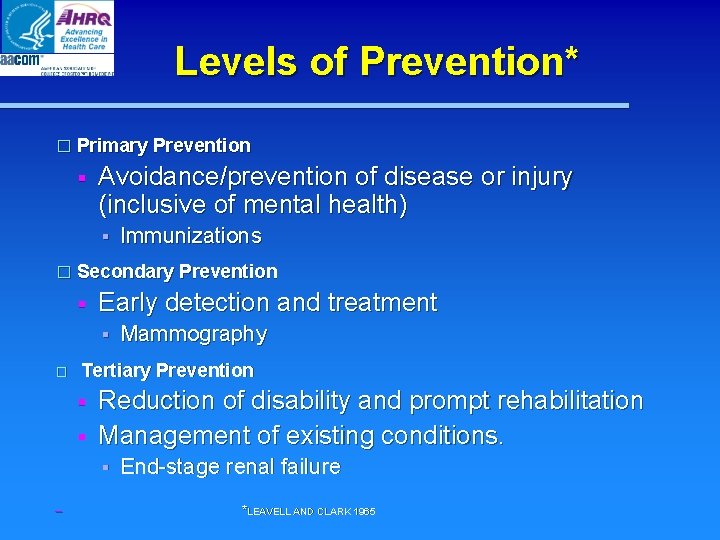
Levels of Prevention* � Primary Prevention § Avoidance/prevention of disease or injury (inclusive of mental health) § Immunizations � Secondary Prevention § Early detection and treatment § Mammography � Tertiary § § Reduction of disability and prompt rehabilitation Management of existing conditions. § – Prevention End-stage renal failure *LEAVELL AND CLARK 1965
Primary Prevention n Immunizations n Sanitation – Clean water – Hand washing n Workplace Safety – Seatbelts – Helmets n Education n Diet
Secondary Prevention n Halt or slow progress of a disease n Screening at risk individuals – Identification of risks – Screening tests
Tertiary Prevention Examples: § Care of an active disease that keeps a problem from getting worse § Renal failure-slowing progression § Mental health § Cardiac/Stroke rehabilitation
When Prevention? n Screening Tests/Circumstances that must exist for screening tests to be useful: § Condition has significant impact on the individual and society § Effective treatment in asymptomatic phase § Asymptomatic period for detection and treatment § Acceptable screening tests at reasonable costs § Disease burden justifies cost The clinician and patient should share in decision-making.
DISCUSS THE ROLE OF EVIDENCE BASED MEDICINE
The Role of Evidence Based Medicine n The USPSTF reviews the scientific evidence regarding the effectiveness, risks, and benefits of specific health care services. n A conclusion that there is no evidence of the effectiveness of a service is different from a conclusion that the service is ineffective.
DEFINE THE ROLE OF THE USPSTF GRADING SYSTEM
Defining the USPSTF n The U. S. Preventive Services Task Force (USPSTF) is an independent, non -governmental panel of experts in prevention and primary care that is convened by the Agency for Healthcare Research and Quality (AHRQ). n The work of the USPSTF supports AHRQ's mission, which is "to improve the quality, safety, efficiency, and effectiveness of health care for all Americans. "
Defining the USPSTF (2) n The Federal Government established the USPSTF in 1984 to make prevention recommendations for the country. n The USPSTF conducts rigorous, impartial assessments of the scientific evidence for the effectiveness of a broad range of clinical preventive services, including screening, counseling, and preventive medications.
USPSTF Mission n Since its inception the USPSTF has worked to fulfill its mission of: – Evaluating the benefits and harms of preventive services in healthy populations based on age, gender, and risk factors for disease; and – Making recommendations about which preventive services should be incorporated routinely into primary care practice. – In making its recommendations, the USPSTF assesses: n the quality of evidence supporting a specific preventive service; and n the magnitude of net benefit in providing the service.
USPSTF Evidence Review Each recommendation is based on a review of the evidence that includes: n Creation of an analytic framework and a set of key questions that determine the scope of the literature review. n Systematic review of the relevant literature to answer the key questions. n Quality ratings of bodies of research literature supporting each key question. n Estimation of benefits and harms. n Determination of the balance of benefits and harms of the preventive service.
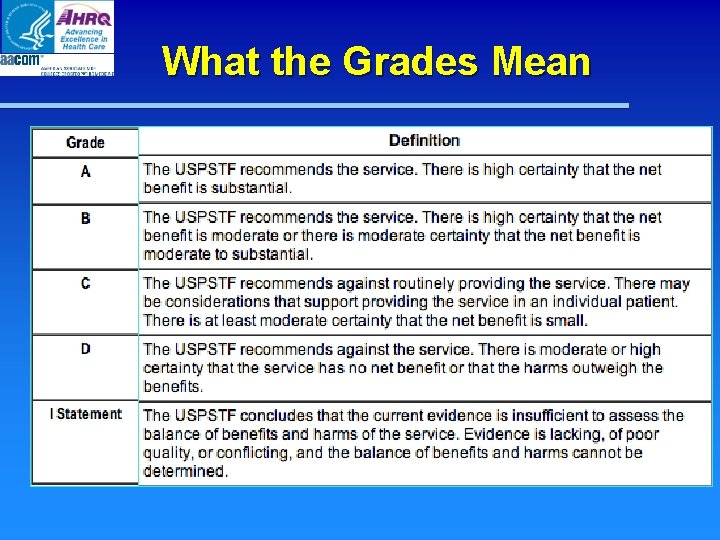
USPSTF Letter Grades n The recommendation is linked to a letter grade that reflects the magnitude of net benefit and the strength of the evidence supporting the provision of the specific preventive service. The recommendation is graded from “A” (strongly recommended) to "D" (recommended against). When the evidence is insufficient to determine net benefit, the Task Force assigns a grade of “I. ”
USPSTF and the e. PSS The information presented in the e. PSS is abridged from the full Recommendation Statements published by the USPSTF. The complete Recommendation Statements and supporting evidence reviews and/or summaries can be accessed at www. uspreventiveservicestaskforce. org The USPSTF hopes that you will find these recommendations useful as you care for your patients.
USPSTF and Clinical Decision -Making n The recommendations made by the USPSTF are intended for use in primary care settings. n The USPSTF realizes clinical decision-making with patients involves more complex considerations than the evidence alone. n It is important that clinicians understand the evidence, but also that decision-making be tailored to the specific patient and situation. n The "Clinical Considerations" section of each USPSTF Recommendation Statement offers information to be used by clinicians as they put the recommendations into practice with individual patients.
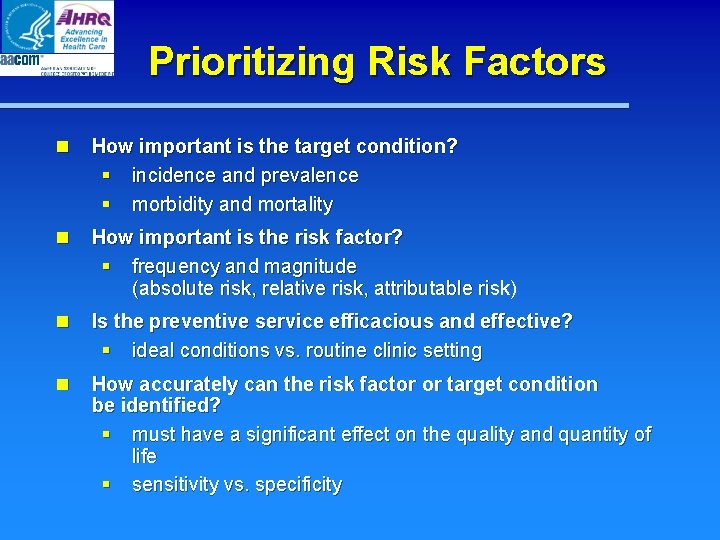
Prioritizing Risk Factors n How important is the target condition? § incidence and prevalence § morbidity and mortality n How important is the risk factor? § frequency and magnitude (absolute risk, relative risk, attributable risk) n Is the preventive service efficacious and effective? § ideal conditions vs. routine clinic setting n How accurately can the risk factor or target condition be identified? § must have a significant effect on the quality and quantity of life § sensitivity vs. specificity
What the Grades Mean
IMPLEMENTING WELLNESS RECOMMENDATIONS
Implementing Wellness Interventions n Work interprofessionally n Counsel patient effectively n Recognize the body is capable of selfhealing and health maintenance n Using the e. PSS program saves time and simplifies the task. n Work with legislators to support wellness services
Interprofessional Healthcare n Healthcare is a complex activity that demands that health and social care professionals work together for maximal effectiveness. n Collaborative team behavior reduces the error rate in healthcare.
DISCUSS COUNSELING AND DELIVERY TO PATIENTS
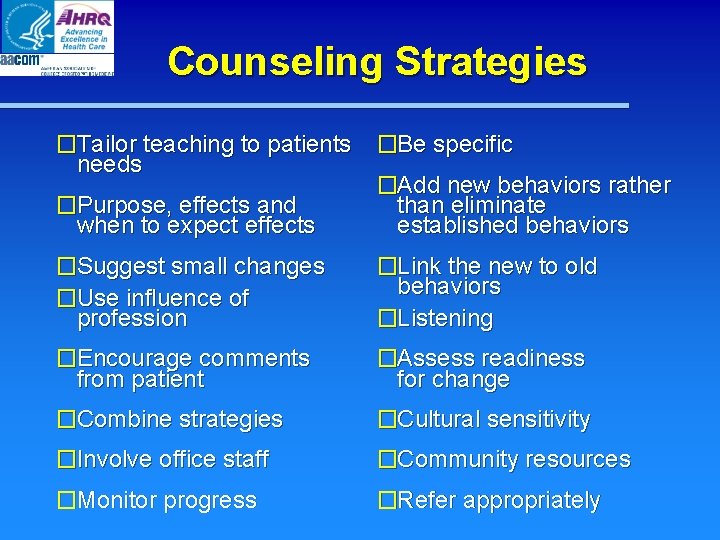
Counseling Strategies �Tailor teaching to patients �Be specific needs �Add new behaviors rather �Purpose, effects and than eliminate when to expect effects established behaviors �Suggest small changes �Use influence of profession �Link the new to old behaviors �Listening �Encourage comments from patient �Assess readiness for change �Combine strategies �Cultural sensitivity �Involve office staff �Community resources �Monitor progress �Refer appropriately
Improving Delivery n Pamphlets, posters and reading materials n Short questionnaires n Assess patient’s readiness to change Early behavior: information Ready for change: counseling and behavior modification – Changed: support and follow-up – – n Community programs and resources
DESCRIBE NEW FEDERAL INITIATIVES
New Federal Initiatives Change in Reimbursements n Reimbursement for services has been an impediment to consistently providing preventive/wellness services in a busy clinic environment. Recent legislation has removed this barrier. n Free Preventive Care Under Medicare—Eliminates co‐payments for preventive services and exempts preventive services from deductibles under the Medicare program. Effective beginning January 1, 2011. n Free Preventive Care Under New Private Plans—Requires new private plans to cover preventive services with no co‐payments and with preventive services being exempt from deductibles. Effective 6 months after enactment [9/23/10]. n New England Journal of Medicine, Promoting Prevention through the Affordable Care Act, 10. 1056/JEJM 1008560
DEMONSTRATE USPSTFRELATED RESOURCES
Tools for Different Audiences n n Physicians and healthcare providers § Electronic and print resources and tools § Downloadable point of care prompts – electronic Preventive Services Selector: www. epss. ahrq. gov § How to: www. uspreventiveservicestaskforce. org Patients § Explanation of recommendations § Checklists to monitor individual preventive needs § www. healthfinder. gov has tools for patients.
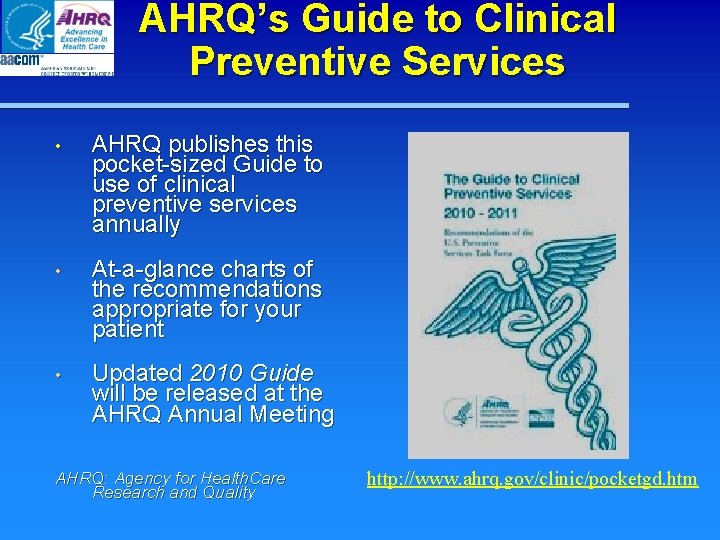
AHRQ’s Guide to Clinical Preventive Services • AHRQ publishes this pocket-sized Guide to use of clinical preventive services annually • At-a-glance charts of the recommendations appropriate for your patient • Updated 2010 Guide will be released at the AHRQ Annual Meeting AHRQ: Agency for Health. Care Research and Quality http: //www. ahrq. gov/clinic/pocketgd. htm
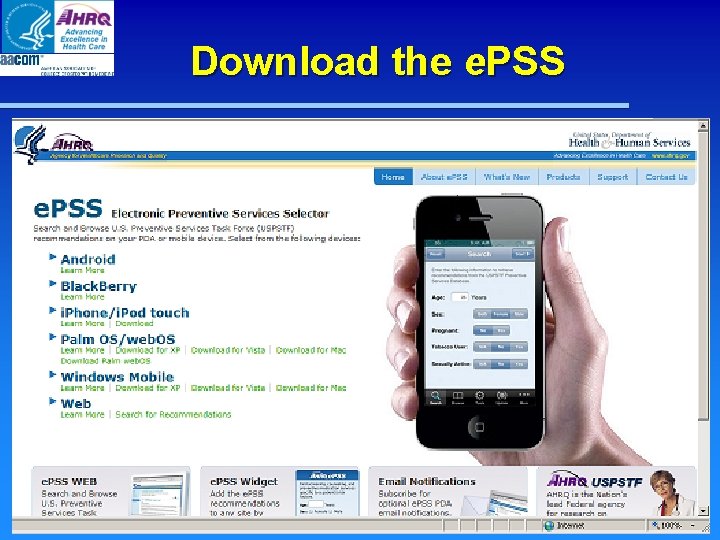
Download the e. PSS
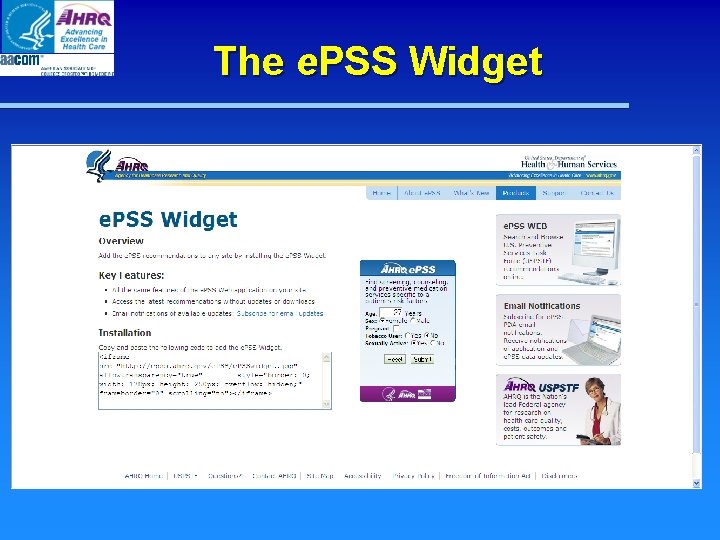
The e. PSS Widget
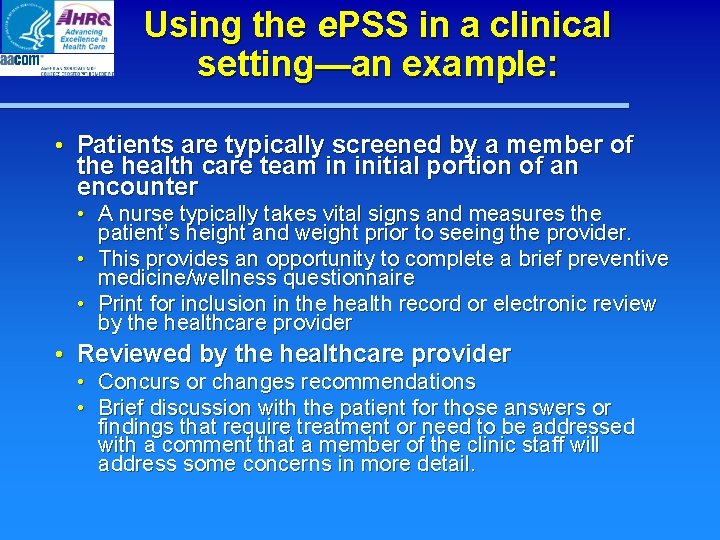
Using the e. PSS in a clinical setting—an example: • Patients are typically screened by a member of the health care team in initial portion of an encounter • A nurse typically takes vital signs and measures the patient’s height and weight prior to seeing the provider. • This provides an opportunity to complete a brief preventive medicine/wellness questionnaire • Print for inclusion in the health record or electronic review by the healthcare provider • Reviewed by the healthcare provider • Concurs or changes recommendations • Brief discussion with the patient for those answers or findings that require treatment or need to be addressed with a comment that a member of the clinic staff will address some concerns in more detail.
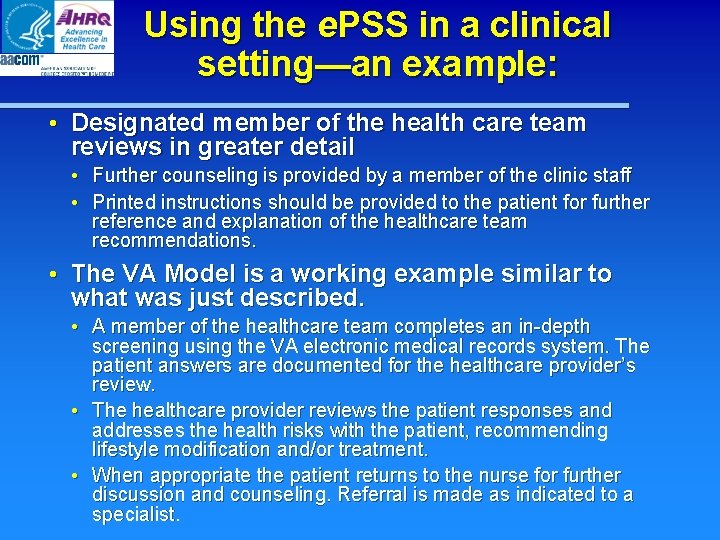
Using the e. PSS in a clinical setting—an example: • Designated member of the health care team reviews in greater detail • Further counseling is provided by a member of the clinic staff • Printed instructions should be provided to the patient for further reference and explanation of the healthcare team recommendations. • The VA Model is a working example similar to what was just described. • A member of the healthcare team completes an in-depth screening using the VA electronic medical records system. The patient answers are documented for the healthcare provider’s review. • The healthcare provider reviews the patient responses and addresses the health risks with the patient, recommending lifestyle modification and/or treatment. • When appropriate the patient returns to the nurse for further discussion and counseling. Referral is made as indicated to a specialist.
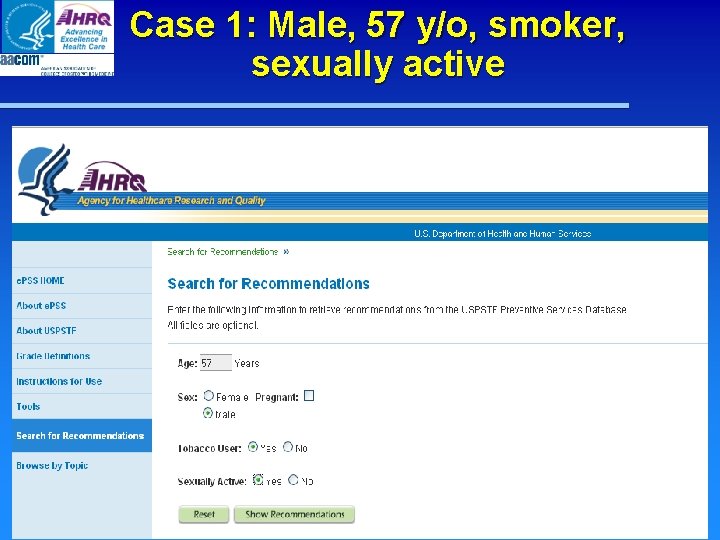
Case 1: Male, 57 y/o, smoker, sexually active
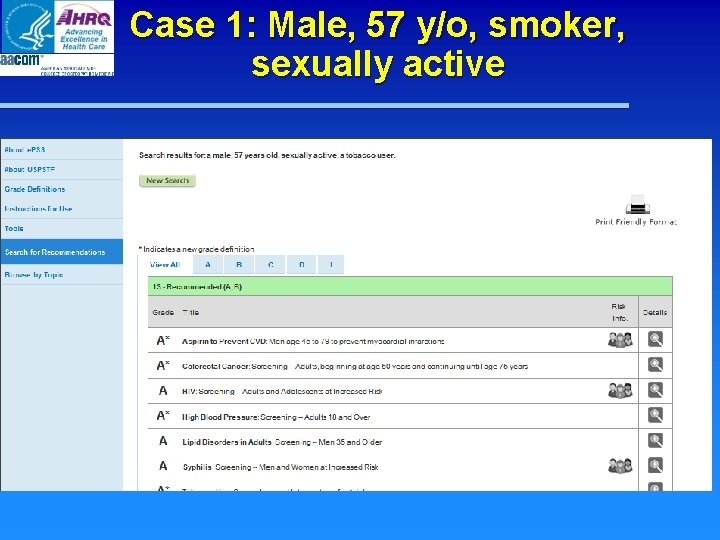
Case 1: Male, 57 y/o, smoker, sexually active
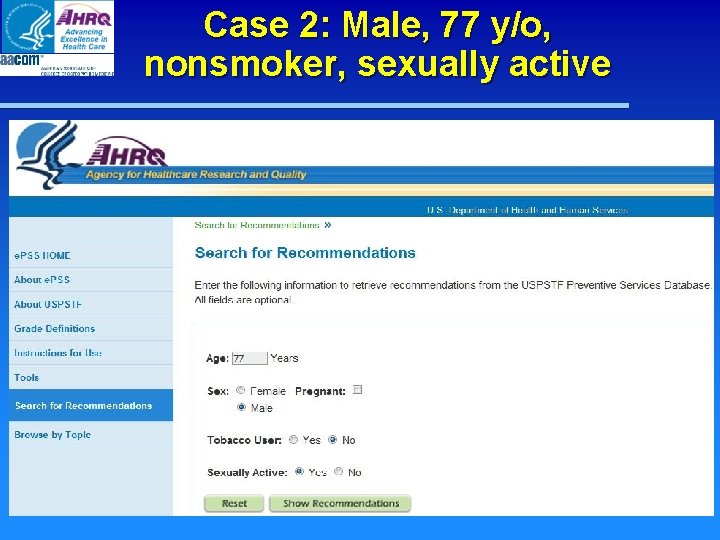
Case 2: Male, 77 y/o, nonsmoker, sexually active
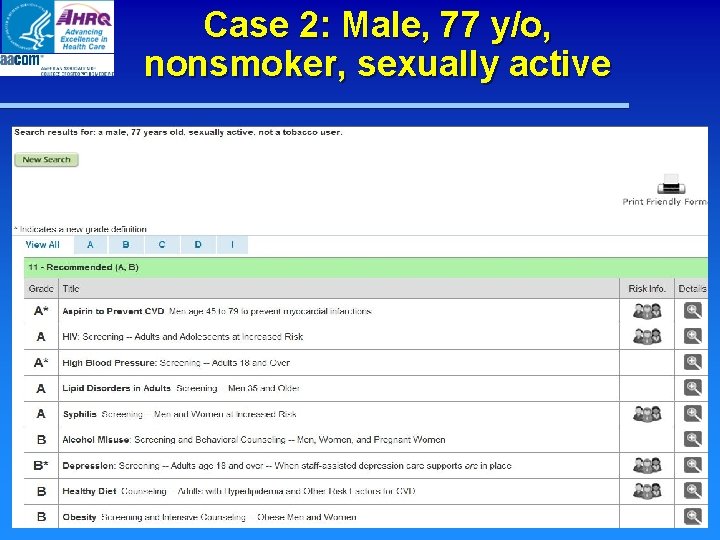
Case 2: Male, 77 y/o, nonsmoker, sexually active
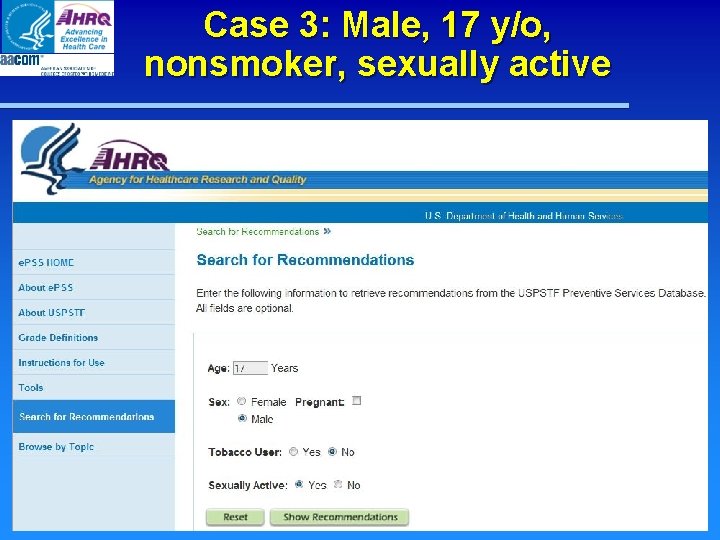
Case 3: Male, 17 y/o, nonsmoker, sexually active
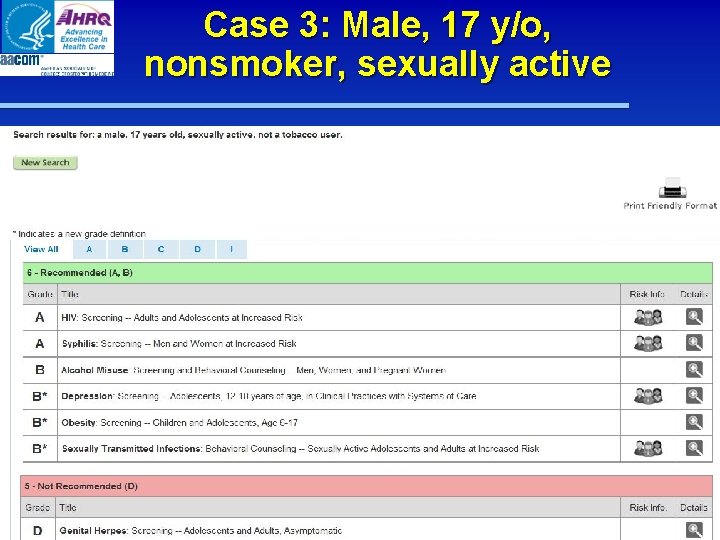
Case 3: Male, 17 y/o, nonsmoker, sexually active
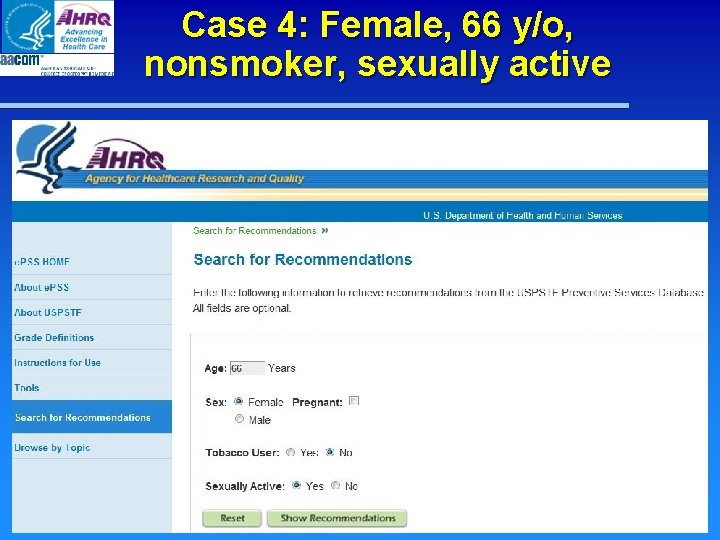
Case 4: Female, 66 y/o, nonsmoker, sexually active
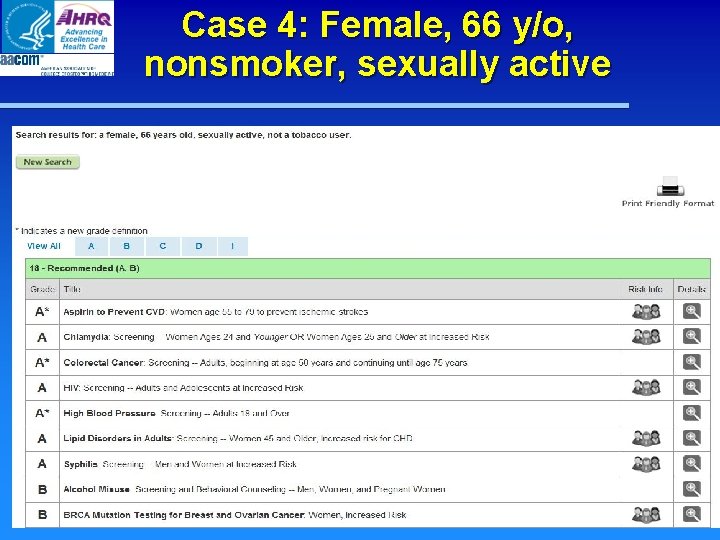
Case 4: Female, 66 y/o, nonsmoker, sexually active
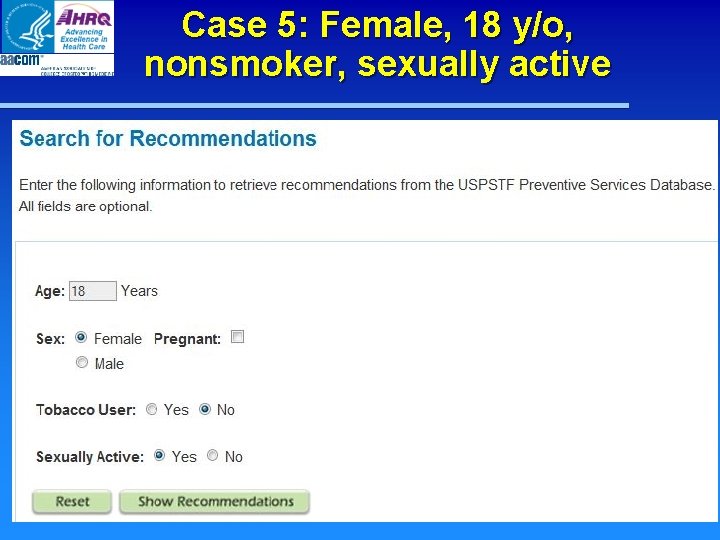
Case 5: Female, 18 y/o, nonsmoker, sexually active
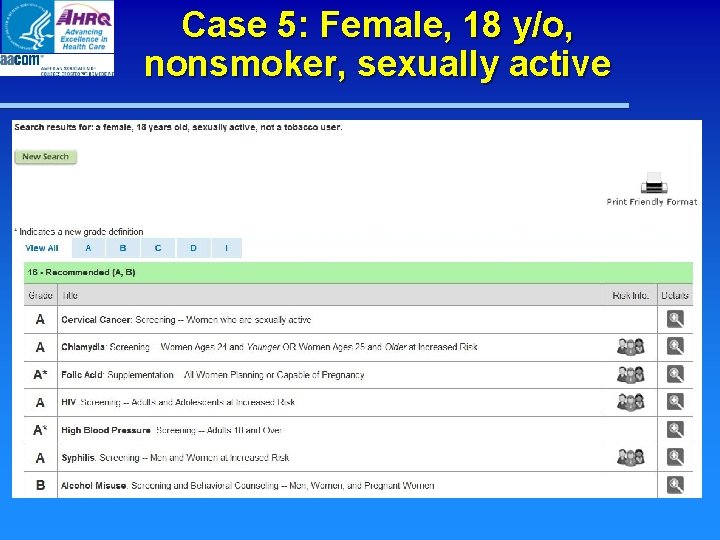
Case 5: Female, 18 y/o, nonsmoker, sexually active
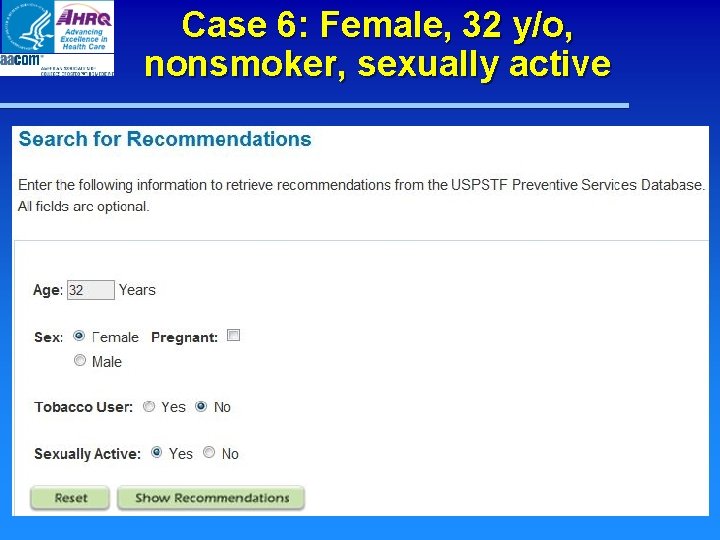
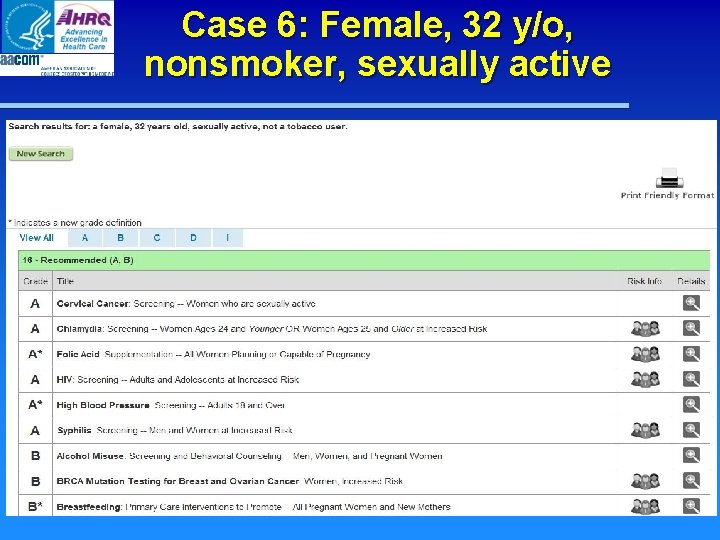
Case 6: Female, 32 y/o, nonsmoker, sexually active
Case 6: Female, 32 y/o, nonsmoker, sexually active
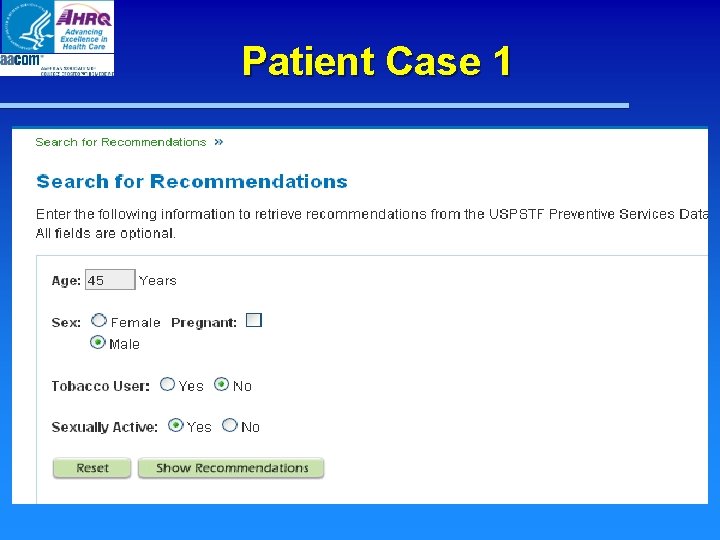
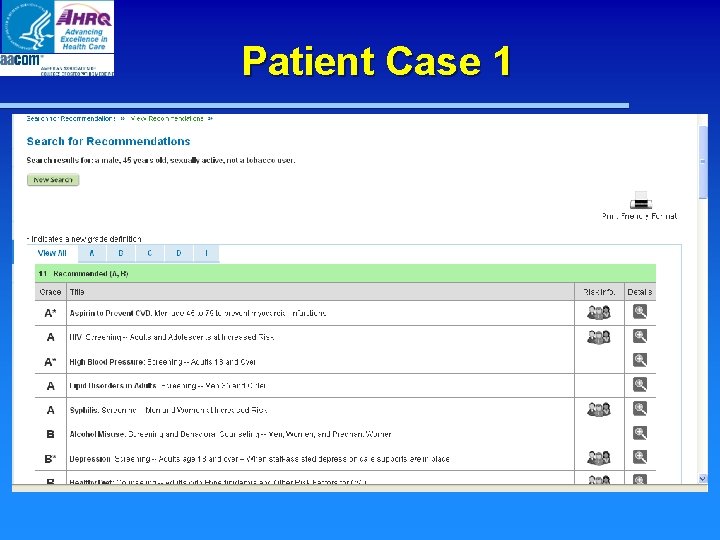
Patient Case 1 � Your physician assistant (PA) reports to you the story of a 45 -yearold man seen in the practice for an annual examination. The patient’s only complaint is occasional elbow pain that he attributes to using a new tennis racquet. He reports no medical illnesses and his only prior surgery is a hernia repair 10 years ago. He takes one low-dose aspirin per day, does not smoke and reports having an occasional alcoholic beverage. He reports no family history of early heart disease or cancer. Last year, his total cholesterol (TC) and high-density lipoprotein cholesterol (HDL-C) were normal. He is married and in a monogamous relationship. Since testing negative for STIs (including HIV) many years ago, he reports no potential for new exposures. On examination, he is not overweight and not hypertensive. The patient asked the PA about the recommended preventive services for a person at his age and your PA is unsure of the appropriate source of prevention guidelines.
Patient Case 1
Patient Case 1
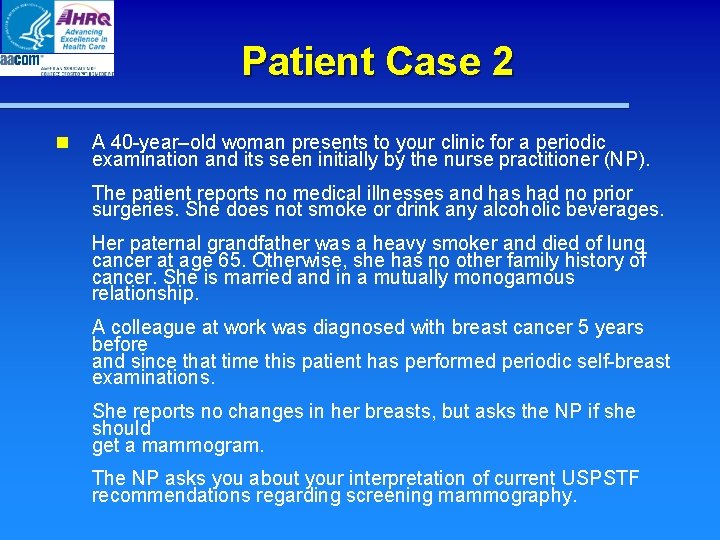
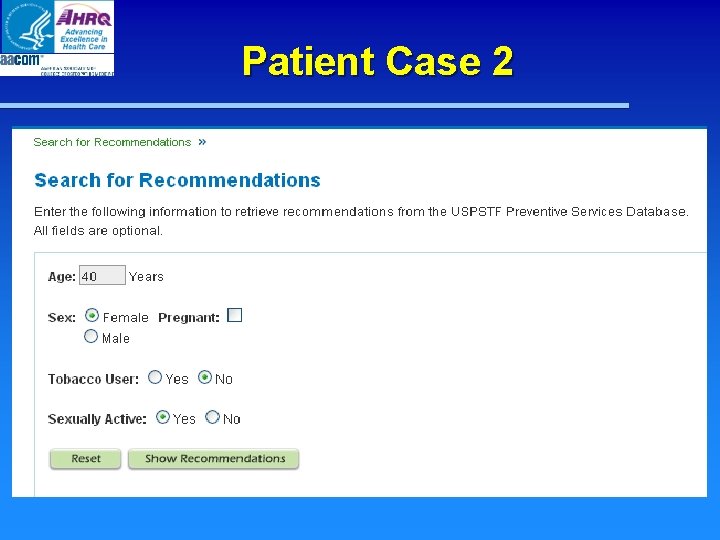
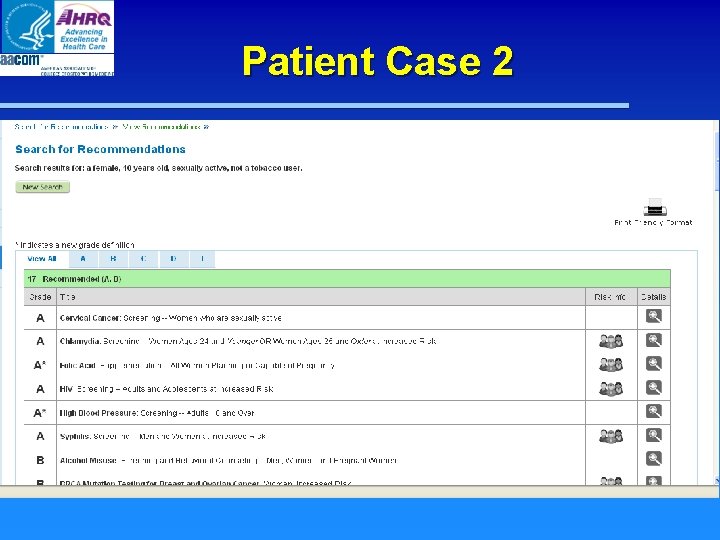
Patient Case 2 n A 40 -year–old woman presents to your clinic for a periodic examination and its seen initially by the nurse practitioner (NP). The patient reports no medical illnesses and has had no prior surgeries. She does not smoke or drink any alcoholic beverages. Her paternal grandfather was a heavy smoker and died of lung cancer at age 65. Otherwise, she has no other family history of cancer. She is married and in a mutually monogamous relationship. A colleague at work was diagnosed with breast cancer 5 years before and since that time this patient has performed periodic self-breast examinations. She reports no changes in her breasts, but asks the NP if she should get a mammogram. The NP asks you about your interpretation of current USPSTF recommendations regarding screening mammography.
Patient Case 2
Patient Case 2
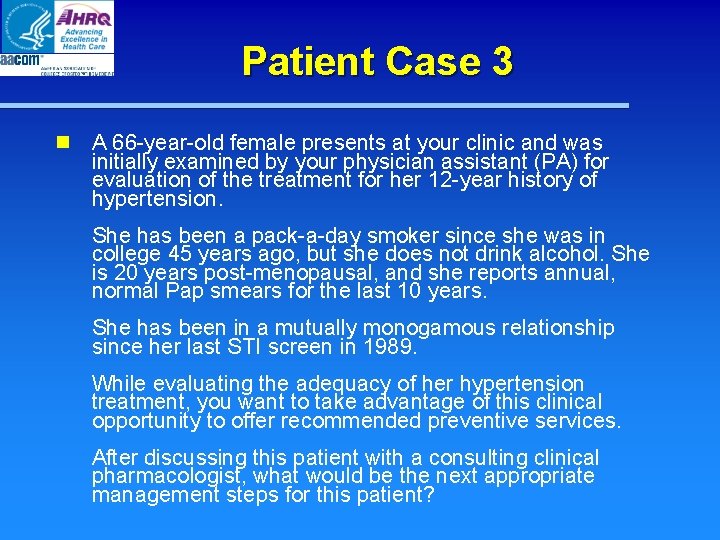
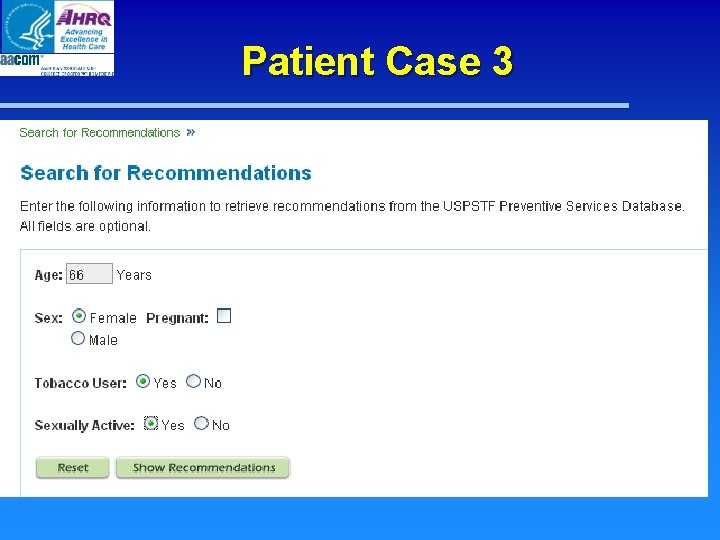
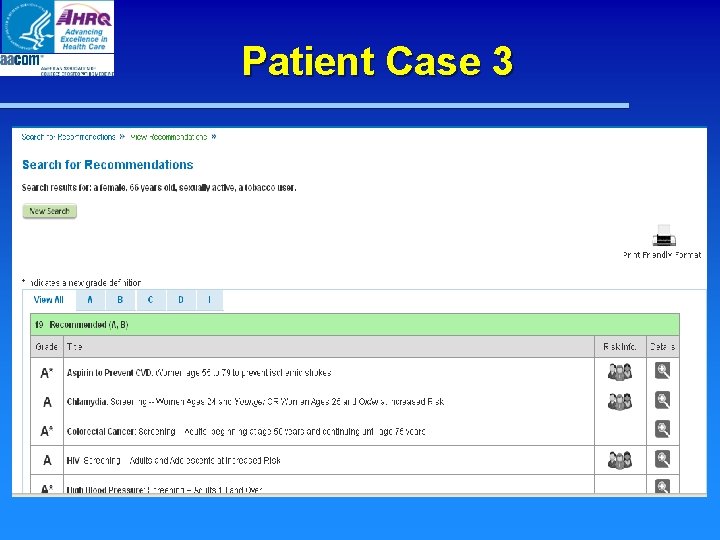
Patient Case 3 n A 66 -year-old female presents at your clinic and was initially examined by your physician assistant (PA) for evaluation of the treatment for her 12 -year history of hypertension. She has been a pack-a-day smoker since she was in college 45 years ago, but she does not drink alcohol. She is 20 years post-menopausal, and she reports annual, normal Pap smears for the last 10 years. She has been in a mutually monogamous relationship since her last STI screen in 1989. While evaluating the adequacy of her hypertension treatment, you want to take advantage of this clinical opportunity to offer recommended preventive services. After discussing this patient with a consulting clinical pharmacologist, what would be the next appropriate management steps for this patient?
Patient Case 3
Patient Case 3
For More Information n If you have any questions or would like more information please contact: – Barbara Kass, Health Communications Specialist, Office of Communications and Knowledge Transfer; AHRQ at barbara. kass@ahrq. hhs. gov n Helpful URLs AHRQ’s USPSTF website (http: //www. preventiveservices. ahrq. gov) has downloadable electronic Preventive Services Selector (e. PSS) app – Printable patient counseling information for clinicians and patients, available at http: //epss. ahrq. gov/e. PSS/Tools. do – Technical Assistance paper with patient cases for health professions education http: //www. ahrq. gov/qual/kt/tfmethods/impuspstf. htm – Power. Point slide deck for educators and clinicians: “Understanding the Methods Used by the USPSTF in Developing Recommendations” http: //www. ahrq. gov/qual/kt/tfmethods. htm –