
Putting it all together Ray Townsend September 06
Putting it all together Ray Townsend September 06 2018 11: 30 - Noon
Two examples to follow • One to illustrate a recent case of translational research success • One to illustrate the steps involved in emulating the first case

Translational Research Example
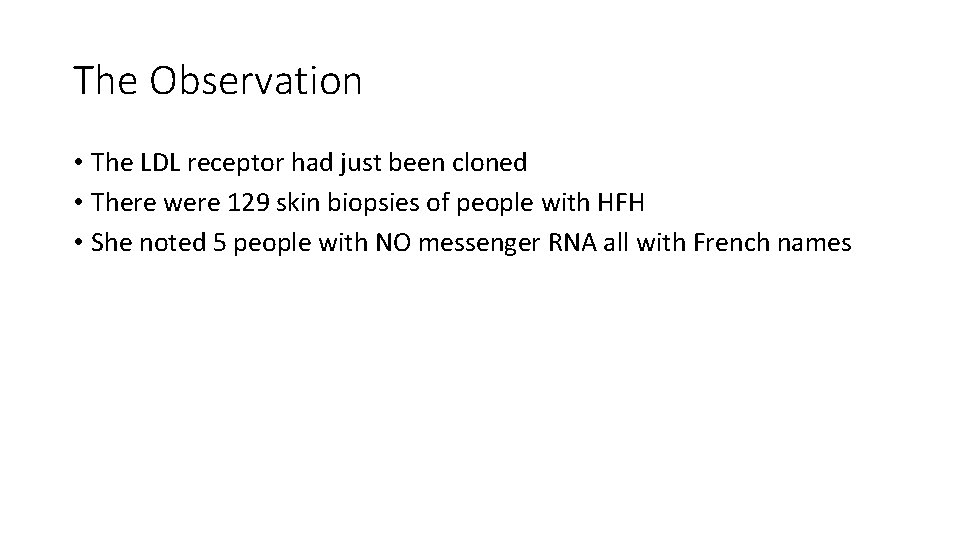
The Observation • The LDL receptor had just been cloned • There were 129 skin biopsies of people with HFH • She noted 5 people with NO messenger RNA all with French names
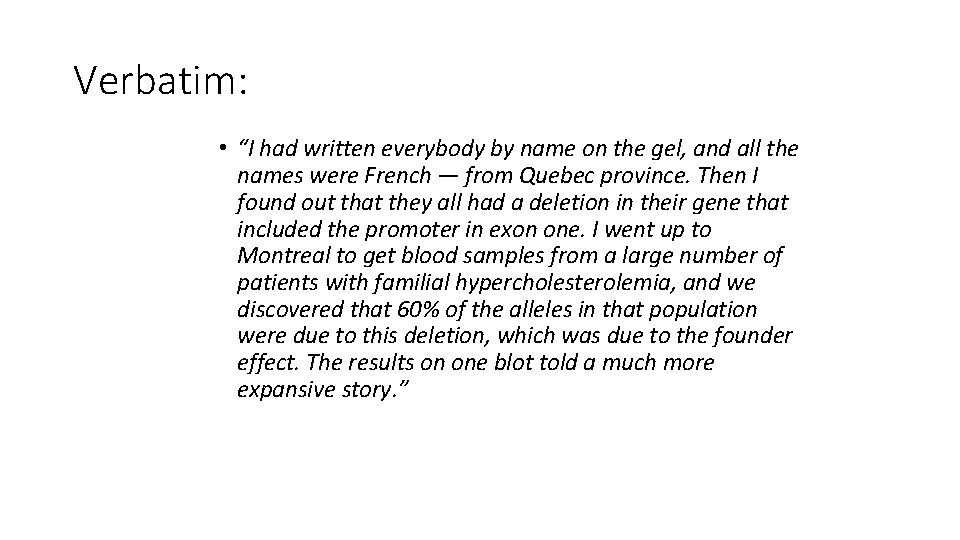
Verbatim: • “I had written everybody by name on the gel, and all the names were French — from Quebec province. Then I found out that they all had a deletion in their gene that included the promoter in exon one. I went up to Montreal to get blood samples from a large number of patients with familial hypercholesterolemia, and we discovered that 60% of the alleles in that population were due to this deletion, which was due to the founder effect. The results on one blot told a much more expansive story. ”
TENACITY • Every time I’d wanted to figure out whether any of these genes that we had identified played a role in hypercholesterolemia in the general population, I had to go to established studies. I had to write a proposal, which would usually die a painful death. I never was successful at getting any samples from the established population-based studies. We decided to apply for a large grant from the Donald W. Reynolds Foundation.
TEAMWORK, THINKAHEAD • Together with Ron Victor, I drafted a proposal to establish a “human biology laboratory” that was representative of the genetic diversity in Dallas County: half the population in the study is African-American, 15% Hispanic. We wanted to have the phenotypes be as precise as possible to minimize phenotypic noise. We also wanted to be able to go back to each participant, so we specified this in the consent form.
TO ARMS! • It was at this time that I joined forces with Jonathan Cohen, because we have a very complimentary skill set. Once we got the grant, we started sequencing DNA right away, starting at the extreme ends of trait distributions. At this time (year 2000) the general view was that common diseases were due to common variants — that a collection of common variants caused common diseases. Instead, we wondered whether rare variants could cumulatively contribute to common diseases. Rare variants with large phenotypic effects would get us to function more rapidly.
Don’t marry an Ho for life! • Started in HDL (it was simpler, just three known genes). Then… • “That study told us that rare variants cumulatively contribute to complex traits. As this was all happening, there was a great paper in Nature Genetics from Catherine Boileau’s group where they had identified a new gene, PCSK 9, with selected missense mutations that caused a disease that looked just like familial hypercholesterolemia. ”
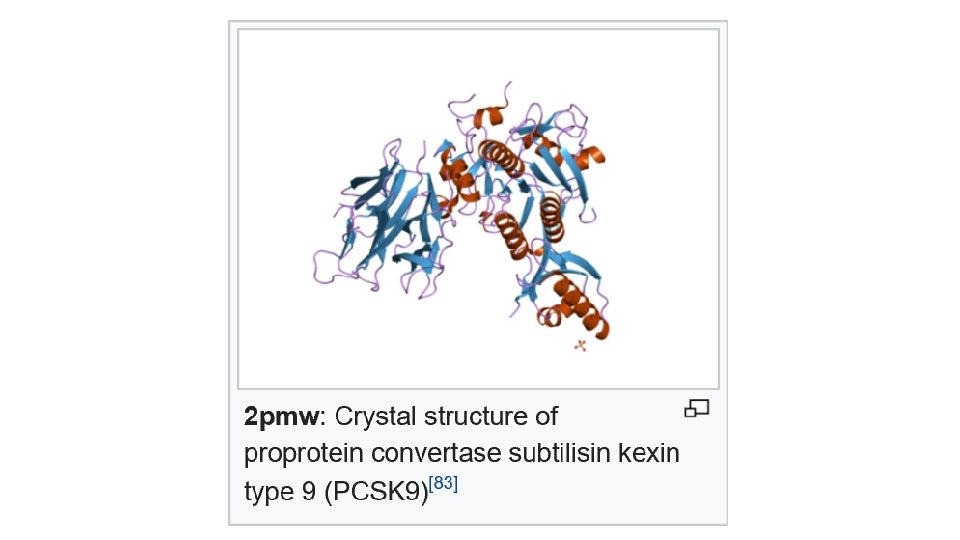
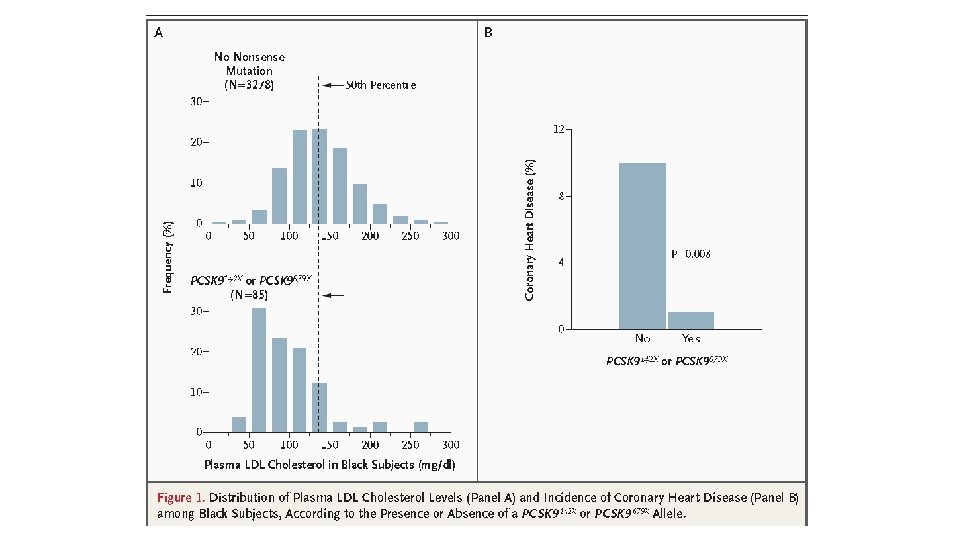
Onward • This strongly suggested these mutations were gainoffunction mutations. We thought the likelihood that we would find a gain-of-function mutation in the Dallas Heart Study was very low, given the size of the population. So we looked for loss-of-function mutations and predicted that the phenotype would be just the opposite: very low LDL cholesterol levels. We went to our population and sequenced the coding regions of PCSK 9 in the individuals with the lowest LDL levels and hit pay dirt right away when we found a nonsense mutation.
Reward • We found our first and then a second nonsense mutation in the African. Americans. We took those two mutations, assayed the whole group of African. Americans, and one out of every 50 had a nonsense mutation. When we looked, the LDL levels were reduced by about 40% in the 33 people we identified with a nonsense mutation compared to the ones who didn’t have the nonsense mutation.
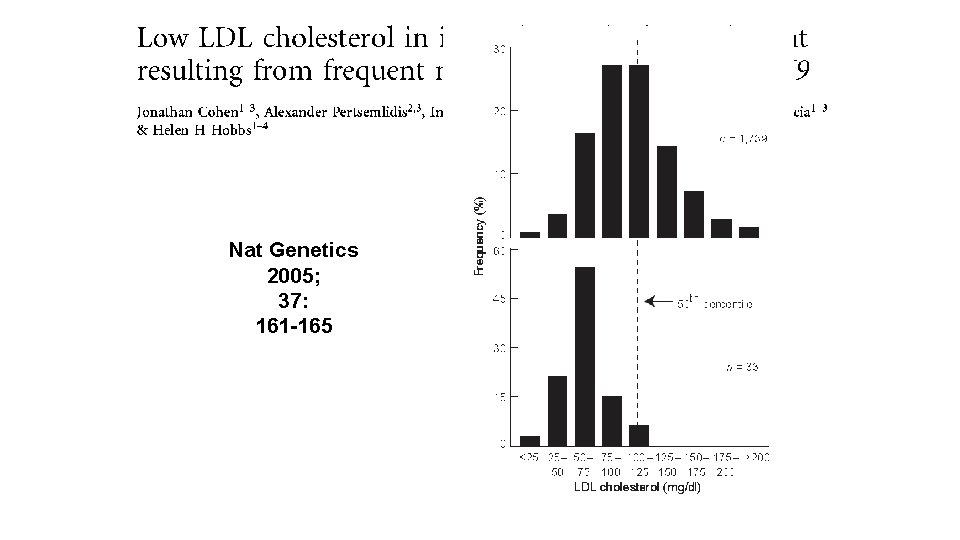
Nat Genetics 2005; 37: 161 -165
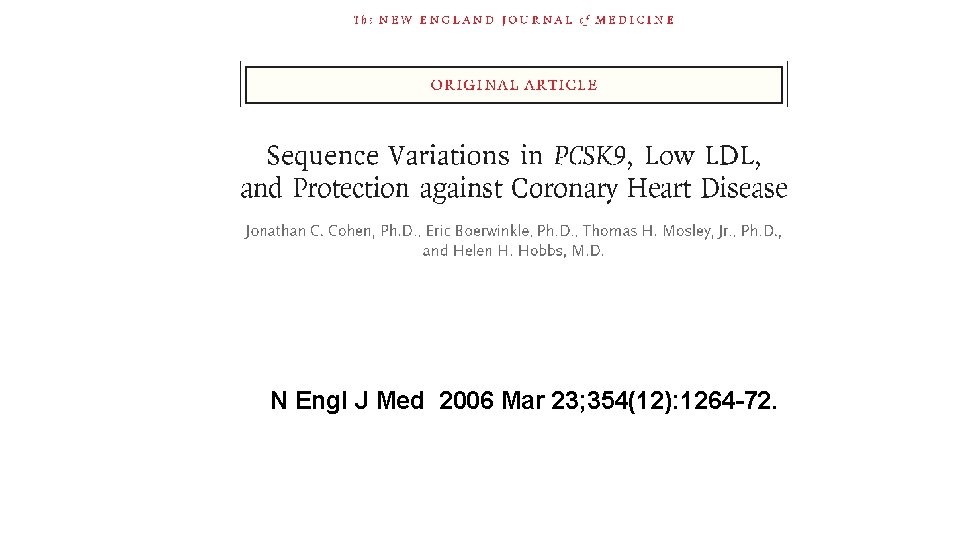
N Engl J Med 2006 Mar 23; 354(12): 1264 -72.
Personal Example • Issue (c. 2003): what do we know that is a risk factor for CKD progression? • Background – by 2003 there were dozens of CV risk factors known, courtesy of Framingham and other longitudinal observation studies in US and elsewhere
Answer (The Observation) • Blood pressure, proteinuria and diabetes
How do I proceed with my idea? • Who does it interest? • How big a picture are you trying to paint? • How focused is your idea?
But I have no prelim data • So, get some • Called a colleague in Internal Medicine • “Colleague” says I, “if I can identify 40 of your patients with CKD, would it be OK if I conducted a mock recruitment effort to see if they would be willing to participate in a long term observational study of CKD? ” • Response: “Sure, knock yourself out…”
Step 1 (Tenacity) • IRB approval – expedited (Less than minimal risk) • Drafted a participant letter, offered opportunity to decline participation • Follow up by phone • Spiel • Survey says ---
Results of Step 1 • 24 of 40 contacted said they were not planning to leave the area in the next 5 years, and indicated they would be willing to enroll in a kidney observation study (with the understanding, which was true, that their PCP was in favor of this)
Step 2 (TEAMWORK) • So how many more patients with CKD are there in the UPHS? • Used the resources I mentioned earlier this morning and it … • Turns out the answer is >6, 000 • Even at half the efficiency seen in the pilot study, this is a lot of potential research study participants
Step 3: Draft the aims • If you have an FOA read it carefully • If you are going for a new grant (R type is common) then you develop them on your own • The format is a bit unstructured in that you have one page to present your rationale and your aims/hypothesis (or hypotheses)
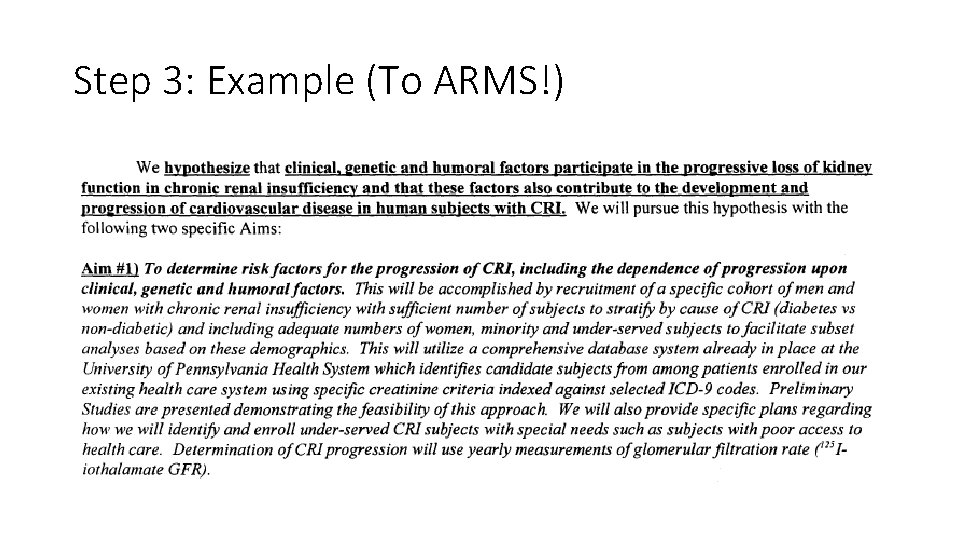
Step 3: Example (To ARMS!)
Develop the research strategy • Draw it when possible • Go a little overboard, easier to delete than to add
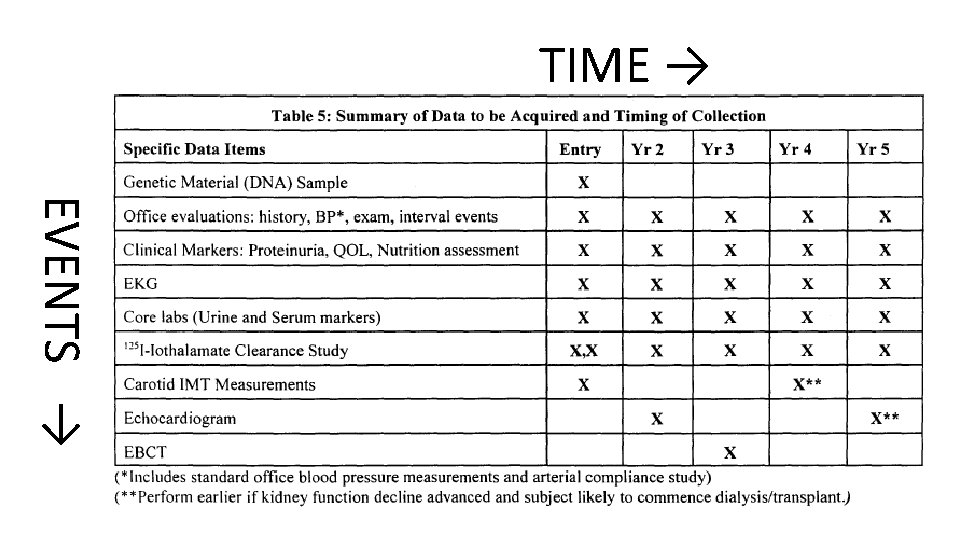
TIME → EVENTS →
What does Penn have that makes me competitive? • CHPS • Supplies, centrifuges, freezers, bathroom** • Track record of success • Electronic Health Record • Support when writing the grant • Biostats • Colleagues who critiqued it
RECAP • The OBSERVATION • TEAMWORK • TO ARMS (IRB, PRELIM DATA, Grant writing) • ONWARD (Actually doing the study) • REWARDS
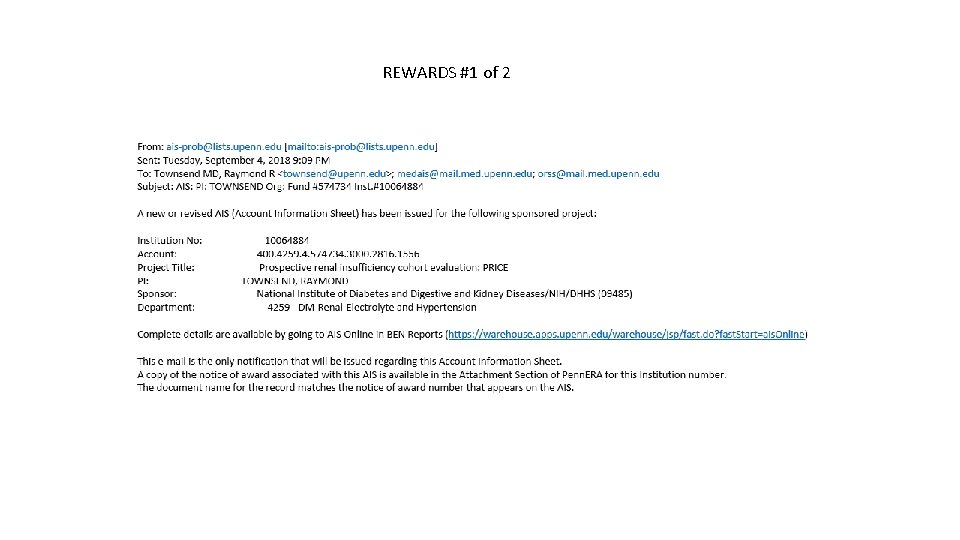
REWARDS #1 of 2
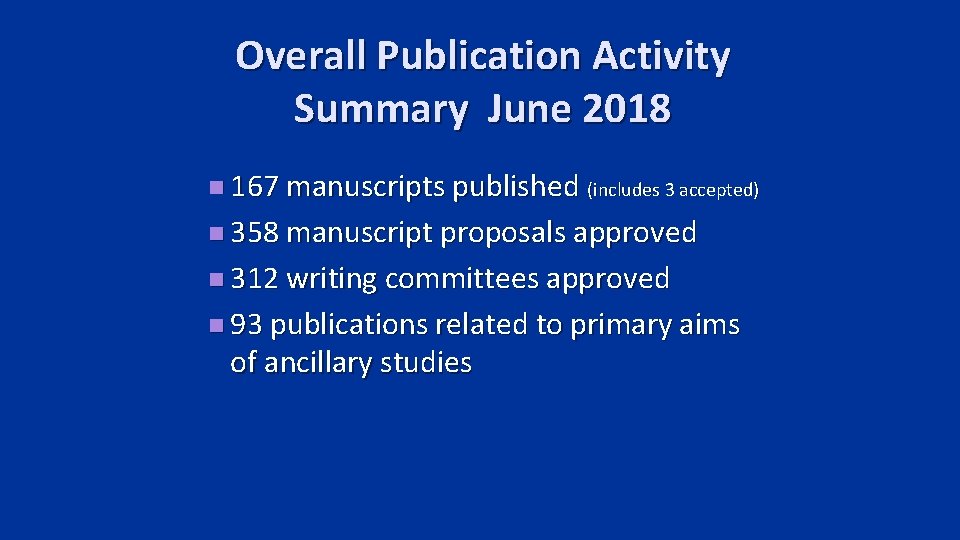
Overall Publication Activity Summary June 2018 n 167 manuscripts published (includes 3 accepted) n 358 manuscript proposals approved n 312 writing committees approved n 93 publications related to primary aims of ancillary studies
- Slides: 31