
Putting it all together Leadership Skills Interpersonal Skills



- Slides: 34
Putting it all together. . ü Leadership Skills ü Interpersonal Skills ü Intrapersonal Skills
Leadership Skills ü Motivating talent ü Developing & communicating vision üGoal setting üPersuasion ü Persistence
Interpersonal Skills ü Social Skills ü Self-monitoring ü Self Control Intrapersonal Skills ü Emotional Stability ü Self Control • Attitudes toward authority • Learning style
Teaching Method Lecture Self Assessment Role Play • House (1996) Leadership Quarterly • Leadership behaviors • Pat Howard Leadership Ex
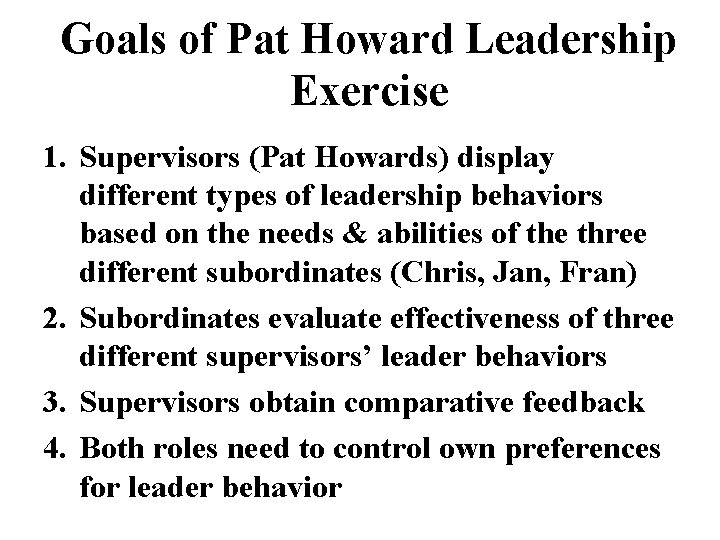
Goals of Pat Howard Leadership Exercise 1. Supervisors (Pat Howards) display different types of leadership behaviors based on the needs & abilities of the three different subordinates (Chris, Jan, Fran) 2. Subordinates evaluate effectiveness of three different supervisors’ leader behaviors 3. Supervisors obtain comparative feedback 4. Both roles need to control own preferences for leader behavior
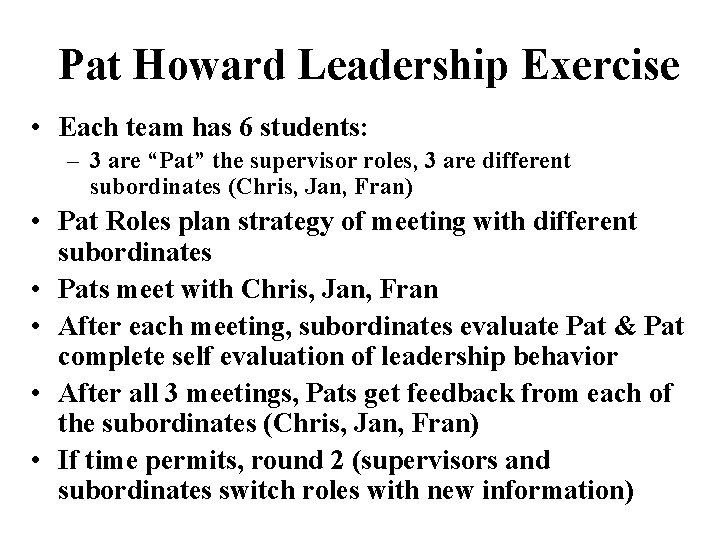
Pat Howard Leadership Exercise • Each team has 6 students: – 3 are “Pat” the supervisor roles, 3 are different subordinates (Chris, Jan, Fran) • Pat Roles plan strategy of meeting with different subordinates • Pats meet with Chris, Jan, Fran • After each meeting, subordinates evaluate Pat & Pat complete self evaluation of leadership behavior • After all 3 meetings, Pats get feedback from each of the subordinates (Chris, Jan, Fran) • If time permits, round 2 (supervisors and subordinates switch roles with new information)
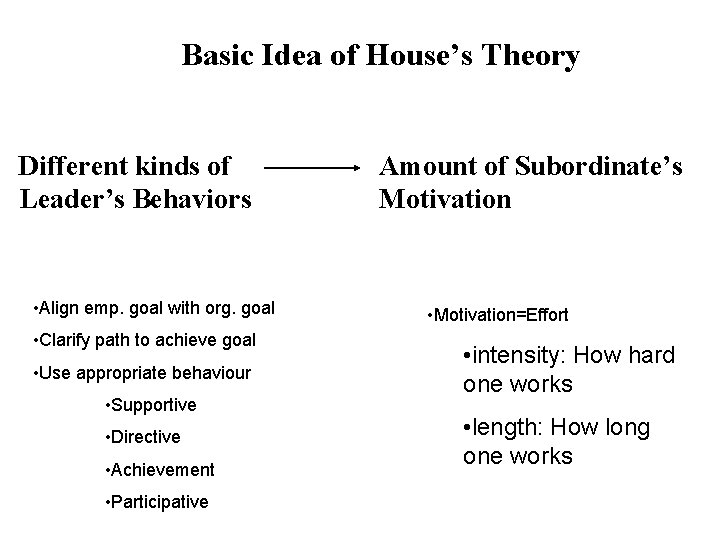
Basic Idea of House’s Theory Different kinds of Leader’s Behaviors • Align emp. goal with org. goal • Clarify path to achieve goal • Use appropriate behaviour • Supportive • Directive • Achievement • Participative Amount of Subordinate’s Motivation • Motivation=Effort • intensity: How hard one works • length: How long one works
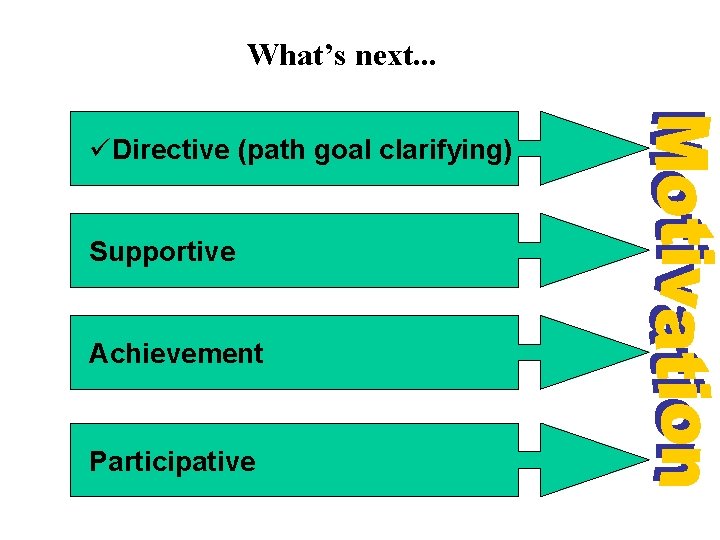
Kinds of Leader Behavior that Increase Subordinate Motivation Directive (path goal clarifying) Supportive Achievement Participative
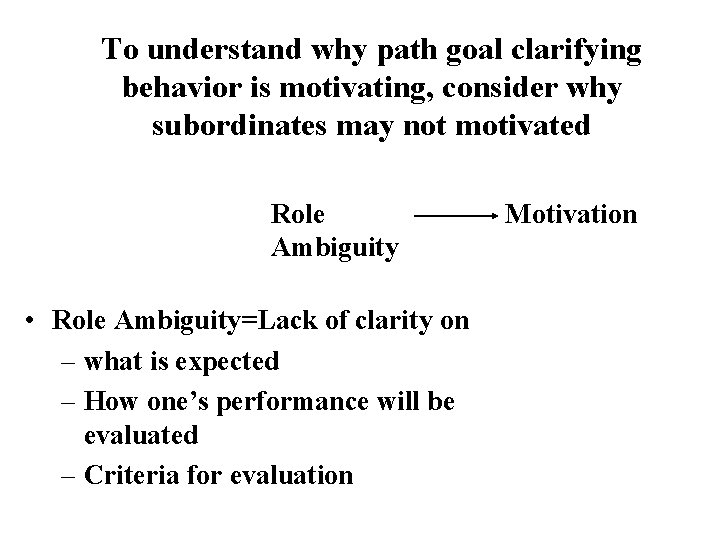
To understand why path goal clarifying behavior is motivating, consider why subordinates may not motivated Role Ambiguity • Role Ambiguity=Lack of clarity on – what is expected – How one’s performance will be evaluated – Criteria for evaluation Motivation
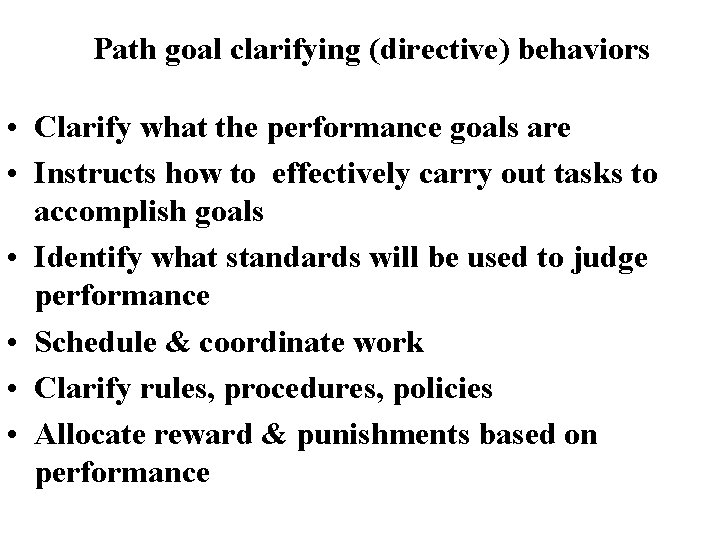
Path goal clarifying (directive) behaviors • Clarify what the performance goals are • Instructs how to effectively carry out tasks to accomplish goals • Identify what standards will be used to judge performance • Schedule & coordinate work • Clarify rules, procedures, policies • Allocate reward & punishments based on performance
Describe & Plan Directive Behavior • Describe how you displayed or should have displayed path-goal clarifying behaviors to your subordinates. • • Performance Feedback exercise (Flintstones) Salary Negotiation Chris the Donut Company Manager Vleader • Students write individual plan for Pat Howard… – Of the three subordinates, who needs path-goal clarifying behavior? How will you display it?
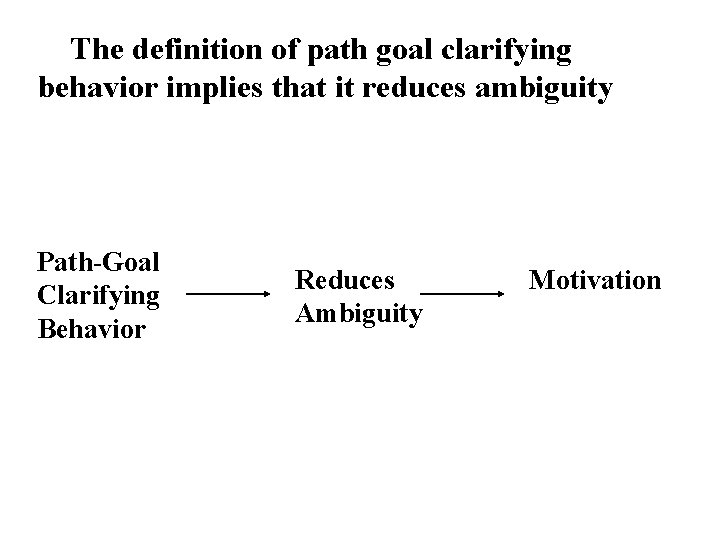
The definition of path goal clarifying behavior implies that it reduces ambiguity Path-Goal Clarifying Behavior Reduces Ambiguity Motivation
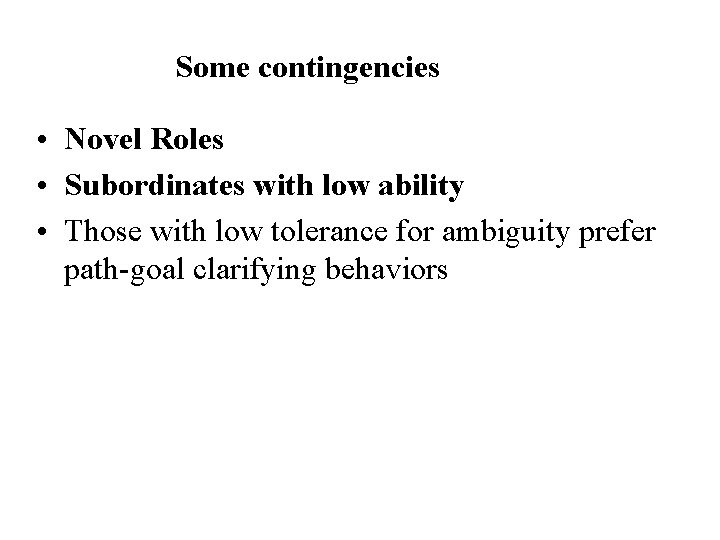
Some contingencies • Novel Roles • Subordinates with low ability • Those with low tolerance for ambiguity prefer path-goal clarifying behaviors
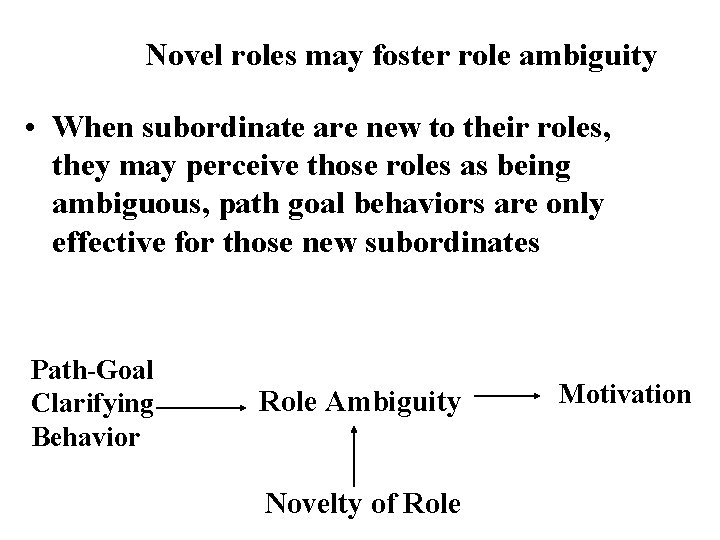
Novel roles may foster role ambiguity • When subordinate are new to their roles, they may perceive those roles as being ambiguous, path goal behaviors are only effective for those new subordinates Path-Goal Clarifying Behavior Role Ambiguity Novelty of Role Motivation
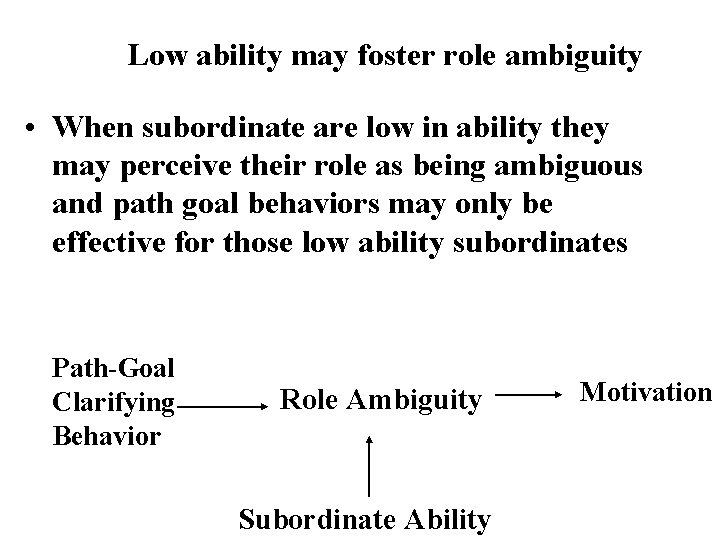
Low ability may foster role ambiguity • When subordinate are low in ability they may perceive their role as being ambiguous and path goal behaviors may only be effective for those low ability subordinates Path-Goal Clarifying Behavior Role Ambiguity Subordinate Ability Motivation
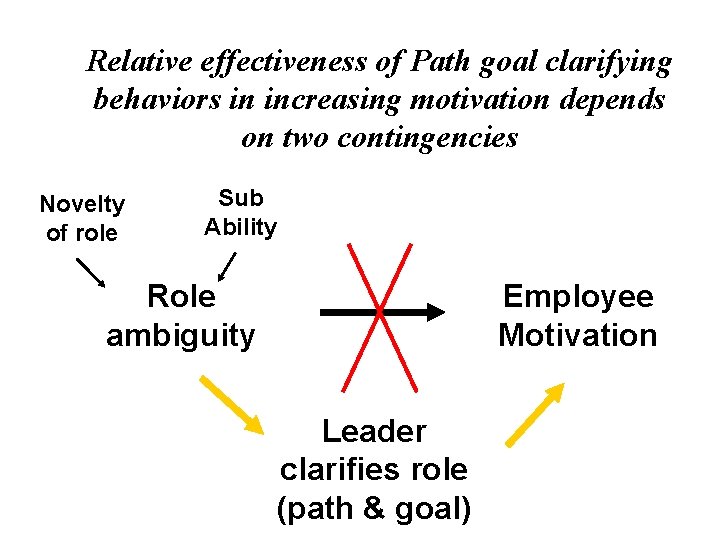
Relative effectiveness of Path goal clarifying behaviors in increasing motivation depends on two contingencies Novelty of role Sub Ability Role ambiguity Employee Motivation Leader clarifies role (path & goal)
What’s next. . . üDirective (path goal clarifying) Supportive Achievement Participative
What are Supportive Behaviors • Show concern for welfare • Create a friendly and supportive environment
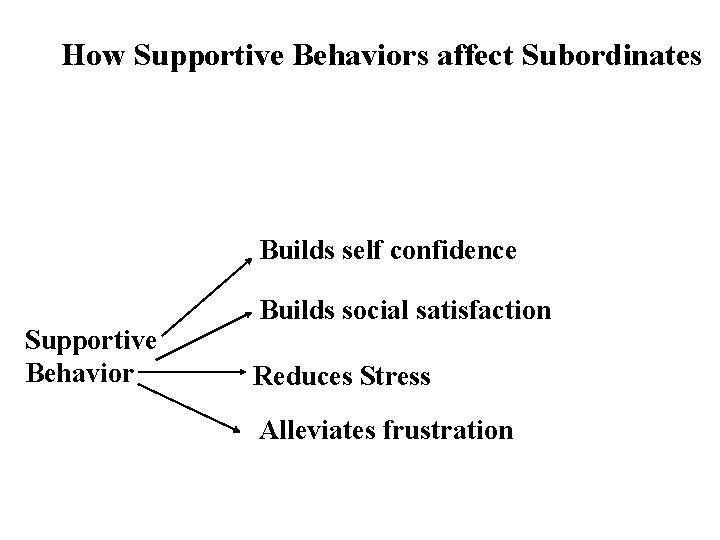
How Supportive Behaviors affect Subordinates Builds self confidence Supportive Behavior Builds social satisfaction Reduces Stress Alleviates frustration
Describe and Plan Supportive Behaviors • Describe how you will display or should have displayed supportive behaviors to your subordinates. • Flintstones • Salary Negotiation • Chris – Which email needed supportive behavior? How did you display it? • Students write individual plan for Pat Howard – Of the three subordinates, who needs supportive behavior? How will you display it?
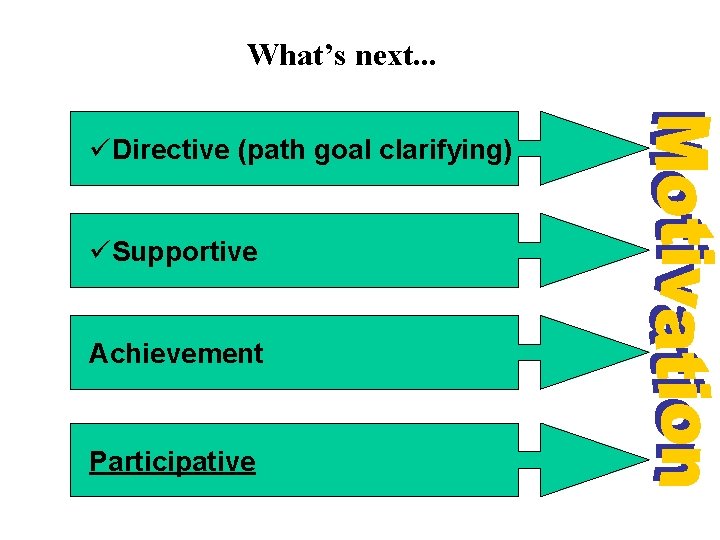
What’s next. . . üDirective (path goal clarifying) üSupportive Achievement Participative
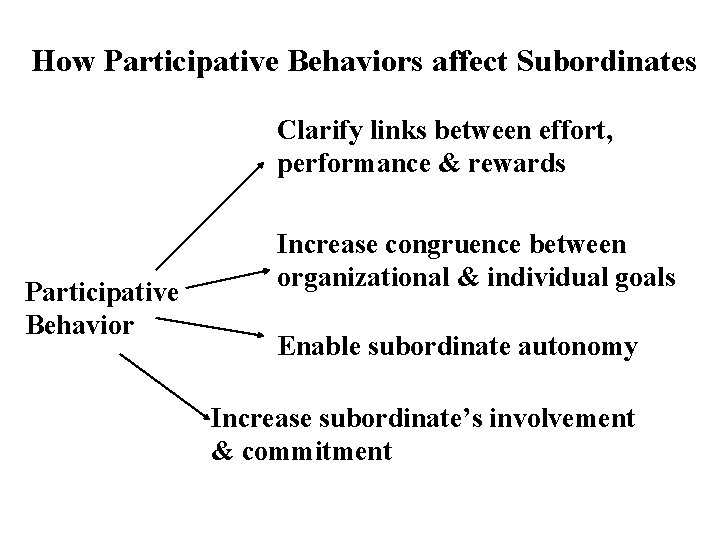
What are Participative Behaviors • Encouraging subordinates to influence how decisions are made, how work is done
How Participative Behaviors affect Subordinates Clarify links between effort, performance & rewards Participative Behavior Increase congruence between organizational & individual goals Enable subordinate autonomy Increase subordinate’s involvement & commitment
Describe & Plan Participative Behaviors • Describe how displayed or should have displayed participative behaviors to your subordinates. • Flintstones • Salary Negotiation • Chris the Donut Company Manager • Students write individual plan for Pat Howard
Some contingencies • Internal locus of control prefer participative behaviors
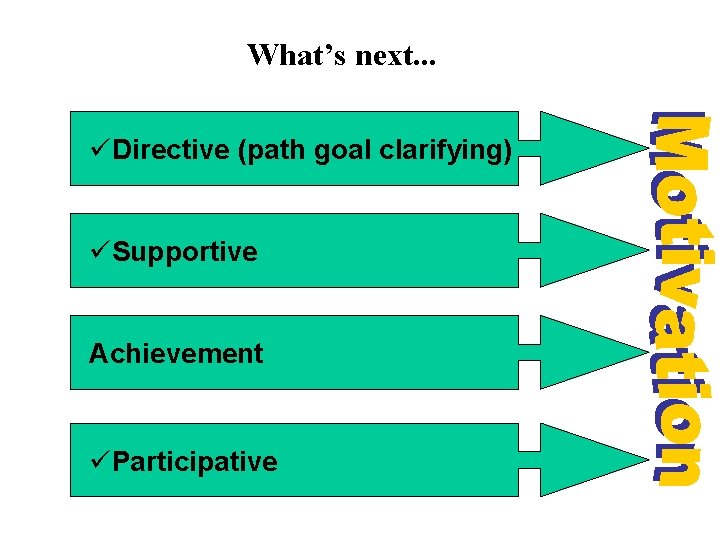
What’s next. . . üDirective (path goal clarifying) üSupportive Achievement üParticipative
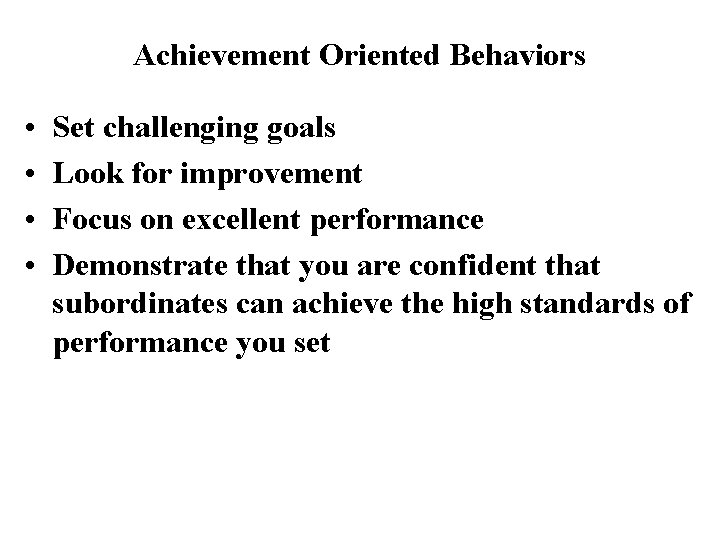
Achievement Oriented Behaviors • • Set challenging goals Look for improvement Focus on excellent performance Demonstrate that you are confident that subordinates can achieve the high standards of performance you set
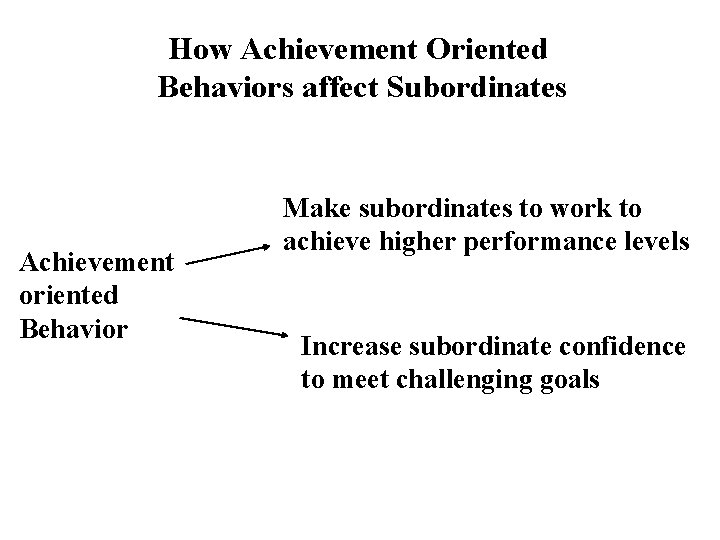
How Achievement Oriented Behaviors affect Subordinates Achievement oriented Behavior Make subordinates to work to achieve higher performance levels Increase subordinate confidence to meet challenging goals
Describe & Plan Achievement Behaviors • Describe how displayed or should have displayed Achievement behaviors to your subordinates. • Flintstones • Salary Negotiation • Chris the Donut Company Manager • Students write individual plan for Pat Howard
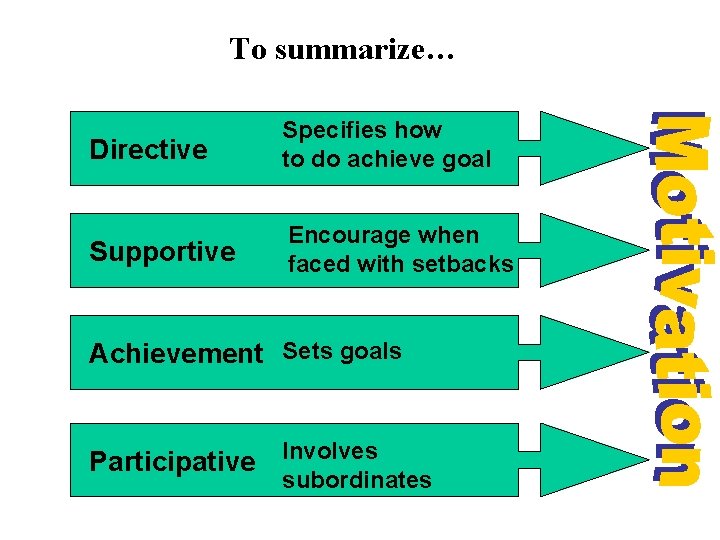
To summarize… Directive Specifies how to do achieve goal Supportive Encourage when faced with setbacks Achievement Sets goals Participative Involves subordinates
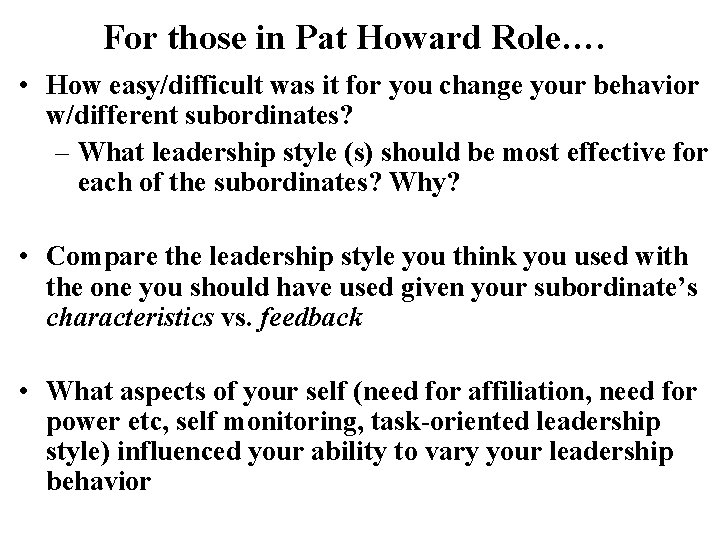
For those in Pat Howard Role…. • How easy/difficult was it for you change your behavior w/different subordinates? – What leadership style (s) should be most effective for each of the subordinates? Why? • Compare the leadership style you think you used with the one you should have used given your subordinate’s characteristics vs. feedback • What aspects of your self (need for affiliation, need for power etc, self monitoring, task-oriented leadership style) influenced your ability to vary your leadership behavior
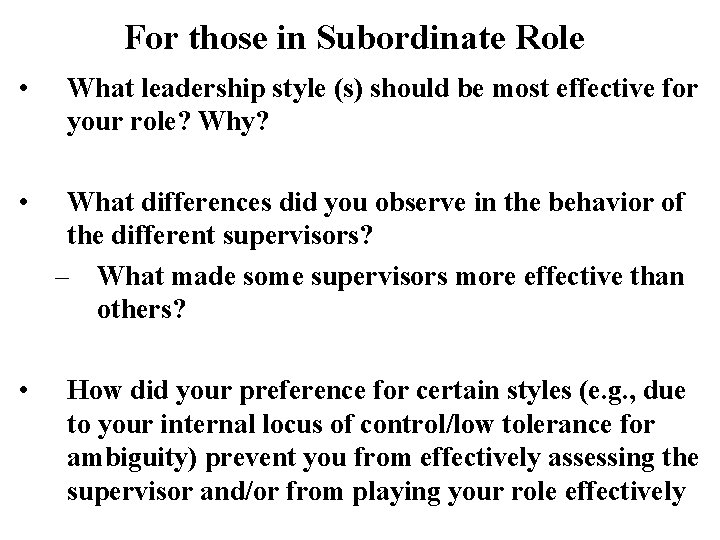
For those in Subordinate Role • • • What leadership style (s) should be most effective for your role? Why? What differences did you observe in the behavior of the different supervisors? – What made some supervisors more effective than others? How did your preference for certain styles (e. g. , due to your internal locus of control/low tolerance for ambiguity) prevent you from effectively assessing the supervisor and/or from playing your role effectively
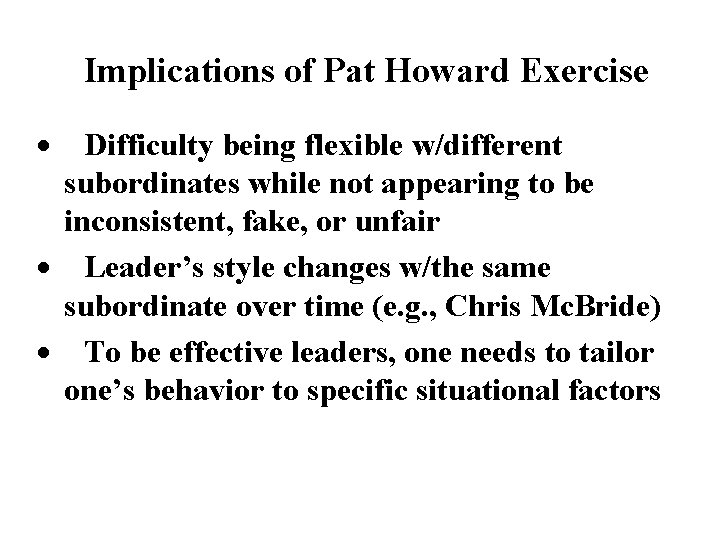
Implications of Pat Howard Exercise · Difficulty being flexible w/different subordinates while not appearing to be inconsistent, fake, or unfair · Leader’s style changes w/the same subordinate over time (e. g. , Chris Mc. Bride) · To be effective leaders, one needs to tailor one’s behavior to specific situational factors
Sample student answers See Notes section of this slide