
Putting EvidenceBased Practice into Practice Taylor Arman MSEd

Putting Evidence-Based Practice into Practice Taylor Arman, MSEd, ATC
Disclosures No conflict of interests The views expressed in these slides and the today’s discussion are mine. The views expressed are my own and not the views of my colleagues or employers. Please use your own discretion when utilizing presented information in your clinical practice.
Learning Objectives 1. Describe the common beliefs and barriers to the implementation of evidence-based practice in health care and athletic training 2. Identify the importance of the use of evidence-based practice in athletic training 3. Understand implement foundational concepts of evidencebased practice, including the steps of evidence-based practice, clinical prediction rules, PICO questioning format, disablement models, and patient-reported outcomes
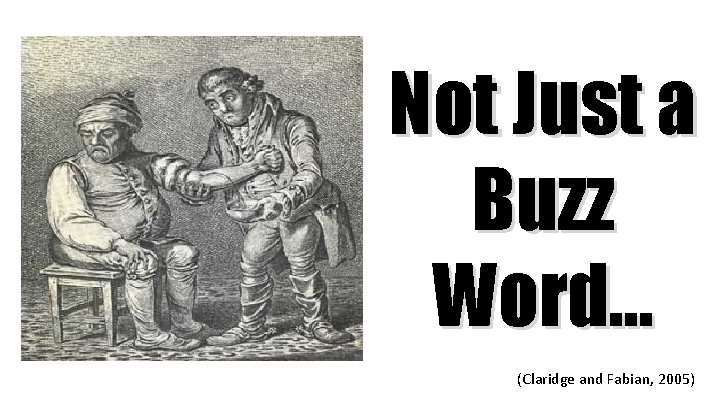
Not Just a Buzz Word… (Claridge and Fabian, 2005)
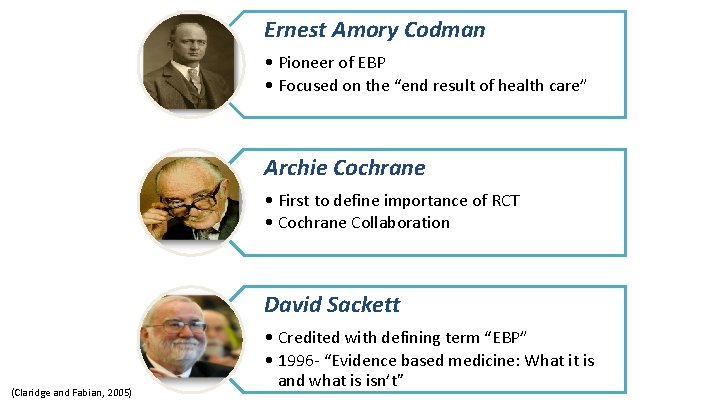
Ernest Amory Codman • Pioneer of EBP • Focused on the “end result of health care” Archie Cochrane • First to define importance of RCT • Cochrane Collaboration David Sackett (Claridge and Fabian, 2005) • Credited with defining term “EBP” • 1996 - “Evidence based medicine: What it is and what is isn’t”
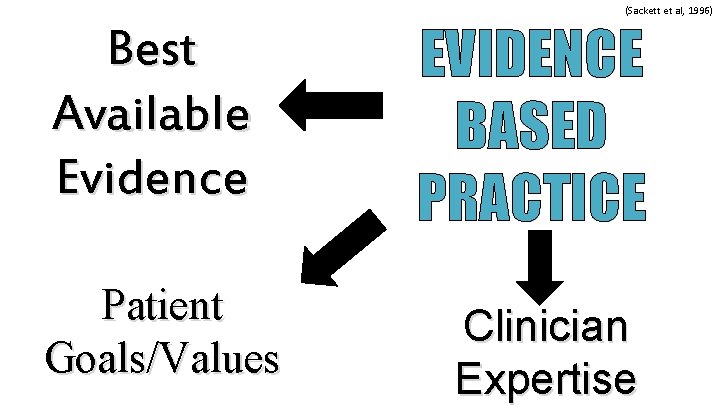
(Sackett et al, 1996) Best Available Evidence Patient Goals/Values EVIDENCE BASED PRACTICE Clinician Expertise
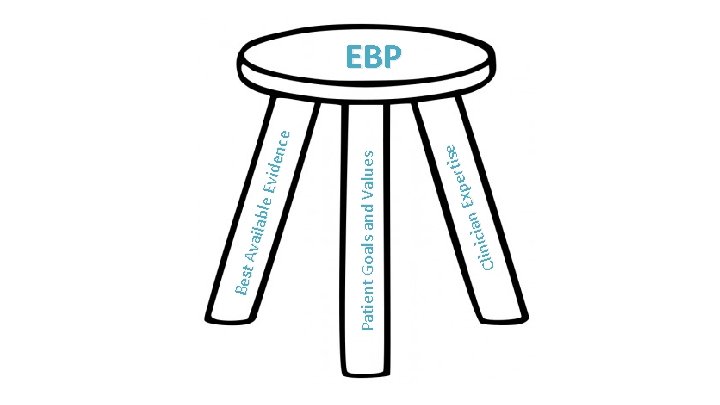
ise t r e Exp n a i c Clini Patient Goals and Values Best Avail able Evide nce EBP
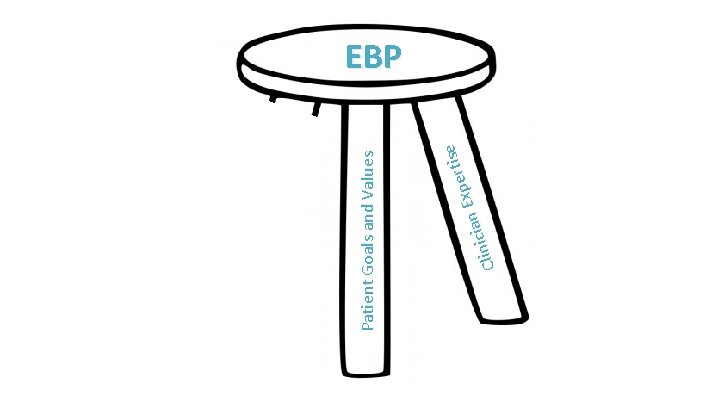
ise t r e Exp n a i c Clini Patient Goals and Values Best Avail able Evide nce EBP
Best Available Evidence What most people think of when they hear EBP Not always a lot of research out there It’s not just spend hours and hours looking through research… Should guide- not dictate! Finding and using clinically relevant research to help provide the best possible patient care (Sexton, 2011) What’s the “best” type of research?
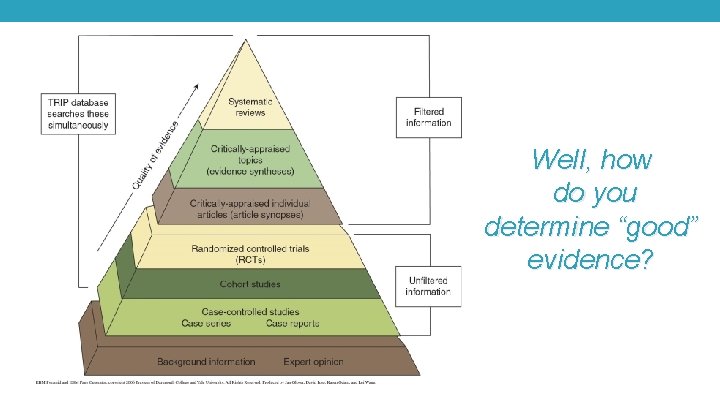
Well, how do you determine “good” evidence?
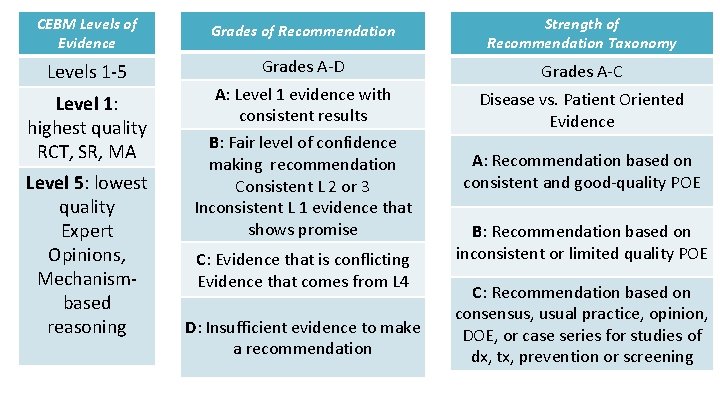
CEBM Levels of Evidence Grades of Recommendation Strength of Recommendation Taxonomy Levels 1 -5 Grades A-D Grades A-C A: Level 1 evidence with consistent results B: Fair level of confidence making recommendation Consistent L 2 or 3 Inconsistent L 1 evidence that shows promise Disease vs. Patient Oriented Evidence Level 1: highest quality RCT, SR, MA Level 5: lowest quality Expert Opinions, Mechanismbased reasoning C: Evidence that is conflicting Evidence that comes from L 4 D: Insufficient evidence to make a recommendation A: Recommendation based on consistent and good-quality POE B: Recommendation based on inconsistent or limited quality POE C: Recommendation based on consensus, usual practice, opinion, DOE, or case series for studies of dx, tx, prevention or screening
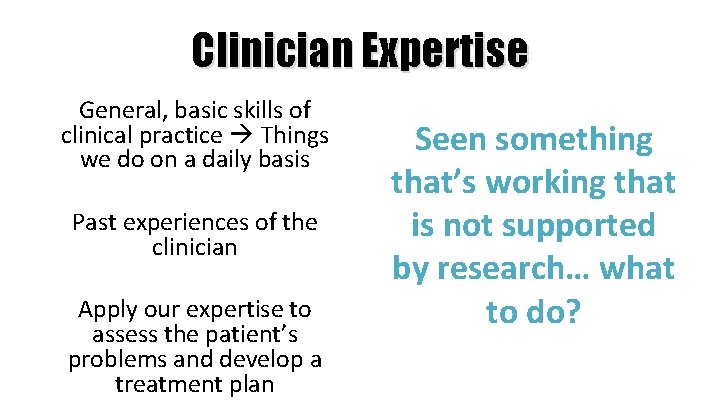
Clinician Expertise General, basic skills of clinical practice Things we do on a daily basis Past experiences of the clinician Apply our expertise to assess the patient’s problems and develop a treatment plan Seen something that’s working that is not supported by research… what to do?
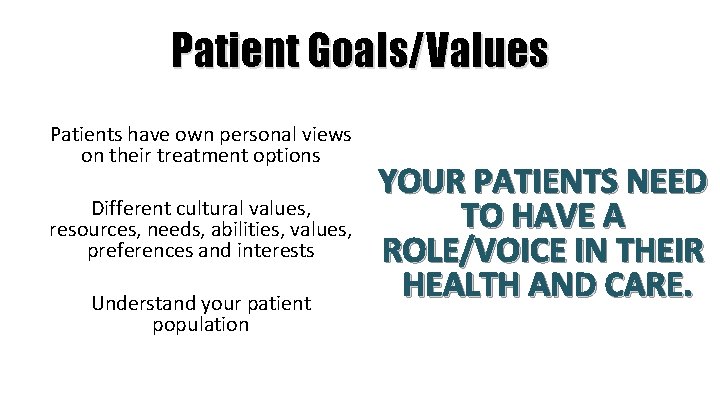
Patient Goals/Values Patients have own personal views on their treatment options Different cultural values, resources, needs, abilities, values, preferences and interests Understand your patient population YOUR PATIENTS NEED TO HAVE A ROLE/VOICE IN THEIR HEALTH AND CARE.
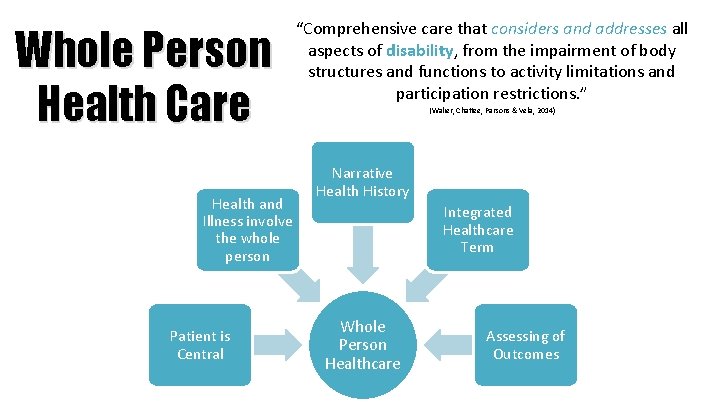
Whole Person Health Care Health and Illness involve the whole person Patient is Central “Comprehensive care that considers and addresses all aspects of disability, from the impairment of body structures and functions to activity limitations and participation restrictions. ” (Walier, Chaffee, Parsons & Vela, 2014) Narrative Health History Integrated Healthcare Term Whole Person Healthcare Assessing of Outcomes
What is a Disablement Model? “Disablement models are conceptual schemes or scientific models that form the basic architecture for clinical practice and research as well as health care policy. ” Framework (Snyder et al, 2008) – Common language of health care, acting as a foundation for communication, justification for treatment, demonstration of value and reimbursement for services (Sitzler, 2016) – Combination of medical and social perspectives (Van Lunen, Hankemeier, and Welch, 2015) – Outlines patient care and research activities- Contributes to Patient Orientated Evidence that Matters (POEMs) Patient-Centered Care “As health care professionals, athletic trainers must function as such. ” (Sitzler, 2016)
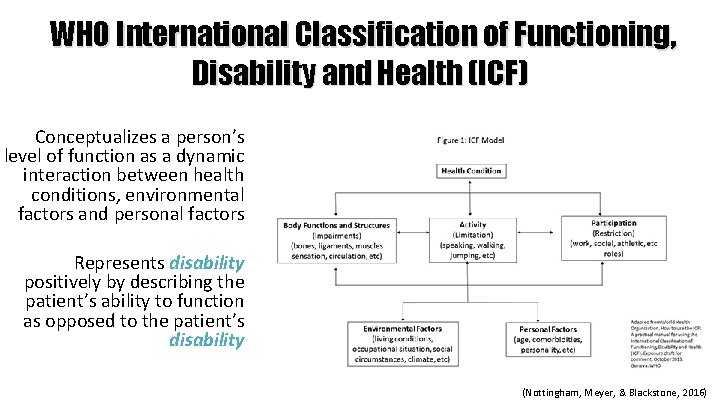
WHO International Classification of Functioning, Disability and Health (ICF) Conceptualizes a person’s level of function as a dynamic interaction between health conditions, environmental factors and personal factors Represents disability positively by describing the patient’s ability to function as opposed to the patient’s disability (Nottingham, Meyer, & Blackstone, 2016)
EBP and AT? Still a novel concept that’s not fully embraced across membership. Needs to be a clinical mindset GOAL BEST PATIENT CARE POSSIBLE! (Evans and Lam, 2011)

Barriers to Implementation Social Work and Crisis Intervention Shortage of Evidence Applying the results to individuals Lack of training, time and resources Athletic Training Health Care Amount and complexity of research Difficulty developing EB policies Limited access Ineffective CE opportunities Lack of time Lack of EBP mentors (Haynes and Haines, 1998) Nursing Physical Therapy Lack of EBP knowledge Unable to search the evidence Publication bias Understanding statistical results Understanding results Research findings related to patient Inadequate training in EBP Access to materials Difficulty judging quality of research Assessing applicability population Lack of time (Mullen and Streiner, 2004) (Maher, Sherrington, Elkins, Herbert and Moseley, (Majid, Foo, Luyt, Zhang, Theng, Chang, and Mokhtar, 2011) 2004) (Hankemeier & Van Lunen, 2011, Mc. Carty, Hankemeier, Walter, Newton, Van Lunen 2013)
“Partnerships between researchers and clinicians will continue to help the lives of our [patients] and achieve the goal of learning new, better, quick, and more successful methods to return our [patients] to their recreational or competitive sports. ” (Manske and Lehecka, 2012)
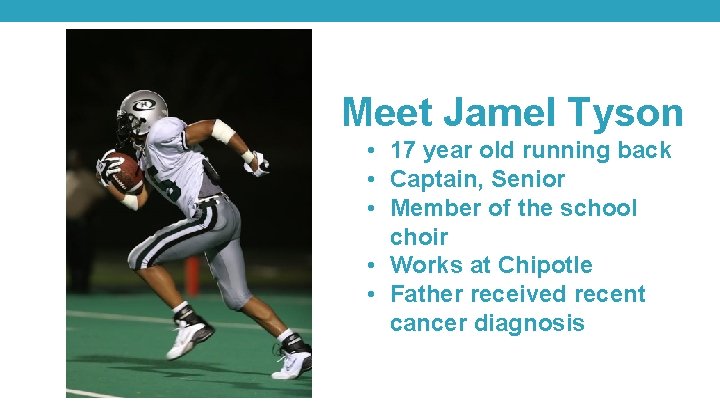
Meet Jamel Tyson • 17 year old running back • Captain, Senior • Member of the school choir • Works at Chipotle • Father received recent cancer diagnosis
During practice, Jamel falls to the ground after a collision with a teammate. He is grasping his left knee, squirming in pain. Upon evaluation, the patient presents with moderate tenderness to the medial joint line and patella. There is noticeable swelling. He has limited range of motion and complains of pain throughout. At this point in your assessment, you are unsure if the patient has fractured his patella.
How do we decide if the patient needs advanced medical care?
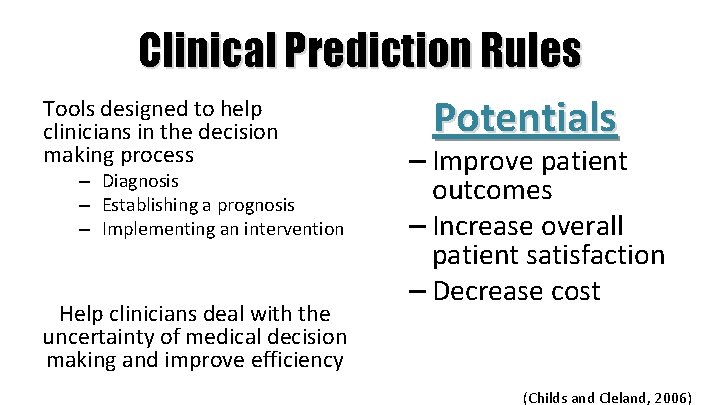
Clinical Prediction Rules Tools designed to help Potentials clinicians in the decision making process – Diagnosis – Establishing a prognosis – Implementing an intervention Help clinicians deal with the uncertainty of medical decision making and improve efficiency – Improve patient outcomes – Increase overall patient satisfaction – Decrease cost (Childs and Cleland, 2006)
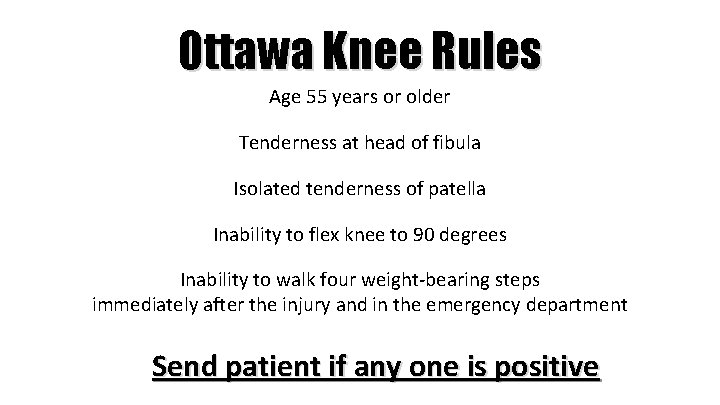
Ottawa Knee Rules Age 55 years or older Tenderness at head of fibula Isolated tenderness of patella Inability to flex knee to 90 degrees Inability to walk four weight-bearing steps immediately after the injury and in the emergency department Send patient if any one is positive
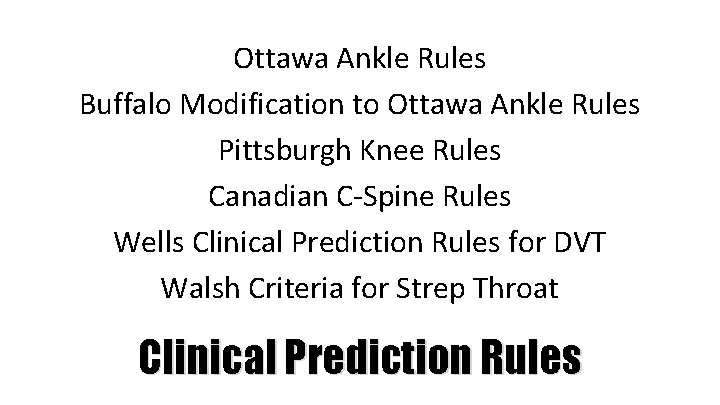
Ottawa Ankle Rules Buffalo Modification to Ottawa Ankle Rules Pittsburgh Knee Rules Canadian C-Spine Rules Wells Clinical Prediction Rules for DVT Walsh Criteria for Strep Throat Clinical Prediction Rules
Putting it into Clinical Practice Create a log/binder of CPRs Pick one- understand it and use it Have a CPR of the month Must follow through!
After applying the OKRs, you determine it is not necessary to send Jamel to the hospital. Upon further evaluation, he presents with an ACL tear. He is to follow up with an orthopedic physician. Jamel comes to you asking what is his best option for treatment of his injury.
How can you determine the most effective treatment plan for this patient?
Asking Focused Questions Well built clinical question = Fundamental skills for practicing EBP Everyday questions arise… Some answers are easy to find Needs to be both directly relevant to the patient’s problems and phrased in a way that directs you to relevant and precise answers – Word our questions a specific way to yield the best answer
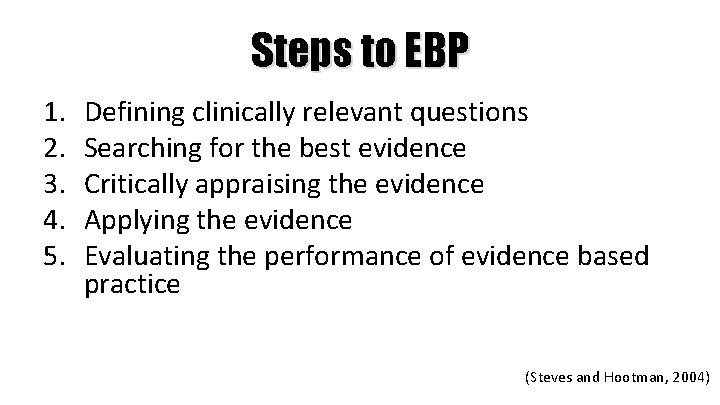
Steps to EBP 1. 2. 3. 4. 5. Defining clinically relevant questions Searching for the best evidence Critically appraising the evidence Applying the evidence Evaluating the performance of evidence based practice (Steves and Hootman, 2004)
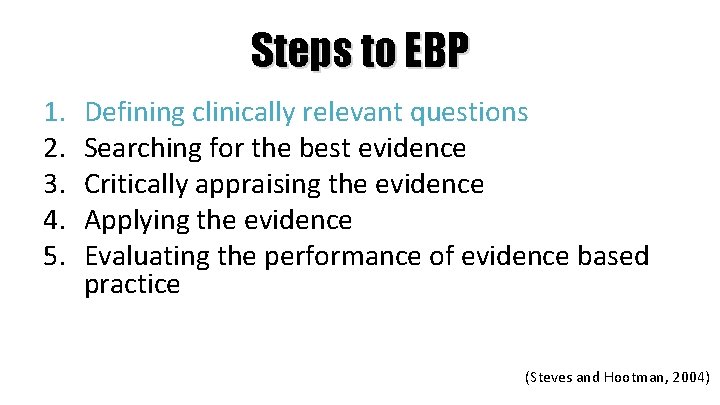
Steps to EBP 1. 2. 3. 4. 5. Defining clinically relevant questions Searching for the best evidence Critically appraising the evidence Applying the evidence Evaluating the performance of evidence based practice (Steves and Hootman, 2004)

P I C O
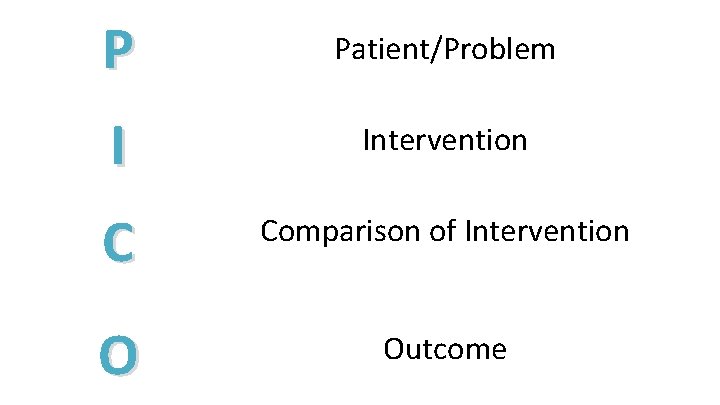
P Patient/Problem I Intervention C Comparison of Intervention O Outcome

P I C O
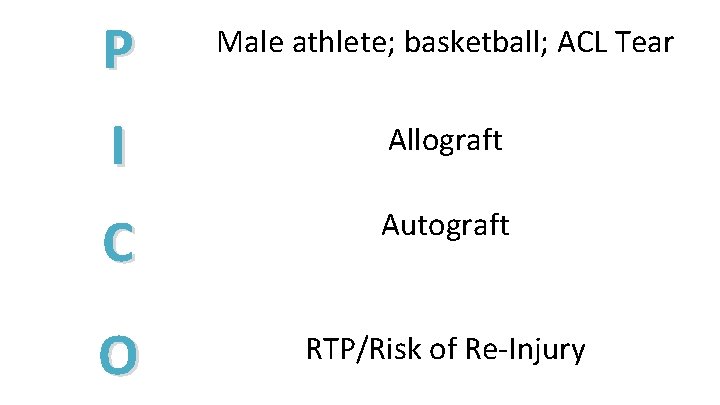
P Male athlete; basketball; ACL Tear I Allograft C Autograft O RTP/Risk of Re-Injury
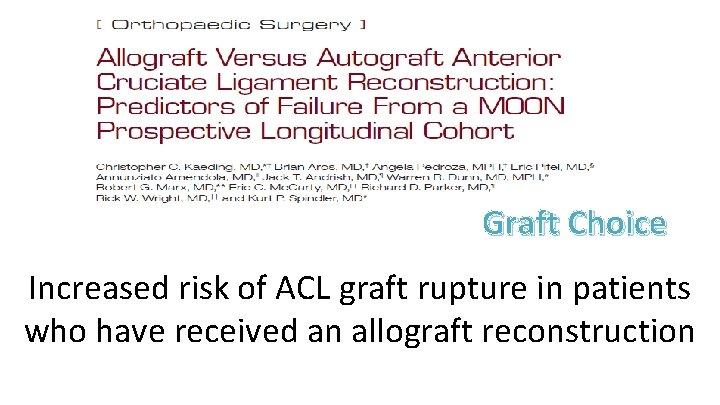
Graft Choice Increased risk of ACL graft rupture in patients who have received an allograft reconstruction
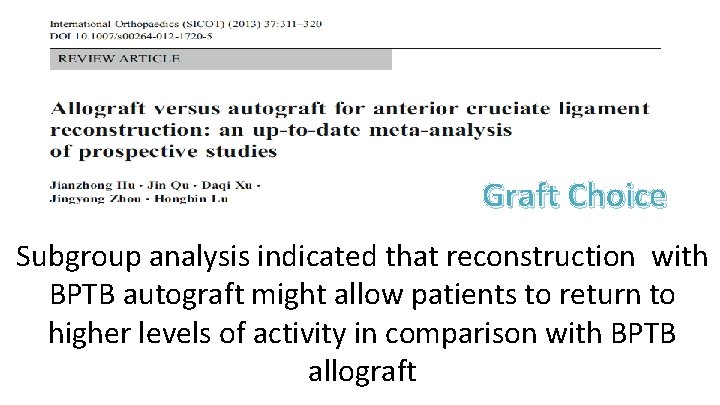
Graft Choice Subgroup analysis indicated that reconstruction with BPTB autograft might allow patients to return to higher levels of activity in comparison with BPTB allograft
Putting it into Clinical Practice You have questions every day… do not be afraid to write them down Talk with co-workers/other HCP about your questions Be curious and do your own homework Must follow through!
After researching and discussing with Jamel and team physician, you determine an autograft is the appropriate surgical intervention. You begin Jamel’s rehabilitation. After the first two weeks, you ask him how he is feeling. He states, “I am feeling much better than I was in the beginning of my rehab. ”
How can we quantify “better”?
Patient Reported Outcome Assessments “The study of the end result of health care, specifically examining the changes in health status for a patient or group of patients after medical intervention. ” (Evans and Lam, 2011)
Patient Reported Outcome Assessments Evaluating the efficacy of our patient care… …while using patient centered approaches that are backed by evidence, clinical expertise, and fits patient goals and values – Helps us to evaluate the effectiveness of our evidence based treatments Many types – Generic vs. Specific Instruments (Evans and Lam, 2011)
Patient Reported Outcome Assessments Gives the patient a voice in their treatment – Takes into account the patient’s experiences, preferences and values (Snyder, Mc. Leod, and Sauers, 2007) Address problems that are meaningful to our patients Help us to practice better PATIENT-CENTERED CARE
Importance of PROs Need this component if EBP is going to be successful State licensure and third-party reimbursement – Can justify the treatments/services we provide as effective Reputation of AT (Snyder, Mc. Leod, and Sauers, 2007)
Steps to EBP 1. 2. 3. 4. 5. Defining clinically relevant questions Searching for the best evidence Critically appraising the evidence Applying the evidence Evaluating the performance of evidence based practice (Steves and Hootman, 2004)
Steps to EBP 1. 2. 3. 4. 5. Defining clinically relevant questions Searching for the best evidence Critically appraising the evidence Applying the evidence Evaluating the performance of evidence based practice (Steves and Hootman, 2004)

Lower Extremity Functional Scale “LEFS can be used by clinicians as a measure of patient’s initial function, ongoing progress, and outcomes as well as to set function goals. ” (Binkley, Stratford, Lott, and Riddle, 1999) 20 questions scored on a 5 point Likert Scale Possible of 80 for a score
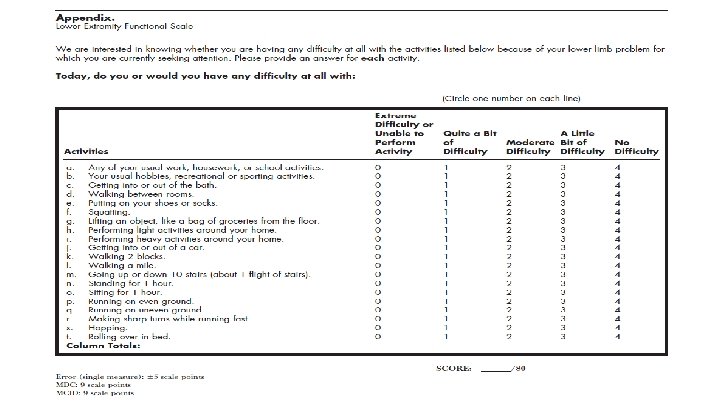
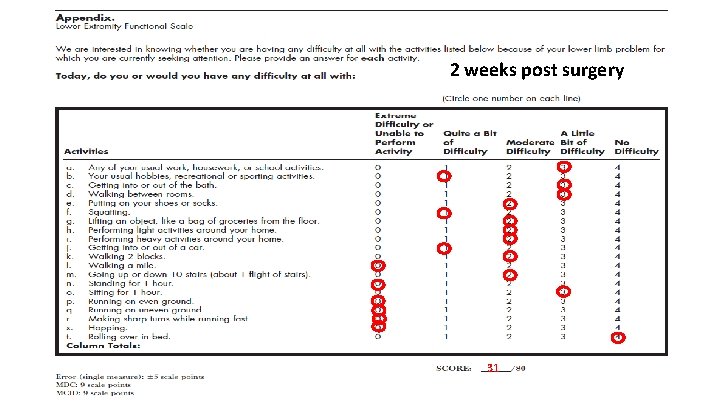
2 weeks post surgery 31
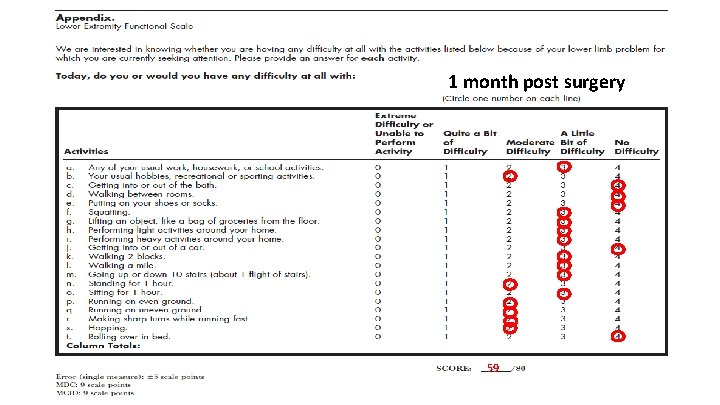
1 month post surgery 59
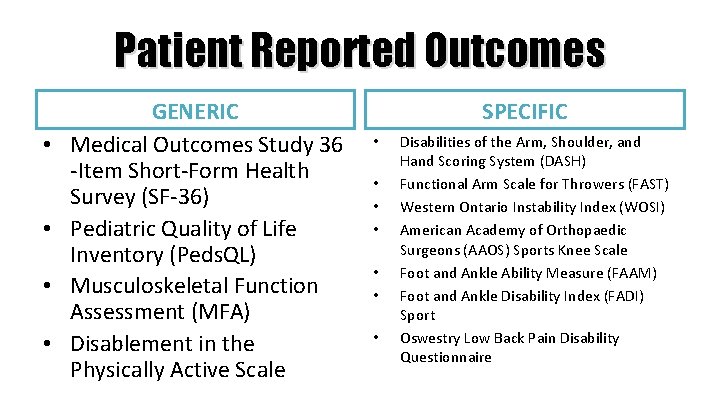
Patient Reported Outcomes • • GENERIC Medical Outcomes Study 36 -Item Short-Form Health Survey (SF-36) Pediatric Quality of Life Inventory (Peds. QL) Musculoskeletal Function Assessment (MFA) Disablement in the Physically Active Scale SPECIFIC • • Disabilities of the Arm, Shoulder, and Hand Scoring System (DASH) Functional Arm Scale for Throwers (FAST) Western Ontario Instability Index (WOSI) American Academy of Orthopaedic Surgeons (AAOS) Sports Knee Scale Foot and Ankle Ability Measure (FAAM) Foot and Ankle Disability Index (FADI) Sport Oswestry Low Back Pain Disability Questionnaire
Putting it Into Clinical Practice See if the EMR system you use has them/can design them Start small- long term rehabilitation patients, PPEs Help with that pesky last step of EBP Must follow through!
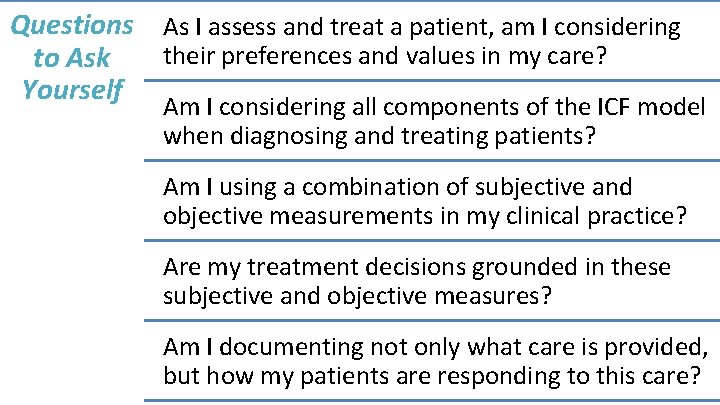
Questions As I assess and treat a patient, am I considering their preferences and values in my care? to Ask Yourself Am I considering all components of the ICF model when diagnosing and treating patients? Am I using a combination of subjective and objective measurements in my clinical practice? Are my treatment decisions grounded in these subjective and objective measures? Am I documenting not only what care is provided, but how my patients are responding to this care?
“The athletic training profession needs to investigate the efficacy and effectiveness of our own clinical practice. Otherwise, we impede our professional credibility and jeopardize the long-term viability of our profession. ” Alison Snyder, John Parsons, Tamara Valovich Mc. Leod, Curtis Bay, Lori Michner, and Eric Sauers, 2008
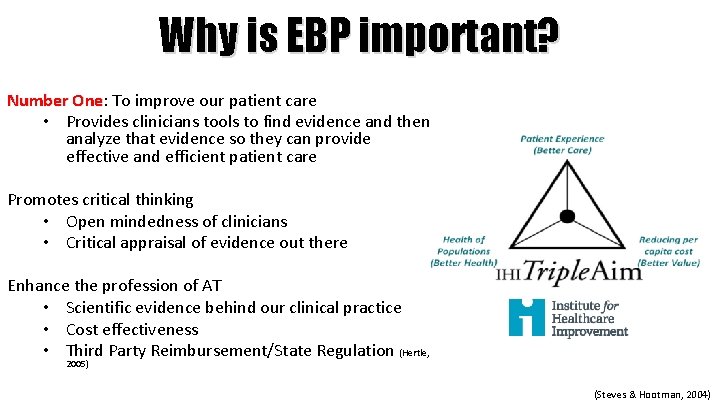
Why is EBP important? Number One: One To improve our patient care • Provides clinicians tools to find evidence and then analyze that evidence so they can provide effective and efficient patient care Promotes critical thinking • Open mindedness of clinicians • Critical appraisal of evidence out there Enhance the profession of AT • Scientific evidence behind our clinical practice • Cost effectiveness • Third Party Reimbursement/State Regulation (Hertle, 2005) (Steves & Hootman, 2004)
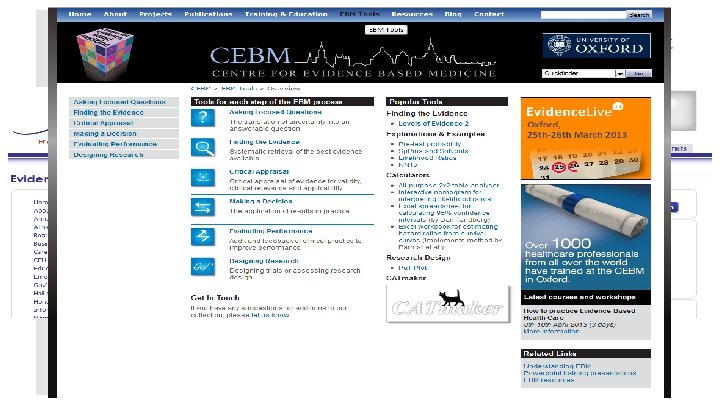
Available Resources • NATA News – Clinical bottom lines • NATA Online Modules • CEBM • BOC Approved CE Opportunities

Where do I go from here? Does not happen over night “Persistent Commitment” (Welch, Hankemeier, Wyant, Hays, Pitney & Van Lunen, 2014) Encourage Co-Workers Start the conversation! Thoughtful CEU choices Take ownership in your professional enhancement and the profession What do you do?

Thank You! Taylor Arman, MSEd, ATC 630 -363 -1922 tsarman@noctrl. edu
References Calrdige, JA and Fabian, TC. (2005). History and development of evidence-based medicine, World Journal of Surgery, 29, 547 -533. Sackett, DL, Rosenberg, WM, Gray, JM, Haynes, RB, and Richardson, WS. (1996). Evidence based medicine: What it is and what it isn’t. British Journal of Medicine, 312, 71 -23. Sexton, P. (2011). Clinical decision making: Assumptions made in the absence of evidence, International Journal of Athletic Therapy & Training, 16, 2, 1 -3. Evans, TA and Lam, KC. (2011). Clinical outcomes assessment in sports rehabilitation, Journal of Sports Rehabilitation, 20, 8 -16. Manske, RC and Lehecka, BJ. (2012). Evidence-based medicine/practice in sports physical therapy, The International Journal of Sports Physical Therapy, 7, 5, 461 -473 Ray, R and Konin, J. Management Strategies in Athletic Training. 4 th ed. Champaign, Illinois: Human Kinetics, 2011. Steves, R and Hootman, JM. (2004). Evidence-based medicine: What is it and how does it apply to athletic training? , Journal of Athletic Training, 39, 1, 83 -87. Mullen, EJ and Streiner, DL. (2004). The evidence for and against evidence-based practice, Brief Treatment and Crisis Intervention, 4, 2, 111 -121. Haynes, B and Haines, A. (1998). Getting research findings into practice: Barriers and bridges to evidence based clinical practice, British Medical Journal, 317, 7153, 273 -276. Maher, CG, Sherrington, C, Elkins, M, Herbert, RD, and Moseley, AM. (2004). Challenges for evidence-based physical therapy: Accessing and interpreting high-quality evidence on therapy, Physical Therapy, 84, 644 -654. Majid, S, Schubert, F, Luyt, B, Zhang, X, Theng, YL, Chang, YK, and Mokhtar, IA. (2011). Adopting evidence-based practice in clinical decision making: Nurses’ perceptions, knowledge, and barriers, Journal of the Medical Library Association, 99, 3, 229 -236. Hankemeier, DA and Van Lunen, BL. (2011). Approved clinical instructors’ perceptions on implementing strategies in evidence-based practice for athletic training students, Journal of Athletic Training, 46, 6, 655 -664. Mc. Carty, CW, Hankemeier, DA, Walter, JM, Newton, EJ, Van Lunen, BL. (2013) Use of evidence-based practice among athletic training educators, clinicians, and students, part 2: Attitudes, beliefs, barriers and accessibility, Journal of Athletic Training, In-Press Childs, JD and Cleland, JA. (2006). Development and application of clinical prediction rules to improve decision making in physical therapist practice, Physical Therapy, 86, 122 -131. Davda, K and Nathwani, D. (2012). Traumatic problems of the patella, Trauma, 26, 5, 354 -361. Gosal, HS, Singh, P, Field, RE. (2000). Clinical experience of patellar fracture fixation using metal wire or non-absorbable polyester: A study of 37 cases, International Journal of the Care of the Injured, 32, 129 -135. Snyder AR, Valovich Mc. Leod TC. (2009). Selecting patient-based outcome measures. Athletic Therapy Today, 12, 6, 2 -15. Binkley, JM, Stratford, PW, Lott, SA, and Riddle, DL. (1999). The lower extremity functional scale (LEFS): Scale development, measurement properties, and clinical application, Physical Therapy, 79, 371 -383. Welch, CE, Hankemeier, DA, Wyant, AL, Hays, DG, Pitney, WA, Van Lunen, BL (2014). Future directions of evidence-based practice in athletic training: Perceived strategies to enhance the use of evidence-based practice, Journal of Athletic Training.
- Slides: 60