
Put Down the Tortilla and Pick up the
- Slides: 24
Put Down the Tortilla and Pick up the Fork: Using peer education to ensure culturally-appropriate nutrition education in Chicago Latino Communities Sandy Sifuentes, NPE, Miriam Virto, NPE, Nancy Alvarez, NPE, Magdalena Raigosa, NPE, Cristina Martinez, RD, LDN, MSW, Jen Kauper-Brown, MPH, and Anastasia Mc. Gee, RD, CDE UIC Neighborhoods Initiatives
Chicago Partnership for Health Promotion A USDA funded Food Stamp Nutrition Education Program Mission Statement: To provide high quality nutrition education, health promotion and disease prevention services through partnerships directed at eligible families in Chicago.
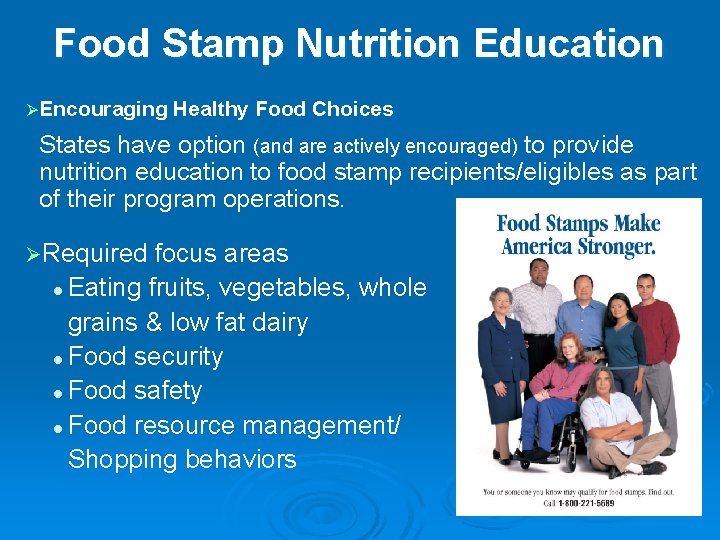
Food Stamp Nutrition Education ØEncouraging Healthy Food Choices States have option (and are actively encouraged) to provide nutrition education to food stamp recipients/eligibles as part of their program operations. ØRequired focus areas l Eating fruits, vegetables, whole grains & low fat dairy l Food security l Food safety l Food resource management/ Shopping behaviors
CPHP’s Team Approach: Combined Paraprofessional/Professional model Ø Nutrition Peer Educators: representative of our diverse Latino & African American clients, specially trained in nutrition education. Able to send powerful “peer” message to community. Ø Nutrition Specialists (typically Registered Dietitians): Work independently and also with Peer Educators to design, coordinate, & implement nutrition education services.
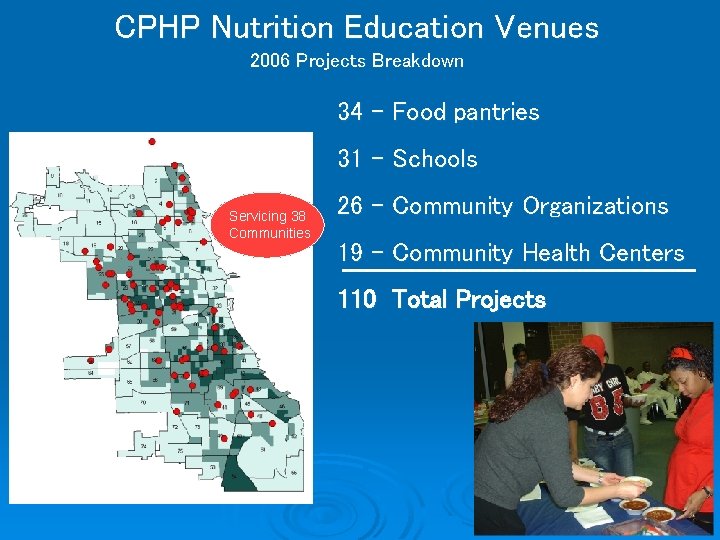
CPHP Nutrition Education Venues 2006 Projects Breakdown 34 – Food pantries 31 – Schools Servicing 38 Communities 26 – Community Organizations 19 – Community Health Centers 110 Total Projects
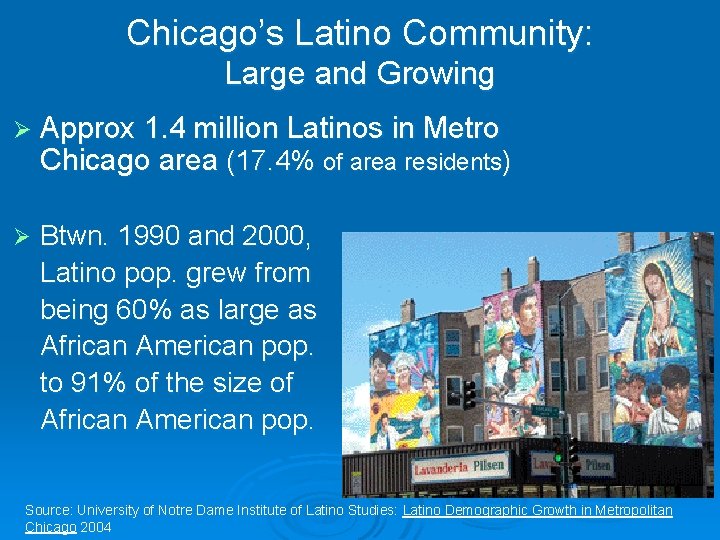
Chicago’s Latino Community: Large and Growing Ø Approx 1. 4 million Latinos in Metro Chicago area (17. 4% of area residents) Ø Btwn. 1990 and 2000, Latino pop. grew from being 60% as large as African American pop. to 91% of the size of African American pop. Source: University of Notre Dame Institute of Latino Studies: Latino Demographic Growth in Metropolitan Chicago 2004
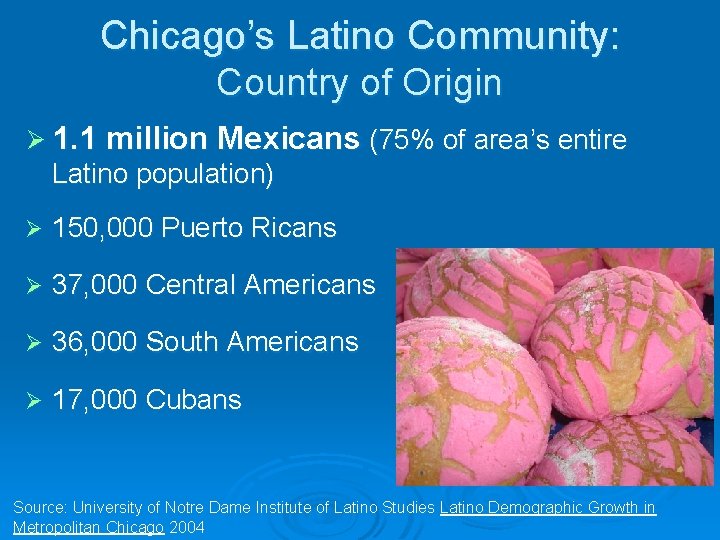
Chicago’s Latino Community: Country of Origin Ø 1. 1 million Mexicans (75% of area’s entire Latino population) Ø 150, 000 Puerto Ricans Ø 37, 000 Central Americans Ø 36, 000 South Americans Ø 17, 000 Cubans Source: University of Notre Dame Institute of Latino Studies Latino Demographic Growth in Metropolitan Chicago 2004
Obesity a health issue for local Latinos Ø In 2003, higher obesity rates than Non- Hispanic Whites (31. 9% among Latinos in Chicago) Ø Obesity is associated with diabetes, high blood pressure, high cholesterol, asthma, arthritis, and poor health. Sources: Chicago Dept of Public Health. Behavioral Risk Factor Surveillance System: Chicago Reference Tables. 2006. Mokddatel et al. Prevalence of obsesity, diabetes, and obesity-related health risk factors. 2001. JAMA.
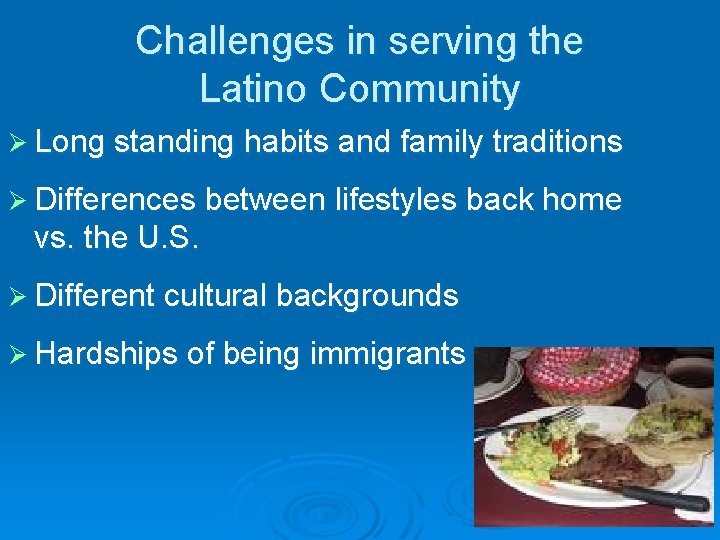
Challenges in serving the Latino Community Ø Long standing habits and family traditions Ø Differences between lifestyles back home vs. the U. S. Ø Different cultural backgrounds Ø Hardships of being immigrants
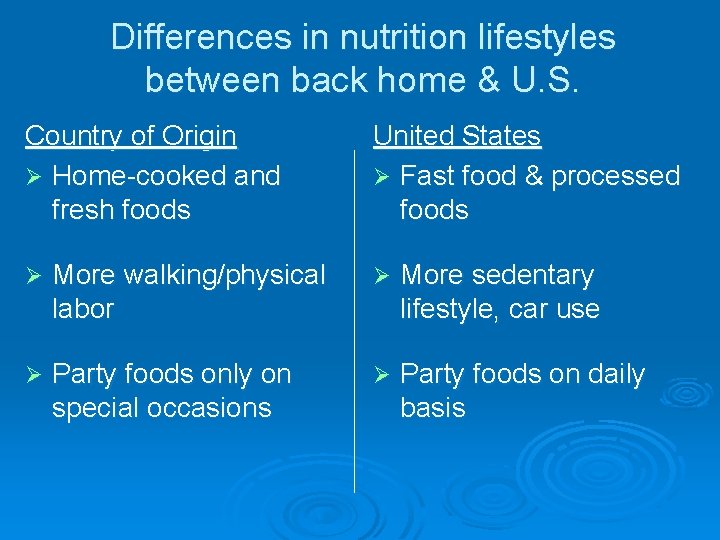
Differences in nutrition lifestyles between back home & U. S. Country of Origin Ø Home-cooked and fresh foods United States Ø Fast food & processed foods Ø More walking/physical labor Ø More sedentary lifestyle, car use Ø Party foods only on special occasions Ø Party foods on daily basis
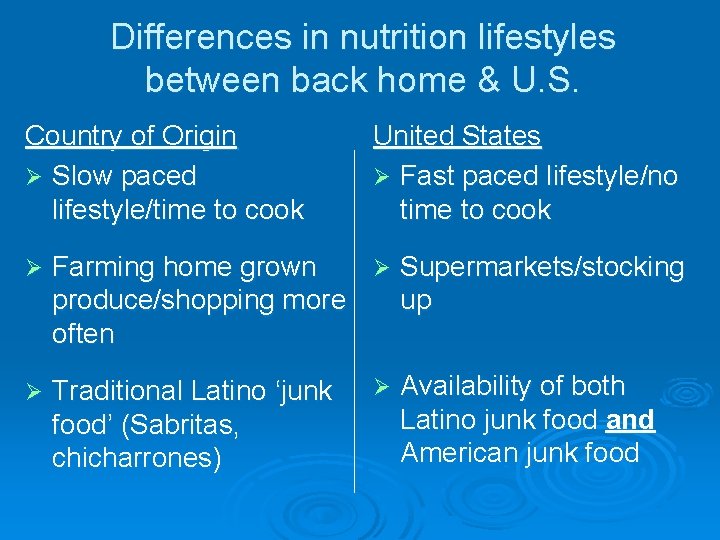
Differences in nutrition lifestyles between back home & U. S. Country of Origin Ø Slow paced lifestyle/time to cook United States Ø Fast paced lifestyle/no time to cook Ø Farming home grown Ø Supermarkets/stocking produce/shopping more up often Ø Traditional Latino ‘junk food’ (Sabritas, chicharrones) Ø Availability of both Latino junk food and American junk food
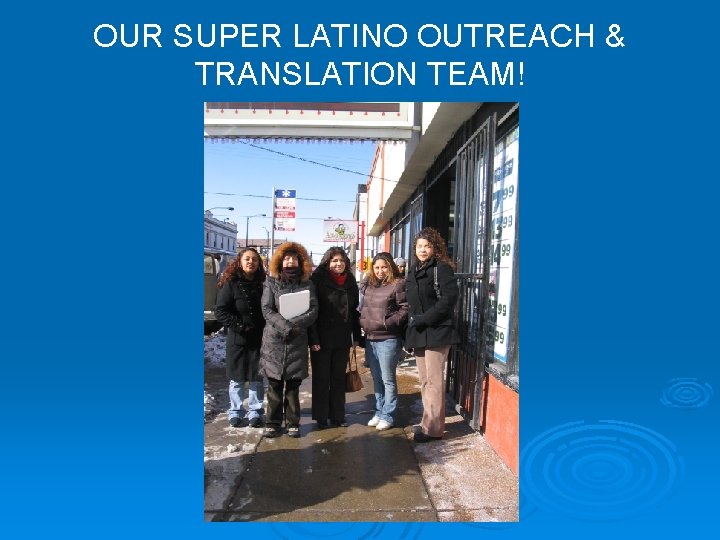
OUR SUPER LATINO OUTREACH & TRANSLATION TEAM!
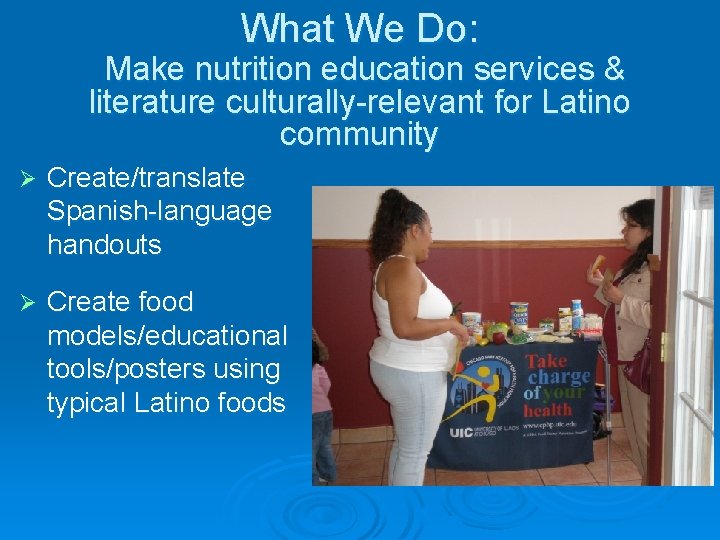
What We Do: Make nutrition education services & literature culturally-relevant for Latino community Ø Create/translate Spanish-language handouts Ø Create food models/educational tools/posters using typical Latino foods
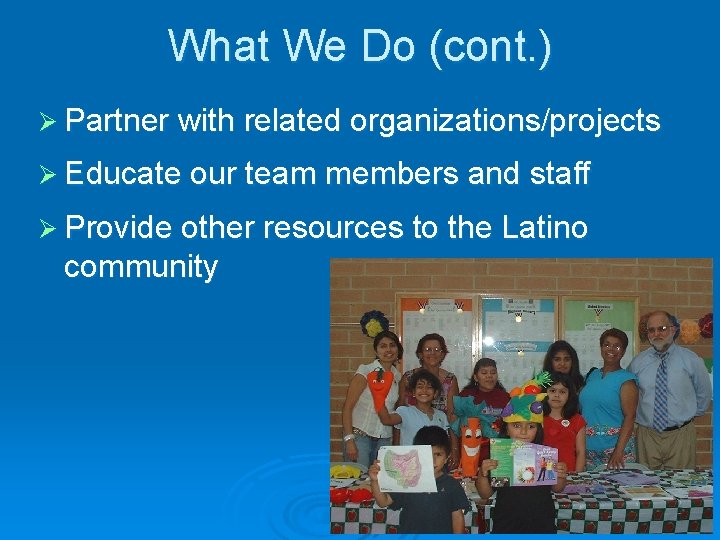
What We Do (cont. ) Ø Partner with related organizations/projects Ø Educate our team members and staff Ø Provide other resources to the Latino community
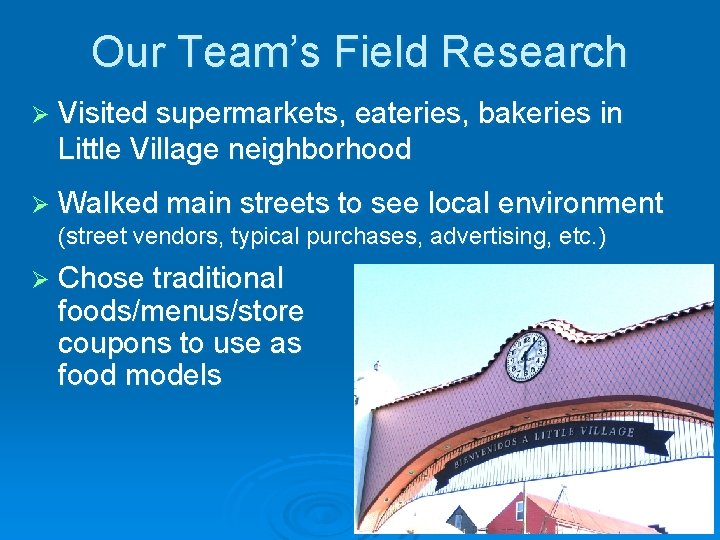
Our Team’s Field Research Ø Visited supermarkets, eateries, bakeries in Little Village neighborhood Ø Walked main streets to see local environment (street vendors, typical purchases, advertising, etc. ) Ø Chose traditional foods/menus/store coupons to use as food models
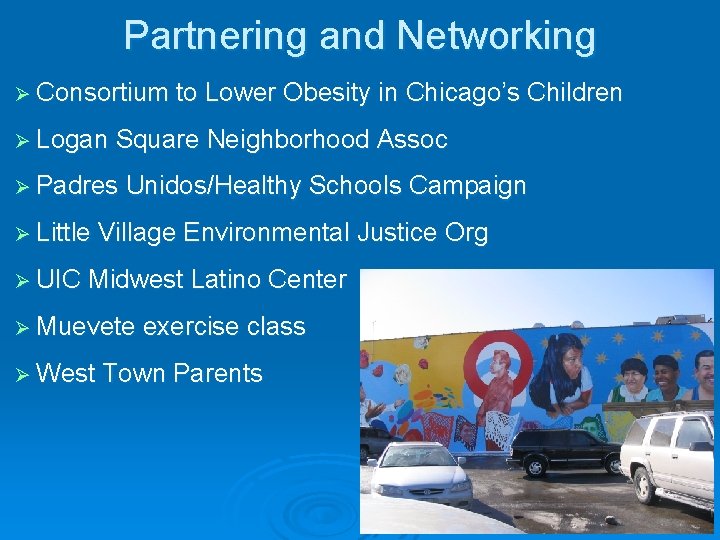
Partnering and Networking Ø Consortium Ø Logan Square Neighborhood Assoc Ø Padres Ø Little Ø UIC to Lower Obesity in Chicago’s Children Unidos/Healthy Schools Campaign Village Environmental Justice Org Midwest Latino Center Ø Muevete Ø West exercise class Town Parents
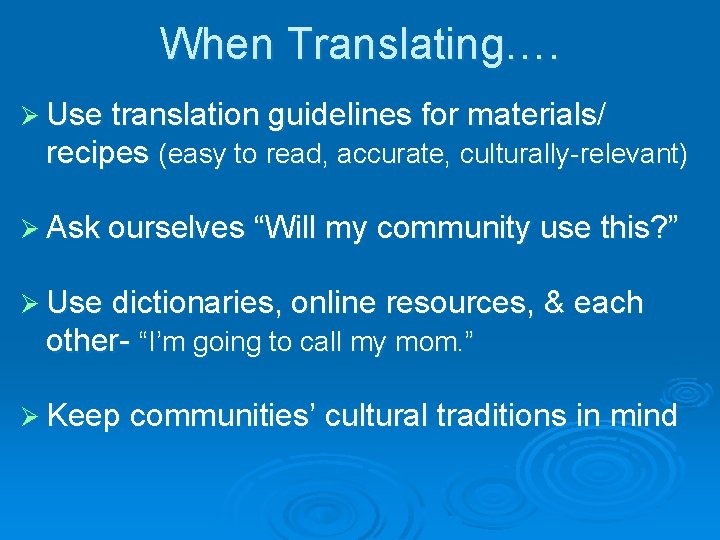
When Translating…. Ø Use translation guidelines for materials/ recipes (easy to read, accurate, culturally-relevant) Ø Ask ourselves “Will my community use this? ” Ø Use dictionaries, online resources, & each other- “I’m going to call my mom. ” Ø Keep communities’ cultural traditions in mind
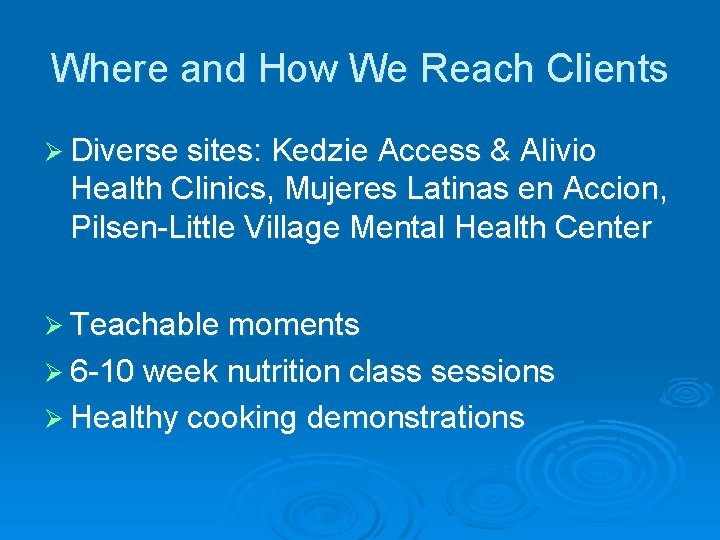
Where and How We Reach Clients Ø Diverse sites: Kedzie Access & Alivio Health Clinics, Mujeres Latinas en Accion, Pilsen-Little Village Mental Health Center Ø Teachable moments Ø 6 -10 week nutrition class sessions Ø Healthy cooking demonstrations
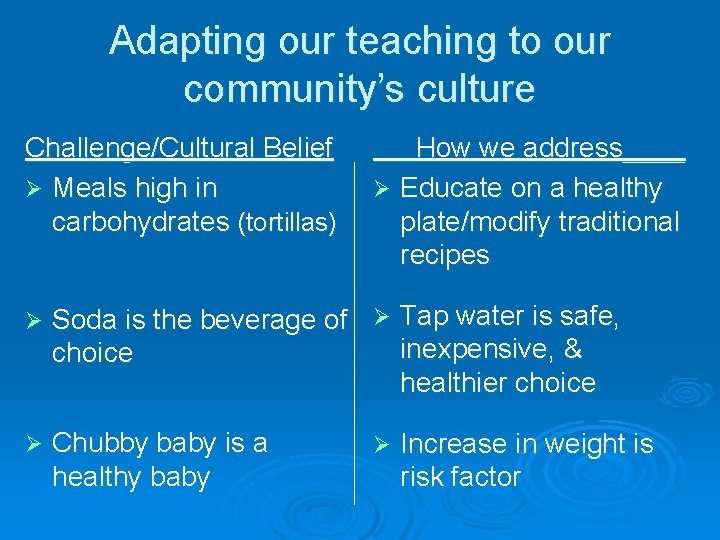
Adapting our teaching to our community’s culture Challenge/Cultural Belief Ø Meals high in carbohydrates (tortillas) How we address____ Ø Educate on a healthy plate/modify traditional recipes Ø Soda is the beverage of Ø Tap water is safe, inexpensive, & choice healthier choice Ø Chubby baby is a healthy baby Ø Increase in weight is risk factor
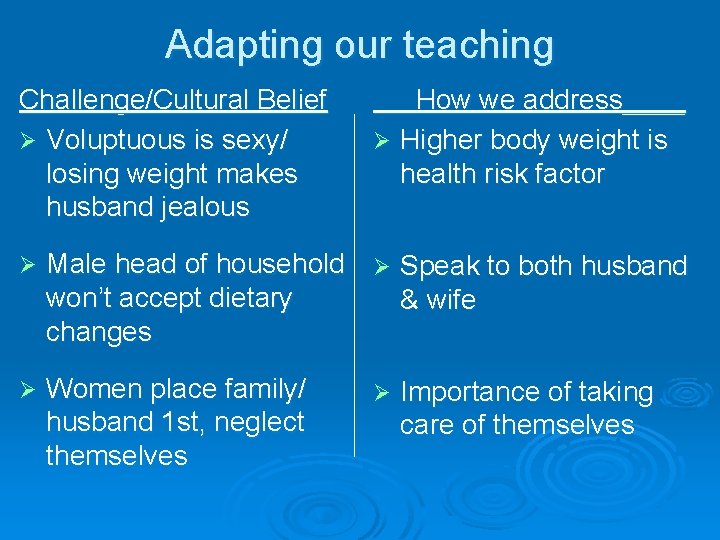
Adapting our teaching Challenge/Cultural Belief Ø Voluptuous is sexy/ losing weight makes husband jealous How we address____ Ø Higher body weight is health risk factor Ø Male head of household Ø Speak to both husband won’t accept dietary & wife changes Ø Women place family/ husband 1 st, neglect themselves Ø Importance of taking care of themselves
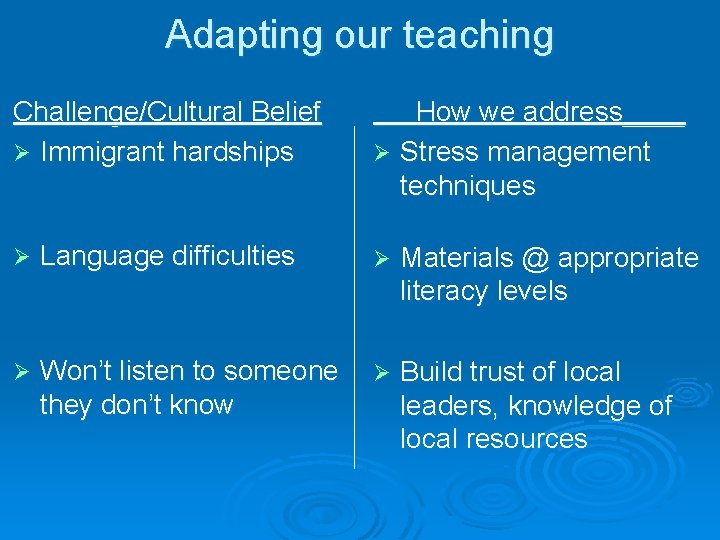
Adapting our teaching Challenge/Cultural Belief Ø Immigrant hardships How we address____ Ø Stress management techniques Ø Language difficulties Ø Materials @ appropriate literacy levels Ø Won’t listen to someone they don’t know Ø Build trust of local leaders, knowledge of local resources
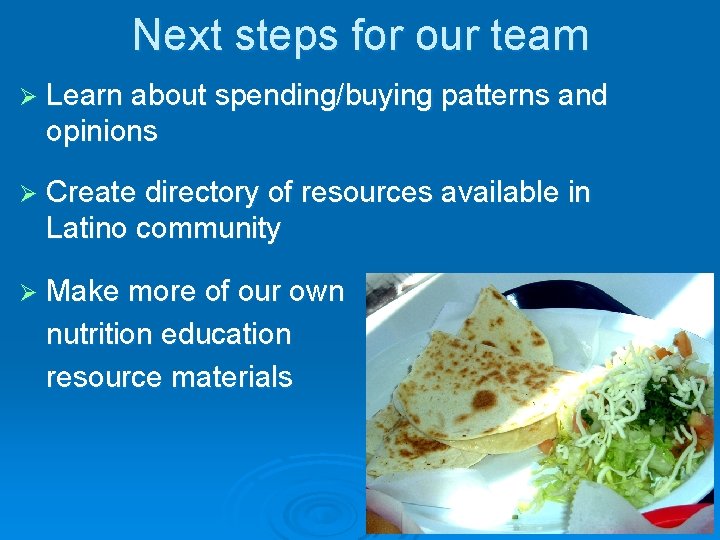
Next steps for our team Ø Learn about spending/buying patterns and opinions Ø Create directory of resources available in Latino community Ø Make more of our own nutrition education resource materials
Conclusions Ø 1. 4 million Latinos in Chicago Ø Incidence of Type II DM, CVD, asthma, obesity are increasing Ø Definite need for culturally-relevant education/materials for Latinos Ø CPHP providing & developing services to meet this need
Thank you! For additional information: Chicago Partnership for Health Promotion www. cphp. uic. edu