
Put Dispensing Errors Behind Bars Implementation of Barcode
Put Dispensing Errors Behind Bars Implementation of Barcode Scanning In Pharmacy Departments Released July 2014
The Good Pharmacist • Pharmacists are by nature (usually) very careful • Jeff Kiger, “Pharmacist: The perfect job for a perfectionist”, Post. Bulletin. com, 8 Jan 2013 • LOW rate of dispensing errors - 0. 1% 2 error rate
The Hidden Danger • Even with a low error rate High volumes of dispensing can lead to a large number of errors • For every 1, 000 items dispensed, 1 dispensing error can occur 3
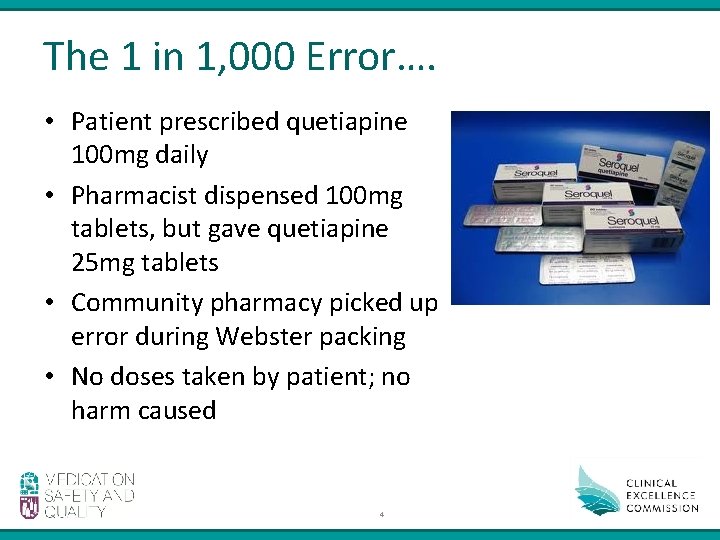
The 1 in 1, 000 Error…. • Patient prescribed quetiapine 100 mg daily • Pharmacist dispensed 100 mg tablets, but gave quetiapine 25 mg tablets • Community pharmacy picked up error during Webster packing • No doses taken by patient; no harm caused 4
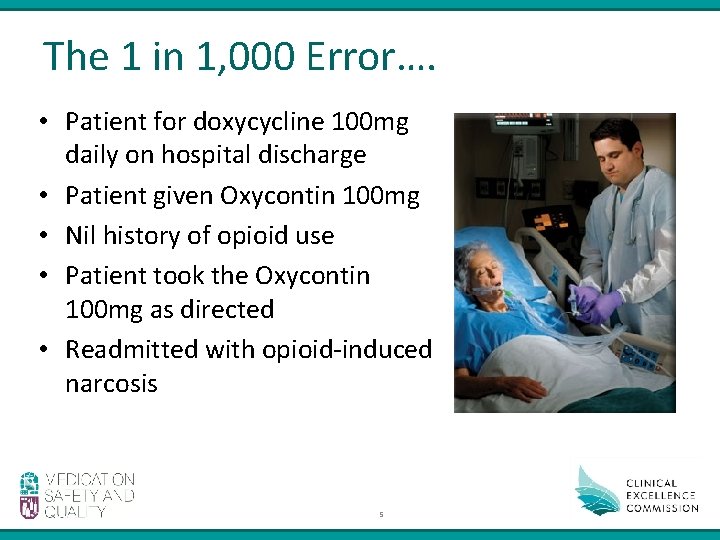
The 1 in 1, 000 Error…. • Patient for doxycycline 100 mg daily on hospital discharge • Patient given Oxycontin 100 mg • Nil history of opioid use • Patient took the Oxycontin 100 mg as directed • Readmitted with opioid-induced narcosis 5
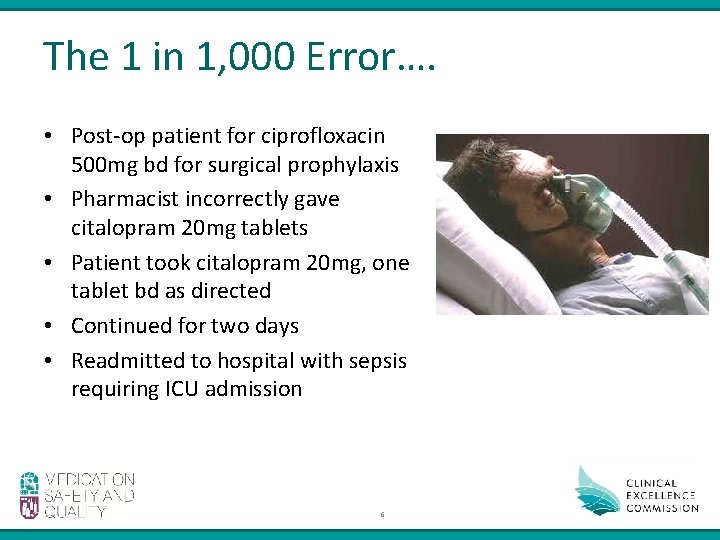
The 1 in 1, 000 Error…. • Post-op patient for ciprofloxacin 500 mg bd for surgical prophylaxis • Pharmacist incorrectly gave citalopram 20 mg tablets • Patient took citalopram 20 mg, one tablet bd as directed • Continued for two days • Readmitted to hospital with sepsis requiring ICU admission 6
The 1 in 1, 000 Error…. • Renal patient on Pegatron 120 mcg + 140 combipack • Pegatron dispensed but Pegasys 180 mcg + 140 combipack given by mistake • Patient took medication home, realised pack looked different and called Liver Clinic • Returned Pegasys without taking any doses and picked up Pegatron • Pegasys needed to be discarded • Cost to facility = around $3, 200 7

Reducing the Error Rate Further • Barcode scanning has been shown to reduce product selection errors • Studies have shown a 85% reduction in targeted dispensing errors (0. 37% to 0. 06%) 8
What is Barcode Scanning • Patient safety initiative • Way of checking the identity of product dispensed to product selected • However, barcode scanning doesn’t fix all errors…. 9
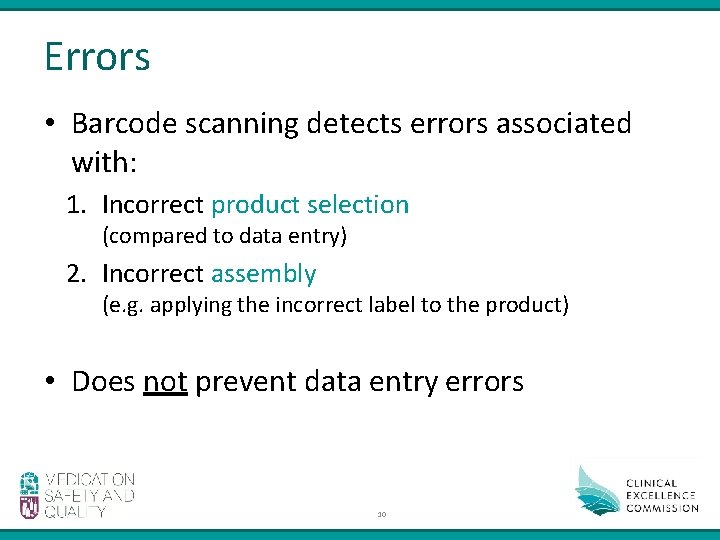
Errors • Barcode scanning detects errors associated with: 1. Incorrect product selection (compared to data entry) 2. Incorrect assembly (e. g. applying the incorrect label to the product) • Does not prevent data entry errors 10
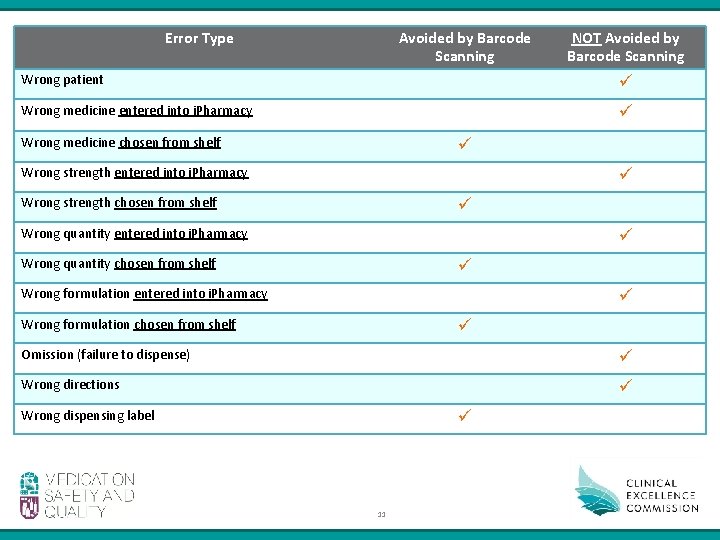
Error Type Avoided by Barcode Scanning NOT Avoided by Barcode Scanning Wrong patient Wrong medicine entered into i. Pharmacy Wrong medicine chosen from shelf Wrong strength entered into i. Pharmacy Wrong strength chosen from shelf Wrong quantity entered into i. Pharmacy Wrong quantity chosen from shelf Wrong formulation entered into i. Pharmacy Wrong formulation chosen from shelf Omission (failure to dispense) Wrong directions Wrong dispensing label 11
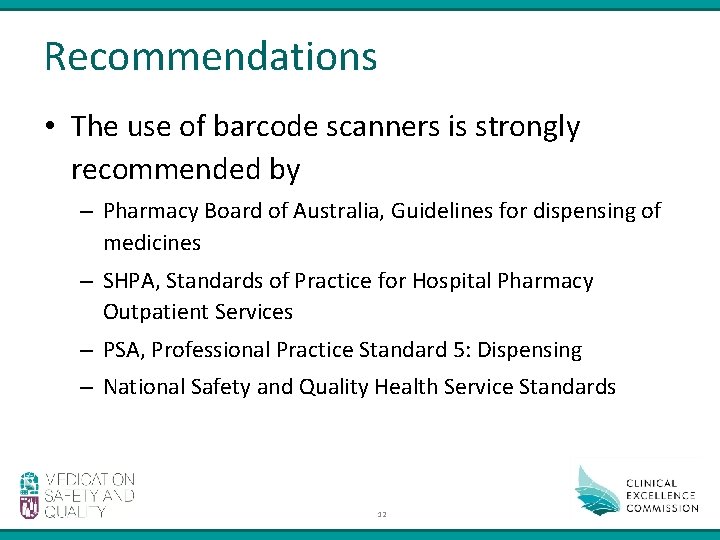
Recommendations • The use of barcode scanners is strongly recommended by – Pharmacy Board of Australia, Guidelines for dispensing of medicines – SHPA, Standards of Practice for Hospital Pharmacy Outpatient Services – PSA, Professional Practice Standard 5: Dispensing – National Safety and Quality Health Service Standards 12
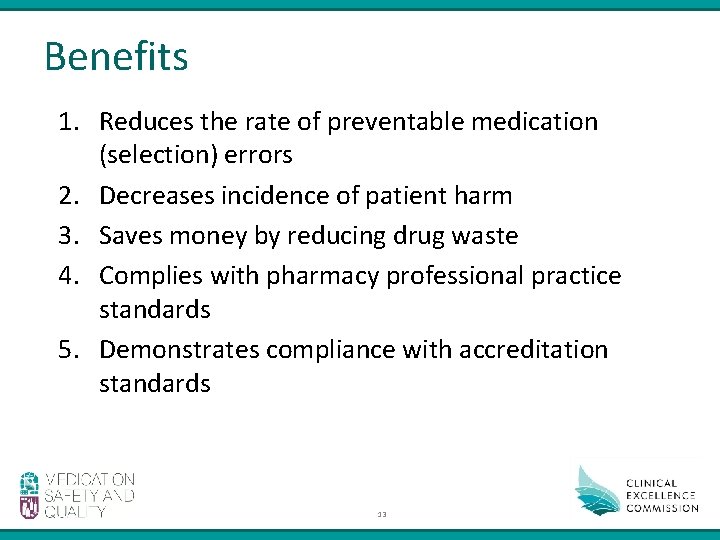
Benefits 1. Reduces the rate of preventable medication (selection) errors 2. Decreases incidence of patient harm 3. Saves money by reducing drug waste 4. Complies with pharmacy professional practice standards 5. Demonstrates compliance with accreditation standards 13
Barcode Scanning and the Dispensary Workflow 14
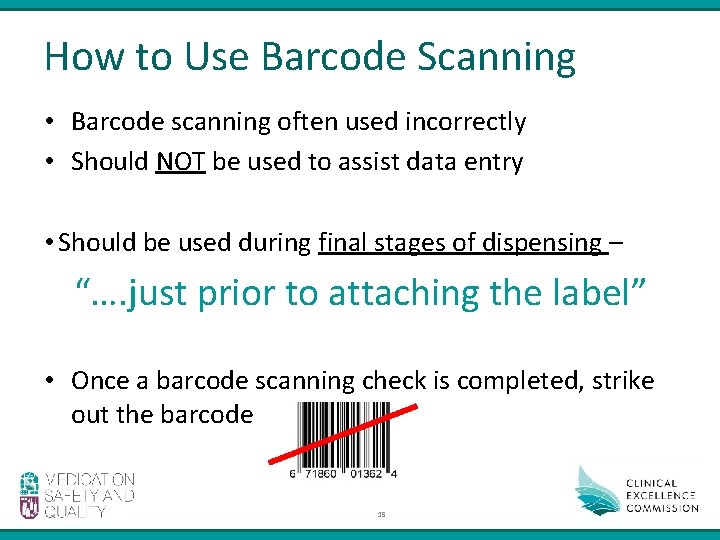
How to Use Barcode Scanning • Barcode scanning often used incorrectly • Should NOT be used to assist data entry • Should be used during final stages of dispensing – “…. just prior to attaching the label” • Once a barcode scanning check is completed, strike out the barcode 15
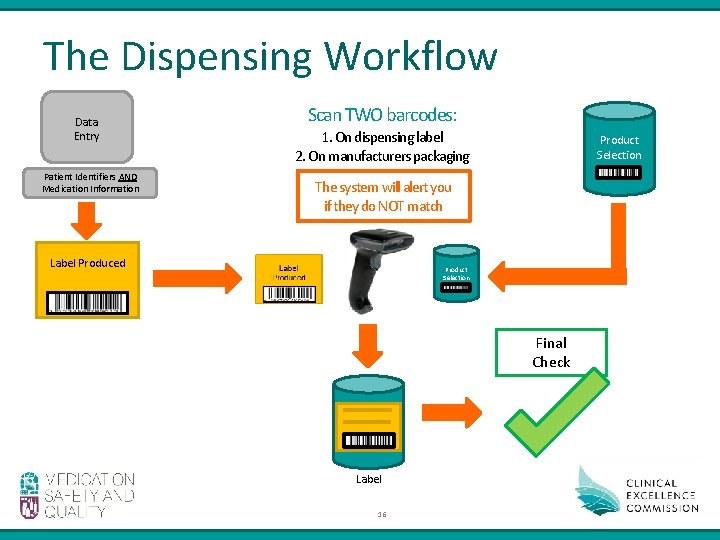
The Dispensing Workflow Data Entry Patient Identifiers AND Medication Information Scan TWO barcodes: 1. On dispensing label 2. On manufacturers packaging Product Selection The system will alert you if they do NOT match Label Produced Product Selection Final Check Label 16
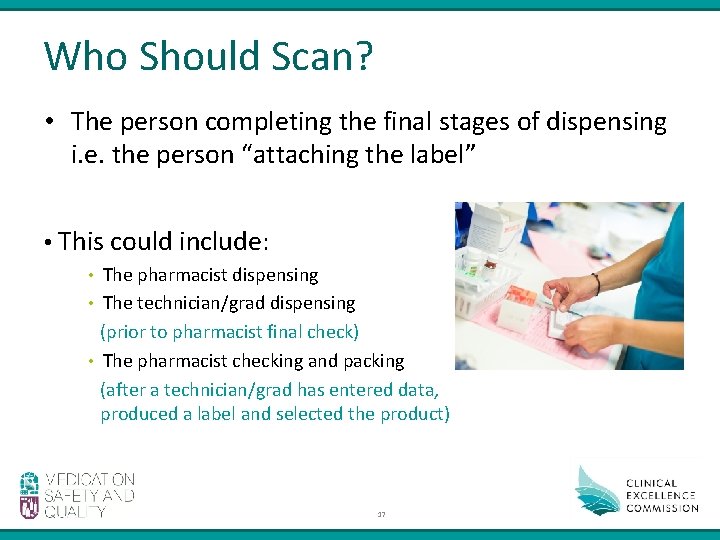
Who Should Scan? • The person completing the final stages of dispensing i. e. the person “attaching the label” • This could include: • The pharmacist dispensing • The technician/grad dispensing (prior to pharmacist final check) • The pharmacist checking and packing (after a technician/grad has entered data, produced a label and selected the product) 17
What Medications Need Scanning? Ideally, ALL medications should be scanned Some departments will start with Outpatient (full box) dispensing only EXCLUSIONS: i. Medications that are part of a trial or study ii. SAS medications iii. Extemporaneous products 18
Trouble-Shooting The barcode on the original box/bottle isn’t recognised in i. Pharmacy. What to do? 1. 2. 3. 4. Write down the medication name, strength, formulation Give details to <delegate/s name/s> <delegates name> will contact Health. Share NSW Dispense as normal. Barcode scanning will not be available so do a double/triple check! 19
Thank you Questions For further information: medicationsafety@cec. health. nsw. gov. au www. cec. health. nsw. gov. au +
- Slides: 20