
PURPURA DR MAHA HUSSIEN Definition Purpura is a


- Slides: 26
PURPURA DR/ MAHA HUSSIEN
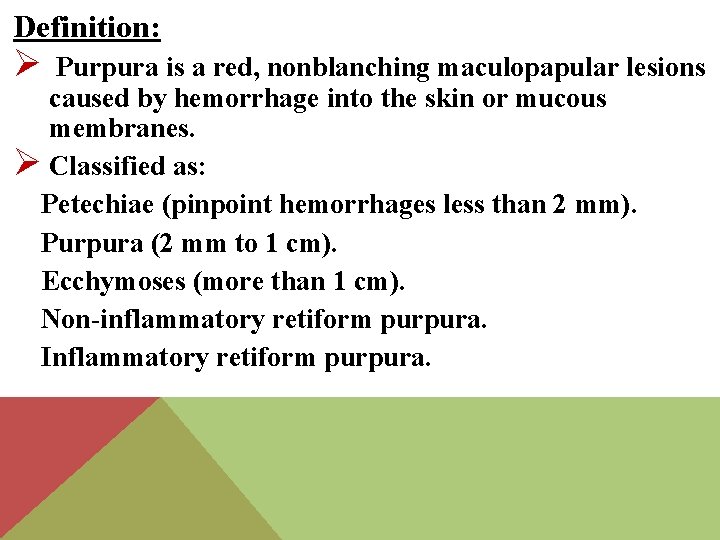
Definition: Ø Purpura is a red, nonblanching maculopapular lesions caused by hemorrhage into the skin or mucous membranes. Ø Classified as: Petechiae (pinpoint hemorrhages less than 2 mm). Purpura (2 mm to 1 cm). Ecchymoses (more than 1 cm). Non-inflammatory retiform purpura. Inflammatory retiform purpura.
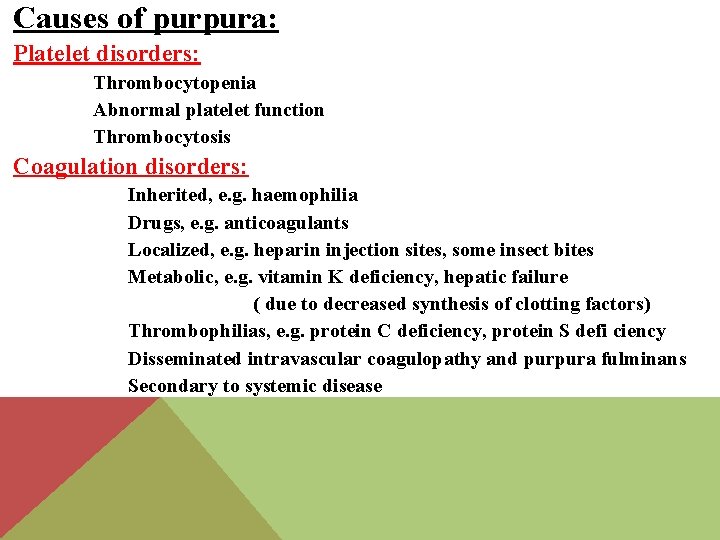
Causes of purpura: Platelet disorders: Thrombocytopenia Abnormal platelet function Thrombocytosis Coagulation disorders: Inherited, e. g. haemophilia Drugs, e. g. anticoagulants Localized, e. g. heparin injection sites, some insect bites Metabolic, e. g. vitamin K deficiency, hepatic failure ( due to decreased synthesis of clotting factors) Thrombophilias, e. g. protein C deficiency, protein S defi ciency Disseminated intravascular coagulopathy and purpura fulminans Secondary to systemic disease
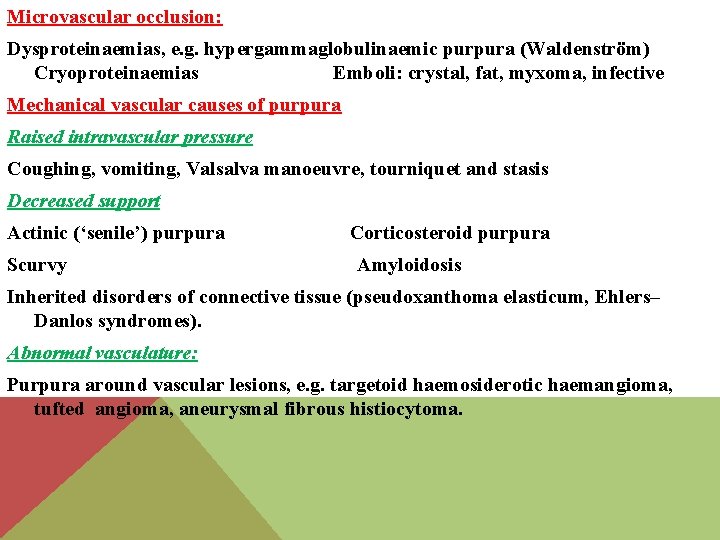
Microvascular occlusion: Dysproteinaemias, e. g. hypergammaglobulinaemic purpura (Waldenström) Cryoproteinaemias Emboli: crystal, fat, myxoma, infective Mechanical vascular causes of purpura Raised intravascular pressure Coughing, vomiting, Valsalva manoeuvre, tourniquet and stasis Decreased support Actinic (‘senile’) purpura Scurvy Corticosteroid purpura Amyloidosis Inherited disorders of connective tissue (pseudoxanthoma elasticum, Ehlers– Danlos syndromes). Abnormal vasculature: Purpura around vascular lesions, e. g. targetoid haemosiderotic haemangioma, tufted angioma, aneurysmal fibrous histiocytoma.
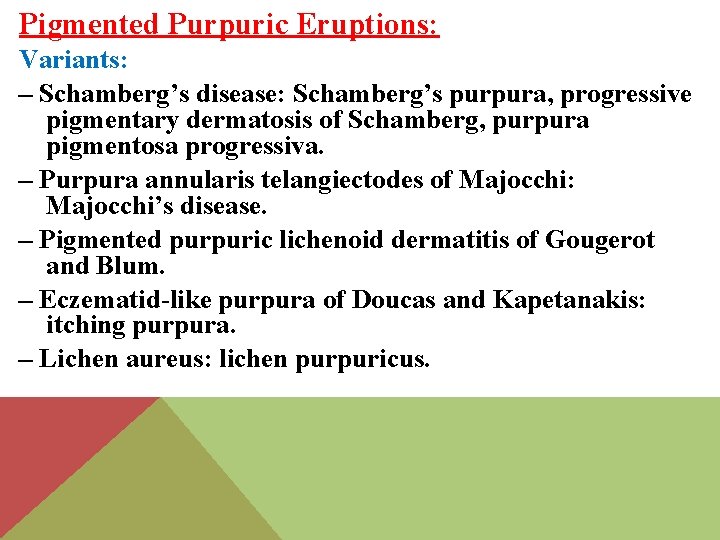
Pigmented Purpuric Eruptions: Variants: – Schamberg’s disease: Schamberg’s purpura, progressive pigmentary dermatosis of Schamberg, purpura pigmentosa progressiva. – Purpura annularis telangiectodes of Majocchi: Majocchi’s disease. – Pigmented purpuric lichenoid dermatitis of Gougerot and Blum. – Eczematid-like purpura of Doucas and Kapetanakis: itching purpura. – Lichen aureus: lichen purpuricus.
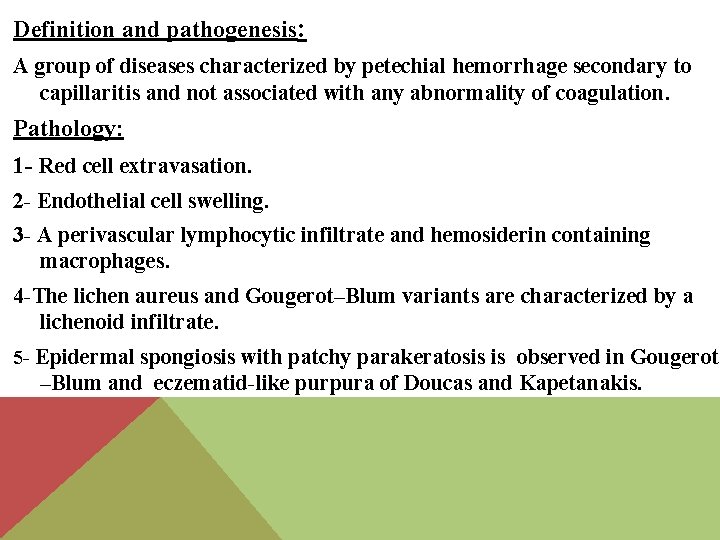
Definition and pathogenesis: A group of diseases characterized by petechial hemorrhage secondary to capillaritis and not associated with any abnormality of coagulation. Pathology: 1 - Red cell extravasation. 2 - Endothelial cell swelling. 3 - A perivascular lymphocytic infiltrate and hemosiderin containing macrophages. 4 -The lichen aureus and Gougerot–Blum variants are characterized by a lichenoid infiltrate. 5 - Epidermal spongiosis with patchy parakeratosis is observed in Gougerot –Blum and eczematid-like purpura of Doucas and Kapetanakis.
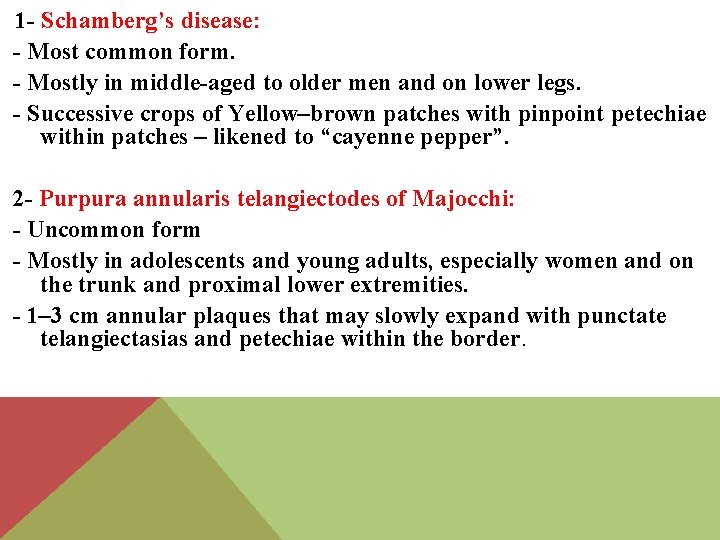
1 - Schamberg’s disease: - Most common form. - Mostly in middle-aged to older men and on lower legs. - Successive crops of Yellow–brown patches with pinpoint petechiae within patches – likened to “cayenne pepper”. 2 - Purpura annularis telangiectodes of Majocchi: - Uncommon form - Mostly in adolescents and young adults, especially women and on the trunk and proximal lower extremities. - 1– 3 cm annular plaques that may slowly expand with punctate telangiectasias and petechiae within the border.
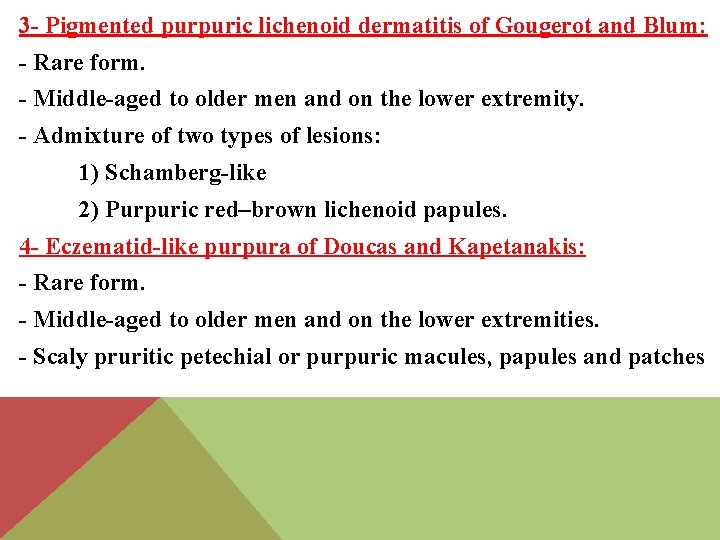
3 - Pigmented purpuric lichenoid dermatitis of Gougerot and Blum: - Rare form. - Middle-aged to older men and on the lower extremity. - Admixture of two types of lesions: 1) Schamberg-like 2) Purpuric red–brown lichenoid papules. 4 - Eczematid-like purpura of Doucas and Kapetanakis: - Rare form. - Middle-aged to older men and on the lower extremities. - Scaly pruritic petechial or purpuric macules, papules and patches
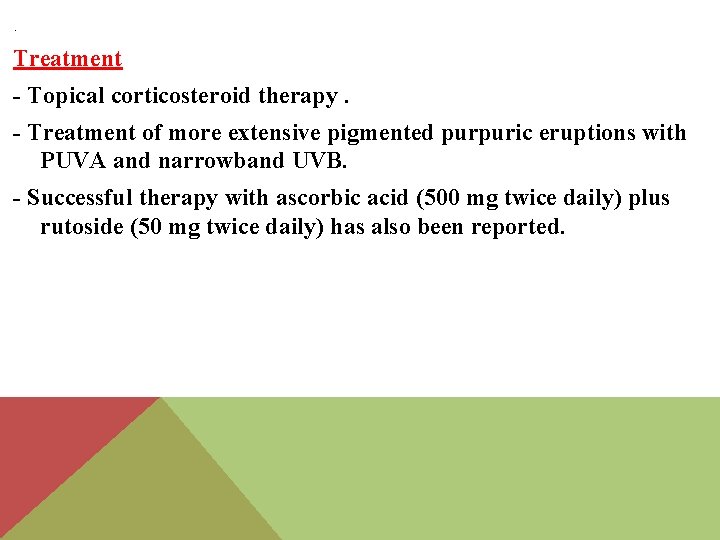
. Treatment - Topical corticosteroid therapy. - Treatment of more extensive pigmented purpuric eruptions with PUVA and narrowband UVB. - Successful therapy with ascorbic acid (500 mg twice daily) plus rutoside (50 mg twice daily) has also been reported.
Hypergammaglobulinemic Purpura of Waldenstrom: - Usually affects women - Recurrent crops of burning or tingling petechiae or large purpuric macules on the lower extremities. - Patients typically have elevated ESR. And a polyclonal hypergammaglobulinemia and high titers of Ig. G or Ig. A rheumatoid factor - Most often associated with an autoimmune connective tissue disease mostly Sjogren’s syndrome, develops in a subset of patients. Pathology: Simple hemorrhage, a mild perivascular lymphocytic infiltrate or leukocytoclastic vasculitis can characterize these lesions. Treatment: - Avoidance of precipitating factors such as alcohol and prolonged standing and tight-fitting garments may be helpful. - In secondary cases, treatment is aimed at the underlying disease.
Heparin Necrosis: - Necrosis may occur with heparin exposure after subcutaneous or intravenous administration, including the trace amounts of heparin used to keep infusion lines open. - Heparin-induced thrombocytopenia occurs in 1– 5% of adults exposed to heparin, with 30– 90% of these patients developing thrombosis. - Heparin necrosis is caused by an antibody which binds not to heparin alone, but to complexes of heparin plus platelet factor 4, a protein expressed on the platelet surface. This results in platelet consumption, aggregation, vascular occlusion, involving veins, arteries or the cutaneous microvasculature, leading to stroke, digital or limb necrosis, or cutaneous necrosis.
Clinical features - Usually occurs between days 5 and 10 of heparin therapy. - Lesions are usually tender, sharply demarcated, noninflammatory (erythema unusual), and typically purpuric or necrotic with a retiform morphology; large necrotic areas with irregular branching margins can also be seen. - Lesions may occur at the site of subcutaneous injections or may develop at sites distant to the heparin infusion. - Associated with thrombocytopenia, with a recent history of heparin administration. Treatment: Requires cessation of heparin therapy.
Thrombotic Thrombocytopenic Purpura–Hemolytic Uremic Syndrome - Primary (idiopathic) TTP - Secondary TTP hemorrhagic colitis infections pregnancy, systemic drugs (particularly cyclosporine, mitomycin C, tacrolimus, ticlopidine, quinine), metastatic carcinoma disease. autoimmune connective tissue In primary acquired TTP, autoantibodies against ADAMTS 13 are present. But not in the secondary.
The complete syndrome is characterized by fever, petechiae, thrombocytopenia, microangiopathic hemolytic anemia, renal disease and neurologic symptoms (most commonly headache and confusion). CRYOGELLING OR CRYOAGGLUTINATION: Cryoglobulins are immunoglobulins that reversibly precipitate or gel on cold exposure, and they are present in both serum and plasma. Cryofibrinogens are fibrinogens which gel in the cold, and are detectable only in plasma samples. Cold agglutinins are antibodies which promote agglutination of red cells on exposure to cold. All three groups can cause occlusive syndromes in the skin triggered by cold exposure.
- Cryoglobulins can cause disease through two mechanisms: occlusion or immune complex-mediated vasculitis. - Purpuric or necrotic lesions, often retiform, at acral sites of cold exposure, are cardinal signs). Other cutaneous findings include acral cyanosis, Raynaud’s phenomenon and livedo reticularis. Treatment: Therapy for cryogelling is primarily directed at minimizing cold exposure and controlling the underlying plasma cell dyscrasia or lymphoproliferative disorder (when possible) to reduce the titer of monoclonal cryoglobulin.
Protein C and S Disorders, Congenital and Acquired: - Neonatal purpura fulminans – congenital severe protein C or S deficiency - Warfarin necrosis – acquired protein C dysfunction - Purpura fulminans of sepsis – probable acquired severe protein C deficiency or dysfunction. - Purpura fulminans in children during recovery from streptococcal or varicella infections– severe acquired protein S dysfunction, probably antibody-mediated.
Neonatal purpura fulminans: - Protein C or protein S leads invariably to neonatal purpura fulminans within a few hours to 5 days after birth; which is fatal unless treated. - Lesions of neonatal purpura fulminans are those of noninflammatory retiform purpura, until confluence results in largescale cutaneous and limb necrosis and, ultimately, visceral organ involvement. - In addition, such infants are often born with cerebral thrombosis or retinal vessel occlusion with congenital blindness. Treatment: - Intravenous protein C concentrate is used as initial therapy and then warfarin is begun, followed by tapering of the concentrate and warfarin is continued for life.
Warfarin necrosis: - Warfarin therapy results in abnormal γ-carboxylation by the liver of the vitamin K-sensitive factors; presumably, severe vitamin K deficiency and a resulting deficiency of vitamin K dependant factors including protein C (i. e. protein C function can drop dramatically within days). - Usually develops within 2– 5 days of starting warfarin in the absence of heparin, it is four times higher in women, with a peak incidence in the sixth and seventh decades of life.
Affected sites usually overlie abundant subcutaneous fat, such as the breast, hip, buttock or thigh. Pain is often the first sign, followed by well-demarcated erythema, which rapidly becomes hemorrhagic and then necrotic. Partial retiform or branching purpura typically can be seen within or at the margin of the cutaneous lesions. Treatment: - Begins with discontinuing the warfarin; administration of vitamin K and heparin at therapeutic doses is recommended. - Use of protein C concentrate should also be strongly considered.
Purpura fulminans with sepsis: - Purpura fulminans is most famously associated with meningococcal infection, it can occur in association with sepsis syndromes from a variety of bacteria, including S. aureus, groups A and B β-hemolytic streptococci, S. pneumoniae, Haemophilus influenzae and H. aegyptius.
Purpura fulminans postinfection: - Recognized in children which occurs during the recovery period from either group A streptococcal or varicella–zoster viral infections. - These patients do not have deficient protein C activity; instead, they have an acquired antibody which interferes with protein S function. - The development of post infectious purpura fulminans roughly 2 weeks after the onset of the initial infection would correlate well with the production of infection-triggered antibodies which interfere with protein S function. Treatment: - This syndrome is even more challenging than treating protein C deficiency, because currently there is no commercially available protein S concentrate. - In addition, it is significantly more difficult to overcome antibody-mediated inhibition of protein S than to restore a deficiency of protein S. A combination of plasma exchange and prednisone is recommended as well as heparin anticoagulation.
Idiopathic (immune) thrombocytopenic purpura: - The most common etiology of thrombocytopenia in childhood. - Caused by the development of Ig. G autoantibodies to platelet membrane antigens as a result of an unbalanced response to an infectious agent or autoimmunity. - Sudden onset of bruises, purpura, mucosal hemorrhage and petechiae in a child who is otherwise in excellent health. - Antecedent viral infection is common. - The peak incidence is between two and four years of age. - 80 to 90 percent of children recovering within six to 12 months. - Chronic idiopathic thrombocytopenic purpura is more likely to present in teenage girls and children with underlying immune disorders. - It has a more insidious onset.
Drugs: - Penicillin, valproic acid (Depakene), quinidine, sulfonamides, cimetidine (Tagamet) and heparin. Post-transfusion purpura: - Acute onset of thrombocytopenia approximately five to 14 days after a transfusion. Rarely - HIV, CMV, HSV. - 10% of SLE cases.
Workup: - Complete Blood Count (CBC): - Isolated thrombocytopenia (key laboratory finding). - The white blood cell (WBC) count should be normal. - Hemoglobin level should be normal, unless severe hemorrhage has occurred. - Peripheral Smear: If truly giant platelets are found this is indicative of congenital thrombocytopenia. - Coagulation Studies: Results typically appear normal and a normal bleeding time does not exclude a platelet disorder.
Treatment: - Corticosteroids : - Prednisone (Deltasone, Orasone, Sterapred). - Methylprednisolone (Solu-Medrol, Depo-Medrol). - Intravenous immune globulin (IVIg). - Splenectomy. - Rituximab.