
Puritanism Colonial Period 1607 1750 When Timeline for
- Slides: 16
Puritanism (Colonial Period) 1607 -1750
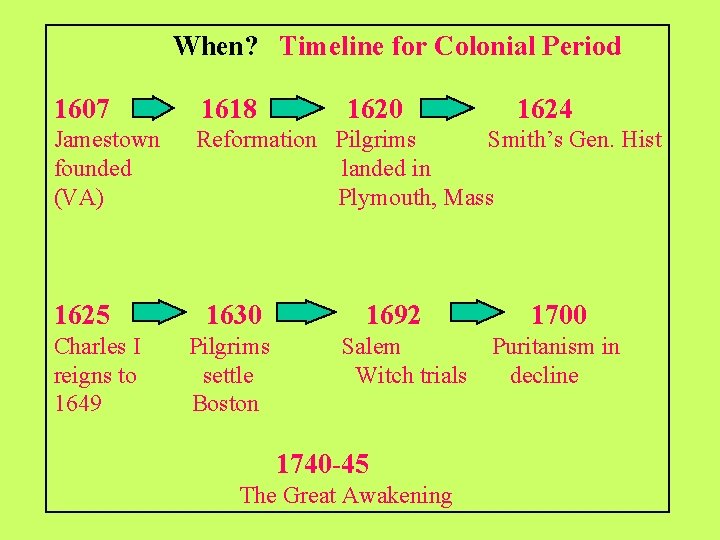
When? Timeline for Colonial Period 1607 1618 Jamestown founded (VA) Reformation Pilgrims Smith’s Gen. Hist landed in Plymouth, Mass 1625 Charles I reigns to 1649 1630 Pilgrims settle Boston 1620 1692 Salem Witch trials 1740 -45 The Great Awakening 1624 1700 Puritanism in decline
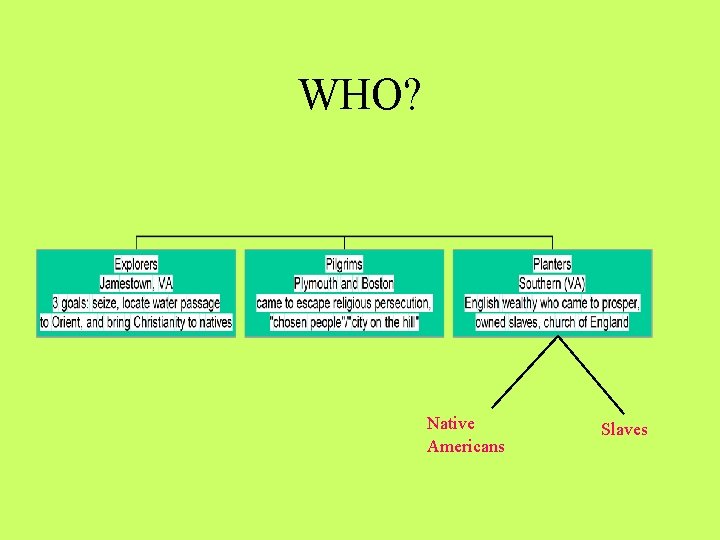
WHO? Native Americans Slaves
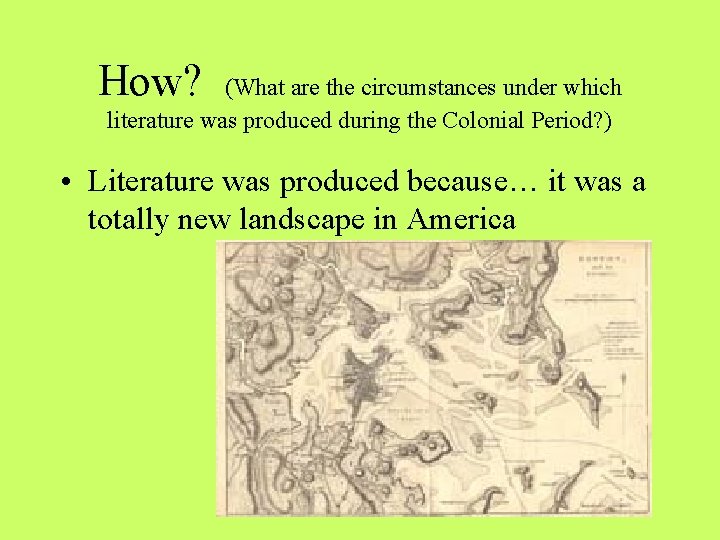
How? (What are the circumstances under which literature was produced during the Colonial Period? ) • Literature was produced because… it was a totally new landscape in America
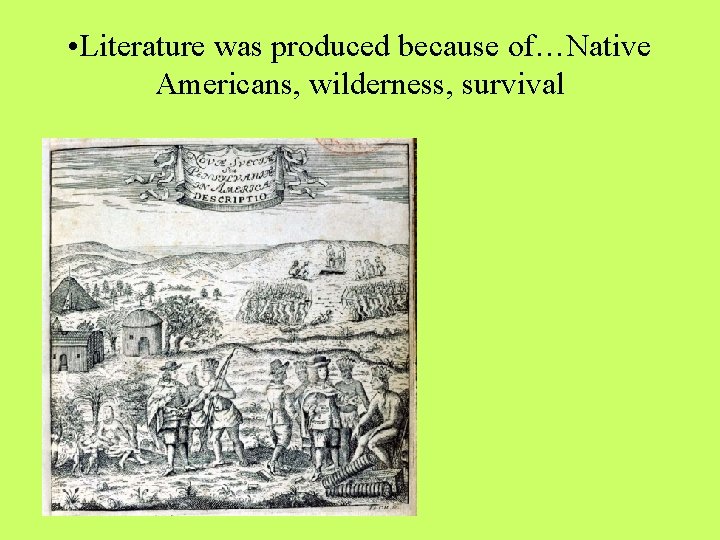
• Literature was produced because of…Native Americans, wilderness, survival
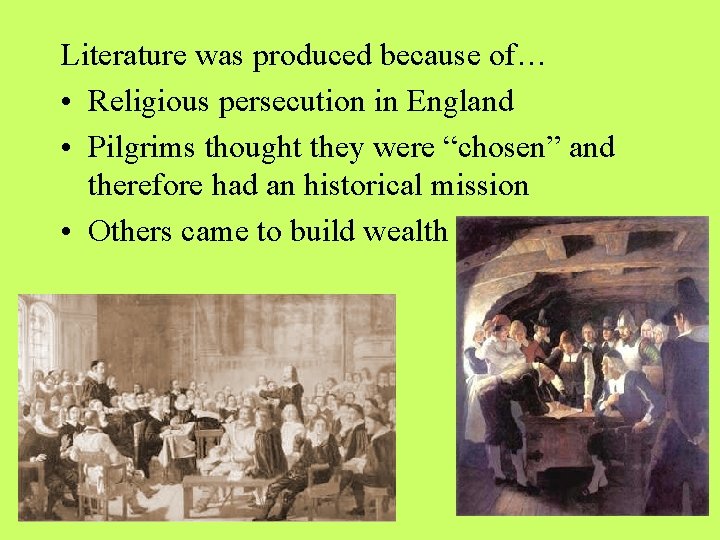
Literature was produced because of… • Religious persecution in England • Pilgrims thought they were “chosen” and therefore had an historical mission • Others came to build wealth
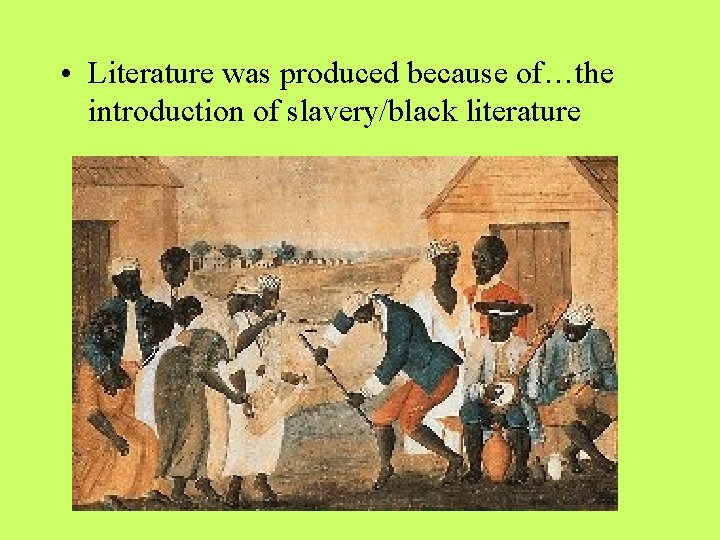
• Literature was produced because of…the introduction of slavery/black literature
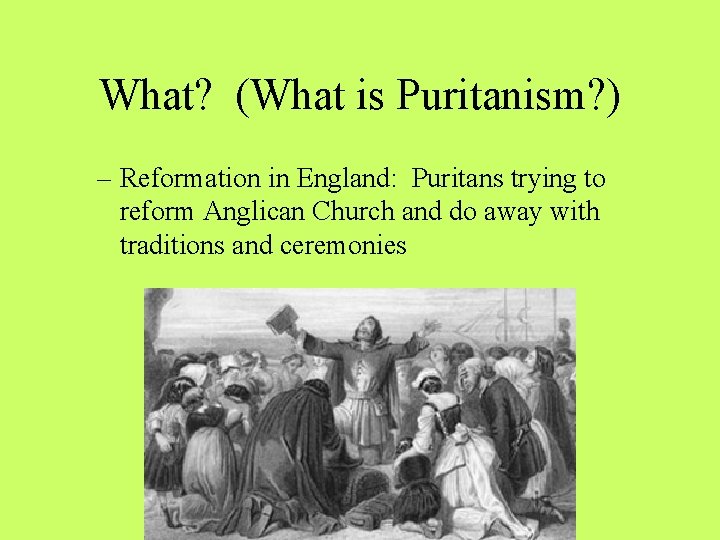
What? (What is Puritanism? ) – Reformation in England: Puritans trying to reform Anglican Church and do away with traditions and ceremonies
• Charles I reigned: Puritans became a minority political party oppressed by Charles • Couldn’t buy land, lost rights, required to worship in Anglican church • Left for “city upon a hill” -- Plymouth and Boston
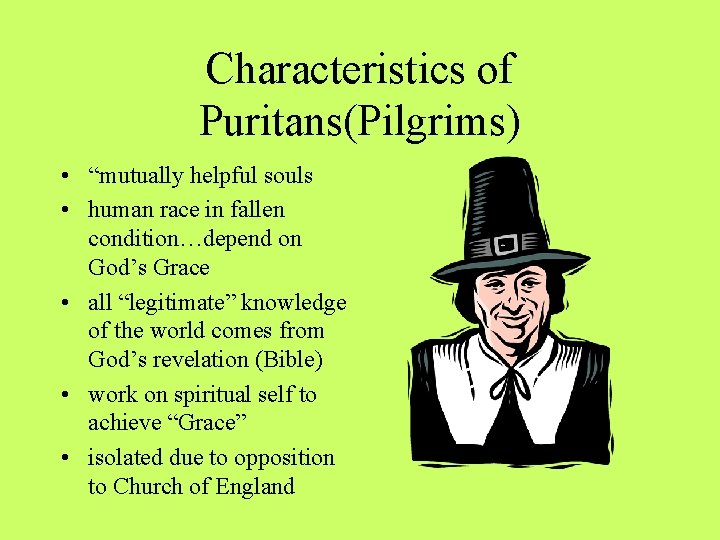
Characteristics of Puritans(Pilgrims) • “mutually helpful souls • human race in fallen condition…depend on God’s Grace • all “legitimate” knowledge of the world comes from God’s revelation (Bible) • work on spiritual self to achieve “Grace” • isolated due to opposition to Church of England
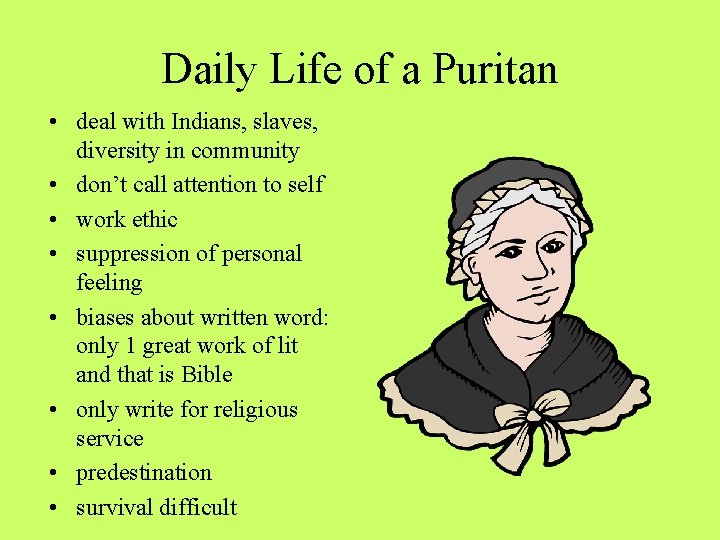
Daily Life of a Puritan • deal with Indians, slaves, diversity in community • don’t call attention to self • work ethic • suppression of personal feeling • biases about written word: only 1 great work of lit and that is Bible • only write for religious service • predestination • survival difficult
Adjectives to describe Puritans • • • pious modest direct passionate about religion obedient to God intelligent, yet unwilling to be better than others • plain • introspective
3 Values of Puritans: • 1) Grace: attempt to cleanse self of vanity, envy, and lust through God • 2) plainness: simple worship without adornments (one of arguments against Church of England) • 3) divine mission: go to America as God’s appointed place…the “city upon a hill”
The Writings of Puritans • Puritan poetry depressing and not always enjoyable to read • about religious subjects and morality • conceits (Taylor) • religious imagery and metaphor • Puritan prose often sermons (Jonathan Edwards) • reflected own survival and fears • showed relationship to fellow man (including Native Americans)
Difficulties of Establishing a Native Literary Culture in America • In early Colonial Period no leisure time • concerned with survival • not much time to write • biases Puritans held against written word for entertainment • only the Bible as 1 great work of literature • literature in the service of religion only • Until 1837, no international copyright law • So publishers reluctant to take on American writers when could reprint well known English writers without paying for rights
Literary Nationalism • A movement to create a literature unique to America • Emerson and Melville, for instance, in a later literary period