
Purification of cells Preparation of gradient solutions from

- Slides: 22
Purification of cells Preparation of gradient solutions from general purpose media
Axis-Shield Iodinated Density Gradient Media (General Purpose) • Diatrizoate • Nycodenz® • Iodixanol
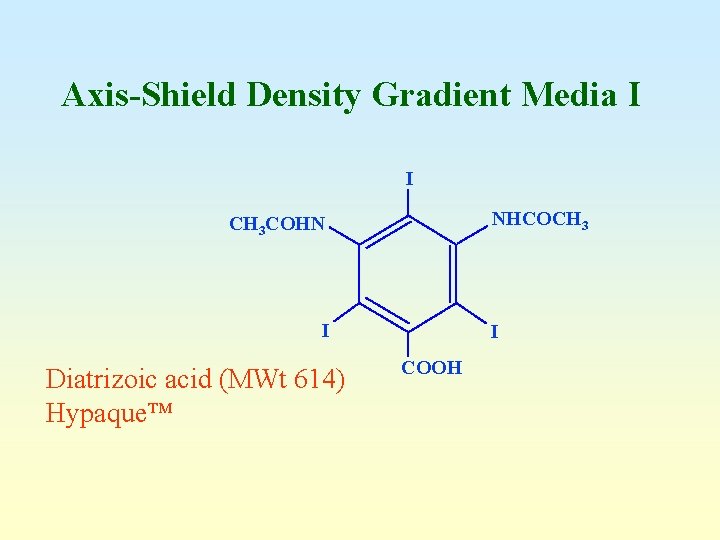
Axis-Shield Density Gradient Media I I NHCOCH 3 COHN I Diatrizoic acid (MWt 614) Hypaque I COOH
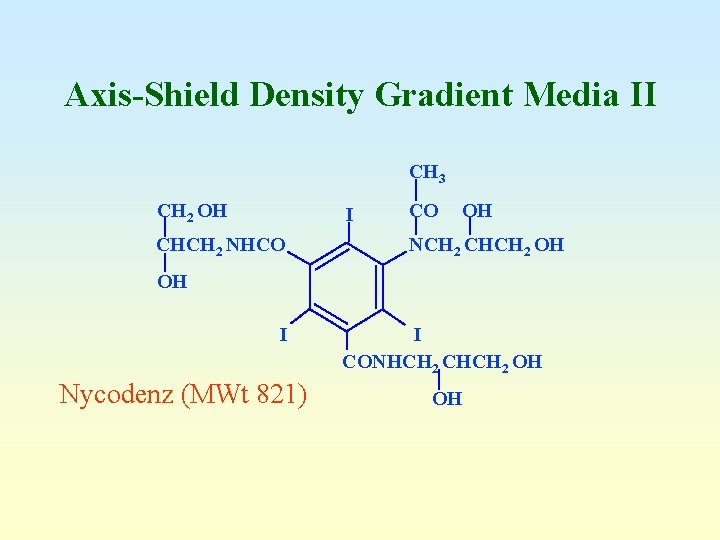
Axis-Shield Density Gradient Media II CH 3 CH 2 OH I CHCH 2 NHCO CO OH NCH 2 CHCH 2 OH OH I Nycodenz (MWt 821) I CONHCH 2 CHCH 2 OH OH
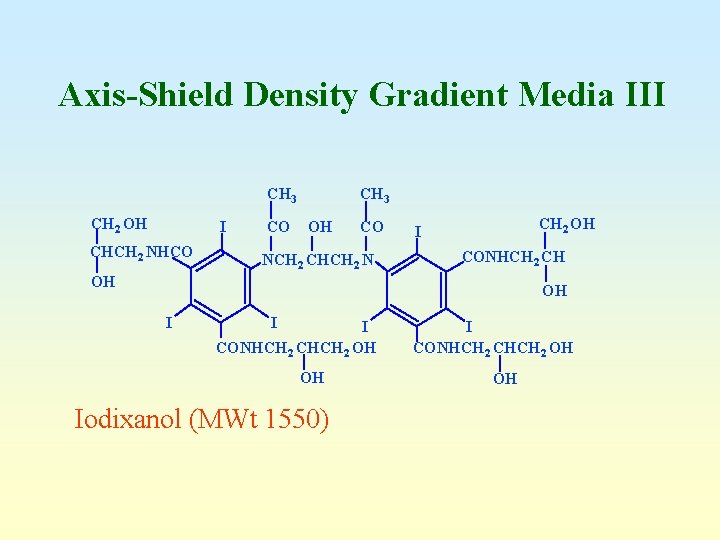
Axis-Shield Density Gradient Media III CH 3 CH 2 OH I CHCH 2 NHCO CO CH 3 OH CO NCH 2 CHCH 2 N CH 2 OH I CONHCH 2 CH OH OH I I I CONHCH 2 CHCH 2 OH OH Iodixanol (MWt 1550) I CONHCH 2 CHCH 2 OH OH
Axis-Shield Density Gradient Media (General Purpose) • Polysucrose • MWt approx 450, 000
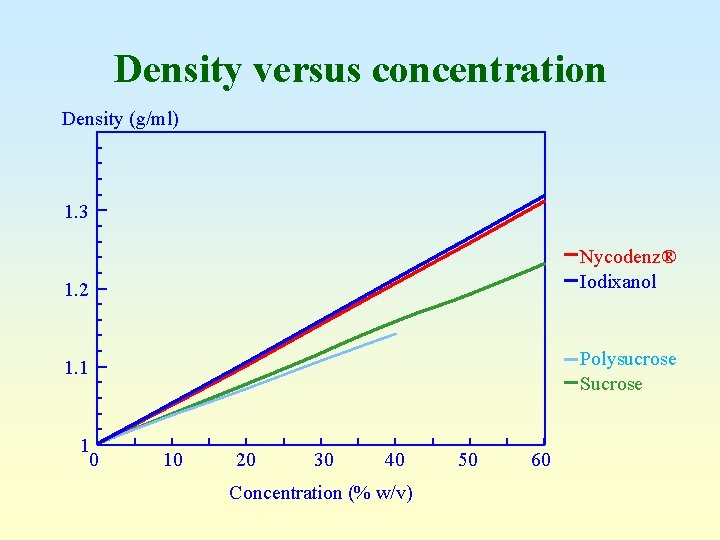
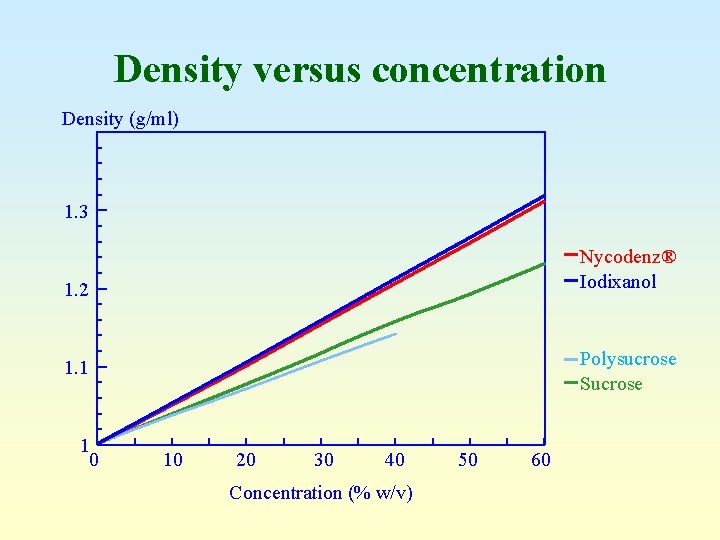
Density versus concentration Density (g/ml) 1. 3 Nycodenz® Iodixanol 1. 2 Polysucrose Sucrose 1. 1 1 0 10 20 30 40 Concentration (% w/v) 50 60
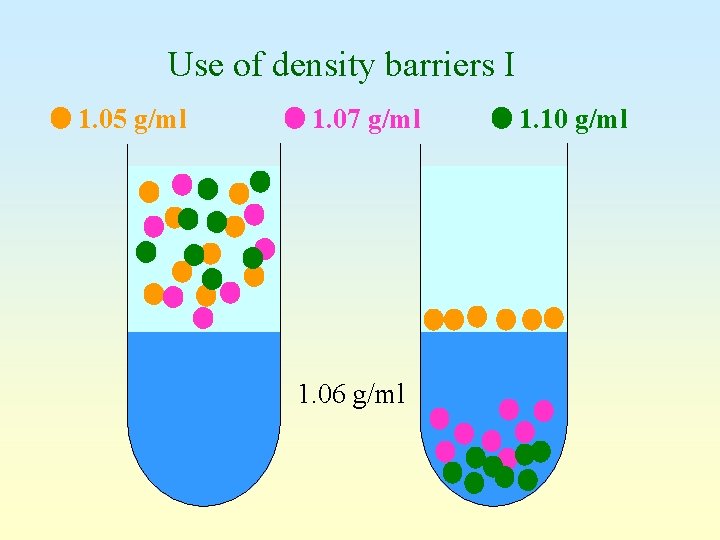
Use of density barriers I 1. 05 g/ml 1. 07 g/ml 1. 06 g/ml 1. 10 g/ml
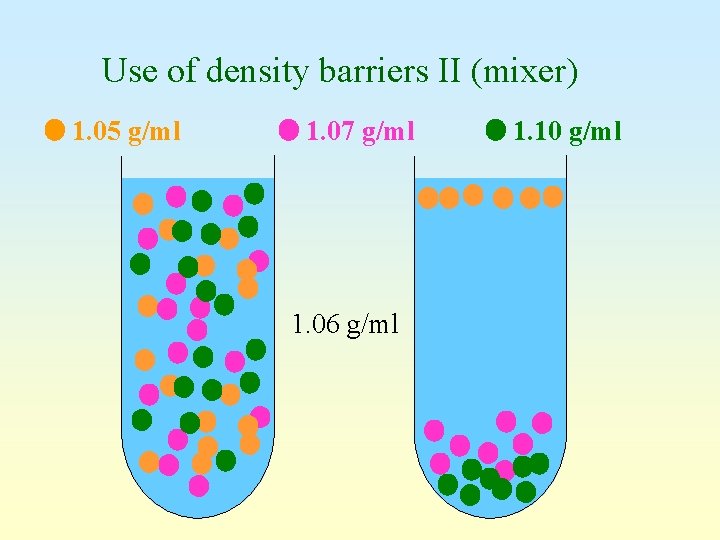
Use of density barriers II (mixer) 1. 05 g/ml 1. 07 g/ml 1. 06 g/ml 1. 10 g/ml
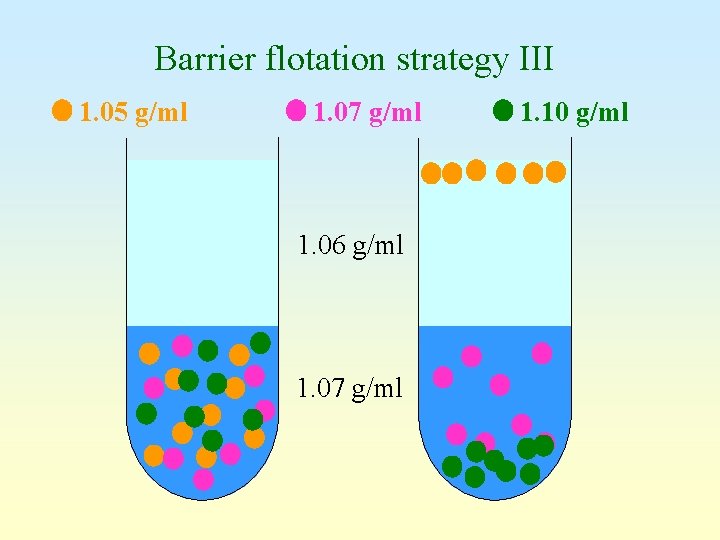
Barrier flotation strategy III 1. 05 g/ml 1. 07 g/ml 1. 06 g/ml 1. 07 g/ml 1. 10 g/ml
Axis-Shield Density Gradient Media for Cells • Diatrizoic acid powder • Nycodenz® powder • Opti. Prep™: a sterile 60% (w/v) solution of iodixanol in water, density = 1. 32 g/ml Principal competition: Percoll®
Density versus concentration Density (g/ml) 1. 3 Nycodenz® Iodixanol 1. 2 Polysucrose Sucrose 1. 1 1 0 10 20 30 40 Concentration (% w/v) 50 60
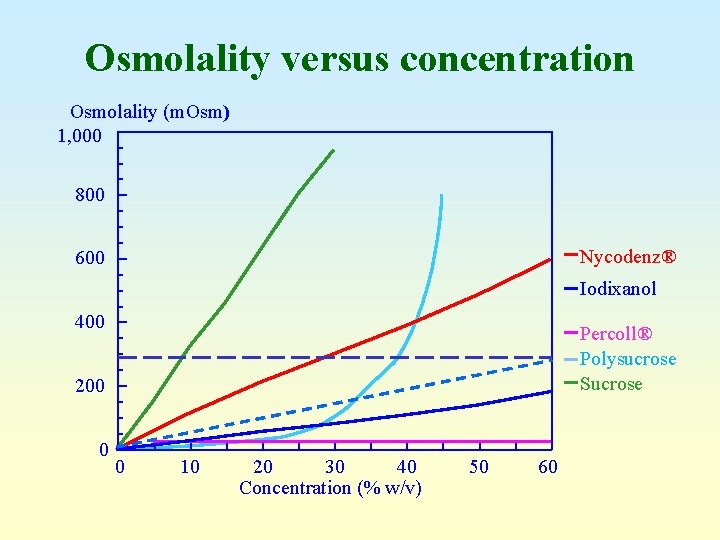
Osmolality versus concentration Osmolality (m. Osm) 1, 000 800 Nycodenz® 600 Iodixanol 400 Percoll® Polysucrose Sucrose 200 0 0 10 20 30 40 Concentration (% w/v) 50 60
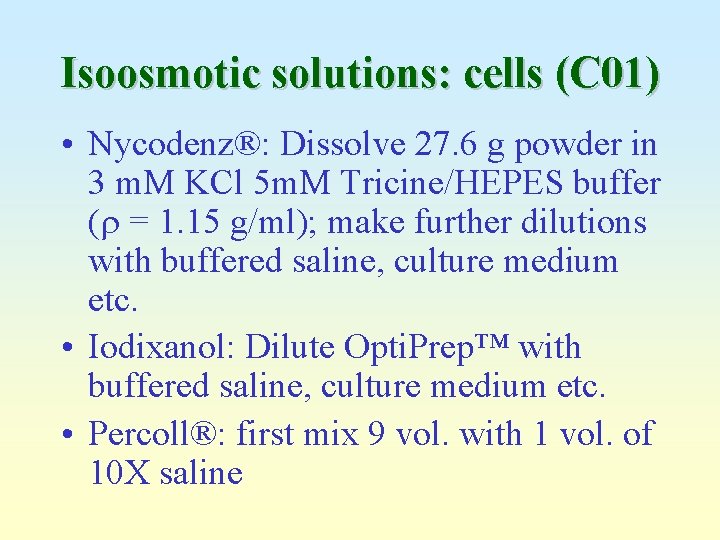
Isoosmotic solutions: cells (C 01) • Nycodenz®: Dissolve 27. 6 g powder in 3 m. M KCl 5 m. M Tricine/HEPES buffer ( = 1. 15 g/ml); make further dilutions with buffered saline, culture medium etc. • Iodixanol: Dilute Opti. Prep™ with buffered saline, culture medium etc. • Percoll®: first mix 9 vol. with 1 vol. of 10 X saline
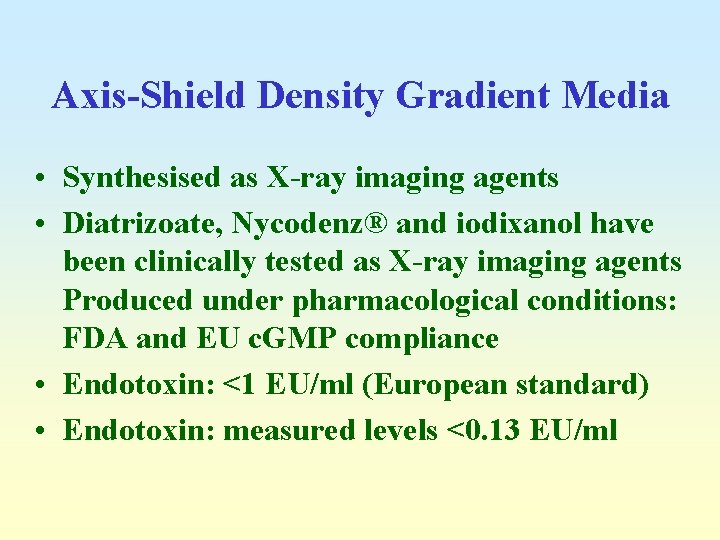
Axis-Shield Density Gradient Media • Synthesised as X-ray imaging agents • Diatrizoate, Nycodenz® and iodixanol have been clinically tested as X-ray imaging agents Produced under pharmacological conditions: FDA and EU c. GMP compliance • Endotoxin: <1 EU/ml (European standard) • Endotoxin: measured levels <0. 13 EU/ml
What is endotoxin? • Endotoxin is a heat-resistant pyrogen (sometimes called lipopolysaccharide), which is released by Gram-negative bacteria.
What are the effects of endotoxin in vivo? • • • A variety of inflammatory responses Hypotension Changes to leukocyte populations Intravascular coagulation Shock Death
What are the effects of endotoxin in vitro? • Interacts with CD 14 and other receptors • Causes cytokine production in monocytes and macrophages • Activates complement and coagulation cascades • Acts as a B cell mitogen
Percoll® problems I • • High levels of endotoxin (6 -60 EU/ml) Some free polyvinylpyrollidone (PVP) PVP toxic to cells More expensive versions with reduced endotoxin levels or PVP-free
Is Percoll® innocuous to cells? Wakefield, J. S. et al (1982) Biochem. J. 202, 795 -797 • Peritoneal macrophages, rat liver Kupffer cells, rat testis Leydig cells ingest large numbers of colloidal silica particles at room temperature • Colloidal silica particles adhere to cell surface at all temperatures • Affects adherence of macrophages
Percoll® problems: II • Toxicity to Type II lung pneumocytes: Viscardi RM et al (1992) Exp. Lung Res. , 18, 225 -245 • Poor recoveries of gastric parietal cells; stimulation of acid and c. AMP secretion: Benn, SE et al (1987) J. Physiol. 391, 9 P • Toxicity to progenitor cells: Mayanagi, T et al (2003) Reproduction, 125, 667 -675 • Adherence of silica to erythrocytes causes progressive haemolysis: Kamiyama M. (2002) Personal communication
Percoll® problems: III • Poor recovery and function of soil bacteria: Robe, P et al (2003) Eur. J. Soil Biol. , 39, 183 -190 • Poor viability of plasmodium: Carter, EH et al (1987) Parasitology, 95, 25 -30 • Poor yield and purity of intracellular bacteria: Henriquez, V. et al (2003) Appl. Environ. Microbiol. , 69, 6268 -6271 • Phagocytosed by sea urchin cells: Gross, PS et al (2000) Immunogenetics, 51, 1034 -1044