
PureRotational and Electronic Raman Spectrum of Nitric Oxide

- Slides: 20
Pure-Rotational and Electronic. Raman Spectrum of Nitric Oxide. Aman Satija, Ning Chai and Robert P. Lucht
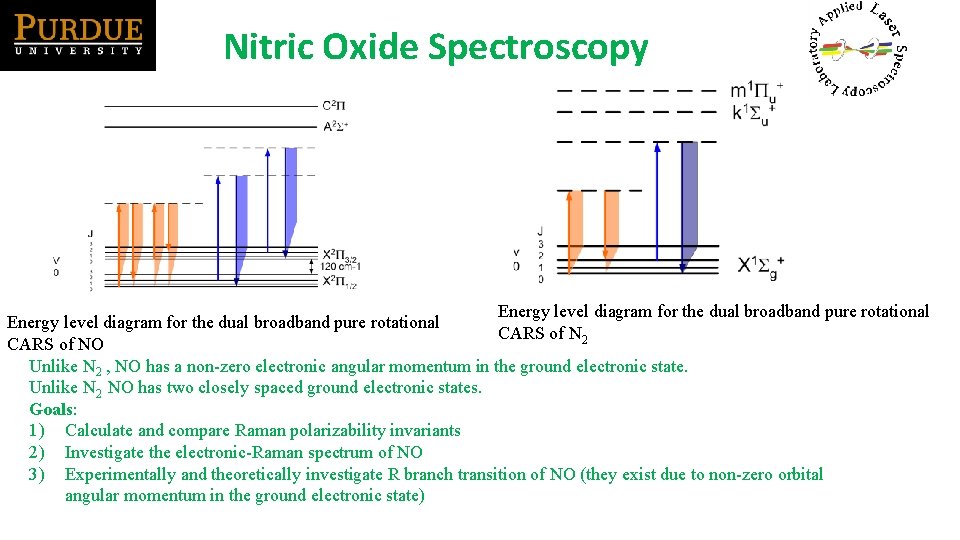
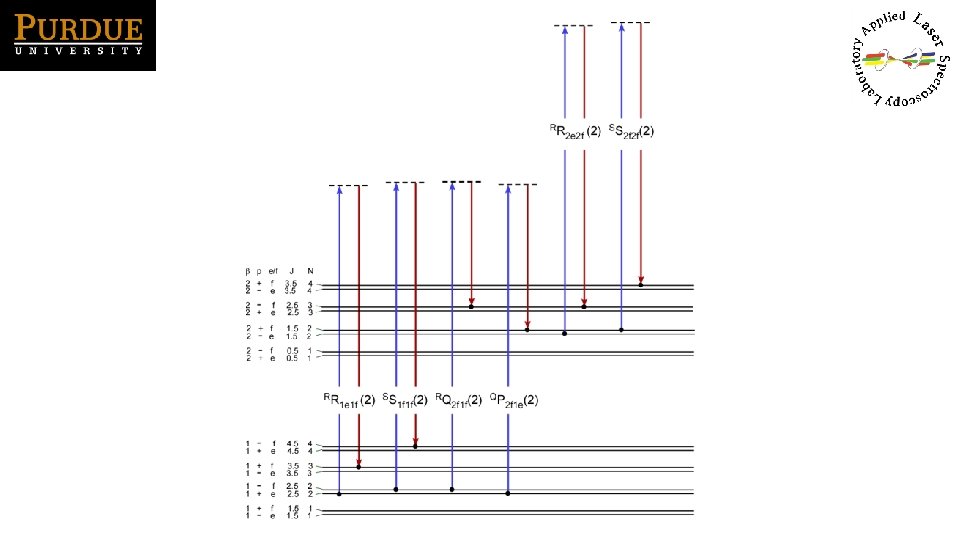
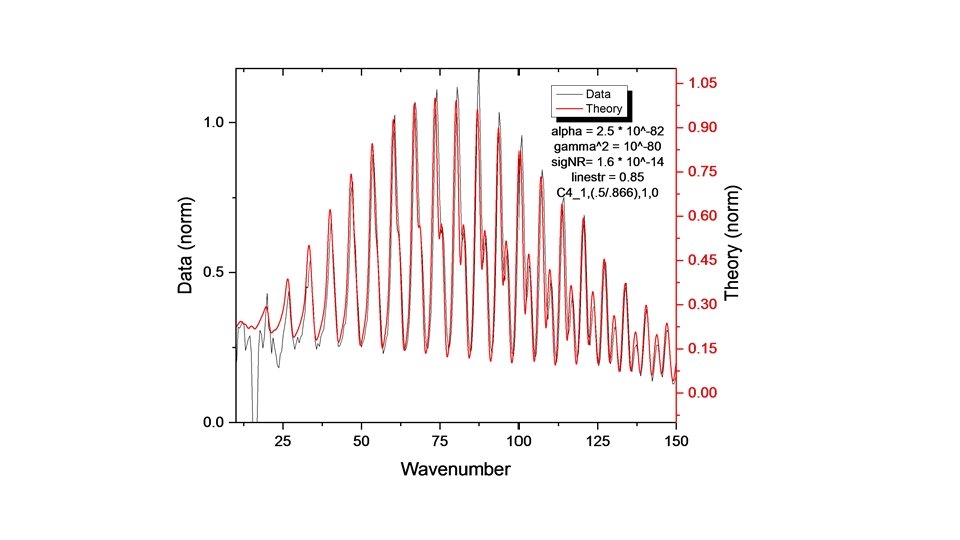
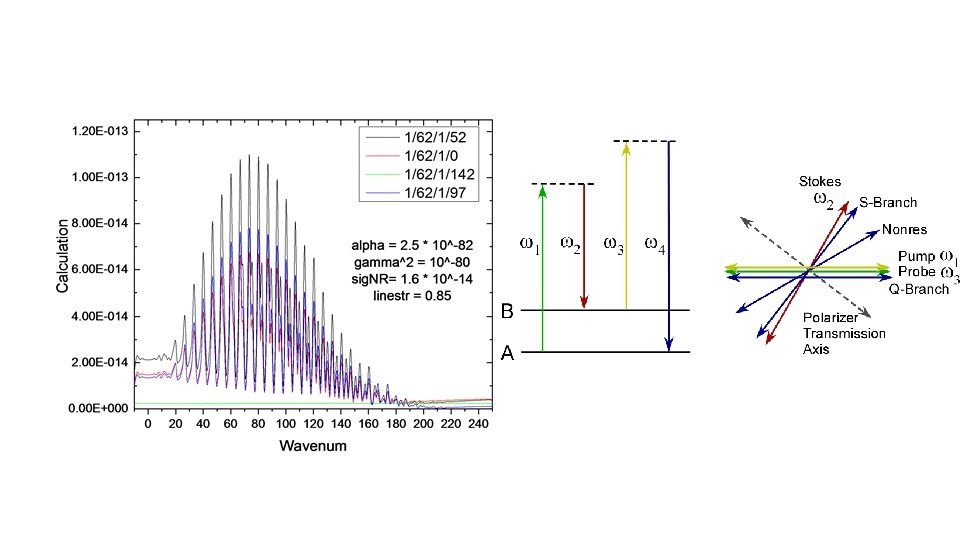
Nitric Oxide Spectroscopy Energy level diagram for the dual broadband pure rotational CARS of N 2 CARS of NO Unlike N 2 , NO has a non-zero electronic angular momentum in the ground electronic state. Unlike N 2 NO has two closely spaced ground electronic states. Goals: 1) Calculate and compare Raman polarizability invariants 2) Investigate the electronic-Raman spectrum of NO 3) Experimentally and theoretically investigate R branch transition of NO (they exist due to non-zero orbital angular momentum in the ground electronic state)
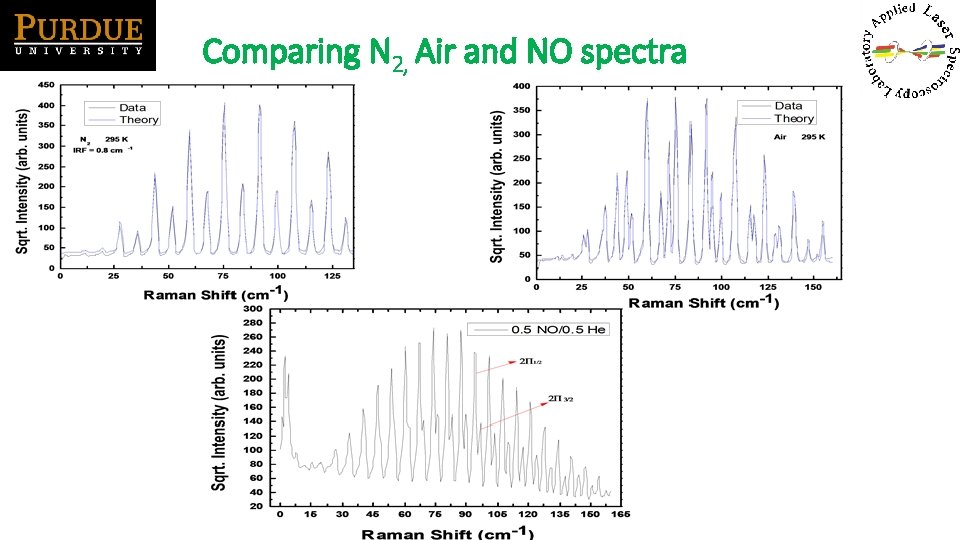
Comparing N 2, Air and NO spectra
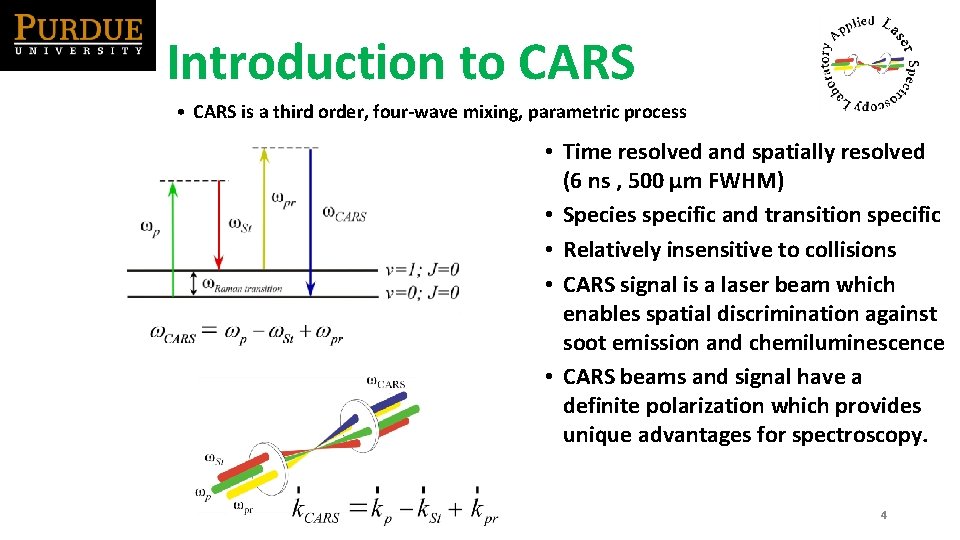
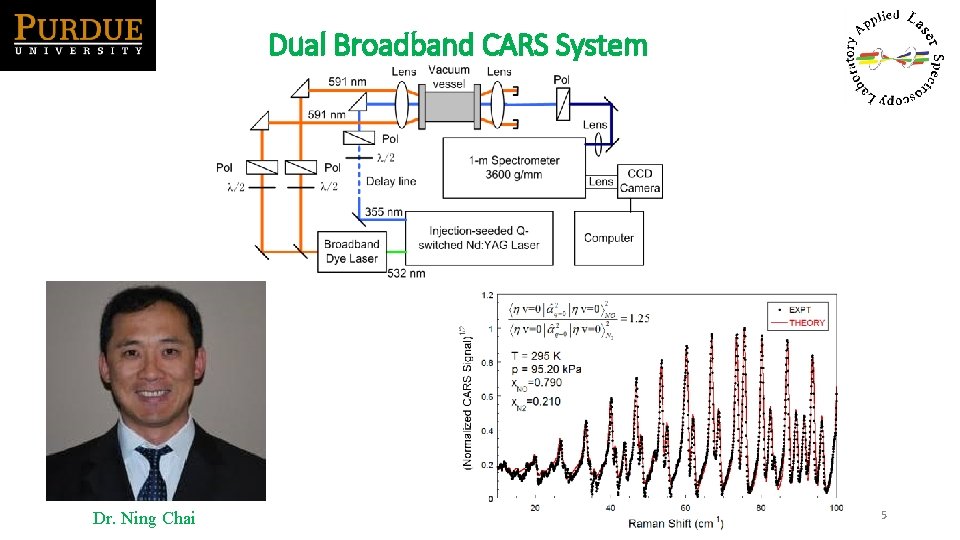
Introduction to CARS • CARS is a third order, four-wave mixing, parametric process • Time resolved and spatially resolved (6 ns , 500 µm FWHM) • Species specific and transition specific • Relatively insensitive to collisions • CARS signal is a laser beam which enables spatial discrimination against soot emission and chemiluminescence • CARS beams and signal have a definite polarization which provides unique advantages for spectroscopy. 4
Dual Broadband CARS System Dr. Ning Chai 5
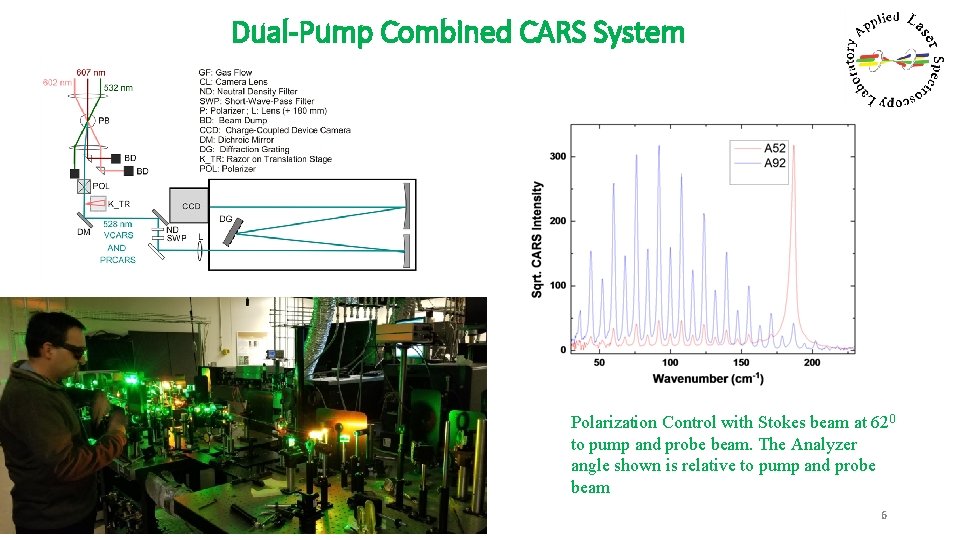
Dual-Pump Combined CARS System Polarization Control with Stokes beam at 620 to pump and probe beam. The Analyzer angle shown is relative to pump and probe beam 6
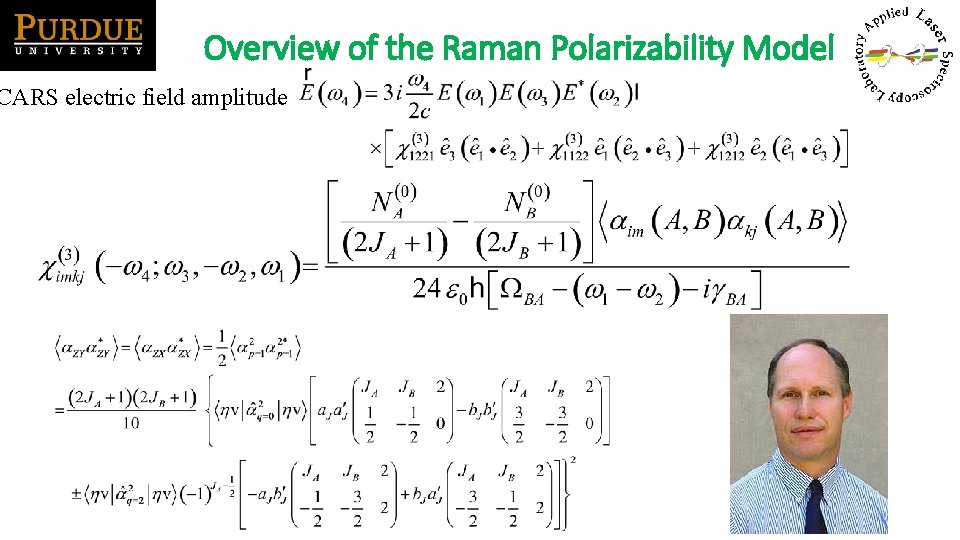
Overview of the Raman Polarizability Model CARS electric field amplitude
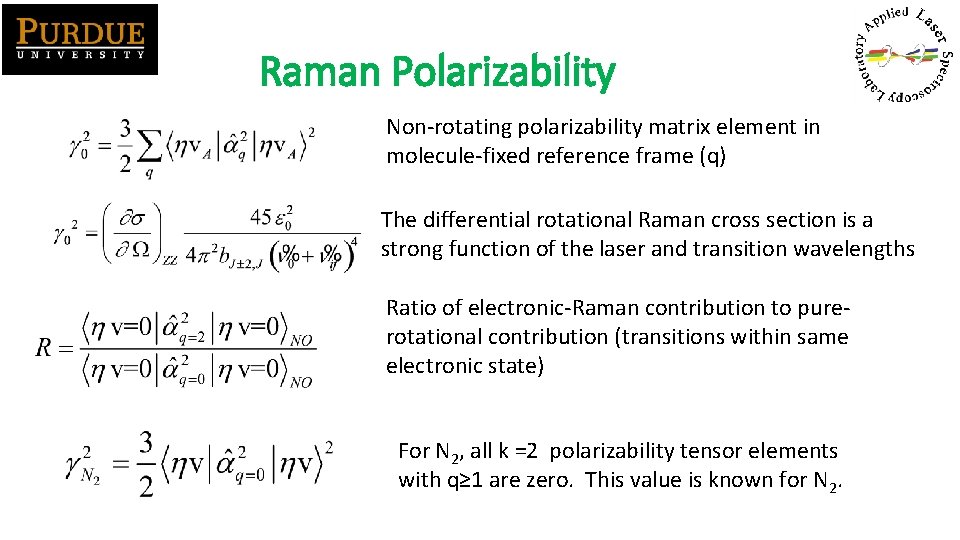
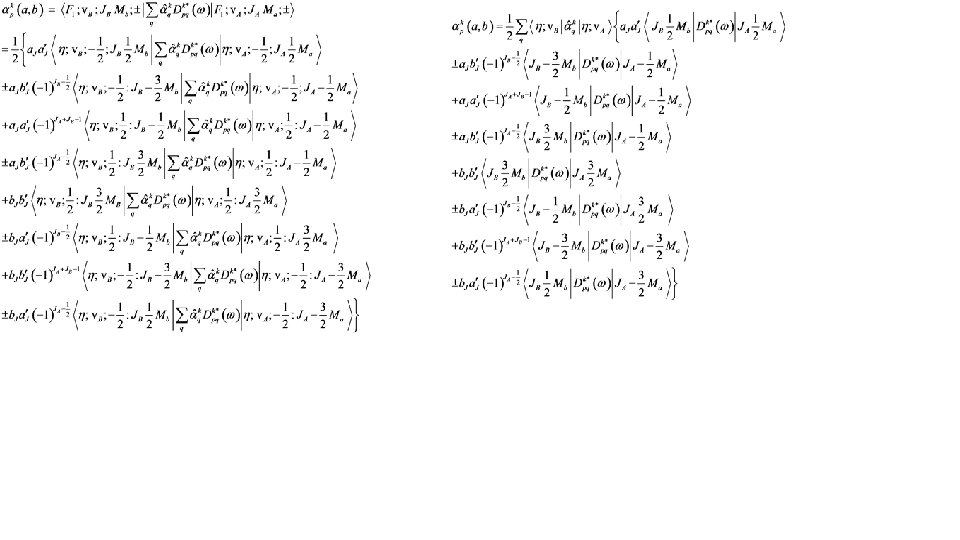
Raman Polarizability Non-rotating polarizability matrix element in molecule-fixed reference frame (q) The differential rotational Raman cross section is a strong function of the laser and transition wavelengths Ratio of electronic-Raman contribution to purerotational contribution (transitions within same electronic state) For N 2, all k =2 polarizability tensor elements with q≥ 1 are zero. This value is known for N 2.
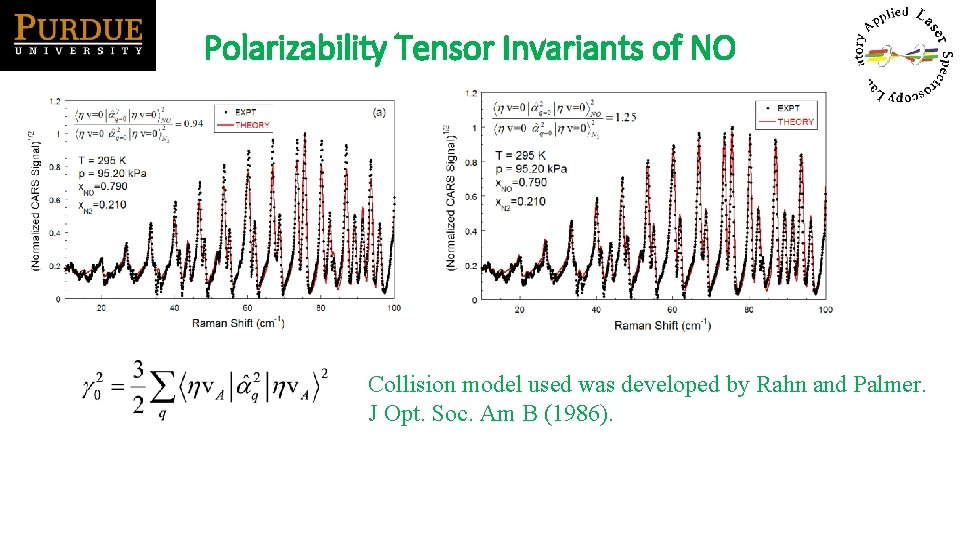
Polarizability Tensor Invariants of NO Collision model used was developed by Rahn and Palmer. J Opt. Soc. Am B (1986).
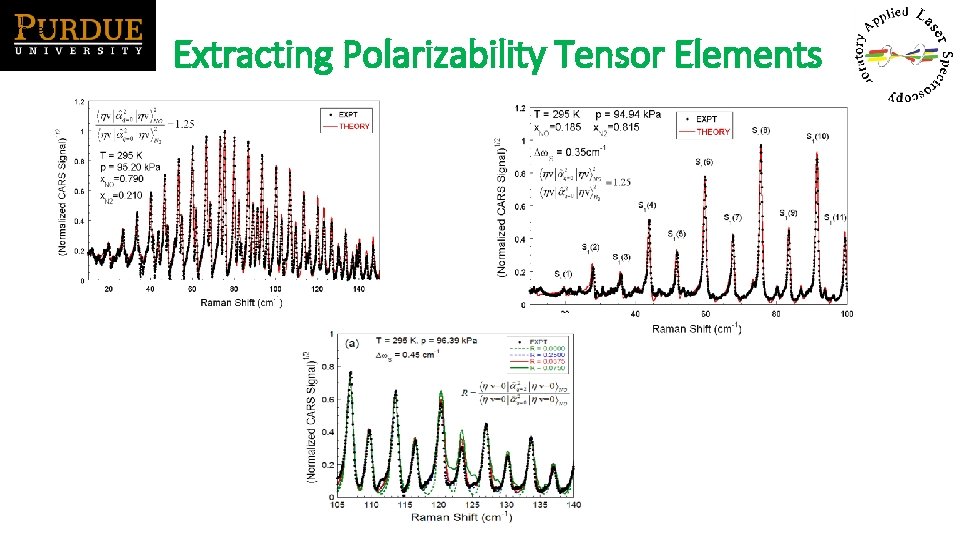
are zero Extracting Polarizability Tensor Elements
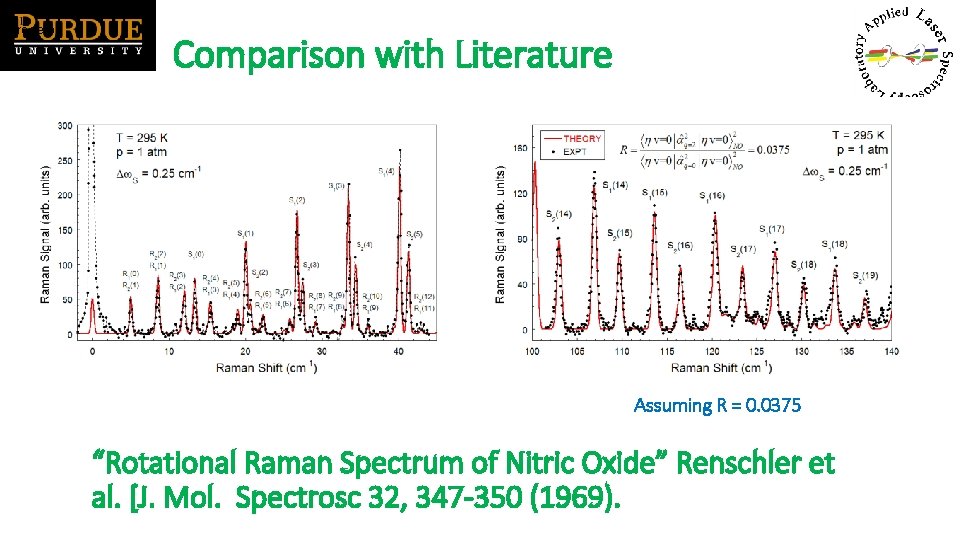
are zero Comparison with Literature Assuming R = 0. 0375 “Rotational Raman Spectrum of Nitric Oxide” Renschler et al. [J. Mol. Spectrosc 32, 347 -350 (1969).
Summary ØDBB-CARS and a DPCCS system was established to obtain NO spectrum. ØDetailed modelling of polarizability equations in terms of anisotropic invariants and 3 j symbols ØPolarizability invariants for NO were extracted using combined NO/N 2 spectrum for pure-rotational and electronic-Raman transitions. ØExtracted polarization invariants were used to fit Raman spectra including R branch spectra from literature. 12
Femtosecond CARS at Elevated Pressures (Mingming Gu) RL 05 [2: 57 PM Thursday at 2079 Natural History]
Acknowledgements Funding for this research was provided by the U. S. Department of Energy, Office of Basic Energy Science, Division of Chemical Sciences, Geoscience and Biosciences, Gas Phase Chemical Physics Program, Grant No. (DE-FG 02 -03 ER 15391). 14
Backup Slides
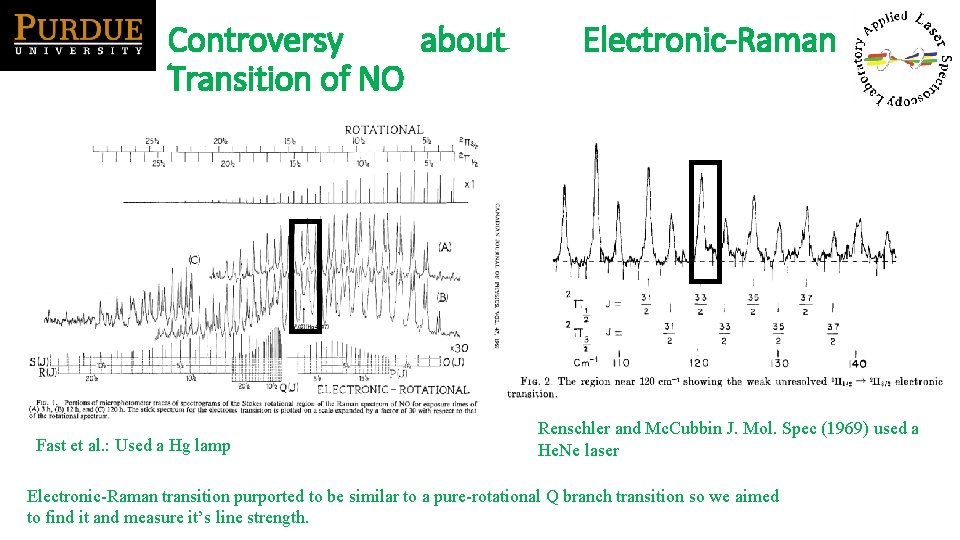
Controversy about Transition of NO Fast et al. : Used a Hg lamp Electronic-Raman Renschler and Mc. Cubbin J. Mol. Spec (1969) used a He. Ne laser Electronic-Raman transition purported to be similar to a pure-rotational Q branch transition so we aimed to find it and measure it’s line strength.