
Pure substances and mixtures S 8 P 1
Pure substances and mixtures S 8 P 1 b. Describe the difference between pure substances (elements and compounds) and mixtures.
Pure substance �Is matter that as uniform and unchangeable composition �Examples include: pure water ( H 2 O is uniform always having 2 hydrogen atoms and one oxygen atom) vs. sea water (not uniform, its composition differs from place to place)
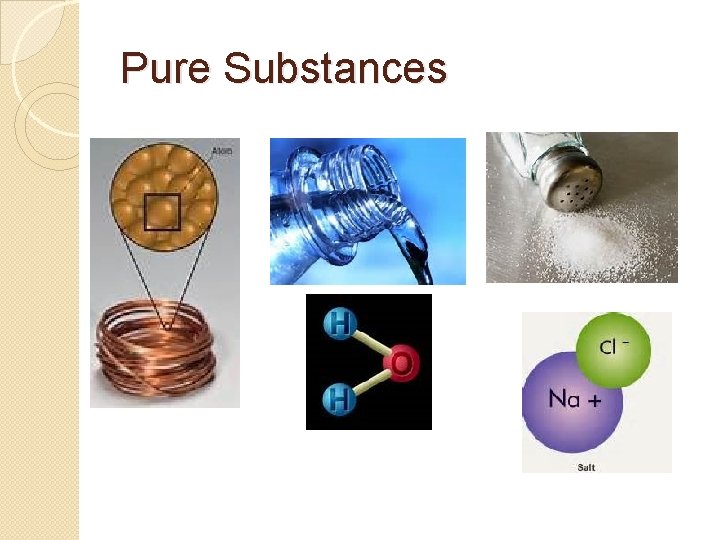
Pure Substances �Uniform and Unchanging �Element – a pure substance that contains only one type of atom and cannot be broken down into simpler substances ( hydrogen, iron, and argon are elements) �Compound – made up of atoms of 2 or more elements ( Water is H 2 O, Salt is Na. Cl)
Pure Substances
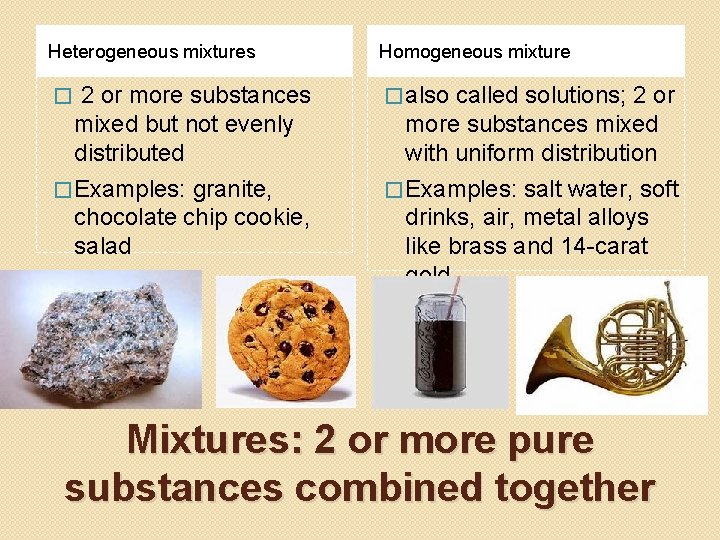
Heterogeneous mixtures Homogeneous mixture 2 or more substances mixed but not evenly distributed � Examples: granite, chocolate chip cookie, salad � also � called solutions; 2 or more substances mixed with uniform distribution � Examples: salt water, soft drinks, air, metal alloys like brass and 14 -carat gold Mixtures: 2 or more pure substances combined together
S 8 P 1 d. Distinguish between physical and chemical properties of matter as physical (i. e. , density, melting point, boiling point) or chemical (i. e. , reactivity, combustibility).
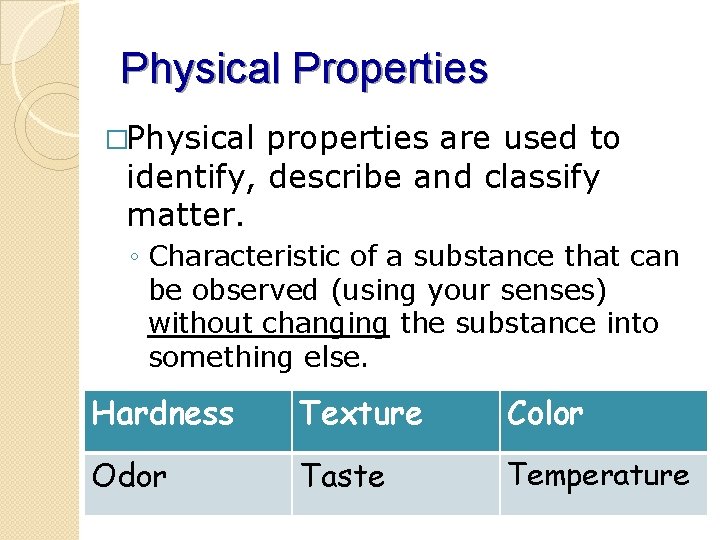
Physical Properties �Physical properties are used to identify, describe and classify matter. ◦ Characteristic of a substance that can be observed (using your senses) without changing the substance into something else. Hardness Texture Color Odor Taste Temperature
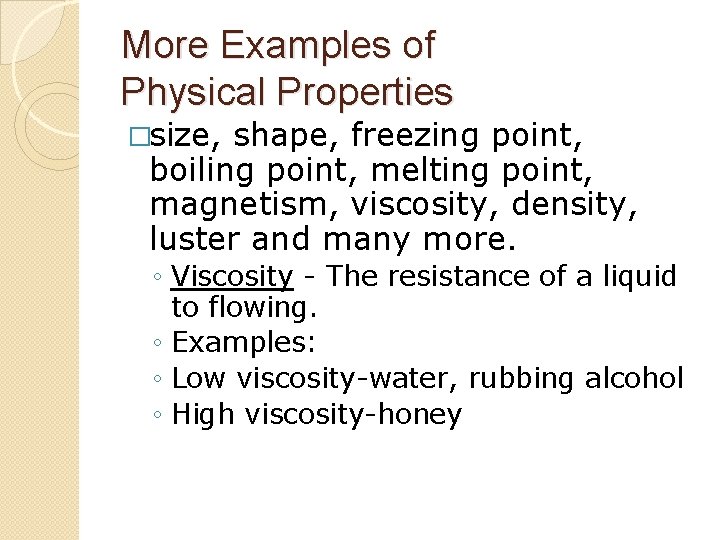
More Examples of Physical Properties �size, shape, freezing point, boiling point, melting point, magnetism, viscosity, density, luster and many more. ◦ Viscosity - The resistance of a liquid to flowing. ◦ Examples: ◦ Low viscosity-water, rubbing alcohol ◦ High viscosity-honey
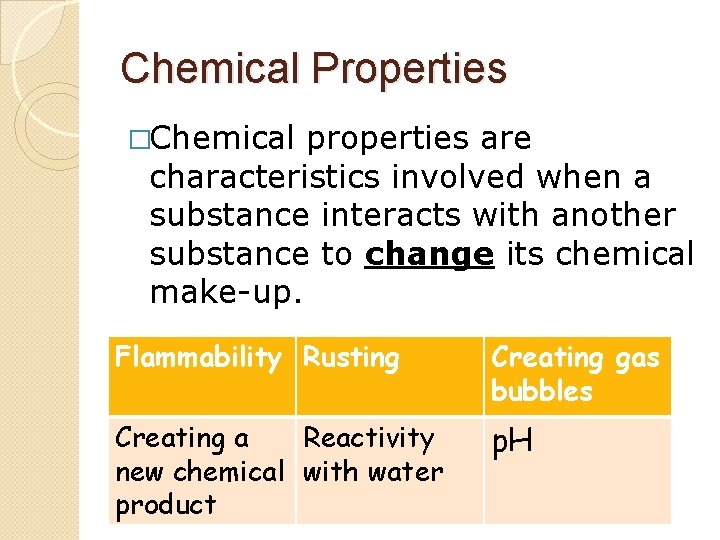
Chemical Properties �Chemical properties are characteristics involved when a substance interacts with another substance to change its chemical make-up. Flammability Rusting Creating gas bubbles Creating a Reactivity new chemical with water product p. H
Alike and Different �Draw a double bubble map in your notes to compare and contrast physical and chemical properties.

http: //www. youtube. com/watch? v=u. JOGy 0 dgm. UU
S 8 P 1 e. Distinguish between changes in matter as physical (i. e. , physical change) or chemical (development of a gas, formation of precipitate, and change in color).
Physical Change �Physical changes occur when matter changes its property but not its chemical nature. �Physical property changes could include a change in: texture, shape, size, color, odor, volume, mass, weight,
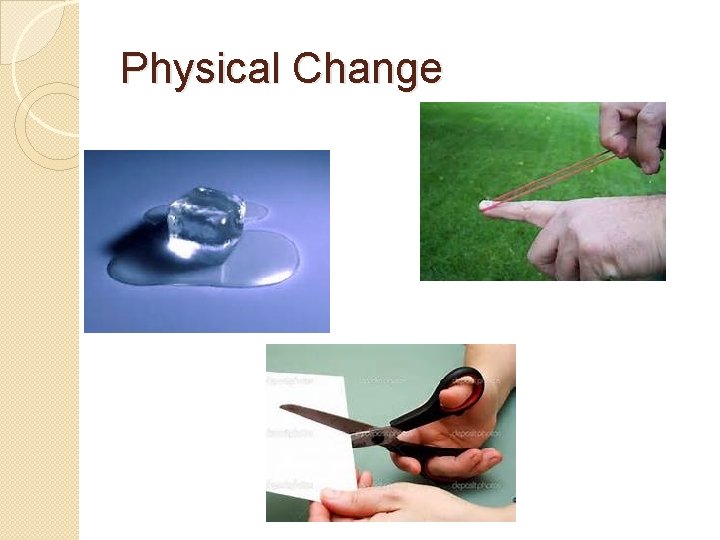
Physical Change
Chemical Change �Chemical changes are changes matter undergoes when it becomes new or different matter. �To identify a chemical change look for signs such as color change, bubbling and fizzing, light production, smoke, and presence of heat.
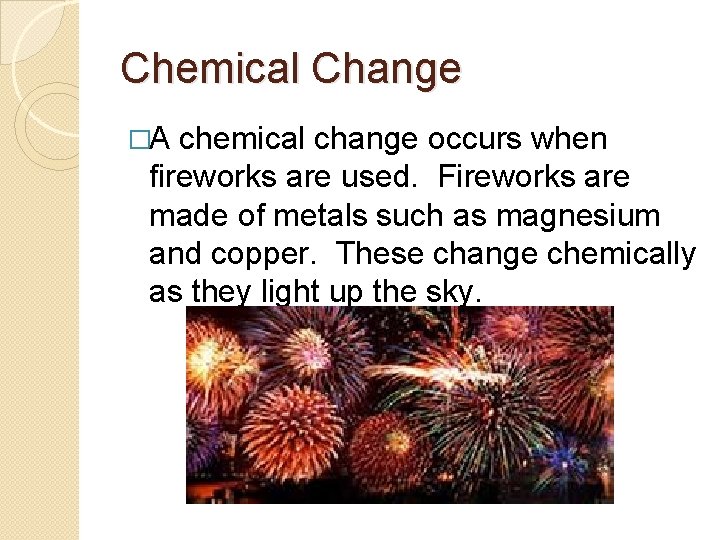
Chemical Change �A chemical change occurs when fireworks are used. Fireworks are made of metals such as magnesium and copper. These change chemically as they light up the sky.
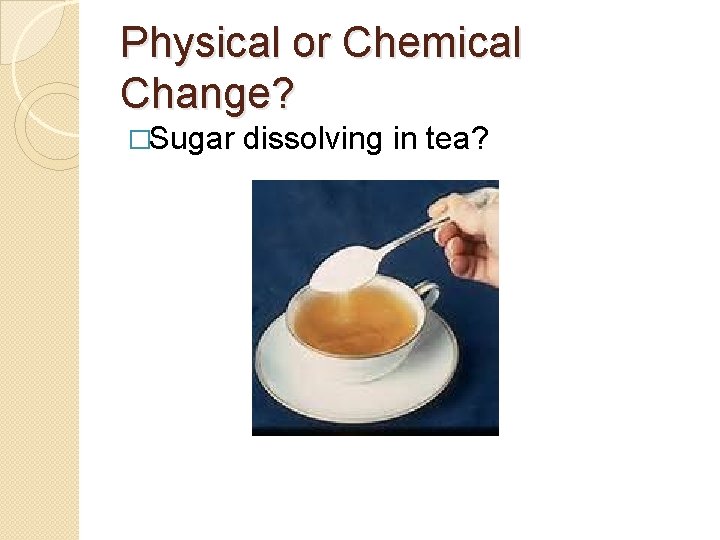
Physical or Chemical Change? �Sugar dissolving in tea?
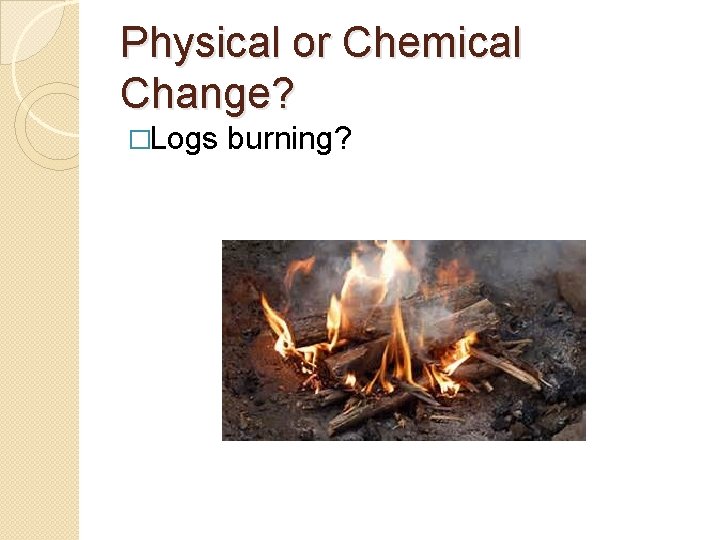
Physical or Chemical Change? �Logs burning?
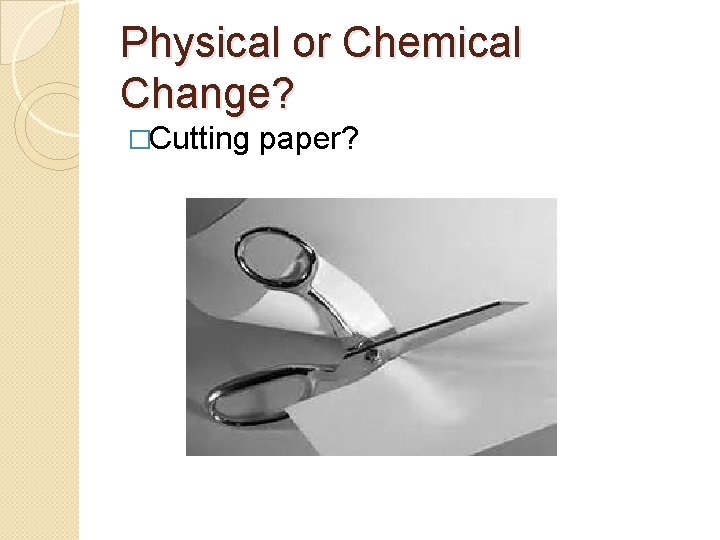
Physical or Chemical Change? �Cutting paper?
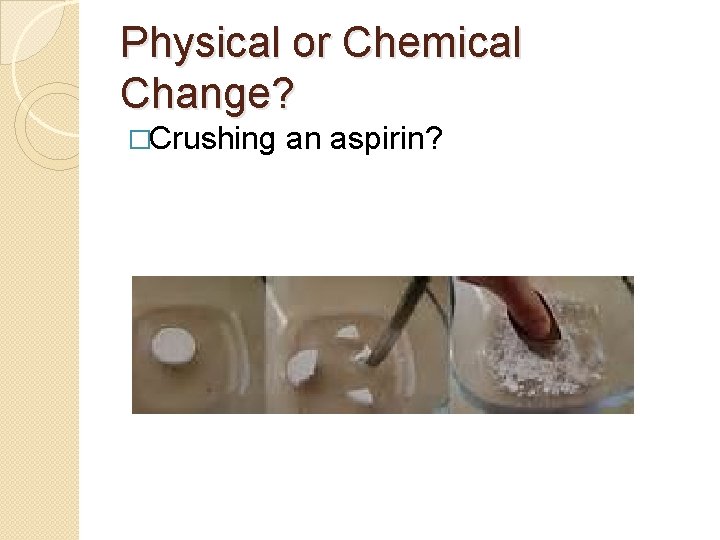
Physical or Chemical Change? �Crushing an aspirin?
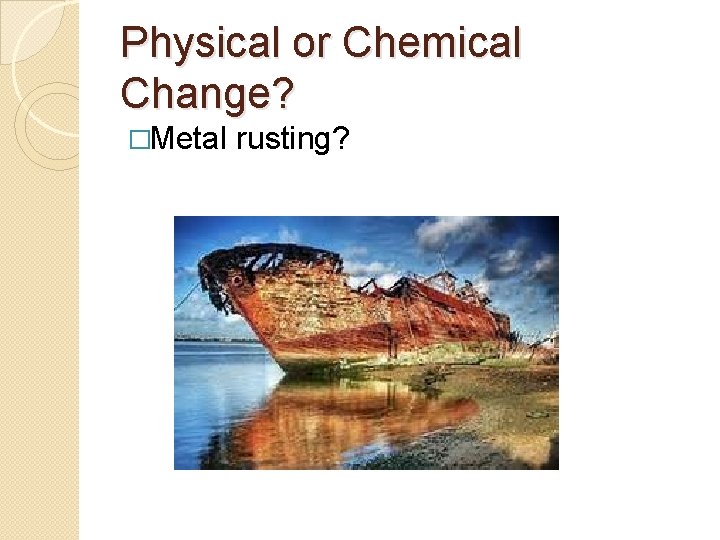
Physical or Chemical Change? �Metal rusting?
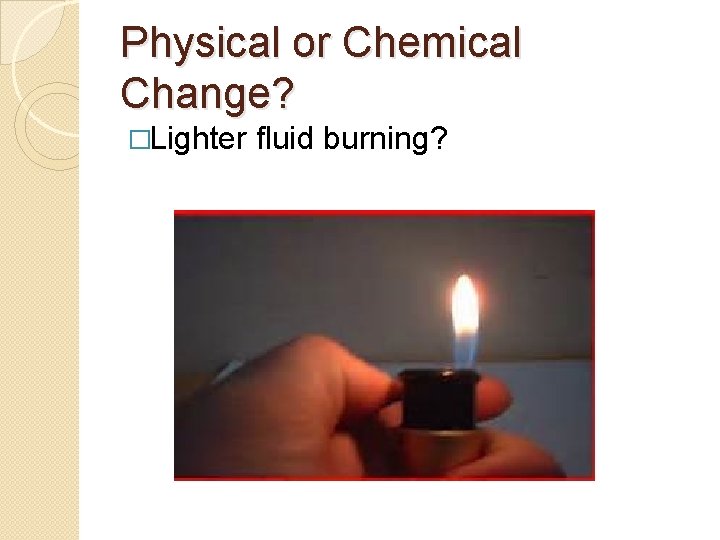
Physical or Chemical Change? �Lighter fluid burning?
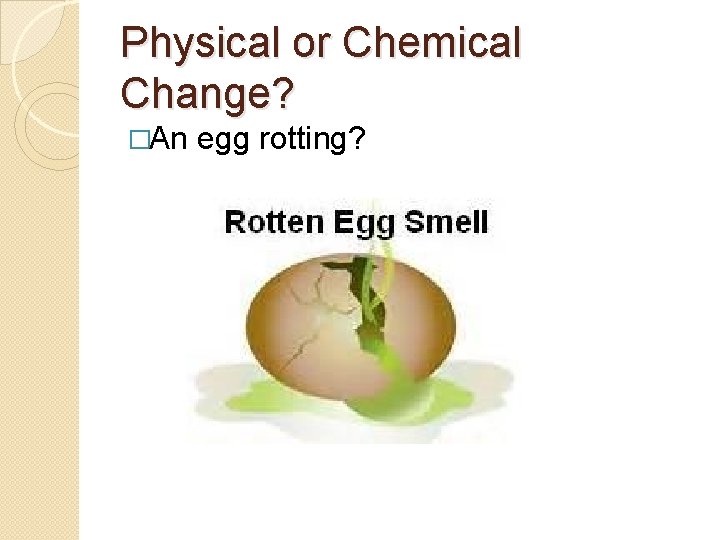
Physical or Chemical Change? �An egg rotting?
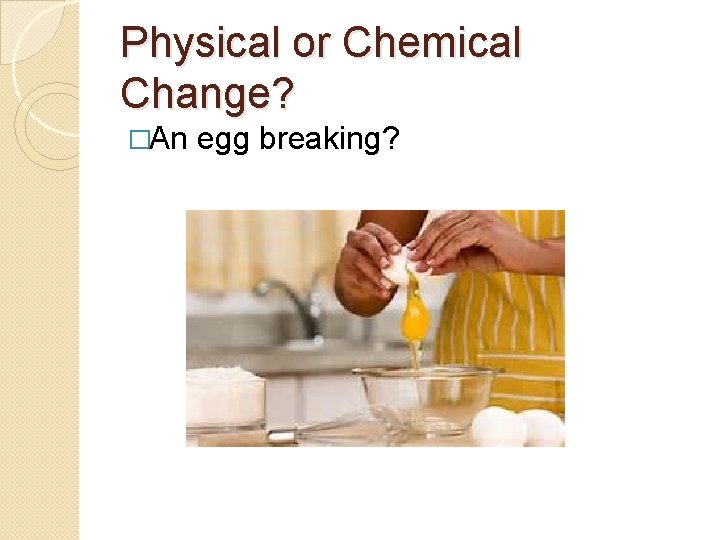
Physical or Chemical Change? �An egg breaking?

http: //www. youtube. com/watch? v=qqqm. FF Cwd 7 k
- Slides: 25