
PURE SUBSTANCES AND MIXTURES MATTER Matter is anything
PURE SUBSTANCES AND MIXTURES
MATTER • Matter is anything that has mass and takes up space • Matter can be classified into 2 categories: • Pure substances • Mixtures
PURE SUBSTANCES • A pure substance is matter that has definite chemical and physical properties, such as appearance, melting point and reactivity • Always has the same properties no matter how much of the substance you have • Ex. Copper (element) and water (compound)
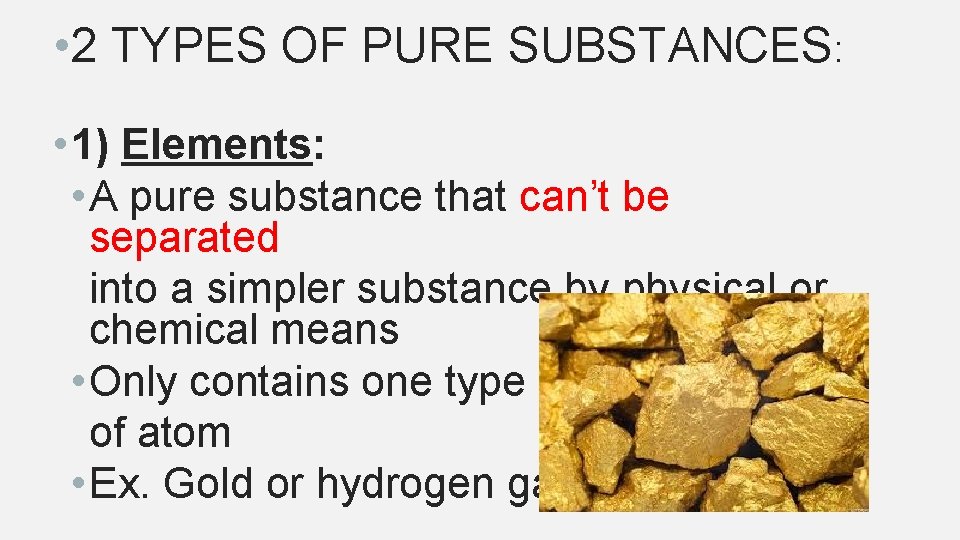
• 2 TYPES OF PURE SUBSTANCES: • 1) Elements: • A pure substance that can’t be separated into a simpler substance by physical or chemical means • Only contains one type of atom • Ex. Gold or hydrogen gas
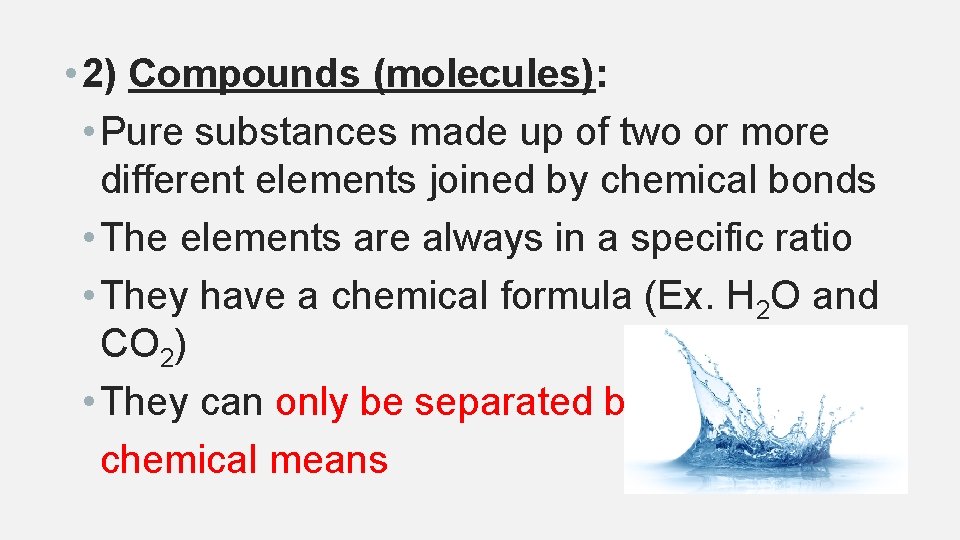
• 2) Compounds (molecules): • Pure substances made up of two or more different elements joined by chemical bonds • The elements are always in a specific ratio • They have a chemical formula (Ex. H 2 O and CO 2) • They can only be separated by chemical means
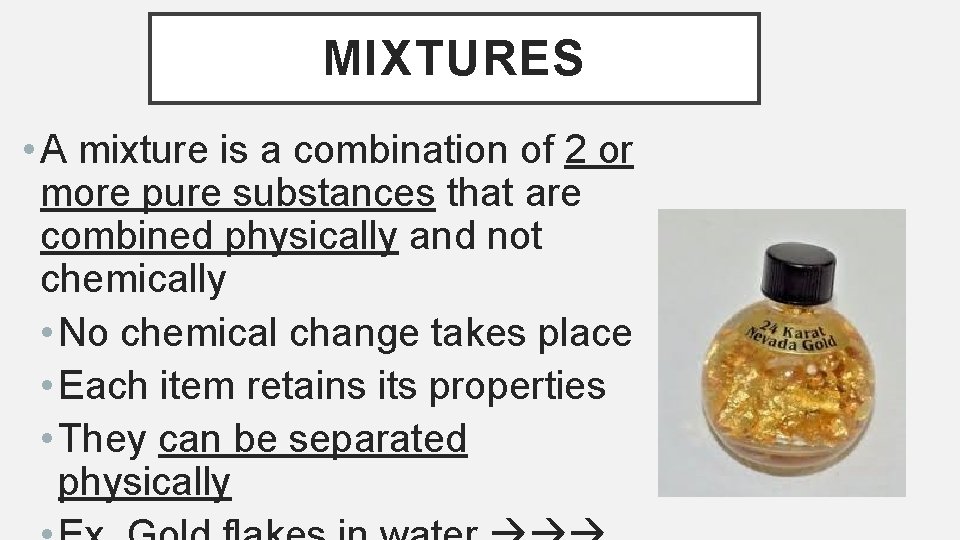
MIXTURES • A mixture is a combination of 2 or more pure substances that are combined physically and not chemically • No chemical change takes place • Each item retains its properties • They can be separated physically
• Take a few minutes with your partner and think of other mixtures you come across
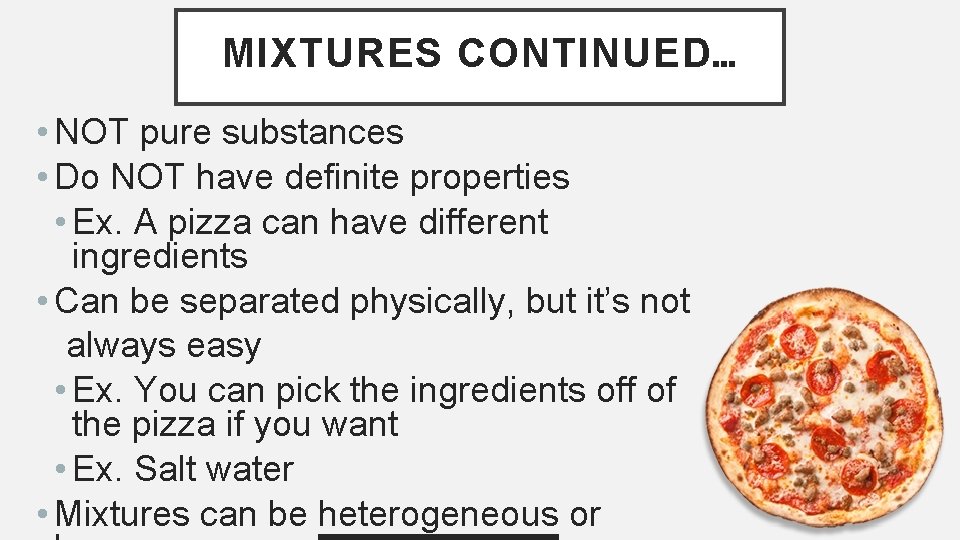
MIXTURES CONTINUED… • NOT pure substances • Do NOT have definite properties • Ex. A pizza can have different ingredients • Can be separated physically, but it’s not always easy • Ex. You can pick the ingredients off of the pizza if you want • Ex. Salt water • Mixtures can be heterogeneous or
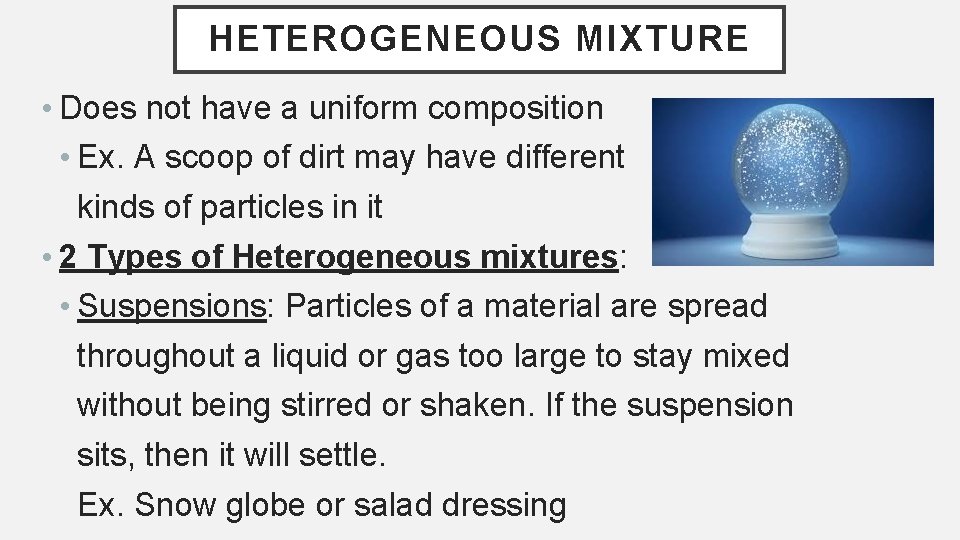
HETEROGENEOUS MIXTURE • Does not have a uniform composition • Ex. A scoop of dirt may have different kinds of particles in it • 2 Types of Heterogeneous mixtures: • Suspensions: Particles of a material are spread throughout a liquid or gas too large to stay mixed without being stirred or shaken. If the suspension sits, then it will settle. Ex. Snow globe or salad dressing
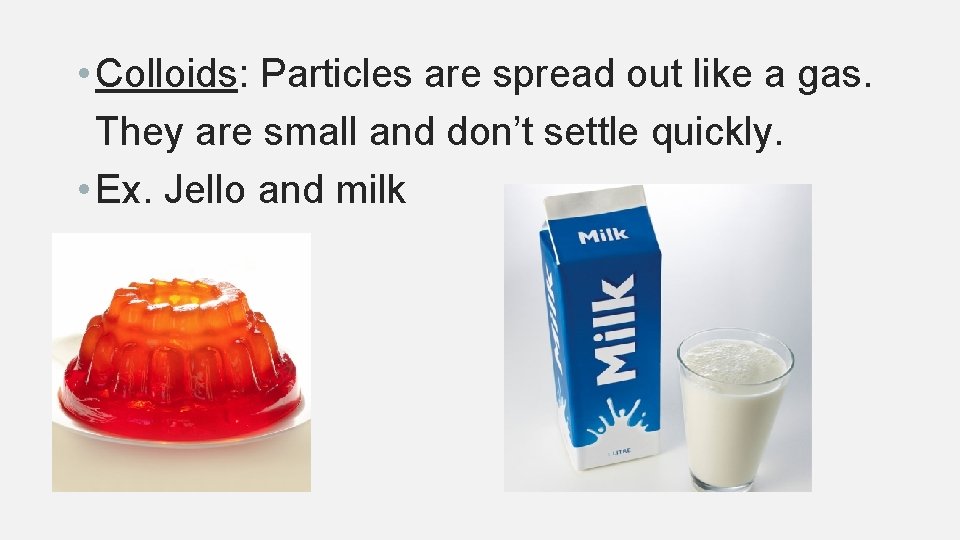
• Colloids: Particles are spread out like a gas. They are small and don’t settle quickly. • Ex. Jello and milk
HOMOGENEOUS MIXTURES • Solutions: One substance is dissolved in another substance • Have a uniform composition. • They do not separate easily. • Ex. Sugar water, salt water, tea, etc.
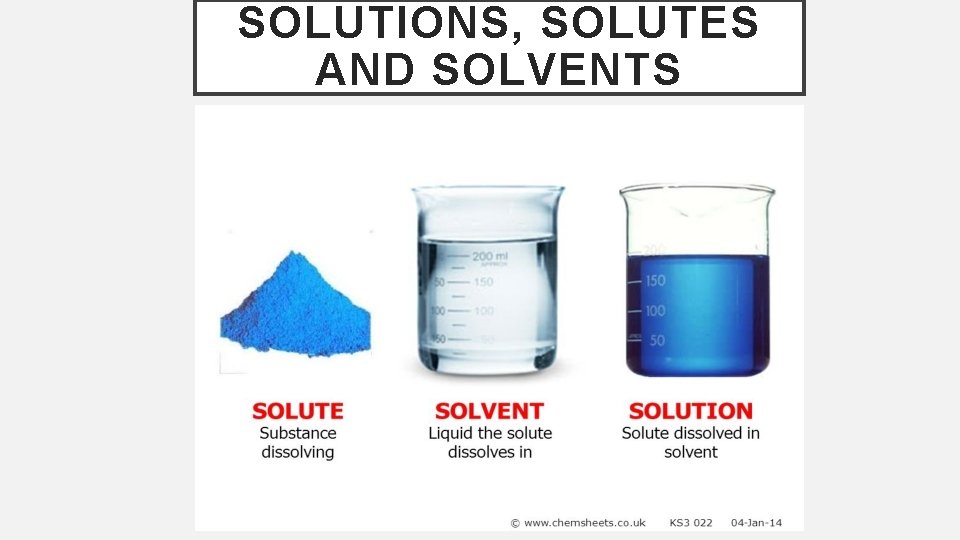
SOLUTIONS, SOLUTES AND SOLVENTS
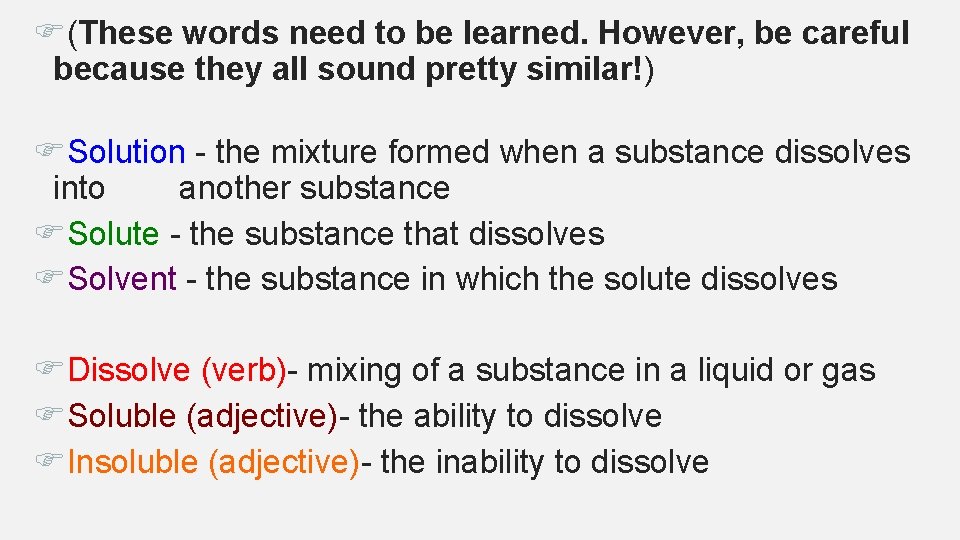
F(These words need to be learned. However, be careful because they all sound pretty similar!) FSolution - the mixture formed when a substance dissolves into another substance FSolute - the substance that dissolves FSolvent - the substance in which the solute dissolves FDissolve (verb)- mixing of a substance in a liquid or gas FSoluble (adjective)- the ability to dissolve FInsoluble (adjective)- the inability to dissolve
SATURATION POINT • A solution with the maximum possible amount of solute is saturated. • If a solution contains less than the maximum amount of solute, it is unsaturated. • The saturation point is the concentration at which the solute can no longer dissolve into the solvent.
MATTER TREE MAP • Make a matter tree map in your ISN
- Slides: 15