
PURE CONNECTED PARTICLES 1 PULLEYS MECHANICS CONNECTED PARTICLES


















- Slides: 69
PURE CONNECTED PARTICLES 1 PULLEYS MECHANICS CONNECTED PARTICLES OBJECTS IN CONTACT STATISTICS FORCE COUPLING
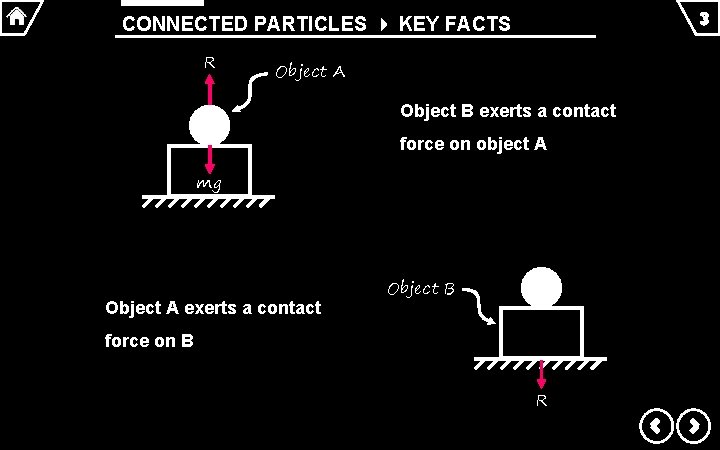
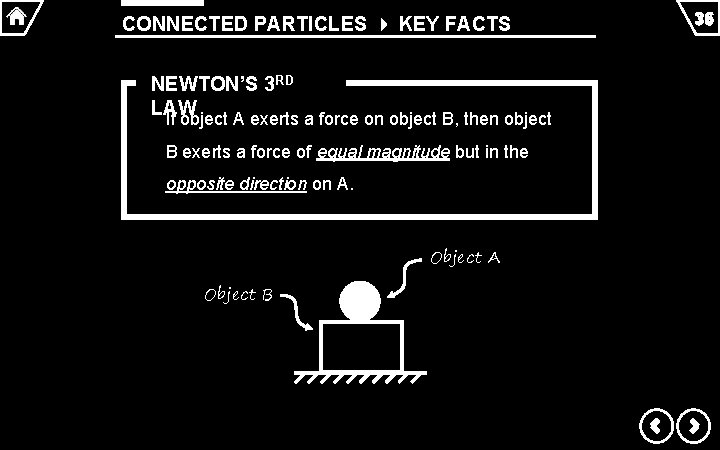
CONNECTED PARTICLES 4 KEY FACTS NEWTON’S 3 RD LAW If object A exerts a force on object B, then object B exerts a force of equal magnitude but in the opposite direction on A. Object A Object B 2
3 CONNECTED PARTICLES 4 KEY FACTS R Object A Object B exerts a contact force on object A mg Object B Object A exerts a contact Object B force on B R
4 PULLEYS MECHANICS CONNECTED PARTICLES PULLE YS
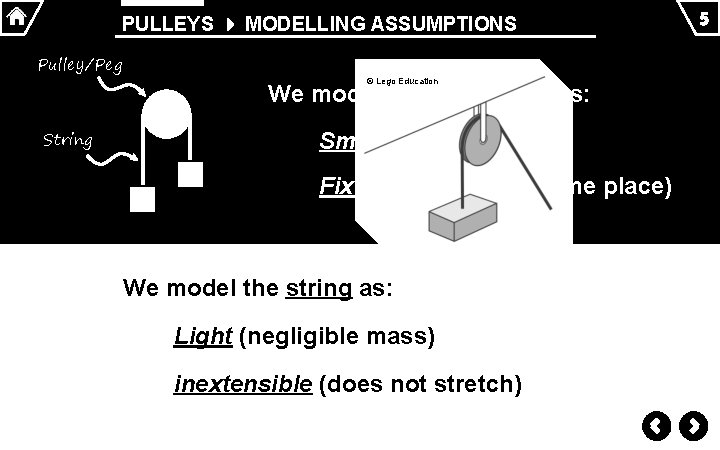
PULLEYS 4 MODELLING ASSUMPTIONS Pulley/Peg © Lego Education We model the pulley/peg as: String Smooth (no friction) Fixed (stays in the same place) We model the string as: Light (negligible mass) inextensible (does not stretch) 5
6 PULLEYS EXERCISE – STARTER QUESTIONS Complete three questions on the following slides. Ensure your working out contains: Force diagrams. Force equations. Clear mathematical notation. CHECK YOUR ANSWERS USING THE SOLUTIONS
PULLEYS 4 PRACTICE QUESTIONS Q 1. Find the acceleration of the particles and the tension in the string. Solution on next page… 7
8 PULLEYS 4 PRACTICE QUESTIONS Q 1. Particle A: Particle A (1) Particle B (2) Particle B: (1) + (2) gives Solving for T:
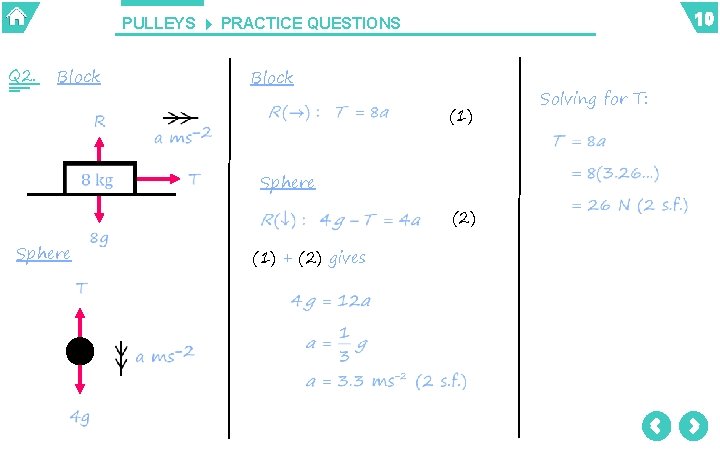
PULLEYS 4 PRACTICE QUESTIONS Q 2. (a) Find the acceleration of the block before it reaches the pulley. (b) Find the tension in the string. Solution on next page… 9
10 PULLEYS 4 PRACTICE QUESTIONS Q 2. Block (1) Sphere (2) Sphere (1) + (2) gives Solving for T:
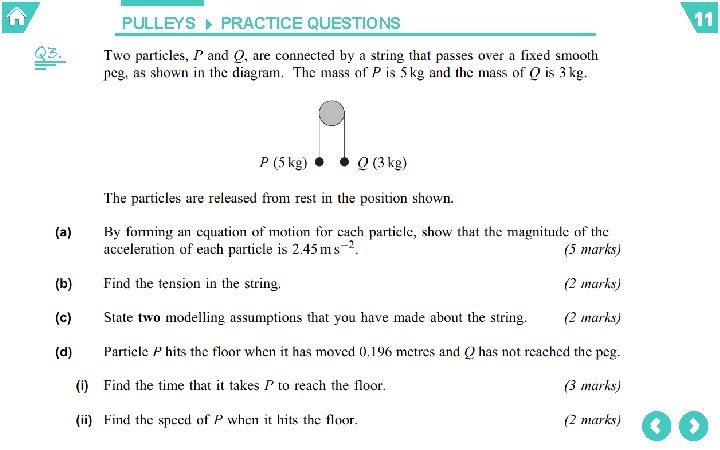
PULLEYS 4 PRACTICE QUESTIONS Q 3. 11
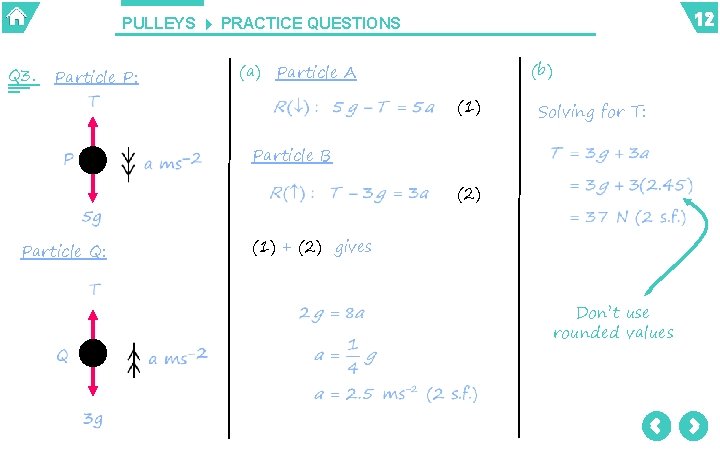
12 PULLEYS 4 PRACTICE QUESTIONS Q 3. Particle P: (b) (a) Particle A (1) Solving for T: Particle B (2) Particle Q: (1) + (2) gives Don’t use rounded values
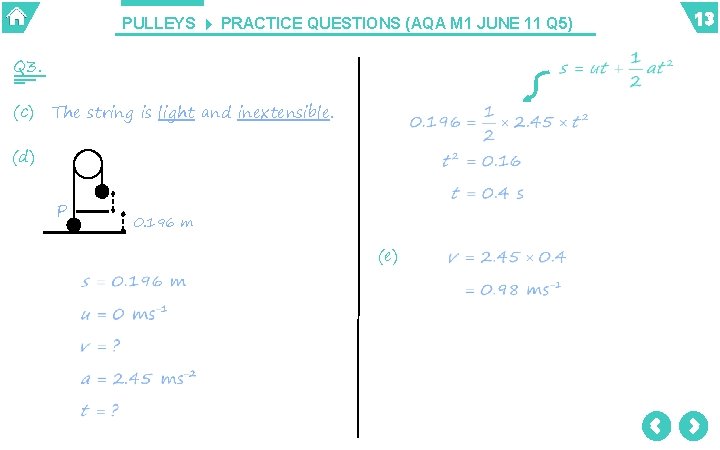
PULLEYS 4 PRACTICE QUESTIONS (AQA M 1 JUNE 11 Q 5) Q 3. (c) The string is light and inextensible. (d) P 0. 196 m (e) 13
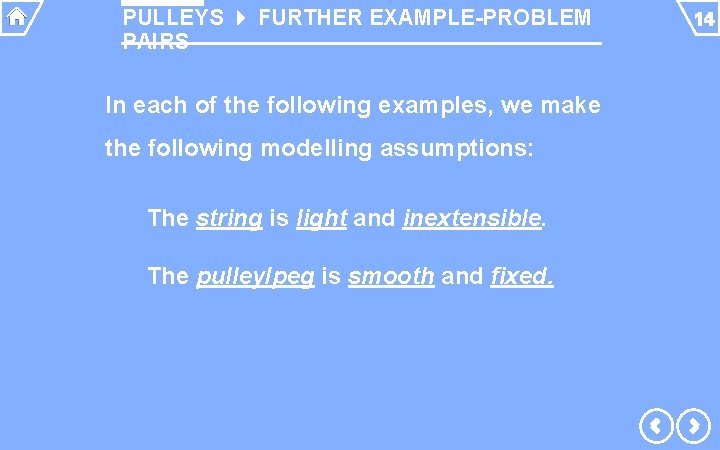
PULLEYS 4 FURTHER EXAMPLE-PROBLEM PAIRS In each of the following examples, we make the following modelling assumptions: The string is light and inextensible. The pulley/peg is smooth and fixed. 14
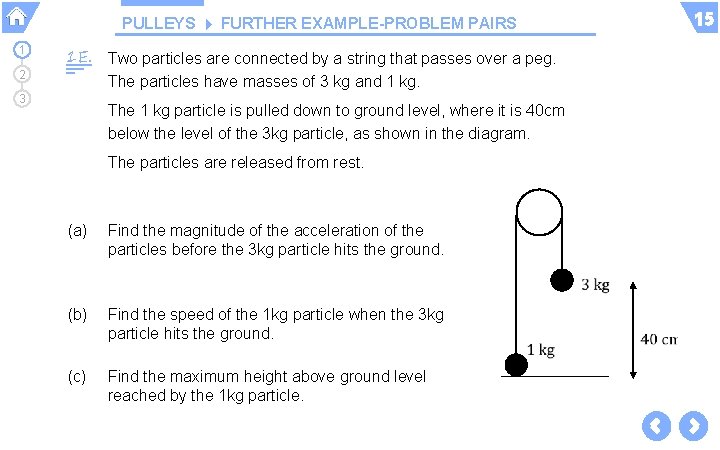
PULLEYS 4 FURTHER EXAMPLE-PROBLEM PAIRS 1 2 1 E. Two particles are connected by a string that passes over a peg. The particles have masses of 3 kg and 1 kg. 3 The 1 kg particle is pulled down to ground level, where it is 40 cm below the level of the 3 kg particle, as shown in the diagram. The particles are released from rest. (a) Find the magnitude of the acceleration of the particles before the 3 kg particle hits the ground. (b) Find the speed of the 1 kg particle when the 3 kg particle hits the ground. (c) Find the maximum height above ground level reached by the 1 kg particle. 15
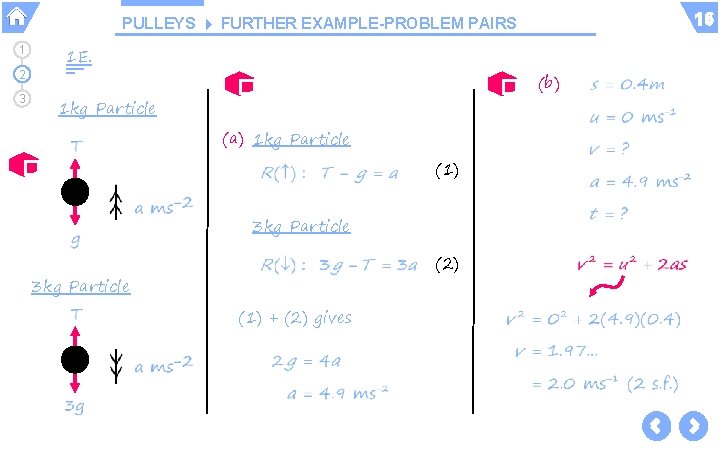
PULLEYS 4 FURTHER EXAMPLE-PROBLEM PAIRS 1 E. 1 2 3 1 kg Particle ��(b) �� (a) 1 kg Particle (1) �� 3 kg Particle (2) 3 kg Particle (1) + (2) gives 16
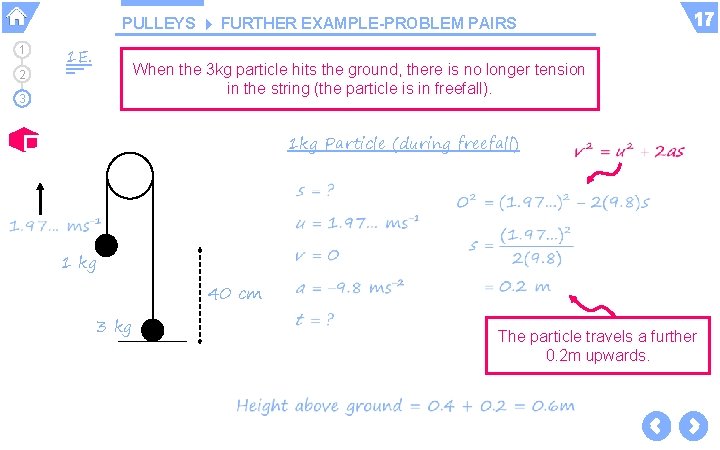
PULLEYS 4 FURTHER EXAMPLE-PROBLEM PAIRS 1 E. 1 2 17 When the 3 kg particle hits the ground, there is no longer tension in the string (the particle is in freefall). 3 1 kg Particle (during freefall) �� 1 kg 40 cm 3 kg The particle travels a further 0. 2 m upwards.
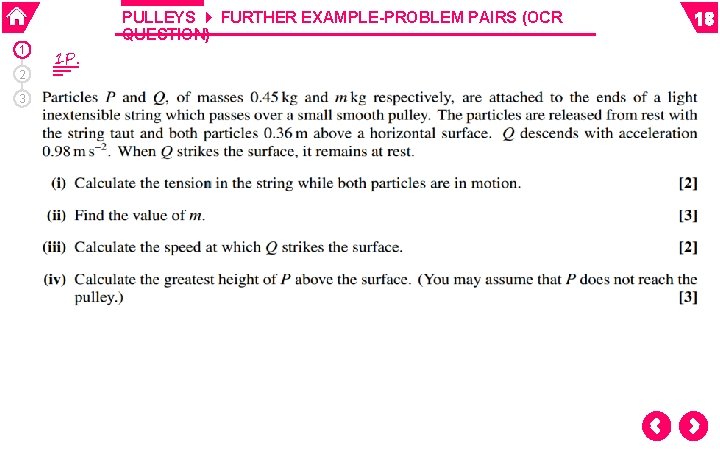
1 2 3 PULLEYS 4 FURTHER EXAMPLE-PROBLEM PAIRS (OCR QUESTION) 1 P. 18
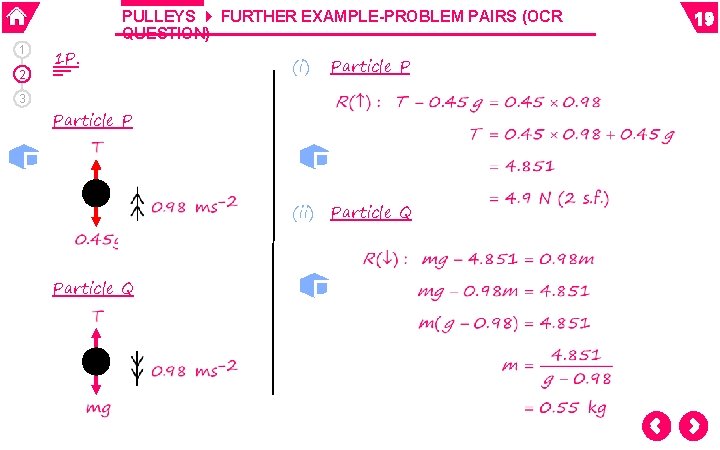
PULLEYS 4 FURTHER EXAMPLE-PROBLEM PAIRS (OCR QUESTION) 1 2 1 P. (i) Particle P 3 Particle P �� �� (ii) Particle Q �� 19
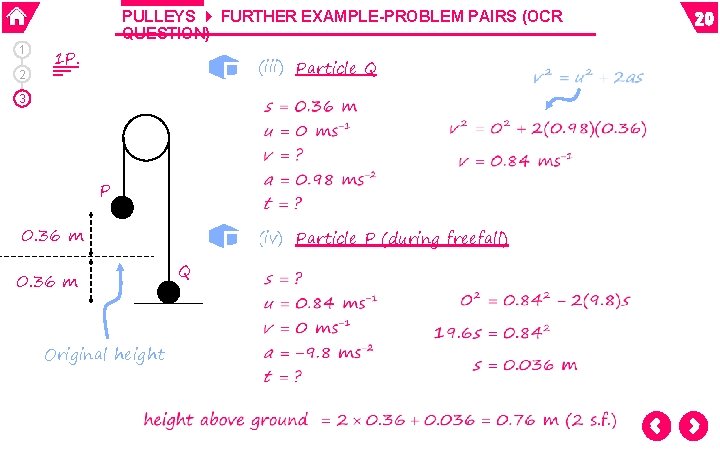
PULLEYS 4 FURTHER EXAMPLE-PROBLEM PAIRS (OCR QUESTION) 1 2 1 P. ��(iii) Particle Q ��(iv) Particle P (during freefall) 3 P 0. 36 m Original height Q 20
21 PULLEYS – PRACTICE QUESTIONS Suggested time: 30 -40 minutes. CHECK YOUR ANSWERS USING THE SOLUTIONS Question(s) Notes 4 Optional question – similar to example 5 -6 Minimum expected 7 Additional question
22 Note: The following questions are from an older AQA specification. In your specification you need to use “a suitable degree of accuracy”.
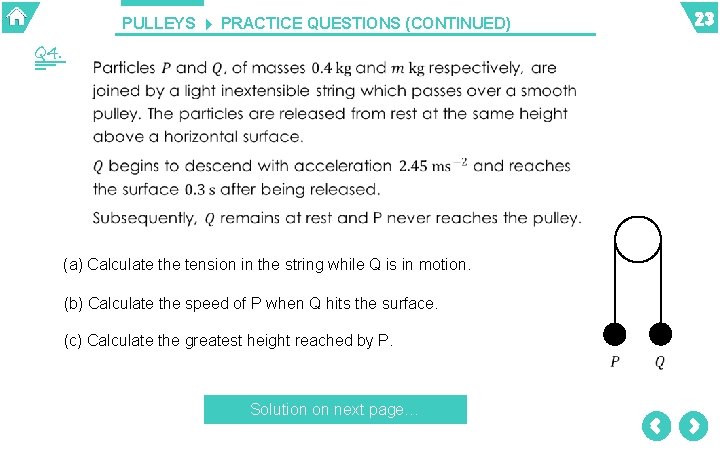
PULLEYS 4 PRACTICE QUESTIONS (CONTINUED) Q 4. (a) Calculate the tension in the string while Q is in motion. (b) Calculate the speed of P when Q hits the surface. (c) Calculate the greatest height reached by P. Solution on next page… 23
PULLEYS 4 PRACTICE QUESTIONS (CONTINUED) Q 4. (a) Particle P (b) Particle P Particle Q 24
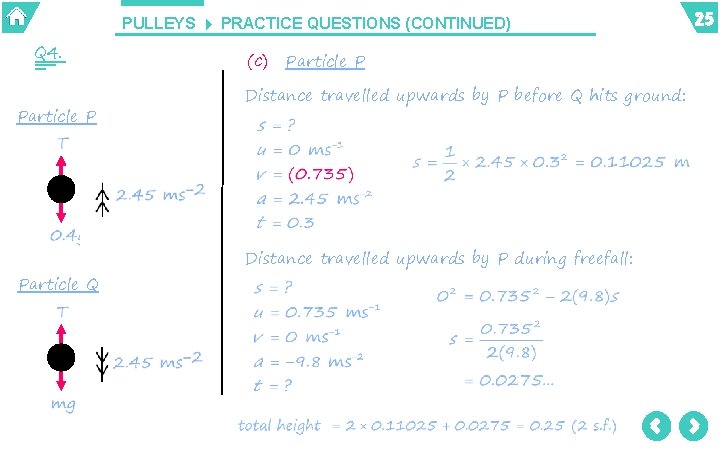
PULLEYS 4 PRACTICE QUESTIONS (CONTINUED) Q 4. Particle P Particle Q (c) Particle P Distance travelled upwards by P before Q hits ground: Distance travelled upwards by P during freefall: 25
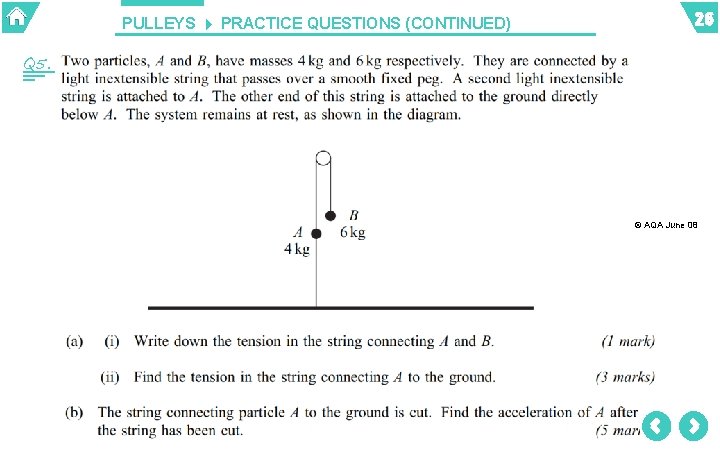
PULLEYS 4 PRACTICE QUESTIONS (CONTINUED) 26 Q 5. © AQA June 08
PULLEYS 4 PRACTICE QUESTIONS (CONTINUED) 27 Q 5. © AQA June 08
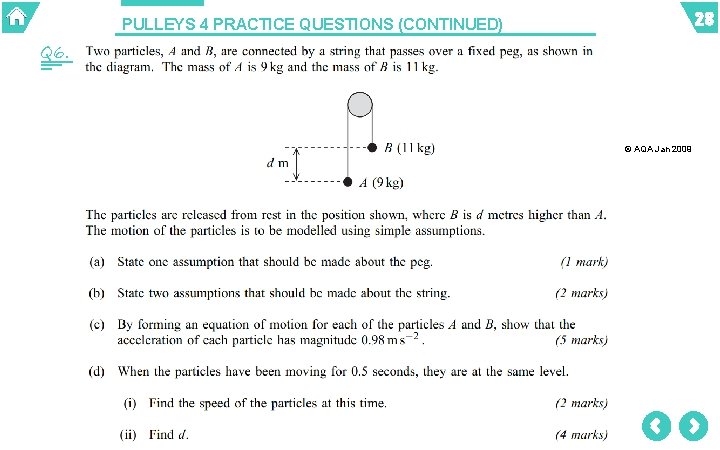
28 PULLEYS 4 PRACTICE QUESTIONS (CONTINUED) Q 6. © AQA Jan 2009
29 PULLEYS 4 PRACTICE QUESTIONS (CONTINUED) Q 6. © AQA Jan 2009 Continues on next page…
30 PULLEYS 4 PRACTICE QUESTIONS (CONTINUED) Q 6. © AQA Jan 2009
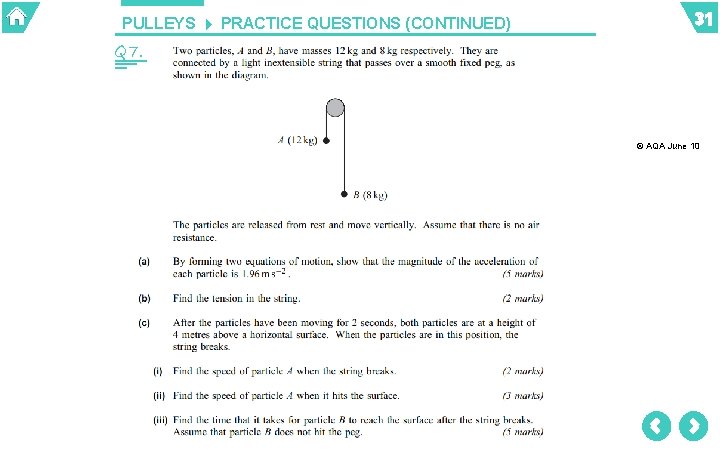
PULLEYS 4 PRACTICE QUESTIONS (CONTINUED) 31 Q 7. © AQA June 10
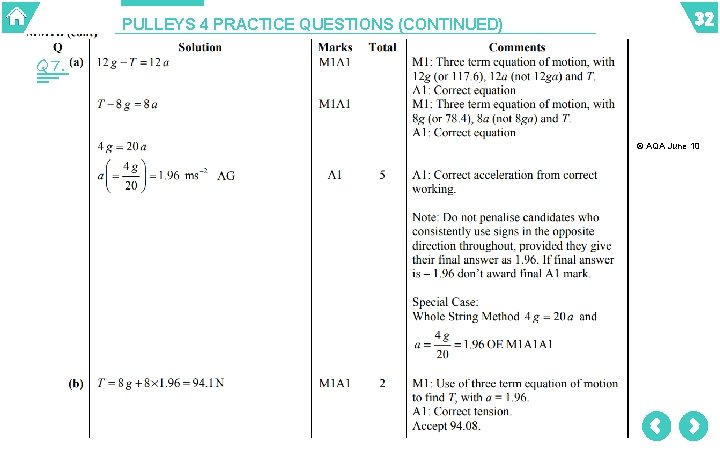
PULLEYS 4 PRACTICE QUESTIONS (CONTINUED) 32 Q 7. © AQA June 10
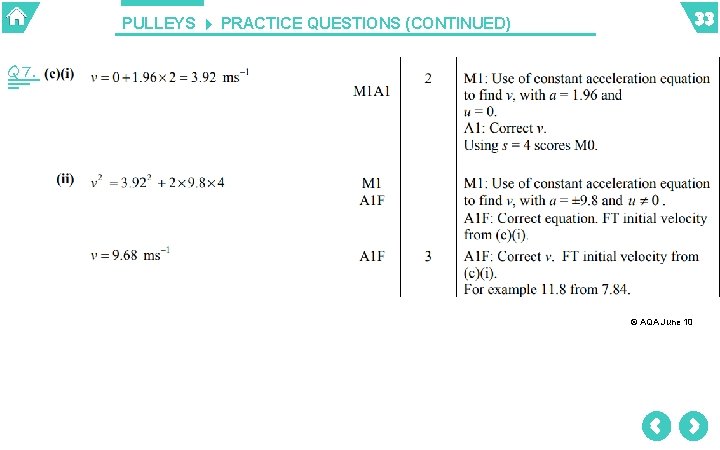
33 PULLEYS 4 PRACTICE QUESTIONS (CONTINUED) Q 7. © AQA June 10
34 PULLEYS 4 PRACTICE QUESTIONS (CONTINUED) Q 7. © AQA June 10
35 OBJECTS IN CONTACT MECHANICS CONNECTED PARTICLES OBJECTS IN CONTACT
CONNECTED PARTICLES 4 KEY FACTS NEWTON’S 3 RD LAW If object A exerts a force on object B, then object B exerts a force of equal magnitude but in the opposite direction on A. Object A Object B 36
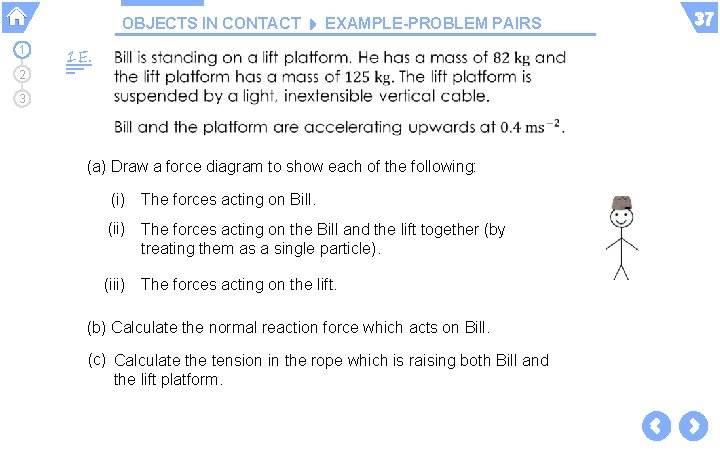
OBJECTS IN CONTACT 4 EXAMPLE-PROBLEM PAIRS 1 2 1 E. 3 (a) Draw a force diagram to show each of the following: (i) The forces acting on Bill. (ii) The forces acting on the Bill and the lift together (by treating them as a single particle). (iii) The forces acting on the lift. (b) Calculate the normal reaction force which acts on Bill. (c) Calculate the tension in the rope which is raising both Bill and the lift platform. 37
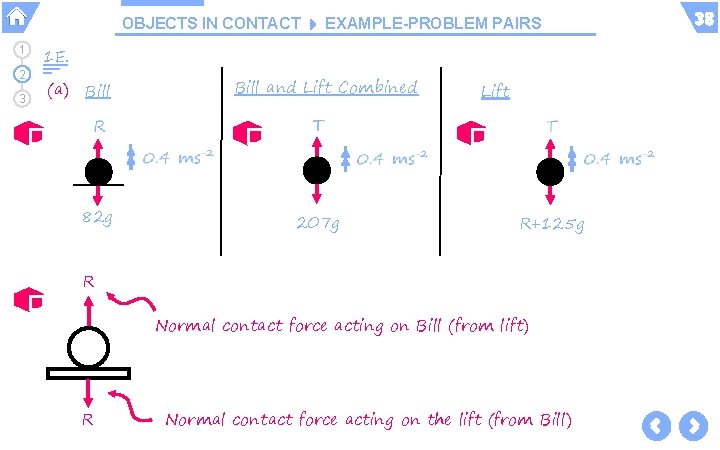
OBJECTS IN CONTACT 4 EXAMPLE-PROBLEM PAIRS 1 2 3 1 E. (a) Bill �� �� 82 g �� Bill and Lift Combined Lift �� 207 g R+125 g R Normal contact force acting on Bill (from lift) R Normal contact force acting on the lift (from Bill) 38
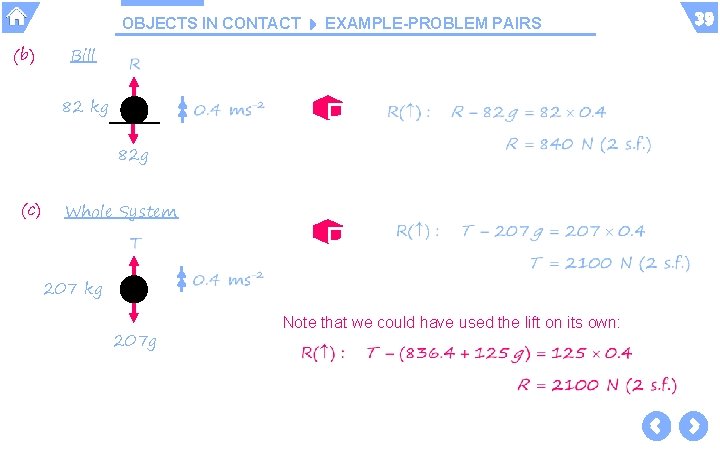
OBJECTS IN CONTACT 4 EXAMPLE-PROBLEM PAIRS (b) Bill 82 kg �� 82 g (c) Whole System �� 207 kg 207 g Note that we could have used the lift on its own: 39
40 OBJECTS IN CONTACT – PRACTICE QUESTIONS Suggested time: 30 -40 minutes. CHECK YOUR ANSWERS USING THE SOLUTIONS Question(s) Notes 1 -2 Standard questions 3 -4 Require a little more thought
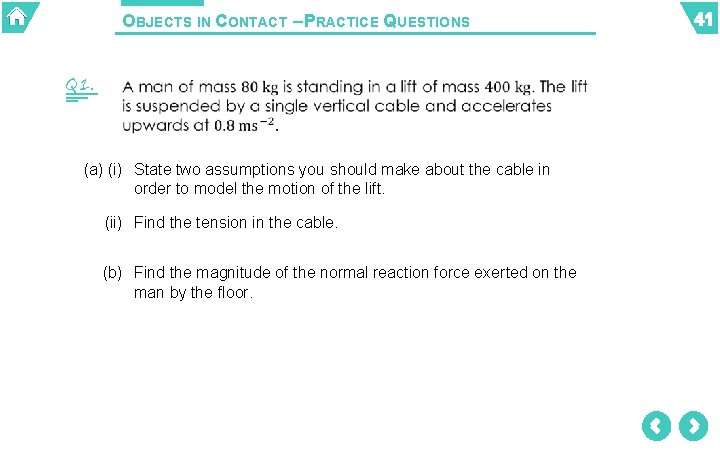
OBJECTS IN CONTACT – PRACTICE QUESTIONS Q 1. (a) (i) State two assumptions you should make about the cable in order to model the motion of the lift. (ii) Find the tension in the cable. (b) Find the magnitude of the normal reaction force exerted on the man by the floor. 41
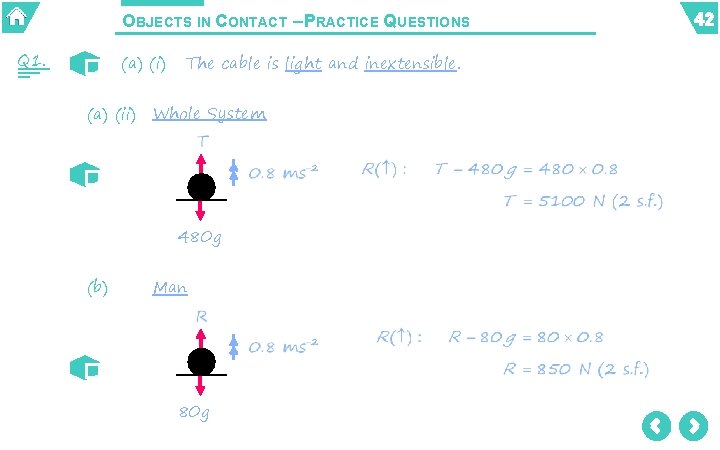
OBJECTS IN CONTACT – PRACTICE QUESTIONS Q 1. ��(a) (i) (a) (ii) Whole System The cable is light and inextensible. �� 480 g (b) Man �� 80 g 42
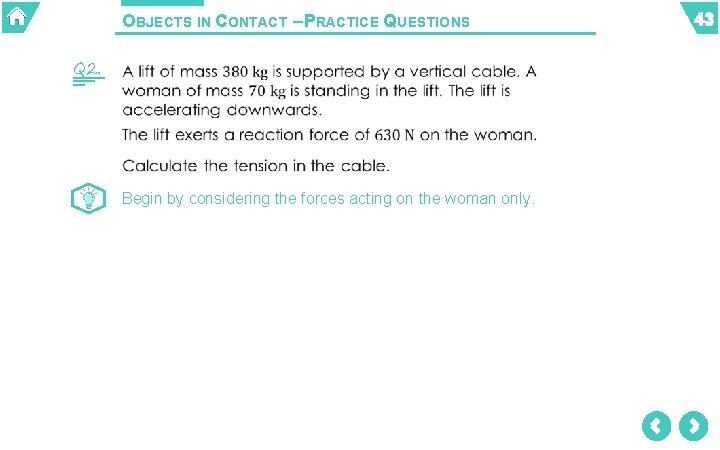
OBJECTS IN CONTACT – PRACTICE QUESTIONS Q 2. Begin by considering the forces acting on the woman only. 43
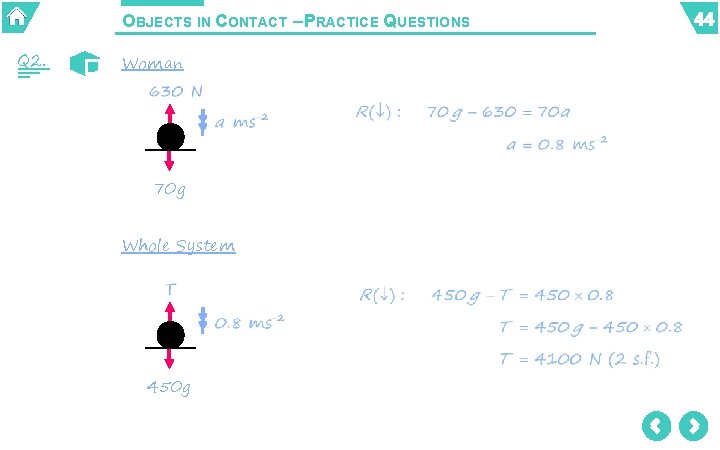
OBJECTS IN CONTACT – PRACTICE QUESTIONS Q 2. ��Woman 70 g Whole System 450 g 44
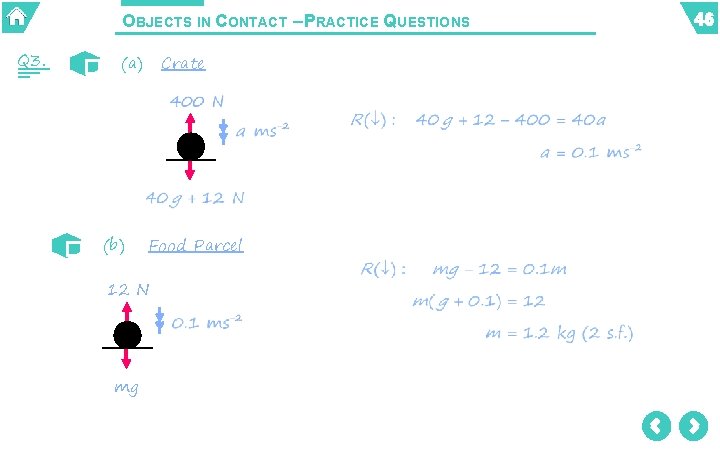
45 OBJECTS IN CONTACT – PRACTICE QUESTIONS Q 3. crate food parcel The magnitude of the reaction force acting on the crate from the parcel is equal to the magnitude of the reaction force acting on the parcel from the crate.
OBJECTS IN CONTACT – PRACTICE QUESTIONS Q 3. ��(a) ��(b) Crate Food Parcel 12 N mg 46
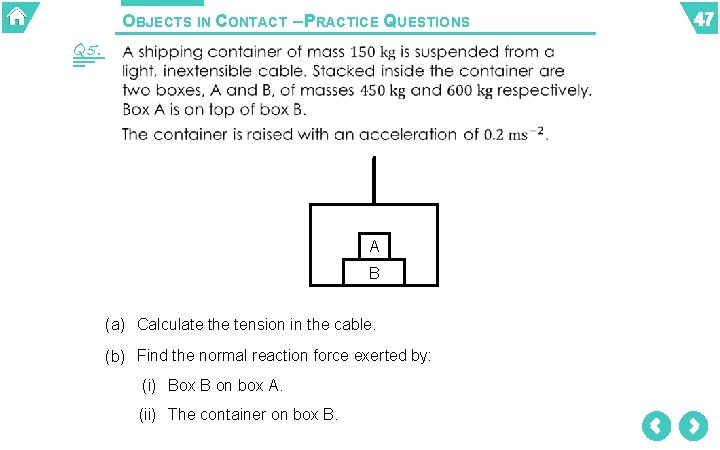
OBJECTS IN CONTACT – PRACTICE QUESTIONS Q 5. A B (a) Calculate the tension in the cable. (b) Find the normal reaction force exerted by: (i) Box B on box A. (ii) The container on box B. 47
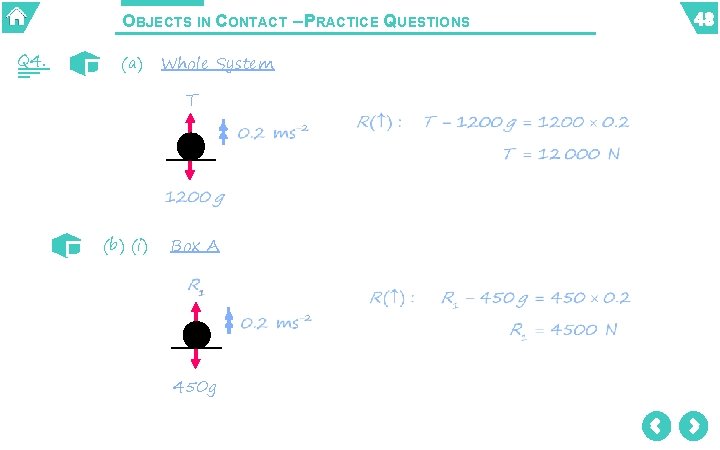
OBJECTS IN CONTACT – PRACTICE QUESTIONS Q 4. ��(a) Whole System T ��(b) (i) Box A 450 g 48
OBJECTS IN CONTACT – PRACTICE QUESTIONS Q 4. ��(b) Box B (ii) 49
50 FORCE COUPLING MECHANICS CONNECTED PARTICLES FORCE COUPLING
COUPLING FORCES When considering forces acting on connected particles, we can consider: The whole system. The individual parts separately. 51
52 FORCE COUPLING Here, we could consider the following cases: The forces on the man. a Tension in rope man Driving force Note: We may also include other resistive forces (e. g. air resistance)
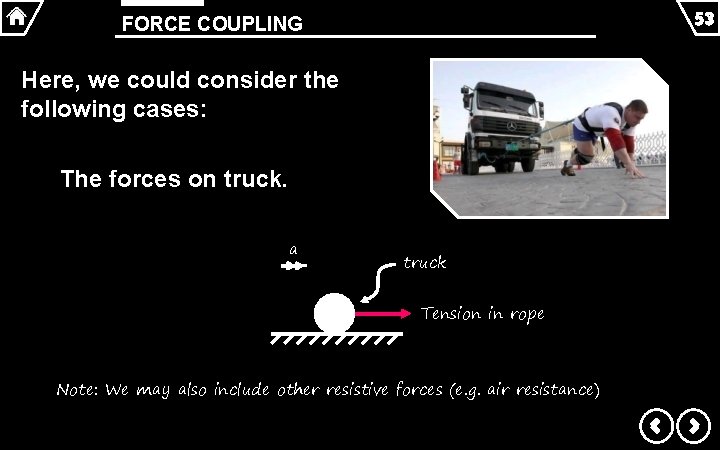
53 FORCE COUPLING Here, we could consider the following cases: The forces on truck. a truck Tension in rope Note: We may also include other resistive forces (e. g. air resistance)
54 FORCE COUPLING Here, we could consider the following cases: The whole system. a Man and truck Driving force Note: The mass here is the combined mass
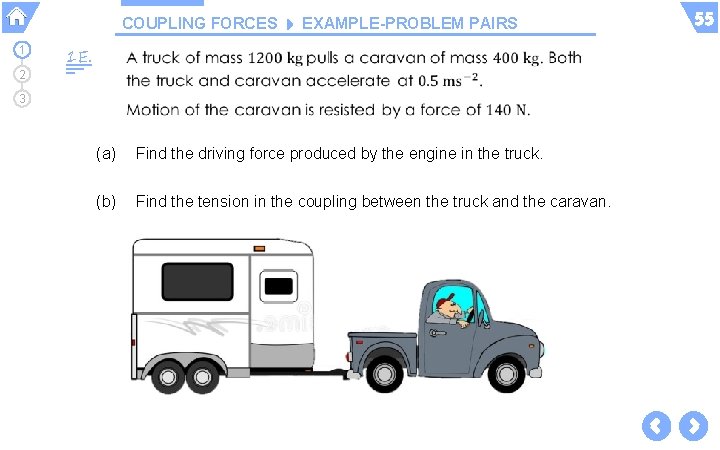
COUPLING FORCES 4 EXAMPLE-PROBLEM PAIRS 1 2 1 E. 3 (a) Find the driving force produced by the engine in the truck. (b) Find the tension in the coupling between the truck and the caravan. 55
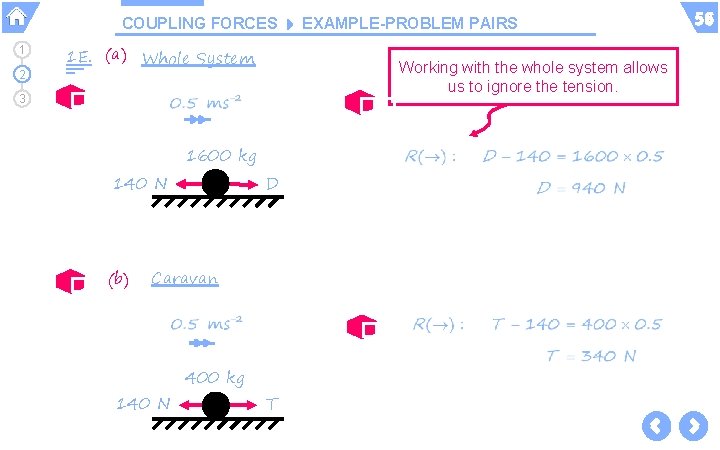
COUPLING FORCES 4 EXAMPLE-PROBLEM PAIRS 1 2 3 1 E. (a) Whole System Working with the whole system allows us to ignore the tension. �� �� 1600 kg D 140 N ��(b) Caravan �� 140 N 400 kg T 56
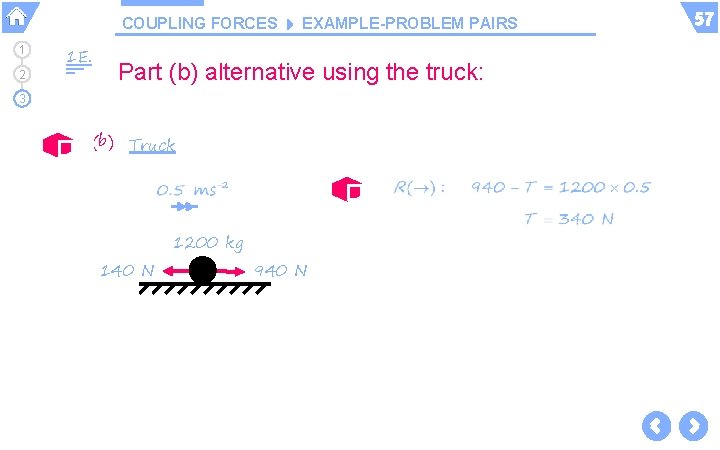
COUPLING FORCES 4 EXAMPLE-PROBLEM PAIRS 1 2 1 E. Part (b) alternative using the truck: 3 ��(b) Truck �� 1200 kg 140 N 940 N 57
EXAMPLE 1 – INTERNAL FORCES The previous example illustrates Newton’s 3 rd Law. The force that the truck applies to the caravan is • equal in magnitude • opposite in direction to the force that the caravan applies to the truck. equal magnitude opposite direction 140 N T T D 58
EXAMPLE 1 – INTERNAL FORCES 140 N T T D Internal forces cancel out when working with the whole system*. * Provided the velocity and acceleration of both objects is equal. 59
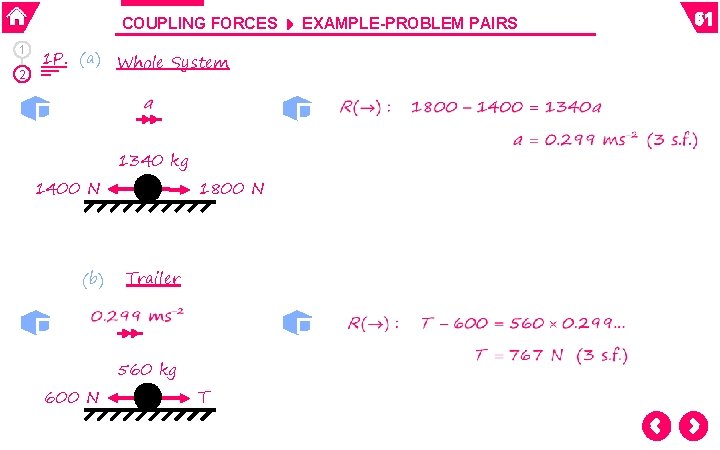
COUPLING FORCES 4 EXAMPLE-PROBLEM PAIRS 1 2 1 P. (a) Find the acceleration of the car. (b) Find the tension in the cable. 60
COUPLING FORCES 4 EXAMPLE-PROBLEM PAIRS 1 2 1 P. (a) Whole System �� �� 1340 kg 1800 N 1400 N (b) Trailer �� �� 560 kg 600 N T 61
62 COUPLING FORCES – PRACTICE QUESTIONS Suggested time: 30 -40 minutes. CHECK YOUR ANSWERS USING THE SOLUTIONS Question(s) Notes 1 -4 Minimum expected 5 -6 Additional questions
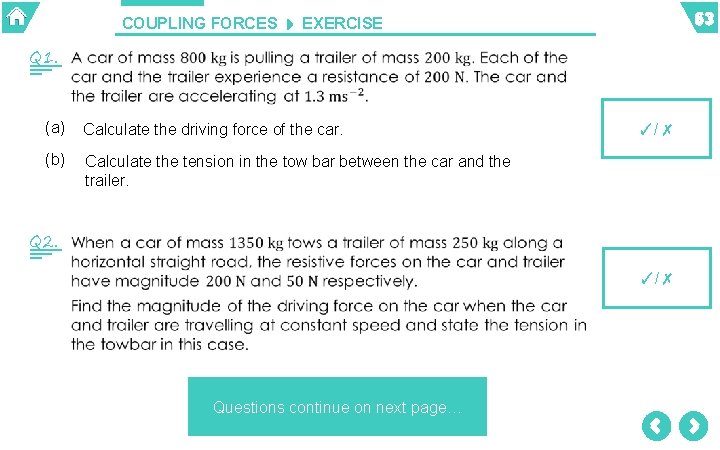
COUPLING FORCES 4 EXERCISE 63 Q 1. (a) Calculate the driving force of the car. (b) Calculate the tension in the tow bar between the car and the trailer. (a)✓/✗ 1700 N (b) 460 N Q 2. 250 ✓/✗ N, 50 N Questions continue on next page…
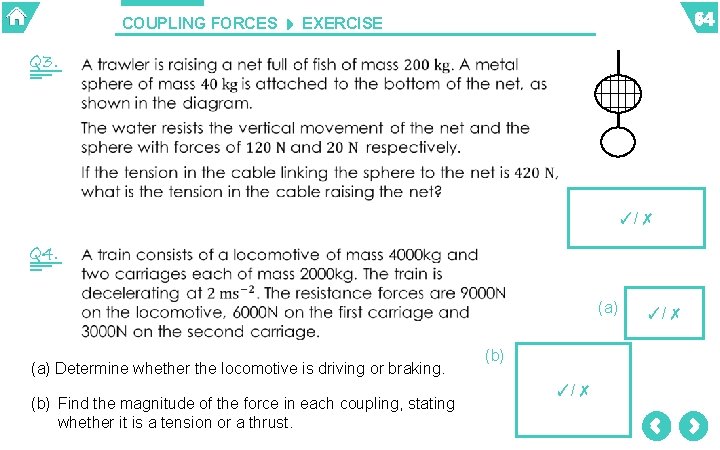
64 COUPLING FORCES 4 EXERCISE Q 3. 2500✓/✗ N (or 2540 to 3 sf) Q 4. (a) 2000 N ✓/✗ (driving) (a) Determine whether the locomotive is driving or braking. (b) Find the magnitude of the force in each coupling, stating whether it is a tension or a thrust. (b) 2 nd carriage: 1000 N thrust ✓/✗ 1 st carriage: 1000 N tension
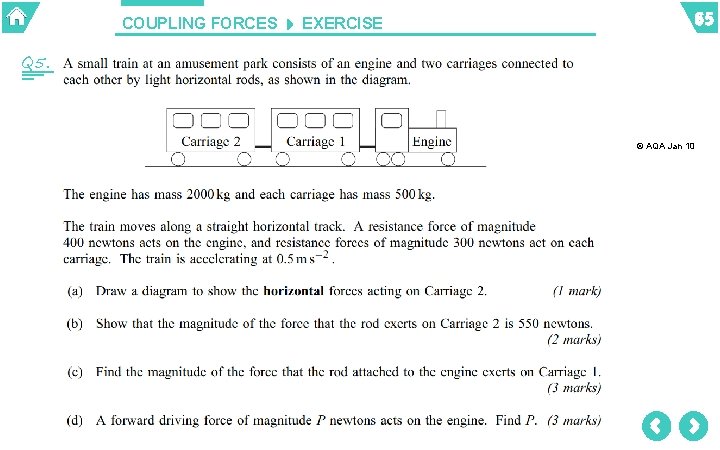
COUPLING FORCES 4 EXERCISE 65 Q 5. © AQA Jan 10
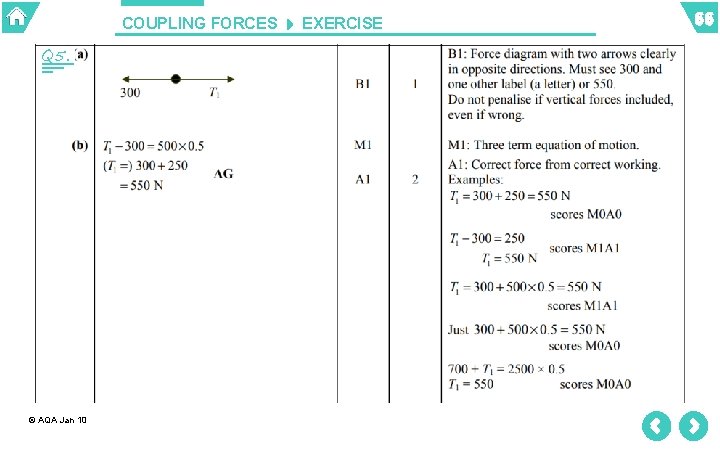
COUPLING FORCES 4 EXERCISE Q 5. © AQA Jan 10 66
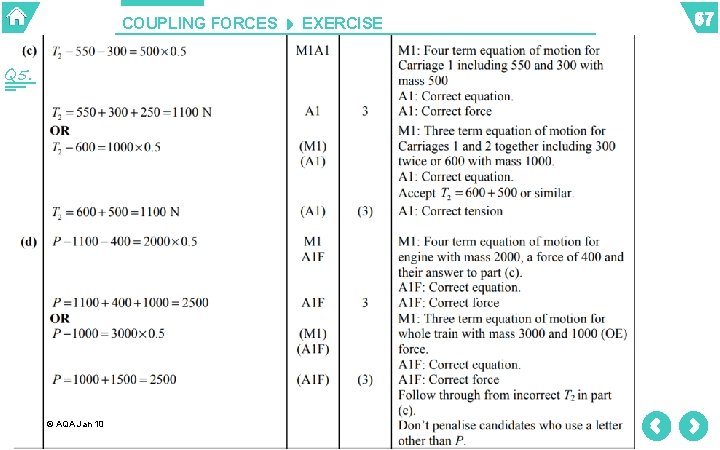
COUPLING FORCES 4 EXERCISE Q 5. © AQA Jan 10 67
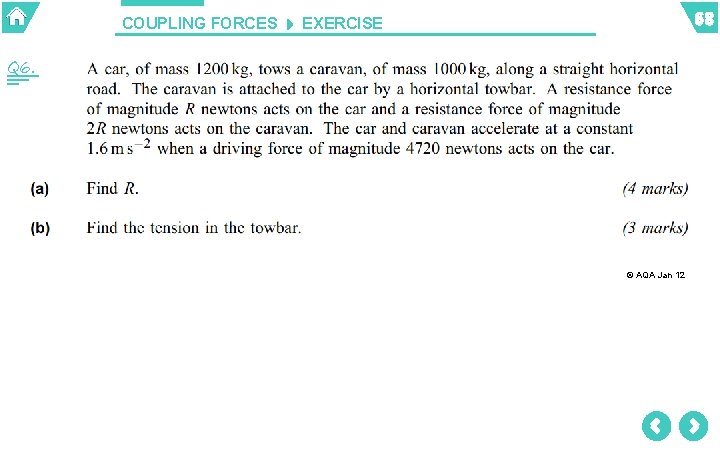
68 COUPLING FORCES 4 EXERCISE Q 6. © AQA Jan 12
69 COUPLING FORCES 4 EXERCISE Q 6. © AQA Jan 12