
Purchasing fish Forms of Fish fresh live frozen

- Slides: 20
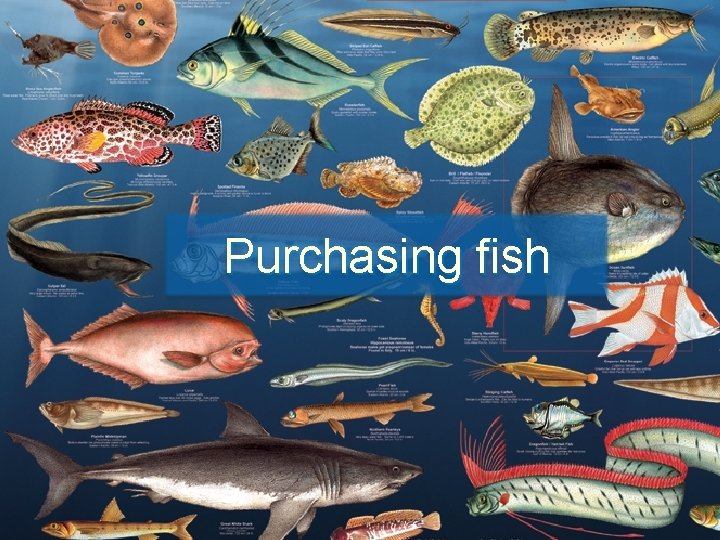
Purchasing fish
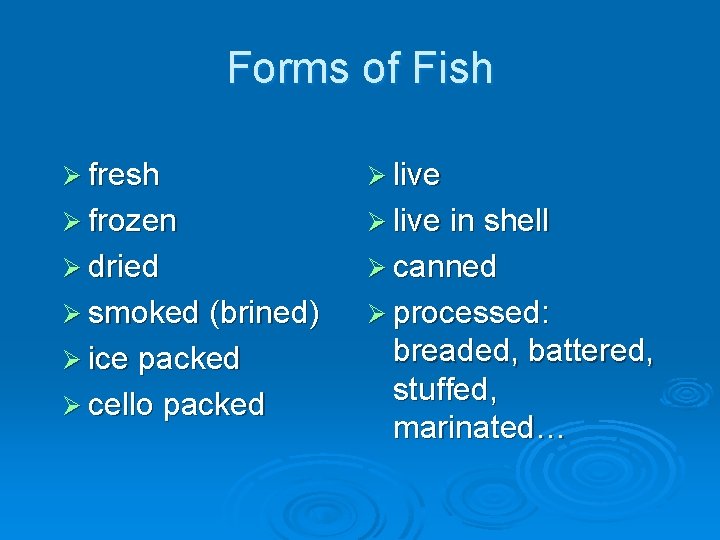
Forms of Fish Ø fresh Ø live Ø frozen Ø live in shell Ø dried Ø canned Ø smoked (brined) Ø processed: Ø ice packed Ø cello packed breaded, battered, stuffed, marinated…
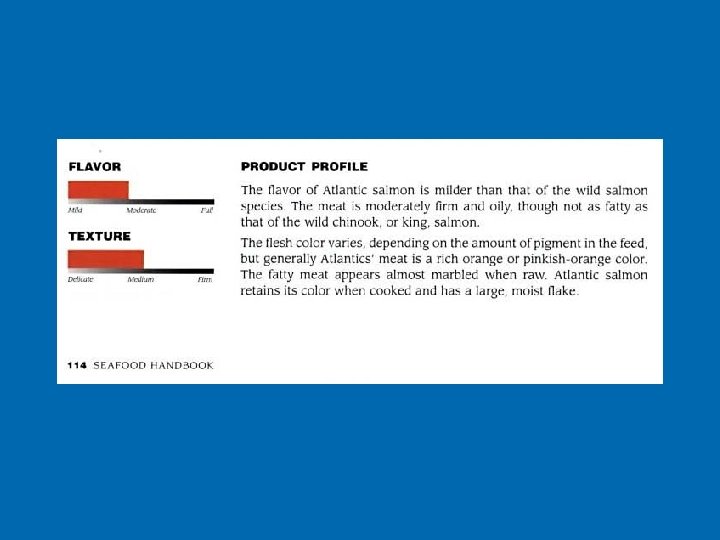
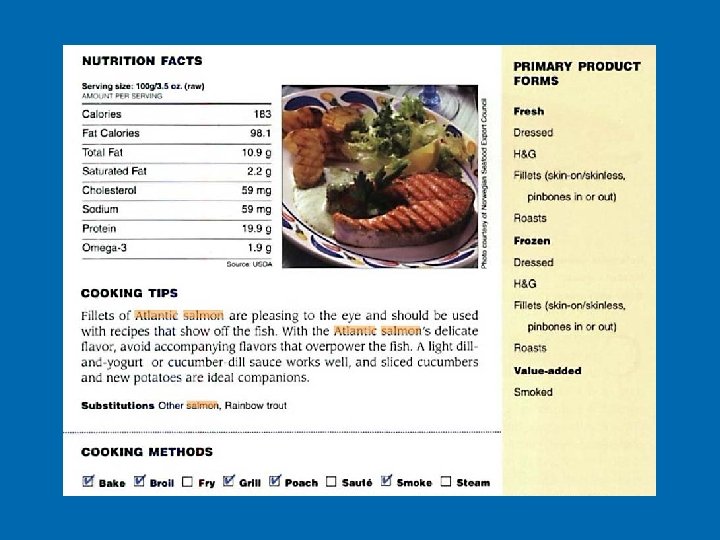
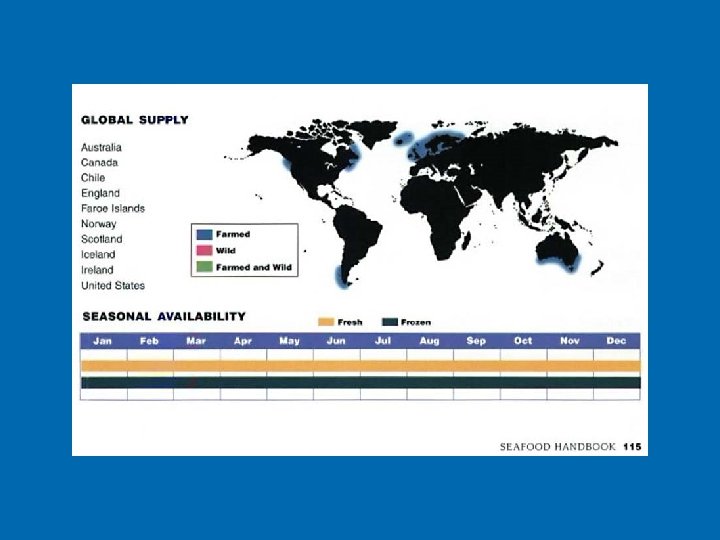
Seafood Handbook
Get good purveyor Ø Check references, ask around Ø Check with FDA Office of Seafood Safety for approved interstate fish suppliers Ø Establish exactly what you want and what you are using it for- whole filets, frozen, bones, scaled etc.
Who is cutting fish? Ø Do you have a butcher? Ø Do you have storage? Ø Fish is expensive- can you use the whole fish if you pay for bones? Ø Bodies in fish stock, scraps in fish cakes, filets in dining room, etc.
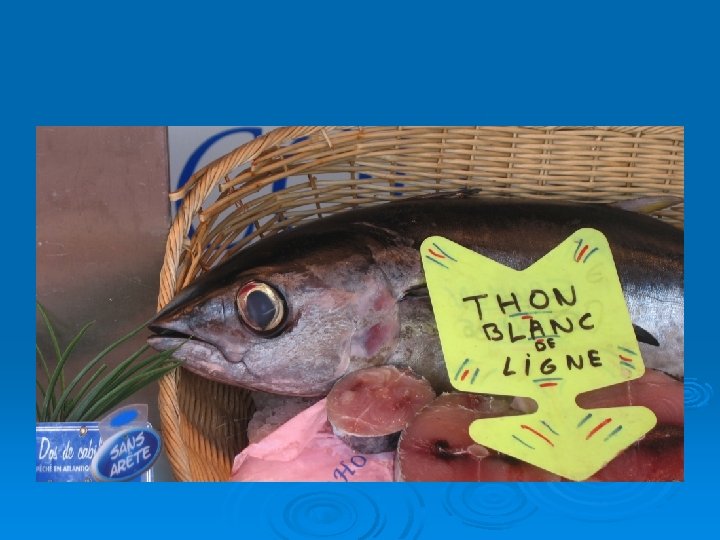
Receiving fresh seafood Ø Check quality Ø No smell Ø Bright eyes Ø Gills are red Ø Not slimy Ø no holes or tears in flesh, no discolorations Ø Is it cold? Was truck cold?
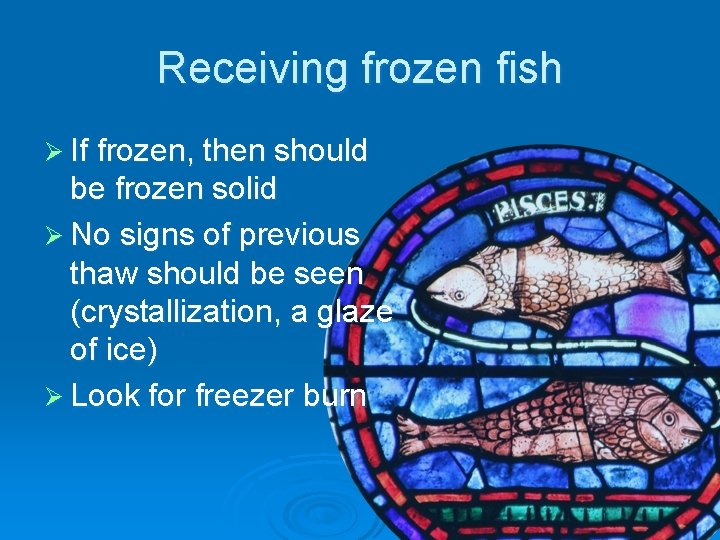
Receiving frozen fish Ø If frozen, then should be frozen solid Ø No signs of previous thaw should be seen (crystallization, a glaze of ice) Ø Look for freezer burn
Storing fish Ø About 32 degrees, stored on bed of ice with drip tray underneath Ø Smoked fish stored cooler in commercial establishment Ø Shellfish save tags- keep on file for 90 days
Fish no mandatory federal inspection program Ø FDA has inspections for processing plants, monitors state to state shipments, all processors must have HAACP- hazard analysis critical control point) Ø Fish exposed to toxins, get parasites, but are cold-blooded so what makes them sick is different than humans Ø U. S. Dept. of Commerce (not USDA) grades a small % of fish
Grading some fish Grade A only available on a few, packaged items, not common, only for U. S, processed-fish Ø 2/3 of fish eaten in US (info 2007) comes from 120 other countries Ø PUFI (packed under federal inspection) is voluntary grade system, not useful as fish caught in morning and sent out right away Ø
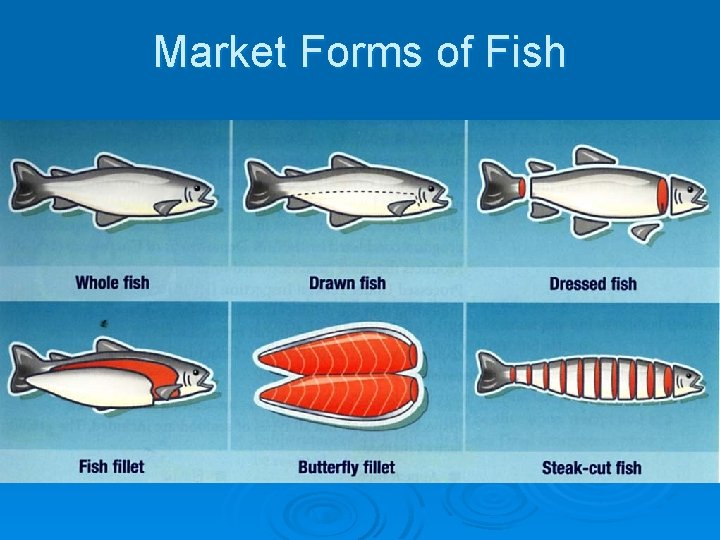
Market Forms of Fish
Fish market forms Ø “flaked and reformed” or “packed in oil” or imitation shrimp or crab “sea legs” Ø Exact type of fish Ø Acceptable substitutions Ø Whole fish, filets, gutted, scaled, boned? Ø Sold by weight and count
Point of Origin Ø Maine lobster? Alaska salmon? Atlantic cod? Ø Oysters especially, people will ask Ø Don’t underestimate customer Ø Wait staff must be informed Ø Tell the truth or be vague on menu
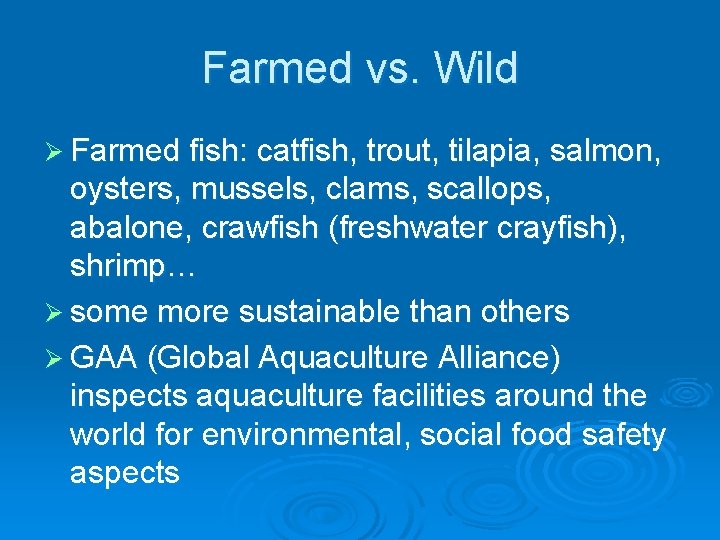
Farmed vs. Wild Ø Farmed fish: catfish, trout, tilapia, salmon, oysters, mussels, clams, scallops, abalone, crawfish (freshwater crayfish), shrimp… Ø some more sustainable than others Ø GAA (Global Aquaculture Alliance) inspects aquaculture facilities around the world for environmental, social food safety aspects
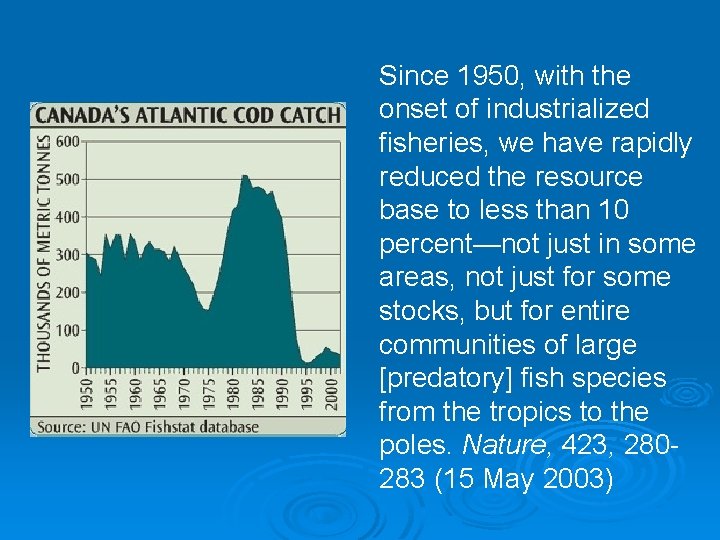
Since 1950, with the onset of industrialized fisheries, we have rapidly reduced the resource base to less than 10 percent—not just in some areas, not just for some stocks, but for entire communities of large [predatory] fish species from the tropics to the poles. Nature, 423, 280283 (15 May 2003)
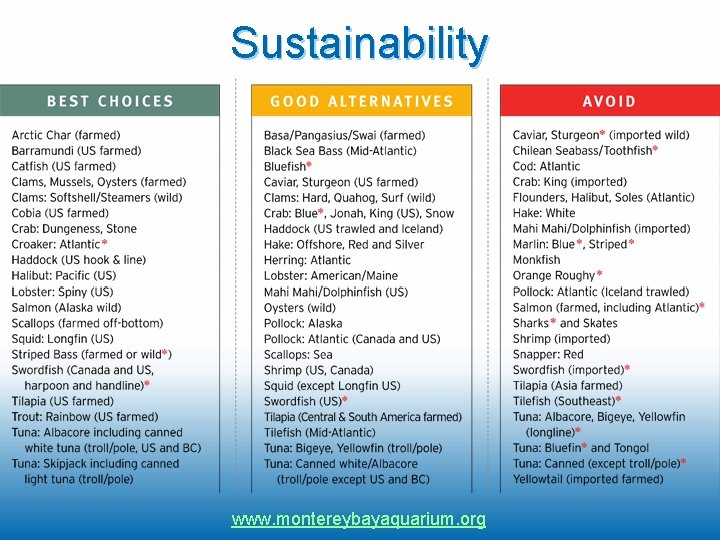
Sustainability www. montereybayaquarium. org