
Punnett Squares Method used to calculate the probable
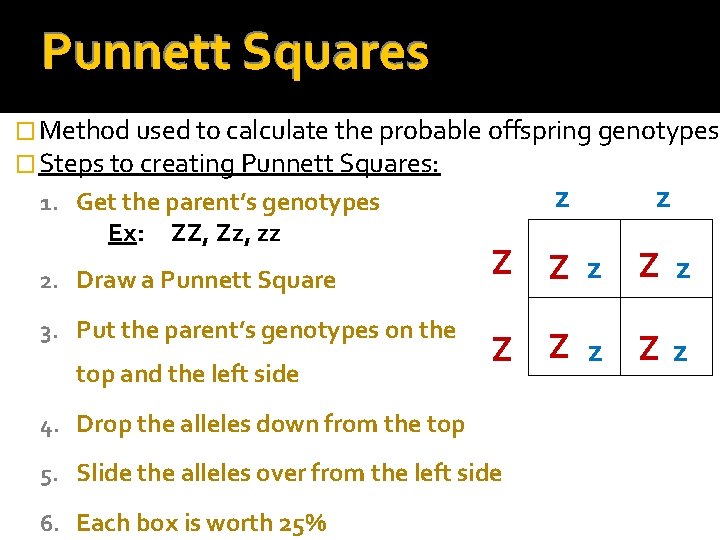
Punnett Squares � Method used to calculate the probable offspring genotypes � Steps to creating Punnett Squares: z 1. Get the parent’s genotypes Ex: ZZ, Zz, zz 2. Draw a Punnett Square 3. Put the parent’s genotypes on the top and the left side Z Z z Zz 4. Drop the alleles down from the top 5. Slide the alleles over from the left side 6. Each box is worth 25% z

Punnett Squares � Punnett Example: Father Genotype: Aa Mother Genotype: AA Possible Genotypes: 50% AA 50% Aa Possible Phenotypes: 100% Dominant Trait

Punnett Squares � Punnett Example: Tongue curling is a dominant trait: Dominant allele = C Recessive allele = c Homozygous dominant = ______ Homozygous recessive = ______ Heterozygous = ______ People heterozygous for tongue curling can curl their tongue. T / F A homozygous recessive mom for tongue curling and a heterozygous father want to know if their children will be able to curl their tongues. Calculate the genotype and phenotype percentages for the offspring.

Punnett Squares Square Examples � Punnett Example: Brown hair is dominant over blonde hair: Dominant allele = B Recessive allele = b Homozygous dominant = ______ Homozygous recessive = ______ Heterozygous = ______ Genotypes: Phenotypes:
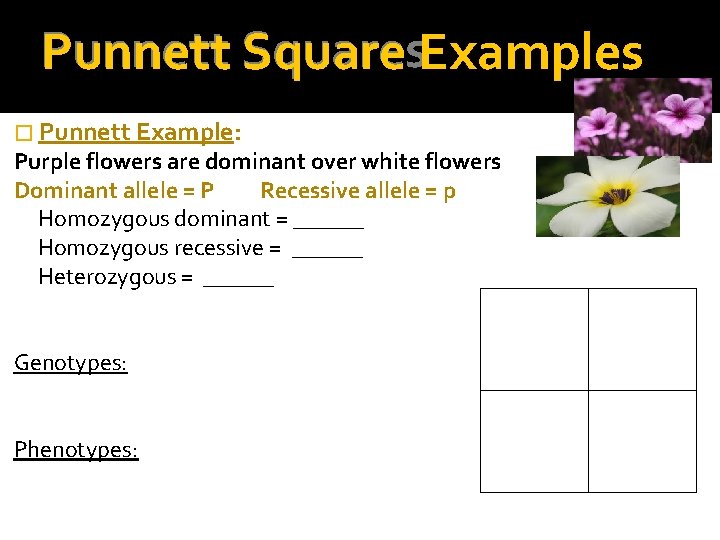
Punnett Squares Square Examples � Punnett Example: Purple flowers are dominant over white flowers Dominant allele = P Recessive allele = p Homozygous dominant = ______ Homozygous recessive = ______ Heterozygous = ______ Genotypes: Phenotypes:

Punnett Square Examples � Punnett Example: Round flowers is dominant over pointed flowers Dominant allele = R Recessive allele = r Homozygous dominant = ______ Homozygous recessive = ______ Heterozygous = ______ Genotypes: Phenotypes:
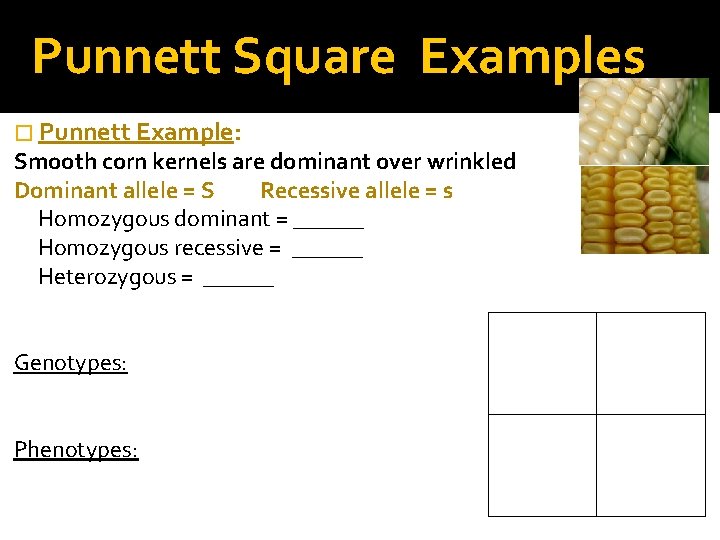
Punnett Square Examples � Punnett Example: Smooth corn kernels are dominant over wrinkled Dominant allele = S Recessive allele = s Homozygous dominant = ______ Homozygous recessive = ______ Heterozygous = ______ Genotypes: Phenotypes:
- Slides: 7