
Pumps Compressors Fans Ejectors and Expanders Chapter 20

- Slides: 35
Pumps, Compressors, Fans, Ejectors and Expanders Chapter 20 Ch. EN 4253 Design I Terry A. Ring
Pumps • Moves Liquid, Creates Pressure – Vapor bubbles • Causes Cavitations • Erodes Impeller – Solids Erode Impeller • Pump Types – Centrifugal – Positive Displacement • Piston • diaphragm • Pump Power = Q*ΔP = brake (delivered) (horse) power from motor
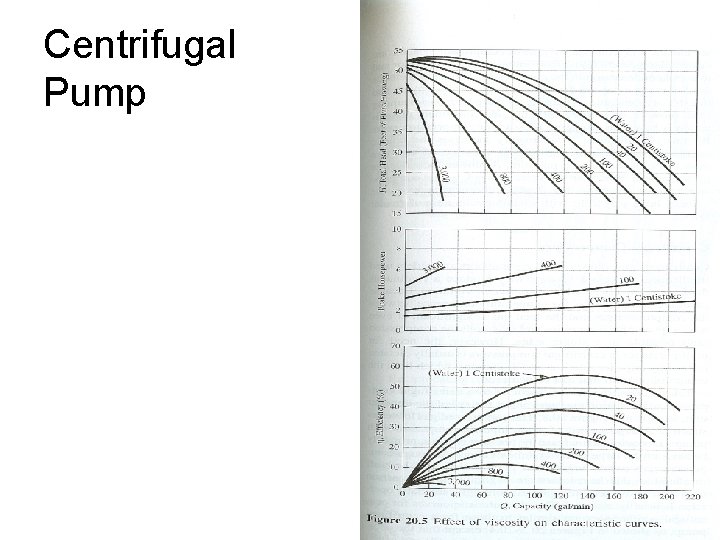
Centrifugal Pumps • Two Basic Requirements for Trouble. Free Operation of Centrifugal Pumps – no cavitation of the pump occurs throughout the broad operating range – a certain minimum continuous flow is always maintained during operation • Pump around loops
Reduced Flows • Unfavorable conditions which may occur separately or simultaneously when the pump is operated at reduced flows • Cases of heavy leakages from the casing, seal, and stuffing box • Deflection and shearing of shafts • Seizure of pump internals • Close tolerances erosion • Separation cavitation • Product quality degradation • Excessive hydraulic thrust • Premature bearing failures
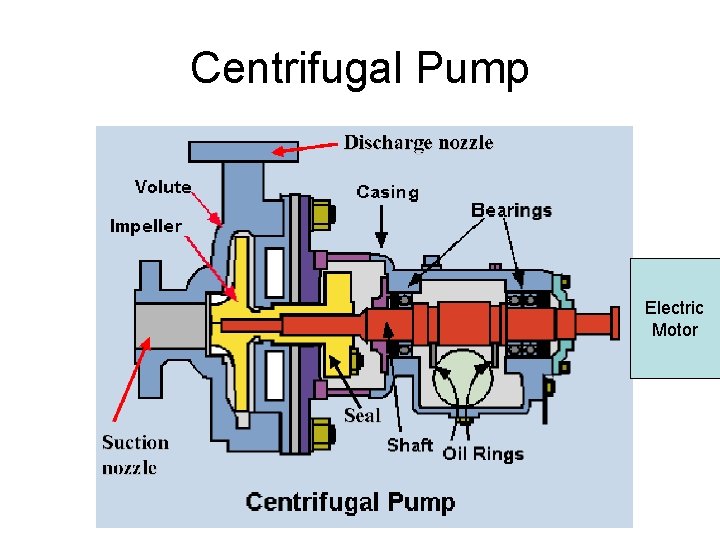
Centrifugal Pump Electric Motor
Centrifugal Pump Electric Motor
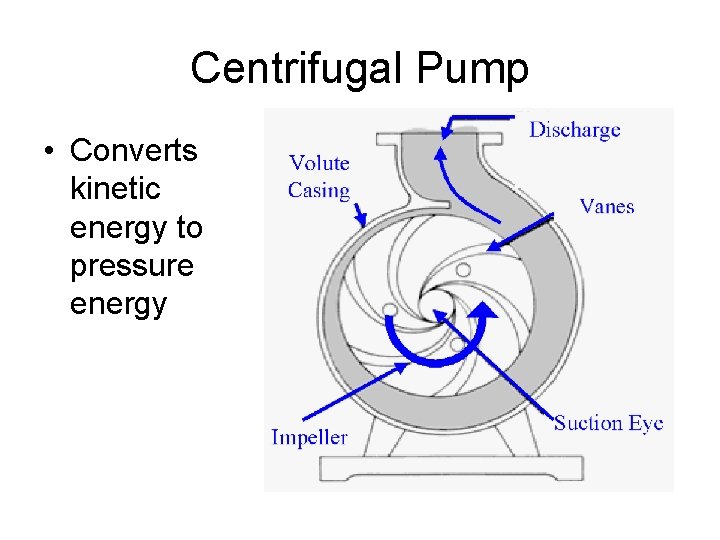
Centrifugal Pump • Converts kinetic energy to pressure energy
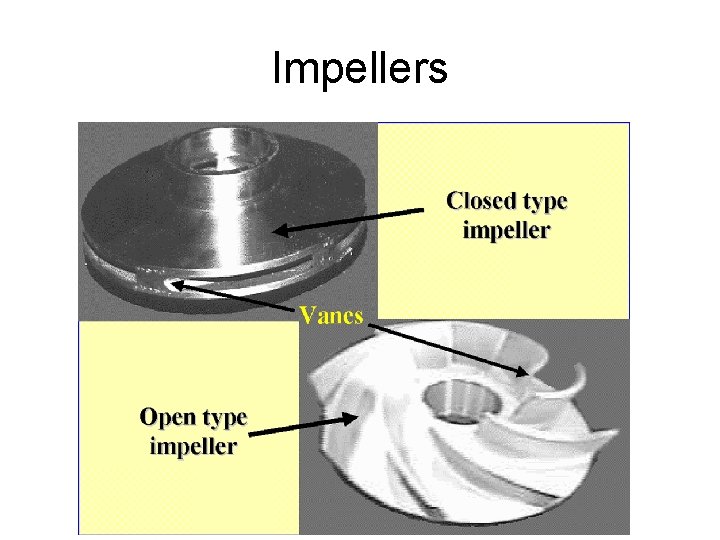
Impellers
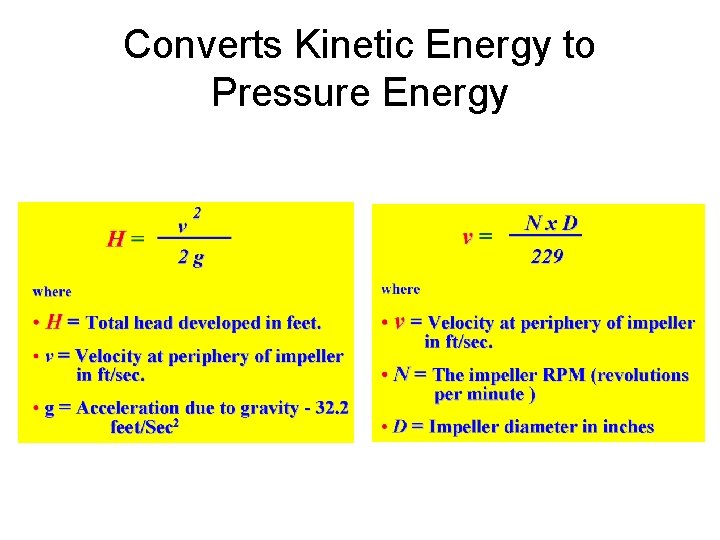
Converts Kinetic Energy to Pressure Energy
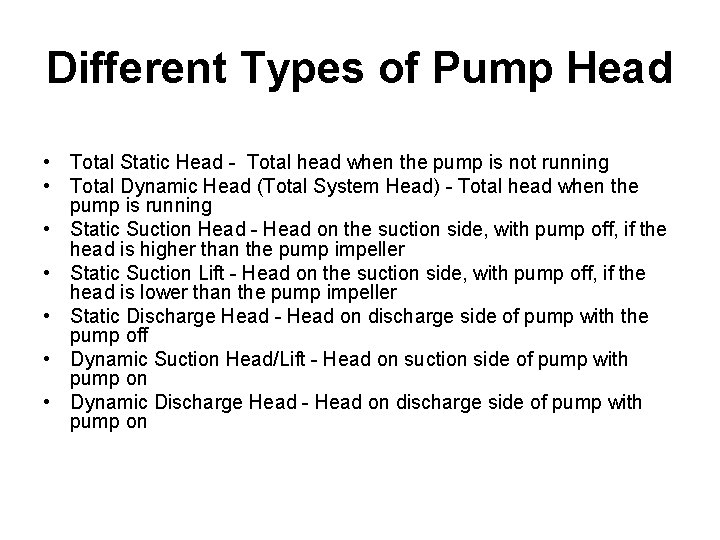
Different Types of Pump Head • Total Static Head - Total head when the pump is not running • Total Dynamic Head (Total System Head) - Total head when the pump is running • Static Suction Head - Head on the suction side, with pump off, if the head is higher than the pump impeller • Static Suction Lift - Head on the suction side, with pump off, if the head is lower than the pump impeller • Static Discharge Head - Head on discharge side of pump with the pump off • Dynamic Suction Head/Lift - Head on suction side of pump with pump on • Dynamic Discharge Head - Head on discharge side of pump with pump on
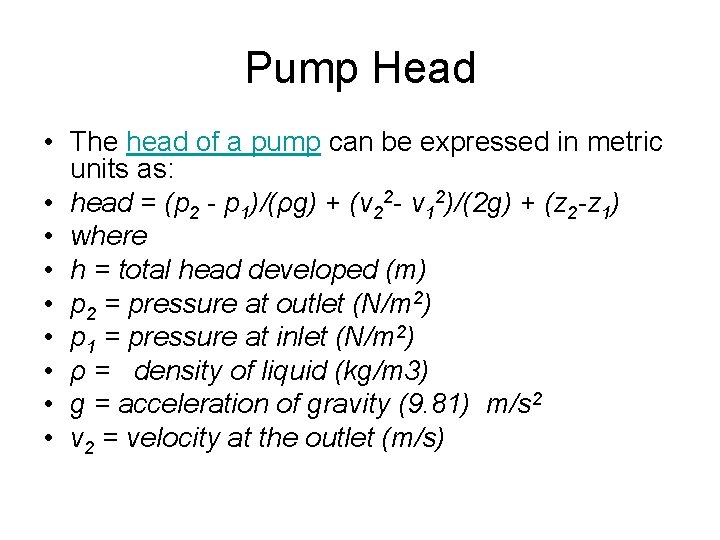
Pump Head • The head of a pump can be expressed in metric units as: • head = (p 2 - p 1)/(ρg) + (v 22 - v 12)/(2 g) + (z 2 -z 1) • where • h = total head developed (m) • p 2 = pressure at outlet (N/m 2) • p 1 = pressure at inlet (N/m 2) • ρ = density of liquid (kg/m 3) • g = acceleration of gravity (9. 81) m/s 2 • v 2 = velocity at the outlet (m/s)
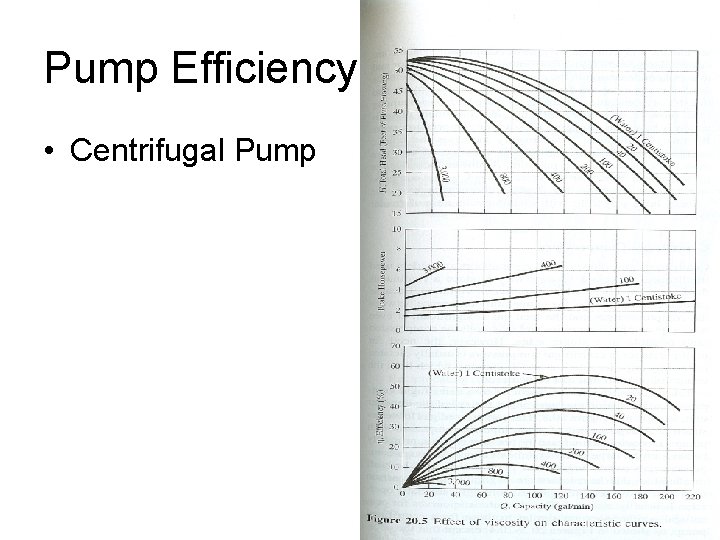
Pump Efficiency • Centrifugal Pump
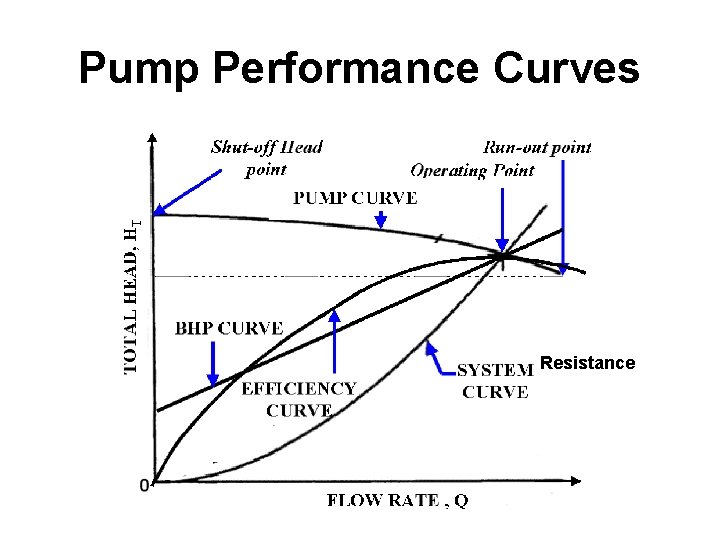
Pump Performance Curves Resistance
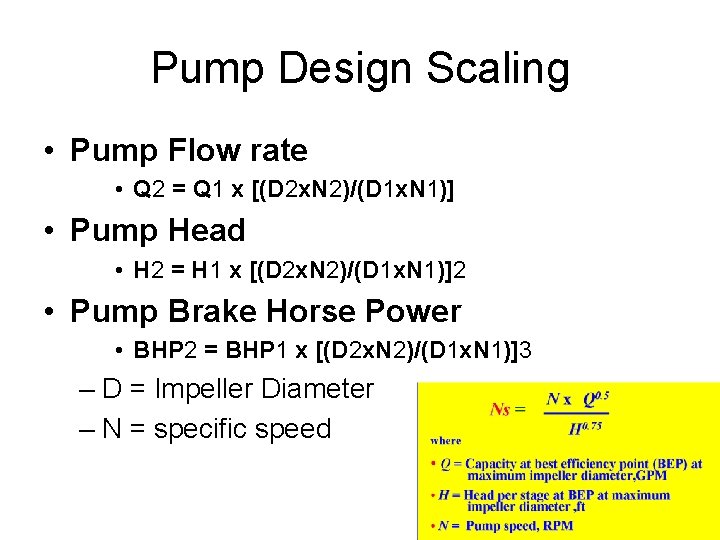
Pump Design Scaling • Pump Flow rate • Q 2 = Q 1 x [(D 2 x. N 2)/(D 1 x. N 1)] • Pump Head • H 2 = H 1 x [(D 2 x. N 2)/(D 1 x. N 1)]2 • Pump Brake Horse Power • BHP 2 = BHP 1 x [(D 2 x. N 2)/(D 1 x. N 1)]3 – D = Impeller Diameter – N = specific speed
Net Positive Suction Head-NPSH • Pumps can not pump vapors! • The satisfactory operation of a pump requires that vaporization of the liquid being pumped does not occur at any condition of operation.
Net Positive Suction Head Required, NPSHR As the liquid passes from the pump suction to the eye of the impeller, the velocity increases and the pressure decreases. There also pressure losses due to shock and turbulence as the liquid strikes the impeller. The centrifugal force of the impeller vanes further increases the velocity and decreases the pressure of the liquid. The NPSH required is the positive head (absolute pressure) required at the pump suction to overcome these pressure drops in the pump and maintain the liquid above its vapor pressure.
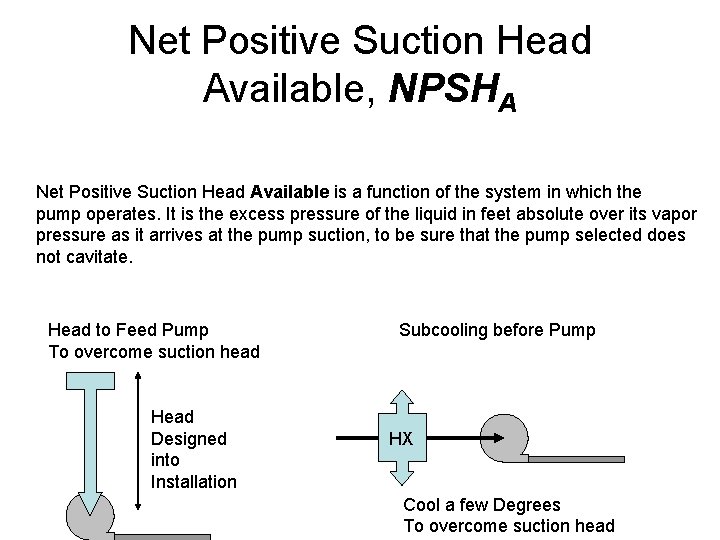
Net Positive Suction Head Available, NPSHA Net Positive Suction Head Available is a function of the system in which the pump operates. It is the excess pressure of the liquid in feet absolute over its vapor pressure as it arrives at the pump suction, to be sure that the pump selected does not cavitate. Head to Feed Pump Subcooling before Pump To overcome suction head Head Designed into Installation HX Cool a few Degrees To overcome suction head
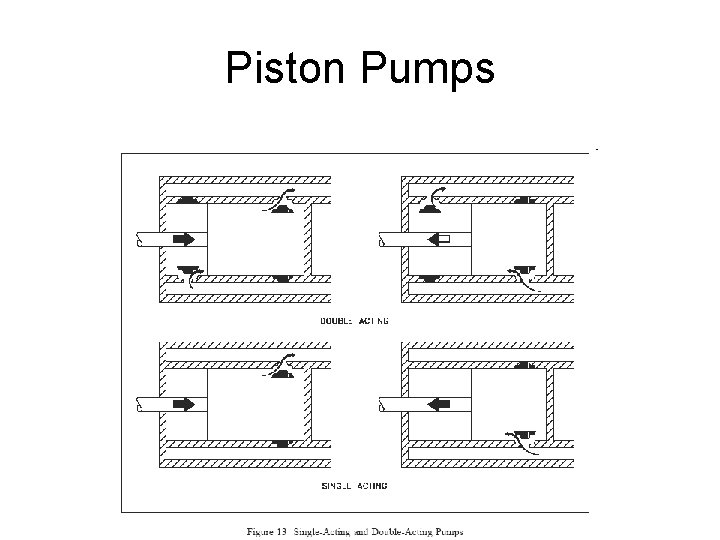
Piston Pumps
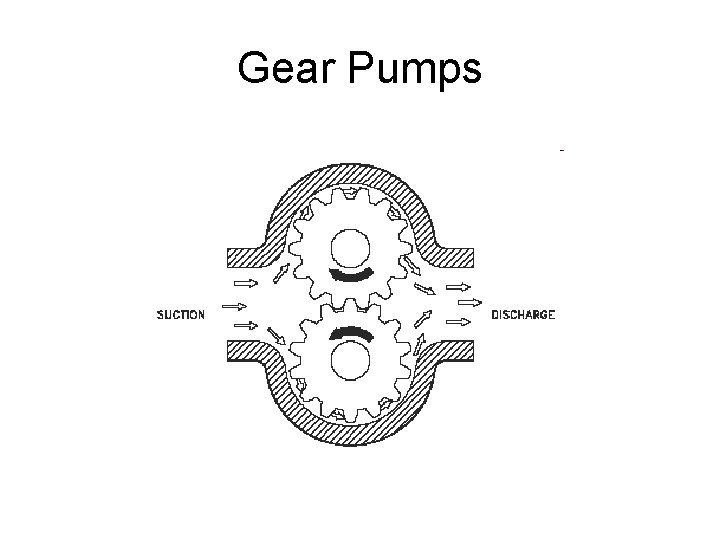
Gear Pumps
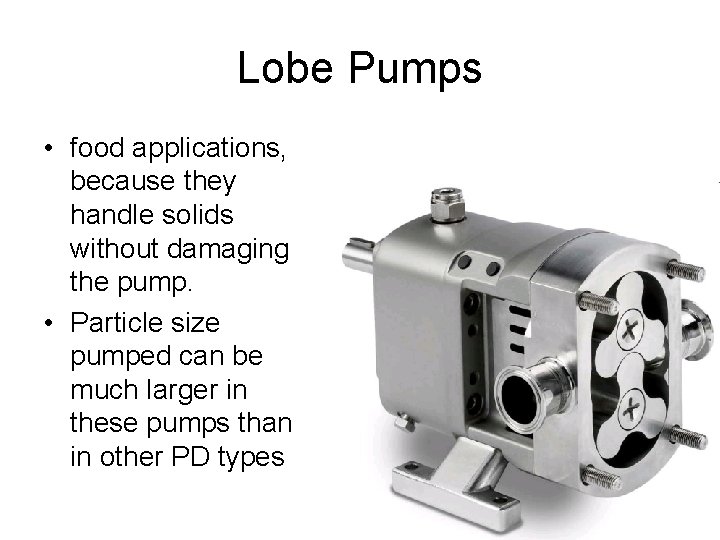
Lobe Pumps • food applications, because they handle solids without damaging the pump. • Particle size pumped can be much larger in these pumps than in other PD types
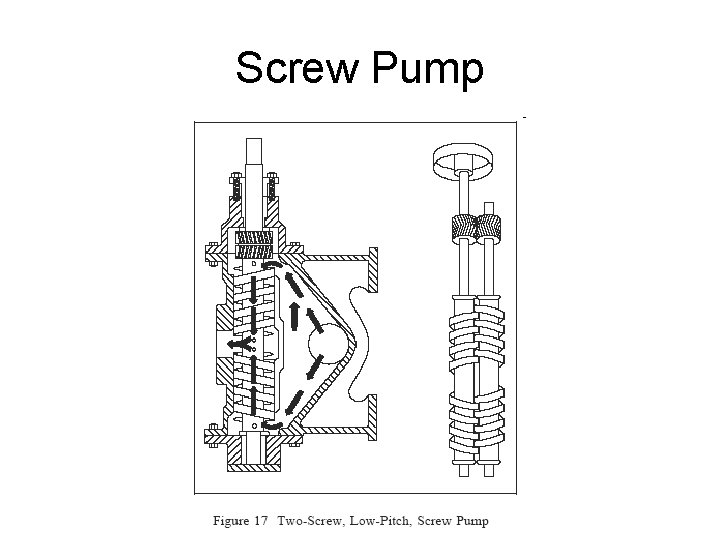
Screw Pump
Centrifugal Pump
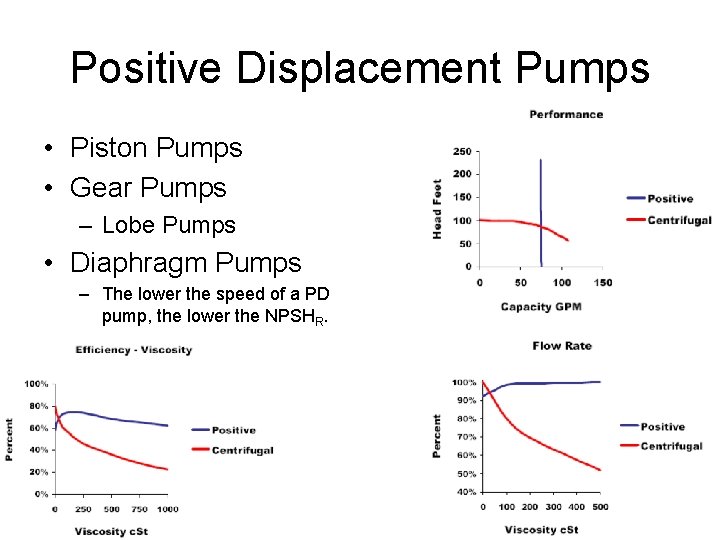
Positive Displacement Pumps • Piston Pumps • Gear Pumps – Lobe Pumps • Diaphragm Pumps – The lower the speed of a PD pump, the lower the NPSHR.
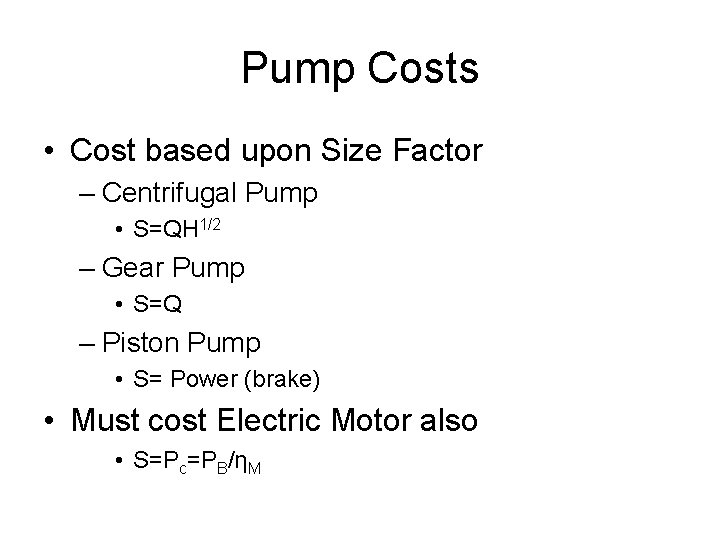
Pump Costs • Cost based upon Size Factor – Centrifugal Pump • S=QH 1/2 – Gear Pump • S=Q – Piston Pump • S= Power (brake) • Must cost Electric Motor also • S=Pc=PB/ηM
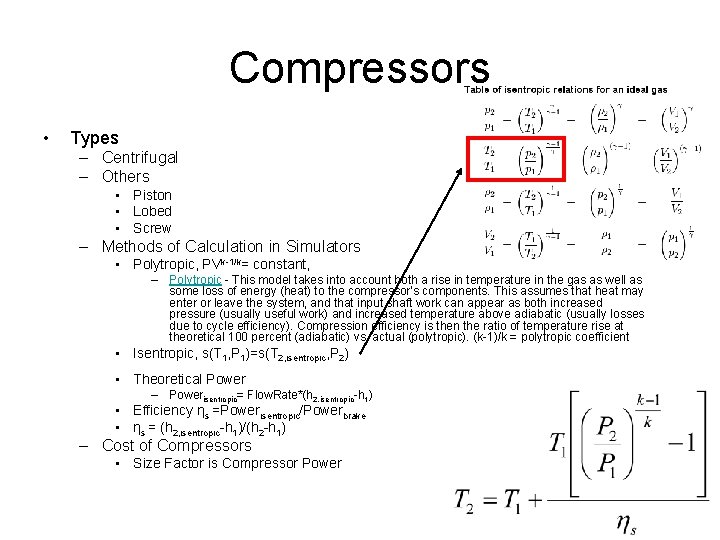
Compressors • Types – Centrifugal – Others • Piston • Lobed • Screw – Methods of Calculation in Simulators • Polytropic, PVk-1/k= constant, – Polytropic - This model takes into account both a rise in temperature in the gas as well as some loss of energy (heat) to the compressor's components. This assumes that heat may enter or leave the system, and that input shaft work can appear as both increased pressure (usually useful work) and increased temperature above adiabatic (usually losses due to cycle efficiency). Compression efficiency is then the ratio of temperature rise at theoretical 100 percent (adiabatic) vs. actual (polytropic). (k-1)/k = polytropic coefficient • Isentropic, s(T 1, P 1)=s(T 2, isentropic, P 2) • Theoretical Power – Powerisentropic= Flow. Rate*(h 2, isentropic-h 1) • Efficiency ηs =Powerisentropic/Powerbrake • ηs = (h 2, isentropic-h 1)/(h 2 -h 1) – Cost of Compressors • Size Factor is Compressor Power
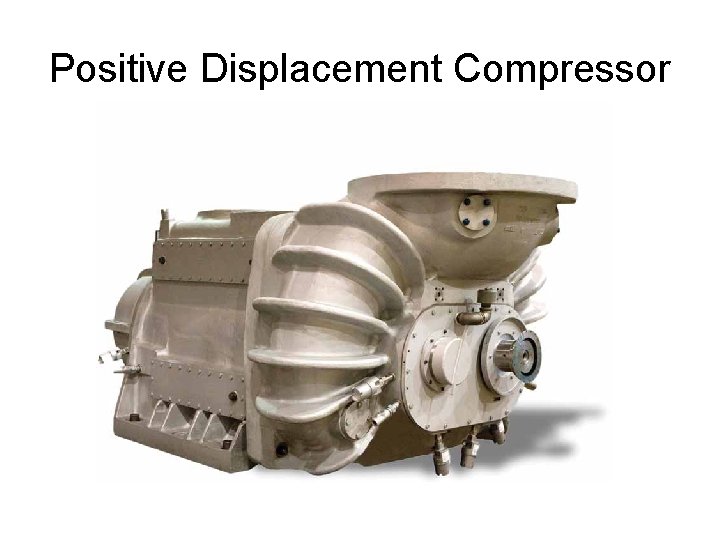
Positive Displacement Compressor
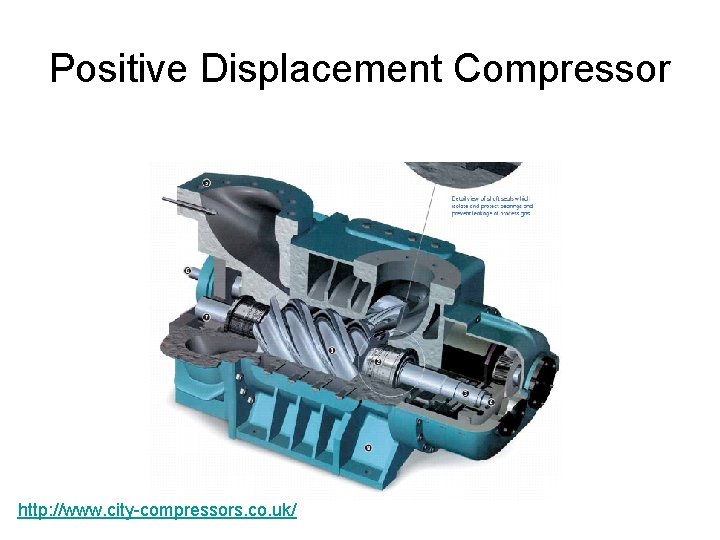
Positive Displacement Compressor http: //www. city-compressors. co. uk/
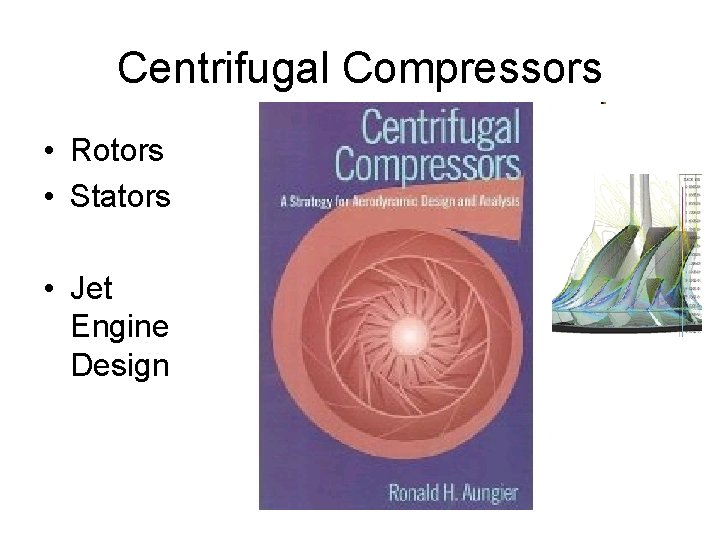
Centrifugal Compressors • Rotors • Stators • Jet Engine Design
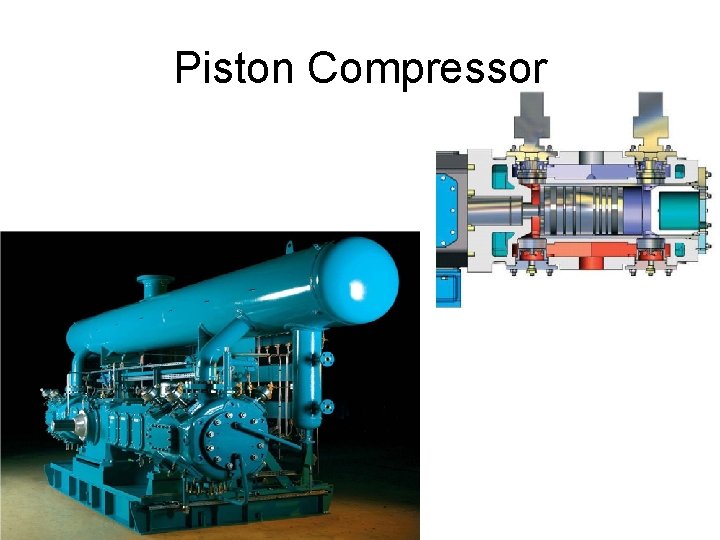
Piston Compressor
Expander • Reverse of Compressor • Let flow produce shaft work • Types – Centrifugal – Positive Displacement • Piston • Lobed • Screw – Methods of Calculation in Simulators • Polytropic, PVk-1/k= constant, • Isentropic, s(T 1, P 1)=s(T 2, isentropic, P 2) • Theoretical Power – Powerisentropic= f*(h 2, isentropic-h 1) • Efficiency ηs=Powerbrake/Powerisentropic= (h 2 -h 1) /(h 2, isentropic-h 1) – Cost • Size factor = Power http: //www. city-compressors. co. uk/
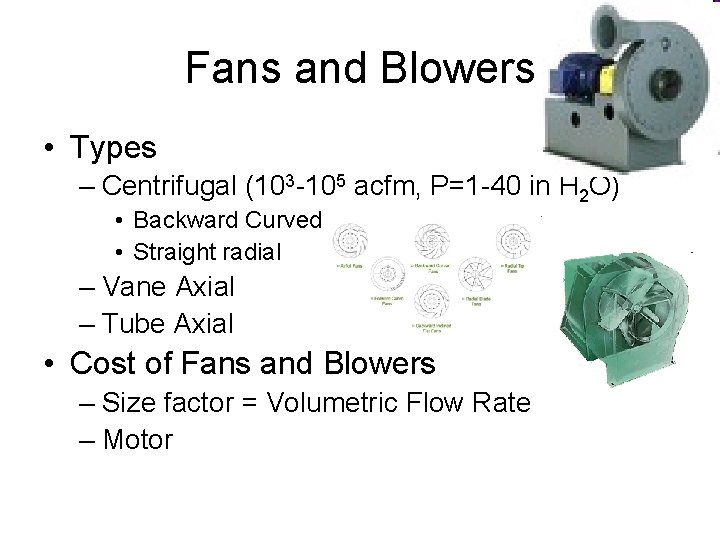
Fans and Blowers • Types – Centrifugal (103 -105 acfm, P=1 -40 in H 2 O) • Backward Curved • Straight radial – Vane Axial – Tube Axial • Cost of Fans and Blowers – Size factor = Volumetric Flow Rate – Motor
Choice to Increase Pressure • Heuristic 34 – Use a Fan • Atm to 1. 47 psig – Use a Blower • < 30 psig – Compressor (or staged system) • > 30 psig • Heuristic 34 - Number of Stages – Up to a Compression ratio 4 for each stage • With intercooler between stages (ΔP=2 psi) – Equal Hp for each stage ( equal compression ratio)
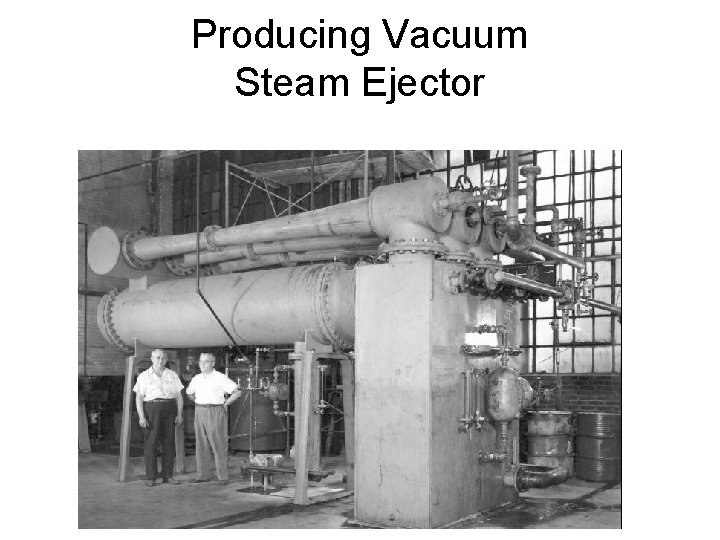
Producing Vacuum Steam Ejector
Producing Vacuum • Types – Ejector - advantage = large volumetric flow rate • Multi-Stage with interstage condensers – Liquid (Oil) Ring Vacuum Pump – Dry Vacuum Pump (rotary screw, lobe) (advantage =low pressure) Designs similar to Expanders • Design for – Flow Rate at suction plus – Air Leakage Rate • Function of pressure and Volume of vessel • Cost – Size factor = Flow Rate at suction – Motor for pumps
Ejector • Produces Vacuum • Provides Low Pressures for Distillation Columns • Fluid (P ≥ Psat) – Steam • for suction pressure below 100 mbar absolute, more than one ejector will be used, with condensors between the ejector stages – Air – Water • Collects Particles in Gas Stream – Venturi Scrubber