
Pump Intake Pressures from Dynamometer Pump Cards Valve
- Slides: 27
Pump Intake Pressures from Dynamometer Pump Cards Valve Check Load Tests Fluid Levels Shots Lynn Rowlan
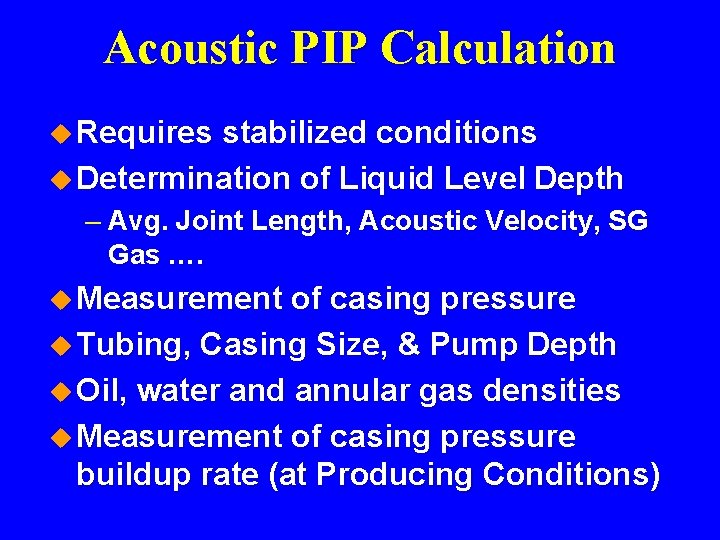
Acoustic PIP Calculation u Requires stabilized conditions u Determination of Liquid Level Depth – Avg. Joint Length, Acoustic Velocity, SG Gas …. u Measurement of casing pressure u Tubing, Casing Size, & Pump Depth u Oil, water and annular gas densities u Measurement of casing pressure buildup rate (at Producing Conditions)
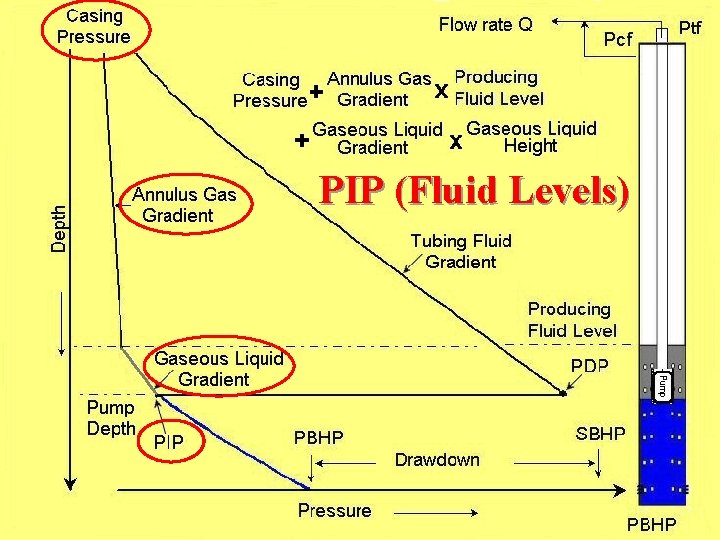
PIP (Fluid Levels)
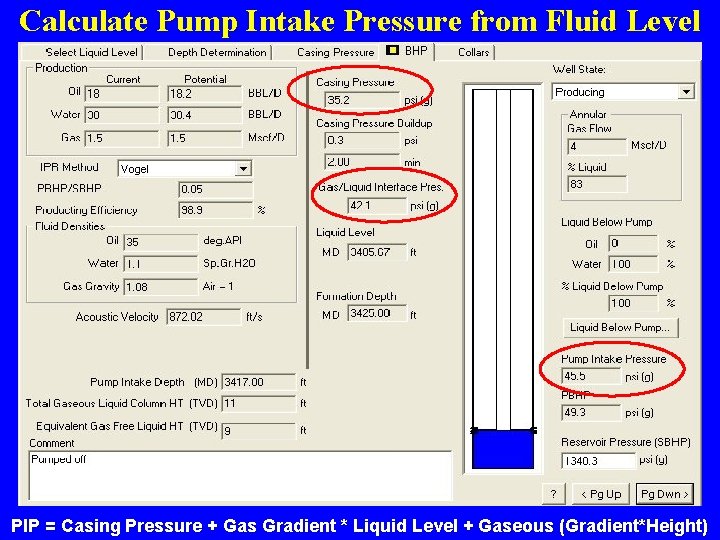
Calculate Pump Intake Pressure from Fluid Level PIP = Casing Pressure + Gas Gradient * Liquid Level + Gaseous (Gradient*Height)
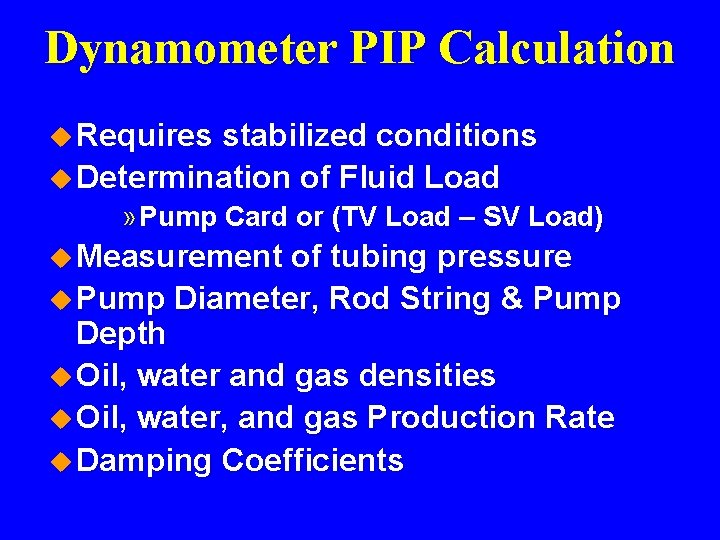
Dynamometer PIP Calculation u Requires stabilized conditions u Determination of Fluid Load » Pump Card or (TV Load – SV Load) u Measurement of tubing pressure u Pump Diameter, Rod String & Pump Depth u Oil, water and gas densities u Oil, water, and gas Production Rate u Damping Coefficients
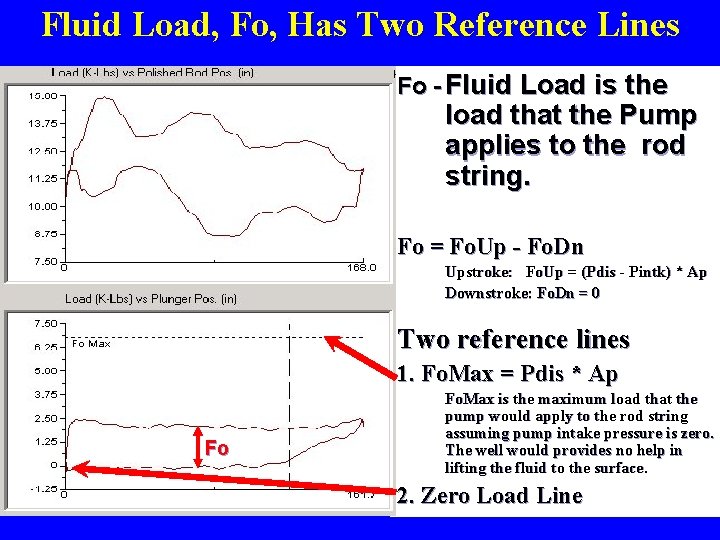
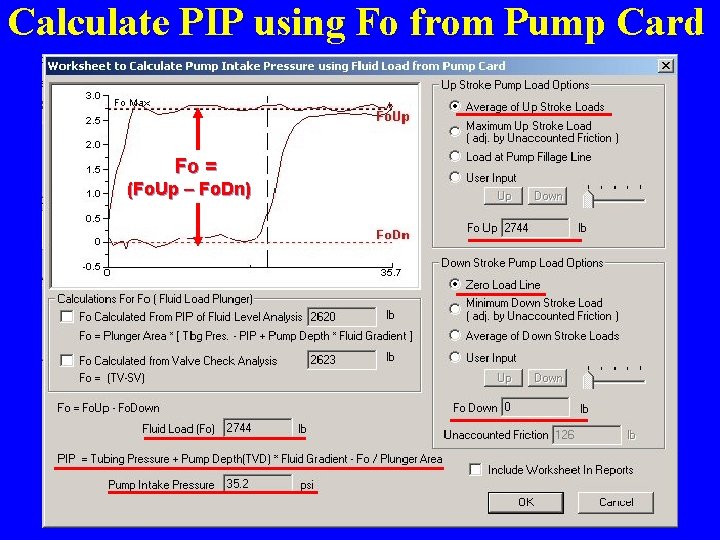
Fluid Load, Fo, Has Two Reference Lines Fo - Fluid Load is the load that the Pump applies to the rod string. Fo = Fo. Up - Fo. Dn Upstroke: Fo. Up = (Pdis - Pintk) * Ap Downstroke: Fo. Dn = 0 Two reference lines 1. Fo. Max = Pdis * Ap Fo Fo. Max is the maximum load that the pump would apply to the rod string assuming pump intake pressure is zero. The well would provides no help in lifting the fluid to the surface. 2. Zero Load Line
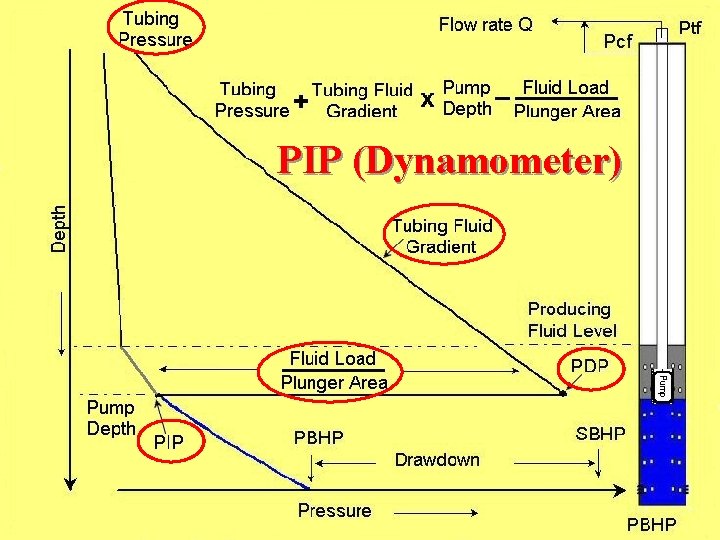
PIP (Dynamometer)
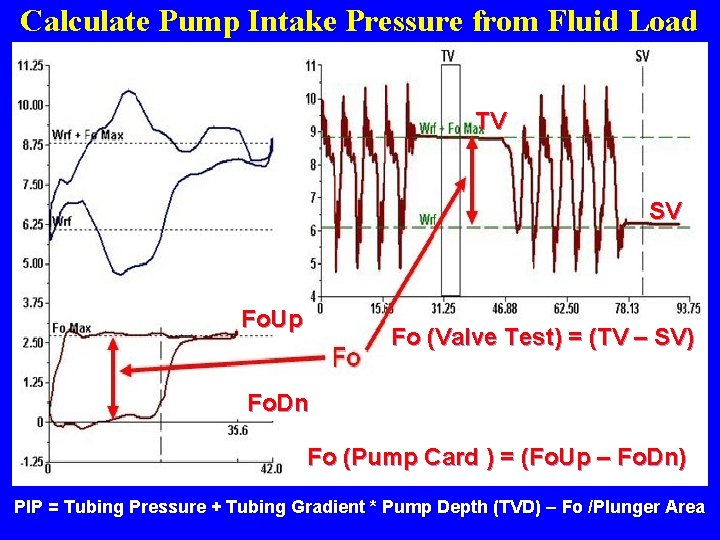
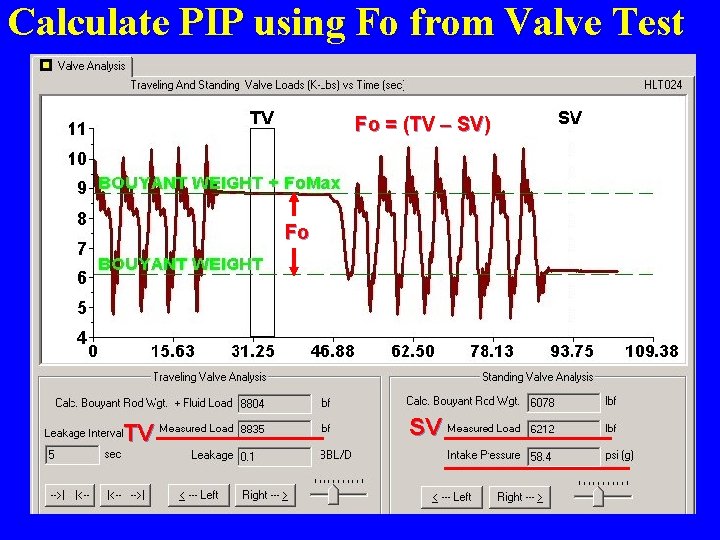
Calculate Pump Intake Pressure from Fluid Load TV SV Fo. Up Fo (Valve Test) = (TV – SV) Fo. Dn Fo (Pump Card ) = (Fo. Up – Fo. Dn) PIP = Tubing Pressure + Tubing Gradient * Pump Depth (TVD) – Fo /Plunger Area
Calculate PIP using Fo from Pump Card Fo = (Fo. Up – Fo. Dn)
Calculate PIP using Fo from Valve Test Fo = (TV – SV) Fo TV SV
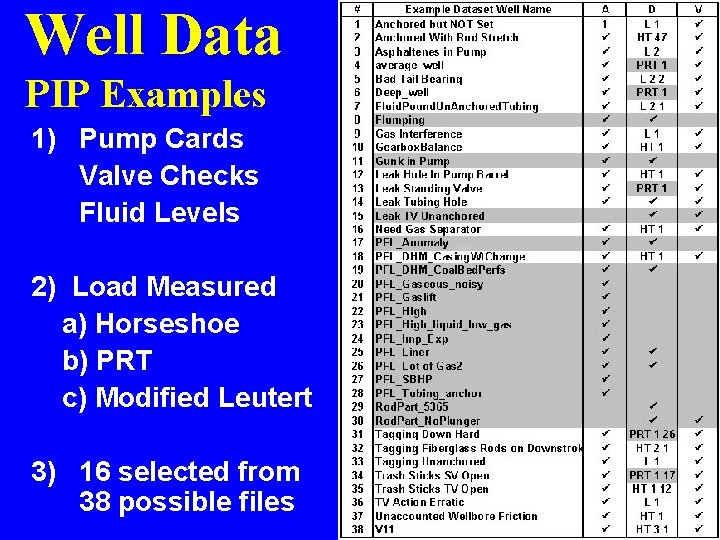
Well Data PIP Examples 1) Pump Cards Valve Checks Fluid Levels 2) Load Measured a) Horseshoe b) PRT c) Modified Leutert 3) 16 selected from 38 possible files
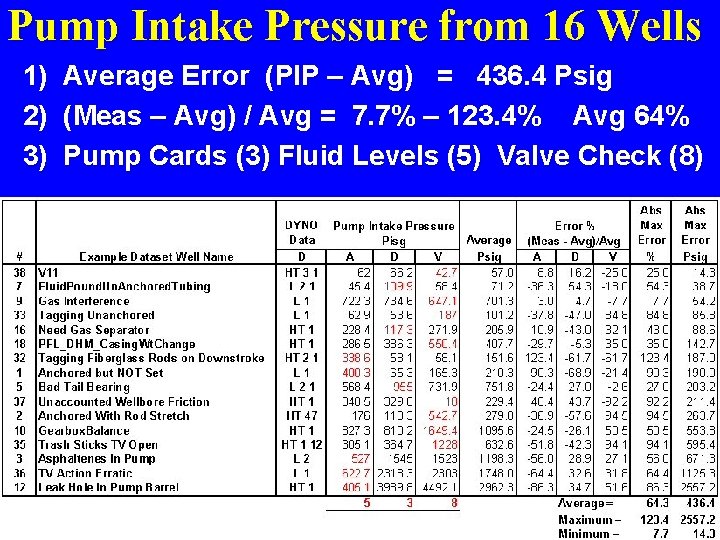
Pump Intake Pressure from 16 Wells 1) Average Error (PIP – Avg) = 436. 4 Psig 2) (Meas – Avg) / Avg = 7. 7% – 123. 4% Avg 64% 3) Pump Cards (3) Fluid Levels (5) Valve Check (8)
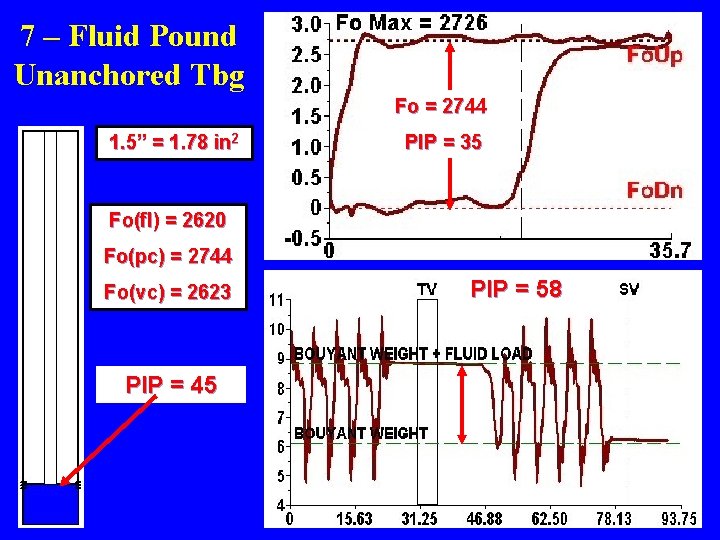
7 – Fluid Pound Unanchored Tbg Fo = 2744 1. 5” = 1. 78 in 2 PIP = 35 Fo(fl) = 2620 Fo(pc) = 2744 Fo(vc) = 2623 PIP = 45 PIP = 58
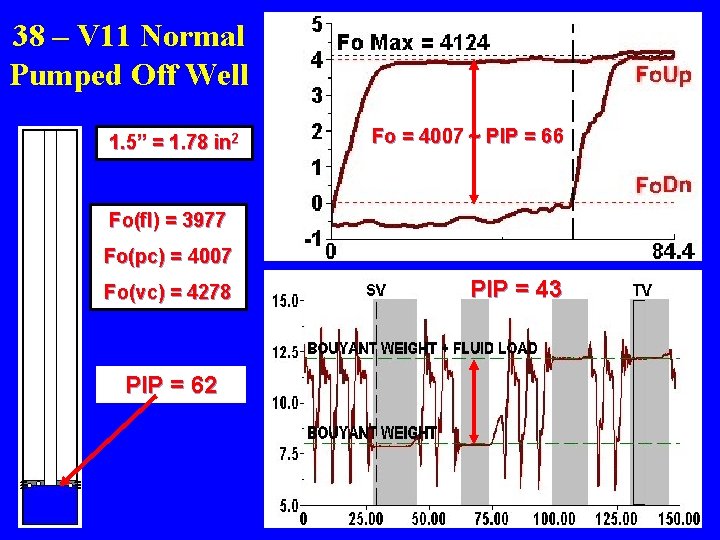
38 – V 11 Normal Pumped Off Well 1. 5” = 1. 78 in 2 Fo = 4007 ~ PIP = 66 Fo(fl) = 3977 Fo(pc) = 4007 Fo(vc) = 4278 PIP = 62 PIP = 43
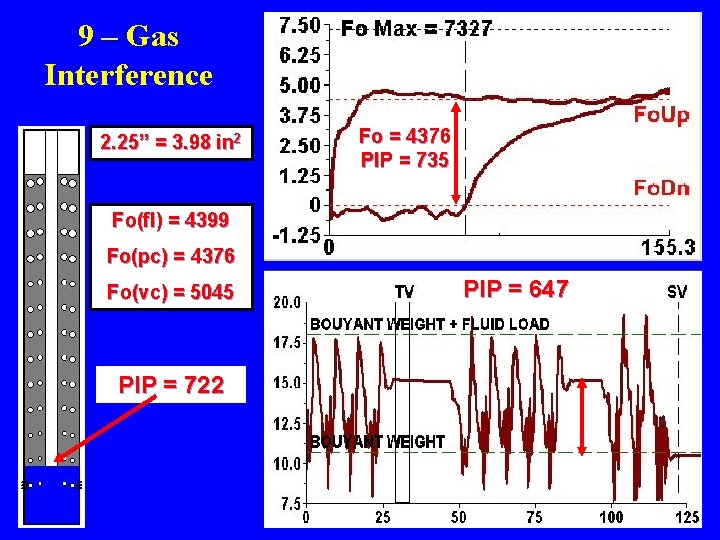
9 – Gas Interference 2. 25” = 3. 98 in 2 Fo = 4376 PIP = 735 Fo(fl) = 4399 Fo(pc) = 4376 Fo(vc) = 5045 PIP = 722 PIP = 647
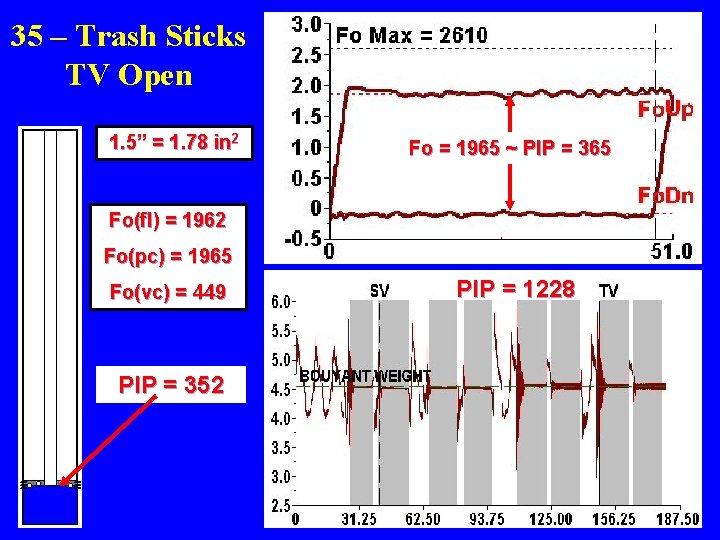
35 – Trash Sticks TV Open 1. 5” = 1. 78 in 2 Fo = 1965 ~ PIP = 365 Fo(fl) = 1962 Fo(pc) = 1965 Fo(vc) = 449 PIP = 352 PIP = 1228
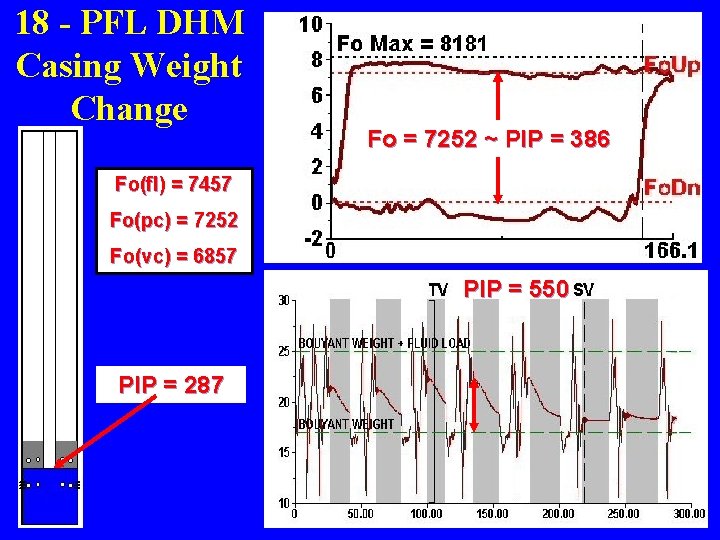
18 - PFL DHM Casing Weight Change Fo = 7252 ~ PIP = 386 Fo(fl) = 7457 Fo(pc) = 7252 Fo(vc) = 6857 PIP = 550 PIP = 287
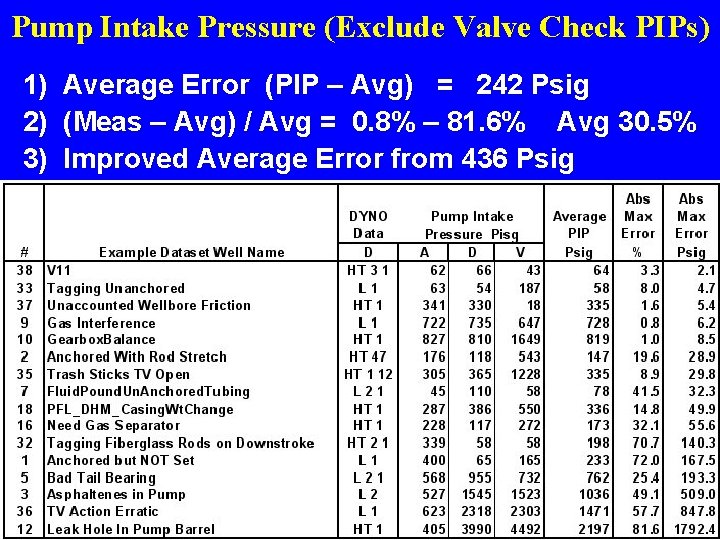
Pump Intake Pressure (Exclude Valve Check PIPs) 1) 2) 3) Average Error (PIP – Avg) = 242 Psig (Meas – Avg) / Avg = 0. 8% – 81. 6% Avg 30. 5% Improved Average Error from 436 Psig
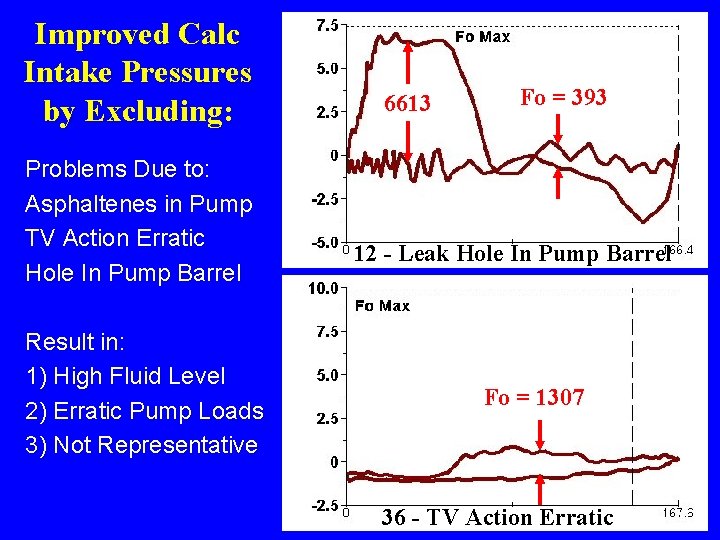
Improved Calc Intake Pressures by Excluding: Problems Due to: Asphaltenes in Pump TV Action Erratic Hole In Pump Barrel Result in: 1) High Fluid Level 2) Erratic Pump Loads 3) Not Representative 6613 Fo = 393 12 - Leak Hole In Pump Barrel Fo = 1307 36 - TV Action Erratic
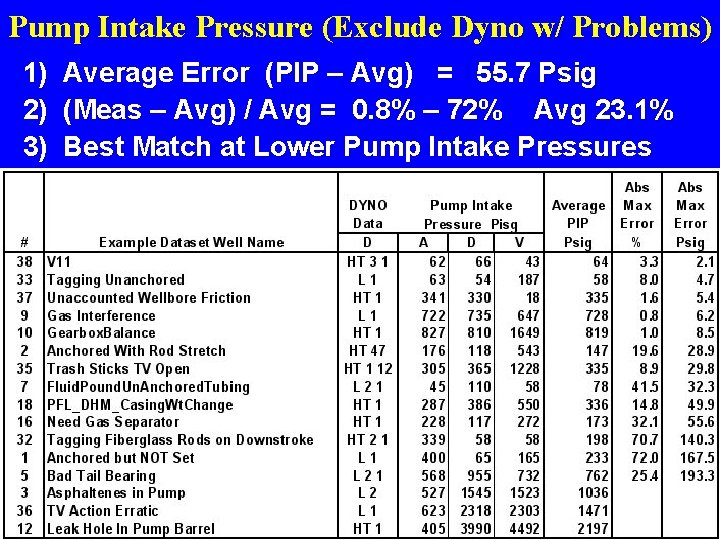
Pump Intake Pressure (Exclude Dyno w/ Problems) 1) 2) 3) Average Error (PIP – Avg) = 55. 7 Psig (Meas – Avg) / Avg = 0. 8% – 72% Avg 23. 1% Best Match at Lower Pump Intake Pressures
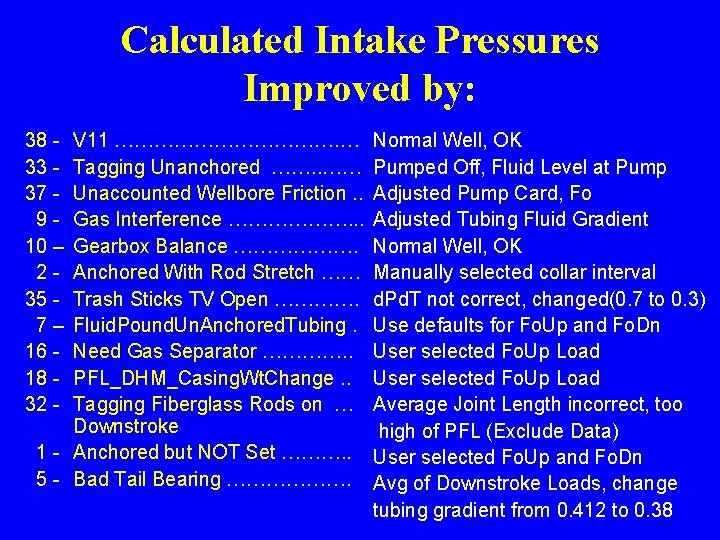
Calculated Intake Pressures Improved by: 38 33 37 910 – 235 7– 16 18 32 - V 11 ………………. … Tagging Unanchored ……. . …… Unaccounted Wellbore Friction. . Gas Interference ………………. . . Gearbox Balance ………………. Anchored With Rod Stretch …… Trash Sticks TV Open …………. Fluid. Pound. Un. Anchored. Tubing. Need Gas Separator …………. . PFL_DHM_Casing. Wt. Change. . Tagging Fiberglass Rods on … Downstroke 1 - Anchored but NOT Set ………. . 5 - Bad Tail Bearing ………………. Normal Well, OK Pumped Off, Fluid Level at Pump Adjusted Pump Card, Fo Adjusted Tubing Fluid Gradient Normal Well, OK Manually selected collar interval d. Pd. T not correct, changed(0. 7 to 0. 3) Use defaults for Fo. Up and Fo. Dn User selected Fo. Up Load Average Joint Length incorrect, too high of PFL (Exclude Data) User selected Fo. Up and Fo. Dn Avg of Downstroke Loads, change tubing gradient from 0. 412 to 0. 38
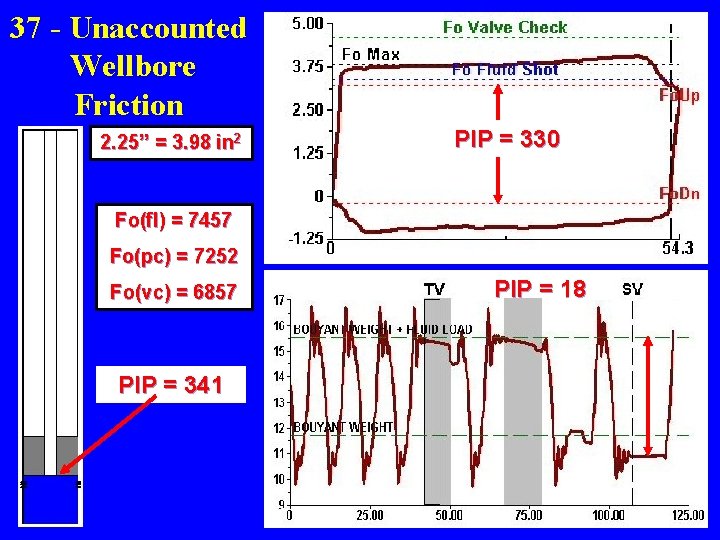
37 - Unaccounted Wellbore Friction 2. 25” = 3. 98 in 2 PIP = 330 Fo(fl) = 7457 Fo(pc) = 7252 Fo(vc) = 6857 PIP = 341 PIP = 18
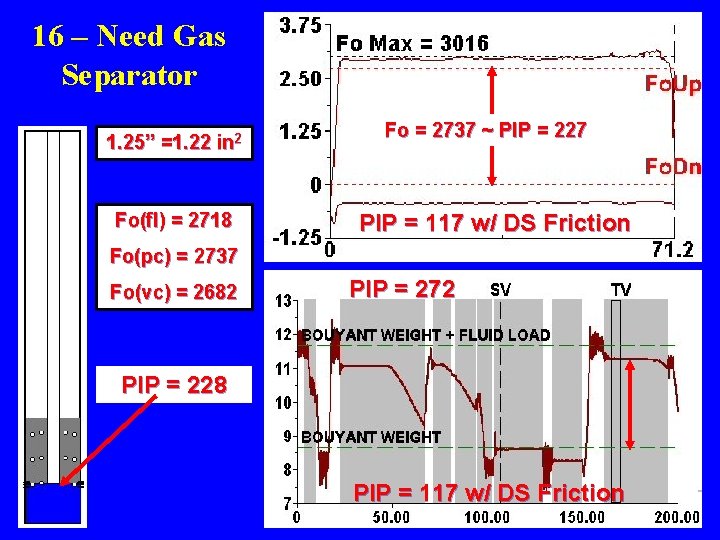
16 – Need Gas Separator 1. 25” =1. 22 in 2 Fo(fl) = 2718 Fo = 2737 ~ PIP = 227 PIP = 117 w/ DS Friction Fo(pc) = 2737 Fo(vc) = 2682 PIP = 272 PIP = 228 PIP = 117 w/ DS Friction
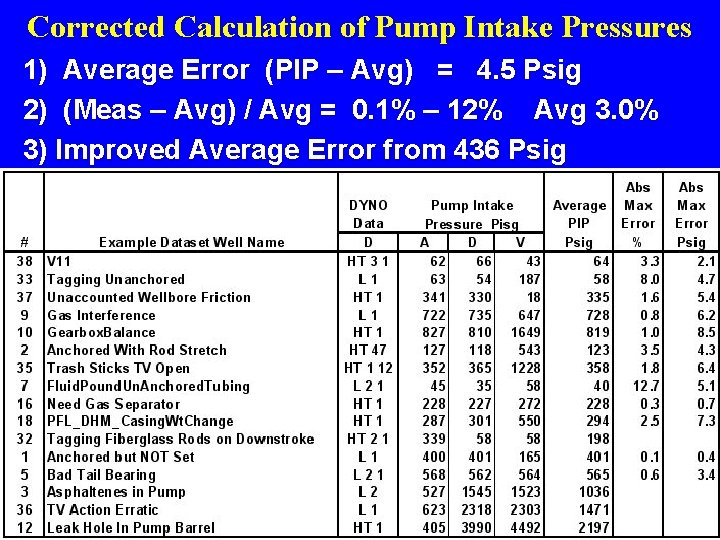
Corrected Calculation of Pump Intake Pressures 1) Average Error (PIP – Avg) = 4. 5 Psig 2) (Meas – Avg) / Avg = 0. 1% – 12% Avg 3. 0% 3) Improved Average Error from 436 Psig
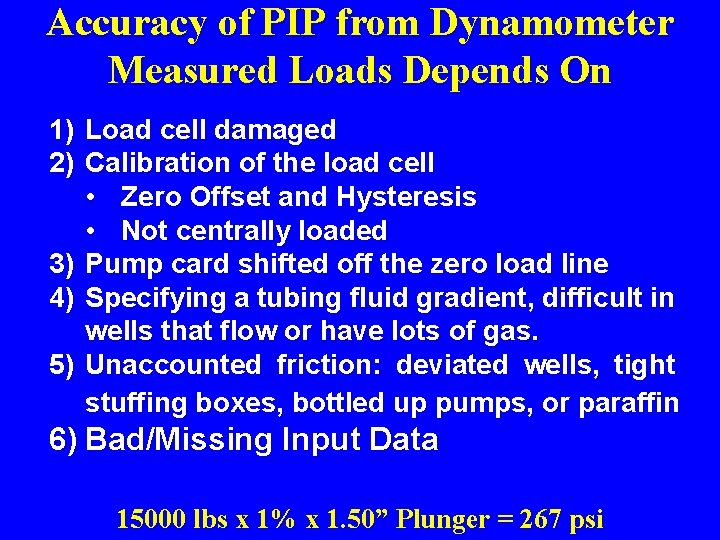
Accuracy of PIP from Dynamometer Measured Loads Depends On 1) Load cell damaged 2) Calibration of the load cell • Zero Offset and Hysteresis • Not centrally loaded 3) Pump card shifted off the zero load line 4) Specifying a tubing fluid gradient, difficult in wells that flow or have lots of gas. 5) Unaccounted friction: deviated wells, tight stuffing boxes, bottled up pumps, or paraffin 6) Bad/Missing Input Data 15000 lbs x 1% x 1. 50” Plunger = 267 psi
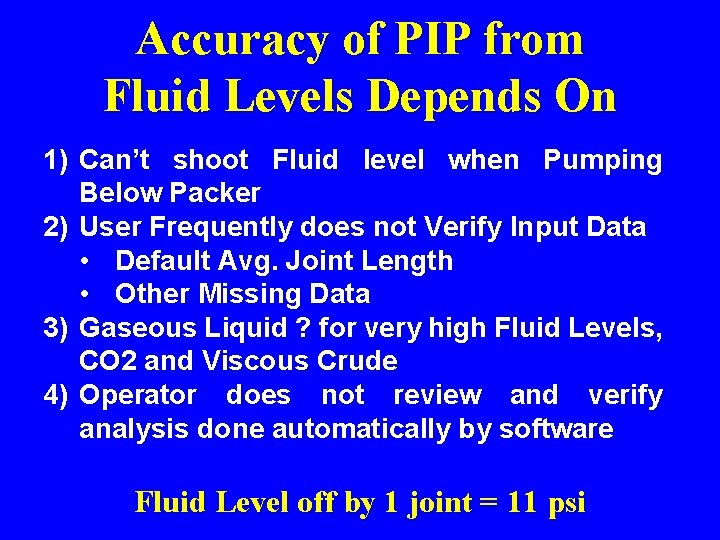
Accuracy of PIP from Fluid Levels Depends On 1) Can’t shoot Fluid level when Pumping Below Packer 2) User Frequently does not Verify Input Data • Default Avg. Joint Length • Other Missing Data 3) Gaseous Liquid ? for very high Fluid Levels, CO 2 and Viscous Crude 4) Operator does not review and verify analysis done automatically by software Fluid Level off by 1 joint = 11 psi
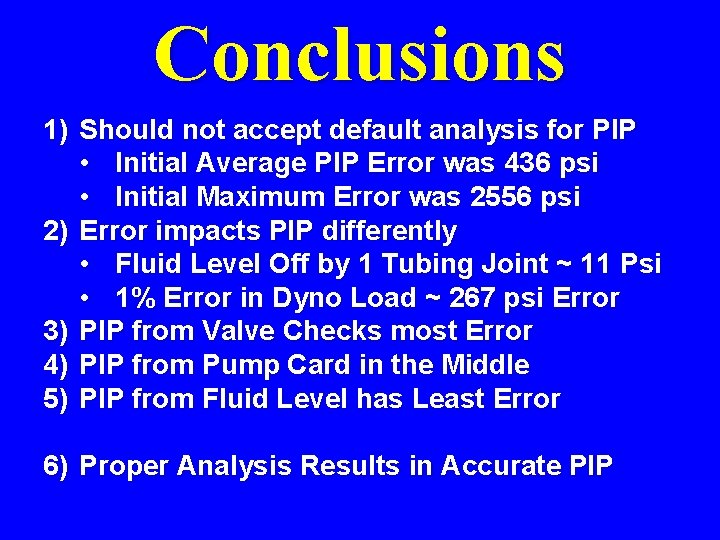
Conclusions 1) Should not accept default analysis for PIP • Initial Average PIP Error was 436 psi • Initial Maximum Error was 2556 psi 2) Error impacts PIP differently • Fluid Level Off by 1 Tubing Joint ~ 11 Psi • 1% Error in Dyno Load ~ 267 psi Error 3) PIP from Valve Checks most Error 4) PIP from Pump Card in the Middle 5) PIP from Fluid Level has Least Error 6) Proper Analysis Results in Accurate PIP