
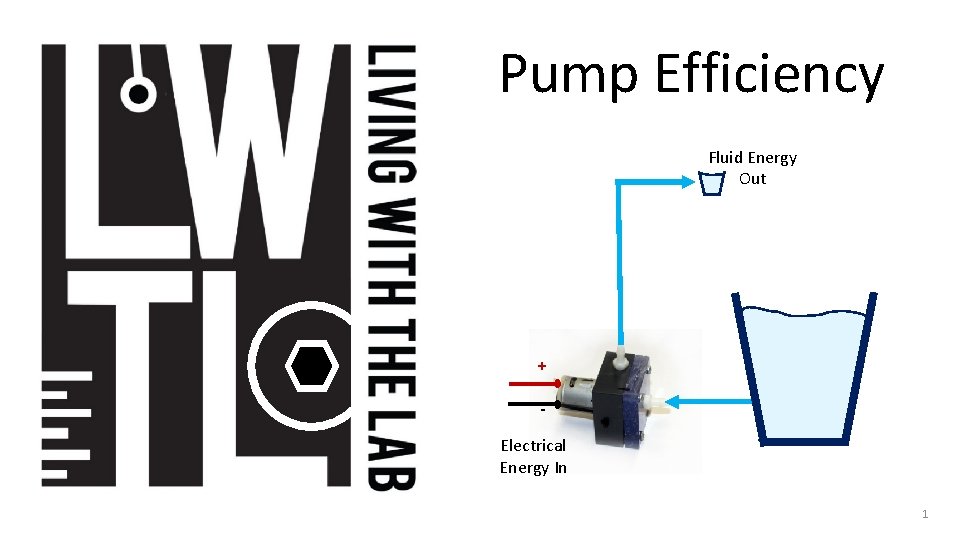
Pump Efficiency Fluid Energy Out Electrical Energy In

- Slides: 11
Pump Efficiency Fluid Energy Out + Electrical Energy In 1
DISCLAIMER & USAGE • The content of this presentation is for informational purposes only and is intended for students attending Louisiana Tech University only. • The authors of this information do not make any claims as to the validity or accuracy of the information or methods presented. • Any procedures demonstrated here are potentially dangerous and could result in damage and injury. boosting application-focused learning through student ownership of learning platforms • Louisiana Tech University, its officers, employees, agents and volunteers, are not liable or responsible for any injuries, illness, damage or losses which may result from your using the materials or ideas, or from your performing the experiments or procedures depicted in this presentation. • The Living with the Lab logos should remain attached to each slide, and the work should be attributed to Louisiana Tech University. • If you do not agree, then please do not view this content. 2
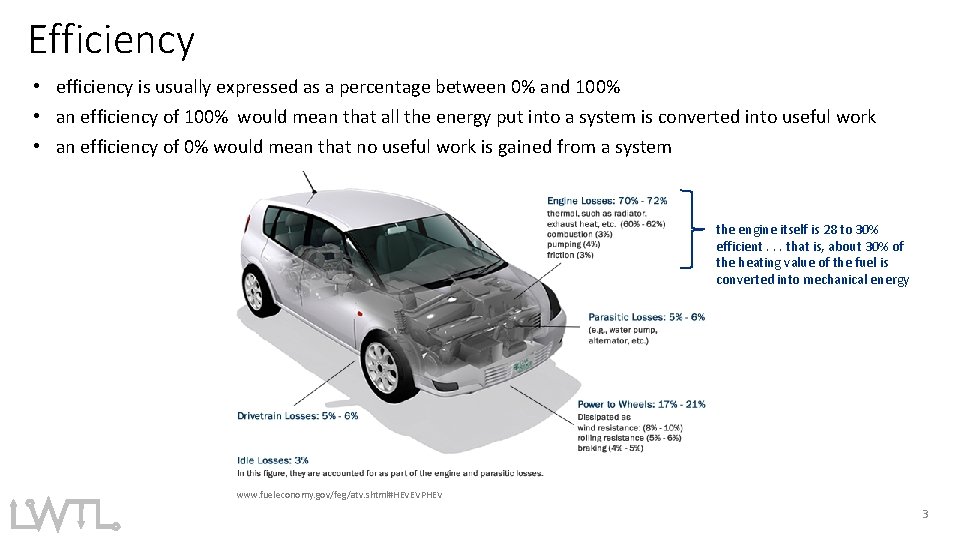
Efficiency • efficiency is usually expressed as a percentage between 0% and 100% • an efficiency of 100% would mean that all the energy put into a system is converted into useful work • an efficiency of 0% would mean that no useful work is gained from a system the engine itself is 28 to 30% efficient. . . that is, about 30% of the heating value of the fuel is converted into mechanical energy www. fueleconomy. gov/feg/atv. shtml#HEVEVPHEV 3
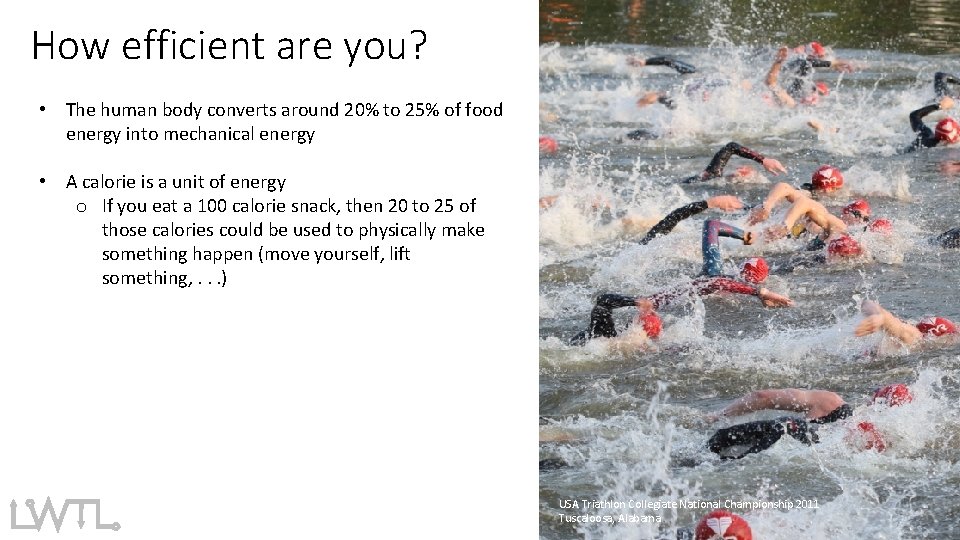
How efficient are you? • The human body converts around 20% to 25% of food energy into mechanical energy • A calorie is a unit of energy o If you eat a 100 calorie snack, then 20 to 25 of those calories could be used to physically make something happen (move yourself, lift something, . . . ) USA Triathlon Collegiate National Championship 2011 Tuscaloosa, Alabama 4
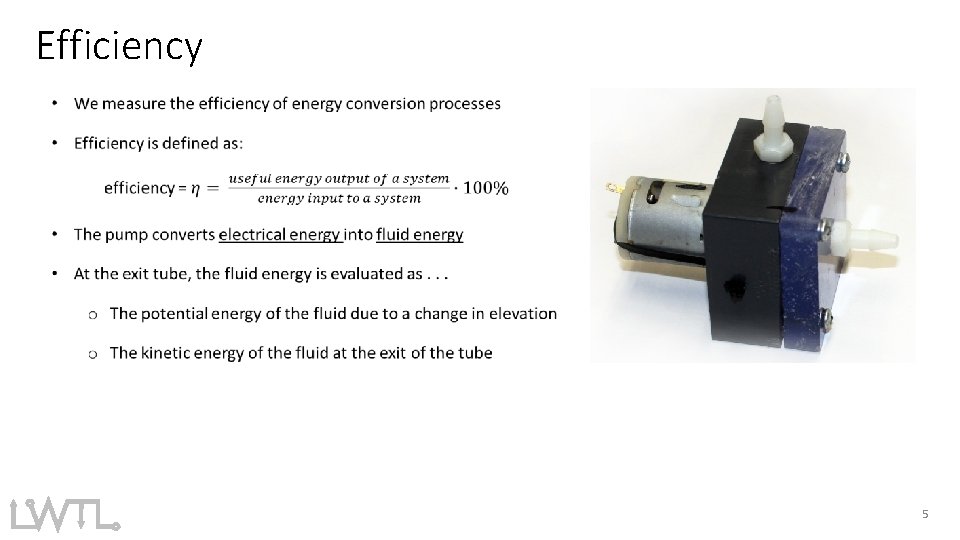
Efficiency 5
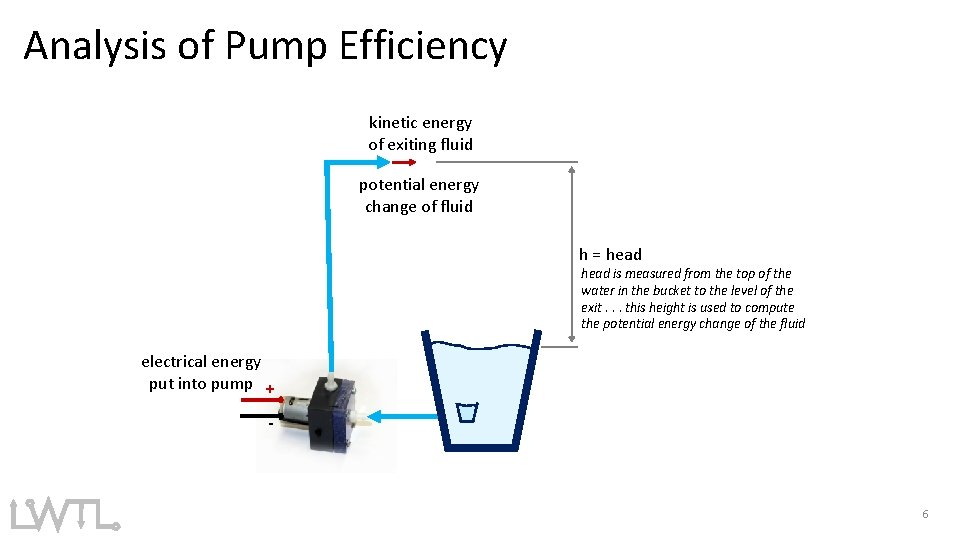
Analysis of Pump Efficiency kinetic energy of exiting fluid potential energy change of fluid h = head is measured from the top of the water in the bucket to the level of the exit. . . this height is used to compute the potential energy change of the fluid electrical energy put into pump + - 6
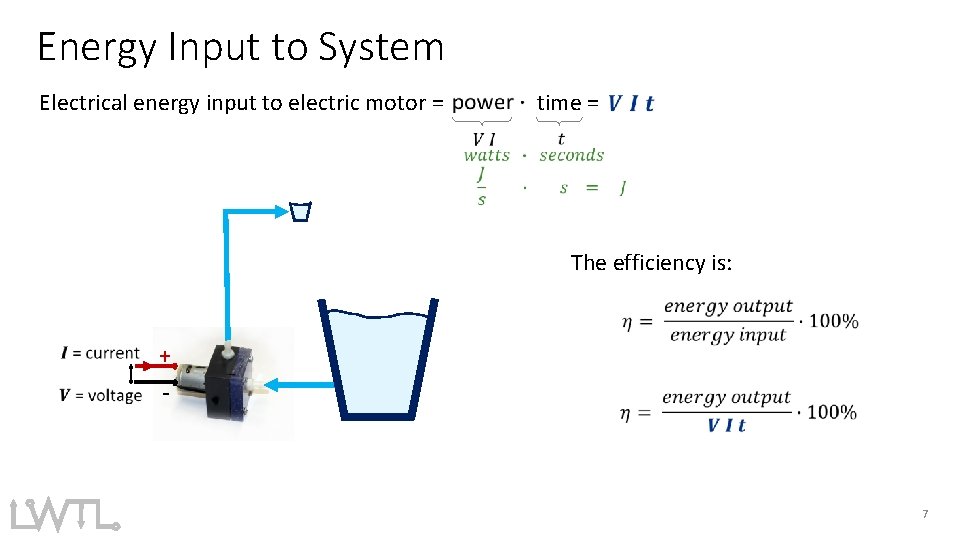
Energy Input to System Electrical energy input to electric motor = time = The efficiency is: + - 7
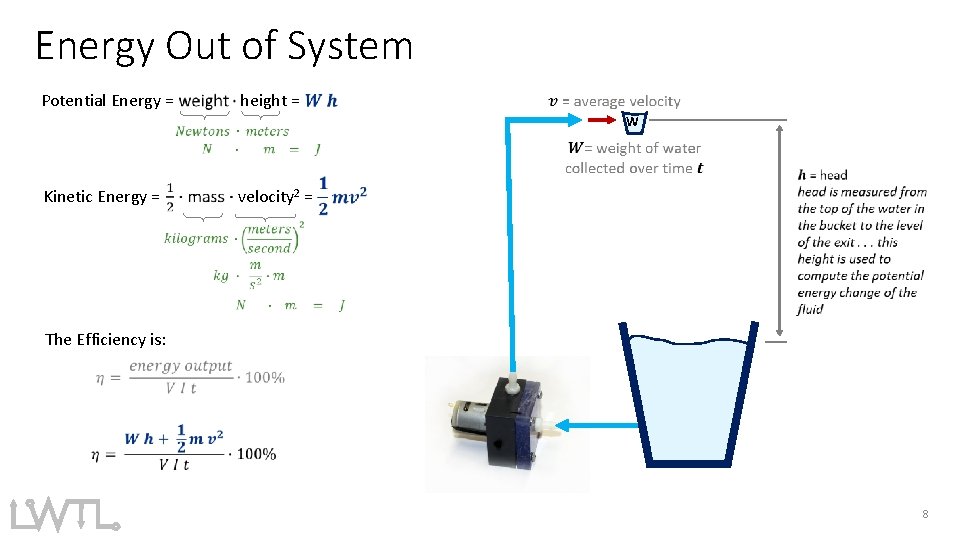
Energy Out of System Potential Energy = height = W Kinetic Energy = velocity 2 = The Efficiency is: 8
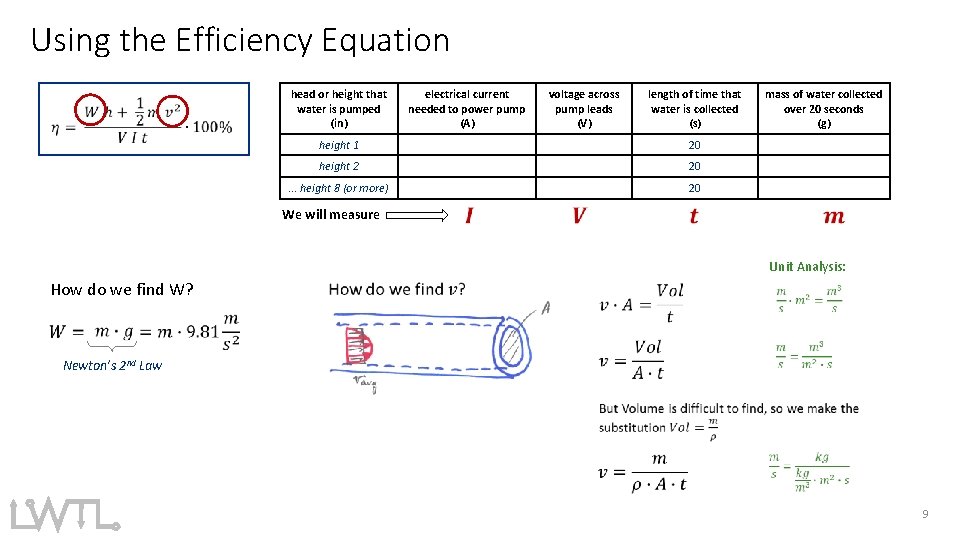
Using the Efficiency Equation head or height that water is pumped (in) electrical current needed to power pump (A) voltage across pump leads (V) length of time that water is collected (s) height 1 20 height 2 20 … height 8 (or more) 20 mass of water collected over 20 seconds (g) We will measure Unit Analysis: How do we find W? Newton’s 2 nd Law 9
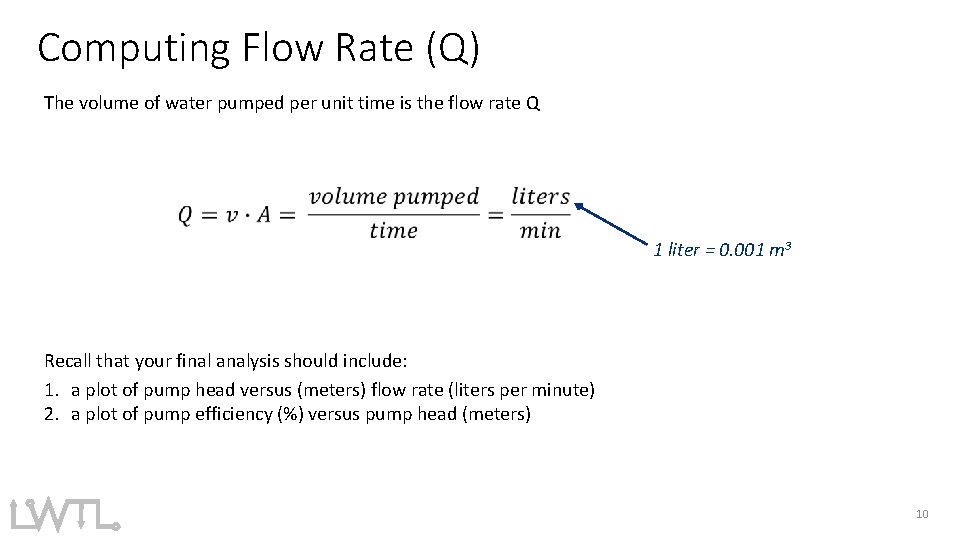
Computing Flow Rate (Q) The volume of water pumped per unit time is the flow rate Q 1 liter = 0. 001 m 3 Recall that your final analysis should include: 1. a plot of pump head versus (meters) flow rate (liters per minute) 2. a plot of pump efficiency (%) versus pump head (meters) 10
Class Problem: A pump is connected to an electric motor. The motor is supplied with 1 A of current from a 12 VDC source. The apparatus is run steadily for 30 seconds, and the following measurements are recorded: mass of fluid collected: diameter of exit tube: density of water: height of fluid exit above reservoir: 500 grams 3/16 inch 1000 kg/m 3 30 inches Useful Conversions: 1000 grams = 1 kg 1 inch = 25. 4 mm 1 L = 0. 001 m 3 1 inch = 25. 4 mm Find: (a) fluid velocity at exit in m/s (b) flow rate in L/min (c) system efficiency Include ALL units in calculations. It would be very helpful to convert any US Customary units to SI units before beginning the solution to avoid complexity. 11