
Pulse Compression Radar Training System Addon Tomy Rodrigue

- Slides: 9
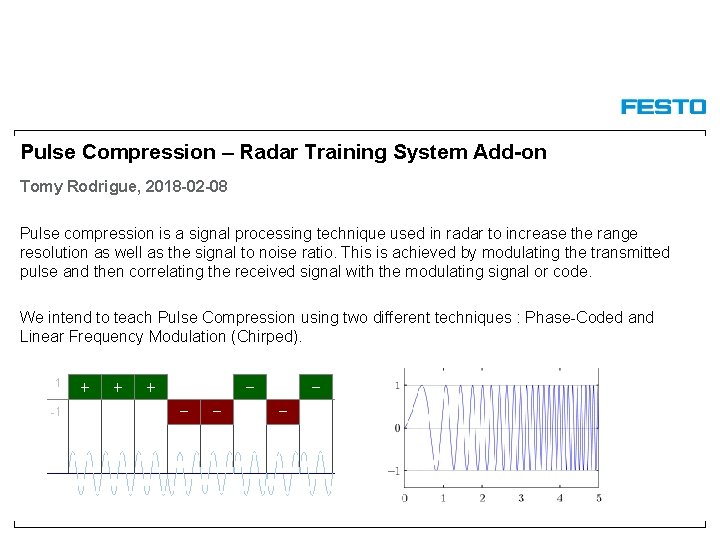
Pulse Compression – Radar Training System Add-on Tomy Rodrigue, 2018 -02 -08 Pulse compression is a signal processing technique used in radar to increase the range resolution as well as the signal to noise ratio. This is achieved by modulating the transmitted pulse and then correlating the received signal with the modulating signal or code. We intend to teach Pulse Compression using two different techniques : Phase-Coded and Linear Frequency Modulation (Chirped).
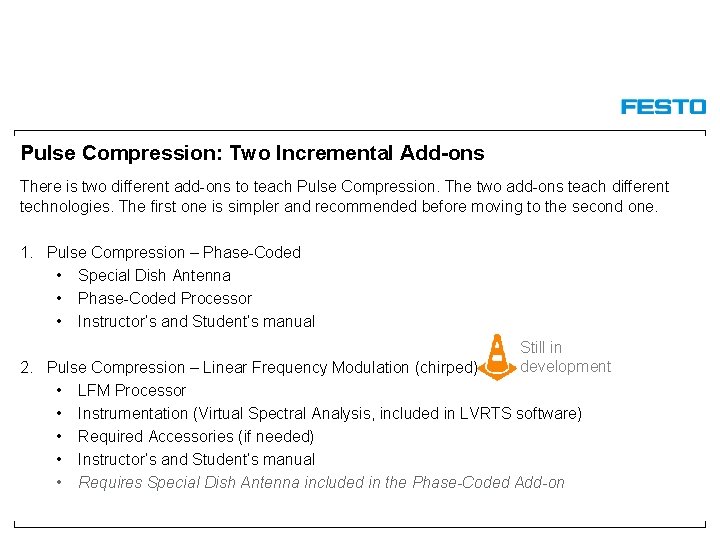
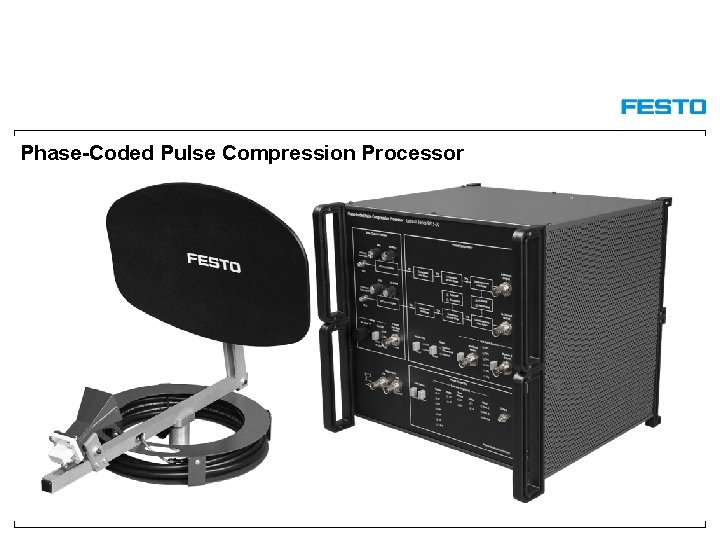
Pulse Compression: Two Incremental Add-ons There is two different add-ons to teach Pulse Compression. The two add-ons teach different technologies. The first one is simpler and recommended before moving to the second one. 1. Pulse Compression – Phase-Coded • Special Dish Antenna • Phase-Coded Processor • Instructor’s and Student’s manual Still in development 2. Pulse Compression – Linear Frequency Modulation (chirped) • LFM Processor • Instrumentation (Virtual Spectral Analysis, included in LVRTS software) • Required Accessories (if needed) • Instructor’s and Student’s manual • Requires Special Dish Antenna included in the Phase-Coded Add-on
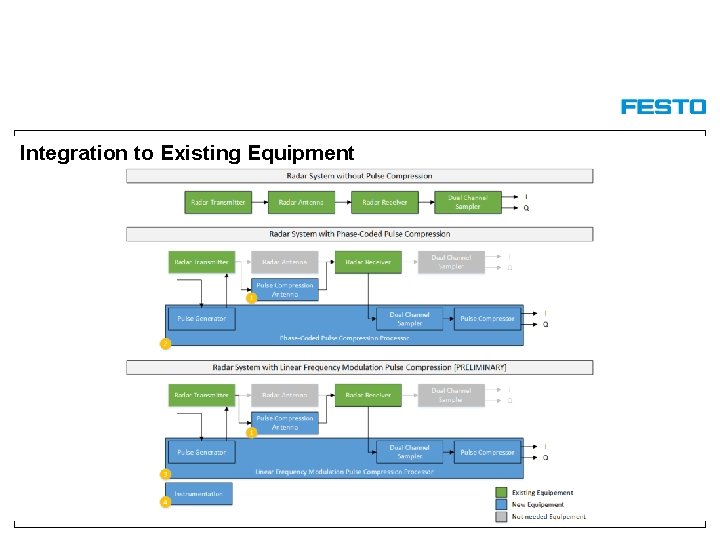
Integration to Existing Equipment
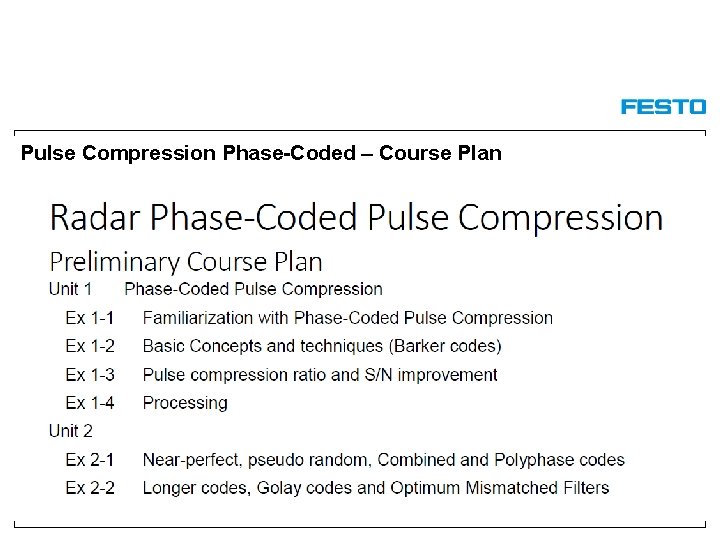
Pulse Compression Phase-Coded – Course Plan
Phase-Coded Pulse Compression Processor
Phase-Coded Pulse Compression Processor • • • Barker 13 encoded pulse and compressed pulse (normalized). Approx. 12 different codes (Barker, PRBS, Near Perfect and Golay) Includes special sampler, range and origin control, AScope output, PRF and Sync. Outputs Includes the Pulse Generator and the Pulse Compressor (in the same module)
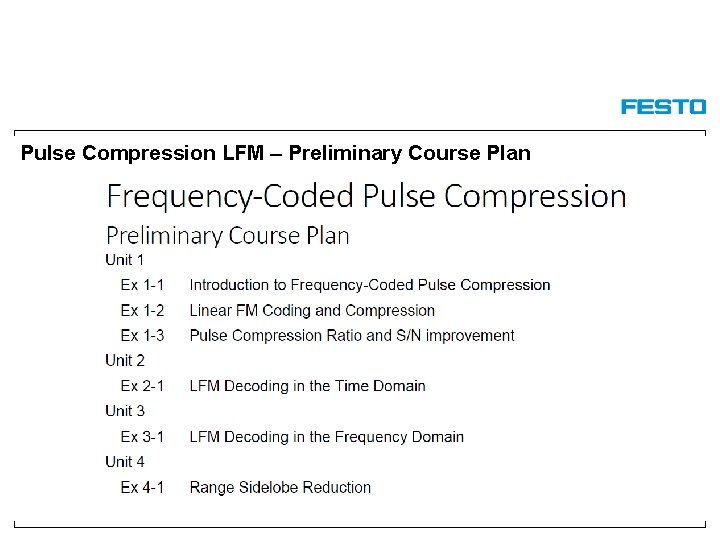
Pulse Compression LFM – Preliminary Course Plan
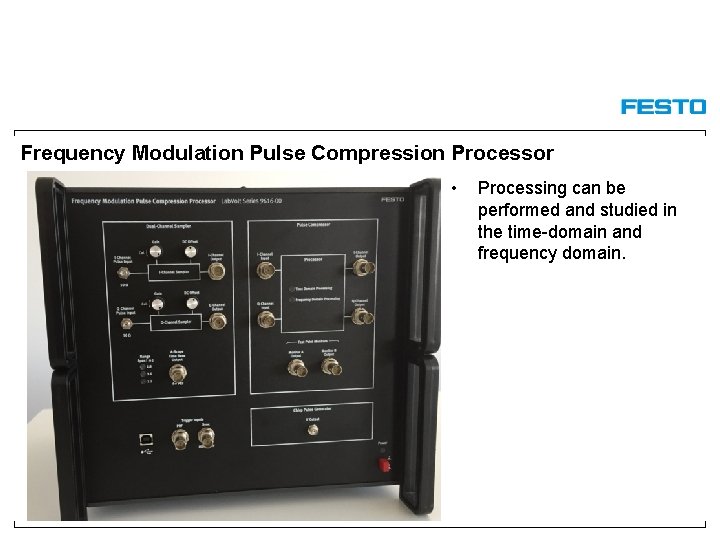
Frequency Modulation Pulse Compression Processor • Processing can be performed and studied in the time-domain and frequency domain.
Project’s Status • • • Frequency Modulation Pulse Compression add-on • Hardware almost completed • Courseware in development It is highly recommended to start with Phase-Coded before moving to LFM Around 6 exercises of 3 hours each are planned for each Add-on