
Pulmonary tuberculosis What is the cause of TB

Pulmonary tuberculosis What is the cause of TB? u. Tuberculosis is a chronic infection, caused by mycobacteria tuberculosis(acid fast bacili.
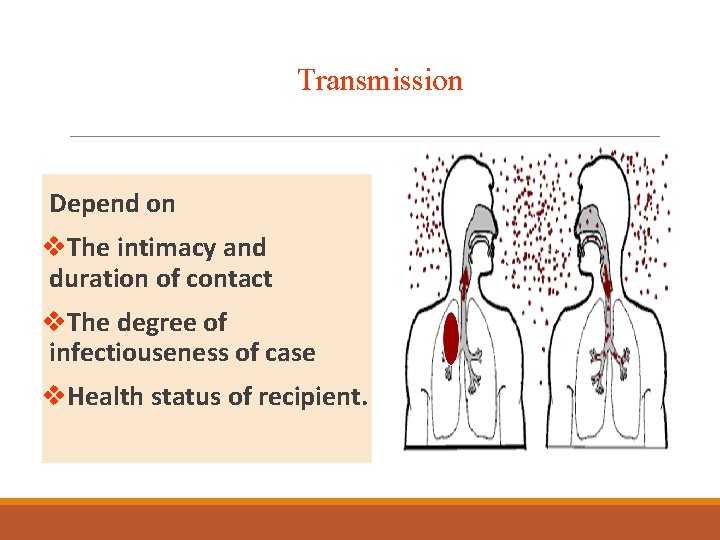
Transmission Depend on v. The intimacy and duration of contact v. The degree of infectiouseness of case v. Health status of recipient.
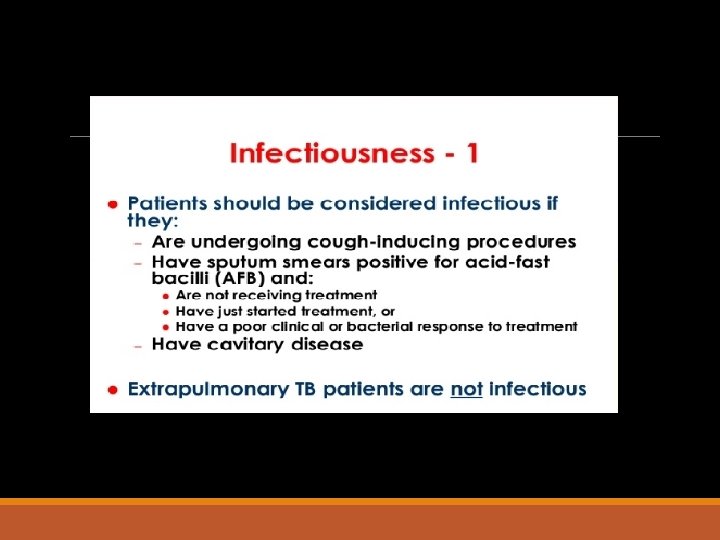
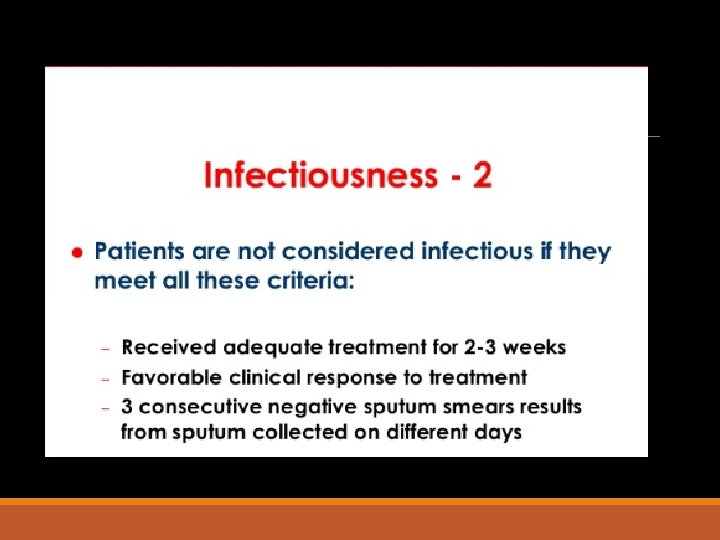
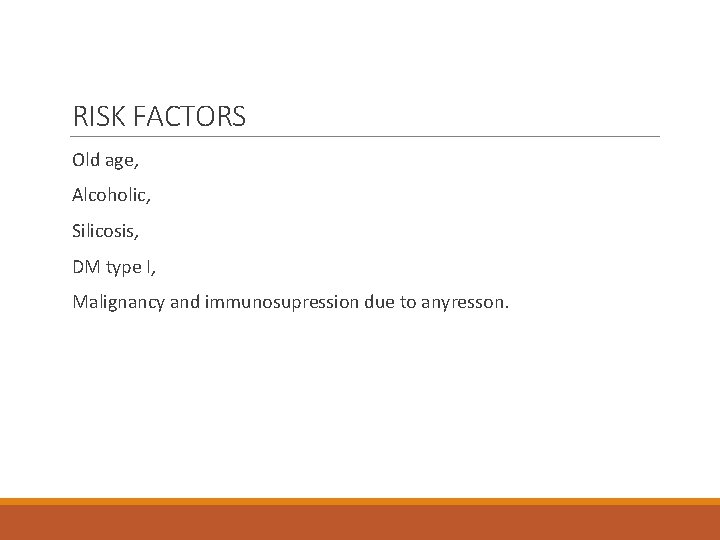
RISK FACTORS Old age, Alcoholic, Silicosis, DM type I, Malignancy and immunosupression due to anyresson.
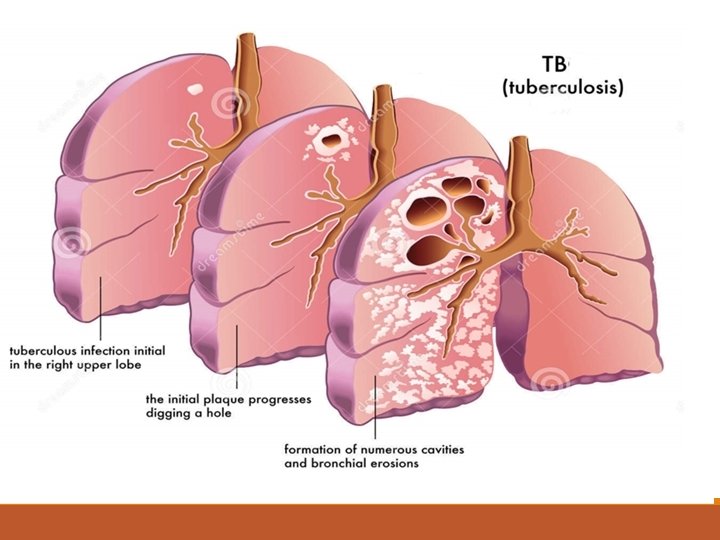
The result of the tuberculosis after infection §Fibrosis §Calcification §Deterioration: enlargement of infected aeras or spreading.
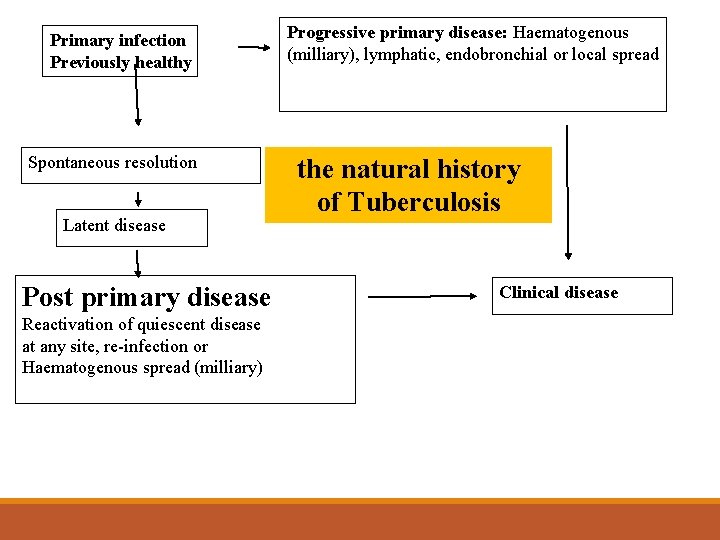
Primary infection Previously healthy Spontaneous resolution Latent disease Post primary disease Reactivation of quiescent disease at any site, re-infection or Haematogenous spread (milliary) Progressive primary disease: Haematogenous (milliary), lymphatic, endobronchial or local spread the natural history of Tuberculosis Clinical disease
what are the clinical patterns of tuberculosis? 1. Primary pulmonary tuberculosis (Primary Complex and Bronchial Lymphnode-Tuberculosis) 2. Milliary Tuberculosis (acute hematogenous pulmonary tuberculosis) 3. Post primary or secondary pulmonary tuberculosis jnfiltrative pulmonary tuberculosis Chronic fibrocavitary pulmonary tuberculosis. 4. Tuberculous pleuritis 5. Extrapulmonary tuberculosis
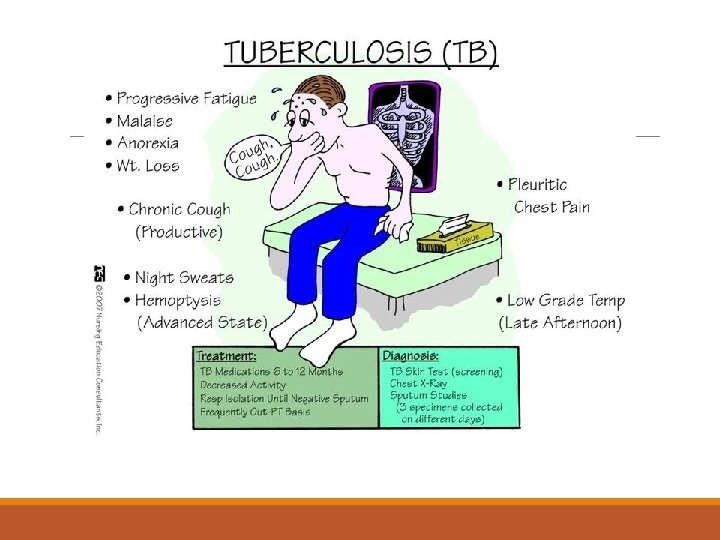
WHAT ARE THE SYMPTOM OF TB? Or When we suspect tb in apatient fever, loss of apatite , weight loss, night sweats and Cough and sputum, Hemoptysis and chest pain, physical signs: nonspecific.
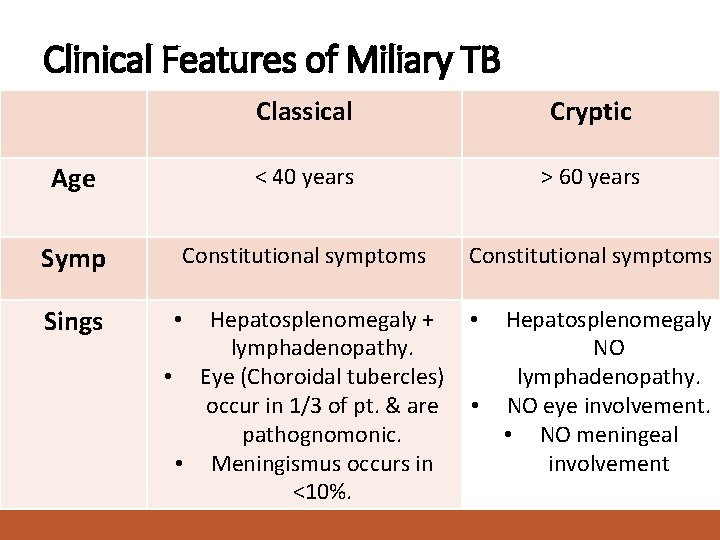
Clinical Features of Miliary TB Classical Cryptic Age < 40 years > 60 years Symp Constitutional symptoms Sings Hepatosplenomegaly + lymphadenopathy. • Eye (Choroidal tubercles) occur in 1/3 of pt. & are pathognomonic. • Meningismus occurs in <10%. • • • Hepatosplenomegaly NO lymphadenopathy. NO eye involvement. • NO meningeal involvement
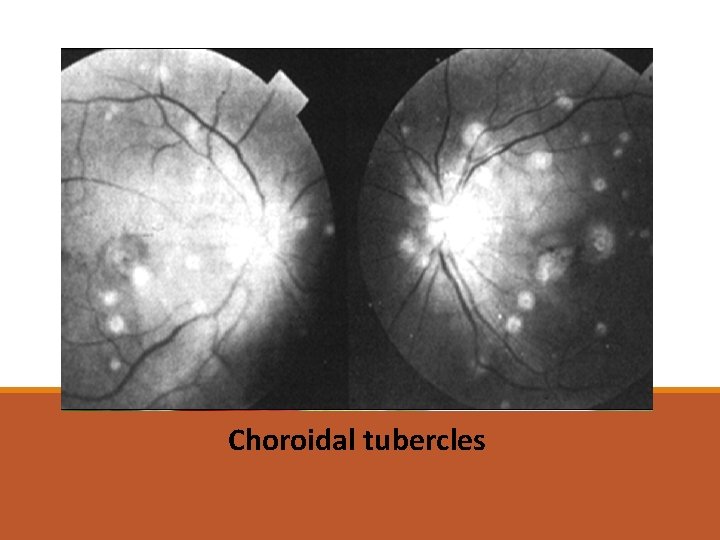
Choroidal tubercles
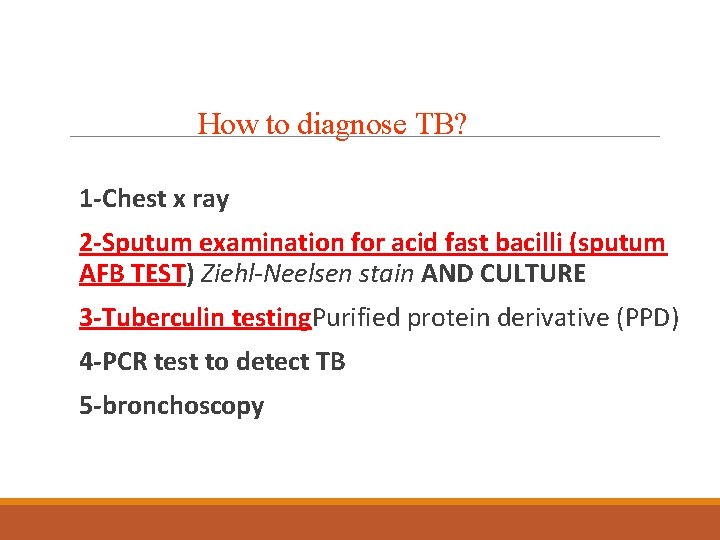
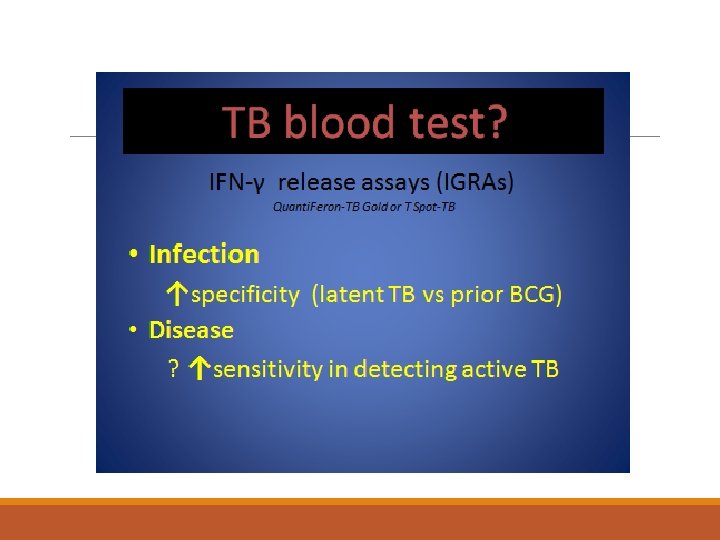
How to diagnose TB? 1 -Chest x ray 2 -Sputum examination for acid fast bacilli (sputum AFB TEST) Ziehl-Neelsen stain AND CULTURE 3 -Tuberculin testing. Purified protein derivative (PPD) 4 -PCR test to detect TB 5 -bronchoscopy
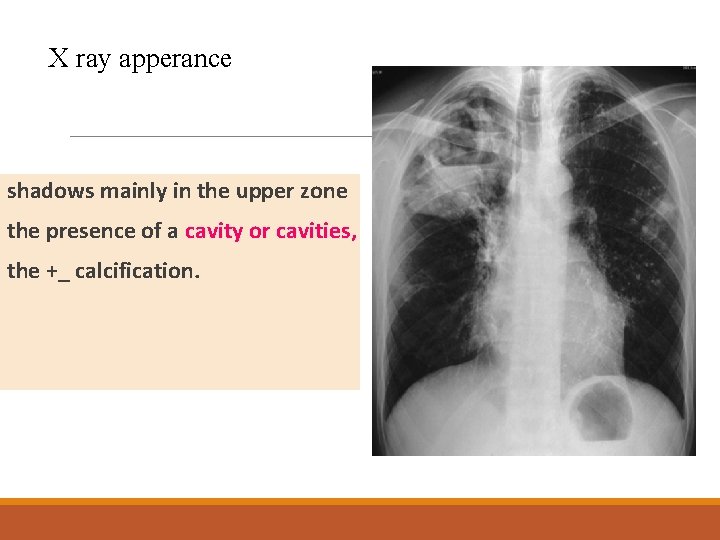
X ray apperance shadows mainly in the upper zone the presence of a cavity or cavities, the +_ calcification.
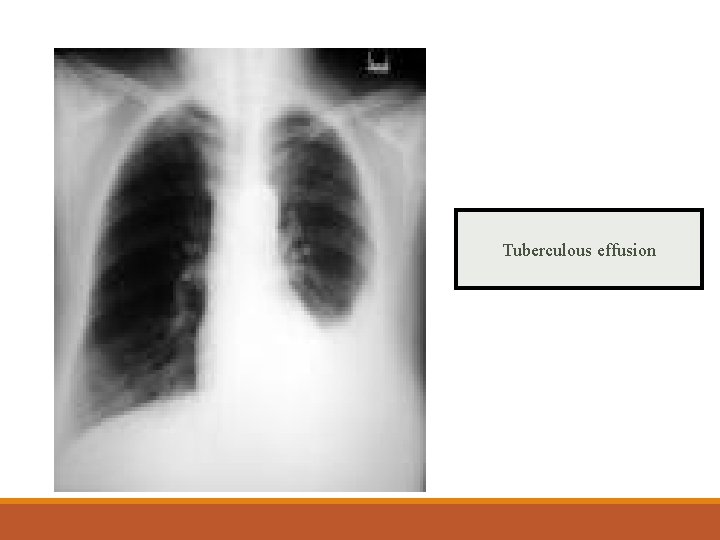
Tuberculous effusion
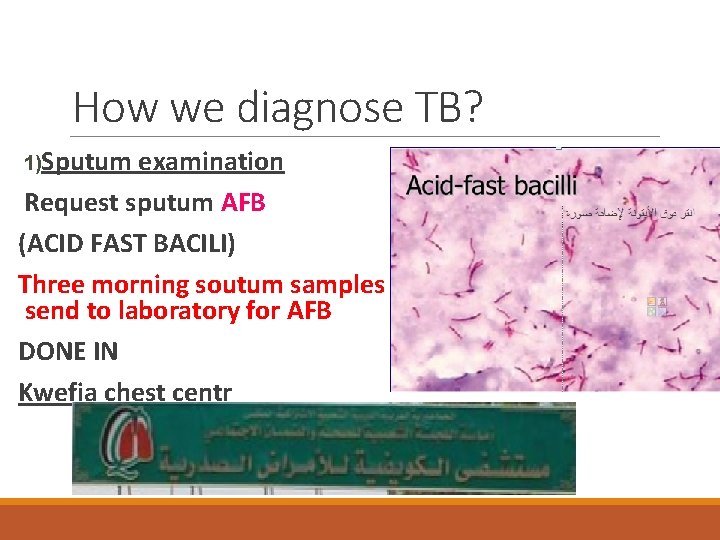
How we diagnose TB? 1)Sputum examination Request sputum AFB (ACID FAST BACILI) Three morning soutum samples should be send to laboratory for AFB DONE IN Kwefia chest centr
2)AFB culture A)Löwenstein–Jensen medium, more commonly known as LJ medium, is a growth medium specially used for tb Result takes 6 -8 weeks B)BACTEC : automated mycobacterial detection system 7 -10 days 3)PCR polymerase chain reaction test to detect TB in samples is better.
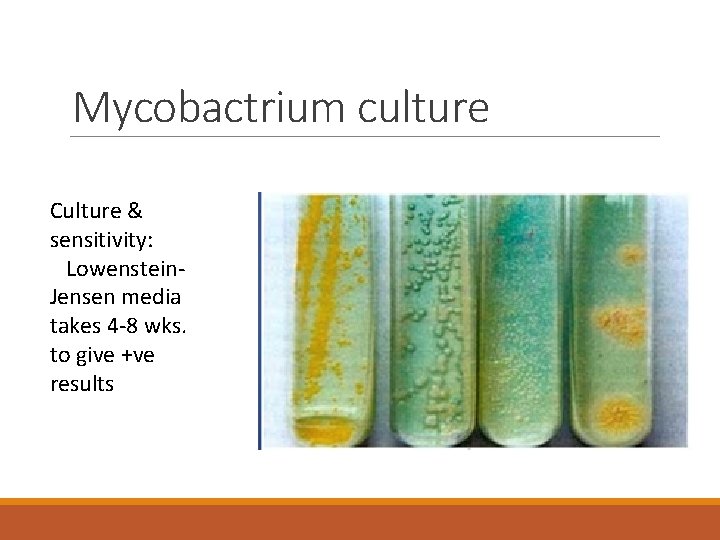
Mycobactrium culture Culture & sensitivity: Lowenstein. Jensen media takes 4 -8 wks. to give +ve results
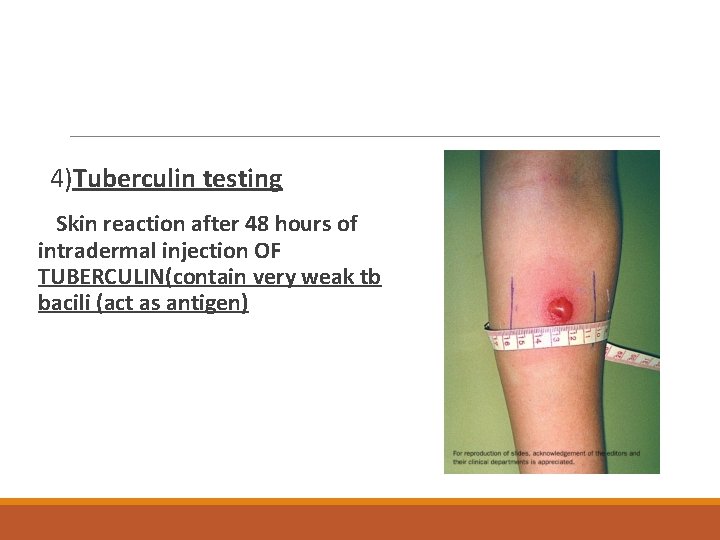
4)Tuberculin testing Skin reaction after 48 hours of intradermal injection OF TUBERCULIN(contain very weak tb bacili (act as antigen)
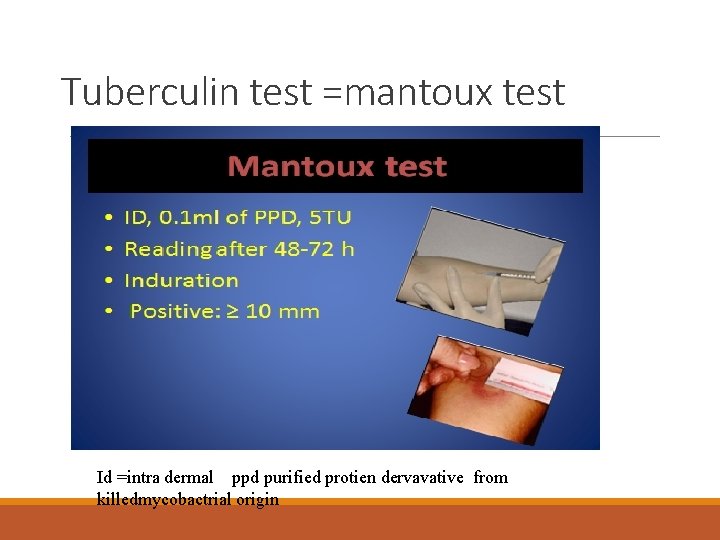
Tuberculin test =mantoux test Id =intra dermal ppd purified protien dervavative from killedmycobactrial origin
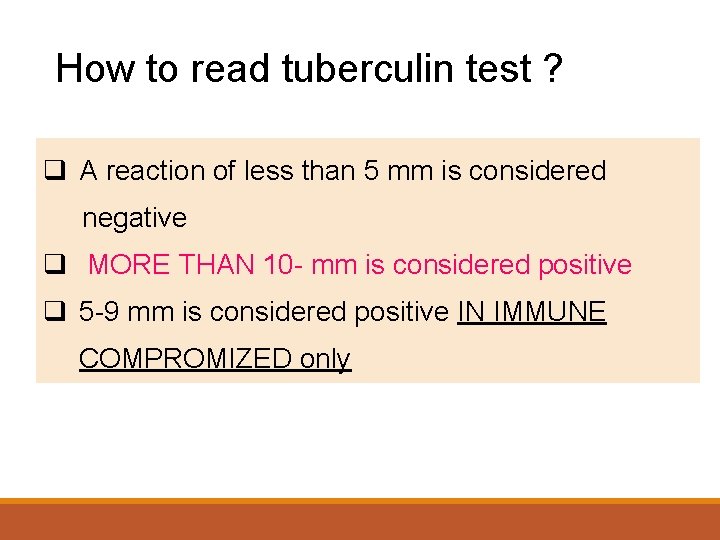
How to read tuberculin test ? q A reaction of less than 5 mm is considered negative q MORE THAN 10 - mm is considered positive q 5 -9 mm is considered positive IN IMMUNE COMPROMIZED only
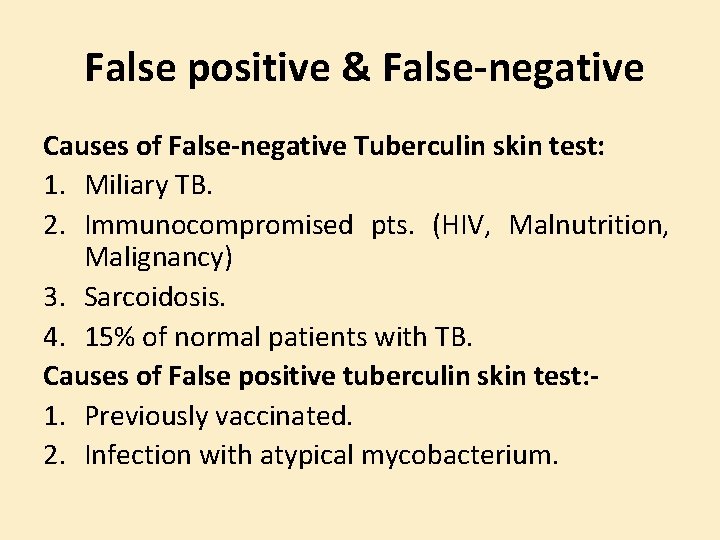
False positive & False-negative Causes of False-negative Tuberculin skin test: 1. Miliary TB. 2. Immunocompromised pts. (HIV, Malnutrition, Malignancy) 3. Sarcoidosis. 4. 15% of normal patients with TB. Causes of False positive tuberculin skin test: 1. Previously vaccinated. 2. Infection with atypical mycobacterium.
Diagnosis According to the history, clinical signs, sputum afb and sputum culture of afb, tuberculin test and chest X-ray and some other examinations for other organs if involved.
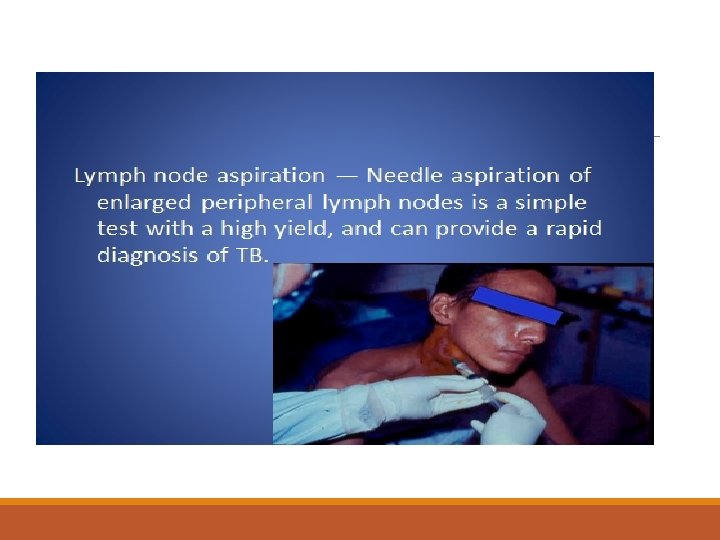
What are the complications of pulmonary tb? 1. Pneumothorax(air in pleural space) 2. Bronchiectasis, irrgular permanent dilation of bronchi 3. Tuberculous Empyema( TB pus in pleural space). 4. Extrapulmonary expansion to other organs. 5. Fibrosis. 6. Cor pulmonale( right heart failure due to chronic lung dis)
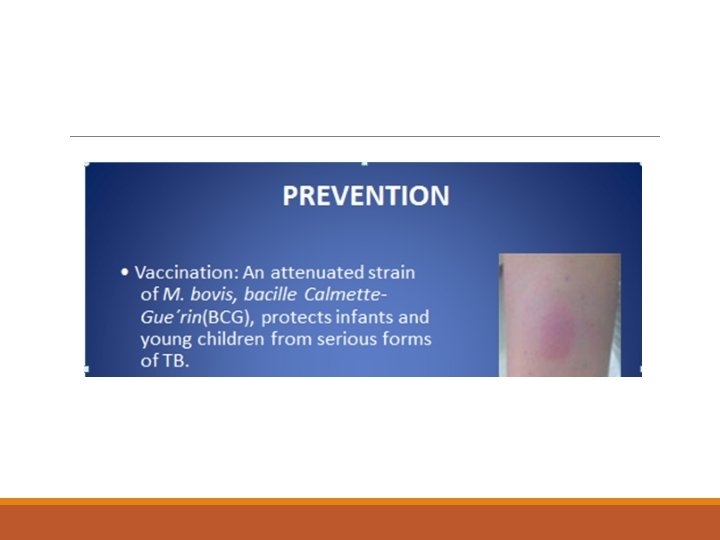
Prevention ØVaccination ØBCG Vaccination can obtain immunity acquired for tubercle bacillus. ØVaccination target: infants children and youngster of tuberculin negative.
Prevention u. Finding patients earlier(ISLOLATION+USE OF MASK DURING HIGH INFECTIVETY PEROID) u. Treatment and management of patients u. Prevention with medicine INH (isoniazid) IN CERTAIN SITUATIONS.
Therapy Chemotherapy Support therapy
Treatment The most important is adopting the DOTS ( Directly Observed Treatment), Isoniazid (INH) Rifampicin (RIF) Pyrazinamide (PZA) Ethambutol 6 MONTHS REGIMENS Rif +inh+pyrazinamide+ethambutol - 2 months 4 x 2 then rif+inh-4 months 2 x 4
Side effects of anti TB rx Isoniazid hepatic enzyme elevation peripheral neuropathy Pyridoxine may prevent peripheral neuropathy. Pyrazinamide Hepatitis-hyperuricemia Rifampin Hepatitis-Colors body fluids orange. Ethambutol Optic neuritis- periodic tests of visual acuity and color vision. Streptomycin Auditory and renal toxicity
Chemoprophylaxis for Asymptomatic TB infection Recent tuberculin conversion No previous BCG Close contact to T. B patient Rifampicin & Isoniazid for 3 months or Isoniazid alone for 6 months
)Multidrug resistance (MDRT. B Resistant to isoniazid & rifampicin. . Treated by second line drugs: ü ü Ciprofloxacin Streptomycin Extensively drug resistant No treatment options, it is fatal.

THANK U
- Slides: 38