
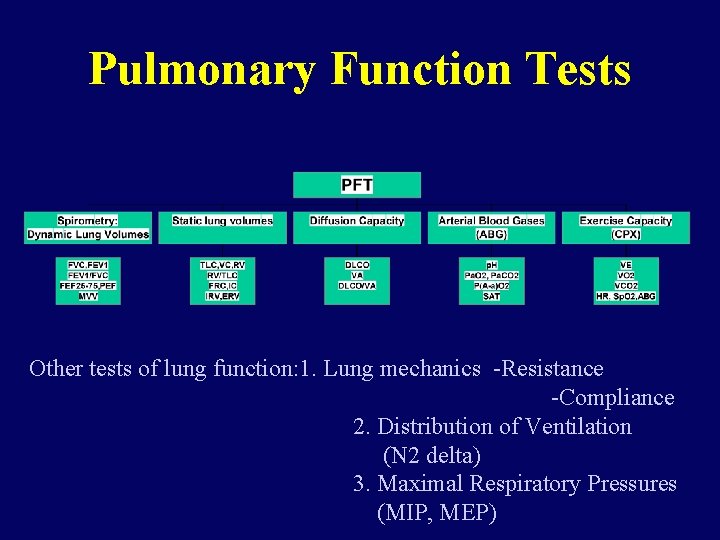
Pulmonary Function Tests Other tests of lung function
- Slides: 37
Pulmonary Function Tests Other tests of lung function: 1. Lung mechanics -Resistance -Compliance 2. Distribution of Ventilation (N 2 delta) 3. Maximal Respiratory Pressures (MIP, MEP)
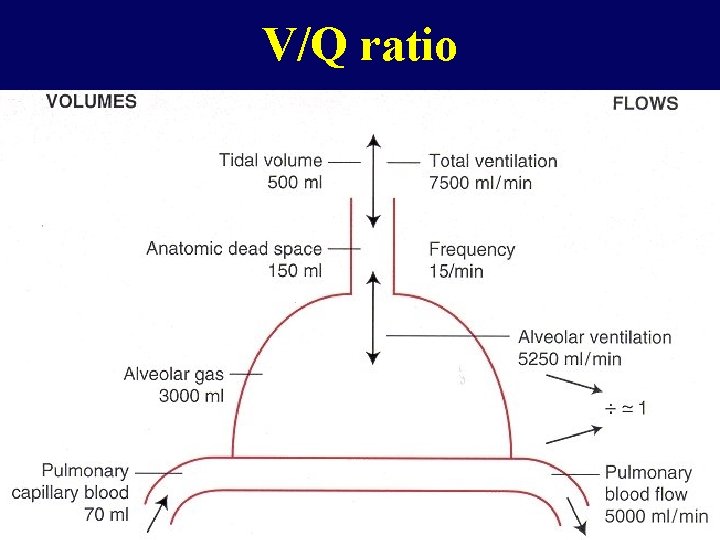
V/Q ratio
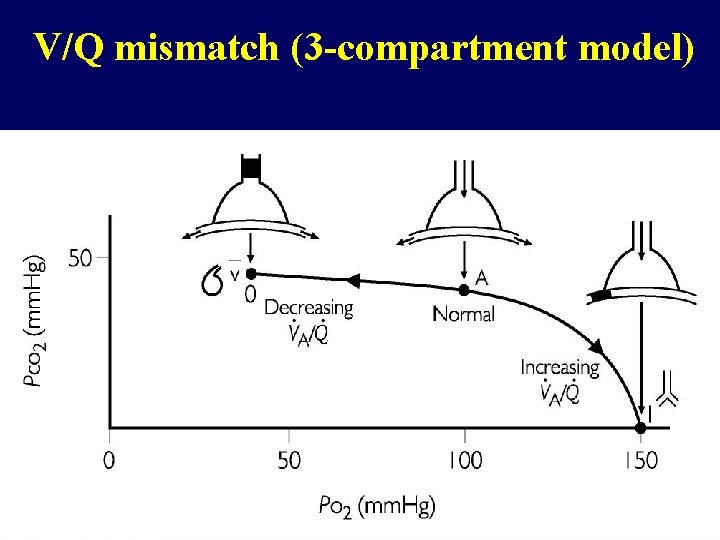
V/Q mismatch (3 -compartment model)
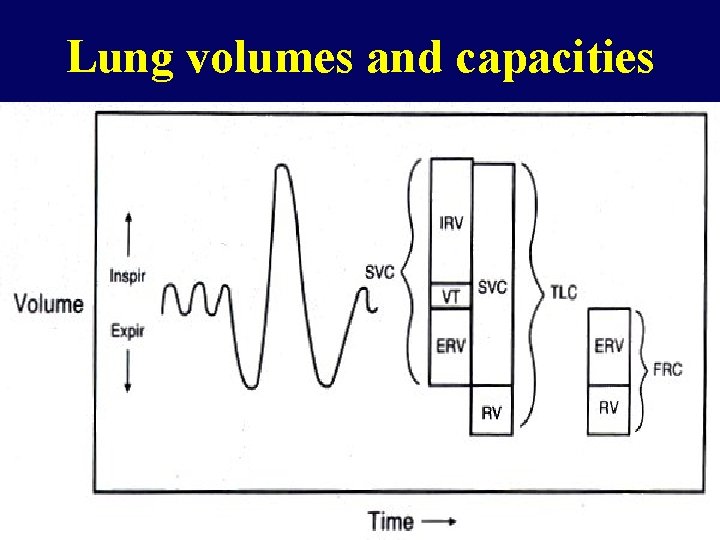
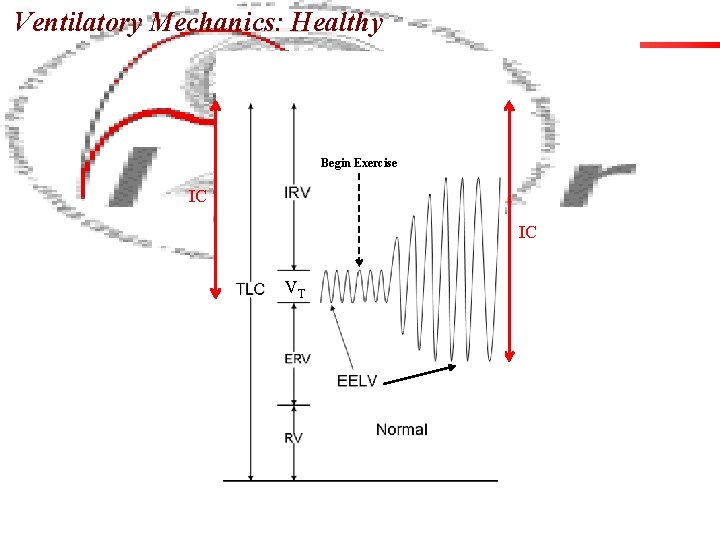
Lung volumes and capacities
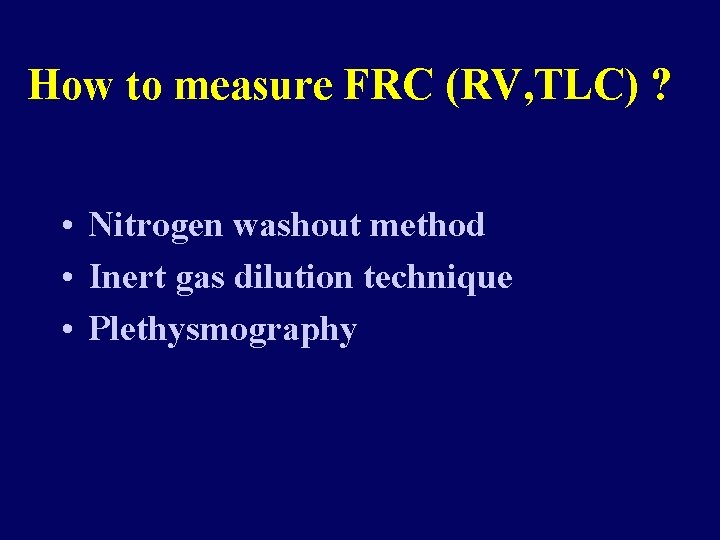
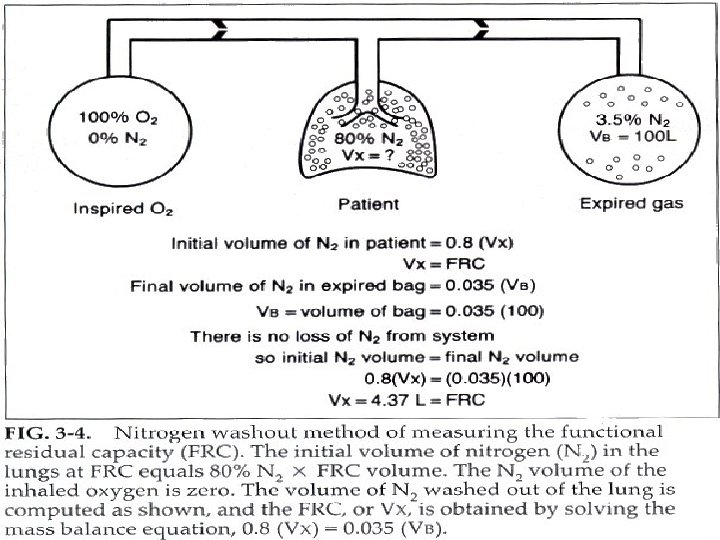
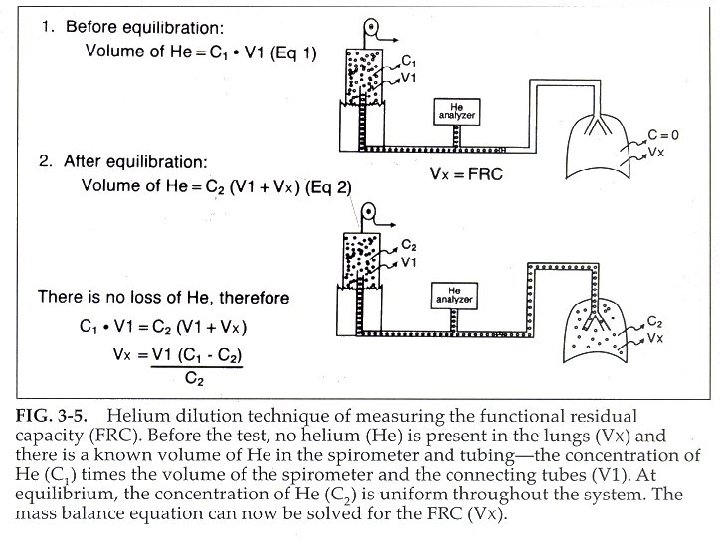
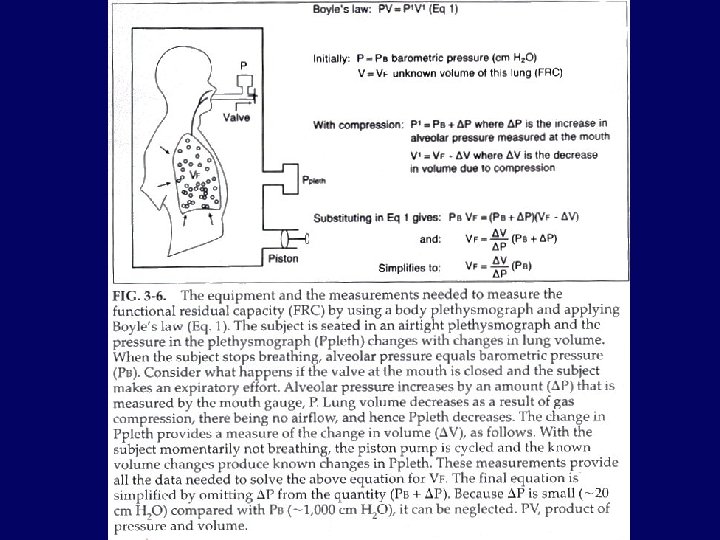
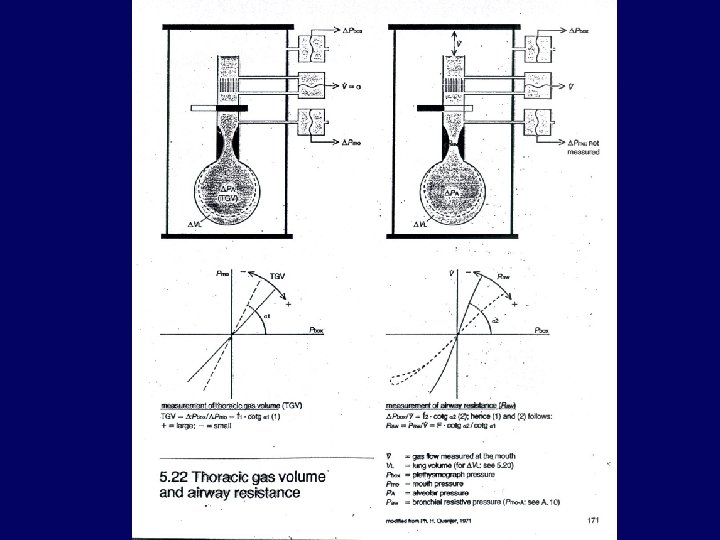
How to measure FRC (RV, TLC) ? • Nitrogen washout method • Inert gas dilution technique • Plethysmography
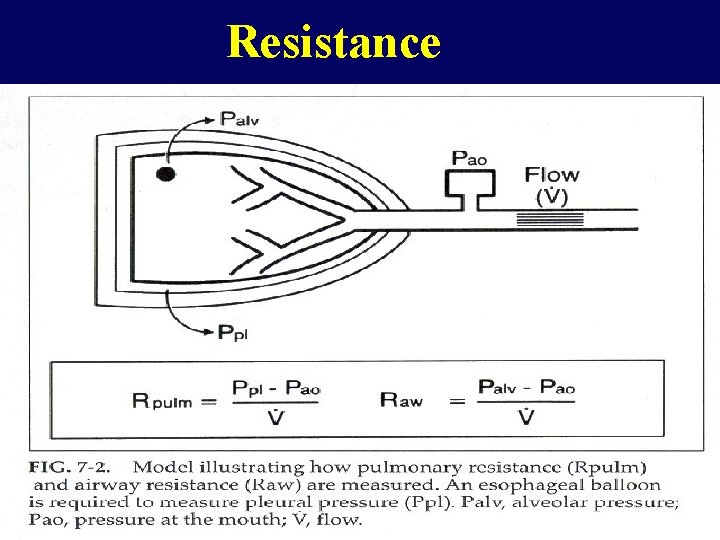
Resistance
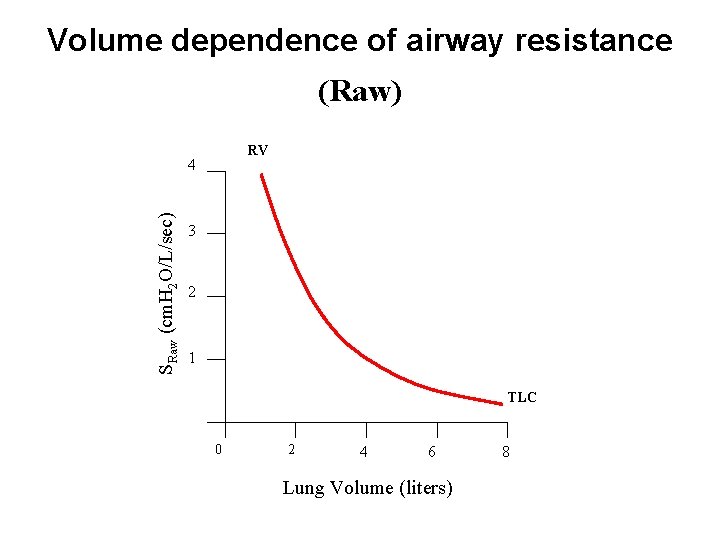
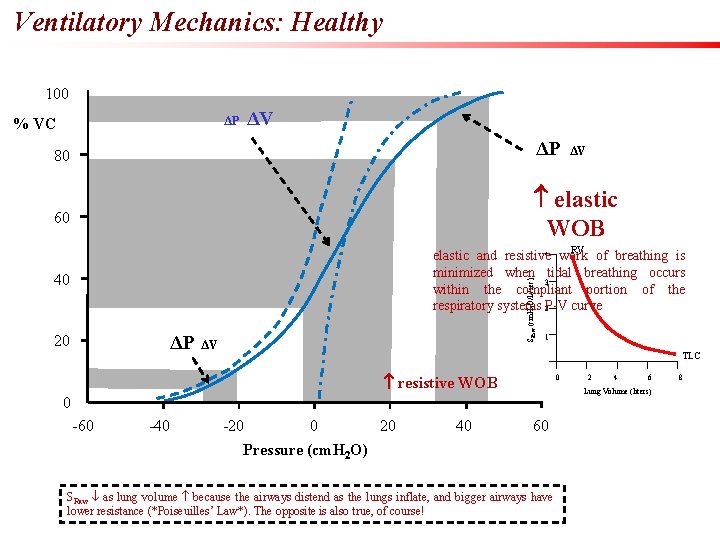
Volume dependence of airway resistance (Raw) RV SRaw (cm. H 2 O/L/sec) 4 3 2 1 TLC 0 2 4 6 Lung Volume (liters) 8
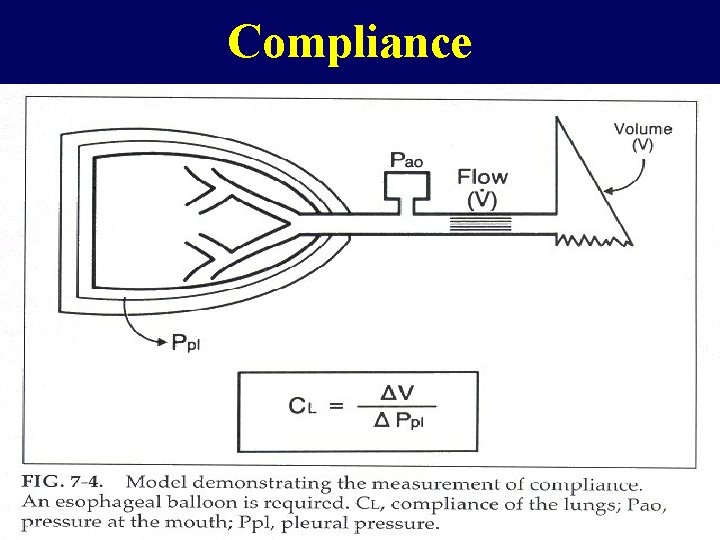
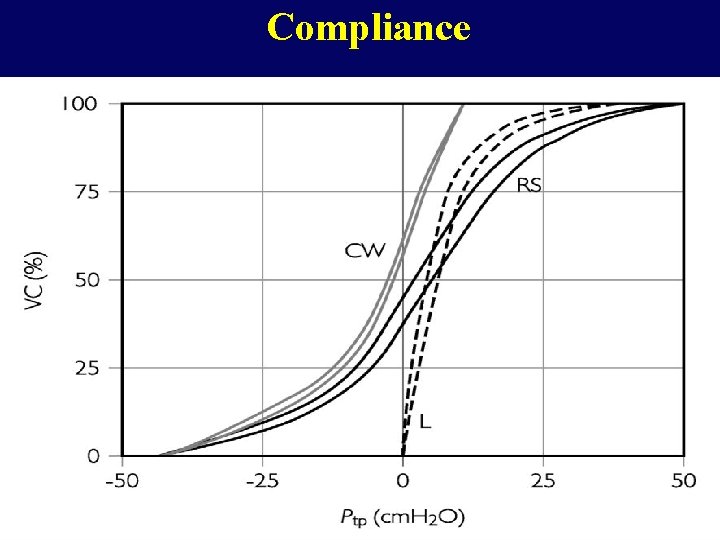
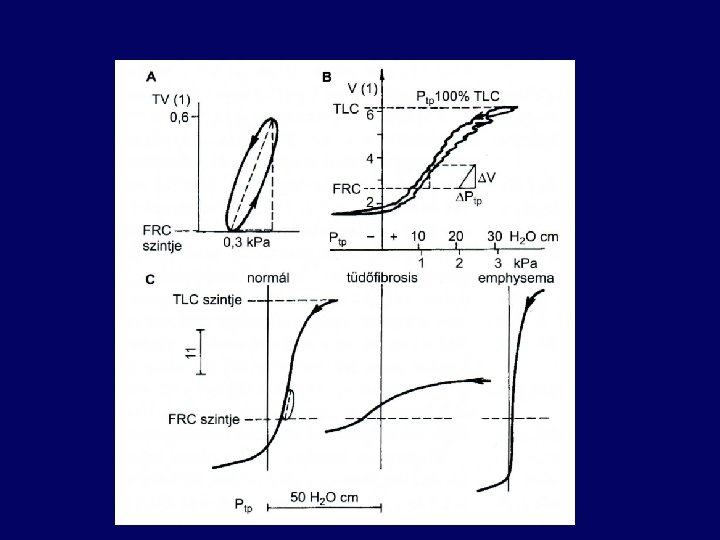
Compliance
Compliance
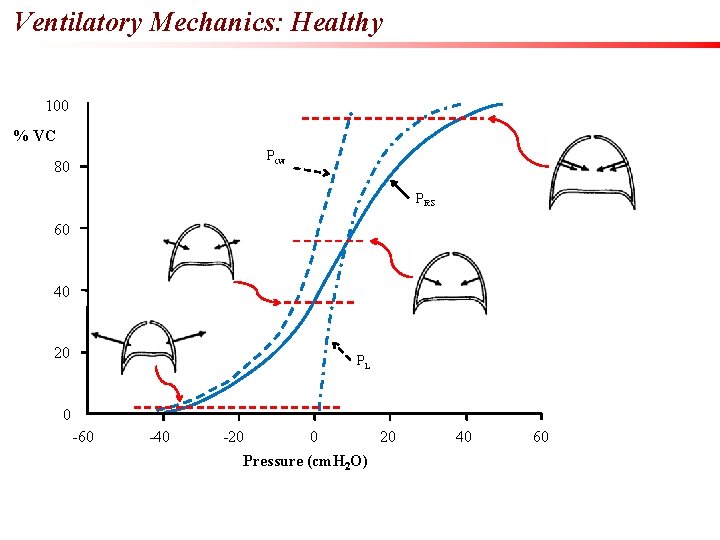
Ventilatory Mechanics: Healthy 100 % VC Pcw 80 PRS 60 40 20 PL 0 -60 -40 20 -20 0 Pressure (cm. H 2 O) 40 60
Ventilatory Mechanics: Healthy 100 ΔP % VC ΔV 80 ΔP 60 elastic WOB ΔV RV elastic and resistive 4 work of breathing is minimized when tidal breathing occurs 3 within the compliant portion of the respiratory systems 2 P-V curve ΔP 20 SRaw (cm. H 2 O/L/sec) 40 ΔV 1 TLC resistive WOB 0 -40 20 -20 0 Pressure (cm. H 2 O) 40 4 6 Lung Volume (liters) 0 -60 2 60 SRaw as lung volume because the airways distend as the lungs inflate, and bigger airways have lower resistance (*Poiseuilles’ Law*). The opposite is also true, of course! 8
Ventilatory Mechanics: Healthy Begin Exercise IC IC VT
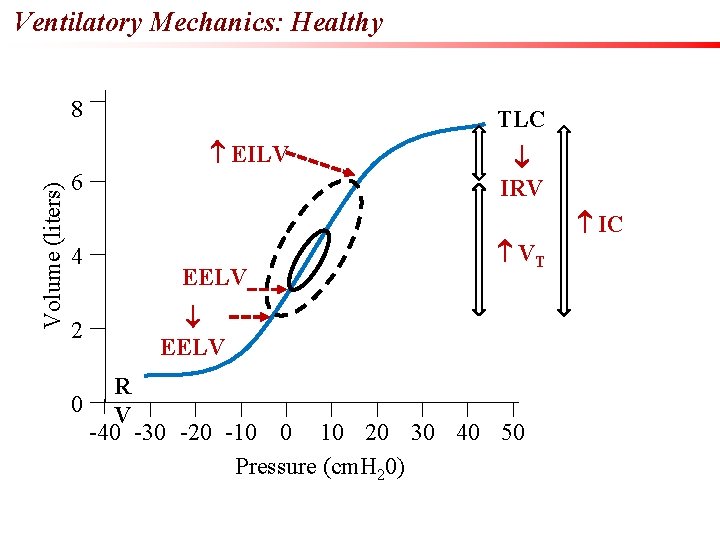
Ventilatory Mechanics: Healthy 8 TLC Volume (liters) EILV 6 4 2 EELV IRV VT EELV R 0 V -40 -30 -20 -10 0 10 20 30 40 50 Pressure (cm. H 20) IC
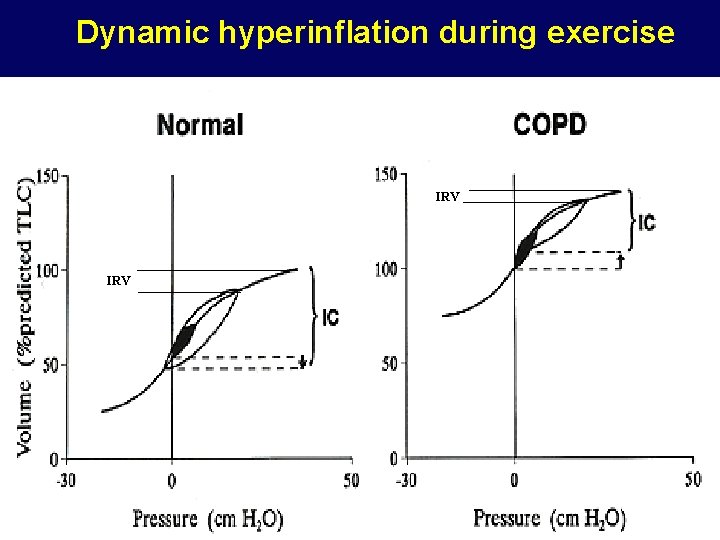
Dynamic hyperinflation during exercise IRV
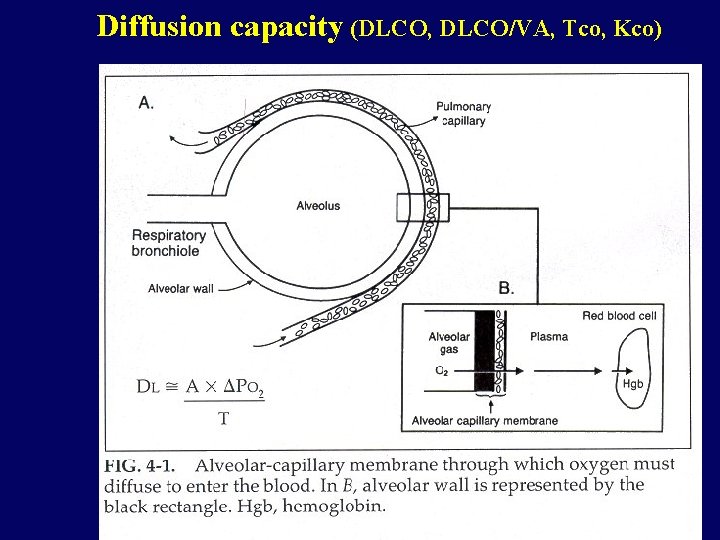
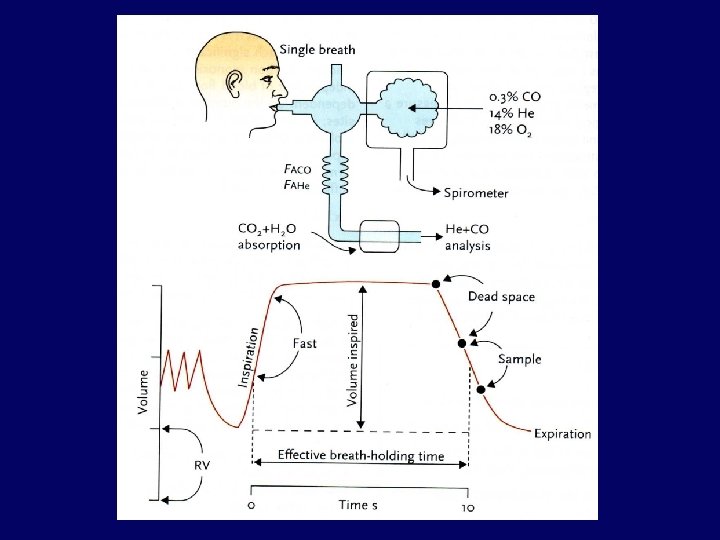
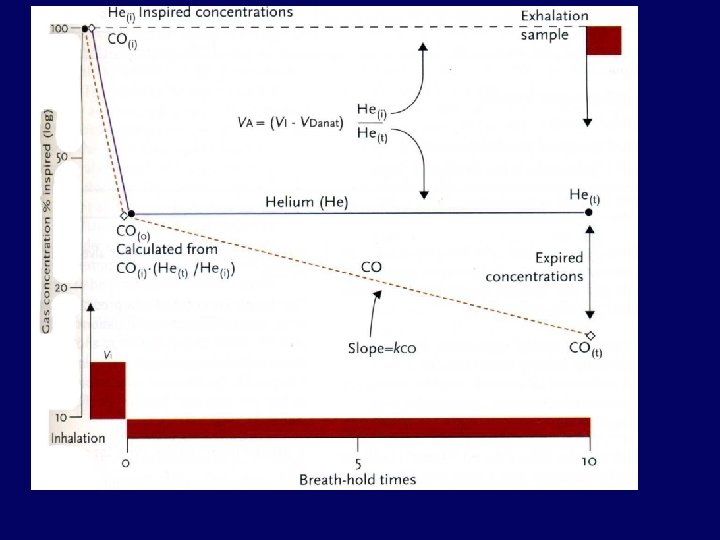
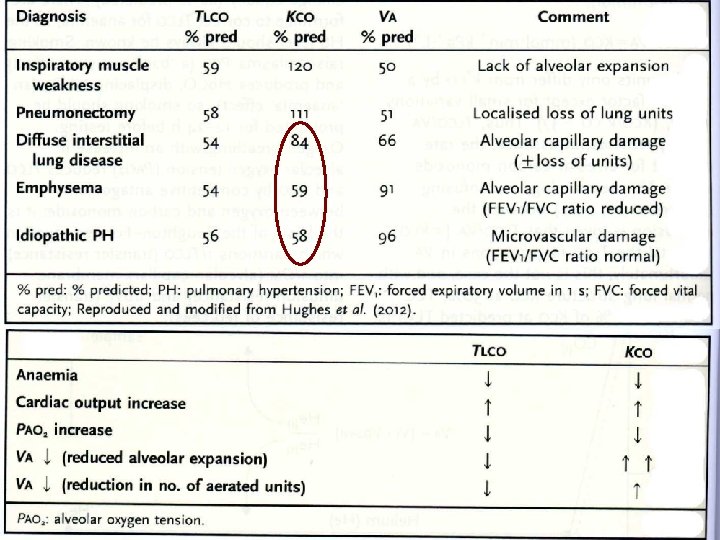
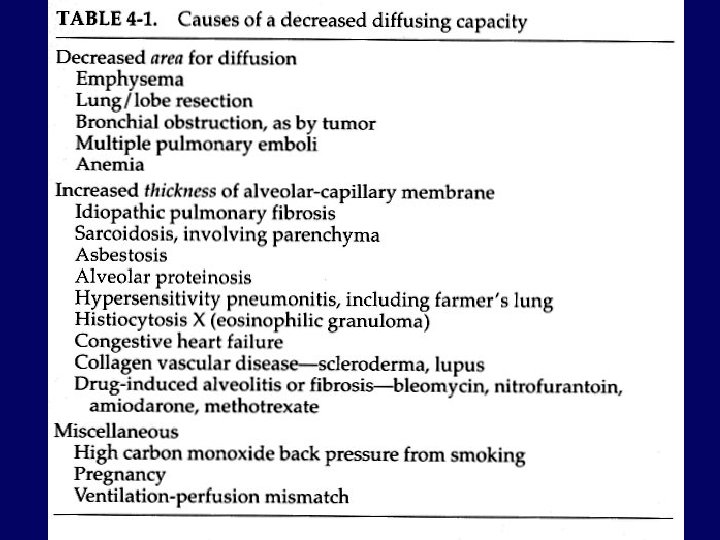
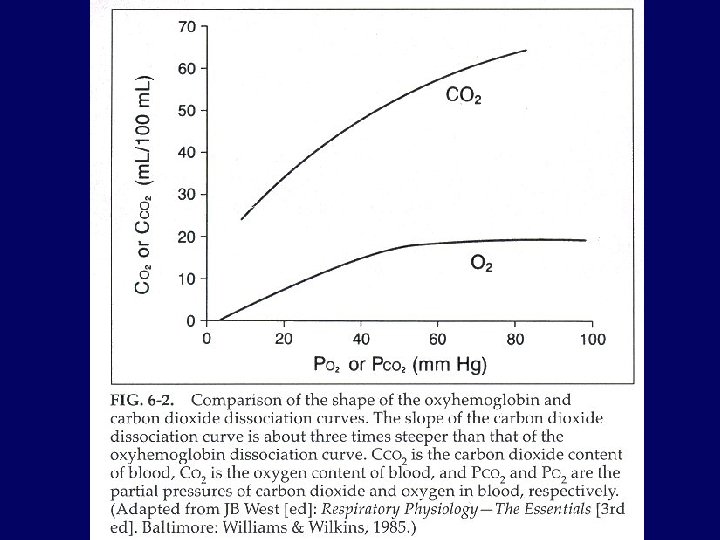
Diffusion capacity (DLCO, DLCO/VA, Tco, Kco)
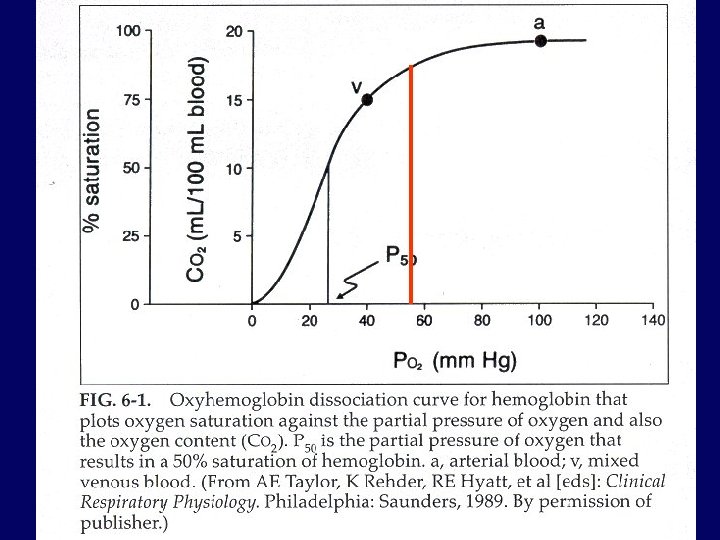
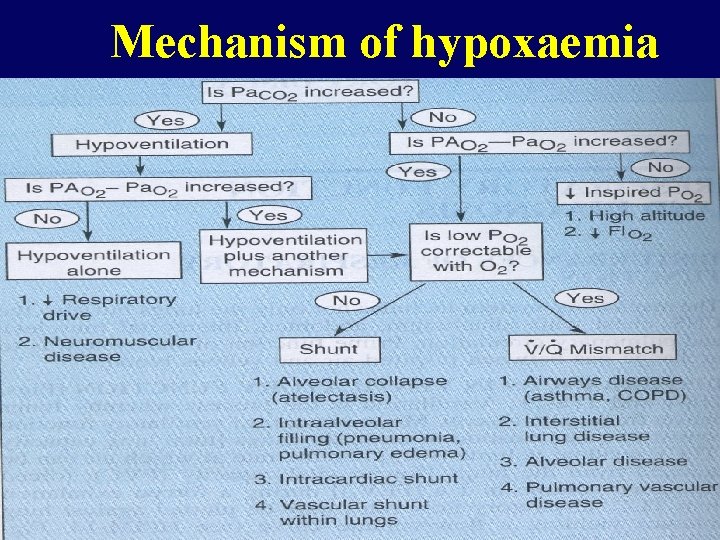
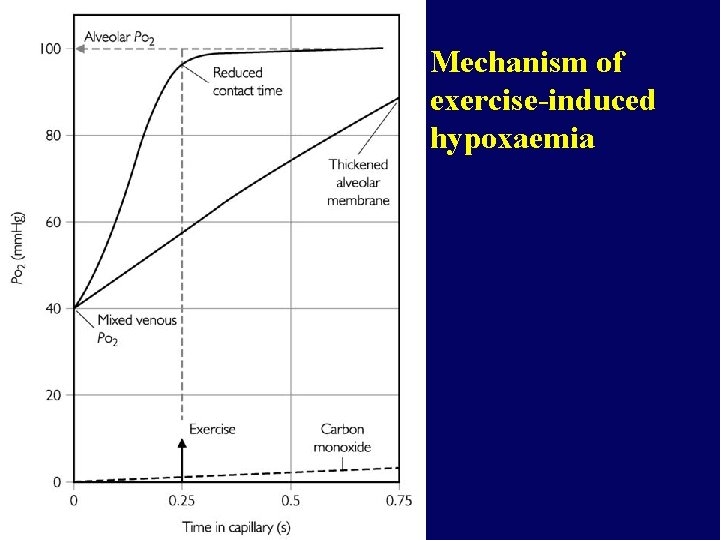
Mechanism of hypoxaemia
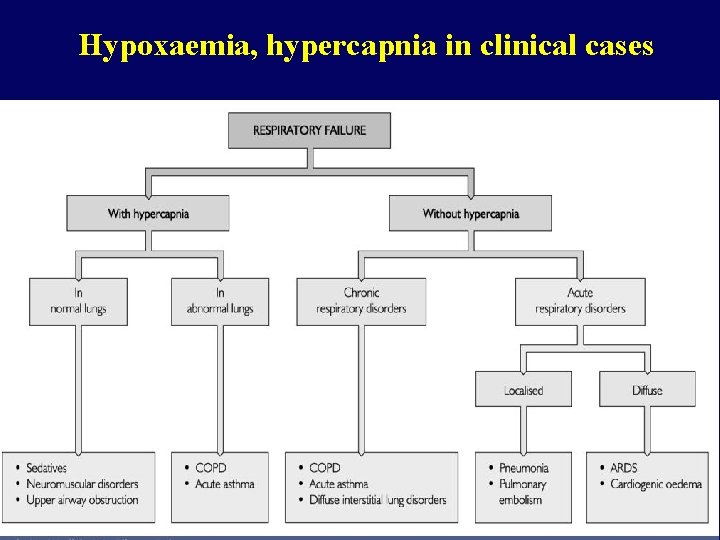
Hypoxaemia, hypercapnia in clinical cases
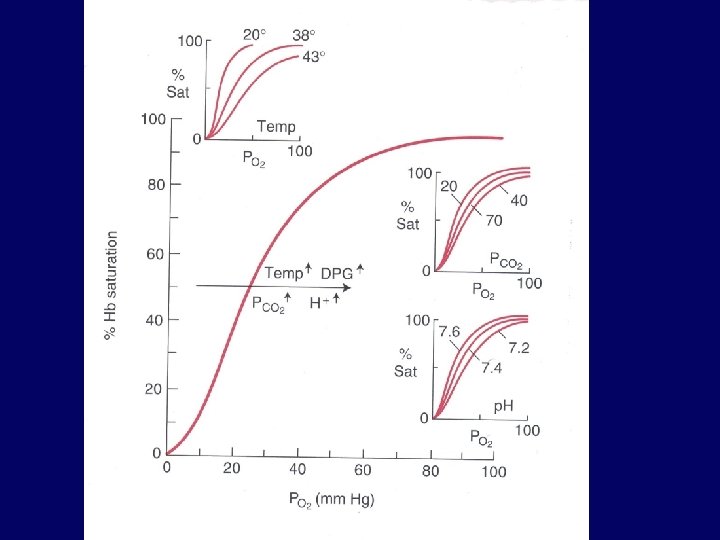
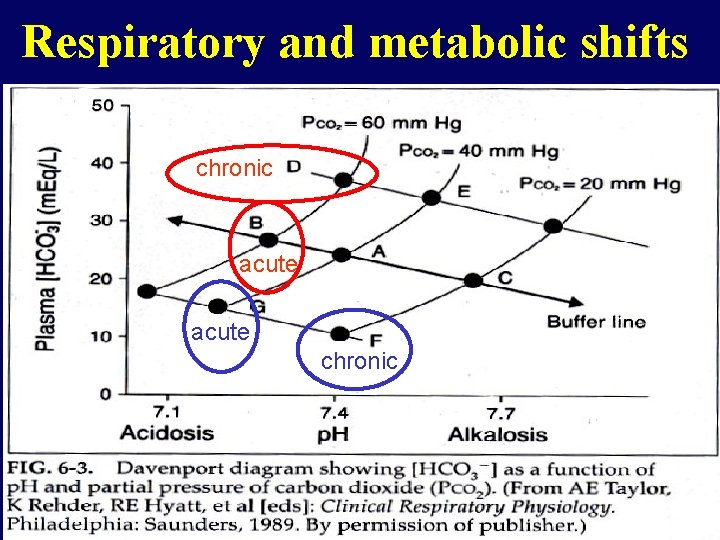
Respiratory and metabolic shifts chronic acute chronic
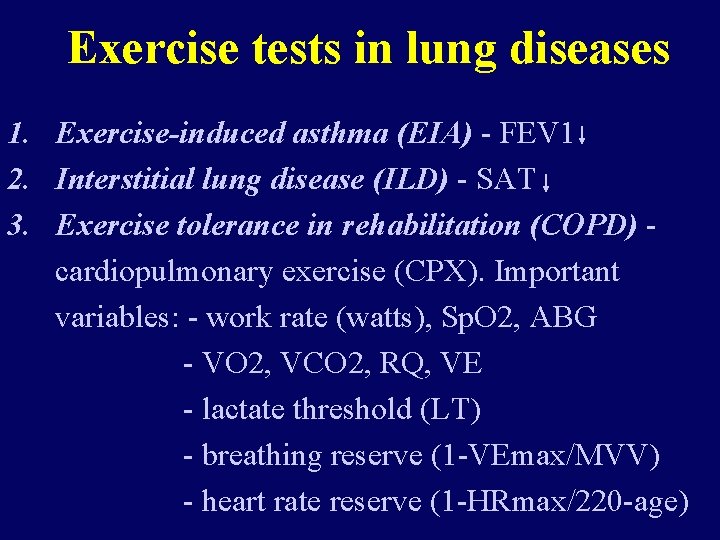
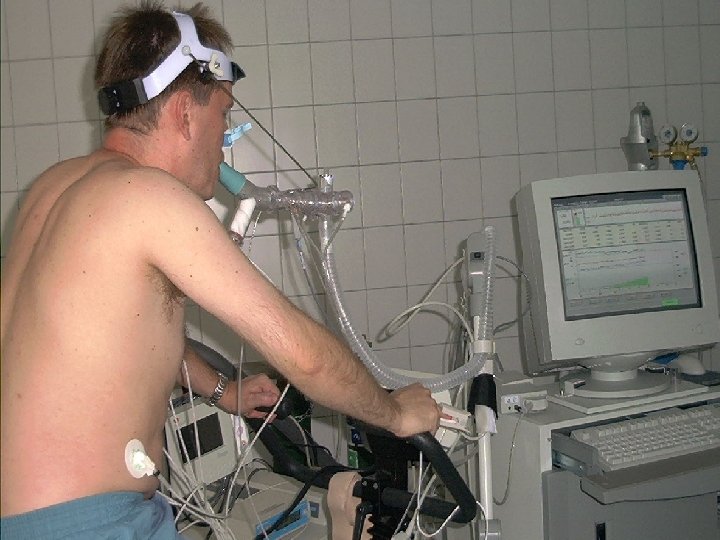
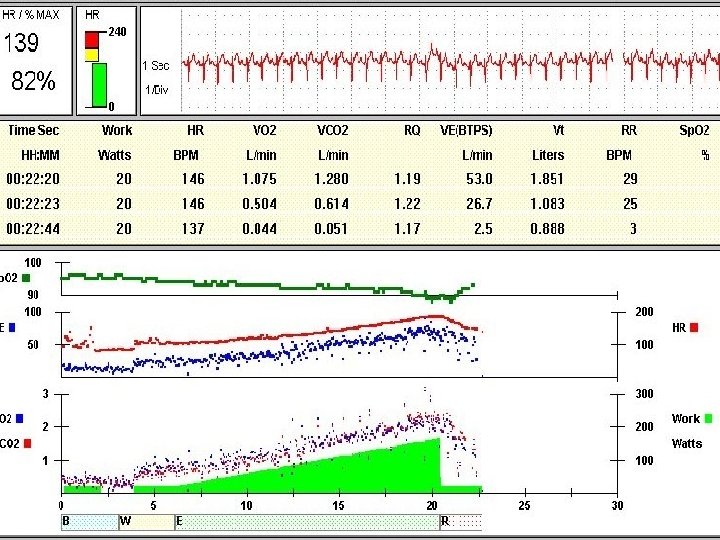
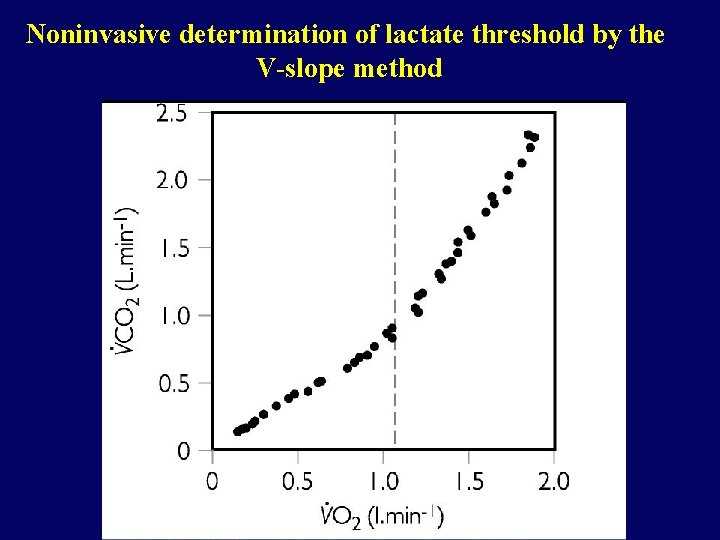
Exercise tests in lung diseases 1. Exercise-induced asthma (EIA) - FEV 1 2. Interstitial lung disease (ILD) - SAT 3. Exercise tolerance in rehabilitation (COPD) cardiopulmonary exercise (CPX). Important variables: - work rate (watts), Sp. O 2, ABG - VO 2, VCO 2, RQ, VE - lactate threshold (LT) - breathing reserve (1 -VEmax/MVV) - heart rate reserve (1 -HRmax/220 -age)
Mechanism of exercise-induced hypoxaemia
Noninvasive determination of lactate threshold by the V-slope method